Unknown's avatar

About johnshortlandwriter

John the Writer: It is as natural for me to write as it is for me to eat or drink (sometimes I forget to do both when the ink is flowing). For years I would write – then shuffle the words until satisfied - then shred it. The act of writing was enough. One day I thought that seemed just a tiny bit silly so saved them on the computer and Life in the English Cotswolds was born. That was in 2009 and to my surprise people like you came along and liked what you saw. Since then, over 180,000 of you have visited, commented and become ‘friends’. Thank you! 2012 saw the very first Chipping Norton Literary Festival take place with which I was closely involved for several years. It was there that I was approached to write my book, Why Can’t my Garden Look Like That?, published a year later by How To Books, an imprint of Constable & Robinson and now part of Little, Brown. Over the years, my blog has expanded to cover many topics ranging from travel to family history and much else. This has brought a new audience with it for which I am both delighted and grateful. John the Gardener: The earliest image of me gardening is one of me as a child of about four using – well that’s too strong a word for it – a rake. Gardening is in my blood for every member of my family have been keen amateur gardeners (I am the only one doing it for a living). Whether it was aunts, grandparents or my father, everywhere I went they were in the garden tending flowers and vegetables or in the greenhouse potting up seedlings. Indoors, around the table, the talk was all about plants. Despite that, I started off my working life (apart from a short stint on a remote Exmoor farm) in the rag trade – selling men’s and women’s fashions. All the time, the great outdoors beckoned so it was off to horticultural college as a mature student before becoming Head Gardener to several large, country estates. That was twenty years ago now and every day I realise that not only did I make a great career move but just how lucky I am. Another sideways step brought me to where I am now – designing gardens, showing others how to garden and looking after gardens. And, of course, writing about it. John the Countryman: I have lived in the country all my life. As a child I spent my time exploring the lanes, woodlands and orchards of the Chilterns, that range of glorious, chalk hills cloaked with beech trees. Each spring they become carpeted with tens of thousands of bluebells. It was here, as a small boy, that I learnt about the wild plants and animals that share our world, a magical place. In more recent times I moved to the Cotswolds – only 50 miles away yet a completely different range of hills both geologically and in character. Here, there are wide open views and skyscapes, dry stone walls and rushing streams and some of the prettiest towns and villages in Britain. I now live in a tiny stone cottage beside the winding river in the photo above, all tucked way in a secret valley. Bliss. Horses and dogs play an important part in my life too. More bliss. John the Explorer: The description is a tad exaggerated but I have had my moments. I guess that spending a night in a hostel for down and outs in the Rocky Mountains (how did I mistake it for a hotel and why didn’t I leave, I often ask myself), being stuck in a blizzard in an Indian reservation at 3 am in the morning in the far north of Canada or getting caught up in an attempted coup in Sudan probably allows me some claim to the title. Recent years have seen my exploring closer to home, in considerably more comfort and a lot less scary. Well, in principle, it is. I spend a lot of time on Exmoor, my spiritual home of over 45 years, and Ireland is another place that I visit frequently. Strangely, things still don’t always seem to go quite to plan …

Stonehenge – 5000 years later

Stonehenge is one of the most important and instantly recognised ancient sites in the world yet those of us that live in the British Isles tend to take it rather for granted.  Perhaps this is inevitable with anything that is on your doorstep, however it is strange that whereas many of us long to see (or perhaps have been lucky enough to have visited), say, the Pyramids of Giza or Machu Picchu, very many Brits have never visited Stonehenge.  Perhaps if they had made the trip they would have been rather surprised at what they saw – and I don’t mean the majesty of the stones.

Over the years, the numbers of visitors to the stones has increased dramatically from twenty thousand a year in the 1920’s to over a million last year.  As numbers increased so erosion and vandalism began to take its toll and access within the circle was stopped.  Now it is only possible to enter the stones on special occasions, such as the summer solstice.  This means that the majority of visitors are only able to walk around the perimeter of the henge.  The memory of my first visit as a child is of running amongst the stones, of being able to touch them and to look up at their immense height – would I remember it now if I hadn’t had this intimate contact with them then?

To view a video of how the Stonehenge area is being transformed into a spectacular, world-class attraction, click the link here

Some years after that early visit and with numbers rapidly increasing a ‘temporary’ visitor centre was built in the late1960’s.  This, along with inadequate car parking  and lack of modern interpretation facilities makes the first impressions of this World Heritage Site poor, to say the least.  Two busy main roads also pass closeby the stones destroying much of the quality of the landscape.  Traffic jams are frequent.

Now this may all sound rather depressing (which it is) and a good reason to cross a visit to Stonehenge off your list of ‘must see’ places.  Fortunately, despite everything, the grandeur of the stones remain and it is an awe-inspiring place to be, especially if you are able to arrive early in the day or when the stones are shrouded in mist.

Now the good news!  After many years of discussion, Stonehenge is about to be ‘returned’
to its original landscape: the visitor centre, car parks and main road leading to them are being swept away and landscaped back to open grassland, giving the stones a greater sense of isolation.  A new centre with educational and other facilities are being built further away and  a low impact shuttle service will transport those visitors that don’t wish to – or are unable to – walk.  This may be a few years away from completion but work has started.  In the not-so-distant future, Stonehenge will have the facilites and landscape that such an important site deserves.

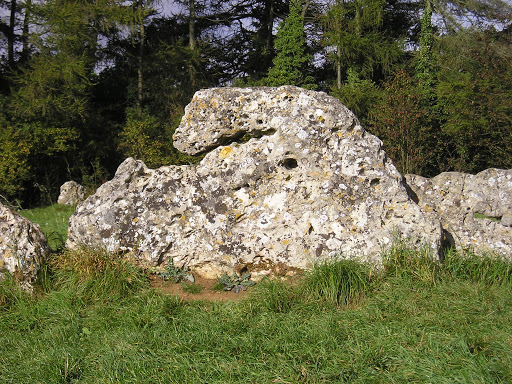
Stonehenge is part of a vast conservation area with over three hundred burial mounds and also includes the Avebury stone circle (link here).  It is about 85 miles south-west of London.  Although not as huge or as frequently visited we have many ancient stone monuments in the Cotswolds too.   The Rollright Stones, a stone circle, photos below, are also 5000 years old, their shapes distorted and lichen covered with age.  To read my earlier post about them, click here.
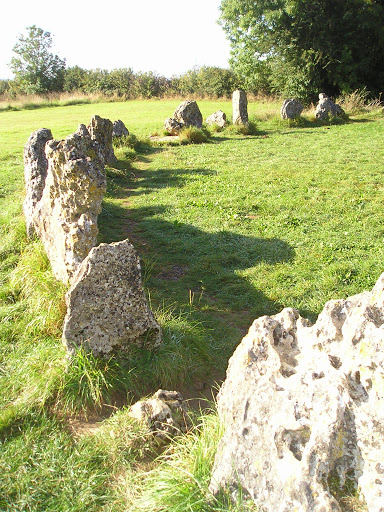


For information on visiting Stonehenge and its history (and how some of their huge stones are thought to have been dragged 150 miles from Wales), click here

Add to Technorati Favorites

The Earliest Signs of Spring

As I write this the rain is lashing against the window panes and beating down upon the glass roof of the conservatory; unrelenting, its endless patter has been sounding since before dawn.  In the last hour the wind has risen and the silver birch, its downward hanging branches blowing first this direction and then the other, sheds its brittle twigs, nature’s way of pruning out the dead wood.
The silver birch silvered by frost

There is no way of casting yourself free from the weather on a day like this.  From every room of the house the rain calls, the views of the secret valley are as montone as the sky; all shape is blurred and merges into one, no defined hills, no defined trees, no defined river bed, even the clouds have been replaced by a heavy, all-oppressing  blanket of grey.  It is as if the life-force has been drained from the landscape.

Siskins are exotic looking winter visitors
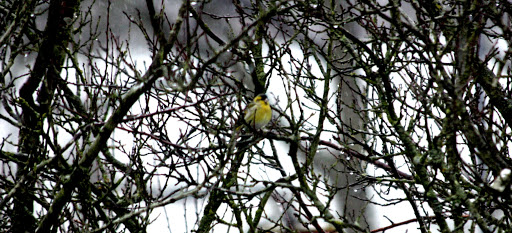
A flash of colour reminds us that this is not the case.  The colder air travelling towards us from the north has driven before it birds desperate to find slightly better conditions.  Far too exotic looking with their bright yellow bodies and sooty black head and bib to be outside the tropics, siskins have arrived to feed on the nut feeders.  They prefer the tiny, black niger seeds but the goldfinches are having none of it; they want to keep those for themselves.  Flurries of feathers, a mix of yellows, golds and reds fall as they scrap – the delicate lttle goldfinch is obviously tougher than it looks.  From time to time, flocks of long-tailed tits descend too to take their place in the food queue; they usually prefer to feed high up in the trees, their search given way by the soft, contact calls they make to keep together.
Siskin vie with Goldfinch for the niger seeds
Long-tailed Tits only visit the feeders in bad weather
It is the birds that tell us that spring is really not so far away.  First it is the robins, their sweet, melodic song sounding as if it should come from a bird twice their size, perhaps a blackbird.  Then it is the turn of the giant sized birds, the raven and the red kite, not with song but with the aerial acrobatics of their courtship displays.  Buzzards follow too but they are more content to circle ever higher, mewing to one another, attraction enough it seems.  All three birds have been rarities for most of the twentieth century but the reintroduction of the red kite in the 1980’s helped protect the buzzards from persecution.  The ravens followed later, arriving in the secret valley with the dawn of the new century – now all three are seen daily.
The forked tail is the easiest way to recognise the red kite
Winter aconites are the first of the flowers to appear, their yellow button flowerheads opening on fine days to prove that they are closely related to  wild buttercups both in flower shape and colour.  Nothing will hold them back and if they become covered in snow or rimed in frost it is of little consequence to them: they are back as pert as ever once the thaw comes.  Snowdrops quickly follow, also uncaring of the weather although they do bow their heads as if allowing their shoulders to take the brunt of it.
Winter aconites flower early whatever the weather
Every tree and shrub show signs of life too.  The hazel, its catkins stubby, hard and green for many weeks begin to lengthen, to grow brighter and looser until they live up to their old and descriptive country name of lamb’s tails.  Knocked back and discoloured by frost they soon restore or are replaced by others threefold.  Others are less precocious and prefer to show the signs of spring more discreetly.  The hawthorn leaf buds show signs of swelling and take on a brighter hue; the blackthorn and cherry flower buds also are clearly visible promising snowstorms of white and pink petals in a month or two.
Buds start to swell slowly at first

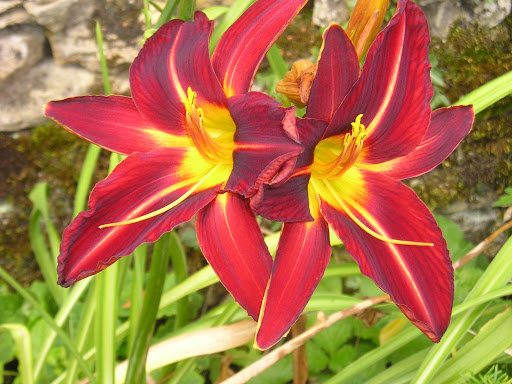
In the flower borders, life is stirring.  The hellebores lift their heads in shades of mournful maroons and creamy whites; the daffodils show their buds too almost as soon as they push through the soil waiting to open once they have reached their full height.  The day lilies are the earliest of the herbaceous plants to send out their leaves, their bright lime green shoots creating an attractive foil to the showier spring bulbs weeks before they send out spray after spray of exotic looking flowers.  Spring is just around the corner…

Hellebores flower early in the year

The day lilies won’t flower for some months but their leaves are amongst the first to show

In the meantime, the rain has turned to snow.  The countryside is turning white and still the wind howls.  Another day of winter to be crossed off the calender before we can relax and say “Spring has come”.

Add to Technorati Favorites

Why Can’t My Garden Look Like That?

Why Can’t My Garden Look Like That?

Proven, Easy Ways to Create a Beautiful Garden of Your Own


by John Shortland


(Johnson of Life in the English Cotswolds)

Available now on pre-order (publication date 26th April 2013)

Click here to find out more …

Add to Technorati Favorites

A Visit to Bath Abbey

There has been a church on the site of Bath Abbey for over a thousand years but the present Abbey Church is relatively new by British ecclesiastical standards.  Building started in 1499 but it was not until the early 1600’s that it was completed.  This was due to Henry VIII’s dissolution of the monasteries in 1539 and the Abbey remained as ruins until 1616 when the church was repaired; the last of the great medieval churches to be built. 

 
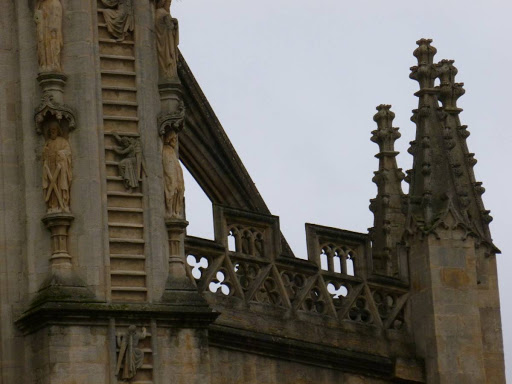
Tradition states that the Abbey Church was built after the then Bishop of Bath dreamt of angels descending – and ascending – to heaven.  It is this vision that is first seen as you enter the building carved into the stonework either side of the West Front.  The great flying buttresses were added in the mid 1830’s to strengthen the building after cracks appeared in the tower; at the same time the pinnacles were also installed.

In late Victorian times many of Britain’s churches had their interiors radically altered and Bath Abbey was no exception.  Much was removed – the organ and screen were taken away which has created the breath-taking view down the full length of the church to the Great East Window, also fitted at this time.  Many other windows were fitted with stained glass and that of the west window was replaced.


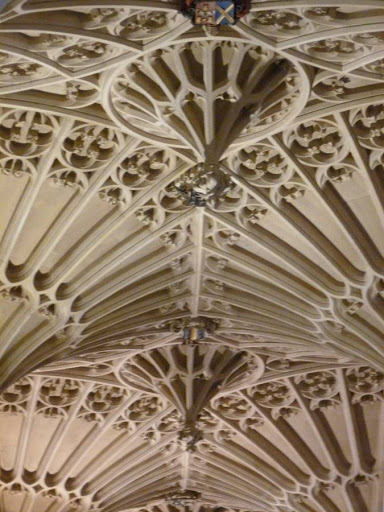
Perhaps the most striking of all of the church’s features is the stone fan vaulting: that of the nave was also created then to match the earlier ones of the chancel.  It soars to great heights with such delicacy and feeling of light that it is difficult to remember it is of stone – or imagine the many hours of craftsmanship that the stonemason’s must have carried out.


Carving of an earlier date, 1649, is the tomb of Sir William Waller’s wife, Jane.  Sir William fought against the Royalists in the English Civil War and intended to be buried with her.  He was however buried in London.
 

Much of the information for this post has been gleaned from the Abbey Church’s excellent website and pamphlets.  It is a magnificent building and well worth allowing plenty of time to visit for there is much to see.  It is, of course, in the city centre and adjacent to the ancient Roman Baths and Georgian Pump Rooms; these featured in an earlier post which can be seen by clicking here.

Add to Technorati Favorites

New Year Resolution: Bath More Often

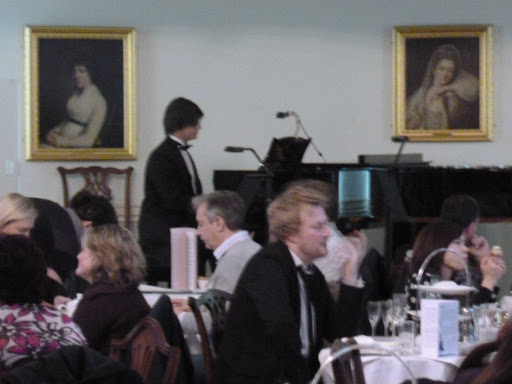
This is not really a post about washing and personal hygiene although I suppose, in a way, it is.  Where can you sit and watch the steam rising from warm bath water whilst having liveried waiters serve you tea in a highly polished silver tea service along with traditional English afternoon tea of scones and cakes?  Add to this scene, chandeliers and a pianist playing at a grand piano and you could be forgiven that it is fantasy.

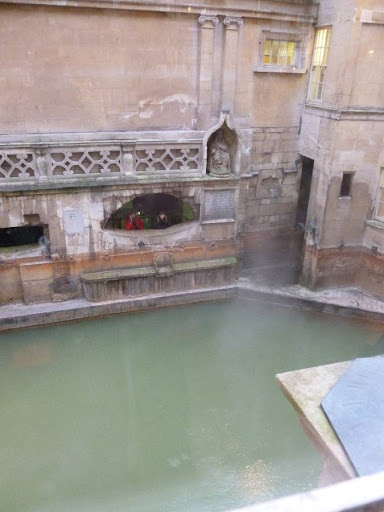
But, of course, it isn’t for this is England and is just another example of the crossing of eccentricity, tradition and commercialism to create the Pump Room in the city of Bath.  In the photo below, the Pump Room is in the further building, the nearer one being the entrance to the Roman Baths themselves.

Bath developed soon after the Romans had invaded Britain giving it the name of Aquae Sulis about AD60 although the hot spring had been a sacred place even before then. Over the next three hundred years the waters were gradually enclosed and then abandoned two hundred years after that with the fall of the Roman Empire.


photo: view of the Roman baths from the Pump Room tea rooms

During the eighteenth century the Grand Pump Rooms were built where it was possible to ‘take the waters’.  At this time, the dandy Beau Nash became Master of Ceremonies and made Bath the most fashionable resort in Britain – the future of the Pump Rooms was assured.


Photo: Beau Nash (statue) still presides over the social gatherings in the Pump Room

Today the Pump Rooms are the perfect place to relax and just absorb the genteel atmosphere.  It is very easy to imagine  Catherine Morland visiting here in the hope of meeting Mr Tilney in Jane Austen’s novel Northanger Abbey.  Although the rooms are steeped in tradition they are not an intimidating place to  visit and all are welcome – it isn’t necessary to be wearing formal clothes! They are open every day for lunch and tea or, if you really want to be exclusive, you can book them for your private party in the evenings.


Photo: even the stairway to the cloakrooms has style!

In the YouTube video below, the music is performed by the Pump Room Trio, the longest, continuous playing  ensemble in Europe.  The fountain is shown in the clip where you can try the water yourself for which, I believe, there is no charge even if you don’t stay for tea.

Bath is a fascinating city to visit and a World Heritage Site.  This will be one New Year’s Resolution that will be easy to keep: visit Bath more often.


Photo: The Royal Crescent, Bath

Add to Technorati Favorites

A Year in Review: 2012 July – December


Where does the time go?  Christmas has been and gone, as have the New Year celebrations and here we are already at the end of January’s first week. I’m beginning to understand those lines of William Davies’ “We have no time to stand and stare.  Not that my life has too many cares fortunately and, of course, I’m exceptionally lucky living where I do and working outdoors – I have plenty of time “… to see, when woods we pass

Continuing on from my review of the first six months …

July: we had a rare fine evening in a year filled mostly with rain, an opportunity for the lucky few to go hot air ballooning.  We had a surprise visitor when Charles Teall, who lives a few miles away, dropped unexpectedly into the secret valley.  We joined him and his balloon team for drinks by the river, a lovely way to end a flight.  Some years earlier Charles had flown me across the Cotswolds before landing to a champagne breakfast – but that’s another story.

Another surprise was when I found an abandoned bantam egg and hatched it out, capturing the moment on video, now uploaded to YouTube.  You can watch it by clicking here.

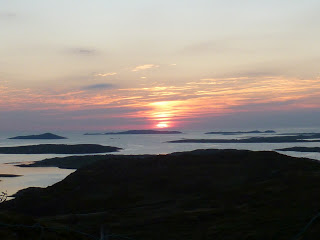
August: You don’t go on holiday to Ireland for the weather, especially the west coast lashed as it is by frequent Atlantic Ocean storms.  To everyone’s great surprise, we had unbroken sunshine and high temperatures day after day.  We even swam in the millpond calm sea.  At night we were treated to the most glorious sunsets, every evening more dramatic than the previous one.


September:  Britain has a long and proud history but we tend to forget about the days before the Conquest in 1066.  We had been invaded and settled many times prior to that but the Romans left us with a road system that is still much used today.  Their houses have long since disappeared although there are many excavated ruins that can be visited.  Cirencester was one of the premier cities of the time and the museum there houses many artefacts including some remarkably intact mosaics, the subject of a post.

October:  Their are numerous new diseases affecting our trees and one species that has been hit badly is the Horse Chestnut.  The leaves become infected with leaf miners and cankers weaken the tree further.  This, in time, may kill the tree but short-term affects the quality of their fruit – the conkers of childhood games.

November:  Trees also featured this month along with a visit to my earliest schooldays.  The larch was my introduction to nature cleverly made magical by my school teacher, Miss Vine.  Larch still are my favourite tree: we have a good number of them here in the secret valley where they give me still as much pleasure at all times of the year as they did all those years ago.

December: With the year whizzing by there were no posts this month other than to wish you all a happy holiday and start this review with the first six months of the year.

Every year has its memories but 2012 will be recalled  as the year of the Queen’s Diamond Jubilee and the London Olympics.  2013 looks like being an especially memorable one for me but you will have to wait a little longer before I reveal all!
 

And just in case we are all rushing about far too much let us remember the words of William Davies:

What is this life if, full of care,
We have no time to stand and stare.

No time to stand beneath the boughs
And stare as long as sheep or cows.

No time to see, when woods we pass,
Where squirrels hide their nuts in grass.

No time to see, in broad day light,
Streams full of stars, like skies at night.

No time to turn at beauty’s glance,
And watch her feet, how they can dance.

No time to wait till her mouth can
Enrich that smile her eyes began.

A poor life this if, full of care,
We have no time to stand and stare.

Leisure from Songs of Joy and Others, 1911


Add to Technorati Favorites

Happy New Year


Happy New Year
 
 
Best wishes for 2013
from
the secret valley
 
 
Johnson 

Add to Technorati Favorites

 
 Wishing you all a very
 
 Happy Christmas
  
Best wishes for the holidays from a very mild, wet and flooded ‘secret’ valley – no snow , so far, this year…
 
Johnson

Add to Technorati Favorites

A Year In Review: 2012 The First Six Months

One of the signs of getting older is that the days, weeks, months and years go by ever faster – this seems rather unfair as you are likely to have relatively few ahead of you.  Not that I plan to leave this world just yet (well, not if I can help it), it is just that 2012 was the anniversary not just of the Queen’s Diamond Jubilee but also of mine which has focussed the mind, rather.

As the time has sped by so fast I thought I would review the year, if only to remind myself what I’ve been doing the past twelve months.

January:  To London for the New Year.  Whenever we visit ‘The Smoke’ (I wonder if anyone still calls it that now that the days of dense smog have long gone) it always ends up rather ‘foody’.  That trip was no exception; we ate our way up the Kings Road, ate our way around Sloane Square and finally ate our way to Fortnum & Mason arriving in time for afternoon tea.  Fortnum’s is the most wonderful grocery store on the planet – whereas, most people, especially those from overseas, visit Harrods, Fortnum’s is the one place you really shouldn’t miss.  Everything about it is delightful and its afternoon teas are legendry.  We did squeeze in a visit to the National Portrait Gallery but why show you images of great works of art when you can see photos of Fortnum’s?  Add it to your list of ‘places I must visit before I die’.


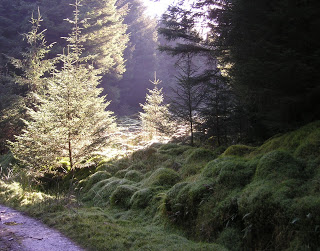
February:  A visit to Snowdonia staying at a friend’s isolated chapel house on the side of the mountains.  The weather was quite kind to us considering the time of year so we were able to do a lot of walking.  To our dismay, our favourite spot that we had christened ‘The Enchanted Forest’ because of its lichen encrusted trees and great mossy hummocks had been clear felled and all signs of it destroyed.  This may sound like wanton vandalism but the trees had been planted for timber production regardless of the impact they had on the scenery.  Now years later, there is a move to restore the mountains back to their original state which is, I’m sure, admirable and an ecologically sound thing to do.  The trouble is that we loved this silent, brooding woodland that no-one, it seemed, apart from us ever visited and now it is gone.  And with it has gone our desire to return but, who knows, perhaps we shall one day.

March:  Recording the life of a hedgerow seemed like agood idea at the time.  It was supposed to have become a month by month photographic notebook of the changes that took place during the year but sadly March turned out to be the first and only entry.  As April arrived I took more photographs but when it came to blogging them they had disappeared (reappearing months later – one of the mysteries of computer technology).  Then came the rain – and it has rained ever since – and the project was abandoned, apart from a vain attempt in May.  The hedge, which is in the little lane that leads from our cottage up the hill out of the secret valley, is an ancient relic from the time of the Wychwood Forest, cleared in the very earliest days of British history.  It is mentioned in the Domesday Book, that great list of the plunder of William the Conqueror, written in 1086.  Although the forest has retreated by many miles there are still some fine trees standing and wild flowers that would normally be found in woodland still grow on its grassy banks.  I shall make a resolution to resurrect the project in 2013.
April:    Part of my everyday job as a practical gardener is pruning, a subject which is a mystery to many people and often fills them with terror at the very thought of wielding secateurs to a treasured shrub.  Mahonia is one of those useful winter flowering plants that so often look dreadful as they become ever more gaunt and ungainly.  This was the case with one in a client’s garden so it seemed a good idea to photograph the process of restoration and blog about it.  That post has rapidly become my most read and I am glad to be able to report that the plant is thriving.  Now covered in new flower buds and almost ready to open, it will welcome the New Year with the scent of lily-of-the-valley.  If you have one in your garden, cut a few flowers for a shallow vase to fragrance the house.

May:   Despite the rain that seems to have fallen incessantly since April, we had a fine, dry day for the most important day in my social calendar of 2012 which was also an important one for the Queen too.  The Pageant of the Horse was held in the grounds of Windsor Castle and celebrated the Queen’s sixty year reign through her association with and love of horses.  Horses, riders and other performers representing every country from around the world that the Queen has visited gave us a show that both we and she will never forget.  It was a quite remarkable and memorable experience; apart from the showmanship and being so close to the Queen and Prince Philip, we had a private ‘Haka’ from the Cook Islanders when they noticed us still seated after the bulk of other visitors had left.  Very exciting!

 
June:  The Jubilee celebrations continued withthe River Pageant held in London on the Thames in pouring rain, this time.  A much smaller river, the Coln, featured in a post ‘The Most Beautiful English Village’ about the exquisite Cotswold village of Bibury.  With its clear, trout-filled waters fast running past ancient stone cottages, it is hardly surprising that it is protected by the National Trust and much visited by sightseers.  It is said that visitors often don’t realise that it is not a living museum and sometimes walk into people’s private gardens or houses to be surprised to find the owners eating their lunch or watching television.


To read any of the posts mentioned above, just click on the links in green.  July to December will appear soon.


Add to Technorati Favorites

My Favourite Tree

When I was a small child I was lucky enough to be sent to a school that had once been a large country house.  Its gardens had long been allowed to return to the wild and it was difficult to differentiate between them and the meadows that came with the property.  Lessons on warm summer days were often taken outdoors sitting not on chairs but on a bank of short mown grass.  This sounds – and was, of course – idyllic but rules were strict and we had to sit in rows as straight as the chairs in the classroom.  At playtime we could run about through the longer grass chasing butterflies and trying to catch grasshoppers in our school caps.

Even in those early days I hated being indoors during bad weather and found it hard to concentrate on lessons in the classroom for there always seemed to be something more interesting happening outside.  Our teacher must have felt the same for with the first sign of sunshine we would be back once more in the open air.  It is said that every child remembers the name of their first teacher and mine, Miss Vine, I recall with great affection and gratitude for it was she that first took me on a nature walk.  The walk – the earliest of all my schoolday memories – triggered off a lifelong love of and fascination with nature.

We were led one late winter’s day wrapped up in our gaberdine raincoats, belts tightly buckled at the waist, crocodile fashion in pairs through the meadows further than we had been before.  How exciting to be exploring somewhere new!  When we came to an old wooden gate we passed through onto a wide, open path lined with trees, their trunks as straight as soldiers and towering high above us.  The path instead of being muddy was soft and springy, our feet cushioned by years of fallen needles.  Miss Vine had brought us to a larch wood; an inspired introduction to trees for everything about them is childlike in scale apart from their height which she said led to a magic world way, way above.

We never were told how we might reach the magic world but she pointed out the gifts that were dropped from it so that we might learn all about the birds and animals that lived there.  She picked up a fallen piece of branch with its tiny cones attached, perfect child-sized miniatures of the larger Spruce fircones, and gave it to us to look at and then we all found our own and carried our ‘gift’ back to the classroom to draw it in painting class.

As the months went by we visited the trees often, watching how the hard, knobbly, dead-looking branches opened into soft tufts of the brightest green.  We marvelled at how the cones formed starting off green and pink before turning chestnut and then brown.  And in the autumn we watched as the needles – and it puzzled us that needles could be soft – turned glorious shades of yellow and orange before falling to the ground.
 
During those visits we learnt about different types of trees, about the wild flowers and birds, the animals and other wildlife.  It was only many years later that I realised that Miss Vine had taught us that there really was a magic world – the one that we live in and take for granted every day of our lives.

Add to Technorati Favorites