
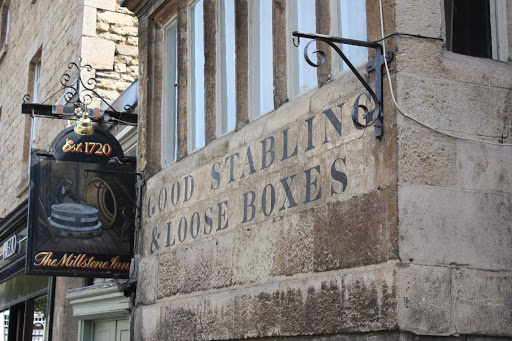
How often, when watching epics on the big screen or television, have you admired the scenery or buildings and wondered where they are or even if they exist in reality? Those of you that have done this when watching Middlemarch or Pride and Prejudice can be reassured that, indeed, they do for they were filmed in the Lincolnshire town of Stamford, often described as the finest stone town in England.

Stamford has an ancient history. The Romans constructed Ermine Street which passes through it only to be then pursued by Queen Boudica; almost a thousand years later it was the turn of the Anglo-Saxons against the Danish invaders. The conquering Normans built a castle (to be demolished four hundred years later) but it was during the Middle Ages that Stamford really flourished due to the wool trade. However, apart from its five medieval churches, the majority of the town’s buildings date from the seventeenth and eighteenth centuries. In the late 1960’s, it became Britain’s first conservation area and is now designated an area of outstanding architectural interest. It is due to this early protection that has earned the town its accolade, seconded by the Sunday Times (national) newspaper describing it as the best place to live in the country.
Close to the bridge which crosses the River Welland stands the church of St. Martin’s, built around 1150 and completely rebuilt three hundred years later. It contains some fine memorials to the Cecil family, the earliest dating from 1598, and also medieval stained glass brought from a neighbouring village in the 1700’s.


For those interested in church timber, St. Martin’s has finely detailed box pews and a carved lectern. It also has the more contemporary (1947) carved head of Christ – Consummatum Est by Alberdi – representing the moment of his death; an anti-war protest.


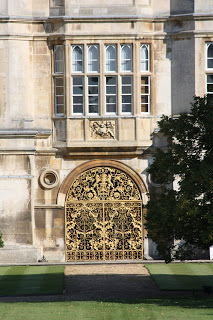
William Cecil, the first Lord Burghley, was chief advisor, Secretary of State and Lord High Treasurer to Queen Elizabeth I. It was he who built Burghley House, considered to be the finest of its age and open to the public. It is still lived in by descendants of the family and also home to the International Horse Trials held in the Park each September. I have written of these before and these posts can be found by clicking on the link here.

More of my images of Stamford and Burghley can be found on Flickr by clicking on the link here.
Refs:
http://www.stamford.co.uk/index.shtml
http://en.wikipedia.org/wiki/Stamford,_Lincolnshire
http://www.stamfordchurches.co.uk/
http://en.wikipedia.org/wiki/William_Cecil,_1st_Baron_Burghley
 In part 1 of these posts on the Trials – click


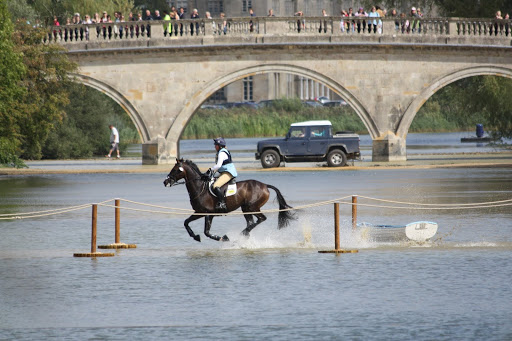
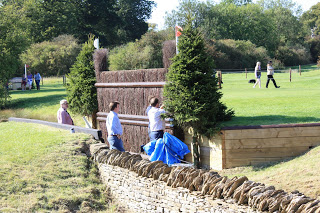
 The water jumps always attract the crowds and there is nothing more they like to see than a rider get a good ducking! This year their were few such moments. Apart from small ponds to jump in and out of, the Capability Brown lake also featured as an obstacle. There can be few more magnificent views than this with Burghley House, one of the greatest Elizabethan buildings in England, in the distance.

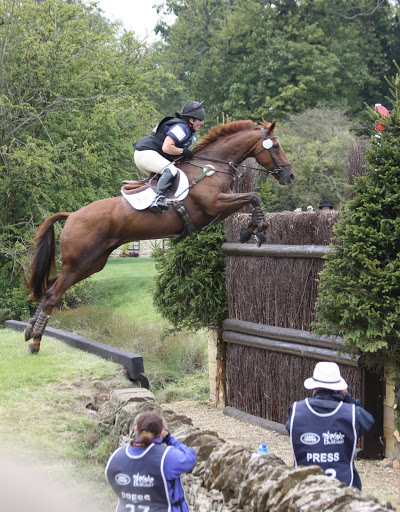
 Zara Phillips, daughter of the Princess Royal and grand-daughter of the Queen was another competitor here. She came in tenth place on High Kingdom.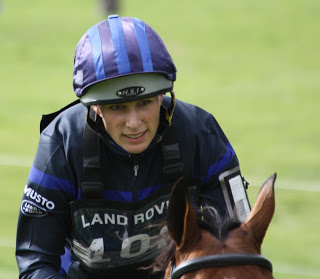

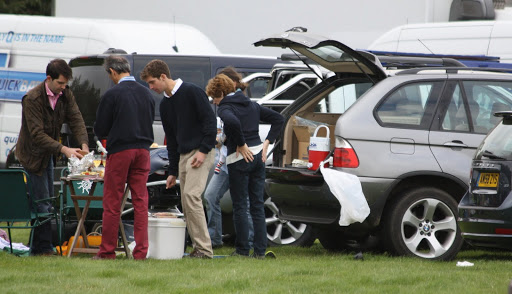

 There is something rather special about Burghley that is quite difficult to define. The atmosphere is electric yet relaxed, a great team of people organise it, the visitors all thoroughly enjoy it and, of course, there is the splendour of the magnificent Burghley House that dominates the grounds.






 Life in the English Cotswolds