
As I feared, once you reach a certain age, time flies by even quicker than before and that certainly has happened in 2013. Where has the year gone? The only consolation is that speaking with young people, they say the same thing. Perhaps that is a rather sad reflection of modern living for I often found that the time didn’t go by quickly enough years ago! Despite the year having gone by rapidly, it has been a great one with some excitement along the way.
January: it is rapidly becoming a tradition that each New Year’s Day some close friends and I go off exploring. This usually includes a museum and food. The year before it had been London with a visit to the National Portrait Gallery followed by afternoon tea at my favourite grocers, Fortnum & Mason. This January it was to the city of Bath with its glorious abbey church where Edgar was crowned King of England in 973AD. The church has the most exquisite vaulting – it is hard to believe that such fine tracery can be achieved by carving stone. Bath, which is a World Heritage Site, is famous for its Roman Baths built about a thousand years earlier and which are open to visitors. A great place to view them from are the Pump Rooms, the imaginary setting of Sheridan’s Georgian play, The Rivals. It was here that we had our champagne tea.


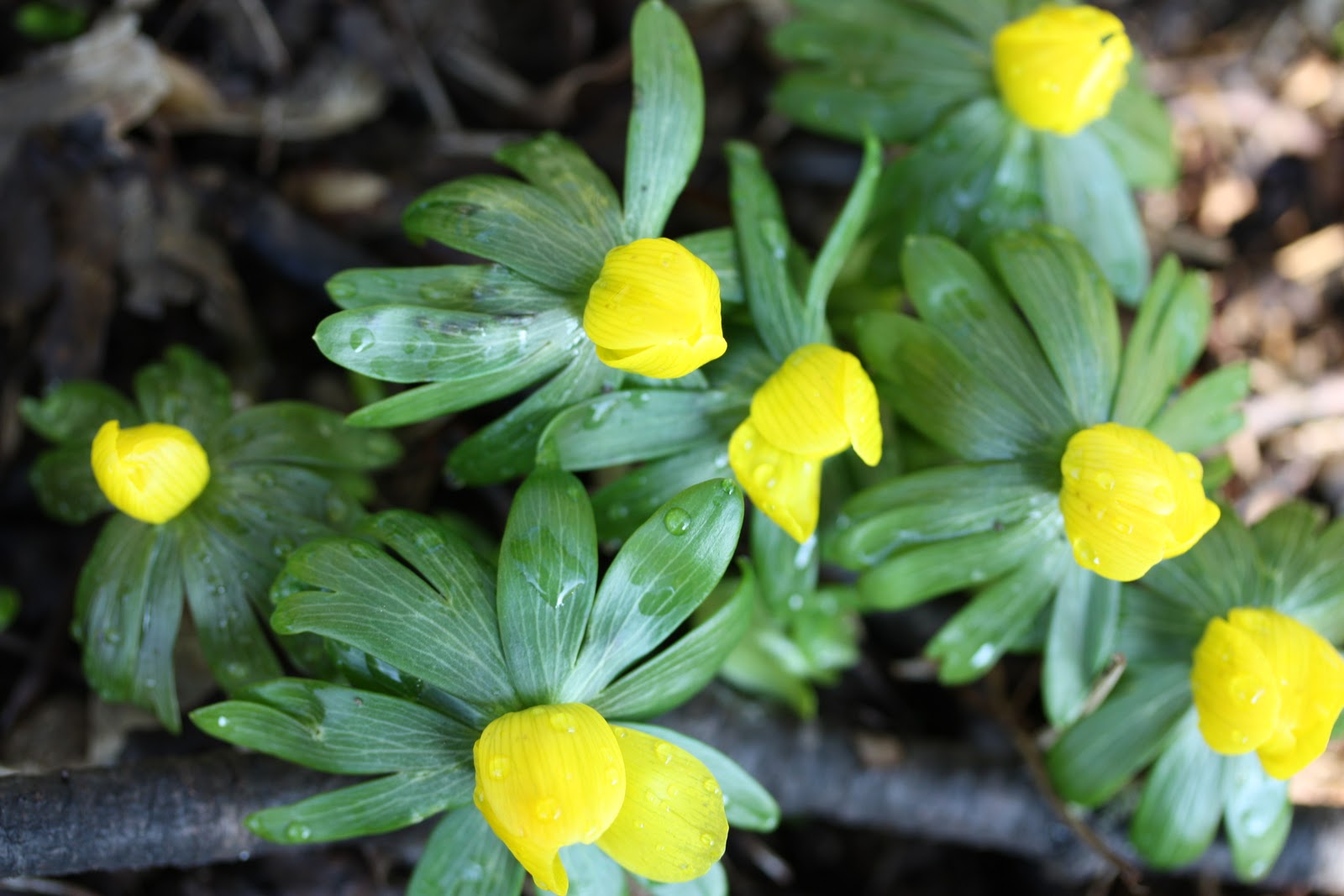
February was a mixed month weather-wise in the secret valley and one post describes the rain lashing against the windows and the trees being thrown around by a winter gale. Despite that the winter aconites were in full flower advertising the advance of spring and the wild birds were hanging onto the feeders for dear life. Take away the aconites and we have a carbon copy day as I write this and, although there are no signs of spring yet, we are passing the shortest day which is always encouraging.
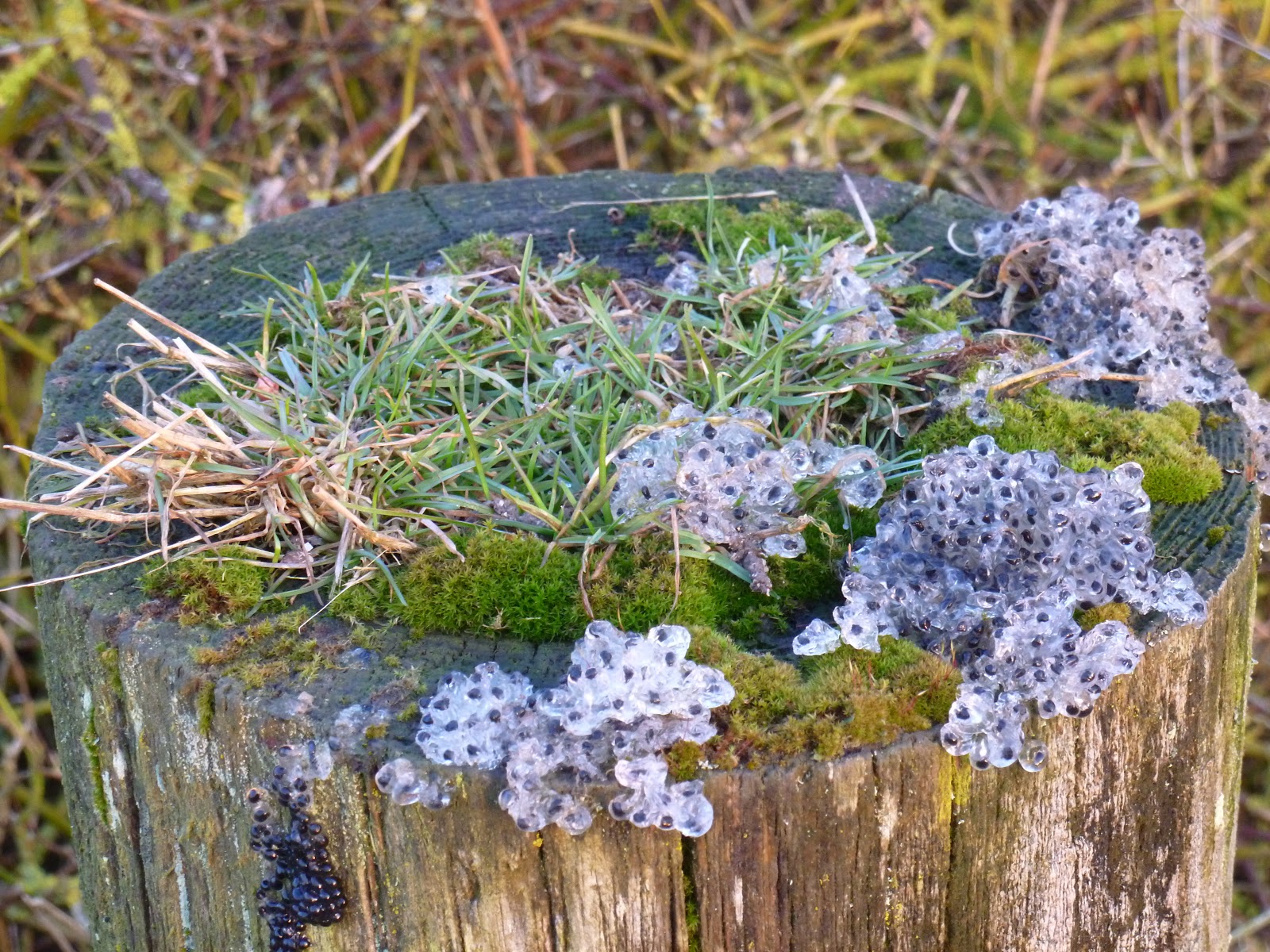
March was a strange month too with huge amounts of rain interspersed with wintry weather. Even stranger was the affect it had upon the secret valley’s frog population. I can only assume that it was because everything was so saturated that, instead of laying their spawn in the small lake that is visible from the cottage, they laid them instead upon the tops of nearby fence posts. They couldn’t possibly have survived there anyway but it was sad to see a few days later that they had turned black and ‘melted’ when a hard frost fell upon them.
April is the month of the Chipping Norton Literary Festival. I have been on the committee since its inception and it has been gratifying to find that it has rapidly established a good reputation with authors, publishers and festival goers. One of the star attractions for 2013 was Sir Julian Fellowes of Downton Abbey fame. Because it is a small festival in a small, country town the atmosphere is very relaxed and it is possible to meet the authors for book signings or just a chat as they stroll about ‘Chippy’. This coming year the festival takes place from 24-27 April and tickets go on sale next month – check out the website for more details.

April also saw the launch of my new website www.johnshortlandwriter.com and also the start of my tweeting. Come and join me @johnshortlandwr
May: As I am always saying the secret valley is a magical place to live and one of the things that makes it so special is its history. Not the history of history books but the type that goes unrecorded other than by the clues it leaves behind in the landscape. Here we have a patch of rough ground left uncultivated that is the invisible site of a Bronze Age settlement. Later, almost to within living memory, the lane was a drover’s route and, in places, the road has been abandoned to become a green track full of wild flowers and butterflies. We still refer to one place as the ‘white gate’ even though it was removed a hundred years ago or more. It feels special to know that the valley has been lived in and loved for over three thousand years.

It was also a very exciting time as my gardening book was published accompanied by radio and other interviews. The launch party took place a couple of months later.
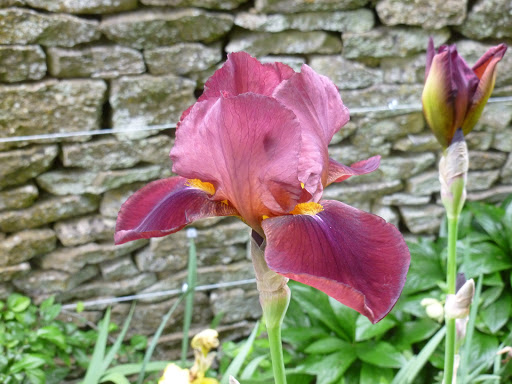
June is a colourful time of year in gardens and one thing I’ve always wanted to create is an Iris border. This is an extravagance of space that few can afford for they are only in flower for a relatively short time. However, one of my clients liked the idea so the ‘rainbow’ border was created. Interest is extended by daffodils and alliums for earlier colour and Japanese anemones, with large flowered clematis behind, for later on.

To read any of the posts referred to above just click on the links, coloured green.




 The lavender hedge not only gave me plenty of lavenders, it also softened the curved and hard edge of the stone path that extended the whole length of the border. An unforeseen bonus was with the reflected heat from the stone – it seemed to heighten their scent, filling the air along with myriads of bees and butterflies that were attracted to it. Another good bee plant was Purple Loosetrife, Lythrum salicifolium, a native plant normally found in damp places and by pond edges. This is a garden cultivar ‘Robert’, which is shorter than the type and was quite at home in ordinary garden soil. The ground cover rose ‘Magic Carpet’ was a close match in colour, the result quite strident but tempered by the lighter centre of the rose flower. I wouldn’t describe this as me at my most subtle!
 A much quieter planting and taking cottage style to it’s extreme was this combination of Icelandic poppies and scabious. I didn’t notice the bumblebee at the time but it really ‘makes’ the photo!
  The Magic Carpet rose looks much easier on the eye planted against lavender and red sage.
 Climbing roses are a passion – no garden should be without at least one. This is a David Austin variety called Snow Goose and is one of my signature plants: it goes into many of the gardens I work with. It is easy, disease free, relatively low growing (about 9ft) so ideal for all sorts of odd corners. It sadly lacks scent which normally would rule it out for me. Certain plants such as roses, sweet peas and pinks, for example, have to have scent, for surely that is their ‘raison d’etre’. Here Snow Goose is growing through Photinia davidiana ‘Palette’ which is being trained as a wall shrub. I love the way the tiny white flowers of the Photinia mimic the rose and the white splashes on the leaves are emphasised by the flower colour.
  Rosa glauca is another rose that I use regularly. It is grown mostly for its wonderful foliage although the flowers are pretty, if somewhat fleeting. This shrub rose will grow to 6ft or more but to get the best foliage and stem colour it is best to prune it hard. Cut back severely it sends out these long, dusky wands which are perfect for cutting for use in the house. Here it is teamed with the Oriental poppy ‘Patty’s Plum’. The poppy was planted inside a trio of the roses which hides the poppy’s leaves as these tend to become rather shabby. The thorns of the rose also hook the floppy stems of the poppy flowers which means that there is no need for staking and tying in: why bother with a chore like that when nature can do it for you?
  A combination of blues against a blue sky using Love-in-a-Mist (Nigella), Salvia nemerosa ‘Rugen’ and two Iris, ‘Jane Phillips’, pale blue with a pleasant scent and ‘Deep Blue’ with its dark, almost black flowers. The tall, ferny foliage in the background is the giant scabious, Cephalaria giganteum. Its pale yellow flowers give a complete colour variation to this part of the border as the iris fade and the Cephalaria opens to glow like moonshine behind the nigella and salvia.

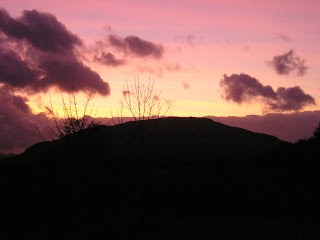
 Sometimes it seems as if flowers have inspired the sunsets! Here is the rose Rosa x odorata ‘Mutabilis’ trying to outdo another mountain sunset. This rose starts with the most intense pink bud and, as the flower fades, turns to the softest apricot, ending up with this wonderful colour combination.
 This old mossy wall was the starting point for a mini parterre – the ‘moss’ is made from the box (boxwood) framework, the ‘stones’ from variegated Iris and Cotton Lavender. The wall reminds me of our garden wall in the secret valley (Sunday 20th September 2009) but this one is in north Wales and is a hard, cool grey and silver granite unlike our soft, mellow Cotswold stone. This planting is tiny compared to the usual grand parterre designs and has been used to link two levels of a small garden.


 So let your imagination take you where it will. Sometimes the combinations don’t work but, more often than not, there will be some exciting discoveries to be made and a lot of fun will be had along the way. And make sure you tell me all about them……
 Life in the English Cotswolds