
The River Otter although not long in length – barely 20 miles from its source in the Blackdown Hills to the sea – is rich in wildlife. Mostly flowing through Devon, in Britain’s West Country, it rises just over the border in the county of Somerset. Passing through rich and fertile farmland it enters the English Channel at Budleigh Salterton where its estuary is protected from the sea by a large pebble bank. It is here that this walk begins.
.
The mudflats, reedbeds and adjoining fields are all part of a relatively small nature reserve, backed by the town on one side and high red sandstone cliffs to the other. The whole area forms part of a World Heritage site for it is part of the English coastline known as the Jurassic Coast, famous for its rock formations, clear water and abundant fossils. The underlying stone of the Otter valley holds one of the most important aquifers in England supplying drinking water to 200,000 people (source: Wikipedia, where else do we go for this sort of infortmation?!).
. .
.
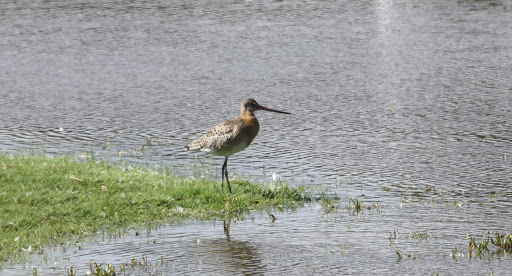
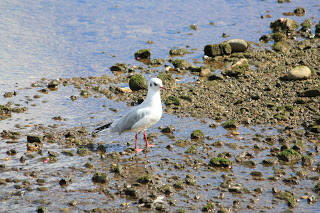
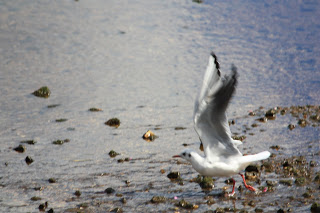
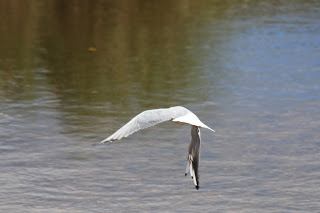
The birdlife, especially at this time of year as migration takes place, is spectacular. In my excitement in trying out my new telephoto lens, I forgot to take general views of the coastline and town. However, as tourism plays such an important part of the Devon economy, it is easy to visit and stay locally – it is well worth adding to your ‘places to visit’ list.
.
There is no public access to the mudflats which means that the birds are relatively undisturbed. However, there are good footpaths along the edges and also hides, where it is possible to view the wildlife with the aid of good binoculars or camera. The Little Egret, below, was a rare visitor to England until very recently. Now, although still not often seen, they are more frequent and breed here. We have even had them occasionally visit us in the secret valley. The Canada Goose also was once a rare escapee from wildfowl collections – now they are seen everywhere and are one of our commonest geese.
. .
.

.
 .
.
 .
.
. .
.

 winter sunshine on silver birch
 Fallow Deer – one of the larger species of deer to be found in England and quite common throughout the country. But like all deer, despite their size, they are remarkably difficult to see and watch. When I lived in the Chiltern Hills, 50 miles to the east of the secret valley, they grazed the field close to my windows, making watching easy. Here, we see them occasionally from the cottage – yesterday was one of those days. In winter, their coats lose their lovely dappled spots and become quite dark – the two pictures below show this, the lower one being taken last summer.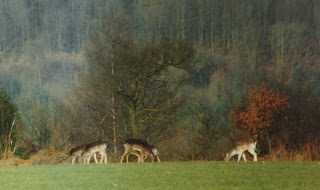
 The Red Kite is one of the great conservation success stories of recent times. Once so common they scavenged in the streets of London (and had a reputation for stealing hats off people’s heads to decorate their nests with. These days they often use plastic instead – the Kites, not the people, I mean, of course). By the 1970’s numbers were down to just a few pairs living in the remotest parts of Wales. A breeding and reintroduction programme started in the 1980’s centered on the village in the Chilterns where I lived. Soon they were a relatively common sight in that area but they have been slow to extend their range. Now we are seeing them much more frequently in the secret valley and they never fail to thrill. The full story of the Red Kite can be found on the Chilterns website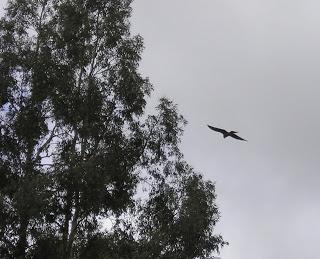
 This photo is most definitely poor quality – I only have a small ‘aim and fire’ camera and took this from an upstairs window. I am hoping to buy a more sophisticated camera with telephoto lenses very soon: another unexpected side effect of blogging has been a rekindled interest in photography. Who knows what will show up on this blog then?
  Life in the English Cotswolds