Unknown's avatar

About johnshortlandwriter

John the Writer: It is as natural for me to write as it is for me to eat or drink (sometimes I forget to do both when the ink is flowing). For years I would write – then shuffle the words until satisfied - then shred it. The act of writing was enough. One day I thought that seemed just a tiny bit silly so saved them on the computer and Life in the English Cotswolds was born. That was in 2009 and to my surprise people like you came along and liked what you saw. Since then, over 180,000 of you have visited, commented and become ‘friends’. Thank you! 2012 saw the very first Chipping Norton Literary Festival take place with which I was closely involved for several years. It was there that I was approached to write my book, Why Can’t my Garden Look Like That?, published a year later by How To Books, an imprint of Constable & Robinson and now part of Little, Brown. Over the years, my blog has expanded to cover many topics ranging from travel to family history and much else. This has brought a new audience with it for which I am both delighted and grateful. John the Gardener: The earliest image of me gardening is one of me as a child of about four using – well that’s too strong a word for it – a rake. Gardening is in my blood for every member of my family have been keen amateur gardeners (I am the only one doing it for a living). Whether it was aunts, grandparents or my father, everywhere I went they were in the garden tending flowers and vegetables or in the greenhouse potting up seedlings. Indoors, around the table, the talk was all about plants. Despite that, I started off my working life (apart from a short stint on a remote Exmoor farm) in the rag trade – selling men’s and women’s fashions. All the time, the great outdoors beckoned so it was off to horticultural college as a mature student before becoming Head Gardener to several large, country estates. That was twenty years ago now and every day I realise that not only did I make a great career move but just how lucky I am. Another sideways step brought me to where I am now – designing gardens, showing others how to garden and looking after gardens. And, of course, writing about it. John the Countryman: I have lived in the country all my life. As a child I spent my time exploring the lanes, woodlands and orchards of the Chilterns, that range of glorious, chalk hills cloaked with beech trees. Each spring they become carpeted with tens of thousands of bluebells. It was here, as a small boy, that I learnt about the wild plants and animals that share our world, a magical place. In more recent times I moved to the Cotswolds – only 50 miles away yet a completely different range of hills both geologically and in character. Here, there are wide open views and skyscapes, dry stone walls and rushing streams and some of the prettiest towns and villages in Britain. I now live in a tiny stone cottage beside the winding river in the photo above, all tucked way in a secret valley. Bliss. Horses and dogs play an important part in my life too. More bliss. John the Explorer: The description is a tad exaggerated but I have had my moments. I guess that spending a night in a hostel for down and outs in the Rocky Mountains (how did I mistake it for a hotel and why didn’t I leave, I often ask myself), being stuck in a blizzard in an Indian reservation at 3 am in the morning in the far north of Canada or getting caught up in an attempted coup in Sudan probably allows me some claim to the title. Recent years have seen my exploring closer to home, in considerably more comfort and a lot less scary. Well, in principle, it is. I spend a lot of time on Exmoor, my spiritual home of over 45 years, and Ireland is another place that I visit frequently. Strangely, things still don’t always seem to go quite to plan …

Fetch me a Handkerchief…

When you come to think of it, gardening is a strange hobby.  What makes people want to spend hours of their time, let alone their hard-earned cash, toiling away in the hope that something might grow?   Why get wet or too cold or too hot and far too tired just to watch your favoured plant being ravaged by pests and diseases or, just when you think all is going swimmingly, to see it being struck down by an unforeseen frost?  On bad days it hardly seems worthwhile.

Of course, the answer is because gardeners are eternal optimists.  Just because something has failed this time means, surely, that it will be a great success the next. And, generally speaking, the good results far outnumber the bad.  What can give more joy than eating, say, a juicy, full-of-flavour pear that you have nurtured knowing that it is free from pollutants and raised by your own hand?  Or, plunging your snout into the centre of a rose bush knowing that it will come out, as the saying goes, smelling of roses?

If all of this sounds slightly odd to a non-gardener, then stranger still must be the thought that many professional gardeners never see the end results of their labour.  They do a task and move onto another garden, often never to return. As a member of this strange breed a question I often get asked is what motivates me.  The answer is always the same: it is the thought of success, of planting for the future and the sheer pleasure in working alongside nature.  And, of course, some gardens we return to again and again.

And so it is with my ‘oldest’ garden: one I have worked in for twenty years, first as Head Gardener and, after I moved miles away to the secret valley, on an occasional basis doing more specialist tasks.
One of the last jobs I carried out was to plant that most celebrated and notorious of ornamental trees Davidia invoulcrata, the Handkerchief Tree, to announce the arrival of the new millennium.  Celebrated because of its wonderful flowers resembling a pocket handkerchief; notorious because it can take twenty years before they appear.

 Davidia originates from China and although first discovered in the mid 1800’s it was not until 1904 that the first one was to be grown in England.  If given the right conditions they grow quickly and although they aren’t fussy about soil type they do like a certain degree of shelter – mine is planted on the edge of woodland which gives protection from strong westerly gales.  They do not respond well to pruning so it is important to allow it space to grow up to 60 feet in height and 20 feet across. They are attractive in a quiet sort of way even when young for, although they lose their leaves in winter, they are of a pleasing shape and shade of green during the summer months.

Every May, I have checked the tree to ensure that it is growing well and looking healthy and wondering if I would ever see it in flower – and this year I did.  Along its uppermost branches, fluttering in the breeze were fifteen flowers, one for each year of its planting.  I stood watching them for several minutes and, as many a gardener will understand, felt quite emotional that I had been instrumental in growing something that will become more spectacular with every year that passes.  Could it be that its English name was given not just because of the resemblance to a clothing accessory but because those early growers, seeing them for the first time, reached out for their own handkerchiefs?  It is special moments like these that keep gardeners, both amateur and professional, gardening.
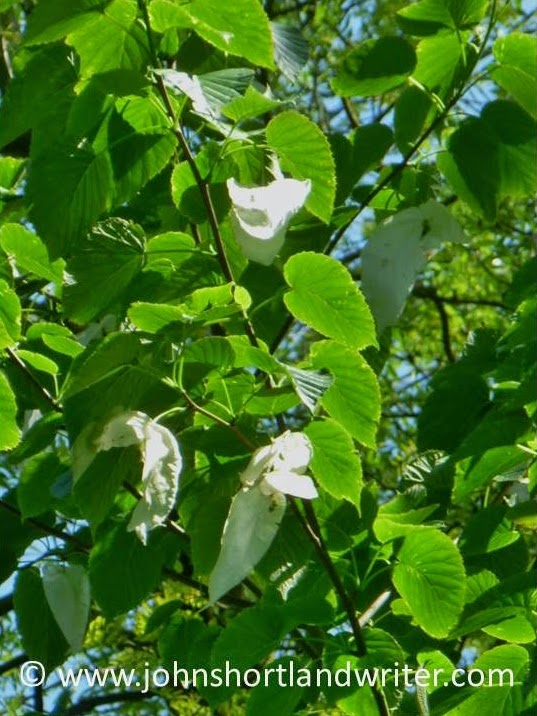
The flowers of Davidia are, in reality, only the round reddish centre; the white parts are bracts, leaf like structures that are often brightly coloured or in the case of Davidia, white.
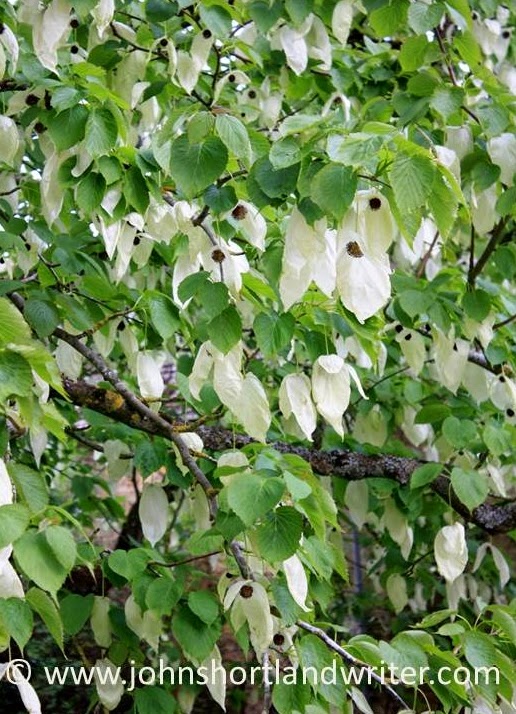
A mature Davidia seen at Hidcote Manor Gardens – it will be some years before the one I planted will look like this…

Add to Technorati Favorites

Casino Marino

Gambling isn’t one of my vices and so when it was suggested that a visit to the Casino at Marino was a ‘must’ when staying in Dublin, I really wasn’t that keen.  Grudgingly I agreed little realising what a treat was to be in store for me.  The Casino was completed in 1775 and just like gambling dens its purpose was to entertain, impress and amuse its guests – but on a very different level.

When James Caulfeild, Ist Earl of Charlemont completed anine year Grand Tour of Italy, Greece, Turkey and Egypt he brought back to Ireland a great hoard of treasures.  He also returned with a loveand deep knowledge of the classics and he used this to create a grand neo-classical building to house them.  Neither a folly nor a house to be lived in (the main dwelling, Marino House, half a mile away and linked by a tunnel, was demolished in the 1920’s) the Casino was built purely to show off his collections.  Caulfeild employed Sir William Chambers as the architect who, busy with Royal clients in London, never visited the site before, during or after completion; most of the work was carried out by the stonemason and sculptor Simon Vierpyl.  Chambers was, however, reputed to be immensely proud of his work and justly so.
Everything about Casino Marino was designed to impress and it still does albeit that the contents of the building have long been lost.  It stands alone and, nowadays, rather out of context for its landscape of far reaching sea views and open countryside are hidden by the city.  It was also built to deceive and it still does this too: what appears to be a square, single storey building is actually one built on a cross over three floors.  The huge oak doors are also a deceit for they open to reveal a small entrance, the remainder hidden from the inside by ornate plasterwork.  The blacked out single windows are neither  of these things for the glass has been bevelled to reflect light making it difficult to see in from outside yet flooding not one but three or more rooms with natural light.  The urns sitting high above the pediments are, in fact, cunningly disguised chimneys.  Four of the solid looking columns are hollow and channel rainwater from the roof.
The building of the Casino (its name derives from the Italian meaning ‘little house’) was all consuming both in effort and money and the building very quickly fell into disrepair, its art sold to settle debt.  By the 1930’s the building was in danger of collapse.  Now carefully restored it is possile to explore its sixteen rooms, some of which are reached by ‘secret’ doors.  Some of the original parquet wooden flooring survives and one small room has a delightful alcove, its wallpaper still looking fresh.  Interestingly, the printing technology of the time prevented continuous rolls being produced and it is possible to see the joints where several large sheets of paper were hung.

 
Casino Marino is open from March to October.  A very knowledgable guide escorts you around the building bringing it back to life with information sprinkled with more than a touch of Irish humour.  It is well worth making a special trip to see this very rare example of neo-classical architecture, considered to be the finest in Ireland and just one of three such buildings in Europe.
 

Links:
How to find the Casino Marino

Add to Technorati Favorites

Guest Blogging

My guest blog for the Chipping Norton Literary Festival:

Gardening author John Shortland has put his green-fingers to the keyboard to tell us all about his ChipLit event

Are you sometimes disappointed with the look of your garden? Unsure what to grow where? Or just never seem to have enough hours in the day to get outside?  What happens when you can’t recognise one plant from another?  These are just some of the issues I’ll be considering in my informal, illustrated discussion.

‘Why Can’t My Garden Look Like That?’ is a question I’ve been asked many times during my career as Head Gardener to some of the most exclusive country gardens in Oxfordshire.  I have also been an adviser at the Chelsea Flower Show and worked for Channel 4 television alongside designer Dan Pearson. I’ll be drawing upon my wealth of practical experience to answer this often-asked question.
Most people these days have to juggle careers and a host of other things, leaving little time for gardening. But there are many ways that it is possible to still have a great looking garden without having to spend every waking hour in it.

In my talk (and book of the same title) I’ll look at simple, jargon-free and straightforward methods to improve the layout of your garden.  I’ll also look at different plant combinations and offer tips on how to make your garden one that others will envy.  A short walk will take you to see a garden in the heart of the town where some of these ideas can be put to the test.  Don’t worry – it doesn’t involve getting your hands or shoes dirty!

As the session ends with an opportunity to ask me questions over a cup of tea and a scone, it is quite probable that this event will run over its scheduled time.

John Shortland

Tickets for this event are limited and are already selling fast: Why Can’t My Garden Look Like That? The Vintage Sports Car Club, Sunday 27th April, 1.30pm

Add to Technorati Favorites

Where Waters Meet

With two rushing rivers – Hoar Oak Water and the East Lyn River – merging in a series of spectacular cascades and rapids it is hardly surprising that Watersmeet is one of Exmoor’s most popular visitor’s attractions.  Its deep, wooded valley is doubly protected for not only does it lie within the heart of the National Park 340 acres were gifted to the National Trust.   Watersmeet House, now a café but originally built as a romantic fishing lodge, and with car parking nearby makes a good place to begin and end a walk.

There are numerous paths that can be taken from here and most link up to create walks of varying lengths.  They hug the valley bottom or rise steeply to the tops of the surrounding hills so it is possible for almost anyone, regardless of their ability to have an enjoyable outing.  It should be remembered that even in dry weather the paths can be quite rugged so good, solid footwear is always recommended.  A stout stick or walking poles won’t go amiss, especially if you choose the hillier paths.
 Apart from the noise and excitement of the rivers, the other awe-inspiring feature of Watersmeet is its woodland which clings to the steep, three hundred foot sides of the valley.  These are some of the best examples of ‘hanging’ woods in the country and are relics of the ancient woodland that once covered lowland Britain.  Mostly the trees are sessile oak although there are some fine specimens of beech in the better soil of the valley bottom.  There are also a number of Whitebeam species that can only be found here or in neighbouring woodlands making them of national importance.
As soon as you start walking, any crowds are soon left behind and you have the splendour of the place to yourself.  Following the East Lyn River upstream the remains of a nineteenth century lime kiln can be explored.  Lime was brought by sea from Wales to be burned before spreading onto the fields to counteract the land’s extreme acidity.  Fuel for the kilns was provided by the woodland which was coppiced and some of this timber was also sent back to Wales to be used in the iron foundries.
 Wildlife abounds; there are dippers and herons by the water’s edge, and red deer, badgers and otters can all be seen by the fortunate few.  On quieter stretches of the river the calls of raven and buzzard can be heard overhead.
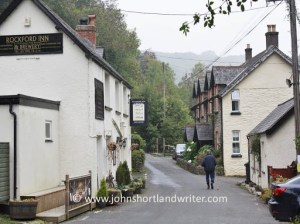
After an hour or so, the tiny hamlet of Rockford appears, consisting of just a few cottages and an inn – another great excuse for a stop.  From here you can trace your route back to Watersmeet or continue along the river to the village of Brendon to make a longer, circular walk.
Watersmeet is open to the public all year round and every season has its special moments.  In the spring, the valley is lush and green; in summer the sunlight filters through the canopy to play on the water’s surface; in autumn there are the changing colours and in winter, the extraordinary beauty of the gnarled trees adorned with grey lichens come to the fore.  It needs to be visited more than just once!
 

For more information take a look at these websites:
National Trust
The Rockford Inn
Exmoor National Park

Add to Technorati Favorites

A Garden Invitation

If you are disappointed or disillusioned with your garden – or just not too sure how to begin – then this may be the answer: come and join me at the Chipping Norton Literary Festival next month.

Click on the image to enlarge.

Hope to see you there!

Add to Technorati Favorites

Richard Jefferies – His Passion Lives On

Great artists such as Gainsborough, Turner and Reubens speak to us down the centuries through their work as do poets but how many people still read the great – or the lesser – writers from years past?  The Bible is still read regularly by some, Shakespeare’s more famous lines are often quoted and we all think we know Bronte and Dickens whereas, in reality, most of us know the characters only as interpreted through television and film.  However, authors from past centuries still  have much to offer whether it be for historical background, research or, simply, pleasure.

I have always lived in the country and my fascination with the natural world began at a very early age.  My kindergarten class was taken on a nature walk and, as our teacher showed us the magical things to be found along the way, I became hooked and wanted to know more.  There are many excellent wildlife manuals and handbooks, new and old, that give detailed descriptions more often than not, in a rather dry, analytical way.  Wouldn’t it be wonderful if there was someone who could give all this information in great detail; who would notice the minutiae of everyday things, whether a flower, a wild creature or even of man, himself?  In the late nineteenth century there was one such person, now forgotten by most, and his name is Richard Jefferies – most definitely not a poet but there is poetry in his words.

Jefferies, born in 1848, in a Wiltshire (England) farmhouse suffered ill-health and subsequent poverty for much of his life.  From a young age he had enjoyed solitude and wandering about the countryside and here he developed a fascination for the Iron Age hill fort on nearby Liddington Hill and the wildlife that could be found there.  Employment as a reporter, initially with a local newspaper, developed his writing skills and his literary work began to be published, first as a series of essays and later in book form, from 1874.  He died from tuberculosis in 1887.  His books vary from collections of nature notes and the countrymen he encountered on his travels to novels, including one, After London, which would now be described as post-apocalyptical.  In it he describes how nature has taken over the now vanished city with its few surviving inhabitants returning to the lifestyle of many centuries before.  Jefferies still has his devotees, myself included, and he deserves better recognition.  The remainder of this post is my demonstration of how his words are of relevance to everyone today, especially those who are passionate about the wonders of nature – not the awe-inspiring world famous creatures or places but the everyday ones, found all around us, that should be equally awe-inspiring.

Nothing sums up my feelings towards the natural world better than these words of his.  They almost seem to have been written to illustrate this photograph of myself aged four with my father.

“So it seemed to me as a boy, sweet and new like this each morning; and now after the years they have passed, and the lines they have worn in the forehead, the summer mead shines as bright and fresh as when my foot first touched the grass…”      
The Open Air, 1885

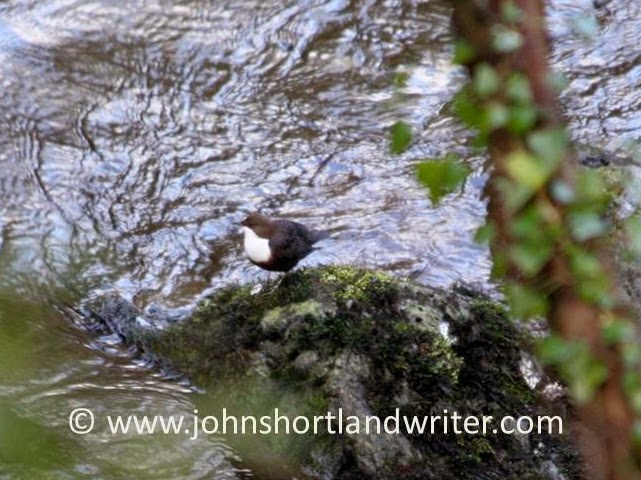
“Next he stepped into the current, which, though shallow, looked strong enough to sweep him away. The water checked against him rose to the white mark on his breast. He waded up the rapid, every now and then thrusting his head completely under the water; sometimes he was up to his neck, sometimes not so deep; now and then getting on a stone…”                                                                 The Water Colley (Dipper), The Life of the Fields, 1884
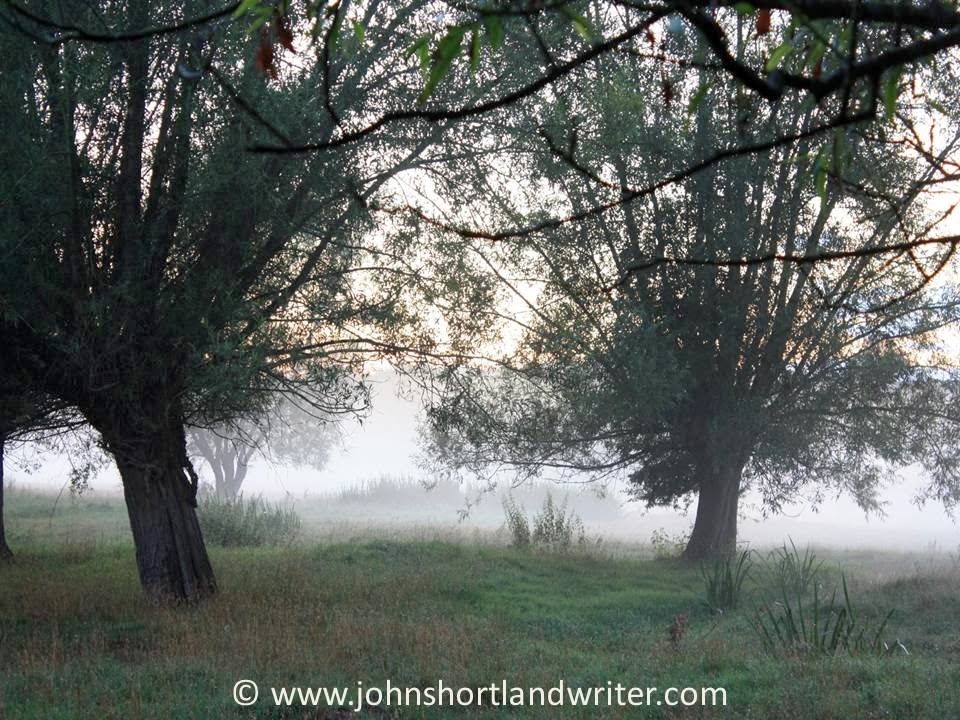
“In the evening of a fine day the mists may be seen from hence as they rise in the meadows … beginning first over the brooks, a long white winding vapour marking their course, next extending over the moist places and hollows.”    
Wild Life in a Southern County, 1879
“Sometimes through these narrow slits (of cloud), long beams of light fall aslant upon the distant fields of the vale.  They resemble, only on a greatly lengthened scale, the beams that may be seen in churches of a sunny afternoon, falling from the upper windows on the tiled floor of the chancel, and made visible by motes in the air.  So through such slits in the cloudy roof of the sky the rays of the sun shoot downwards, made visible on their passage by the moisture or the motes of the atmosphere… the labourers say that the sun is sucking up water there.”   
Wild Life in a Southern County, 1879
“It is midsummer, and midsummer, like a bride, is decked in white. On the high-reaching briars
white June roses; white flowers on the lowly brambles; broad white umbels of elder in the corner,  and white cornels blooming under the elm; honeysuckle hanging creamy white coronals round the ash boughs; white meadow-sweet flowering on the shore of the ditch; white clover, too, beside the gateway. As spring is azure and purple, so midsummer is white, and autumn golden. Thus the coming out of the wheat into ear is marked and welcomed with the purest colour.”
Nature Near London,  1883
“…and finally is lost in the vast marshes which cover the site of the ancient London…  There exhales from this oozy mass so fatal a vapour that no animal can endure it. The black water bears a greenish-brown floating scum, which for ever bubbles up from the putrid mud of the bottom. When the wind collects the miasma, and, as it were, presses it together, it becomes visible as a low cloud which hangs over the place. The cloud does not advance beyond the limit of the marsh, seeming to stay there by some constant attraction; and well it is for us that it does not, since at such times when the vapour is thickest, the very wildfowl leave the reeds, and fly from the poison. There are no fishes, neither can eels exist in the mud, nor even newts. It is dead.”      
After London, 1885
“…the heat pours down by day as if an invisible lens in the atmosphere focussed the sun’s rays.
Strong woody knapweed endures it, so does toadflax and pale blue scabious, and wild mignonette…”                                       
Pageant of Summer, 1884
“Nature is a miniature painter and handles a delicate brush, the tip of which touches the tiniest
spot and leaves something living. The park has indeed its larger lines, its broad open sweep,
and gradual slope, to which the eye accustomed to small inclosures requires time to adjust
itself. These left to themselves are beautiful; they are the surface of the earth, which is always true
to itself and needs no banks nor artificial hollows. The earth is right and the tree is right: trim
either and all is wrong.”                                                 
Field & Hedgerow, 1889
 
Fortunately, much of his work is still readily available as books and, often, as free e-books.  The Richard Jefferies Society promotes his writing and holds regular meetings.  Visit their website by clicking the link here.  The farmhouse where Richard Jefferies grew up is now a museum dedicated to his life and work and well worth visiting.  Click here for details.
Add to Technorati Favorites

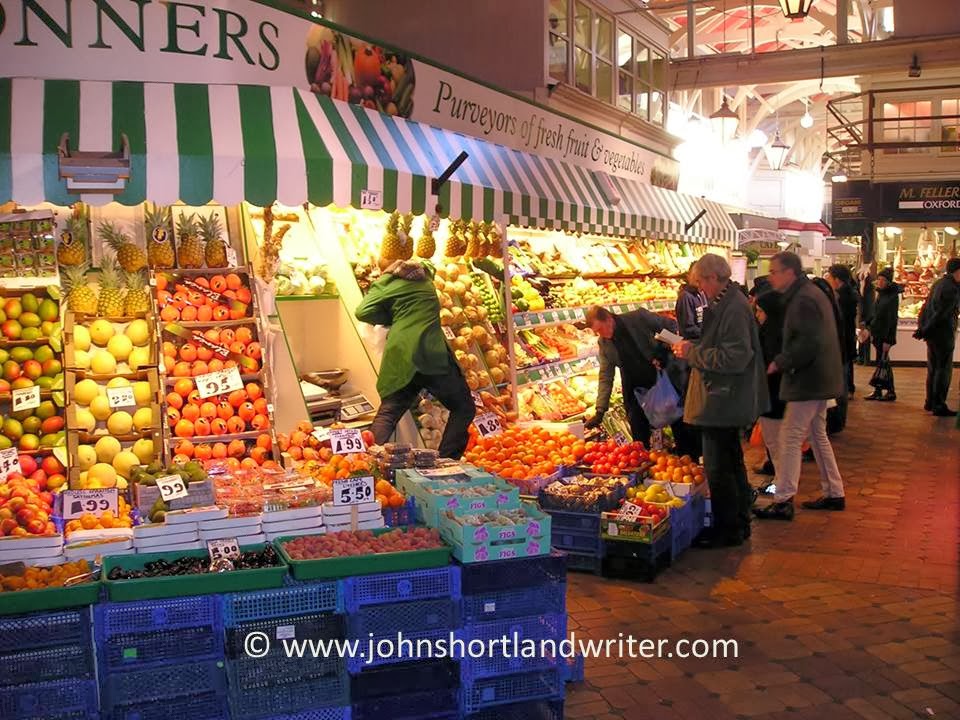
Clearing the Streets of Oxford

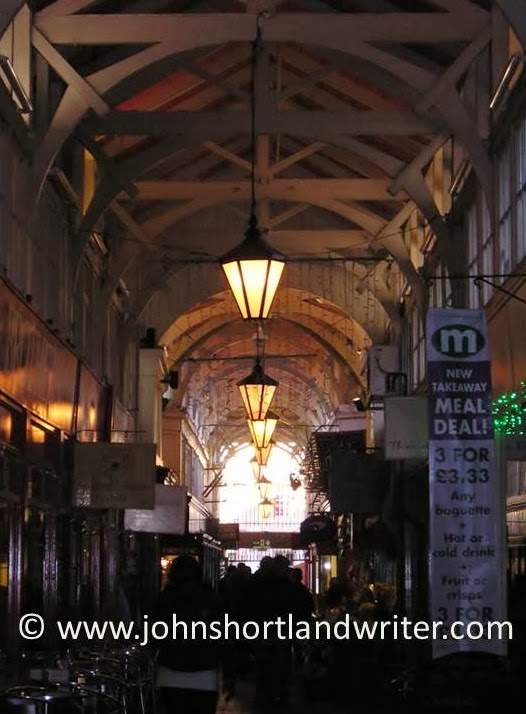
From the earliest days of the universities, there have been tensions between Oxford’s ‘Town & Gown’, the term used to describe the non-academics and scholars.  In the 1300’s  there were two days of rioting after two students complained of the quality of the local ale leaving many killed.  Not all altercations have ended in bloodshed and it was a general consensus to improve access into the town that the Covered Market was created.  The design was to be of the highest standard (by John Gwynn, designer of the Magdalen Bridge) although today it is all too easy not to notice the craftsmanship of the building.

In 1771 an Act was passed to rid the streets of food stalls and by 1774 the market had opened for business.  Originally, twenty butcher’s shops and stalls were built, swiftly followed by a further twenty.  Today, 240 years later,  meat and poultry are still sold there with fruit and vegetables alongside clothing, footwear and jewellery.  Numerous cafes feed and water students, residents and tourists alike, fortunately no longer causing riots.

In recent times there has been a controversial increase in rent which has allegedly caused some businesses to close.  However, despite the present recession, the market is thriving although, in true market tradition, it is always possible to find a bargain there.

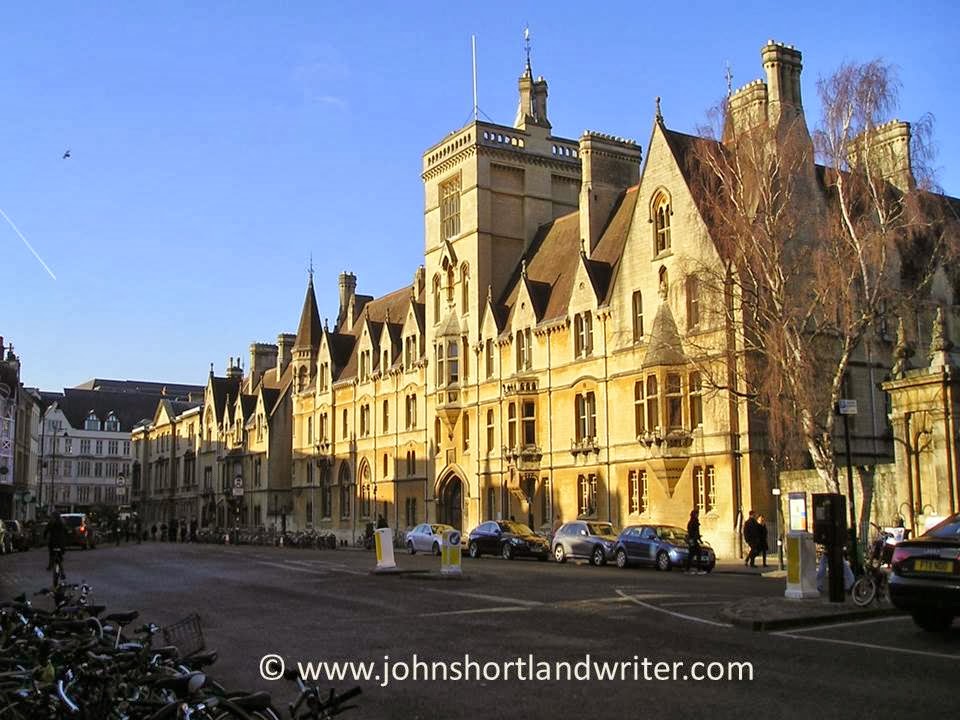
After the enclosed and bustling avenues of the market it is refreshing to step into the open air once more and to take in the sights and sounds of the city.  Surrounded by the historic colleges with their splendid architecture it is all too easy to forget that the market has played an important role in shaping the town.  It has a fascinating story of its own to tell.


Information about visiting the market, its present traders and its illustrious past can be found on it’s website.  Click this link here to find out more.

Add to Technorati Favorites

A Year in Review 2013: the Second Half

July to the end of  December already is a memory and rapidly becoming a distant one at that.  Just five days into January and Christmas seems further back in the mind than it is in reality.  2014 has arrived and I am optimistically looking forward to all that it may bring.  Not that the last one was disappointing or sad in any way; just that with time flying by it is essential to make the most of every moment.  Of course, I’m very fortunate: I have my health, I have a great job, friends and family I can always rely upon and I live in a superb part of the English countryside.  Long may all those things last!

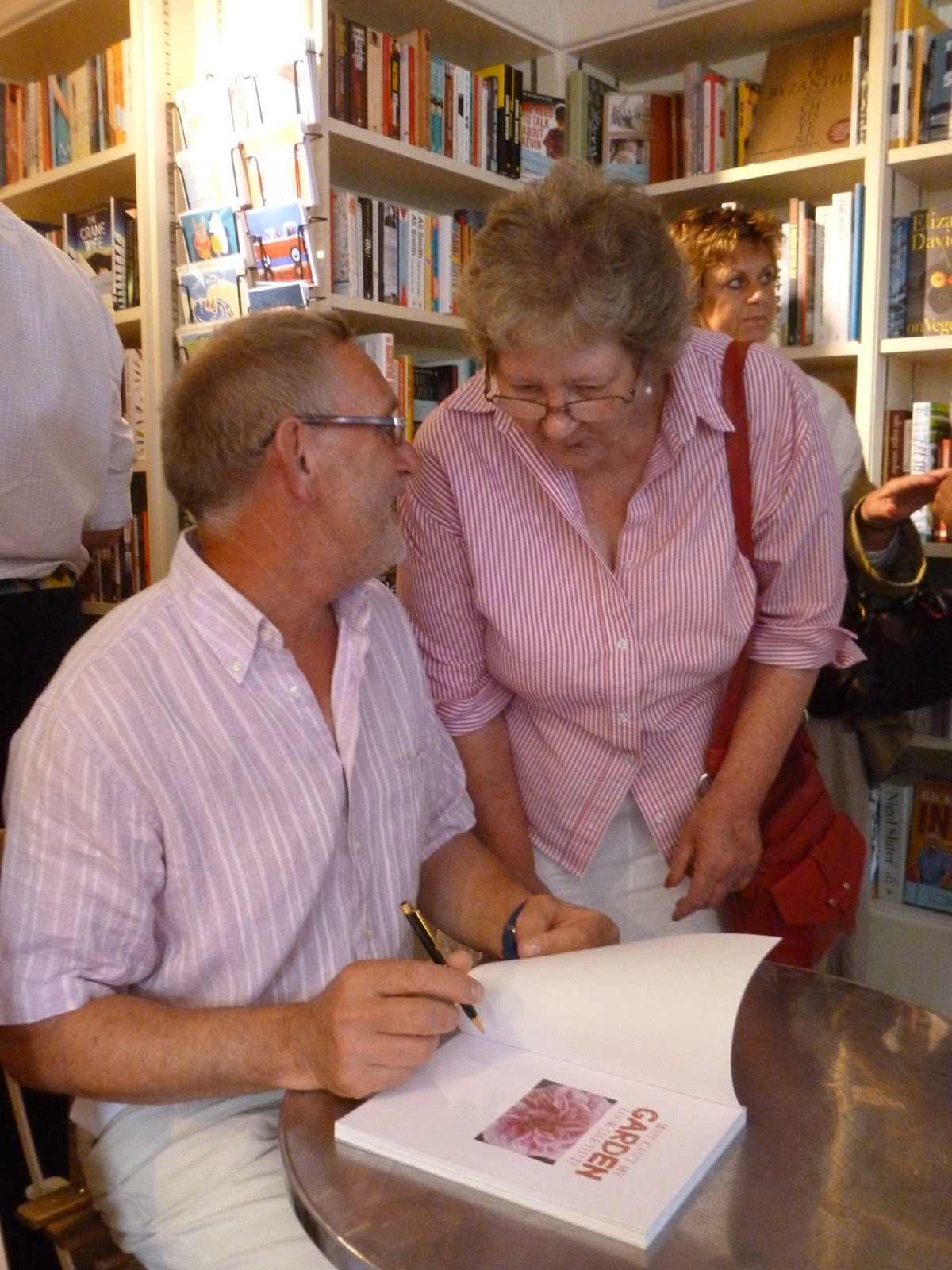
July:  The highlight of my year occurred this month.  An exciting and memorable launch of my first book to be published – a gardening book – Why Can’t My Garden Look Like That? took place in Chipping Norton’s award winning bookshop, Jaffe & Neale.  Would anyone turn up?  As it happened, very many did with people overflowing onto the street, the warm, sunny evening and the wine contributing to a street party feel to the occasion.  If you wish to find out more of the book or would like a signed copy you can find details here.

Many people are attracted to the magnificent looking but dangerous Giant Hogweed, also the subject of a post this month.  I was delighted when photographs from it were used in an educational video by the Hamilton County Soil and Water Conservation District (New York State).  Take heed of the messages if you come across the plant!

August: Travelling around the Cotswold Hills as I do every day in the course of my work you would think I would know most of what goes on there.  Nevertheless, I was surprised when I saw Tibetan flags fluttering in the breeze.  Further investigation found Alain Rouveure’s galleries and tea room.  Of course, I couldn’t leave until I’d tried out their lunch…

September:  Street fairs have been held for hundreds of years throughout England and Chipping Norton has an annual one that dates back to medieval charters.  Originally the time when livestock was sold and labour sought, these days they are purely held for pleasure.  Traffic has to be diverted around the town as the centre is blocked off by the rides and stalls.  Noisy, crowded and well lit they are great fun but I found  myself completely alone in darkness walking around it late one night.  It was an eerie experience, described here.

October:  The appearance of the secret valley was changed dramatically when the willow trees that line the banks of our little winding river were pollarded.  This dramatic ‘haircut’ is carried out only when necessary, the last time about fifteen years ago.  Suddenly, the view in the header of this blog has become wide open as every branch was removed leaving just the trunks standing.  The secret valley looks naked now but ‘new clothes’ will grow rapidly this coming spring.

November:  History isn’t just about learning dates of battles, the most interesting aspects are those that we can so easily relate to.  Yet so much of this is forgotten over time and it takes teams of dedicated people, often volunteers, to literally unearth it.  A now deserted and seemingly empty part of the Exmoor National Park was, one hundred and fifty years ago, teeming with people and was at the very forefront of Victorian technology.  It was quite extraordinary what these engineers achieved and their story featured in two posts which created much interest and comment.  They can be found by clicking here and here.

December:  The blogging year ended on a cuddly note – looking after two adorable but naughty beagle puppies.  If you are a dog lover there is nothing better than to be mauled by puppies.  If you’re not over-keen on dogs then you won’t understand the attraction!  You could try to find out, however, by clicking here.

So what’s going on in 2014?  Lots, hopefully. There is a new racehorse, more gardening, more travel, a lot more writing; it will be a busy year and how it pans out time – and this blog – will tell.

Thank you all so much for following my blog. Over one hundred thousand of you have looked at it since its inception which I find quite extraordinary and very humbling.  Please continue to do so and to tell all your blogging friends to come and pay me a visit, either on here or at my full website www.johnshortlandwriter.com .  I am also on Facebook and Twitter where daily updates can be found.  You are always very welcome to contact me with your comments or queries and I will do my best to answer them all.

Wishing you all a very happy and healthy New Year.

Add to Technorati Favorites

A Year in Review 2013: The First Six Months

As I feared, once you reach a certain age, time flies by even quicker than before and that certainly has happened in 2013.  Where has the year gone?  The only consolation is that speaking with young people, they say the same thing.  Perhaps that is a rather sad reflection of modern living for I often found that the time didn’t go by quickly enough years ago!  Despite the year having gone by rapidly, it has been a great one with some excitement along the way.

January: it is rapidly becoming a tradition that each New Year’s Day some close friends and I go off exploring.  This usually includes a museum and food.  The year before it had been London with a visit to the National Portrait Gallery followed by afternoon tea at my favourite grocers, Fortnum & Mason.  This January it was to the city of Bath with its glorious abbey church where Edgar was crowned King of England in 973AD.  The church has the most exquisite vaulting – it is hard to believe that such fine tracery can be achieved by carving stone.  Bath, which is a World Heritage Site, is famous for its Roman Baths built about a thousand years earlier and which are open to visitors.  A great place to view them from are the Pump Rooms, the imaginary setting of Sheridan’s Georgian play, The Rivals.  It was here that we had our champagne tea.

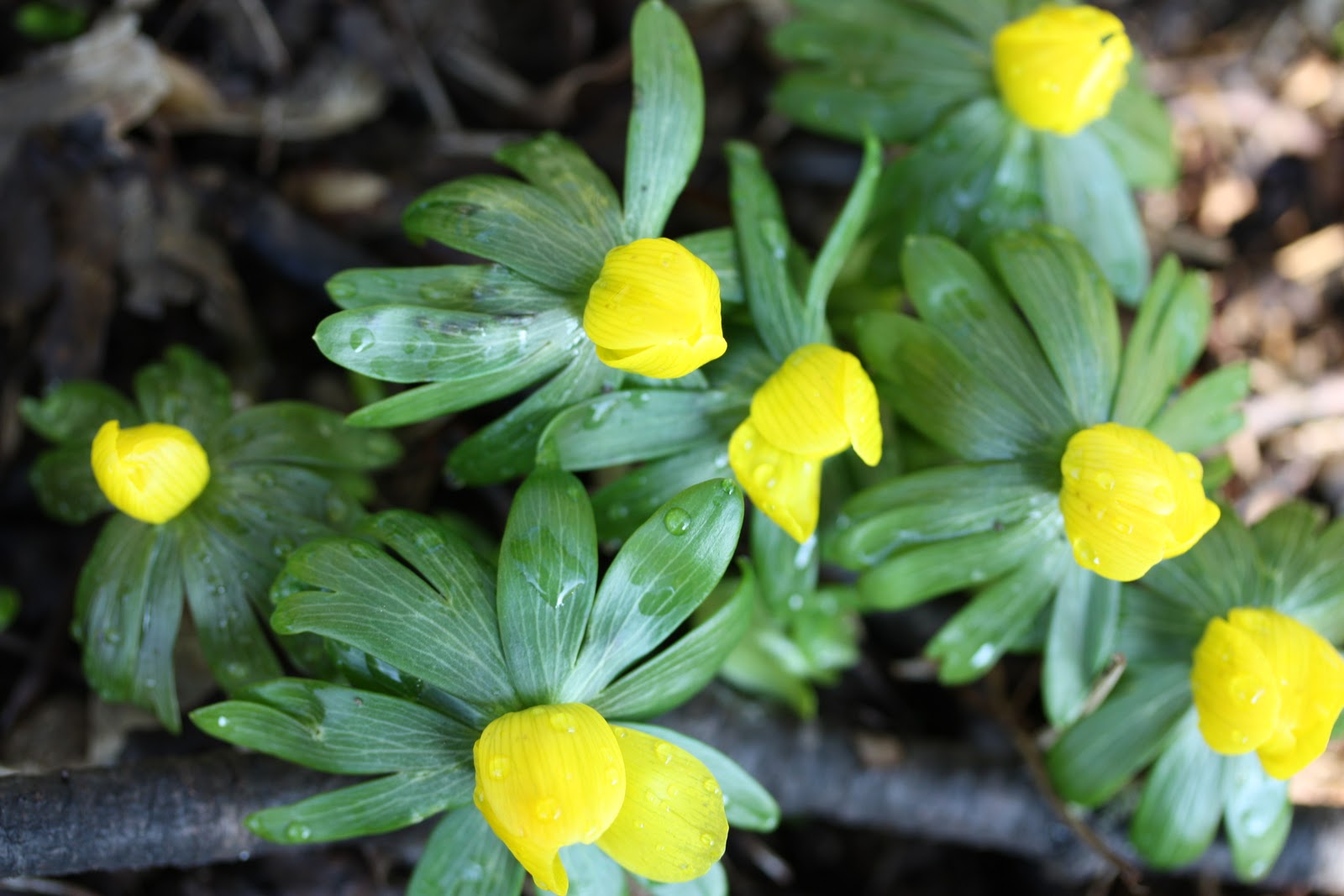
February was a mixed month weather-wise in the secret valley and one post describes the rain lashing against the windows and the trees being thrown around by a winter gale.  Despite that the winter aconites were in full flower advertising the advance of spring and the wild birds were hanging onto the feeders for dear life.  Take away the aconites and we have a carbon copy day as I write this and, although there are no signs of spring yet, we are passing the shortest day which is always encouraging.

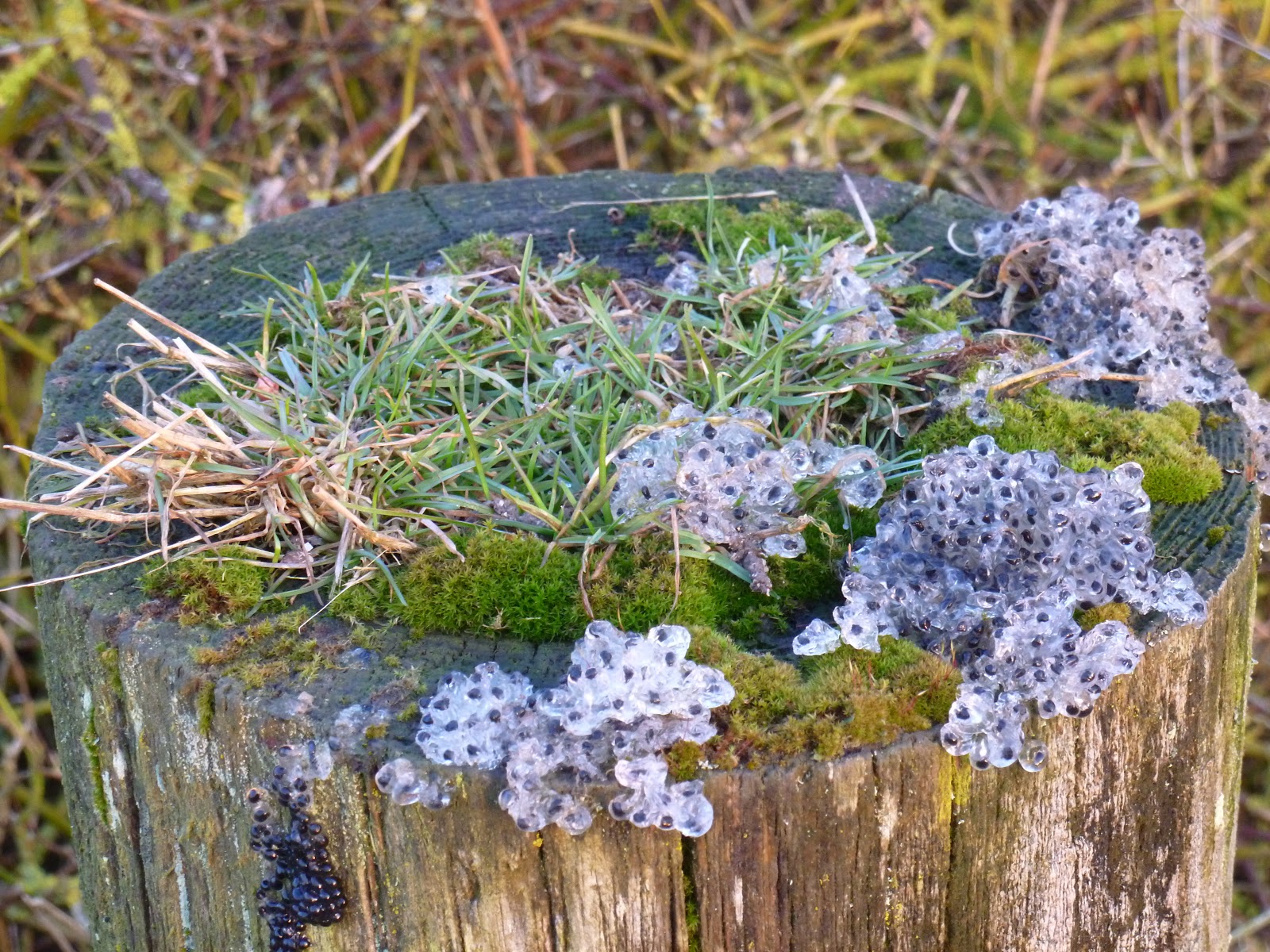
March was a strange month too with huge amounts of rain interspersed with wintry weather.  Even stranger was the affect it had upon the secret valley’s frog population.  I can only assume that it was because everything was so saturated that, instead of laying their spawn in the small lake that is visible from the cottage, they laid them instead upon the tops of nearby fence posts. They couldn’t possibly have survived there anyway but it was sad to see a few days later that they had turned black and ‘melted’ when a hard frost fell upon them.

April is the month of the Chipping Norton Literary Festival.  I have been on the committee since its inception and it has been gratifying to find that it has rapidly established a good reputation with authors, publishers and festival goers. One of the star attractions for 2013 was Sir Julian Fellowes of Downton Abbey fame.  Because it is a small festival in a small, country town the atmosphere is very relaxed and it is possible to meet the authors for book signings or just a chat as they stroll about ‘Chippy’.  This coming year the festival takes place from 24-27 April and tickets go on sale next month – check out the website for more details.

April also saw the launch of my new website www.johnshortlandwriter.com and also the start of my tweeting.  Come and join me @johnshortlandwr

May:  As I am always saying the secret valley is a magical place to live and one of the things that makes it so special is its history. Not the history of history books but the type that goes unrecorded other than by the clues it leaves behind in the landscape.  Here we have a patch of rough ground left uncultivated that is the invisible site of a Bronze Age settlement. Later, almost to within living memory, the lane was a drover’s route and, in places, the road has been abandoned to become a green track full of wild flowers and butterflies.  We still refer to one place as the ‘white gate’ even though it was removed a hundred years ago or more.  It feels special to know that the valley has been lived in and loved for over three thousand years.

It was also a very exciting time as my gardening book was published accompanied by radio and other interviews. The launch party took place a couple of months later.

June is a colourful time of year in gardens and one thing I’ve always wanted to create is an Iris border.  This is an extravagance of space that few can afford for they are only in flower for a relatively short time.  However, one of my clients liked the idea so the ‘rainbow’ border was created.  Interest is extended by daffodils and alliums for earlier colour and Japanese anemones, with large flowered clematis behind, for later on.

To read any of the posts referred to above just click on the links, coloured green.

Add to Technorati Favorites