A New Year

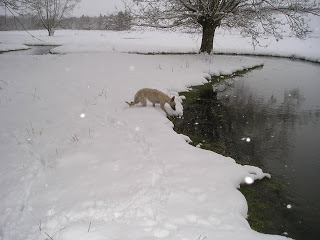
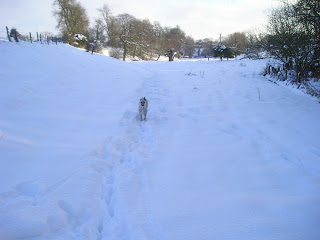
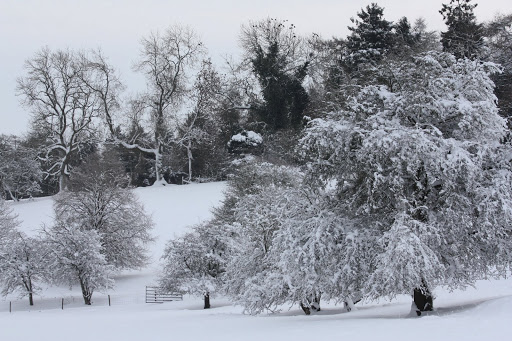
The snow has all but gone from the secret valley, thanks to a sudden thaw, after the temperature rose from -15 centigrade to +6 centigrade. Some still clings to the gullies at the sides of the fields and on the colder banks of the hillside but elsewhere, in its place, is the battered appearance of a landscape after attack.
.
.
Last night, New Year’s Eve, was seen out at our neighbours and good friends 3/4 mile up the road, at the farmhouse that is the centre of our farming life here. Although a cold night it was good to be able to walk there effortlessly (after ploughing our way through snow for several weeks or sliding around in the car). As the chimes of Big Ben in London struck twelve o’clock we all sang ‘Auld Langs Syne’ to the traditional sound of a lone piper – in this case lone because there was only one Scotsman present and he could play the bagpipes. And a couple of hours later I stepped out into the cold, still air to walk back down the hill to home.
.
.
The secret valley at night – and some nights especially so – is a silent and dark place. Never menacing, it is a good time to reflect on times passed and to breathe in the air which seems to take on a different quality to daytime. Walking down the lane, with bands of snow periodically reminding me to watch my feet, I was aware that there were others on the move too. An alarmed rabbit shot across the road in front of me, diving into the hedge, it’s path being highlighted not by moonlight, for there was none, but by the sounds of leaves rustling and twigs breaking beneath it. The fox was far more discreet, the only witness to its passing, its distinctive musky scent.
. .
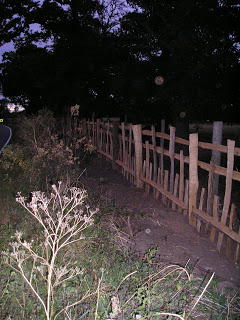
Our little river, now thawed out from the frozen state that it had been in gurgled and splashed its way into the distance. It had seemed odd not to be able to hear it when it had its lid of ice and snow for even in the hardest winters past it had not been known to freeze over.
.

.
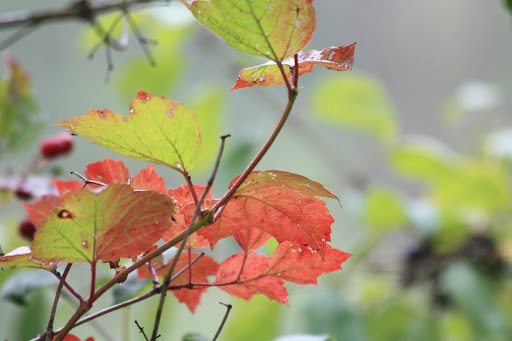
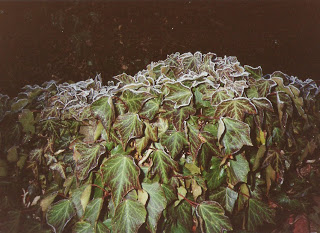
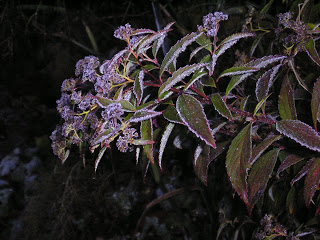
However, a touch of frost had given a magical dusting to the plants and fruits that had survived the onslaught of our early winter, for snow is rare at this time of year. January and February can be snowy and often we have none at all so who knows what the start of 2011 will bring?
.
.
.
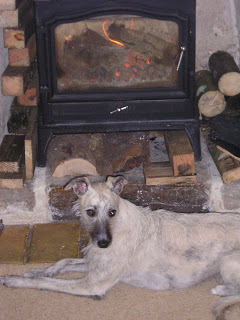
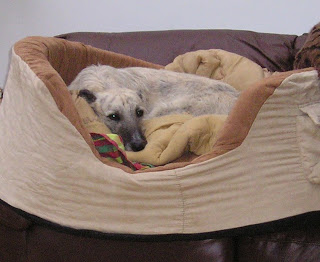
Approaching home, the reassuring smell of wood smoke drifted from the chimneys towards me. Warmth at last! And, as always, She-dog, our best companion, was there to greet us but not before raising a bleary eye from her bed, as if to say “what are you doing out at this time of day and at your age?”.
.
.

And so to bed tired but with a warm, contented feeling both inside and outside. To live in the secret valley, isolated but surrounded by beauty and good friends, is such a privelege. Who knows what 2011 may bring but if the first days sunrise is to go by, it should be a good one!

. .

Happy New Year to you all…..
.

.

.

Add to Technorati Favorites

Exmoor: The Blue Ball Inn

Autumn has been at its best the last week or so with blue skies and warm sunshine by day, the perfect weather for long walks. And afterwards, as the evening chill sets in, what can be better than to laze contentedly in front of a blazing log fire, losing your thoughts in the flickering flames? This is what I have been doing the past ten days.
.
And where better than to do this than on Exmoor, the 270 square mile national park in England’s West Country? I have known this place for over 40 years and it’s dramatic scenery never tires with the passing years. The coastal area between Lynmouth and Porlock, where the open moorland meets clifftop and plunges 800 feet to the sea is the most dramatic of all. And the tiny village of Countisbury can lay claim, in my opinion, to have the best views on Exmoor.
.

..
I made a decision when I started this blog that I would not go commercial – either for my own garden based business or for anyone else. Somehow, it just seems to put a different slant on your writing. However, I am always being asked where I stay on my Exmoor visits and I am more than happy to break the rule on this occasion. There can be no better place to spend your time than at the Blue Ball Inn, situated in the heart of the village.

.

.

The Blue Ball Inn, which dates back to the 13th century, was originally a coaching inn where horses and travellers rested after the exhausting 1 in 4 climb up Countisbury Hill from Lynmouth. Today it still welcomes travellers, whether it is for just a drink, a meal or to stay in one of their sixteen bedrooms.

.

.
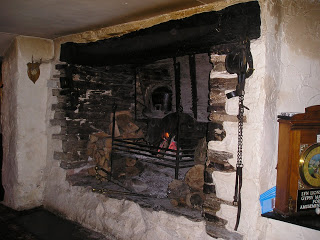
The building both inside and out is dominated by a vast and ancient inglenook fireplace and chimney, so big that you can look up it and see daylight. It is a great place to relax and unwind with a pint of locally brewed ale and is the hub of the inn.
.

.

.
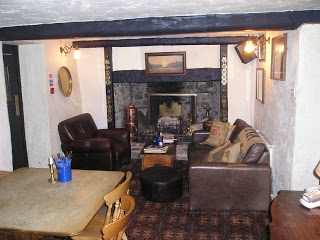
The bar, with its low ceilings, blackened beams and loads of character, is a busy area but there are also several other places to sit. Each has its own fireplace and comfortable chairs, ideal if you want to find a quieter space to read or plan the next day’s walks.
.

. .

It is not just the beer that is produced locally. The restaurant, which serves food all day, is committed to offering a wide choice of menu, much of it sourced from the area – they even rear their own rare breed pork. During my stay, I never once had the same meal twice (although I wish it would have been possible to have forced down a second helping of their spare ribs they were so delicious). The chips are the best in Britain. By the time dinner was over, I was usually too tired to continue drinking in the bar and would disappear to bed. The bedrooms, which have all the usual facilities, are comfortable and clean and, after so much exercise and fresh air, sleep guaranteed.

.

.
Awake and refreshed and after a hearty breakfast, walks can start from the door and can vary in both their length and the steepness of hill. Ours varied from twenty minutes to five or six hours. With instant access to heather moorland, ancient woodlands, rushing rivers and the spectacular clifftop walks with its views across the sea to Wales, you are spoilt for choice. (Exmoor is, of course, great dog walking country and the Blue Ball welcomes them too). If you are lucky and walk quietly, there is a very good chance that you will see the wild Exmoor ponies or the herds of Red Deer – we saw both within a mile of the pub.
.
.
.

But it is not just good food and drink, comfortable rooms or amazing views that make a good holiday. It is people. Phil, Jackie and son Nick, the owners of the Blue Ball, and all of their staff without exception, do everything possible to ensure that your stay is memorable. The ‘locals’ too, for this is still very much the village pub, are very welcoming and friendly – where else would you meet someone who lends you a book to return “when you next come down”? And I have never spent such a riotous evening as with them all at the Harvest auction, held in the pub. Apart from bidding for a crate of the local beer, I also have managed to get a days hawking on neighbouring Dartmoor. I was too slow to get a day’s salmon fishing on the local Lyn river – but that, of course, gives me an excuse to visit again next year. I have already booked!
.

.
.
.
.

Life Behind Baas: A Story of Sheep Betrayal

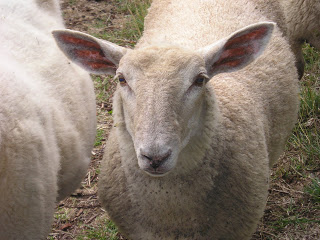
I love sheep! There is something about them. They are supposed to be stupid but I’ve known some clever ones in my time (like I’ve known lots of people who claim to be clever …..). They have exquisite faces, full of charm with a look in their eyes that just beg for a little more human understanding.
.

.
What more can I say about the joys of building a relationship with a sheep or, preferably, many sheep? They smell nice, especially when wet. They’re cuddly (when dry) once they’ve allowed you to become more intimate with them, an especial priviledge.
.
They have lovely voices – varying in tone from deep bass through alto to soprano – and there’s usually quite a few castratos among them too. Each morning, as soon as I step outside into the garden, I am greeted by uplifted heads and welcoming bleats, a sort of dawn chorus, an ovine welcome to another day. And as I enter their field to feed the bantams who are kept there, they gather around me pushing and jostling to have their noses scratched, their ears rubbed and to tell me the latest gossip and goings-on in their sheepy world.
.

.
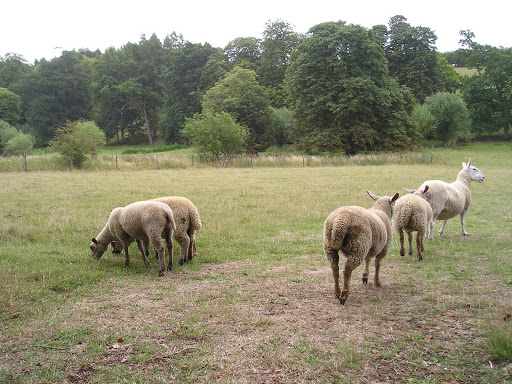
Now there is one special reason that I haven’t mentioned yet about why I’m so fond of sheep: they taste great, well roasted with lashings of gravy and mint sauce. And that is the quandry. For the reason that these are here in the loveliest field in the secret valley is not for favouritism (as they think) – it is for the pot. And as they try to eat the poultry food I explain that they have no need for such processed feed, for they have the sweetest grass and the freshest river water, when replete they can rest in the shade of the finest trees, the secret valley can offer.
.

.
As if to make me feel even more gulity, they wander off to the empty, upturned feeders. Somehow, even the fattest ones can get inside them. For them, life behind bars is nothing more than a defiant gesture: they little know that judgement has been passed and they have been sentenced to death.
.
..
.
.

To end on an upbeat note, the tups have been put in with the stock ewes this week. Soon enough, the new season’s lambs will be born – something we always look forward too.
.
.
Add to Technorati Favorites

First Signs of Autumn

To quote from the Keats poem ‘To Autumn’, is rather cliched I know but it really is becoming the “season of mists and mellow fruitfulness” here in the secret valley. I have to admit until I decided upon the theme for this post that, although I had heard this line so many times before, I’d never read the poem. I suspect a large number of people would admit the same so I have included it here, in full, at the end.
.
Almost imperceptably, the leaves have started to turn colour although they are still more green than yellow, orange or red. The most noticeable sign of the new season has been the berries and other fruits. Despite the heavy, late spring frosts we had, it seems to be a bumper crop this year although I have heard that commercial crops of apples are down by 30%.
..

The river a few hundred yards downstream from our little stone cottage broadens to become a small lake, created 100 years ago to attract duck and fish for the pot. Invisible throughout the summer months because of the leafy shrubs that shield it, it gradually comes into view as the foliage withers and falls and the water levels rise with the winter rain. Then it gives us what one of our friends describes as “the best view from any bath(wash)room in England” – and it is! What can be more decadent than lying in the bath with a glass of wine in hand, watching the wild geese and swans flying in from who knows where, for we rarely see them during the summer months?
.
.

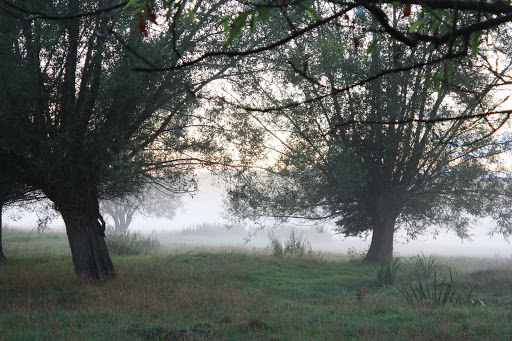
And it is the river and lake that tends to give us the mists on cool mornings. There is such a subtle difference between these mists and the fogs that are much more widespread across the country. We can recognise the difference instantly but how do we describe it in meaningful words? Perhaps mists drift to rise and fall as strands of it are caught on the slightest breeze, an uplifting experience for the soul, whereas fogs sit heavily both on the ground and on our spirits?
.
.

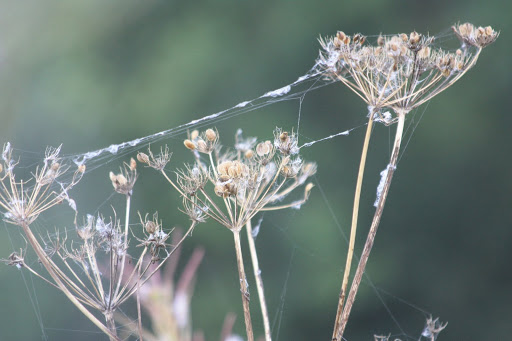
A few days ago, on such a misty morning, it was cool enough for a heavy dew to form transforming the scenery with its silver frosting. Cobwebs hung from every available perch: strands of wire, branches and twigs, even the dying flower stems of the wild plants were draped with them. The scene was of silence and stillness, no bird sang and even the brook seemed to gurgle and babble more quietly than normal, as if reluctant to wake the slumbering countryside.
.
.

.

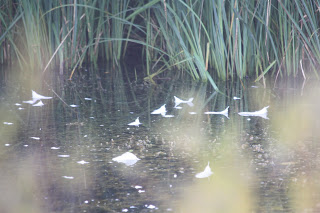
As if to confirm the silence and emptiness of the landscape, even the new seasons swan, that I had admired on the lake the day before, had gone. Heavily in moult, all there was to confirm its arrival were white feathers slowly drifting on the surface saying “Hush! Be still. All is calm”.
.

.

To Autumn
.
Season of mists and mellow fruitfulness
Close bosom-friend of the maturing sun
Conspiring with him how to load and bless
With fruit the vines that round the thatch-eaves run;
To bend with apples the moss’d cottage-trees,
And fill all fruit with ripeness to the core;
To swell the gourd, and plump the hazel shells
With a sweet kernal; to set budding more,
And still more, later flowers for the bees,
Until they think warm days will never cease.
For Summer has o’er-brimm’d their clammy cells.
.
Who hath not seen thee oft amid thy store?
Sometimes whoever seeks abroad may find
Thee sitting careless on a granary floor,
Thy hair soft-lifted by the winnowing wind;
Or on a half-reap’d furrow sound asleep,
Drows’d with the fume of poppies, while thy hook
Spares the next swath and all its twined flowers:
And sometimes like a gleaner thou dost keep
Steady thy laden head across a brook
Or by a cider-press, with patient look,
Thou watchest the last oozings hours by hours.
.
Where are the songs of Spring? Ay, where are they?
Think not of them, thou hast thy music too –
While barred clouds bloom the soft-dying day,
And touch the stubble-plains with rosy hue;
Then in a wailful choir the small gnats mourn
Among the river sallows, borne aloft
Or sinking as the light wind lives or dies;
And full-grown lambs loud bleat from hilly bourn;
Hedge-crickets sing; and now with treble soft
The red-breast whistles from a garden-croft;
And gathering swallows twitter in the skies.
.
.
Add to Technorati Favorites

An Unexpected Downpour

The heatwave may have ended a good number of days ago but the dry weather hasn’t and the gardens are desparate for water. Digging down to plant some large shrubs the other day, there was no sign of moisture in the soil, nor earthworms for that matter, no matter how deep I dug. It is tedious to water with a hosepipe and, for some inexplicable reason, (perhaps it’s the chemicals in tap water), plants react so much better to a drop of rain.
.
Today the skies were grey but, as none had been forecast, it came as a surprise when I thought I could smell rain in the air. And was that a distant roll of thunder or was it just wishful thinking? With no further warning, the heavens opened, the rain bouncing off the surface of the lane and the leaves of the plants. By the time I had reached my camera, it was already beginning to ease.
.
.

.
They must have had more rain than us, further up the secret valley, for water continued to rush down the lane in its haste to reach the river. Just past the bend its route took a sharp right turn to tumble down the steep banks to enter the meanders – the ones that feature on the header of this blog – just above the road bridge.

.
.
It’s a novelty to see puddles once again!
.

.
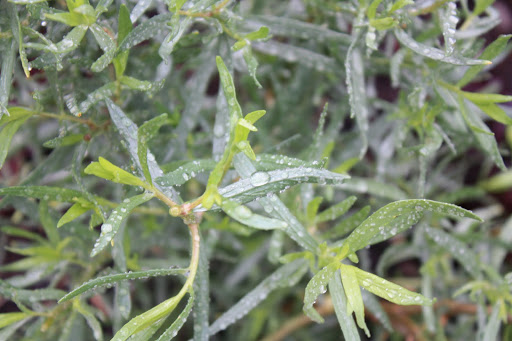
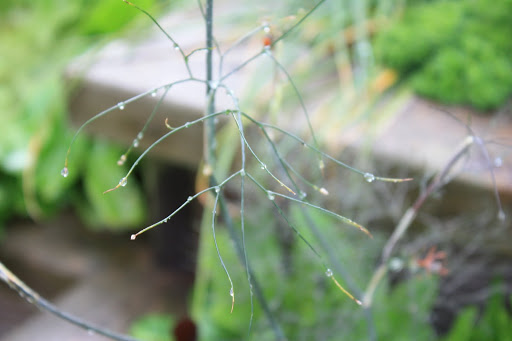
I couldn’t resist catching these images of the herbs cloaked in moisture. The French Tarragon seems to be greedier than most and holds water all over the surface of its leaves. The bronze Fennel, however, holds its drops in a very much more refined way as befits such a graceful plant.
.

.

.
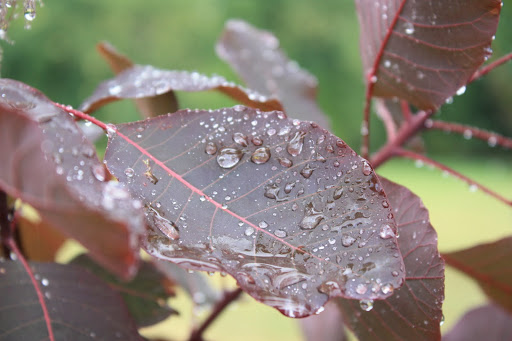
Cotinus – this is the variety called ‘Grace’ – appeared splattered with rain, as if it had been flicked with paintbrushes. It held its drops in different sizes, some so large I wondered how they could remain in place and keep separate from the smaller sized ones alongside.
.

.
The old fountain head of a cherub and dolphin sits at the top of a flight of steps leading to the garden, for many years no longer used for its original purpose. Did the rain bring a slight smile to its lips and was that a tear that rolled down its cheek to its chin as it recalled its real purpose in life?
.
.
If above is the picture of innocence, what is this next one? A single raindrop on each barb transforms the fence but it can only partially disguise its wickededness. We are not that easily fooled …
.

.
Thirty minutes after the rain stopped the secret valley was shrouded in mist as the cooled air reacted with the warm earth. A short battle for supremacy ensued but, along with a slash of blue sky came a winning dart of sunlight and the mist fell to the ground, disappearing as quickly as the rain.
.
.

Images at Easter

So the Easter holidays are with us once again: a time of our gardens and countryside bursting with new vigour, the smell of fresh, green growth, gentle, warming breezes and longer daylight hours to enjoy it all.

Primroses and violets are the traditional wild flowers of Easter and our lawn is dotted with dozens of them. We avoid mowing them when in flower, after that we don’t worry yet the numbers increase with every passing year.


The pretty, native Wood Anemone, Anemone nemerosa, blooms in profusion in favoured places – usually in sheltered woodland. Sometimes they are found on banks, perhaps showing where ancient woodland once stood, for Anemone nemerosa is one of the ‘indicator’ plants. Ancient woodland is classified in England as woodland growing prior to 1600 and although a number still stand many were cleared centuries ago.

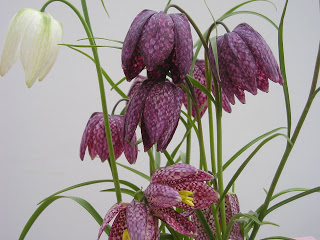
The Snake’s Head Fritillary, Fritillaria meleagris, is an extremely rare plant in the wild although there are water meadows around Oxford and the Cotswolds where they carpet the ground – a spectacular sight. Fortunately, they grow quite easily in our gardens and the corms are readily available from reputable bulb merchants, who only source them from grown stock. Sadly, there are still occasions when bulbs and corms are marketed from illegally collected wild stock.
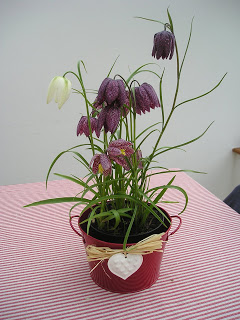
They make fine, if somewhat short-lived house plants. We like to have them indoors at Easter and they can afterwards be planted in the garden to bloom again another year. When seen close-up, it is obvious from their markings why one old name that country folk give to them is Chequers.
It is not only flowers at Easter that should be thriving. The wild birds are singing and building their nests and sheltered beneath a large clump of Oat Grass, the wild Mallard duck, lay their eggs each year in our garden. As soon as they hatch, their mother leads them to the safety of the river below the house.

This is the joy of Easter – or it usually is. Not in 2010. The primroses and violets may be blooming but the weather is more of winter than spring with the season up to six weeks behind this year. There is hardly a leaf showing on the trees and bushes of the secret valley and the river has burst its banks with the continuous rain we have had the past few weeks. Any duckling that ventured onto the water would soon be swept away in the torrent our gentle stream has become.

However, She-dog is thoroughly enjoying running through the flood waters – especially where it is shallow enough to admire her reflection!


Add to Technorati Favorites

Over Excitement

This is She-Dog’s second winter and, although we had some snow during the last one, I don’t remember her being quite so lunatic. Perhaps it is because the snow is so much deeper this time.
. “I’ll pretend to be interested in the river but I’m really hatching a plan….”

“If I stalk Barney he’s bound to chase me”
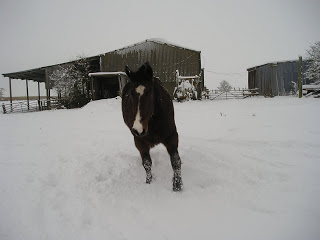
“Call me old and grumpy but I ain’t going no further or faster than this”

“I’ll go for a gallop on my own then….

….and no-one goes faster than me”

“I seem to have run out of steam”

“Let’s plod back up the path to home”

“Thank goodness, the wood burner’s ablaze”
Add to Technorati Favorites

Into the Secret Valley

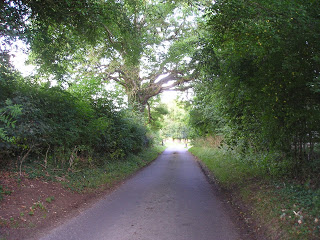
One of the joys of going away is the pleasure of returning home. The main road that cuts across our bit of the Cotswolds follows the ridge of the hill, which gives the appearance of being plateau like. There are few hints that just a little way off to the side is the secret valley and the little lane leading to it gives few hints either.

To call it an avenue would be rather pretentious, but the roadside plantings of beech and cherry create the first thought that you may be going somewhere rather special. And as you begin to pass beneath their canopy, the hills start to rise on either side. These are rarely, if ever, treated with any chemicals and wild flowers, including orchids, abound.

But there is still no hint of our little, winding river. Then, as the avenue ends and on a sharp bend there it is! The first glimpse is of the old sheepwash, where the river was widened and deepened although still almost jumpable, for everything about the secret valley is miniature: the hills, the river, the road. Beyond the sheepwash come the meanders – the photo of these snake like bends are in the blog’s header title.

Our little stone cottage lies further along the road – and this is now the original old drove road, for the one that we have travelled so far has probably only been in place since about the late 1700’s. More of the drover’s in another post. Below is the view from the house looking back towards the meanders – we may only have just one other house nearby but there are dozens of sheep for neighbours!
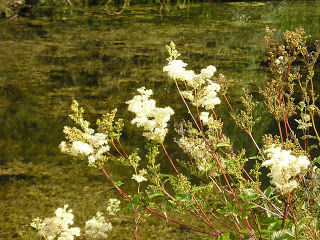
Just below the cottage, the river passes beneath the lane and snakes its way around us, travelling through lush meadows. Watercress and meadowsweet grow along the water’s edge and little rickety, make-do bridges made from old telegraph poles criss-cross from one bank to another. Ancient, gnarled willow trees line the banks, more about these can be found in an earlier post: Willows
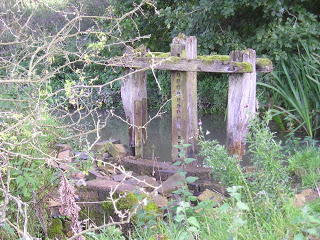
And tucked away beyond the bridges are the remains of the old mill workings. The culvert is barely noticeable until the river levels rise and the water diverts towards the mill. We’ll travel there another day.

Add to Technorati Favorites

Stll Waters Run Deep

A little, winding river flows through the heart of our secret valley. As far as rivers go it isn’t still, it isn’t deep and it certainly isn’t wide – you can jump across it in places. But it is important: in its very short journey of 15 miles from start to finish it passes through several historic country estates where it has been broadened to form ornamental lakes for fishing and pleasure. The photograph on the header of this page shows the river just above our home.

You wouldn’t believe

there was our valley in this photograph. It’s just the other side of this hedge – no wonder no-one knows it’s there! It’s also time to meet She-dog, our lurcher, who insisted in being included in the photograph.


Outside our cottage

and just downstream, the river has formed ‘our’ lake (really only a little larger than a pond, but that description doesn’t seem to give it enough dignity) where, today, I watched a kingfisher perched on a low bough of a willow. A flash of iridescent blue and orange and it was gone, its shrill call giving warning to all around.

Pretty as they are, the lakes were built for a purpose. In winters past, their frozen water would be carried to specially built ice houses: pits made from brick or stone, deep underground. When full they would be sealed making ice available throughout the summer months. Of course, this was only available for the wealthiest few and it was in the kitchens of the gentry that ice cream recipes were devised – a luxury unimagineable to the poor cottagers. They often struggled to feed themselves the most basic diet.
<
Many of these ice houses still remain, usually derelict and unsafe, but sometimes restored and open to the public to view.

Add to Technorati Favorites

Of Blue Skies and Blue Flowers

The sun is shining and the rain has stopped! The wind is still cool but it feels good not having to walk with head tucked low against the elements.

The lane outside our cottage is narrow and winding as it climbs out of the secret valley. To the right the river follows its meandering course below us and, on the left, the lane is bound by an ancient hedgerow, full of wild flowers.

Crane’s-bill is in full bloom there now and has been for a few weeks. This is the Geranium pratense of gardens and flowers so profusely in this part of the Cotswolds it could be our county flower. In places the banks and verges are dominated by this plant creating a sea of colour – and when the wind moves it, it has the appearance of rippling water.

In the garden I like growing it amongst shrub roses where it can hook onto the thorns and peep out amongst the more exotic rose flowers. Once the first flush of crane’s-bill flowers are over, I cut the whole plant down to ground level and within days new leaves and flowers start to appear again. And when the contractor’s cut the roadside verges it is always the crane’s bill that shows through first.

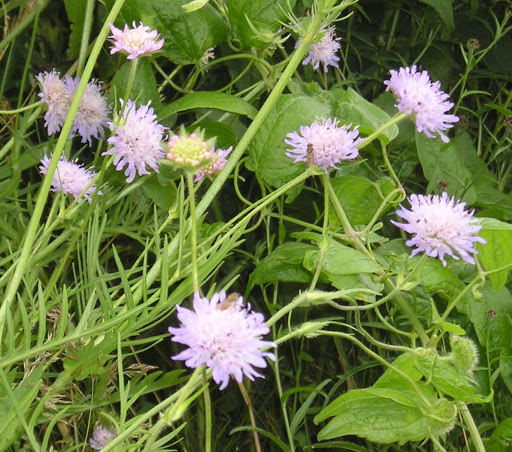
Blue seems to dominate this hedge. First the blue-purple of the dog violets and bluebells, now there is also wild scabious with its little powder puffs of flowers. It would be interesting to try to recreate this mixture in a meadow garden. I shall have to persuade a client to let me have a go!

Add to Technorati Favorites