A Cotswold Tale for Halloween

The popularity of Halloween in the UK as a fun festival is always considered to be a relatively recent American import.  Nothing could be farther from the truth for it was only with the influx of Scottish and Irish immigrants to the USA during the 1800s that it became a major holiday there.  Halloween’s origins date back to pagan times but it was the Christian calendar that fixed the date for All Saints/Hallows Day as November 1st, (Halloween = Hallows Eve). The traditions that became attached to that, of which there are many, will have to wait another year to be written about.  This blog post is about the Witches associated with Rollright and Long Compton, our very own and tragically real Cotswold story of the Neolithic stone circle and village that lies just a few miles from our home in the secret valley.

Newspaper headlines from 1875
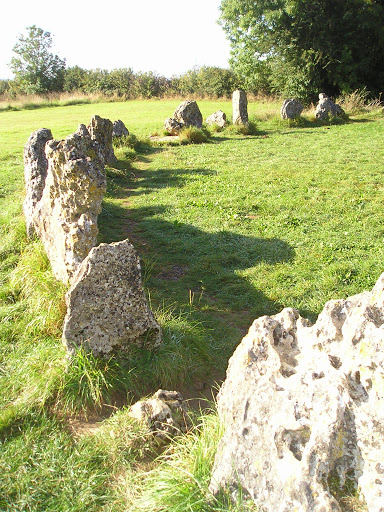
A section of the Kings Men stone circle at the Rollright Stones

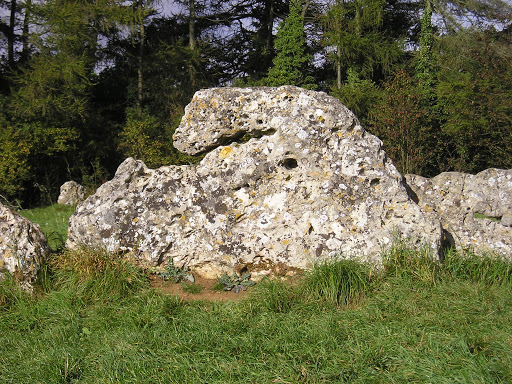
The Rollright Stones, prehistoric standing stones dating back almost six thousand years (making them a thousand years older than Stonehenge) consist of a stone circle, and a separate group of three upright stones, plus one large, solitary stone.   Local tradition has it said that the circle known as The King’s Men, The Whispering Knights – the cluster of three upright stones, and the King Stone – the large, solitary stone were all turned to stone by a witch, Mother Shipton.  As early as the 1600s the rhyme (see below) was printed telling of how Mother Shipton challenged the King to take seven steps forward to view the village of Long Compton in the valley below.  He moved forwards but failing to see it the witch turned him, his army and his scheming knights into stone.  All seems too far-fetched and unbelievable?  Then read on…

The Whispering Knights, turned to stone by witch Mother Shipton. They are a thousand years older than Stonehenge
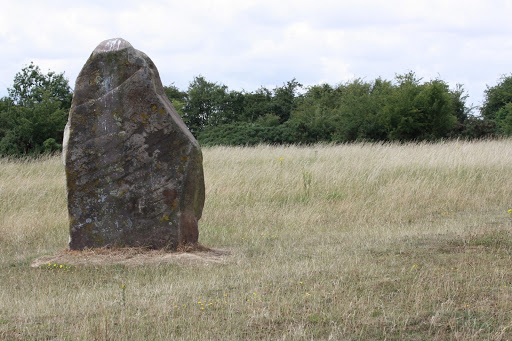
The King Stone stands alone on the hill, still hoping to glimpse the village of Long Compton


In the autumn of 1875 80-year-old Ann Tennant left her home in the village of Long Compton to walk the few hundred yards to the bakers to purchase some bread for her husband’s tea.  It was just like any other day until she met her neighbour’s son, James Heywood.  For many years he had accused her and others in the village of witchcraft, blaming them for various deaths of both people and livestock.  He believed that their evil-eye had prevented him from completing his work in the fields.  He also claimed that they had got inside his drinking water and that was the way they were able to get inside his body and control him.  Meeting her that afternoon on the path he took his opportunity and stabbed her multiple times in the legs with his pitchfork before giving her a blow to the head and stabbing her again.  All this time, Heywood’s father stood nearby not attempting to stop him for he was also convinced there were many witches in the area.

The 17th century lychgate leading to the churchyard where Ann Tennant is buried

It was local farmer James Taylor, hearing her cries, who disarmed James and poor Ann was carried home to die from shock and loss of blood some hours later.  At the inquest, Taylor and a fifteen-year-old lad who had also witnessed the murder gave evidence.  Held in the village pub, The Red Lion, they told of the scene they had witnessed.  Ann’s husband spoke next telling of how the boy’s parents had always said witches wouldn’t leave their son alone.  He also told of how a limb from a tree had fallen onto the boy, leaving him with a scar, and that, too, was blamed on witchcraft.  When Ann’s daughter gave evidence Heywood shouted out, “she’s one as well.  I can name them all and will kill them all.”  Later, at his trial at Warwick Assizes, he was acquitted on grounds of insanity and sentenced to life in Broadmoor mental asylum where he died in 1890.

The Red Lion pub at Long Compton where the inquest into Ann Tennant’s killing took place

You would be forgiven to think that witchcraft and superstition died out with the death of poor Ann Tennant.  Move forward to 1945 – so within living memory for some – to the village of Lower Quinton, some fifteen miles away from Long Compton.   Farm labourer Charles Walton failed to return home from work.  His body was found later that day: his neck had been slashed using his bladed hedging tool and he had been stabbed and pinned to the ground by his pitchfork.  Some reports state that a cross had been cut into his chest.  Several days later a black dog was found hanging from a tree near to the murder scene.

Hedging tools like the ones used by Charles Walton. It was the long-handled slasher on the left
that was used in his killing

It was not until twenty-five years later that Chief Inspector Fabian of Scotland Yard who had led the investigation spoke openly of links to witchcraft.  Apart from warning others not to take part in it he also told of how, when searching the area, he saw a large black dog run past him.  When he mentioned it to a farm lad the boy had turned pale and ran away.   Fabian also told how when questioning local people about the murder, he’d been told that some years earlier a headless black dog had been seen by Charles Walton on nine consecutive days – the following day Walton’s sister died.  Perhaps it was this and his keeping of toads as pets that made some wonder about witches.  However, it was only after Fabian’s public statement that links between Walton’s murder and Elizabeth Tennant’s, all those years earlier, were made.

Handwritten witness account of the murder of Ann Tennent [source: Rachel Cortese-Healey]

So, this is my tale for Halloween.  There is no need for fiction when we live in an area where the belief is still widespread, although rarely openly talked about.  The mystery sightings of black dogs have changed to sightings of large, black cats – are they two of the same?  I visited the Rollright Stones this week and there on one of the stones of the Whispering Knights an offering of thorny, berried hawthorn twigs had been placed.  I’m just glad that a headless, black dog didn’t cross my path.  Do I believe in it all?  Let’s put it this way, I shan’t be venturing anywhere near the Stones on All Hallow’s Eve.

Offerings laid on the Whispering Knights – but are they pagan or witchy?

“…as Long Compton thou cannot see, King of England thou shall not be
Rise up stone to stand alone for thee and thy men shall hoar stone be…”


With special thanks to Rachel Cortese-Healey for permission to reproduce her copy of the handwritten witness account of Ann Tennant’s murder.  Ann is Rachel’s 4x great-grandmother

Sources:
British Newspaper Archive
Wikipedia
Ancestry UK

Stonehenge – 5000 years later

Stonehenge is one of the most important and instantly recognised ancient sites in the world yet those of us that live in the British Isles tend to take it rather for granted.  Perhaps this is inevitable with anything that is on your doorstep, however it is strange that whereas many of us long to see (or perhaps have been lucky enough to have visited), say, the Pyramids of Giza or Machu Picchu, very many Brits have never visited Stonehenge.  Perhaps if they had made the trip they would have been rather surprised at what they saw – and I don’t mean the majesty of the stones.

Over the years, the numbers of visitors to the stones has increased dramatically from twenty thousand a year in the 1920’s to over a million last year.  As numbers increased so erosion and vandalism began to take its toll and access within the circle was stopped.  Now it is only possible to enter the stones on special occasions, such as the summer solstice.  This means that the majority of visitors are only able to walk around the perimeter of the henge.  The memory of my first visit as a child is of running amongst the stones, of being able to touch them and to look up at their immense height – would I remember it now if I hadn’t had this intimate contact with them then?

To view a video of how the Stonehenge area is being transformed into a spectacular, world-class attraction, click the link here

Some years after that early visit and with numbers rapidly increasing a ‘temporary’ visitor centre was built in the late1960’s.  This, along with inadequate car parking  and lack of modern interpretation facilities makes the first impressions of this World Heritage Site poor, to say the least.  Two busy main roads also pass closeby the stones destroying much of the quality of the landscape.  Traffic jams are frequent.

Now this may all sound rather depressing (which it is) and a good reason to cross a visit to Stonehenge off your list of ‘must see’ places.  Fortunately, despite everything, the grandeur of the stones remain and it is an awe-inspiring place to be, especially if you are able to arrive early in the day or when the stones are shrouded in mist.

Now the good news!  After many years of discussion, Stonehenge is about to be ‘returned’
to its original landscape: the visitor centre, car parks and main road leading to them are being swept away and landscaped back to open grassland, giving the stones a greater sense of isolation.  A new centre with educational and other facilities are being built further away and  a low impact shuttle service will transport those visitors that don’t wish to – or are unable to – walk.  This may be a few years away from completion but work has started.  In the not-so-distant future, Stonehenge will have the facilites and landscape that such an important site deserves.

Stonehenge is part of a vast conservation area with over three hundred burial mounds and also includes the Avebury stone circle (link here).  It is about 85 miles south-west of London.  Although not as huge or as frequently visited we have many ancient stone monuments in the Cotswolds too.   The Rollright Stones, a stone circle, photos below, are also 5000 years old, their shapes distorted and lichen covered with age.  To read my earlier post about them, click here.


For information on visiting Stonehenge and its history (and how some of their huge stones are thought to have been dragged 150 miles from Wales), click here

Add to Technorati Favorites

Grey Wethers Double Stone Circle

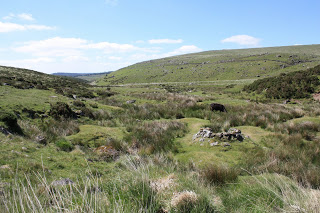
Last summer I spent a day walking on Dartmoor, an area of wild, remote and barren land situated in the south of the county of Devon. Dartmoor is an area of granite outcrops (tors) and coarse grassland, trees are few – except for occasional conifer plantations – and people and properties even fewer. It is a country of streams, bog, cotton grass and silence.
.

.

Remote and empty it may be now but, thousands of years ago, this was a highly populated area and all over the moor there are signs of occupation of our ancestors. The buildings have long disappeared but stone circles, standing stones , scrapes and bumps in the ground are everywhere as the Ordnance Survey map will show.
.
.
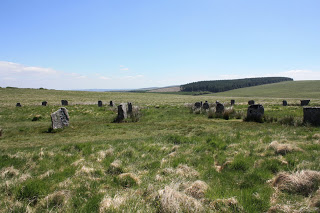
The most mysterious and atmospheric sign of these early settlers is the stone circle found to the northeast of Sittaford Tor. Stepping into a stone circle is always a mystical experience: it feels as if our living history has been trapped within them. The spaces between the stones seem to disappear and you feel completely enclosed by them as if the circle ‘walls’ were completely solid. It feels this way with our own Cotswold stone circle, the Rollright Stones but it feels even more extraordinary up on the wilderness of Dartmoor for there is not one stone circle but two, standing side by side.

.
.

Grey Wethers, as the circles are known, get their name from the old English word for a castrated ram. ‘Wether’ is still a term used in farming and the word is remarkably similar in the old German, Frisian and Nordic languages. It is not uncommonly used to describe large stones that scatter some areas of landscape, whether manmade or left in place as a result of Ice Age glaciation – presumably as, from a distance, they can look remarkably like sheep resting.
.

.

Walking amongst the stones, it is difficult to see that the circles are completely separate for they feel as if they are intertwined as in a figure of eight. However, from above (thanks to Google Earth) the circles can be seen to be quite distinct although sitting side by side. The smaller of the circles measures 31 metres in diameter and the other 33 metres, making them the largest circles on the moor. Together, they have 49 stones standing. Much of this information I have sourced from the web (where else?) and more can be found here.
.

.

What was the purpose of their building, 5000 years ago? Many theories exist but no-one knows for sure. Excavations have shown that there were charcoal deposits here so fire was certainly used – was it for ritualistic purposes? The theory I like most, is that the circles stand on the boundary of two separate tribes and that this was a neutral meeting place. It would be good to find that it was a place of peace for it certainly feels that way now.
.

.
.

To the south of the circles and on the northern bank of the East Dart River are the circular remains of a ‘beehive’ hut. These tiny buildings of stone with, once, a turf roof were most likely built in medieval times and used as a store or shelter from the worst of the elements. It is surprisingly well camouflaged – perhaps designed that way to prevent their contents being raided by others. More information on the ancient huts of Dartmoor can be found here.
.

.
.

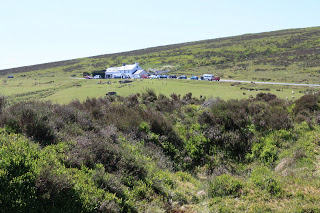
After a picnic lunch high on the moor with only the sound of skylarks, cuckoos and buzzards for company, the path descended to the Warren House Inn, a remote (in the past, tin miners) hostelry, some distance to the east. It is said that the fire here has never been allowed to go out since 1845 and it and a pint or two of ale were most welcome.
.

.

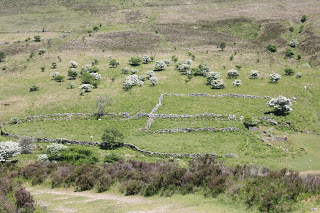
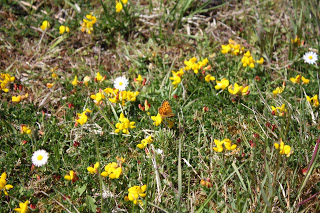
Beyond the pub, more remains of old buildings and walled enclosures could be seen, probably of deserted farms or small mining communities. Now, at lower levels, the climate was noticeably more clement and wild flowers provided some welcome colour after the drab greens and browns of the higher moor. The Bird’s Foot Trefoil, especially, were covered in beautiful Fritillary butterflies.
.

..

.

.

Finally, after several hours of walking we returned to our starting point, the village of Postbridge, to cross the river by the ancient stone clapper bridge, featured in one of my earlier posts. This, and more photographs, can be found by clicking the link here.
..
.
.
.
Add to Technorati Favorites

Richard Long’s Extraordinary Land Art

2I have found that there are no shades of grey when appreciation – or lack of it – of Richard Long’s art is discussed. It seems that either, like me, you are swept away by it or you just cannot see the point of it at all. Whilst respecting this latter point of view, I ask myself, “Does art have to have a point”? For me, of all art forms , Richard Long’s work demonstrates that beauty can be appreciated just for it’s own sake.
.
British born (in Bristol, where he still lives and works), Richard Long studied art in both Bristol and London, giving his first solo exhibition in Germany in 1968, as he completed his studies. I imagine this is quite an achievement in itself. Since then he has exhibited regularly throughout the world.
.

.
In the grounds of my ‘reincarnation’ house, I was fortunate to be involved in the placing of one of his slate circles (photo above). Sadly, I never met the great man himself, for I would have loved to have sat quietly and watched the stones being laid in place. My contribution was extremely modest: I only removed the turf and put down the base ready for the circle to be put in position. However, this did mean that the circle appeared as if by magic – and it has remained mysterious and magical ever since. And, as if by magic, the gaps between the stones have filled with leaves and debris and yellow lichens have started to colonise their surface.
.
.

.
Regular readers of this blog will know of my fascination for stone in all its forms, whether it is the earliest standing stones (and we have our own ancient stone circle here in the Cotswolds, the Rollright Stones), the dry stone walls of the secret valley or placing stone in the garden. But Richard Long’s stone work is different to all of these for each piece is meticulously shaped and honed – or left in its natural state – and crafted into position. To really appreciate it, you have to become part of the landscape yourself. When you lie on the ground looking across the surface of his work, it takes on a completely new appearance and meaning.
.

.

When I first came to know and love Richard Long’s work, I little dreamt that one day it would inspire me to incorporate land art into one of my own designs. Attached to a beautiful old farmhouse, belonging to a client, is a small, almost bottle shaped, raised area of land surrounded by the remains of a twelfth century moat and mill stream. It is too wild an area in which to create a conventional garden so the plan is to keep it as a simple wild flower area. A very low serpentine turf coverd bank will draw the eye – and, hopefully, the visitor – towards the bottle neck. Careful planting will bring you unwittingly into a living willow tunnel and, at the far end where the land broadens once again, will be a circle. Not a stone circle this time but a meditation circle inspired by the photograph below of children playing. This photograph is from the artist’s (or is it sculptor’s?) website; all the remaining photo’s are mine taken at the reincarnation house. To be redirected there just click and make sure you look at both the Exhibitions and the Sculptures pages.

.
.

As for my new design, work is due to commence at the end of this month and I shall report on progress some time in the future. One thing I am quite certain of is that I will not be asked to hold any exhibitions either in the UK or abroad!
.
.
.
2018 Update:   to see more of Richard Long’s work or to view the latest exhibition venues visit his page on Artsy by clicking on the link here
.
.
.
Add to Technorati Favorites

"A Massive Piece of Granite"

It is a family joke that whenever a large piece of stone is seen, one person asks “What is it?” and the other answers – slowly and after much deliberation and head scratching – “well, it’s a massive piece of granite”. For, many years ago, this was the only answer we got from an old countryman at an ancient stone burial chamber that towered above us.
.
Burial chambers, stone circles and other standing stones, which mostly date back 5000 years or so are reasonably common around Britain,and a surprising number of them are quite impressive. There are several scattered around the Cotswolds and I have written about our little known and little visited Old Soldier and also the very well known and very much visited stone circle, the Rollright Stones.
.
.
The Old Soldier
.

.
The Rollright Stones
.
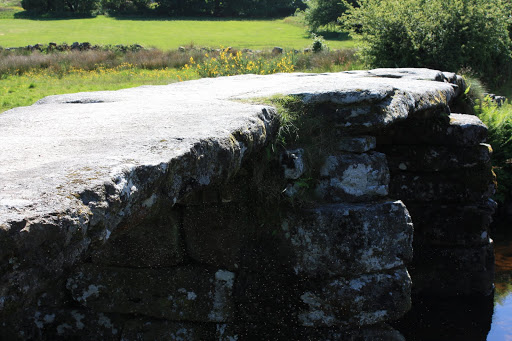
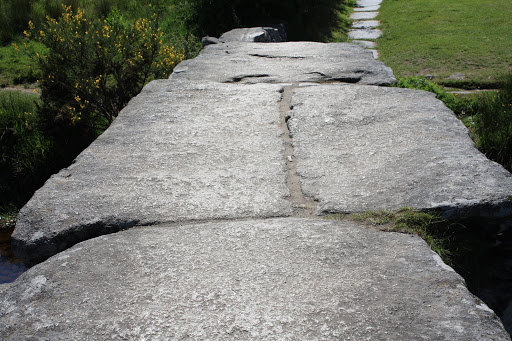
Far more scarce and, perhaps even more impressive, are the stone ‘clapper’ bridges. These are often not as old as they look although, even these, were probably built the best part of a 1000 years ago. I find these bridges, which are mostly in the West Country on Dartmoor and Exmoor, just as impressive as Stonehenge, England’s world famous ancient stone monument. The clapper bridge in the photoographs below is at Postbridge, on Dartmoor, in the county of Devon. This clapper bridge was built to aid the transport of tin from moorland mines about 1200AD.
.
.
The ‘new’ bridge in the background, which carries the road and car traffic over the East Dart river is a mere upstart, having been built about 1780. In the photo below, I love the way the arch of the new bridge is framed by the ‘arch’ of the old one.
.
.
The granite slabs measure over 4 metres (13ft) long and are over 2 metres (6ft 6in) wide and weigh over 8 tons each. Despite this, over the centuries they have been swept away downstream by floods. Some have been rebuilt many times, others lost forever. However did they, without modern technology, transport them?
.

.
.
The bridge just invites you to step onto it and it can be the starting point of many walks that lead across the open moorland. It was for me, a couple of months ago. On that walk, I found deserted settlements and the most incredible stone circle – unusual in that there were two circles side by side. I shall write more of this soon.
.
.
Even now, when a special occasion needs to be commemorated it is to stone that we often turn to. To my knowledge, no modern material is in common use to mark the burial place of a loved one: we mark our graves in a very similar way as our most distant ancestors, with stone slabs.
.
We also use stone to mark more joyous occasions. This standing stone was placed on Ibstone Common, high in the Chiltern Hills, to commemorate the millenium. A small thread that unites us through 5000 years of history and far into the future – a comforting thought.
.
.

Add to Technorati Favorites

Three Very Special Cotswold Reasons….

If you could only choose three things to demonstrate why you love a place, what would they be? This is the tricky question that is being asked by The Guardian in conjunction with enjoyEngland, the English tourist authority ( http://www.guardian.co.uk/enjoy-england ). Well, here are mine:

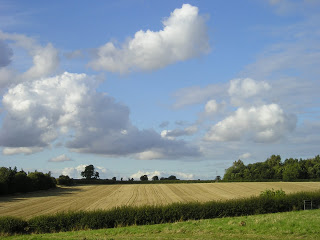
1. Space and Peace. I know this is technically two reasons but they are so interlinked that, in my mind, they only count as one. Besides, that way I can cram in an extra reason without appearing to cheat too much. The flat topped, rolling limestone hills that make up the Cotswolds offer far reaching views to the vales beyond. They free the mind and let the spirit wander – a rare occurrance in the busy world we all inhabit. This view looks north over glorious country to the Vale of Evesham and just invites you to start walking towards a distant goal.

The King’s Men stone circle forms part of the Rollright Stones and have been a meeting place since they were set here 4,500 years ago. In early morning light they appear mysterious and brooding but when the sun strikes them their colours and markings are awe inspiring. Rest here a while, at a time when you can be alone, for the feeling of peace is palpable.

And give back to the soil an offering, (when we have taken so much away), as others have done from the beginnings of time and continue to do so. Single flowers placed at the centre of the circle have a calm simplicity…

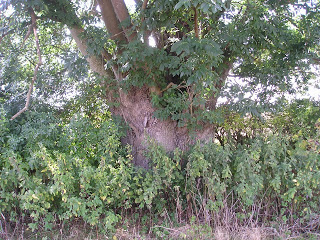
2. Nature. It is impossible not to be aware of nature in the Cotswolds, whether it is the magnificence of old trees, the deer crossing roads in front of you or the cloud formations of our large skyscapes. This ancient ash tree has watched centuries of agricultural change take place and, despite modern farming practice, still stands proud in a hedgerow dividing wheatfields.

Deer are common throughout the Cotswolds. Roe and the introduced Muntjac are frequently seen but perhaps the prettiest, when in their spotted summer coats, are the Fallow.
There are some exotic surprises too! A macaw outside a garage in Charlbury and
alpaca seem to be everywhere
.
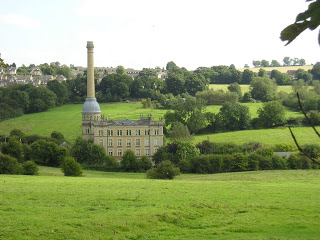
3. History. The Cotswolds are steeped in history and it is the history of wealth and the power it brings. Sheep – or more accurately, their wool – were the originators of this wealth and the region still has a higher population of sheep to humans. But how to illustrate this when there is so much scope to choose from? Bliss Mill, in Chipping Norton, is now converted to luxury apartments but, for most of its time, produced some of the finest tweeds in Britain.
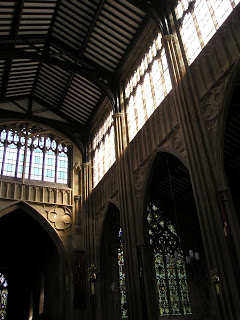
The churches of the Cotswolds were also a by-product of wool – the wealth it created is often shown by their huge size in proportion to the numbers of the local population. The photos below were also taken in Chipping Norton.

So, come and visit the Cotswolds and decide for yourself. And, in the meantime, select three things that make your special place, special.

Add to Technorati Favorites