
The title of this post is taken from the poem by Edith Sitwell, that most eccentric of twentieth century English poets. I am using it for its literal sense, for the rain just won’t stop falling, whereas Sitwell wrote Still Falls The Rain as her response to the London Blitz in the 1940’s.
It has not been an easy gardening year. We were bracing ourselves for the coldest and snowiest winter ever, for after two years of freezing temperatures and snow at greater depths than for a decade or more, we were warned of worse to come ….. it didn’t. Instead we had a relatively mild time of it but with virtually no rain whatsoever. Then came March: temperatures in the 70’s and day after day of unbroken sunshine and the garden couldn’t work out what to do next. Some plants flowered earlier than normal whereas others refused to break out of their winter dormancy. And still no rain; the little river that winds its way through the header of this blog and the secret valley ran lower than midsummer and by the old sheepwash it was almost possible to walk across it in hiking boots.
Then came April and the day water shortages and a hosepipe ban were announced. All the hose reels were wound up to be stored away and we worried about how we were to keep the parched ground alive.

We did not need to worry for, reminiscent of the day in the 1980’s when Michael Fish, the weather forecaster said “What hurricane? We don’t have them in this country….” (the next morning half of England’s trees had been flattened), the rain started to fall. And it hasn’t stopped falling. We have the occasional sunny interlude when you could almost think it is spring but, for the most part, the skies remain leaden and heavy. Day after depressing day it is dark and gloomy with a cold northerly wind blowing and the rain lashes against the window panes.

The ground, so hard from months of drought, could not absorb the deluge and the water, so desperately needed, runs down the lanes and over the fields and banks into the river. Our pretty little tinkling stream has become a torrent and the sheepwash island, coloured golden with its Kingcups in full bloom, has disappeared from view completely. Opposite the sheepwash on the other side of the lane, the water is running off the hill and new springs have appeared where they haven’t been seen in years.


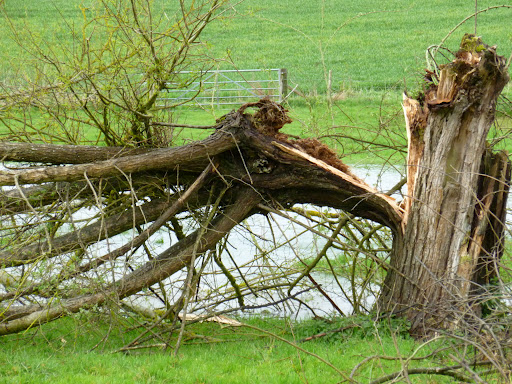
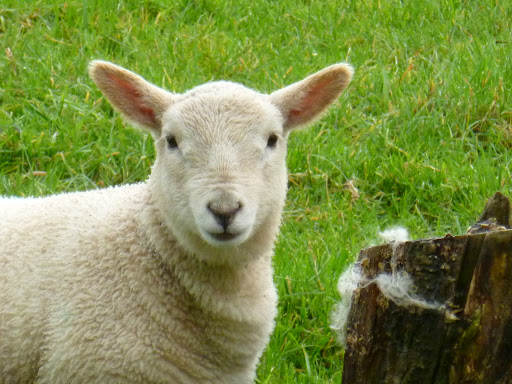
The secret valley is flooding and looks more like how it should have appeared in winter. The sheep and their lambs have been moved to safer pastures and the pastoral scene of a few weeks ago has all but gone. Gales have accompanied the worst of the downpours creating their own havoc and the old willow pollards, heavy with top growth are splitting and falling. The damage, although it looks devestating, will not affect them too much for they will regrow once the broken timber has been cleared, for this is nature’s own way of pollarding them.
In the meantime, we watch the flood water rise all around us. Our little stone cottage, built in the 1850’s, sits safe, high above the river, which snakes around two sides of the building.


As for gardening, weeds continue to grow for they have adapted to the extremes of the English climate over millenia. The nurtured plants of the flower border struggle and produce some oddities. The tulips that usually look bedraggled after just one shower, have remained resilient and daffodils that have normally finished weeks ago are still in bloom, thanks to the cool conditions. The wet weather has also benefitted the cowslips and the bluebells and they seem even more intense in colour if, in the case of bluebells, that is possible. A quick look around the secret valley at the trees also shows contradiction: some are in full leaf and others – almost 50% of them – are still to show their leaves so have a wintry look about them.

Tulip ‘Peppermint Stick’
It has been a dry and sunny day today and tomorrow is also supposed to be quite pleasant. The forecast is for more rain to come and the cool conditions to continue at least until the beginning of June. And when I wake up on Monday and hear the rain hitting the bedroom windows, as forecast, my first awareness will be to hear in my mind the haunting voice of Edith Sitwell saying “Still falls the rain, still falls the rain ……”
To listen to Edith Sitwell reciting Still Falls The Rain click on the link below:
http://www.youtube.com/watch?v=b6_2x948EEw



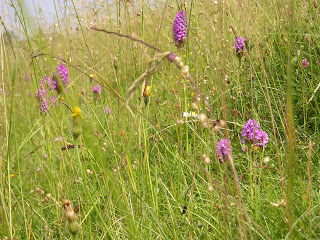
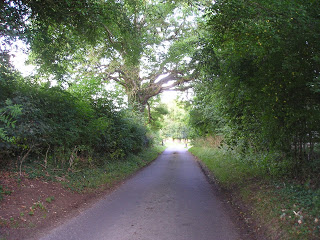 To call it an avenue would be rather pretentious, but the roadside plantings of beech and cherry create the first thought that you may be going somewhere rather special. And as you begin to pass beneath their canopy, the hills start to rise on either side. These are rarely, if ever, treated with any chemicals and wild flowers, including orchids, abound.
 But there is still no hint of our little, winding river. Then, as the avenue ends and on a sharp bend there it is! The first glimpse is of the old sheepwash, where the river was widened and deepened although still almost jumpable, for everything about the secret valley is miniature: the hills, the river, the road. Beyond the sheepwash come the meanders – the photo of these snake like bends are in the blog’s header title.
  Our little stone cottage lies further along the road – and this is now the original old drove road, for the one that we have travelled so far has probably only been in place since about the late 1700’s. More of the drover’s in another post. Below is the view from the house looking back towards the meanders – we may only have just one other house nearby but there are dozens of sheep for neighbours!
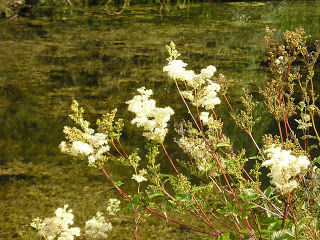
 Just below the cottage, the river passes beneath the lane and snakes its way around us, travelling through lush meadows. Watercress and meadowsweet grow along the water’s edge and little rickety, make-do bridges made from old telegraph poles criss-cross from one bank to another. Ancient, gnarled willow trees line the banks, more about these can be found in an earlier post:
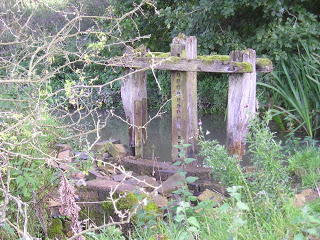
 And tucked away beyond the bridges are the remains of the old mill workings. The culvert is barely noticeable until the river levels rise and the water diverts towards the mill. We’ll travel there another day.
 Life in the English Cotswolds