
This year is proving to be one of extremes. Weather wise, first it was snow, then late frosts, then rain, more recently drought and scorching temperatures. And it also seemed to be a similar situation with wildlife. The tree blossom and wild flowers have been amazing with every month some new blooms outrivalling those of the previous month’s.
.
 .
.
Now it seems July is to be the month of wasps. There are hundreds in the garden, indeed probably thousands, and they are everywhere. And if that isn’t bad enough, the very hot weather we’ve been having seems to have made them far more aggressive. Normally they do not prove to be troublesome until the fruit ripens in late summer, this year it’s different. And I’ve already been stung once this week which is very bad news for me – I suffer from a severe reaction, although never yet been hospitalised, fortunately. I keep my drugs and sprays with me – and a mobile phone, in case help is needed – and also keep my fingers tightly crossed. This, like the recent advice from a doctor to stay indoors, is not too much help for someone who earns their living by gardening.
. .
.
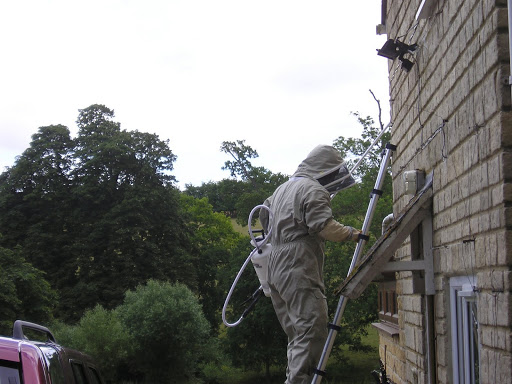
Fifteen wasp nests in four days has surely got to be a record and so I have been keeping the pest control man busy. It’s a pity to destroy them but better I get them first than the other way round! I remind myself that during the spring they live on aphids and the like and are, therefore, valuable pest controllers themselves. Then I remind myself of the pain, discomfort and swelling, and sometimes injections I get, and they have to go.
. .
.
I commended myself on my bravery, taking these photos, as the wasps went into the attack as the chemical jet entered their nest. But such is my devotion to get a new post out – I’m becoing a true blogger news hound!
.  .
.  .
.
My heightend awareness of wasps this week made me also notice these holes in a deserted timber garage. They were the homes of a small colony of wood wasps. Unlike the common wasp which live communally in their hundreds (the largest of our nests turned out to be the size of a football), wood wasps are more solitary, each one occupying their own chamber.
.  .
.
They are quite placid compared to their aggressive cousins and, I believe, unable to sting a human being. The largest ones look terrifying but this species was small, about half the size of the common wasp. There are about 500 species of solitary wasp in Britain and I can’t identify any of them. I felt totally at ease photographing them inches away and they completely ignored me. Perhaps word had got round what I did to them further down the secret valley!
.
 .
. .
. .
.
I’m now looking forward to the first frosts and a wasp free winter!

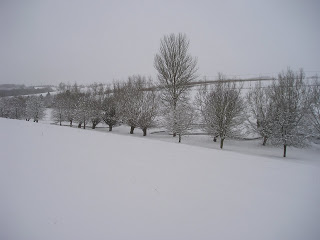
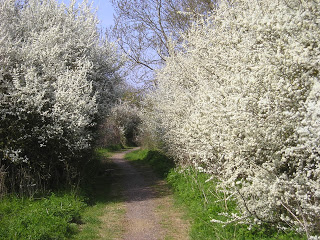


 Now the snow has gone and the seed heads, not quite as pristine as before, have recovered but still live up to their name. They swamp the lower, trimmed parts of the hedge and it is hard to imagine how the field maples, hawthorn, sloes and other woody plants cope and survive.
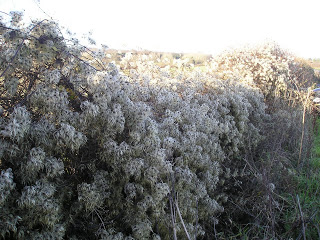 Three days ago, the birds began singing once more and claiming their territories so Spring can’t be too far off (I’m being optimistic here as the sun has been shining too). The Old Man’s Beard will, like garden clematis, be amongst the first to send out new shoots and leaves, in the process knocking off the old seedheads. For a short while the hedge has the opportunity to flourish before the clematis flowers appear. Although blooming in their thousands, individually they are quite insignificant and it is the scent that is the more noticeable – not the perfumed scents of roses and honeysuckles but honeyish, delicate yet cloying too, somehow. And the bees, especially the bumblebees can’t get enough of their nectar.
 As a young child, I once stayed at a schoolfriend’s grandparents and in their garden was an old chalk quarry, long disused. I would love to revisit it now but have no idea where it was – for years I believed that the village was called Loose Chippings. It was only once I grew up that I realised that this was the sign that council workers had put up after repairing the road outside their house! There must, I assume, have been trees in the pit – and it was certainly overgrown – for the Old Man’s Beard had sent up its long vines high into the tree tops. Where this happens the stems become quite thick, strong and woody and we spent many happy hours there swinging through the trees Tarzan-like. They have also done this outside our cottage, where the hedgerow has grown into treelike proportions, although only once, (when I felt confident no-one would see me), have I swung on them. The exhilaration was the same and proves the thought that men never truly grow up but remain little boys that need to shave.
 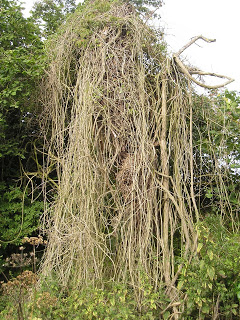 Virgin’s Bower and Traveller’s Joy are two of the other common names given to Clematis virginica. The first, one assumes, because of its tendencies to drape across other plants: how lovely it would be slumber gently beneath its shade on a warm day, breathing its scent and listening to the bees droning. According to my Herbal, in the past, wayfarers would make tea to soothe away headaches, wrap soaked cloths around their weary feet and treat blisters and saddle sores. No wonder it was called Traveller’s Joy. I love to think that along our little lane, the old drover’s would sit on the grassy roadside banks and rest, perhaps stopping for some ale at the old inn next door to us (and our only neighbour), their sheep and cattle drinking from the secret valley’s meandering river. Did they also think, like me, this place to be so special? I doubt it, somehow.
 Life in the English Cotswolds
