First Build Your Bank ….

Some time ago I was asked if I could plant a hedge.  Straightforward enough, I thought and as it was to be a native hedge, I was especially keen to do it.  Using only native species is always a pleasure for not only are you maintaining a tradition that is centuries old, it is also excellent cover for twentyfirst century birds and animals.

It was only when I went to visit the site that it was mentioned that it would be rather nice if the hedge could be planted on top of a bank, reminiscent of those that are found in the West Country counties of Devon and Cornwall.

West Country banks use large amounts of stone in their construction and were built to protect livestock from the gales and snowstorms that sweep in from the Atlantic.  Over time they become encrusted in lichens and mosses with ferns, primroses and other wild flowers sprouting from every crevice.  They are usually topped with a beech hedge or, sometimes, gorse (or furze, as they call it on Exmoor).

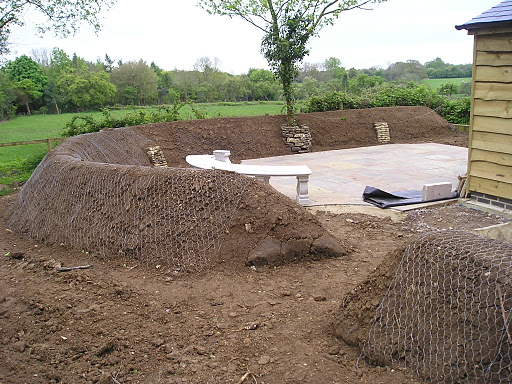
The bank that I had to build was to be similar but faced with turf which would not be as strong. As it was to divide two halves of a garden and (hopefully) not have to keep out determined sheep or cattle, this didn’t matter.  The thing that did matter was that I had to build it in a way that would prevent it from falling down …..

I’ve always found that if you want to create an impression bring in a digger.  There is a morbid fascination in watching a digger at work for the destruction can be immediate and swift.  It certainly would have been if I had been in charge of the controls but, as is so often the case, when you need an expert it is better to bring one in.  I know where I am when it comes to shovels and forks and trowels but it is best not to let me loose with all those knobs and levers.

The ground cleared we were then able to lay out and start building the bank.  We imported the rubble and clod for the base which after being well rammed and compacted could then have a top layer of better quality topsoil spread over the surface.  All was held in place by large mesh chicken wire netting.

Next came the turf and this was laid direct onto the netting and held in place with hazel twig ‘pegs’.  These would gradually rot but not before the turf had grown its roots through the wire.   The netting, too would quite quickly rot (we didn’t use galvanised for we didn’t want it to last for years) and, by then and fingers crossed, the bank would be quite stable and self supporting.

It was with some trepidation when, a few weeks later we cut the top of the turf and the wire out so that we were able to prepare the bank for planting the hedgerow; especially so as we had had some torrential downpours giving me anxious moments about landslips and mudslides.  All, fortunately was well.

Having plants delivered, I find, is always an exciting moment.  It reminds me of when, as a child, I waited for Christmas morning and couldn’t wait any longer to open my presents.  Despite knowing what is coming out of the van, each plant or variety is met with little gasps of delight.   The thrill of knowing that, with luck, they will thrive and continue to grow for many years and may even be there long after I’ve been buried and forgotten is great.

The hedgerow was not the easiest thing to plant but the end result was pleasing.  The final combination was Hawthorn, Field Maple, Wayfaring Tree, Hazel, Dog Rose, Spindle and Hornbeam  with an occasional Honeysuckle to fill the evening air with perfume.  The birds took to it straight away and, in my imagination at least, mice and voles shelter amongst the trunks hiding from mirauding stoats and weasels.  Best of all is the knowledge that, a few years on, the bank is still standing!

Add to Technorati Favorites

Christmas 2011

Many thanks to all of you that have read and followed my blog during 2011.  Despite the dire weather predictions, the secret valley is having the mildest Christmas for years.  Instead of extreme cold and deep snow as forecast some weeks ago, the sun has been shining and the temperature has risen to +13C.  I’ve had to rely on a snowy photograph from last winter!

Wishing you all a very happy and peaceful Christmas
Add to Technorati Favorites

Flowers at Christmas

I know that it isn’t technically Christmas yet for we still have a week to go.  Despite the last few days being cold and frosty – and very beautiful with bright sunshine and blue skies, I have been surprised at just how many flowers are still blooming away when it is almost the end of the year.
A combination of unseasonably mild weather for most of the time and, of equal importance, very little rain to knock the blooms about has resulted in all sorts of odd floral combinations.  Of course, I realised as soon as I started to write this post that I hadn’t bothered to carry my camera around with me so most of the flower photos have been taken at some other time.
Cowslips and primroses:  It’s not especially to see the occasional primrose in flower in the garden but I don’t ever remember seeing cowslips flowering in December in the wild before.  It will be a good few months before we see carpets of them like these but seeing the odd two or three reminds me that spring is not so very far away.  In the newspapers there have been reports of daffodils in flower too.

Forsythia:  Another spring bloomer and again just the odd flower rather than branches being smothered in flower.  Perhaps not so surprising, as flower arrangers would know – the tight buds that cluster along the bare stems will burst into flower early when brought into the warmth of a house in a similar way to the ‘sticky buds’ of the horse chestnut bursting into leaf indoors.  Here, forsythia has been trained as a tightly clipped shrub to screen an ugly garage wall, the warmth and protection of which also makes the flowers open a week or two before normal.

Ferns:  Some of the shabbier looking ferns had been cut dowm to ground level as part of the autumn tidy.  I hadn’t expected them to burst back into growth …..

Violets:  There have been a lot of violets out, both in the garden and in the hedgebanks of the secret valley.  Is it just coincidence that these out-of-season blooms have all been mauve with not a white flowered one in sight?

Daisy:  There have even been odd wild daisies flowering in the lawn (we have mowed twice this month too).  The Erigeron daisy that you see growing in profusion amongst the ruins of ancient Rome has been flowering in our garden as if it was still midsummer; it is smothered in blooms.

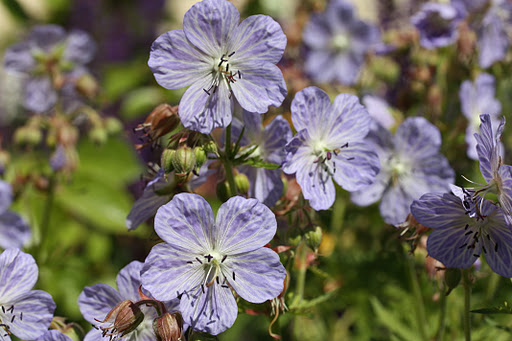
Geraniums:  The hardy herbaceous sort.  Like the ferns, they had been given the chop some time ago but are coming back into leaf and flower.  Some of the hardy salvias are doing the same thing.

Mallows:  I have seen hollyhocks still in flower on my travels around the Cotswolds.  They are majestic when they are grown well but my favourite of all is the musk-mallow, Malva moschata, which is a wild flower that is often brought into gardensl.  I grow both the pink and the white versions and they self sow happily in the borders without ever becoming a nuisance.  It wouldn’t matter, you couldn’t have too many!

Roses:  There are nearly always roses out on Christmas Day and we always exclaim how extraordinary a sight it is.  They are poor, wet, bedraggled specimens carefully left in place by even the hardest pruners as a reminder of warm summer days.  For the most part that is the case this year too.  What we don’t expect to find are bushes smothered in beautiful blooms still wafting scent but this is the case in one rose garden I attend.  I am uncertain as to the variety but there are three of these amongst forty other bushes – all shrub roses.  They really are a joy to see.

I can’t believe that this state of affairs will last much longer.  Surely the frost and rain, or even snow, will get them soon.  I plan to wait until New Year’s Day and go walking armed with camera, pen and paper and list all that I see.  I have intended to do this every year for as long as I can remember but if I manage it this time, I will report back.  And, as this will almost certainly be the first of 2012’s resolutions to be broken, perhaps you would do the same and send me the list.

Add to Technorati Favorites

Now on Facebook

Life in the English Cotswolds is moving into the twentyfirst century!  It can now be found on Facebook.

Click the ‘Networked Blogs’ link in the column – it’s found on the right side of the page.

Add to Technorati Favorites

What A Difference A Year Makes

The British are always going on about the weather and I’m no exception.  My very first words upon waking are “What is the weather doing?” and my final words before sleeping are “What will the weather be doing?”.  I make no apologies for this: it’s part of our make-up as a nation.  It’s because, I was once told, that whereas other countries have seasons, Britain just has weather.  It’s not quite that simple, we do have seasons – Spring, Summer, Autumn and Winter – just like any other temperate country, it’s just that in the UK they get a bit muddled up.

I write this, snug in front of the woodburner – not that much heat is getting past She-dog who thinks this has been lit solely for her pleasure and comfort – listening to a gale rattling the window panes and whistling around the eaves.  The rain is lashing down and there is absolutely no need for me to ask what the weather is doing this evening.  However, I have been told that I have said “Listen to the weather” several times. I could have said how remarkable it is that only yesterday I had my lunch sitting in the garden.  Yes, really.

I should admit that I am a hardy sole as I work outdoors all year and so am less affected by cold than most and I also should admit that I was wearing a coat and gloves and sitting in a sheltered, sunny spot. Regardless of those finer details, yesterday I commented how last year to the day we were up to our necks in snow in the worst wintry weather the Secret Valley had had for years.  And, even more remarkably, the snow came when you would expect it  –  in midwinter but (and there’s always a ‘but’ where British weather is concerned) in the Cotswolds we rarely get snow before January …..   But it was still rather remarkable to be sitting there, surely and remark worthy?

What is even more remarkable is that all of this week I have been planting out herbaceous plants and laying turf; late even by our odd climate standards.  We have had frosts: there were three quite hard ones in October, then none until the last week of November and then a couple more last week and none since.  In between, we had two weeks of warmish air and thick fog which was enough to make even me depressed. 

The spirits, even on those damp, grey days, were uplifted by the huge array of flowers that have reappeared.  There are always a few late roses hanging on determinedly until Christmas Day, looking bedraggled and ragged but not this time.  Some of them have given up but others have almost as many blooms as midsummer.  There are pots of herbaceous Salvia nemerosa ‘Mainacht’ that have regrown after their end-of-season haircut and are in full bloom once again.  Primroses and cowslips are showing colour.  Today I counted over twenty different summer flowering plants still going strong.  That’s a bit of an exaggeration, I really mean showing the odd flower or two.  All the plants have become muddled so we have Winter Jasmine as you would expect but not alongside spring flowering Forsythia.  And we have evergreen, flowering shrubs such as Viburnum and Sarcococca as we should have at this time of year – but not alongside the newly unfurling purple leaves of Cotinus cogyggria.  Where, or more to the point, when will it all end?  Possibly quite soon.

It isn’t just the garden that is confused.  On the farm the cattle are still out grazing the fields.  They should be inside by now but with plenty of grass still available in the fields they can be out for a little longer. 

While I am here writing about a bit of wind and rain, the north of England and Scotland, in particular, are bearing the brunt of 100mph gales and heavy snow.  Perhaps we are quite fortunate, after all.  The rain here is only supposed to last a few hours and tomorrow is forecast unbroken sunshine once more.  Which reminds me, I  really must start talking about the lack of rain we have had in recent months.  The little winding river is running lower than it ever has and can be easily walked across in places in just walking boots where the water flows over gravel .  It should look, at this time of year, like the photograph I use on the header to this blog.  Instead it looks like midsummer again with the water, where it flows deeper, still choked with watercress.  Oh well!  I suppose I should be grateful that I am still able to go out and pick it in December – I can make a store of some delicious hot soup to drink when the weather realises it is winter.

All the photographs, except for She-dog in the snow, were taken over the past week or two.  When the frost has been hard the Secret Valley has looked at its best.

Add to Technorati Favorites

A Royal Invitation

Like most people, I wait with eager anticipation for the postman to deliver the mail each day and, each day, I find that, if it isn’t bills he’s put through the letter box, it’s circulars that go straight into the recycling bin.  So when a card sized envelope arrived with a nicer quality about it than most – and especially as it wasn’t my birthday – I was intrigued.  Why do we always feel envelopes and squint at postmarks to try and work out what is inside when all we have to do is open them and take a look?

My first reaction upon finding I’d received an invitation from the Duke of Edinburgh to attend Windsor Castle was to think that a friend was playing a practical joke.  But the more I read it the more real it looked:

His Royal Highness The Duke of Edinburgh, K.G., K.T
requests the pleasure of your company
at a Reception to be held in the State Apartments, Windsor Castle

How extraordinary!  Why me?  Why should I be drinking and eating one evening soon with Royalty?  The answer was, of course, it wasn’t me at all, it was my partner who has spent a lifetime working with and competing horses.

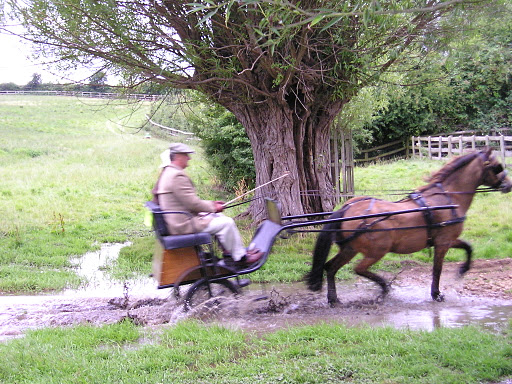
Horses have always been close to the Royal Family and both the Queen and the Duke of Edinburgh are knowledgable and skilled horsemen.  Carriage driving at top competition level had, until recently, been a regular part of the Duke’s regime and we had often been to watch him race at Windsor Great Park.  We too, have also participated in driving although my competition level is still at the most basic.  My partner is much more skilled and fearless and I always marvel when a neurotic and potentially lethal animal becomes calm and pliable under his control.  The photo below is of us just out for a quiet afternoons drive – although the pony did have his moment a little later when we careered out of control amongst the trees.  Thomas could become quite exciteable at times!

I realised with dismay that the date on the invitation was the day that we would be on Exmoor for a couple of weeks holiday, 150 miles away.  Working on the theory that we’d never likely receive another invitation we postponed the trip by a day.  And so, that early evening we drove up to the closed gates of Windsor Castle, showed our credentials and passed through to be further security checked.  Once this had taken place we were driven by an offical to the Quadrangle and the State Entrance.  Thie entrance, as it’s name implies, is used on State occcasions and the Quadrangle is used for military parades, including the regular Changing of the Guard.  From here is a panoramic view of the castle buildings, the oldest of which date from the 11th century (making Windsor the world’s oldest inhabited castle), and the Long Walk: a tree lined vista that cuts across the Great Park for a distance of over two and a half miles.


We entered the building by the Grand Staircase, with it’s fine displays of armour and firearms.  Here we were able to see the musket ball that killed Lord Nelson which had been presented to Queen Victoria.  Queen Charlotte’s sedan chairs were also here, remarkably small, I thought.

The reception was held in St George’s Hall, which was at the centre of the fire in the 1990’s and completely destroyed.  As a consequence, the restoration work has made the green oak, hammer beam roof the largest to be constructed in that century.  The craftsmanship and colours are extraordinary: set into the roof are the shields of every Knight of the Garter with some shields being blank.  These, I discovered, were not reserved for future knights but were of those that had fallen from Royal favour. 

Nothing prepares you for the sheer magnificence and size of this room as you enter – it measures 185 x 30 feet.  Here we met other guests – there were only about two hundred  – and, finally, the Duke who arrived with little pomp or ceremony.  The Duke made a short speech before joining us informally to champagne and canapes.  I was impressed not just by his energy (he is now over 90) but also by his wit.  He really is very funny, indeed.  I wondered how many other people of his age could carry out all these duties day in, day out and still make you feel as if you were of interest to them.  Both he and the Queen – who works equally hard – may live in splendour with aides and courtiers but I wouldn’t exchange places with them: I will be more than content just to still be able to hear, see, think and garden!

Access was also granted to The Grand Reception Room and The Waterloo Chamber, where the immense and seamless, two ton carpet took fifty soldiers to lift to a place of safety during the fire.  What I found surprising was that we were given free access to wander around these rooms at will, although I’m certain that if we had attempted to go elsewhere we would have found our way blocked!  Sadly, because we were attending a royal event, we were not allowed to take photgraphs, so I am unable to show you the splendours of these rooms.  You will find them, however, if you look in a search engine.

The evening came to a close after two and a half hours and, as we stepped back out into the autumn air in the Quadrangle, I was struck by the realisation why it is traditional to say, upon the death of a monarch, “The King is dead, long live the King”:  for all the affection that the current Queen has in the hearts of many of her subjects, the Office is greater than the individual.  The institution of monarchy has worked well for this country, long may it remain so.

Add to Technorati Favorites

A Walk in the Doone Valley

Exmoor is one of England’s smaller National Parks and it is also has one of the most varied landscapes: heather moorland, grass moorland, wooded combes, rushing streams and waterfalls, the lush farmland of the Porlock Vale, high cliffs and sea views.

The moor is especially beautiful at this time of year now the heather flowers, which in midsummer had turned hundreds of acres purple, have changed to a golden bronze. The bracken, also yellowing as the autumn progresses, helps to make the landscape a combination of coppers, oranges, golds, browns and greens.

I had returned to my spiritual home to refresh my soul, as well as my body – for I was pretty knackered after a hard summer of gardening – hence the lack of posts recently. I always stay at the Blue Ball Inn, a traditional pub with rooms, where you can be certain of a warm welcome from the blazing log fire in the 13th century inglenook and an even warmer welcome from the owners, Phil, Jackie and Nick. An added bonus of being on Exmoor is that my mobile phone does not pick up a signal for miles so I am isolated from the world.

For an English holiday at this time of year, I couldn’t have been luckier with the weather either: day after day pleasantly mild and with only a couple of days rain. Perfect conditions for walking and, because it is now ‘out of season’ with the summer visitors long departed, the moor was even more empty of people than usual.

There must be many people that have read R D Blackmore’s great Victorian novel, set in the 1600’s, or seen the film ‘Lorna Doone’, yet never visited the area where the action took place or, perhaps, realise that it is an actual place. It is a tale of the Doone’s of Badgworthy (pronounced Badgery), wicked outlaws terrorising a remote rural community, of kidnap, love and, best of all, it has a happy ending. It is questionable how much is fact and how much is fiction but the places exist and, even now, there are Ridd’s (the hero’s family name) living on the moor. The Doone’s, if they existed at all, are all long gone.

One day, the Doone Valley, their remote moorland stronghold beckoned, a walk of some 15 miles. There are two ways into the valley, the easiest is at Malmsmead, a pretty little place with a couple of houses, farms and coffee shop. I chose the more difficult – and to my mind, more exciting, way across some of the wildest moor, Exmoor can offer. Parking the car at Brendon Two Gates (there isn’t a gate in sight – I’ll explain how it got it’s name another time!), my choice proved wise for I was met by the sound of the wild red deer stags calling, for this was the start of their breeding or ‘rutting’ season. Standing on the skyline a stag roared, keeping his herd of hinds close and to fend off rivals. As I took a photograph, a flock of curlew flew past, a lucky coincidence and a great start to the walk. The photo is rather small but I doubt if I will have the chance to take a second, larger one!

The moorland here, is a vast, open and empty space, full of bogs to catch the unwary. Although not dangerous in themselves, it is unpleasant, to say the least, to be up to your knees in cold, black, peaty water. A minor injury such as a twisted ankle in bad weather, or as dusk falls, could become potentially life threatening. Squelching my way along, my strong, waterproof boots made light work of this first stage and after an hour or so the first fold of the combe appeared – I had reached the head of the Doone Valley.

The path from here is well marked, yet even in midsummer, few but the intrepid walk as far. The only sounds are of water rushing over rocks and the occasional calls of sheep, ravens and buzzards. The walk is now downhill all the way as the path follows the river back to Malmsmead although it is still far from an easy stroll. As the walk continues, more and more side streams meet the main river and Badgworthy Water becomes faster flowing and wider, although two or three bounds and you would be across it. This time it was gentle and the sound relaxing: after heavy rains it will become thunderous and capable of sweeping you away.
A third of the way down the Doone Valley, Hoccombe Combe is reached, said to be the site of the Doone’s village although the ‘waterslide’ that John Ridd climbed to reach Lorna is not here. Some say that it is based on the river that runs through Lank Combe a little further to the north.

The photograph below is of the waterslide at Watersmeet some miles further west and not part of the Doone country.

Soon the valley becomes more gentle and lush although the hills of the moor still tower above. There are trees too: larch, beech and rhododendron. Soon the river will run through farmland and to Malmsead itself, a good place for a rest and a coffee. It is also a place where the walk could stop if another car was available to take you back to your starting point. However, I was only halfway and so turned up the steep lane making my way back to the open moorland.

It was a long and tiring walk back across the heather. In the distance a small group of the wild Exmoor ponies, the oldest native breed in the UK and virtually unchanged from pre-history. Athough free to roam the moors they tend to keep to their own territories and are quite tolerant of strangers approaching. Only those that live in the tourist ‘hotspots’ will allow themselves to be touched and these ones soon galloped off once I got too close.

By the time I reached Brendon Two Gates, a pint of ale at the Blue Ball and a hot bath beckoned. It was almost dark when I returned to be greeted by a spectacular sunset, the perfect end to a very satisying day.

Add to Technorati Favorites

Summer, Autumn, Summer, Autumn

It is said that the English, compared to those from other countries, always talk of the weather and, I have to admit that it is true. I have also heard it said that, whereas other countries have ‘climate’, we just have ‘weather’. And it is weather that has shaped the nation’s psyche, especially those of us that earn our living standing outside in it.

It has been an odd year. The hardest and earliest winter for years gave way to a lovely spring, March and April being mild and sunny. We were then hit by the hardest May frost that anyone could remember and here, in the secret valley, many of the trees had their newly formed leaves and flower buds blackened. The horse chestnuts and oaks seemed hardest hit, although oddly enough, not all of them and not even all of the leaves or flowers on the same tree. Those damaged leaves fell and bare braches remained until July when, suddenly, they sprouted fresh leaves with the same verdent intensity as you would find two or three months earlier.

One moment bright green growth, the next ……..

…….. dead from frost

A similar thing with the weather has happened again over the last couple of weeks. Late summer proved to be rather disappointing with few really warm days and none where you could sit and relax in an evening with friends, wining and dining under the stars. Autumn seemed to be arriving early. Then, just as October arrived and our thoughts turned to log fires and bowls of soup for supper, summer returned with a vengeance. The temperature soared to 30C, breaking all records, the wind dropped and, for a week, we sweltered under cloudless skies and relentless sunshine. As the leaves on the trees began to crisp and garden pots started to die (I refused to start watering them again at this time of year), out came the garden furniture once again.

But what has happened now? Three days ago, we returned to chill, and with a drop of nearly twenty degrees it suddenly feels more like November. Some leaves have begun to turn colour but others have fallen, too exhausted to give us their fleeting pleasure of golds and yellows. Snow is forecast up north in Scotland and every day the news is full of gloomy stories of an even harsher winter than the last one.

One place that always gives good autumn colour is the Chiltern Hills that rise so dramatically from the Oxford plain. It is a special place for me as I was born and lived most of my life there, a country so different from the Cotswolds where I have been the past ten years. Now I live in watery valleys with far reaching views and open skies. The Chilterns, although no more than fifty miles away, is the opposite – dry, chalky and steep, a secretive place where the clouds and views are hidden by beech woodlands. It is the beech which give the best of autumn colours.

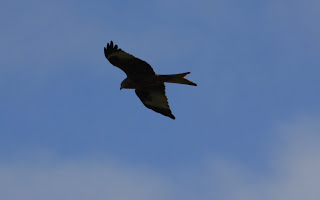
When the M40 motorway ripped a great chunk out of the chalk ridge, no-one anticipated it would alter the climate somewhat. But it is here, where the beech hang precariously to the edge (and sometimes topple over it) that the earliest signs of colour start. And even less did we think that one day Red Kites, one of Britain’s rarest birds of prey, would become so numerous soaring above it and feeding on the road kill that the motorway ineveitably produced. If the view of the chalk cut looks familiar it is because it was used in the opening shots of The Vicar of Dibley, the much loved comedy series on television that was filmed in the nearby village of Turville.

So, we Brits have suddenly become wrapped up and stand huddled together talking about being too hot and too cold and will there be snow. Who knows? One thing, however, is certain: if there is snow down here in the south, it will be the chalk cut on the M40 that will get it first and it will also be the first motorway to be blocked by traffic trying to climb to the top of the ridge.

Add to Technorati Favorites

At the 2011 Burghley Horse Trials – part 2

To compete at the Burghley horse trials you have to be brave, for the size of the fences are not for the faint-hearted. However, to have reached the standard that is required, riders and their horses have had to overcome fear in plenty and have the necessary skill, stamina and strength to compete at this level – not just on the cross-country course but also in dressage and showjumping disciplines. It certainly draws the crowds with over 140,000 people attending.

In part 1 of these posts on the Trials – click here for link – the photograph below was also the first photograph shown, but before the trials began. It looked a huge, solid jump (and was) but the horses cleared it with ease. It is often the smaller jumps where a tired rider or horse come unstuck. Fortunately, this year, there were no major casualties although, sadly, these do occur from time to time.


Burghley, because of its status as one of the top eventing locations, not just in Britain but worldwide, attracts the superstars of the equestrian world, from both the UK and overseas. Ollie Townend won Burghley in 2009 and was a favourite to win this year. It wasn’t to be, with one of his horses being eliminated on the cross country, the other having to retire.

Mary King, is always enthusiastically applauded whenever she appears and is supposed to be the person most young ‘horsey’ girls want to be when they grow up! Not surprising really, for she gets results and is a charming person as well. She came third on her own homebred Kings Temptress.

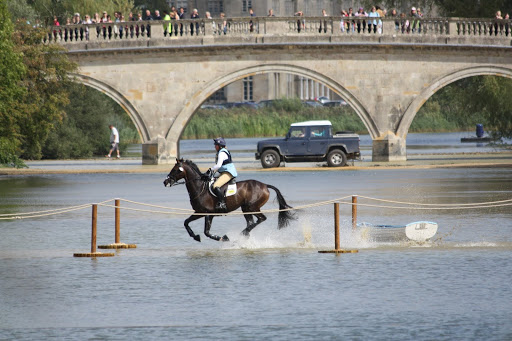
The water jumps always attract the crowds and there is nothing more they like to see than a rider get a good ducking! This year their were few such moments. Apart from small ponds to jump in and out of, the Capability Brown lake also featured as an obstacle. There can be few more magnificent views than this with Burghley House, one of the greatest Elizabethan buildings in England, in the distance.


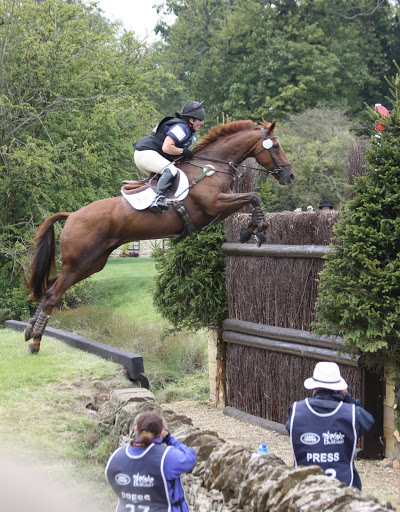
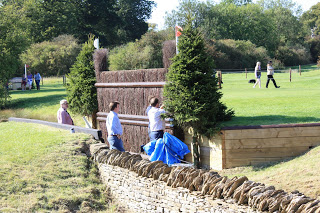
Another photograph that appeared in the first post was the one below. This image has a horse clearing what is the biggest jump on the course. To guage the height look at the press photographers being dwarfed by it ….. This jump was another that the horses took with ease – it is more of a frightener for the rider. The press and the television crews all help to create the atmosphere at Burghley which is , to my mind anyaway, the greatest horse show of them all.

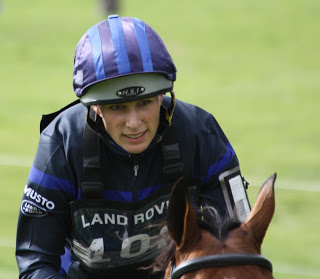
Zara Phillips, daughter of the Princess Royal and grand-daughter of the Queen was another competitor here. She came in tenth place on High Kingdom.

The winner – and for a record sixth time – was the popular William Fox-Pitt. Known as ‘Mr Cool’, William sits quietly on his horse, unlike some riders, and appears to have no nerves whatsoever. I wonder if that is really so!

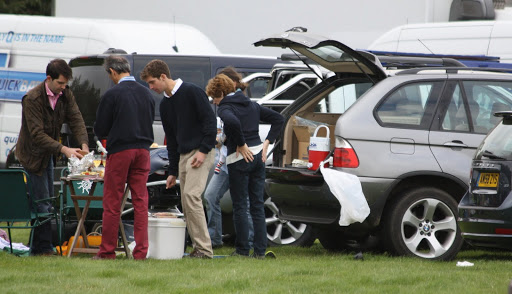
But Burghley isn’t just about horses! For many of us, Burghley and events like it, are places where we can meet up with old friends and aquaintances, a place to relax in late summer sunshine, a place to bring all the family including our dogs. It’s a place where we can shop, where we can picnic and where we can dream of one day riding a horse well enough to compete here.

Add to Technorati Favorites

At the 2011 Burghley Horse Trials – part 1

One of the highlights of my social calendar is the annual trip to Burghley for the horse trials. Although I ride and, probably immodest of me to say it, ride rather well, neither my horse, nor my skill, nor my nerve would take me to this level. As it happens, we have just got an additional new horse that has competed at Burghley in the past – as has my partner – but just the sight of some of the fences fill me with such fear we won’t be attempting it!

There is something rather special about Burghley that is quite difficult to define. The atmosphere is electric yet relaxed, a great team of people organise it, the visitors all thoroughly enjoy it and, of course, there is the splendour of the magnificent Burghley House that dominates the grounds.
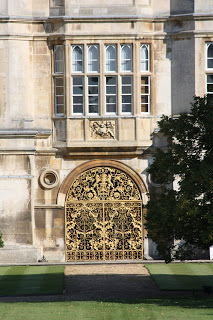
Burghley House was built in the 1500’s for the first Earl of Exeter, one of Queen Elizabeth I’s favourites. Today it is considered to be one of the finest Elizabethan houses in England and is still owned by the same family. Dominating the west front of the house and its turrets and towers, the great gilded gates were designed to catch the rays of the setting sun. These, and the huge numbers of windows, create a blaze of light on a summer’s evening , exactly the image that was required: power, wealth and fine enough to impress the Virgin Queen when she visited.

The Exeter crest is designed into the gates and, elsewhere, there is yet more gilding. The levels of craftsmanship is outstanding, not just in the architecture but down to every detail. Even the garden railings are beautifully crafted.

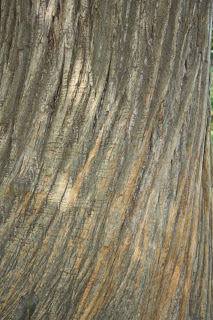
The grounds, where the horse trials take place, are also kept beautifully. A dominant feature of the parkland is the large numbers of Sweet Chestnut trees, mostly planted in avenues. Their immense girth really shows the twisted bark that is seldom seen on younger trees.

However, it is the lake and Lion Bridge that creates the focal centrepoint whether from the park or when seen from the house. These were created later than the house by Lancelot ‘Capability’ Brown (who else?!) around 1778. The lake is designed to give the impression of a winding river and features as an obstacle in the trials.
Trialling or eventing, for those unfamiliar with the sport – the word ‘horse’ is only said by those that don’t ride and is a social faux pas when used – is one of the toughest tests of endurance for both horse and rider. First there are dressage tests where the skill and accuracy of both are measured. This is followed by the most popular part of the contest (although all have their aficionados), the cross country course (link here). At a length of 6686 metres with 33 fences – the highest standing at 1.45m – it has a target time of just over 11 minutes to complete. Cross country tests the bravery, strength and stamina of both horse and rider. Finally, there is the showjumping on the last day. Here, the test is for stamina, accuracy and skill. This year, William Fox-Pitt won Burghley for the sixth time, a record, which made a very successful end to Burghley’s 50th anniversary.

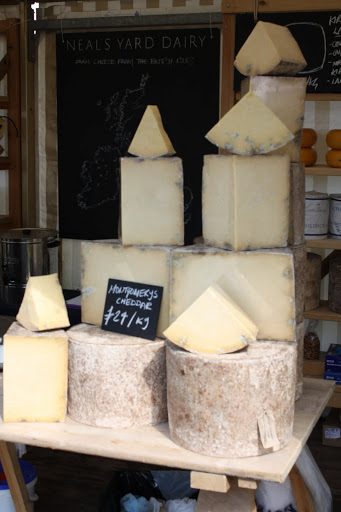
If you are not horse crazy – and the majority of the thousands of people that come here are – there are other things to occupy your time. Socialising is important, catching up with people that you may see only here, and shopping is even more so. There are over five hundred shops to visit on the site selling everything from clothes to furniture, to paintings and sculpture and, of course, lots of horse related products. The food halls are important too: my favourite was the Neil’s Yard cheese shop with its amazing displays of English cheeses. They tasted good too!

For those of you that have never been here, do give it a try, especially at this time. The house and gardens are open to the public all year and, from time to time, concerts are performed here. Burghley House should be on every persons agenda to visit at leat once. If you need convincing, follow this link to their website.

The next post will concentrate more on the cross country course and will even have some ‘horsey’ photos!