.
.
.

.
.
.
.

.
.
.
.
.
.
.
.
.
.

.
.
.
.

.
.
.
.
.
.
.
.
.Plans are afoot to visit Dublin in Ireland once again this Spring. I went last April and the weather was glorious – it is a nice thought anticipating some spring warmth. The highlight then was the day spent at Glasnevin, the city’s botanic gardens.
.
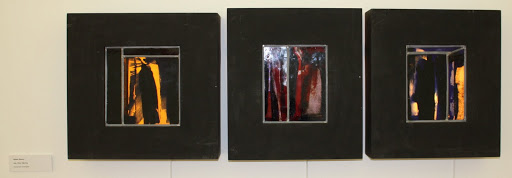
Like many events in life, it is often the unexpected that remain at the forefront of the mind and so it was at Glasnevin. The glasshouses and plants were, without saying, spectacular but a complete surprise was a small exhibition of modern stained glass work.
.
.
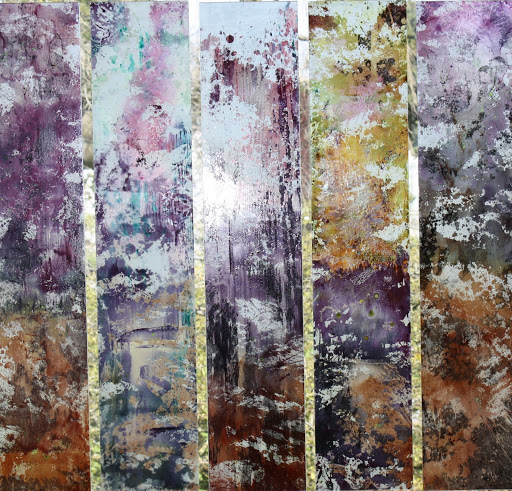
This first piece of five panels is the work of Mary Mackey, based in County Cork. I love the colours and mix – to me it is a blend found in mountains in the fall (odd how, for an Englishman, ‘mountains in the autumn’, doesn’t sound as expressive or as romantic!). However, much of Mary’s work is inspired by the sea and this particular piece is titled ‘Sea-shushed Secret Places’. Painted and sandblasted, the strong colours used still have a swirling, dream like quality about them. Perhaps it is the light coming through the piece that allows this contradiction. Mary, in her own description of her work, tells of how she sees a flash of landscape: “…. fleeting images in real time, but in my memory the image is sharply focused, connected witha particular place, a particular time…..stored and enriched by treasuring it…..until at least something of that essence is achieved“.
.
.
.
.
.
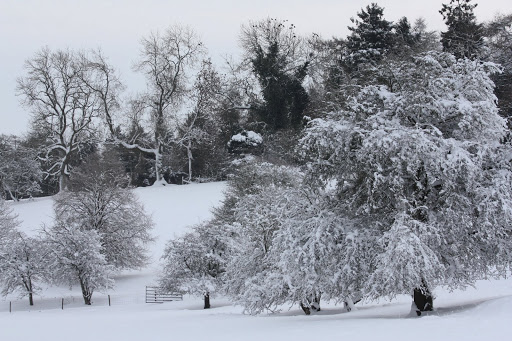
The snow has all but gone from the secret valley, thanks to a sudden thaw, after the temperature rose from -15 centigrade to +6 centigrade. Some still clings to the gullies at the sides of the fields and on the colder banks of the hillside but elsewhere, in its place, is the battered appearance of a landscape after attack.
.
.
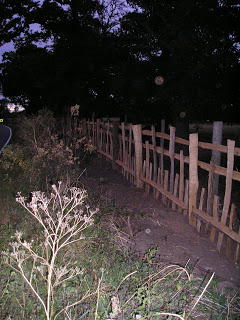
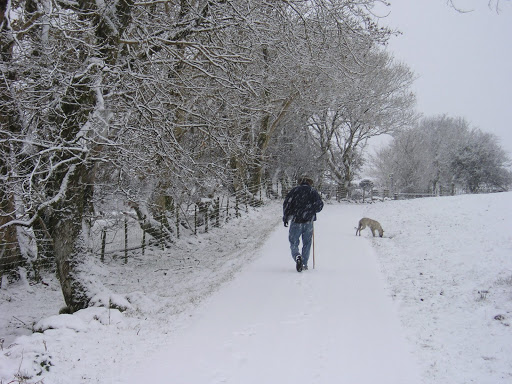
Last night, New Year’s Eve, was seen out at our neighbours and good friends 3/4 mile up the road, at the farmhouse that is the centre of our farming life here. Although a cold night it was good to be able to walk there effortlessly (after ploughing our way through snow for several weeks or sliding around in the car). As the chimes of Big Ben in London struck twelve o’clock we all sang ‘Auld Langs Syne’ to the traditional sound of a lone piper – in this case lone because there was only one Scotsman present and he could play the bagpipes. And a couple of hours later I stepped out into the cold, still air to walk back down the hill to home.
.
.
The secret valley at night – and some nights especially so – is a silent and dark place. Never menacing, it is a good time to reflect on times passed and to breathe in the air which seems to take on a different quality to daytime. Walking down the lane, with bands of snow periodically reminding me to watch my feet, I was aware that there were others on the move too. An alarmed rabbit shot across the road in front of me, diving into the hedge, it’s path being highlighted not by moonlight, for there was none, but by the sounds of leaves rustling and twigs breaking beneath it. The fox was far more discreet, the only witness to its passing, its distinctive musky scent.
.
.
Our little river, now thawed out from the frozen state that it had been in gurgled and splashed its way into the distance. It had seemed odd not to be able to hear it when it had its lid of ice and snow for even in the hardest winters past it had not been known to freeze over.
.
.
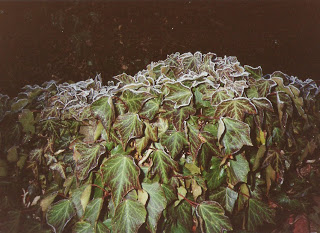
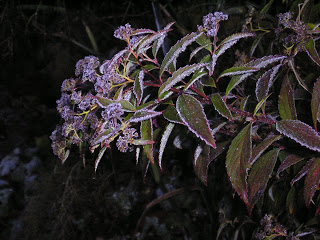
However, a touch of frost had given a magical dusting to the plants and fruits that had survived the onslaught of our early winter, for snow is rare at this time of year. January and February can be snowy and often we have none at all so who knows what the start of 2011 will bring?
.
.
.
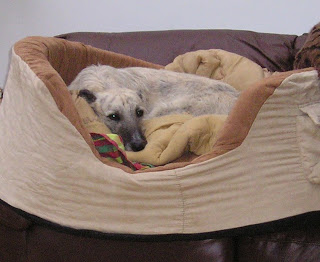
Approaching home, the reassuring smell of wood smoke drifted from the chimneys towards me. Warmth at last! And, as always, She-dog, our best companion, was there to greet us but not before raising a bleary eye from her bed, as if to say “what are you doing out at this time of day and at your age?”.
.
.
And so to bed tired but with a warm, contented feeling both inside and outside. To live in the secret valley, isolated but surrounded by beauty and good friends, is such a privelege. Who knows what 2011 may bring but if the first days sunrise is to go by, it should be a good one!
Happy New Year to you all…..
.
.
.
For the first time for very many years we have a white Christmas
.
Thank you for your continued support and interest – keep the comments flowing, I’m always interested to hear your views!
.
May you all have a very happy holiday
Johnson
Cotswold Hills, England
The other day I recalled one of the nursery rhymes that my mother used to sing to me when I was a small child sitting on her lap. Goodness knows why, after so very many years, but no sooner had I done so than the words became true:
.
“The north wind doth blow and we shall have snow and what will the robin do then, poor thing?”
.
Well, the answer is puff up its feathers and stand close to the bird feeding table until it gets fed!

.
It isn’t just the robin that demands food in these difficult conditions and there has been a constant stream of activity back and forth to the feeders. The tit family are always welcome – we get many different sorts here: blue, great, coal, willow and long-tailed.
.
.
It is often stated that British birds are rather dull compared to the exotica of warmer climes. We do have our share of ‘little brown jobs’ that aren’t too easy to identify but what can be more spectacular than the Greater Spotted Woodpecker? With it’s red cap and rump and black and white markings, it is a beautiful looking bird. We also have its diminutive cousin, the Lesser Spotted, but these tend to stay out of the garden and feed amongst the willows by the river.
.
.
.
.
.

.
.
.
The snow – which is very unusual around here before Christmas – looks to hang around for a while, with more forecast next week. I cannot remember the last time we had one but, perhaps, a white Christmas may be a reality rather than just a picture on a card. If so, I shall have to write a post quoting Bing Crosby…..
.
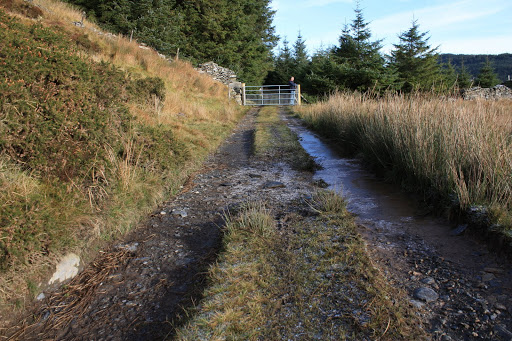
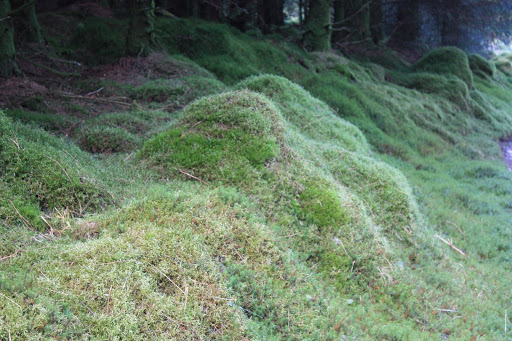
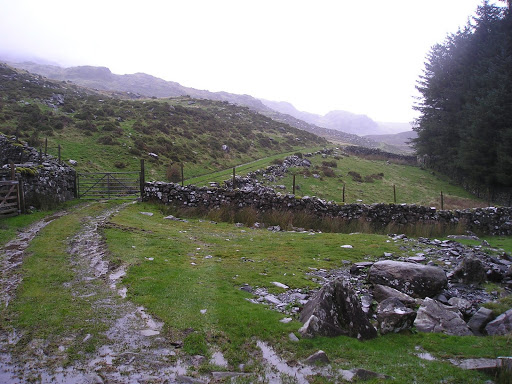
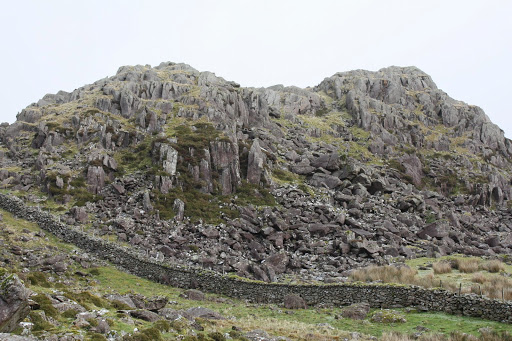
The tiny road that passes the converted chapel that we have been staying in once again for a late holiday continues to climb further into the mountains. The grassy areas, cropped short by sheep, give way to bracken, heather and stunted gorse, also shortened by the harsh climate. And an hours walk along this road – now little more than a stone track – brings you to the Enchanted Forest. At first, it is barely noticed: a tongue of dark green that appears to be sliding down the mountain as if desperate to reach the richer soil of the valley below.
.
.
But suddenly, as you walk round a bend in the path, there it is in front of you. The trees look inviting; beckoning you to shelter from the cold north-easterly wind that cuts through to your bones. Yet, as you approach, the gate barring your way makes you hesitate, for the first
.
.
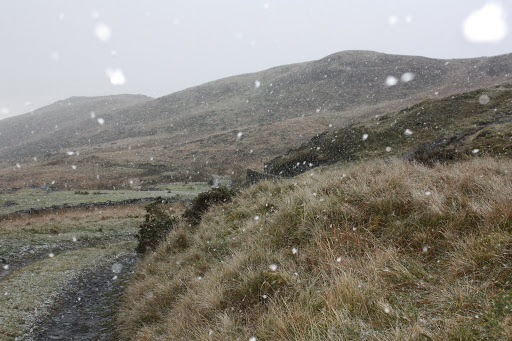
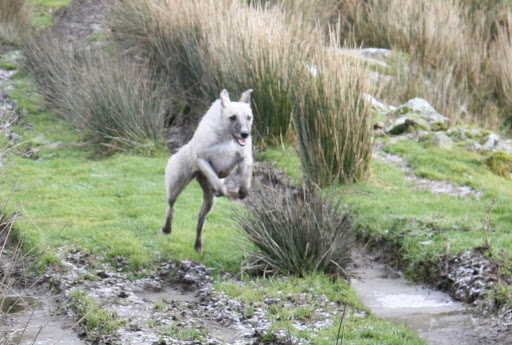
The sun had been shining brightly when we had stepped into the trees. Now, in an instant, the weather has turned and we are being threatened by snow flurries. She-dog, our lurcher, who recognises these problems better than we do, had been wandering on far ahead. Now, knowing that danger could be approaching, she hurtles down the track back towards us, agitated, beckoning us to return home.
.
These days the Cotswolds, with its rolling landscape, dry stone walls and picture postcard villages, give the impression of being sleepy and sparsely populated, basking (or some may say smug) in its glory of being one of the jewels of the British countryside. But this is not so. For it is a working landscape with its people going about their daily business, admittedly often in an unhurried way – for our narrow lanes and lack of motorways limit the speed that one can travel. And often our straightest and, therefore, easiest routes have not been made in recent years but by Roman settlers, attracted to this region some two thousand years ago, for much the same reasons as we are now.
.
.
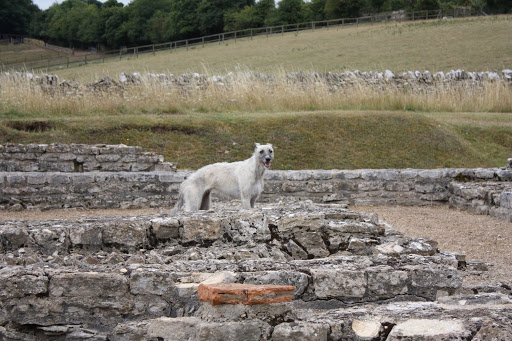
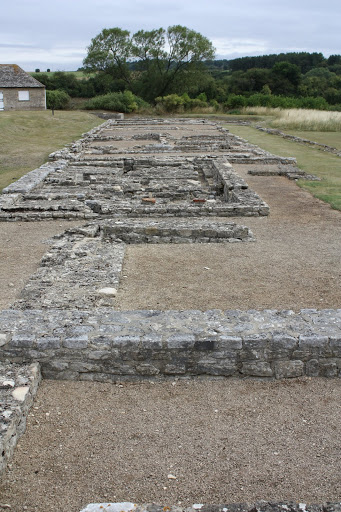
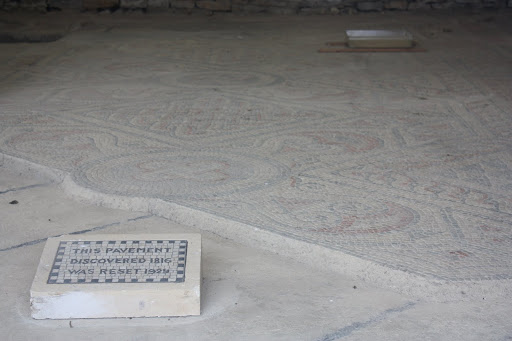
Ryknild Street, Fosse Way, Akeman Street, Ermin Way – just their very names conjure up images of Roman legions marching long distances through the country – linked their towns and cities with Corinium, now our modern Cirencester, the centre of both their commerce and entertainment (it still has the remains of a Roman ampitheatre that held over 8000 people). And, as time passed, they settled in more remote parts of the Cotswolds too: one such place is the villa built at North Leigh, near Witney. The track that leads you to the remains is as straight as any other Roman road but was used solely by servants and traders, the owners and visitors arriving by a more grand approach no longer visible.
.
.
.
.
.
.
.
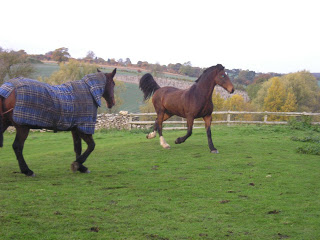
There comes a time when old friends go and new ones appear and so it is with Henry. Not that he has met his demise, despite being elderly and a little infirm. He has gone to pastures new.
.
….. and then the bucking bronco ……. while Barney looks on bored by all the antics.
.
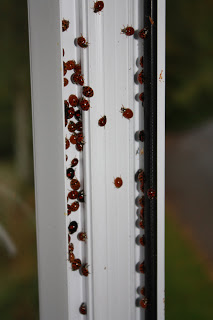
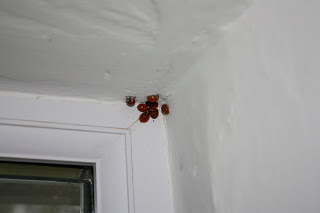
If ladybirds landing on you are traditionally a sign of good fortune to come, I wonder what the latest invasion of hundreds of them coming to hibernate in my bedroom means? Probably not much as I have evicted the majority of them! However, there is something rather special when a wild creature, however small, chooses to associate closely with you and without fear.
.
.
Now I appreciate that a small bug like creature is not exactly prone to a shaking attack of nerves when a human face peers closely at it – not even mine – but they must have some sense of concern when we recite the children’s rhyme “Ladybird, ladybird fly away home”, surely?
.
.
Having realised that they are likely to get ‘crunched’ once the window is shut, they moved further indoors following one another in single file. Of some concern, was the number of Harlequin ladybirds, a foreign invader originally from the Far East but brought here to Britain on plant imports via the USA. These only arrived in the country as recently as 2004 and are now found in every English county, much of Wales and beginning to colonise Scotland. Of the four ladybirds in the picture above only the top one is our native Seven-spot Ladybird.
.
.

Autumn has been at its best the last week or so with blue skies and warm sunshine by day, the perfect weather for long walks. And afterwards, as the evening chill sets in, what can be better than to laze contentedly in front of a blazing log fire, losing your thoughts in the flickering flames? This is what I have been doing the past ten days.
.
And where better than to do this than on Exmoor, the 270 square mile national park in England’s West Country? I have known this place for over 40 years and it’s dramatic scenery never tires with the passing years. The coastal area between Lynmouth and Porlock, where the open moorland meets clifftop and plunges 800 feet to the sea is the most dramatic of all. And the tiny village of Countisbury can lay claim, in my opinion, to have the best views on Exmoor.
.
.
.
I made a decision when I started this blog that I would not go commercial – either for my own garden based business or for anyone else. Somehow, it just seems to put a different slant on your writing. However, I am always being asked where I stay on my Exmoor visits and I am more than happy to break the rule on this occasion. There can be no better place to spend your time than at the Blue Ball Inn, situated in the heart of the village.
.
.
The Blue Ball Inn, which dates back to the 13th century, was originally a coaching inn where horses and travellers rested after the exhausting 1 in 4 climb up Countisbury Hill from Lynmouth. Today it still welcomes travellers, whether it is for just a drink, a meal or to stay in one of their sixteen bedrooms.
.
.
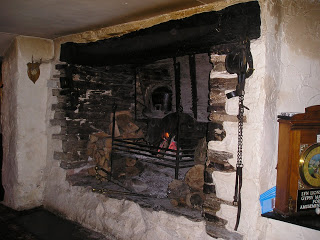
The building both inside and out is dominated by a vast and ancient inglenook fireplace and chimney, so big that you can look up it and see daylight. It is a great place to relax and unwind with a pint of locally brewed ale and is the hub of the inn.
.
.
.
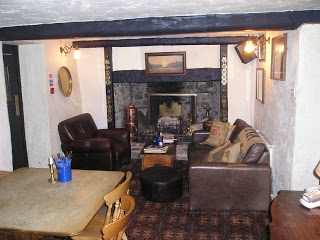
The bar, with its low ceilings, blackened beams and loads of character, is a busy area but there are also several other places to sit. Each has its own fireplace and comfortable chairs, ideal if you want to find a quieter space to read or plan the next day’s walks.
.
.
.
It is not just the beer that is produced locally. The restaurant, which serves food all day, is committed to offering a wide choice of menu, much of it sourced from the area – they even rear their own rare breed pork. During my stay, I never once had the same meal twice (although I wish it would have been possible to have forced down a second helping of their spare ribs they were so delicious). The chips are the best in Britain. By the time dinner was over, I was usually too tired to continue drinking in the bar and would disappear to bed. The bedrooms, which have all the usual facilities, are comfortable and clean and, after so much exercise and fresh air, sleep guaranteed.
.
.
Awake and refreshed and after a hearty breakfast, walks can start from the door and can vary in both their length and the steepness of hill. Ours varied from twenty minutes to five or six hours. With instant access to heather moorland, ancient woodlands, rushing rivers and the spectacular clifftop walks with its views across the sea to Wales, you are spoilt for choice. (Exmoor is, of course, great dog walking country and the Blue Ball welcomes them too). If you are lucky and walk quietly, there is a very good chance that you will see the wild Exmoor ponies or the herds of Red Deer – we saw both within a mile of the pub.
.
.
.