2025: The Year in Review – part 2

2026 has come in with a bit of a blast quite literally for we are experiencing a blast of cold air and snow that has swept down from the Arctic.  Here, in our part of the Cotswolds, the snow and ice are more of a nuisance than anything else for there is very little snow cover and the roads have been quite treacherous.  The country folk of yesteryear always said that if the snow hangs around there’s more on the way – time will tell.  It’s been some years since we had deep snow blocking the lanes.
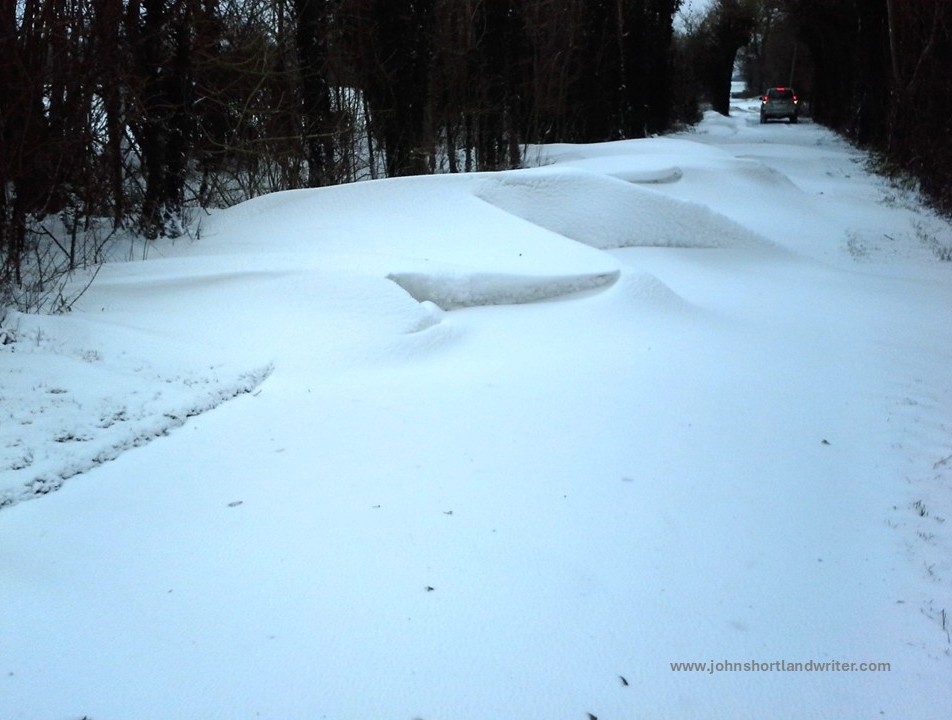
It’s been a few years since we had snow like this

In part 1 of the review (link here), I reflected on the first six months of the year.  It had been quite a successful year for me researching my family history.  I’m fortunate for I can trace them back very many centuries – at the moment I’m reading a book about them in the 1400s!  I also took the opportunity to finally visit the chapel (link here) where one is buried and nothing had prepared me for the splendour of it or how strangely moving the experience was.  I also met with Canadian cousins (this time, living ones!) for the first time and we all commented how strong family bonds can be.  That, and a prompt from you, one of my readers, made me reflect on those other great influencers in our lives, mentors.
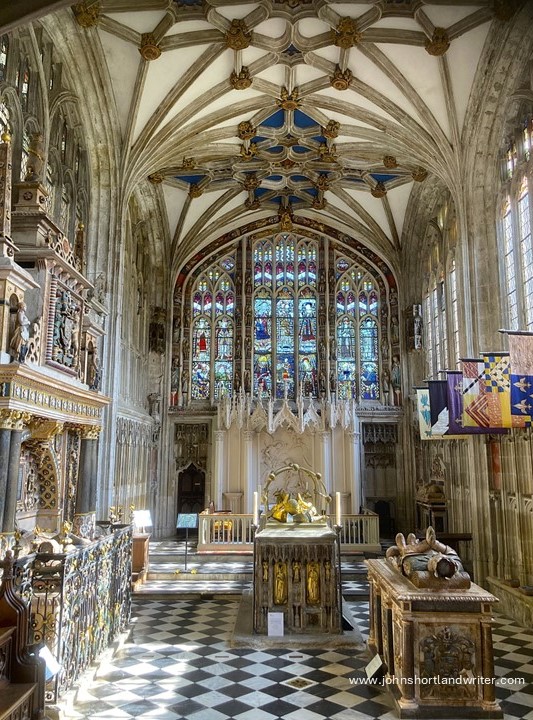
The Beauchamp Chapel, named after one of my ancestors, Richard Beauchamp

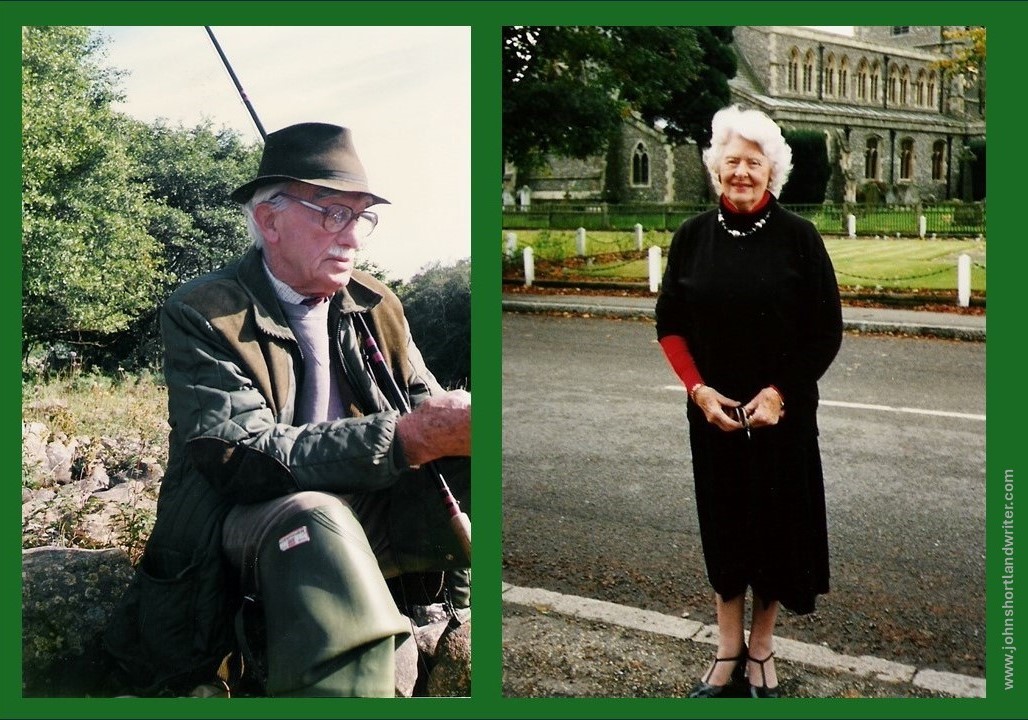
In June I had written about my first pair of mentors, Dick and Lorna French who lived on a remote farm in Exmoor National Park.  Their story can be found here.  The following month, I wrote about Cyril and Pamela Heber Percy who I first met in my early thirties.  How different they were from Lorna and Dick but how equally valuable were the life lessons they taught me!  The Heber Percy’s had both been brought up by wealthy, landed parents.  Cyril, who was born in 1908, had come from a background that we now associate more with Royalty: it was a house with liveried footman and a strict regime.  Pamela’s family were very different for she was brought up in Ireland where the discipline was far more relaxed.  Both had a deep love for nature and a huge interest in people.  They, like most mentors, had the ability to make you feel very special.  It was with Cyril that I first learnt to fly fish, and it was he that gave me the ability to recognise where the fox had lain and the badger pushed through a hedgerow – more of them in this link here.
It was back to Exmoor for August (link here) to explore the three churches where according to local rhyme and legend no priest would ever go to.  Was it due to them being so remote or was it due to witchcraft?  Or bandits?  Or lepers? Whatever the reason, they are well worth visiting today for they sit in some of the most stunning countryside that you’ll find in England, and in August the hills are cloaked in a purple haze of heather flowers.  One of the three churches is world famous for it was at Oare that Lorna Doone was shot as she stood at the altar on her wedding day.  As with all my blog posts, there are lots of photos to demonstrate what a beautiful area I have been lucky enough to have spent so much time in since my teens.

Oare Church on Exmoor where Lorna Doone was shot on her wedding day

September found me writing about the chance contact by a Cheltenham art gallery asking me for help with a series of watercolours of London street scenes they had acquired.  It turned out that they had been painted by yet another ancestor of mine (they have since been sold and are now in the United States).  My own artistic talent is restricted (as one kind person described it) to painting with plants – I can visualise garden design and create it but I could never offer clients an artist’s impression!  In the blog I explored the various connections I have to people that are skilled artists ranging from present day to those in the past.  It was a fascinating task and not one I’d ever thought much about until I received the prompt from Cheltenham.  To see the London paintings as well as the others I found click on the link here.

One of the four paintings of London that are now in the USA

It was very much back to the Cotswolds for Halloween.  We live very close to the Rollright Stones, parts of which date back six thousand years – so older than Stonehenge.  It has long been a place of ritual and superstition and Rollright and its surrounding villages have an equally long association with witchcraft.  In 1875, a ritual murder was committed.  Poor, elderly Anne Tennent was harmless enough but accused of witchcraft with brutal consequences.  In my research for the blog, I came across a hand-written eye-witness report and had email correspondence with her 4xgreat-grandaughter.  What I hadn’t expected to find was that a similar murder was committed very many years later although the connection to witchcraft was not disclosed until the late 1960s, so well within my lifetime.  And then there are the tales of the mysterious black, headless dog being seen…  When I visited the stones in October offerings had been lain upon them.  Intrigued?  Click on the link here to find out more.

The mysterious Rollright Stones, over 5000 years old and a centre for witchcraft

It had been some time since I last wrote about gardening which is, of course, my hobby turned profession.  One of the constant questions I’m asked – and often a tricky one to answer – is how to screen an unwanted view.  November would be the perfect month for dealing with a problem like that so in Hide that Ugly Wall I looked at the various options.  In the blogpost (link here) we looked at trellis, climbing plants, and ideas for planting in front of the wall, fence or whatever else needed screening.   At the end of the post there is a list of plants of all types and sizes to help with selection.

Screening an ugly wall – in gardening, there is a solution to every problem!

So the year came to an end with reflection upon what had been and 2026 begins a new year of blogging.  As Life in the English Cotswolds enters its seventeenth year all that is left is for me to thank you all for helping to make it such a success.  When I began in 2009 it was to be a short-lived experiment in combining text with images.  I never anticipated that it would be read let alone develop into this!  Now, I hear from people all over the world and have even met a few of you.  It has received awards and featured in national newspapers, and it led to my being involved in setting up a literary festival. It was through this that I was approached to write my book on gardening, Why Can’t My Garden Look Like That?  Who would have thought it?!
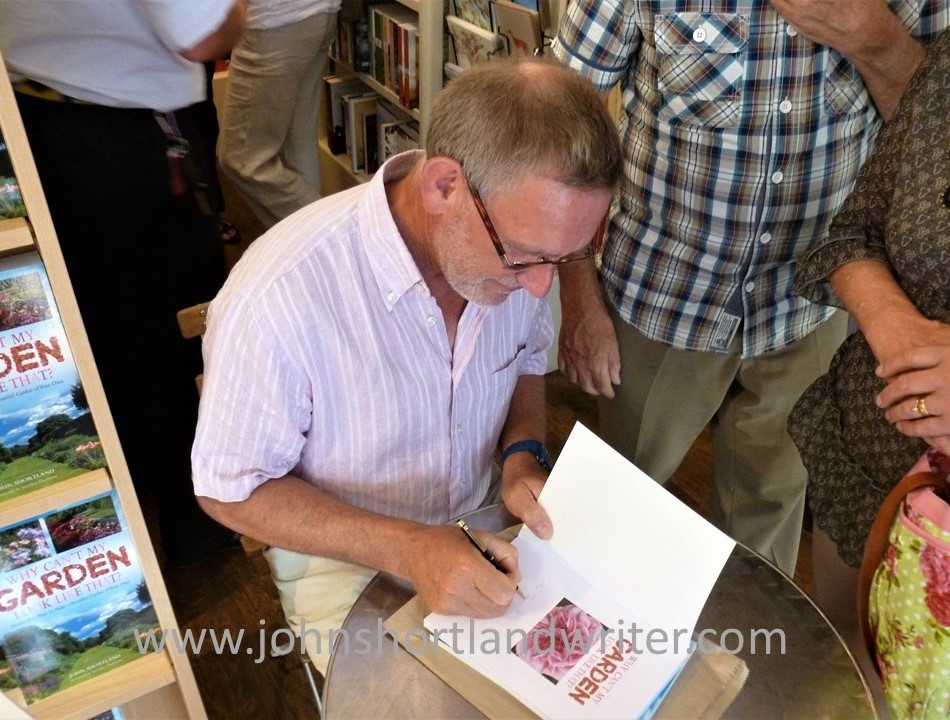
Book signing – the publishing contract came as a direct result of blogging

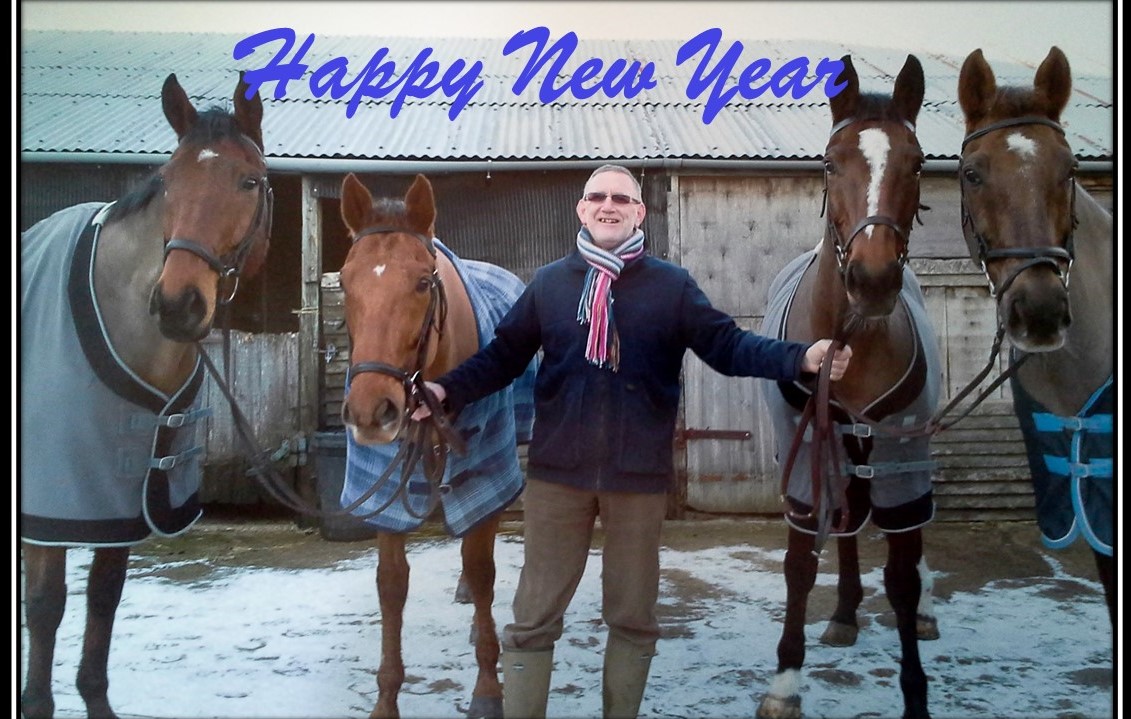
With every good wish for a happy, healthy and peaceful 2026.  I’m very much looking forward to seeing what adventures arise and sharing them here.  If you have any thoughts on topics, ask questions or just fancy a natter I can be contacted through the Get in Touch tab at the top of the page.
Mentors – part 2

In my earlier post on mentors, I asked the question “what makes someone a mentor” and do they realise they have actually become one. Of course, the answer will vary for there are many reasons why people do it, and equally a number of reasons why someone needs it.  My experience is that it is only with hindsight that I realise I had four mentors in my life and all would be amused at my describing them as such. 

Lorna Dick French, Cyril Pamela Heber Percy

In part one I told of how I met, quite by chance, Dick and Lorna French who had a remote hill farm on Exmoor, a National Park in England’s West Country.  I was aged sixteen and, despite our age differences (essential for mentoring) a close friendship developed that lasted until their deaths many years later. [Their story can be found here] Fifteen years after that first meeting, I met another couple, Cyril and Pamela Heber Percy, and although of a very different background from Lorna and Dick, they too took on the role of mentor.

Woodlands Cottage, the Heber Percy’s home

In 1983 I had moved house to a small village in the Chilterns.  Although I consider myself a ‘Chilterns man’ I had always lived at their foot, first by the River Thames and, later, by the steep escarpment to the west.  Now I was living in one of the highest villages, surrounded by wonderful bluebell woods and prone to quite different weather than seemingly, everywhere else.  Like many hilltop villages it was a straggly affair, a mile long but with the houses scattered first one side of the road and then the other.   Our house sat opposite the common – a wide, open piece of land although by us it had been invaded by bracken and hazel scrub where Dormice could be seen climbing amongst the branches.   Wild cherries and raspberries also grew there and with a small pond that had once been the village’s only source of drinking water, it was very quiet and very lovely.     

There was a small pond amongst the cherry trees, once the village water supply
The village was surrounded by wonderful beechwoods awash with bluebells each spring

Soon after our arrival, there had been a knock on the door. Standing on the doorstep was an elderly gentleman, very upright and with a clipped moustache he looked every part the retired army colonel which he was.  With no introduction he barked, “what religion are you?”   Before I could answer, he continued, “Of no matter, we need bell ringers.  I’ll see you at practice tomorrow, 7pm.”  Of course, I didn’t go!  Our next meeting was one evening when out walking.    Hearing a lot of shouting and cursing I could see a man of similar age to me having difficulty with ‘boxing’ (loading) his horse to transport it back home.  No matter how he tried the horse refused to walk up the ramp and into the lorry.  As I drew level, the Colonel holding a whisky in his hand also appeared ready to give advice. The young man looked very dismissive at his suggestions but that changed after the Colonel took hold of the reins, jumped onto the horse’s back with an agility that belied his years and cantered away before turning and riding it straight into the lorry.  “Don’t stand any nonsense in future” was all he said as he tied the horse securely.  Turning to me, he said, “must be time for another whisky.”    Both the rider and I had learnt a valuable lesson that evening – never judge someone’s abilities by their age.

Boxing – or in this case, unboxing – a horse

The Colonel and I spent the rest of that evening in his home drinking whisky and discussing all manner of things, Pamela, his wife, joining us.  Sitting back in a comfortable armchair, I took in my surroundings, my eyes landing on a small photograph sitting on a shelf.  It was of two army officers on duty outside Buckingham Palace.   Cyril noticed my interest immediately – another thing I was to discover: he was exceptionally alert and noticed everything.  He explained that the photo had been taken many years earlier and featured in the national newspapers.  It was of him and his brother, one in the Welsh Guards the other in the Grenadier Guards acting as Colour Bearers at the Changing of Guards ceremony, the first time that two brothers had had that honour.

Changing of the Guard at Buckingham Palace 1927 [copyright British Newspaper Archive]

Over the years that followed, Cyril would tell me of his military career, of his escorting Queen Wilhelmina of the Netherlands under enemy fire during her evacuation, of dinners in England at the Palace with the King. (Pamela complained of how tedious all the formalities were!).  Of even greater interest was to learn of his Edwardian upbringing for he had been raised at Hodnet Hall, a large country estate in Shropshire.  He lived on the top floor in the nursery and each evening Nanny would bring him down to say goodnight to his parents where he would recite a poem and dutifully kiss his mother and shake his father’s hand.  Surrounded by liveried footman and other house staff, he preferred the informal company of the gardeners and gamekeepers.  Through them he developed a deep love for the natural world and keen observational skills which he passed onto me.  Walking together, he would point to a barely visible gap in a hedge and ask me if a hare, fox, badger or deer had made it.  Of course, I got it wrong but he persevered until I was able to tell the difference.

Hodnet Hall, Cyril Heber Percy’s childhood home
The Colonel taught me to recognise the different paths wild animals make (in this case, a badger)

During this time I was still working indoors in the retail fashions business but he taught me a lot about gardening too for the gardens at Hodnet were considered one of the finest in Europe.  You have to think big, he would say, immediately followed by “and you have to think small”.  To prove the point he would get me to lie down staring up at the undersides of large leaved plants, and then, on my knees, examine the different shades of green that could be found in the tiny leaves of wild thyme.  To get me to understand the wonders of the natural world he would say, “think like a child but always act like an adult”.  Years later, in my present career, I remember this advice and concentrate on elements of surprise as well as leaf texture when designing gardens.

When you look up at a plant you see a quite different world….

Pamela, also would tell me stories of her life.  Born into Irish aristocracy she had a very different upbringing to her husbands for there was the insecurity that the fight for Irish independence would bring.  There were stories of hiding in secret passageways within the house ready to escape if a violent attack took place, Fortunately, this never happened, perhaps because her mother took her social duties very seriously and would visit the poor and the sick to make sure that they never went hungry.  Pamela would accompany her mother on these visits and so from an early age saw how frugally ‘ordinary’ people lived.  It also gave her the ability to empathise with people from all walks of life and to treat them as equals.

Pamela Heber Percy

Over the years, the Heber Percy’s taught me many things, one of which was to cast a fly.  Both the Colonel and Pamela were expert salmon and trout fishers.  When I mentioned how much I enjoyed spinning for pike, Cyril had shaken his head and joked that it was very poor sport.  Venturing out onto the lawn he pointed to a fallen leaf – “that is your trout” – and he patiently watched and corrected me as I tried to get the line to drop close-by,  After I had mastered that he made life more difficult by pointing to leaves under low hanging branches and from there, to leaves floating on the surface of the swimming pool.  Unaware at the time, they gave me lessons in accuracy and perseverance as well as a useful fishing skill.

The Colonel: Cyril Heber Percy

It was a sad day when I heard that the Colonel had died.  He was buried, with full military honours at Hodnet, his childhood home.  We had always planned to visit the house and gardens together one day and now we were, although not in the way we had planned.  I felt surprise, pride and honour when I was ushered to the front of the church to sit with the family.  As the Last Post was being played from the top of the church tower I felt my lower lip tremble only for it to be controlled by hearing the Colonel’s voice whispering, “not very British!”.  Soon after his death, Pamela moved house and although not too far away, I saw less of her, and not many years after she also died.  I had lost two very dear and good friends.

Stained glass window at St Luke, Hodnet

And one final thought – I did learn how to ring the church bells!

Have you had a mentor or mentored someone?  What does it take for someone to become a mentor?  Our parents have probably the greatest influence on our lives so why does a mentor s role take on such importance? Let’s hear your story either in the comments below or, if you prefer, by using the Get in Touch tab at the top of this page.  Thanks to Diane Highton for posing the question that triggered this blog!