"The Most Beautiful English Village"

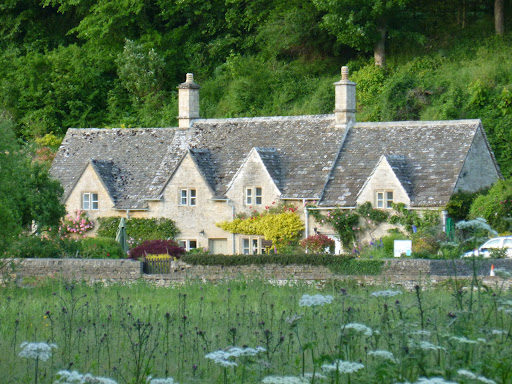
The tiny village of Bibury has long been recognised as one of the prettiest places in the Cotswolds and is much visited by tourists.  It is everything you might magine an old English village to be; so much so that some visitors, according to local gossip, not realising that it isn’t a theme park creation, walk into people’s homes to have a look around.

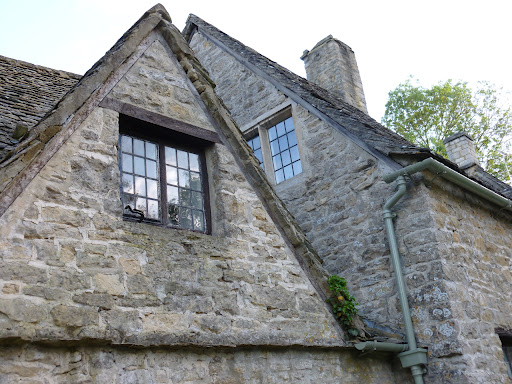
Ancient cottages in mellow Cotswold stone, a crystal clear, trout-filled river running alongside the main street, an old mill and a great pub offering food and accomodation all make Bibury “the most beautiful English village” as William Morris, the Arts and Crafts textile designer described it when he visited during the 1800’s.

The old cottages are so perfect and their setting so tranquil that they appear to have created an ethos amongst their owners: each house and garden has to be more well maintained than their neighbours.  The only weeds I saw there were across the river in the marsh and, of course, not only were they growing where they belong – in a wild setting – but there were only the most attractive ones such as Yellow Flags, the bog irises and the flat, white heads of the hogweeds.


No English village is complete without its church and pub and Bibury has both.  The church of St Mary’s dates back to the 12th century and is well worth seeking out for it is tucked away down one of Bibury’s few side streets.


If the church tries to remain hidden, no such claim can be made for The Swan, one of the landmark buildings situated on the bend where the road crosses the River Coln.  The creeper covered pub/hotel is a good place to watch the world go by although, rarely does a car go by without its occupants stopping to explore the village.  This is quite a problem for there are so many visitors and cars that to experience the tranquility of the place, or to get photographs such as those on this blog, you either need to stay overnight or to visit the village early in the day.  Looking at the online reviews for the Swan, I was amused to see that the only gripes were complaints about old furniture, no street lighting and no wifi or mobile phone signals – surely, some of the very best reasons for visiting!


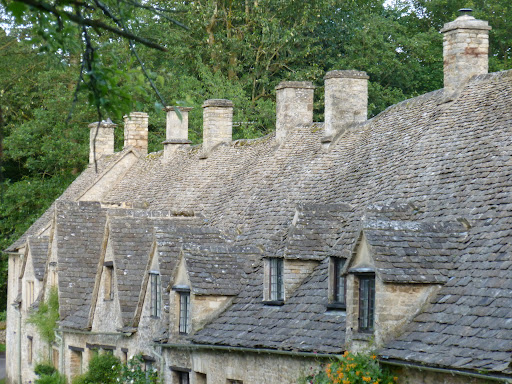
It can almost be guaranteed that every calander of the Cotswolds will have a photograph of Arlington Row – probably on it’s front cover.  Set back away from the road, it is reached by a footbridge: a terrace of former 16th century weavers cottages which, in turn, were converted from a 13th century wool store.  The importance of wool in creating the wealth of the Cotswolds and its churches, including the development of the Cotswold breed of sheep, now endangered, has been described in earlier posts on this blog (click here).  For more on the Cotswold sheep and the work of the Rare Breeds Survival Trust to preserve them, click here.
Arlington Row’s importance in history of vernacular architecture was recognised by the Royal Society of Arts in 1929 when they purchased and restored it.  A plaque, commemorating this is set into a nearby wall.

Exploring Arlington Row gives visitors an opportunity to see just how higgledy-piggledy the construction of old house are.  The old stone walls and mismatched rooflines and windows are juxtaposed seemingly at random – a modern planning departments nightmare.

Despite, the large numbers of tourists (for we all like to believe that we fall out of that category and will be the only persons there), Bibury is well worth making the effort to visit.  It is situated close to Cirencester, one of the most important Roman towns in the UK, with its wealth of history and it is also within easy reach of Oxford.  If I had to choose only one place to take a visitor to see, I think that Bibury would be highly placed on the list. 

Let me know – especially overseas readers, please – which would be the one place that epitomises old rural living in your country.

Add to Technorati Favorites

Hedgerow History and a New Project

One of the greatest and most picturesque, natural aspects of lowland Britain is its patchwork of fields divided by neatly clipped hedgerows.  In hill country, or where there is a wealth of stone, the fields are divided by dry stone walls and the Cotswolds are renowned as much for these as for the limestone cottages and houses built of the same material.  Here, domestic and farm buildings merge into one with the landscape for, as the fields were cleared of stone, it was natural to use it as a building material. 

The overgrown hedge on the left; the drystone wall starts a little further up on the right of our little country lane 

However, the Cotswolds also have their fare share of hedgerows and these often go unnoticed – overshadowed by the craftsmanship, colour and texture of the old walls.  In the secret valley we are fortunate for we have both: outside our little cottage – also built of stone 160 years ago – one side of the lane is bordered by a hedge, the other a dry stone wall.  At a glance, the hedgerow is unremarkable whereas the wall attracts attention for its weathered appearance and moss encrusted stones.  But not all is as it seems.

 The drystone wall was probably built only a couple of hundred years ago

The wall was probably built at the time of the great land enclosures, when large areas of England were partitioned, the ground cleared and ‘improved’ to grow crops (or here, in the Cotswolds, more likely wool) and may not be more than a couple of hundred years old – ‘new’ to us Brits.   However the hedge, shabby and overgrown in places, could well be a relic of the ancient wildwood, the forest that once covered most of lowland Britain in the days of pre-history before man started cutting it down. ‘Our’ hedge would almost certainly have been part of the Wychwood Forest, a royal hunting ground, for written records go back to the time of the Domesday Book of 1086.  As the forest was cleared (for more details click here) to make way for fields, it was easier to leave strips standing than to create new dividers. 

In places, the hedgerow is barely recognisable for trees have grown to huge proportion

How do we know that it is an ancient hedgerow and not one planted at the time of the enclosures?  There is an accepted formula for dating them known as Hooper’s Law: the number of tree and shrub species found in a thirty metre section x 100 is equal to the age of the hedge.  It is normal practice to take three thirty metre sample lengths and apply an average for greater accuracy.  There is also a second method of deciding if the hedge is of ancient origin: by the types of wild flowers that grow in it.  Certain species are very slow to spread, or perhaps only would normally grow in certain conditions such as woodland shade.  These key species are known as ancient woodland indicators and we have a number of them growing at the foot of our hedge.

 Bluebells are an ancient woodland indicator.  Here their new leaves emerge at the foot of the hedge – it will be several weeks before they flower

What is even more remarkable is that the plants tell us what is old and what is new hedge with such accuracy that it is possible to follow the old even after it has left the roadside. For our little lane that winds uphill as it leaves the secret valley to join the main road (‘Turnpike‘) is also part old and part new.  Before the Turnpike was built in the late 1700’s, the lane beyond our house took a sharp turn left and crossed the fields, it’s way now marked only by sunken turf and yes, you’ve guessed it, also by the old hedge and its associated flora.


 The ‘old’ road had been trodden for centuries by countless generations of drovers moving their cattle and sheep to market.  It was probably still used after the opening of the turnpike in the late 1700’s to avoid paying the tolls

I always consider March to be the start of the gardening year, the month when nature turns its back on winter and spring moves rapidly forwards.  Leaf buds burst, seedlings germinate and the first of the flowers remind you that long, hot days are not too far away.  It is the same with the plants that are beyond our garden gate.   And so on our first really warm, sunny day of 2012 I have decided to embark on a new project: to catalogue and photograph a year in the life of our hedge on a month by month basis.  Watch this space!

In places, the ancient hedgerow is still tightly clipped and, over time, has become very wide

Add to Technorati Favorites

Where’s The Snow in Snowdonia? (Only in it’s name)

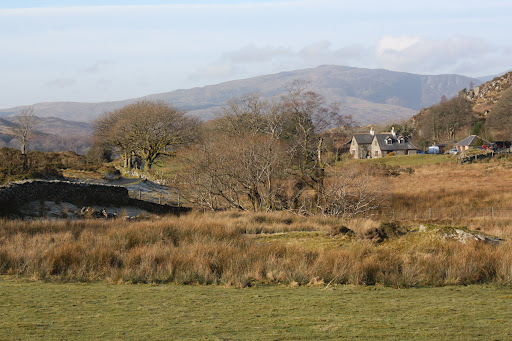
We have been back to Wales for a week’s holiday staying in a remote converted chapel belonging to a friend.  It is good to be back for the isolation is complete – no cars, no houses, no roads, no broadband and no television.  Well, there is television but being rather impatient with non-living things (and also quite a number of people that just might fall into that category) I cannot be bothered to work out just which of the several remote controls switch it on.  But best of all – and rather surprisingly considering all the dire warnings we have been given by the weathermen – no snow.


Last winter when we were here, a blizzard struck the day we arrived.  Gradually, as the supply of logs and oil for heating dwindled and the water supply froze resulting in our collecting it from the stream outside, our resolve and sense of fun also started to diminish.  Put it down to advancing years: in my twenties or thirties I would have considered it to be ‘quite a laugh’.  Not so these days – I could cope with the water and lack of central heating but I am not so good when the wood burner isn’t blazing away.  However, we saw Snowdonia last year as few visitors do; a snow covered landscape with more falling so thickly that it was difficult to see, when out walking, where either my partner – or more importantly She-dog – was even though they were just yards ahead of me.


This year it was different, we left home with the (as it turned out, innacurate) knowledge that we were driving into blizzards and we hoped that we would reach our destination before being marooned, despite having to travel over two high passes and up a track steep enough to make a mountain goat think twice before tackling it. This time we came prepared with a vast amount of food and with three times the amount of warm clothing that any two people could wear over an entire winter.  As we reached the town of Shrewsbury the forecast rain began to fall; it would only be a matter of time as we entered Wales and gradually climbed in height that it would change to snow.  The rain grew steadily heavier and the road ever steeper until we reached the first summit and, surprise, there was not a hint of whiteness anywhere.  The second pass, higher still, was similar although the surrounding peaks did have a dusting of snow. We reached our destination with the rain still falling and the temperature ever rising – it was now fifteen degrees warmer than when we had left home in the Cotswolds, further south and many hundreds of feet lower.


The next morning we woke to sunshine, having no guilt about not getting out of bed in darkness at some ridiculously early hour as every other day of our lives.  Looking out of the bedroom window, the surrounding mountains still wore their apology of snow – it was a scene from the end of March or even April.  The calls from concerned Cotswold friends telephoning (we still have one piece of technology that works here) to confirm our safe arrival quickly turned to irritation when they discovered we were fine and they were blanketed in five inches of overnight snowfall.  It was hardly our fault that they had to work twice as hard at looking after our chickens and horses in our absence and, it seems, my suggestion that carrying buckets of unfrozen drinking water out into the fields was a good daily exercise did not help.


Last year She-dog had a thoroughly enjoyable holiday here as well.  Like most dogs, she revels in human company and snow and her days were spent in a mix of snowy walks and long uninterrupted periods of sleep in front of the fire.  This time we are here on our own.  It has been commented on that She-dog has not featured much in recent posts – all that is about to change for she has  gone away on an adventure of her own: if all goes well, in about ten weeks time she will be having puppies once again and, this time, we might just keep one for ourselves.

Add to Technorati Favorites

New Year in London

Perhaps it is because London will be hosting the Olympic Games later this year that the capital seemed rather quiet and devoid of people and traffic when I visited it at the beginning of the month.  Although it lacked its usual ‘buzz’ it did mean more comfortable walking and it was definitely easier to catch a taxi.  I imagine when the Games are in full swing you will not be able to move for people and public transport of any type will be crowded.

 We tend to follow the same plan when we visit; not because we want to play safe, it is just that we cannot bear to miss a morning coffee and an almond croissant at the Bluebird cafe.  A slow walk up the King’s Road with it’s exclusive shops and boutiques brings you to Sloane Square – just in time for lunch.  This time we found, to our dismay, that our usual dining spot had closed down so we tried the Botanist, almost opposite, instead.  It proved to be a good choice for the food was excellent, as was the service.  My biggest criticism of it is its name which, of course, with me being a ‘planty’ person had rather appealed.  The decor consisted mostly of pictures of insects so we now refer to it as The Entymologist instead. 

A taxi ride took us to the National Portrait Gallery.  One of our New Year resolutions is to take in a bit more culture as we are becoming rather reluctant to move out of the secret valley, generally preferring the peace and quiet of the rural life.   A trip to ‘the smoke’ from time to time is just what’s needed to stop us from becoming complete country bumpkins.  We hadn’t allowed enough time to look at the pictures in any depth –  we really need to visit when we are not being dictated by the thought of food.  A mental note has been made to visit again quite soon, that time bypassing the restaurants ….. Mmm, we’ll see.

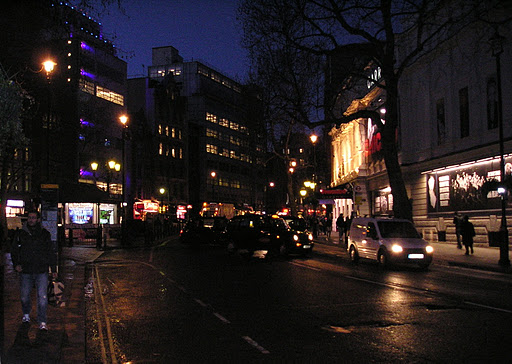
When we came out of the gallery daylight was fading fast and London appeared to have renewed energy.  Somehow a city at night with all it’s lights seems a more exciting place.  I seemed far more aware of statues, theatres and red buses – I’d forgotten just how much I like cities!  I’ve never lived anywhere other than in the country and I’m not too sure how I would fare if I suddenly found myself in one permanently.  Not too well, I would think.

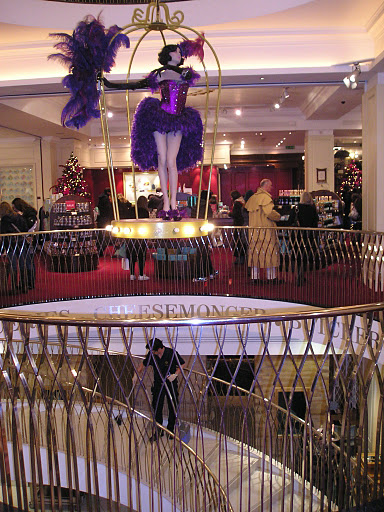
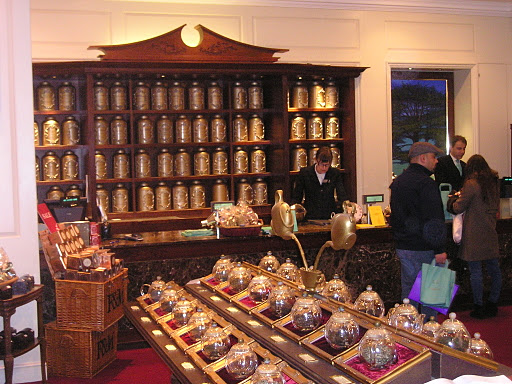
Another taxi ride took us to my favourite London store; favourite perhaps because it is another food place.  Forget Harrods, which I’m afraid I dislike intensely, give me Fortnum & Mason’s anytime. The Christmas windows and decor were still in place but even without those, F & M exudes quality from every pore – or do I mean from every chocolate? 

Who could possibly bite into these white chocolate bears, though?

The first thing I do when I enter the store isn’t to think of my stomach, surprisingly, as I am surrounded by goodies to eat.  I always go to the central circular staircase and lean over to look down which is dramatic, then descend down the old wooden staircase which is equally full of character.

A wander around the coffee and tea halls with their wonderful aromas is another must.

The store has a reputation for making some of the best hampers in England.  I was lucky enough once to be given one for a Christmas present and it was such an exciting treat unpacking it and seeing what all the tins and shiny wrappers contained.  I was rather taken with their picnic hampers but there would be no point in us having one: although we picnic rather a lot because of our outdoor life, they always end up big social events.  What starts off as a casual chat with a couple of friends snowballs and it is not unusual to find twenty or thirty arriving to enjoy the feasting.  Fortunately they usually bring food and drink with them too.  If we had a Fortnum’s picnic hamper it would have to be a quiet, small affair – just the sight of the baskets conjures up images of check tablecloths laid on the grass, eating in the shade of the willows down by our little winding river.

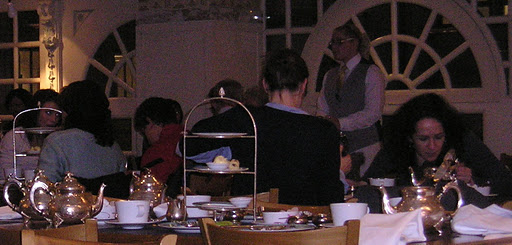
And what would a visit to Fortnum’s be without having one of their splendid traditional afternoon teas?  By the time I had forced down two scones with strawberry jam and Cornish clotted cream and cake, all washed down with a pot or two of Orange Pekoe tea it was time to think about returning home.

If we were lucky and didn’t get held up in traffic jams we would be back in the secret valley just in time for supper.  I think a belated New Year’s resolution ought to be excercise more and eat less …..

PS  Don’t forget you can find me on Facebook now and get regular updates from the secret valley

Add to Technorati Favorites

What A Difference A Year Makes

The British are always going on about the weather and I’m no exception.  My very first words upon waking are “What is the weather doing?” and my final words before sleeping are “What will the weather be doing?”.  I make no apologies for this: it’s part of our make-up as a nation.  It’s because, I was once told, that whereas other countries have seasons, Britain just has weather.  It’s not quite that simple, we do have seasons – Spring, Summer, Autumn and Winter – just like any other temperate country, it’s just that in the UK they get a bit muddled up.

I write this, snug in front of the woodburner – not that much heat is getting past She-dog who thinks this has been lit solely for her pleasure and comfort – listening to a gale rattling the window panes and whistling around the eaves.  The rain is lashing down and there is absolutely no need for me to ask what the weather is doing this evening.  However, I have been told that I have said “Listen to the weather” several times. I could have said how remarkable it is that only yesterday I had my lunch sitting in the garden.  Yes, really.

I should admit that I am a hardy sole as I work outdoors all year and so am less affected by cold than most and I also should admit that I was wearing a coat and gloves and sitting in a sheltered, sunny spot. Regardless of those finer details, yesterday I commented how last year to the day we were up to our necks in snow in the worst wintry weather the Secret Valley had had for years.  And, even more remarkably, the snow came when you would expect it  –  in midwinter but (and there’s always a ‘but’ where British weather is concerned) in the Cotswolds we rarely get snow before January …..   But it was still rather remarkable to be sitting there, surely and remark worthy?

What is even more remarkable is that all of this week I have been planting out herbaceous plants and laying turf; late even by our odd climate standards.  We have had frosts: there were three quite hard ones in October, then none until the last week of November and then a couple more last week and none since.  In between, we had two weeks of warmish air and thick fog which was enough to make even me depressed. 

The spirits, even on those damp, grey days, were uplifted by the huge array of flowers that have reappeared.  There are always a few late roses hanging on determinedly until Christmas Day, looking bedraggled and ragged but not this time.  Some of them have given up but others have almost as many blooms as midsummer.  There are pots of herbaceous Salvia nemerosa ‘Mainacht’ that have regrown after their end-of-season haircut and are in full bloom once again.  Primroses and cowslips are showing colour.  Today I counted over twenty different summer flowering plants still going strong.  That’s a bit of an exaggeration, I really mean showing the odd flower or two.  All the plants have become muddled so we have Winter Jasmine as you would expect but not alongside spring flowering Forsythia.  And we have evergreen, flowering shrubs such as Viburnum and Sarcococca as we should have at this time of year – but not alongside the newly unfurling purple leaves of Cotinus cogyggria.  Where, or more to the point, when will it all end?  Possibly quite soon.

It isn’t just the garden that is confused.  On the farm the cattle are still out grazing the fields.  They should be inside by now but with plenty of grass still available in the fields they can be out for a little longer. 

While I am here writing about a bit of wind and rain, the north of England and Scotland, in particular, are bearing the brunt of 100mph gales and heavy snow.  Perhaps we are quite fortunate, after all.  The rain here is only supposed to last a few hours and tomorrow is forecast unbroken sunshine once more.  Which reminds me, I  really must start talking about the lack of rain we have had in recent months.  The little winding river is running lower than it ever has and can be easily walked across in places in just walking boots where the water flows over gravel .  It should look, at this time of year, like the photograph I use on the header to this blog.  Instead it looks like midsummer again with the water, where it flows deeper, still choked with watercress.  Oh well!  I suppose I should be grateful that I am still able to go out and pick it in December – I can make a store of some delicious hot soup to drink when the weather realises it is winter.

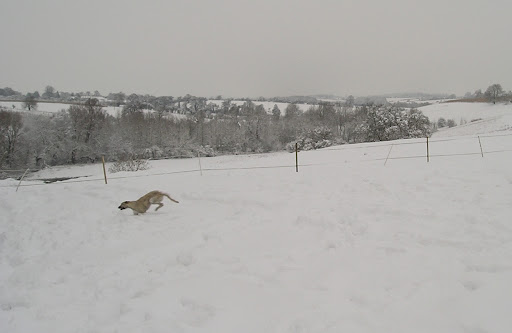
All the photographs, except for She-dog in the snow, were taken over the past week or two.  When the frost has been hard the Secret Valley has looked at its best.

Add to Technorati Favorites

Summer, Autumn, Summer, Autumn

It is said that the English, compared to those from other countries, always talk of the weather and, I have to admit that it is true. I have also heard it said that, whereas other countries have ‘climate’, we just have ‘weather’. And it is weather that has shaped the nation’s psyche, especially those of us that earn our living standing outside in it.

It has been an odd year. The hardest and earliest winter for years gave way to a lovely spring, March and April being mild and sunny. We were then hit by the hardest May frost that anyone could remember and here, in the secret valley, many of the trees had their newly formed leaves and flower buds blackened. The horse chestnuts and oaks seemed hardest hit, although oddly enough, not all of them and not even all of the leaves or flowers on the same tree. Those damaged leaves fell and bare braches remained until July when, suddenly, they sprouted fresh leaves with the same verdent intensity as you would find two or three months earlier.

One moment bright green growth, the next ……..

…….. dead from frost

A similar thing with the weather has happened again over the last couple of weeks. Late summer proved to be rather disappointing with few really warm days and none where you could sit and relax in an evening with friends, wining and dining under the stars. Autumn seemed to be arriving early. Then, just as October arrived and our thoughts turned to log fires and bowls of soup for supper, summer returned with a vengeance. The temperature soared to 30C, breaking all records, the wind dropped and, for a week, we sweltered under cloudless skies and relentless sunshine. As the leaves on the trees began to crisp and garden pots started to die (I refused to start watering them again at this time of year), out came the garden furniture once again.

But what has happened now? Three days ago, we returned to chill, and with a drop of nearly twenty degrees it suddenly feels more like November. Some leaves have begun to turn colour but others have fallen, too exhausted to give us their fleeting pleasure of golds and yellows. Snow is forecast up north in Scotland and every day the news is full of gloomy stories of an even harsher winter than the last one.

One place that always gives good autumn colour is the Chiltern Hills that rise so dramatically from the Oxford plain. It is a special place for me as I was born and lived most of my life there, a country so different from the Cotswolds where I have been the past ten years. Now I live in watery valleys with far reaching views and open skies. The Chilterns, although no more than fifty miles away, is the opposite – dry, chalky and steep, a secretive place where the clouds and views are hidden by beech woodlands. It is the beech which give the best of autumn colours.

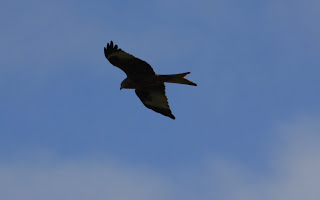
When the M40 motorway ripped a great chunk out of the chalk ridge, no-one anticipated it would alter the climate somewhat. But it is here, where the beech hang precariously to the edge (and sometimes topple over it) that the earliest signs of colour start. And even less did we think that one day Red Kites, one of Britain’s rarest birds of prey, would become so numerous soaring above it and feeding on the road kill that the motorway ineveitably produced. If the view of the chalk cut looks familiar it is because it was used in the opening shots of The Vicar of Dibley, the much loved comedy series on television that was filmed in the nearby village of Turville.

So, we Brits have suddenly become wrapped up and stand huddled together talking about being too hot and too cold and will there be snow. Who knows? One thing, however, is certain: if there is snow down here in the south, it will be the chalk cut on the M40 that will get it first and it will also be the first motorway to be blocked by traffic trying to climb to the top of the ridge.

Add to Technorati Favorites

Shh! Don’t Tell The Weather Man!

I hardly dare mention it but I think Spring is finally coming to the Cotswolds. After I wrote about it back in February, the man from the Met Office sent us cold again. Hard frosts put spring on hold. To be fair, as I also wrote, the Cotswolds may be one of the most beautiful places to live in the south of England but the hills are also one of the coldest. Our spring is always two or three weeks later than places even as close as Oxford or Gloucester.
.

.
Early spring sunshine comes to the ancient Cotswold town of Burford
.

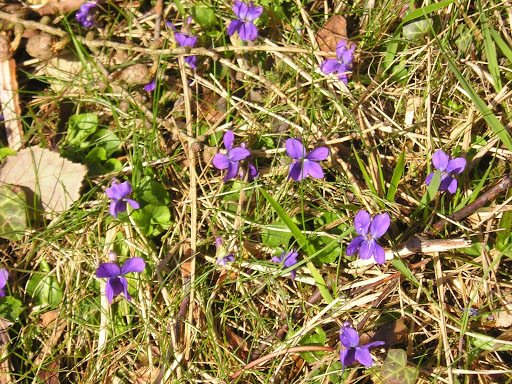
The past few weeks have been unusually dry which has meant that tidying up the garden – or, in my case, gardens: my own as well as clients – has progressed rather well. A nice drop of warm rain now would work a treat and not interfere with time schedules. At last, in the secret valley, leaves are unfurling properly, daffodils are blooming and the lone primrose has been joined by many more as well as purple and white violets.
.

.

.

Wherever I have lived, there has always been one hawthorn that opens its leaves days before the rest, even when planted as a hedgerow. I’ve often wondered if this is a genetic thing which means, I presume, that it could be cloned to have a whole group of early leafing ones. Or is it a combination of warmth and soil conditions in that particular spot? When I retire and have more time (a contradiction as the two never happen according to friends who are trying it) I will take cuttings and carry out a controlled experiment. It will give me the opportunity to blog about it if I am still able to sit in front of a computer!

.

.
I wonder if I could get a whole hedge of early flowering hawthorn? It will be another six weeks or more before they will be in bloom in the secret valley.
.

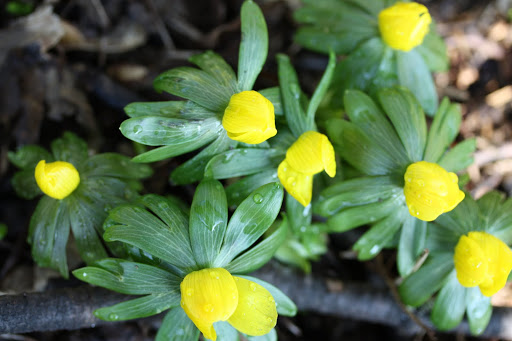
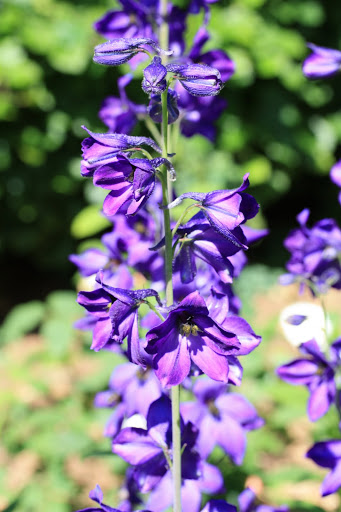
The snowdrops and aconites have now finished flowering. The little ruff of green leaves are all that is left of the latter. They look so similar to the taller herbaceous aconites or Monkhoods whose green ruffs are also poking through the ground now. They are all part of the buttercup family so are related but so unalike one another at their flowering time. I love the tall purple spires of the Monkshoods in mid to late summer: not as delicate as delphiniums, another favourite, but at least slugs don’t eat them and they don’t need staking, a real plus.

.

.

.

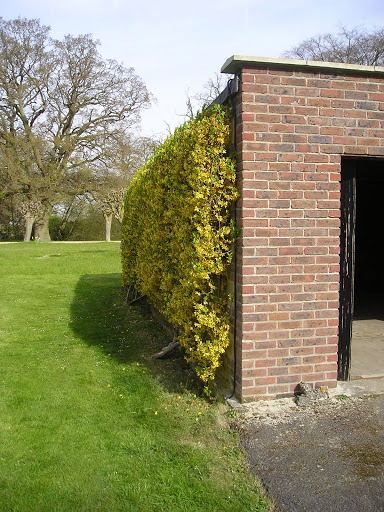
Forsythia is in full bloom. These I enjoy in other gardens but never plant them in my own unless the garden is huge and they can be planted a long way off. They show up from quite a distance and when seen too close, are too strident for my taste. The non flowering shrub later in the summer is a coarse affair too, dull and not warranting the space unless livened up by a clematis or other climbing plant. In the photo below it is grown as a wall shrub and it works well in disguising this unattractive garage. Despite being cut hard back to the wall each year in early summer it is always smothered in bloom by March.

.

The same applies to the common flowering currant. The standard pink is a wishy-washy thing and the deeper coloured, named varieties such as King Edward VIII, is as strong in colour as the forsythia – a plant to be enjoyed in other gardens. For those of you that thought the currants were always pink (although there are white flowered versions) and smelt of cat’s pee – and I include myself in this category for many years – there are three others that are well worth making space for.
.
.

Ribes odoratum, has pale yellow flowers and is beautifully scented. It is a bit of an untidy shrub in my experience, suckering freely but not a nuisance. It grows in happy neglect in a hedgerow – an ideal spot for it to do its own thing – and is really only noticed by the spicy fragrance as you wander past.
.
Ribes lauriflolium is a new plant to me. Unlike the others which all originate from the States, this currant is found in the wild in China. Looking at descriptions on the internet I wonder if they are correct or if there is a lot of variation in the stock, which is possible. I bought mine described as white, evergreen and not too hardy. It has survived -16C this winter, has been deciduous (perhaps it keeps its leaves in milder winters, I rather hope not) and is white flowered. Others are described as yellow and growing to only 1 ft – mine is already 3ft but that may be because it is tucked behind our dry stone wall. The one thing they all agree on and I can confirm is the exquisite scent of lilies of the valley. Do try to grow one if you can find it.

.

.
I have since discovered that this isn’t a ribes at all! See my next post to reveal all!!
.
My final choice of flowering currant is another favourite, Ribes speciosum. It is reminiscent in bloom of fuchsia and, like them, are pollinated in their native environment by humming birds. Hailing from California, in UK gardens it requires shelter and grows best against a warm wall where it can be trained on wires or left free growing. This photo was taken in the botanical gardens in Dublin on a glorious spring day.
.
.

Warmth, blue sky and sunshine. The clocks go forward an hour this weekend giving us more evening daylight. I’m almost feeling optimistic about the days to come – something a gardener should never be!
.
.
.
.
Add to Technorati Favorites

Spring Is Around The Corner!

The first signs of spring are always welcome and especially so after the winter that we have had this time. Frosts arrived early in the season, followed by snow that lay both deep and long, which is unusual for the south of England.
.

Winter in the secret valley: sheep wait patiently for food by our little winding river
.

The Cotswolds are known, however, for their colder and longer winters compared to the rest of the region. Here, about as far inland as you can be on a small island, we have little benefit from the warming effect of the sea and we are also hill country. Elsewhere may be showing signs of spring but in the secret valley these are still hard to find – an elder twig just breaking into leaf is the only green that I can find so far.

.

.

The aconite wood, ‘though, is a sight to behold and has been flowering for a couple of weeks now. How many plants can there be? Surely, tens of thousands. When and why were they planted here, for they are not native to this country. An old country chap told me it used to be called Summer House Woods but there is no sign of a building here and the ‘big’ house that owns the land is some distance away.

.

.

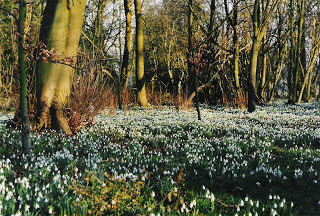
This snowdrop wood was planted by nuns over a hundred and fifty years ago and is attached to my ‘reincarnation’ house. Snowdrop woods, unlike aconite ones, are not uncommon but never fail to impress. Even a small group in a garden are eagerly awaited and we have plenty here where they spill out beyond the garden boundary and peep out from amongst the hedgerow that borders the lane.

.

.

The Cornus mas is also flowering now. It grows in our garden against the house wall, facing east. Despite this, it perfoms regularly and is easy to keep pruned to shape. This one, is the variegated leaf variety which is quite slow growing compared to the standard type and so is ideal as a wall shrub. In late summer it carries edible scarlet berries, hence its common name of Cornelian Cherry.

..

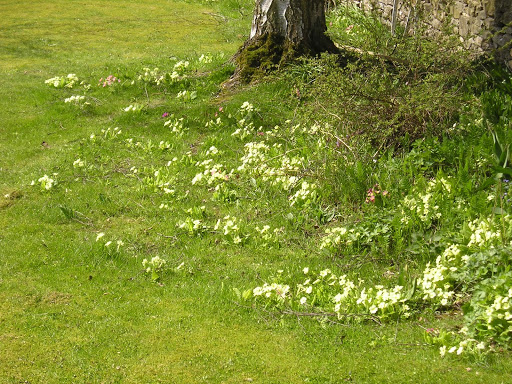
Also in the garden, I found a single, wild primrose, sheltered by the old garden roller, in flower. Later, the garden, and especially the lawn, will be covered with their flowers. Daffodils, although beginning to flower elsewhere will be a few more weeks before they do up here. But even in the Cotwolds they are showing colour in the warmth of our towns – which makes shopping just a little bit more enjoyable.
. .

.

When in town, I was surprised to find that oldest of symbols of spring – the green man. He was standing tall and lofty down a back street unnoticed and forgotten. Closer examination revealed that he was an old column and ball, the remaining one of a pair of stone entrance pillars from some long demolished house. Now covered in ivy, I wondered why it had been left and what was its history.
.

.

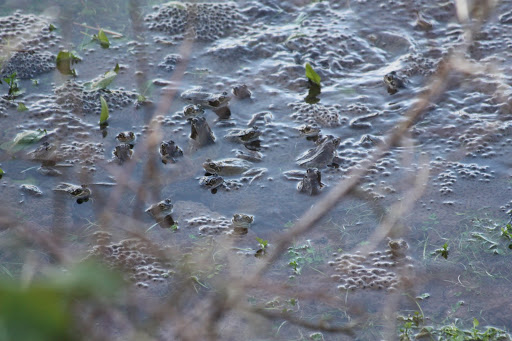
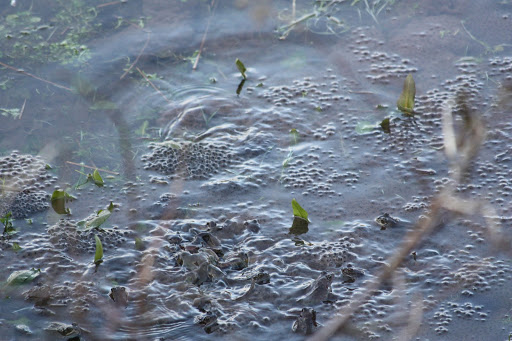
Further afield still, I came across a small pond in a field. The croaking of hundreds of frogs drew my attention to it and in the photo below there are over forty heads poking out above the water. As I approached, sensing danger, they fought one another to get below the surface, making the water look as if it was a boiling cauldron. A few days later, when I returned, all was quiet and the surface of the water completely covered in frogspawn. Like the daffodils, it will be some weeks before our secret valley frogs start marching across the lane and entering the house in their quest to reach the lake below our garden.

. . . .

.

.

.

Add to Technorati Favorites

Christmas Greetings

.
Christmas Greetings
.
from the
.
(very snowy)
.
Secret Valley
.

For the first time for very many years we have a white Christmas

.

Thank you for your continued support and interest – keep the comments flowing, I’m always interested to hear your views!

.

May you all have a very happy holiday

Johnson

Cotswold Hills, England

Add to Technorati Favorites

A Roman Villa in the Cotswolds

These days the Cotswolds, with its rolling landscape, dry stone walls and picture postcard villages, give the impression of being sleepy and sparsely populated, basking (or some may say smug) in its glory of being one of the jewels of the British countryside. But this is not so. For it is a working landscape with its people going about their daily business, admittedly often in an unhurried way – for our narrow lanes and lack of motorways limit the speed that one can travel. And often our straightest and, therefore, easiest routes have not been made in recent years but by Roman settlers, attracted to this region some two thousand years ago, for much the same reasons as we are now.
.
.
Ryknild Street, Fosse Way, Akeman Street, Ermin Way – just their very names conjure up images of Roman legions marching long distances through the country – linked their towns and cities with Corinium, now our modern Cirencester, the centre of both their commerce and entertainment (it still has the remains of a Roman ampitheatre that held over 8000 people). And, as time passed, they settled in more remote parts of the Cotswolds too: one such place is the villa built at North Leigh, near Witney. The track that leads you to the remains is as straight as any other Roman road but was used solely by servants and traders, the owners and visitors arriving by a more grand approach no longer visible.

.

.
Now cared for the nation by English Heritage, admission is free and the site is open all year. Strategically placed notice boards explain the layout of the 60+ rooms and of its history but nothing quite prepares you for the sheer size of area which seems at odds with its present day position – somehow, you expect a small cottage sized building. In fact, the first thing I noticed was the irrepressible She-dog who had run on ahead, in order I imagine, to steal the limelight, as usual!
.
.

.
One of the greatest pleasures of exploring the remains is that they are relatively unknown and so are rarely visited. I explored for over an hour and saw no-one – just perfect! The photos below show the north west range and also the south east range. Beneath the floor of the latter even earlier remains of a hearth were found , dating back to the Iron Age, circa BC100.
.
.

.
Although the site was known as early as 1783 it was not until the early 1800’s that the ruins were excavated, the first plan published in 1823. Further excavations took place in 1908.
.
.

.
The remains of the under floor heating can be clearly seen in the photographs below. It is strange how such an ‘advanced’ civilisation could then be plunged into the relatively primitive period of the Dark Ages after the Romans left.
.
.

.
In amongst the stonework of the walls pieces of tile protrude. No matter how carefully I looked I saw no signs of pottery.
.
.
The’jewel in the crown’ of the villa at North Leigh are the mosaic floors. Several were discovered and lifted, presumably to a museum although I do not know which. However, the floor of the dining room, discovered in 1816, in the south west wing has been preserved in situ and is protected from the elements by a modern building. The mosaics were laid by craftsmen from Corinium in the fashionable geometric style of the time.
.

.

.
The dining room, again with underfloor heating, had a vaulted roof supported by columns, parts of which can be seen against the back wall of the shelter.
.
.
Who were the people that lived here and why was the villa suddenly deserted in the fifth century when it was so obviously thriving a century earlier? It is probable that they were farming here so perhaps there was a change in climatic conditions or with the water supply. Whatever the reason, it is now the most perfect spot to sit and ponder in total peace and quiet.
.
.
.
Add to Technorati Favorites