An Unexpected Downpour

The heatwave may have ended a good number of days ago but the dry weather hasn’t and the gardens are desparate for water. Digging down to plant some large shrubs the other day, there was no sign of moisture in the soil, nor earthworms for that matter, no matter how deep I dug. It is tedious to water with a hosepipe and, for some inexplicable reason, (perhaps it’s the chemicals in tap water), plants react so much better to a drop of rain.
.
Today the skies were grey but, as none had been forecast, it came as a surprise when I thought I could smell rain in the air. And was that a distant roll of thunder or was it just wishful thinking? With no further warning, the heavens opened, the rain bouncing off the surface of the lane and the leaves of the plants. By the time I had reached my camera, it was already beginning to ease.
.
.

.
They must have had more rain than us, further up the secret valley, for water continued to rush down the lane in its haste to reach the river. Just past the bend its route took a sharp right turn to tumble down the steep banks to enter the meanders – the ones that feature on the header of this blog – just above the road bridge.

.
.
It’s a novelty to see puddles once again!
.

.
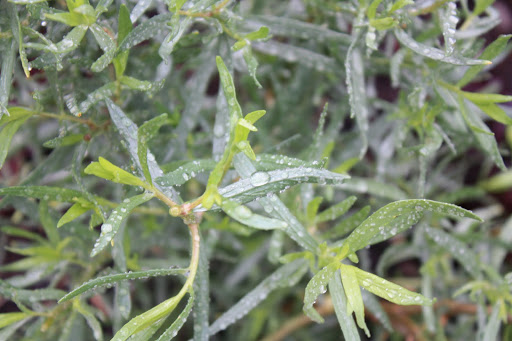
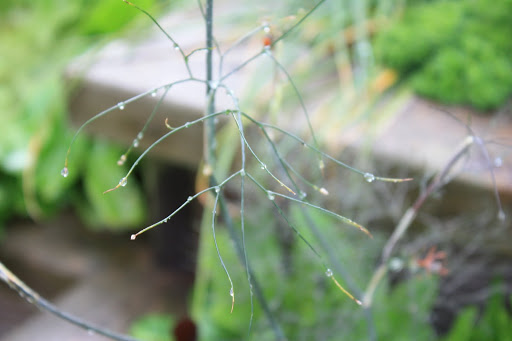
I couldn’t resist catching these images of the herbs cloaked in moisture. The French Tarragon seems to be greedier than most and holds water all over the surface of its leaves. The bronze Fennel, however, holds its drops in a very much more refined way as befits such a graceful plant.
.

.
.
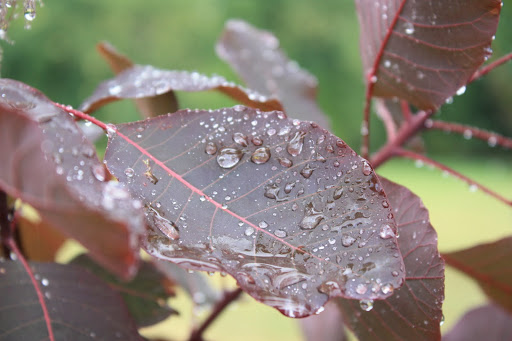
Cotinus – this is the variety called ‘Grace’ – appeared splattered with rain, as if it had been flicked with paintbrushes. It held its drops in different sizes, some so large I wondered how they could remain in place and keep separate from the smaller sized ones alongside.
.
.
The old fountain head of a cherub and dolphin sits at the top of a flight of steps leading to the garden, for many years no longer used for its original purpose. Did the rain bring a slight smile to its lips and was that a tear that rolled down its cheek to its chin as it recalled its real purpose in life?
.
.
If above is the picture of innocence, what is this next one? A single raindrop on each barb transforms the fence but it can only partially disguise its wickededness. We are not that easily fooled …
.

.
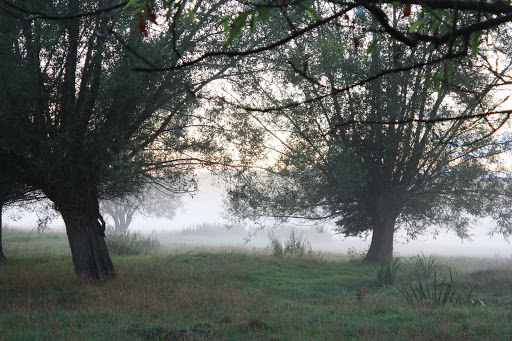
Thirty minutes after the rain stopped the secret valley was shrouded in mist as the cooled air reacted with the warm earth. A short battle for supremacy ensued but, along with a slash of blue sky came a winning dart of sunlight and the mist fell to the ground, disappearing as quickly as the rain.
.
.

Blogging One Year On….

Greetings from the secret valley! Today is a special day for it is exactly one year since my very first post.
.
.
the secret valley
.
When I began blogging, it occurred to me that, as what I was writing would be in the ‘public domain’, that someone might read it. However, deep down, I didn’t think that anyone would. It is a constant surprise that it is read and that the number of viewings is in the thousands rather than just half a dozen or so. Thank you so much.
.
Like many of you, I write for my own pleasure but, knowing that the words are read, I do make some effort to write coherently and, hopefully, interestingly – not always, I fear, with success. The secret valley is always a source of inspiration and, sitting at my computer, I look out across the fields to the trees and the little, winding river. The photo below is what I see every day and never forget just how lucky I am.
.
.
view of the secret valley from my desk
.
And so, one year on, you have followed me through the seasons:
.

.

in the cold

.

.
and as the weather warms
.
You have followed me on my travels:
.

.

Grafton Street, Dublin, Ireland

.

.

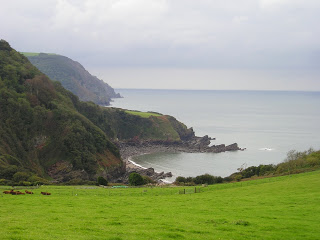
Lee Bay, Exmoor

.

You have met my family:

.

.

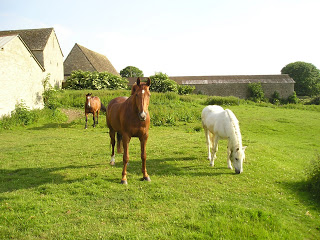
The old nags

..

and the very special She-dog

.
And you have witnessed my gardening:

.


.
my successes….
.
.
….and my failures
.
But best of all, through blogging, I have met interesting people from all over the world, from all walks of life and I am all the richer for it.
.

.

and sometimes I still can’t get the spacing right between paragraphs – is it me or is it Blogger?!

Add to Technorati Favorites

A Sting in the Tail

This year is proving to be one of extremes. Weather wise, first it was snow, then late frosts, then rain, more recently drought and scorching temperatures. And it also seemed to be a similar situation with wildlife. The tree blossom and wild flowers have been amazing with every month some new blooms outrivalling those of the previous month’s.
.

.
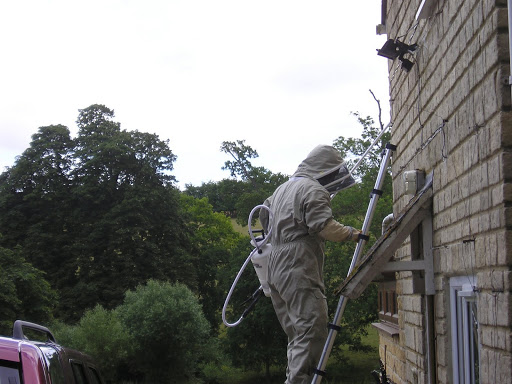
Now it seems July is to be the month of wasps. There are hundreds in the garden, indeed probably thousands, and they are everywhere. And if that isn’t bad enough, the very hot weather we’ve been having seems to have made them far more aggressive. Normally they do not prove to be troublesome until the fruit ripens in late summer, this year it’s different. And I’ve already been stung once this week which is very bad news for me – I suffer from a severe reaction, although never yet been hospitalised, fortunately. I keep my drugs and sprays with me – and a mobile phone, in case help is needed – and also keep my fingers tightly crossed. This, like the recent advice from a doctor to stay indoors, is not too much help for someone who earns their living by gardening.
.
.
Fifteen wasp nests in four days has surely got to be a record and so I have been keeping the pest control man busy. It’s a pity to destroy them but better I get them first than the other way round! I remind myself that during the spring they live on aphids and the like and are, therefore, valuable pest controllers themselves. Then I remind myself of the pain, discomfort and swelling, and sometimes injections I get, and they have to go.
.
.
I commended myself on my bravery, taking these photos, as the wasps went into the attack as the chemical jet entered their nest. But such is my devotion to get a new post out – I’m becoing a true blogger news hound!

. . .

My heightend awareness of wasps this week made me also notice these holes in a deserted timber garage. They were the homes of a small colony of wood wasps. Unlike the common wasp which live communally in their hundreds (the largest of our nests turned out to be the size of a football), wood wasps are more solitary, each one occupying their own chamber.

. .

They are quite placid compared to their aggressive cousins and, I believe, unable to sting a human being. The largest ones look terrifying but this species was small, about half the size of the common wasp. There are about 500 species of solitary wasp in Britain and I can’t identify any of them. I felt totally at ease photographing them inches away and they completely ignored me. Perhaps word had got round what I did to them further down the secret valley!
.

. ..

I’m now looking forward to the first frosts and a wasp free winter!

Add to Technorati Favorites

Scabious: Wild and Tame

Regular readers of this blog will know that I am very fond of garden plants that have not been messed around with too much. By that, I mean I generally prefer the simpler flowers. So-called ‘improvement’ is so often just another word for vulgar, blousy and big – although there are occasions when I have a need for both the blousy and vulgar!
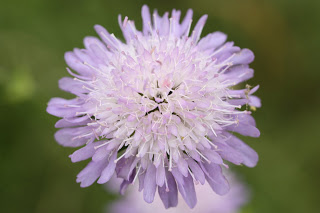
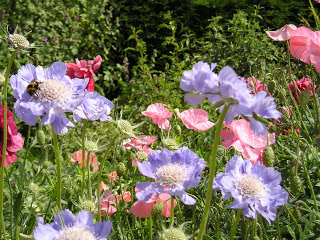
Scabious are a delight regardless, whether they are growing in the hedgerow or the border.
.
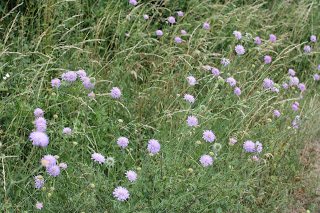
The secret valley is awash with scabious, as well as other wild flowers, at the moment. The dry weather seems to suit them for they are looking just perfect. They seem to be everywhere – they especially like roadside verges but also grow in odd pockets of wasteland on very poor soil. But it is not just the secret valley where they are found, for the whole of the Cotswolds seems to be a haze of powder blue. In fact, they grow pretty well throughout the British Isles although they are much more scarce in Scotland.
.
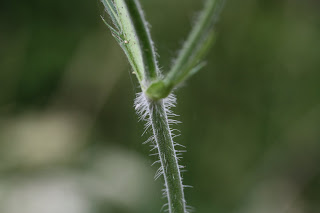
I have found photography and blogging has improved my powers of observation for it is only recently that I noticed that the scabious has quite hairy stems. These feel quite soft to the touch, so it was with some surprise that I learnt that they are closely related to teasels, whose hairs have been modified into sharp, protective spines.
.
However, it was only when looking at these pictures that I noticed how the flowers open from the outer edge and then work there way inwards. Obviously, my powers of observation have still some way to go!
.
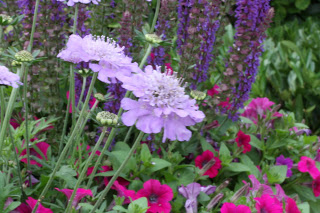
As garden plants, in my opinion, they are superb. Always tidy, never need staking and, with regular dead heading, flower continuously from mid June onwards. In the photos below, scabious is being grown in a cottage garden border (this is Scabiosa caucasica but still pretty!) amongst pale pink Icelandic poppies. The scabious is perennial and will grow again every year, the poppies are annuals. I just threw some poppy seed down amongst them and, as the poppies were mixed colours, removed any that turned out not to be pink. Simple!
.
As an ingredient for containers they are unrivalled, too. Here, in huge one metre square pots, they form an underplanting with Salvia nemerosa and small flowered petunias beneath the (very) light shade of Cornus controversa ‘Variegata’. This scabious is an improved form of our wild flower – it is dwarfer than the type.
.
.
The Five Spot Burnet moth flies in daylight and is everywhere at the moment. They especially seem to like feeding on the scabious, choosing these above the profusion of other wild flowers. They are very pretty and when the light catches them at the right angle, the black ground of their wings become irradescent, similar to the ‘black’ feathers of the magpie and farmyard cockeral.
.
.
Going…..
.
Going…….
.

Gone!
.
Like many plants, occasionally a ‘sport’ arises. Driving home today, I noticed just two white flowered scabious growing by the side of a country lane. Beautiful!


Add to Technorati Favorites

There’s no Business like Sloe Blusiness…..

…..or should it be There’s no Blossom like Sloe Blossom?

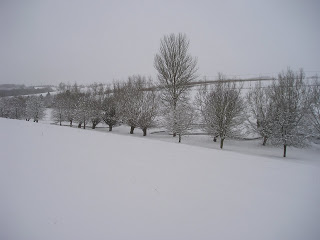
This winter was long and cold and, by the standards of southern England, very snowy. Spring has not been much better with little in the way of warmth for, even on sunny days, there has been a chill wind blowing from the north or east. Frosts have been commonplace and are still occurring – our last one, a hard one, was only a couple of days ago: in recent years we have had our last frosts in early April. This was the view of the entrance to the secret valley not so very long ago.

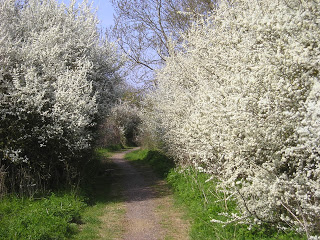
Now, just a few weeks later – and despite the efforts of our friend Jack (Frost) – the secret valley has been transformed by the best blossom for many years. Whether any fruit will set is another matter altogether.

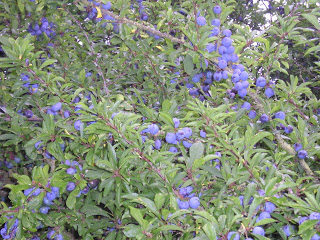
One of the first trees to bloom is the Sloe, Prunus spinosa. The second half of its Latin name gives a hint of its nasty thorns, as does its other common name, Blackthorn. These thorns break off as you touch the plant, entering the skin and festering readily. The old country folk talk of “Blackthorn Winters” as, when it blooms, the weather always turns very cold once again. This year the tree has been caught out: it is flowering five weeks later than normal and the weather has been cold all the time with no warmer spells to fool us into thinking summer has come.

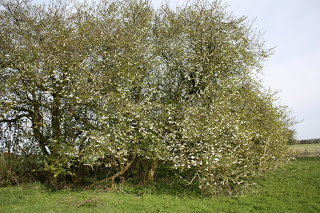
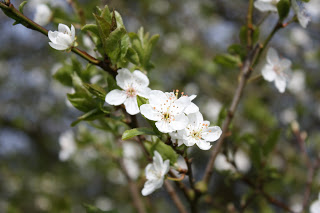
The Sloe is one of those remarkable species which flowers on bare wood in such profusion it gives the plant the appearance of being snow covered (photos above and below).

However, country people hold it in affection not for its early blossom or for making impenetrable, stockproof hedges. They even have a reason to forgive it for all the painful splinters it inflicts upon them, year in, year out. And that reason is alcohol. For despite being incredibly bitter when picked, its blue-black fruits, the size of a marble and equally hard, give rise to that most delicious and sweetest of drinks, Sloe Gin. Traditionally, the drink of hip flasks to be passed around amongst friends on a frosty shooting or hunting day, it is a good drink at all times – which is why I have none left to show you here. I have had to make do with a picture ‘lifted’ from one of the commercial makers of Sloe Gin, for it really is a business venture for some .

Nothing beats home brewed and our recipe, made each year, is below. The Sloes are picked after the first frosts, which softens them and brings out their flavour, although a couple of days in the freezer works just as well. And if Sloes aren’t available where you are, don’t despair: damsons or plums would be just as potent. Cheers!

Recipe:
* Frosted or frozen, then thawed, sloes – weight not too important, probably about a pound.
* Place in a bottle/bowl and cover with gin (or vodka)
* Add a similar quantity of sugar
* Shake well every day until sugar has completely dissolved
* Top up with more gin (we add, at this stage, a quarter bottle of brandy as well – our secret weapon for making fellow imbibers ‘legless’. It also helps to give much needed courage when jumping a big hedge on Barney!
* Leave for several weeks, then strain and enjoy

PS. The fruit will now be sweet and full of alcohol – absolutely delicious eaten with vanilla ice cream.

Add to Technorati Favorites

.

Archbishop Tutu comes to Oxford

One of the best aspects of living in the secret valley, (apart from being unknown, of course), and living on a relatively small island, is that we aren’t too far from anywhere. We can travel north, south, east and west with comparative ease and one of the nearest cities is Oxford.

Oxford is so steeped in the history and daily life of the Universities that it is generally forgotten that it has another side to its personality – but that will have to wait for another post. It was to Oxford, thanks to Kellogg College, that I found myself in the Sheldonian Theatre last Monday afternoon. If the word theatre conjures up a vision of red velvet curtains and plush velour seats, think again: The Sheldonian was designed by Sir Christopher Wren, perhaps our greatest architect, around 1664 to provide a suitable venue for ceremonies associated with the University. It is still used for this purpose and for lectures and the seats – benches – are hard and unforgiving. However, it is a masterpiece of design and, also by being circular, it is possible to see the platform uninterrupted by the heads of other people or by pillars.

When a friend asked if I would like to attend a lecture given by Archbishop Desmond Tutu I thought it must be joke as surely all places would be allocated. They were and we were amongst those that were priviledged to attend. Archbishop Tutu is a person I have admired for many years – for how can someone (or a people) that have suffered so much indignity and hardship be so forgiving? This was the subject of the lecture: Lessons From the Truth and Reconciliation Process for 21st Century Challenges. The transcript and video is not yet available but a similar lecture given in the States can be seen here.

Call me an old softy, but my initial reaction when the Archbishop walked into the centre of the building was to want to burst into tears, such was the emotion in seeing him in person. And when I looked around at the audience, many were wiping their eyes, both men and women, young and old.
.

Archbishop Tutu talked about the hardship that his people had suffered through the dreadful years of apartheid (I’m ashamed to say, that the British government didn’t give much assistance). In his characteristic tone of voice – sometimes high, sometimes low – he pointed out many of the everyday insults that arpartheid brought: the designation of race (black or coloured) by having a comb run through your hair. Of being denied medical treatment, so many things. He told harrowing stories of both blacks and whites being murdered during the armed struggle.
And also, after a long pause, as the horrors were absorbed, his high pitched laugh would bring the story to a close with a quip or a gesture. And he made us laught at ourselves too, which always has to be a good thing!

But the lecture wasn’t all about horror – in fact, horror (although plenty of it) was not the overwhelming feeling. That feeling was of joy and of love and of hope and that has to be great, in the biggest sense of the word, for we all need to be reminded that much in the world is good – don’t we?
.
.
.
.
.
.
Add to Technorati Favorites

Cotswold Cowslips

I never did get to see the fritillary fields of Oxford and the Upper Thames. Perhaps next year. If fritillaries are the flowers of the lowlands (albeit rare) then it has to be the cowslip that can lay claim to the title for the hills of the Cotswolds. These little, short stemmed wild primulas (Primula veris) have a simple beauty – they look good growing in the garden but even better in the fields and hedgerows where they belong.


Cowlsips grow in plenty in the secret valley and I have noticed this year that they abound along the old drovers road, as do bluebells – don’t they look good growing in combination? Is this because these green lanes are never sprayed with chemicals and the thick hedgerows that line them prevent any spray drift from reaching? The field below is at the top of the secret valley and is a haven for wild flowers – soon there will be orchids showing. The farmer likes to see them so has never tried to ‘improve’ the ground in the agricultural sense and, as a consequence, the field is also full of birds and bees and butterflies.


However, to see the truly stunning cowslip meadows, you have to travel out of the secret valley. Just a few miles up the road is this field where the cowslips grow in the tens of thousands, so dense that it is impossible to walk without trampling several plants at once. Few people see them as they are ‘off the beaten track’ which is a pity in some respects, for they should be enjoyed and marvelled over.

The scent of cowslips is subtle but, when growing in these huge numbers, it wafts over in waves on gentle, warm breezes, a heady mix of hay and honey. This gives cowslip wine, a traditional drink, its characteristic taste and potency. Made from many hundreds of flower heads it is now rarely made as, fortunately, most people now understand the importance of preserving our native flora and fauna. This has benefitted the cowslips, which were once quite an uncommon sight, as they are left to multiply with these spectacular results.

Add to Technorati Favorites

Painting The Fields Yellow

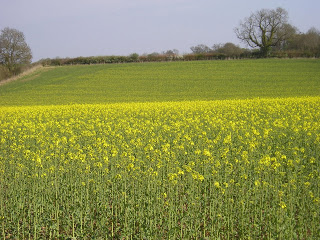
An artist has been at work changing the landscape dramatically over the past week. Finaly the sun has come out, the cold winds from the north have gone to be replaced by gentle, southerly breezes bringing warm air from the continent of Europe. And with this rise in temperature the cultivated fields of the secret valley and beyond have been altered from drab browns and fresh greens by the addition of an acidic, strident yellow.

Love it or hate it (and many people hate it, if only on account of its smell), Rape is now in full flower. Last spring, as a birthday treat, I was given a hot air balloon trip (read the post!) over our beautiful Cotswold countryside and the patchwork of yellow fields stood out as if the land had been given reflective, safety jackets to wear.

Rape, or Oilseed Rape as it is also called, is now a major crop in the UK being grown for its seed which, when pressed, produces cooking oils and biodiesel. The waste product is made into highly nutritious livestock feed.

Although it has been grown since the 13th century it was only in the 1970’s that production took off on a major scale – now almost a million acres. And with this increase in production has come the claim that some people suffer major allergies from it, although as always, there is no conclusive proof of this. What is certain is that there is a greater number of the tiny, black pollen beetles (that are such a nuisance in the flower garden, being transferred into the home with cut flowers) and the thick yellow ‘dust’ that settles on our cars and window sills.

When seen close to, Rape is so obviously one of the Brassica family with its cabbage like leaves and smell. Let a garden cabbage run to flower and the blooms are remarkably similar. However, where cabbages have been bred to ‘heart’ up, rape grows tall and open.

Like our garden cabbages, rape is also prone to a large number of pests and the crop is regularly sprayed with chemicals to protect from these and fungal diseases, in particular. Although it is reputed to be perfectly edible, it is for this reason that I never harvest any (or ‘filch’, would be a more accurate description, I suppose!) on walks around the farm. Even the sheep make no attempt to break through the fence to reach the crop.

Add to Technorati Favorites

Cheltenham: a Regency Treasure

From the moment you enter the town of Cheltenham you are struck by the number of Georgian and Regency houses and municipal buildings – there are hundreds of them dating back to the late 1700’s. In fact, the town has one of the largest concentrations of listed buildings in the country. The style of building is as pleasing to the eye today as it was 250 years ago: clean, fresh lines, mostly built of local, cream coloured stone.

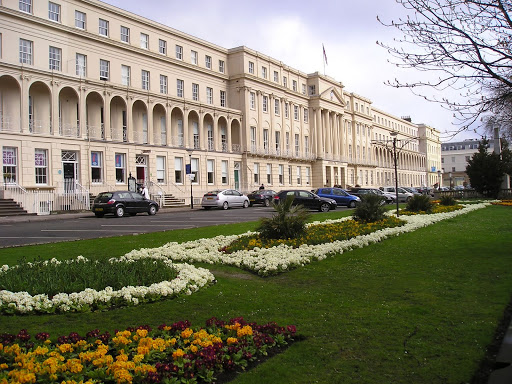
The most prestigious street in the town is Promenade, situated in its heart, in the area known as Montpelier, a mix of designer shops, offices, bistros, sculpture, flower bedding and fountains. The photographs below demonstrate the grandeur of the area – the large building is the Borough Council offices.

Montpelier came into existence in 1808 when a new well was discovered there. A hundred years before, salt springs were discovered and, after George III visited in 1788 to ‘take the waters’, the town became even more popular. Montpelier’s well ensured the success of the area and Promenade was laid out as a wide, tree lined walk in 1818.
.
Today, Cheltenham still thrives, busy and loved by both local residents and tourists alike. The Town Hall, below, is the centre for many exhibitons and concerts and each year the town plays host to both literary and music festivals attracting a world wide audience.

It is not just the grand buildings and streets that contain architectural gems. The photographs below demonstrate the houses and apartments that can be found down many of the side streets. These photographs are of original buildings; many new buildings are also built in the style and blend in so well that, in many cases, they have to be sought out. Not many new buildings can afford the elaborate iron work railings as in these genuine, Regency flats. Ironwork is another major architectural feature of the town.

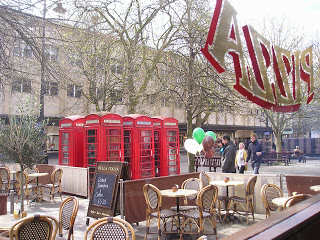
Cheltenham is a place that really has to be explored on foot to discover all of its secrets and eccentricities. Sitting in a street cafe on Promenade I realised I was looking out onto a cluster of red telephone boxes – a very traditional, English sight, rather akin to red double decker buses. These boxes are almost a thing of the past now, having been replaced by modern kiosks that look the same whichever city in the world you might be in.
.
The Wishing Fish Clock is totally eccentric! The tallest mechanical clock in existence, on the hour the fish blows bubbles while the clock plays the tune ‘I’m Forever Blowing Bubbles’!
.
The Cotswold Hills rise steeply from the edge of Cheltenham and driving back to the secret valley through unknown country lanes, I came across another eccentricty. This stream that runs through the tiny village of Compton Abdale has had a witty crocodile waterspout added to it. There was no sign to explain the reasoning behind it: another case of British humour, I imagine!
Add to Technorati Favorites

At Last! Signs of Spring!

The secret valley is at last bursting into life, albeit rather late. Or perhaps, this is how the season should be as we have had such mild winters the past few years. Whichever, the last few days have been warm and sunny, although the wind has been on the keen side at times. The result is greenery beginning to appear in the hedgerows and on the trees and what a welcome sight it is. Today I decided to walk along the ‘old’ road, a drover’s route that was the original way to enter the secret valley before the present road was created, probably in the late 18th century. This route is now a wide grassy path – a subject of a post to come shortly.
.

The photo above shows how advanced the Spindle bushes are compared to some of the other hedgerow shrubs. The hawthorn beyond it is still quite dormant yet, some years, they can start to leaf up during February. Hawthorn seems especially prone to variation as some of them elsewhere in the secret valley are quite green with new leaves.
.
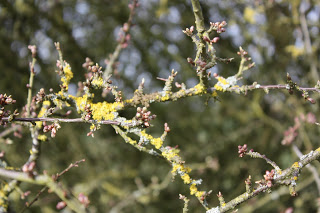
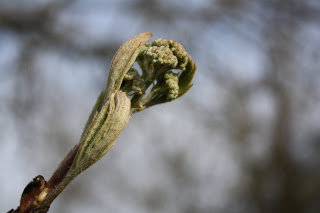
The Wayfaring Tree, Viburnum lantana, below (which never reaches tree like proportions) also looks lifeless from a distance. However, that is because its leaves and flower buds are greyish when first opening, being covered in felt like hairs , botanically referred to as tomentosum. The photograph beneath the Wayfarer is not of the same plant but the opening buds of the Whitebeam, Sorbus aria. They are not related: Viburnums belong to the honeysuckle family and Sorbus to roses. The Whitebeam makes a fine tree and although it is native, it is often planted in gardens.

It will be sometime before the Ash trees open their leaves but their black nobbly buds, that look so hard and devoid of life, quite suddenly have burst into little pom-pom flowers. All they need now is a group of cheerleaders to use them in their routine: it would certainly aid pollination!
.
Why should this group of Cherry Plum be in full flower when other trees are not in leaf? I have no idea but am just grateful to be able to enjoy some of the first blossoms of the year. I’ve had to wait a long time to see this, this year.

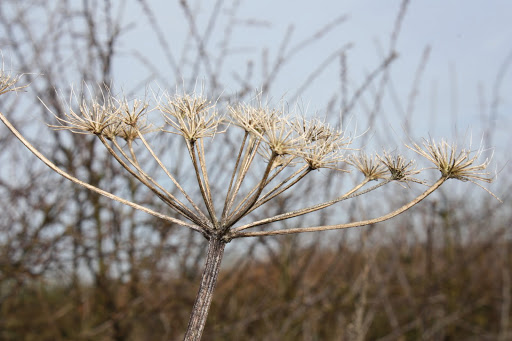
The wild flowers also show both signs of the winter and also spring life. Cow Parsley or ‘Keck’, as it is known locally around here, is sending up its young leaves which clearly show the reason for the ‘parsley’ in its name. Where ‘Keck’ originates from, I have no idea, for I have not come across that name when I lived in the Chiltern Hills just 50 miles away. Local plant names can be very confusing and make an interesting study in itself. Despite its lushness, Cow Parsley is poisonous. Later, in the summer, it will send up tall spikes of flat, white flowerheads made up of dozens of tiny stars. These dessicate to remain standing through the winter and, surprisingly, there are still a few that have survived the snow. They have a special beauty when the sun catches their metallic, bronzed skeletons.

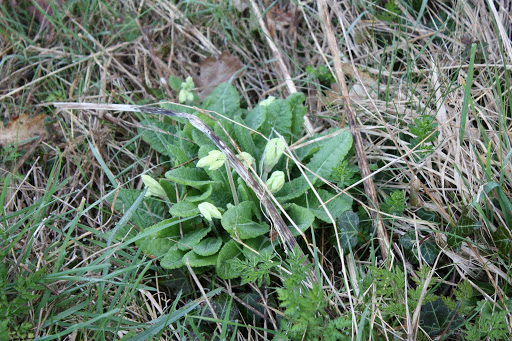
Cowslips, Bluebells and the Hedge Mustard (which in the Chilterns, we called Jack-by-the-hedge) are all showing signs of things to come. The cowslips show their flower buds and, normally, bluebells would be doing so too. In the bottom photograph, the Jack-by-the-hedge has leaves reminiscent of the garden plant, Honesty. These leaves have quite a mild garlic smell when crushed and make a good addition to spring salads when they are young and tender. The little spikes of six to eight small leaves in whorls are the dreaded Goosegrass (or Cleavers, depending where you live). Before long, these will have scrambled five or more feet over every plant in the hedgerow and the garden, their leaves and bobbly, pinhead seeds sticking to every bit of clothing – the gardener’s curse.


Add to Technorati Favorites