
So another year has gone by and as New Year’s Eve fast approaches it is time to reflect on the one past and look forward to the one to come.
I try to visit Exmoor National Park as often as possible for I consider it to be “home from home”. I spent a lot of my youth and early adulthood there on a remote farm not realising that I was witnessing a way of life now gone. With the benefit of hindsight I wish I’d taken many more photographs but, in the days before digital, films were both precious and expensive.

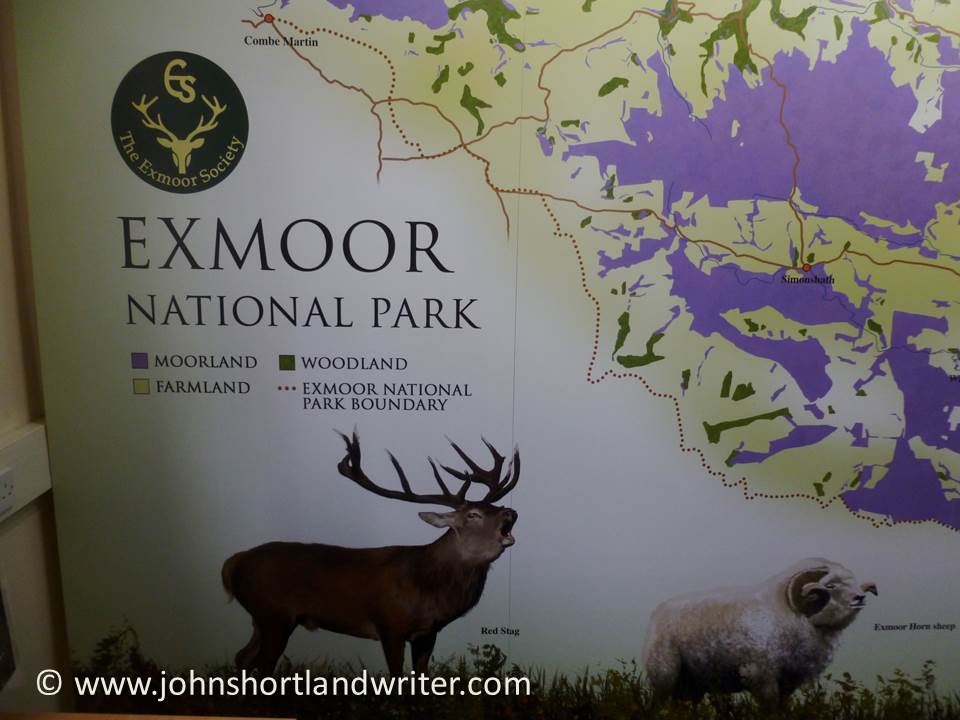
In January, I made a special trip to take a look at the new headquarters of the Exmoor Society in the pretty, little town of Dulverton. The enlarged space that they now have has meant that they it is now much easier to access the archives and seek information. If you are planning a holiday on the moor, it is well worth visiting. Click here to find out more about my day there.
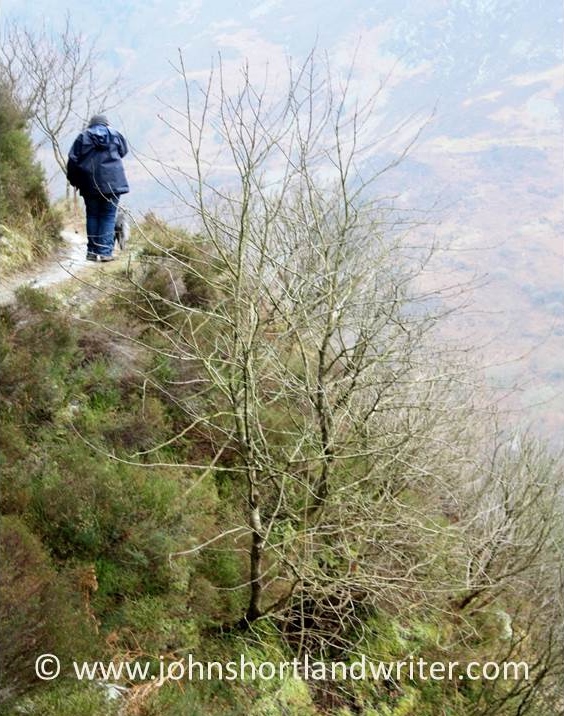
February found me walking along the edge of a precipice and seeking an elderly great-aunt, fortunately not at the same time. I met Ba-ba (how she got this name is still a complete mystery) once as a boy when she was in her late nineties and she left a lasting impression on me. With everyone else that knew her now dead (I’m now the ‘old’ generation) I’ve been trying to research her. Despite the post creating a lot of interest it ended sadly without much success. Perhaps, this post might reach someone who knows who she was. To check out the detective work so far take a look here.

The Precipice Walk in Snowdonia, although not overly strenuous, is not to be attempted by the faint-hearted. Travelling clockwise, the path clings to the edge of the drop before turning back on itself alongside a more gentle and peaceful lake. If you’re afraid of heights go anti-clockwise for a delightful, if somewhat short, walk and turn around when you dare go no further. Alternatively, sit back in your armchair and take a look at the photos here.
A much longer walk, completely different in character, was described in two March posts. Dartmoor is another national park in the West Country but much harsher than Exmoor. Despite its bleakness now, in the past the climate was kinder, confirmed by the large number of Neolithic remains there.

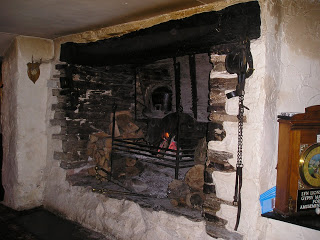
The walk starts at a pub where according to tradition the fire has never been allowed to go out in the past two hundred years. Our path crosses the moor to the village of Postbridge, home of the famous medieval stone clapper bridge. The second part of the walk follows the river before continuing across the moor, taking in beehive huts dating back to 1500AD before arriving at the Grey Wethers stone circles. The twin circles are about two thousand years old. Reaching the stones is described here.
The history of the United States and Ireland are intertwined by mass emigration. In April I visited New Ross in the south of Ireland and the birthplace of John F Kennedy’s great-grandfather. Fifty years after JFK’s visit his sister came to light… Well, read here to find out exactly what she did. The image below might give you a clue.
I stayed with the Irish theme in May and wrote about the lovely village of Castlelyons where a friend spent her early childhood. Well off the tourist trail when you red about the place you’ll wonder why. In the meantime, we had the place to ourselves.

June is a lovely month both for walking and also for garden lovers, with hedgerows and gardens smothered in rose blossom. Continuing the theme of elderly ladies and ancient times the month’s post explored the history of Rosa de Rescht – fascinating for the mystery it holds. Incidentally, even if you a hopeless gardener (and no-one is completely so) this is the simplest of roses to grow…


















 .
.

 .
.
 .
.
 .
. .
.

 The tiny clifftop hamlet of Countisbury – the far distant horizon is the south coast of Wales


 Getting too close for their comfort, they were soon up on their feet and ambling away. In a matter of moments their camouflage made the moorland look empty once again.


 winter sunshine on silver birch
 Fallow Deer – one of the larger species of deer to be found in England and quite common throughout the country. But like all deer, despite their size, they are remarkably difficult to see and watch. When I lived in the Chiltern Hills, 50 miles to the east of the secret valley, they grazed the field close to my windows, making watching easy. Here, we see them occasionally from the cottage – yesterday was one of those days. In winter, their coats lose their lovely dappled spots and become quite dark – the two pictures below show this, the lower one being taken last summer.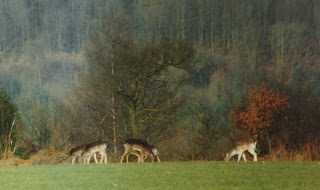
 The Red Kite is one of the great conservation success stories of recent times. Once so common they scavenged in the streets of London (and had a reputation for stealing hats off people’s heads to decorate their nests with. These days they often use plastic instead – the Kites, not the people, I mean, of course). By the 1970’s numbers were down to just a few pairs living in the remotest parts of Wales. A breeding and reintroduction programme started in the 1980’s centered on the village in the Chilterns where I lived. Soon they were a relatively common sight in that area but they have been slow to extend their range. Now we are seeing them much more frequently in the secret valley and they never fail to thrill. The full story of the Red Kite can be found on the Chilterns website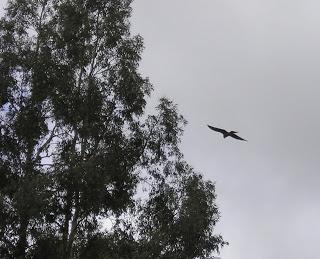
 This photo is most definitely poor quality – I only have a small ‘aim and fire’ camera and took this from an upstairs window. I am hoping to buy a more sophisticated camera with telephoto lenses very soon: another unexpected side effect of blogging has been a rekindled interest in photography. Who knows what will show up on this blog then?
 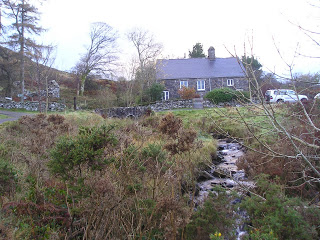 The weather started out unseasonably mild with beautiful blue skies from dawn to dusk giving clear views of the tops of the mountains. Of course, compared to the mountain ranges of the world, the mountains of Snowdonia are not high, Mt. Snowden being the highest at 3560ft. The photo below shows the Cadair Idris range at 2831ft, one of the most popular areas for hill walking. Often mistaken for an extinct volcano because of its crater like top, it was actually formed by glaciation during the last Ice Age.
 The Pecipice Walk is less well known and being close to ‘our’ house is a favourite walk. The path clings to the side of the mountain with a sharp drop to the valley and river below. Further along the path the view opens out to give wonderful views to the sea in the far distance.
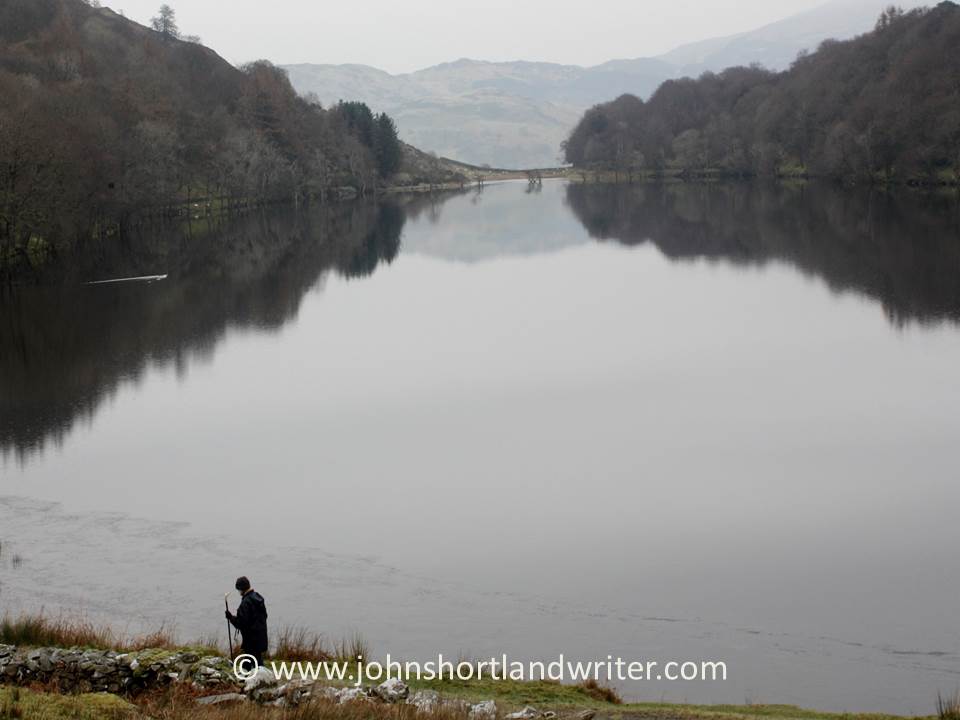
 The return route, on the other side of the mountain, gives the totally unexpected view of this small lake. The water is quite clear and tranquil and with its reflections of forest and sky, a pleasant place to rest and ponder.

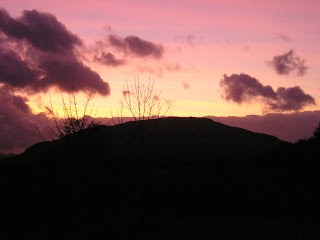
 Sometimes it seems as if flowers have inspired the sunsets! Here is the rose Rosa x odorata ‘Mutabilis’ trying to outdo another mountain sunset. This rose starts with the most intense pink bud and, as the flower fades, turns to the softest apricot, ending up with this wonderful colour combination.
 This old mossy wall was the starting point for a mini parterre – the ‘moss’ is made from the box (boxwood) framework, the ‘stones’ from variegated Iris and Cotton Lavender. The wall reminds me of our garden wall in the secret valley (Sunday 20th September 2009) but this one is in north Wales and is a hard, cool grey and silver granite unlike our soft, mellow Cotswold stone. This planting is tiny compared to the usual grand parterre designs and has been used to link two levels of a small garden.


 So let your imagination take you where it will. Sometimes the combinations don’t work but, more often than not, there will be some exciting discoveries to be made and a lot of fun will be had along the way. And make sure you tell me all about them……
 Life in the English Cotswolds