..
.


.How often does a garden plan go awry only to find that you have something equally as good, if not better, instead? This is what happened to one of my designs, a large area taking up almost one quarter of a walled kitchen garden.
.
.
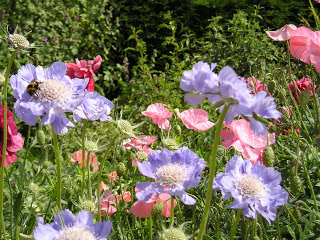
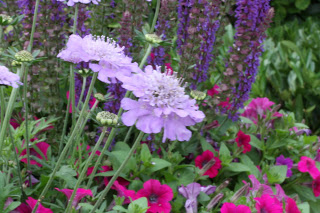
Formal beds, surrounded by box(wood) hedging and topiary, were planted to create what was to be a tisane, or herbal tea, garden. All the plants were supposed to be suitable for making infusions for either medicinal or culinary use. Something went wrong and, for reasons unknown, half the plants either died or refused to flourish. In desperation, we turned it into a cutting garden where flowers could be harvested for arrangements for the big house – actually, the mystery house I used to dream of as a child. I have written about this house before and the tale of my arriving there two hundred years after I had died….
Concentrating on those plants that survived the initial planting, I decided to see how they would cope with being used as cut flowers and the result was much better than expected. The flowers were cut in the middle of the hottest day of this year so far – not ideal conditions – and then plunged up to their necks in water for the rest of the afternoon. They looked poorly and drooping when first arranged but perked up overnight and now, ten days later, look as fresh as ever.
.
.Greetings from the secret valley! Today is a special day for it is exactly one year since my very first post.
.
.
the secret valley
.
When I began blogging, it occurred to me that, as what I was writing would be in the ‘public domain’, that someone might read it. However, deep down, I didn’t think that anyone would. It is a constant surprise that it is read and that the number of viewings is in the thousands rather than just half a dozen or so. Thank you so much.
.
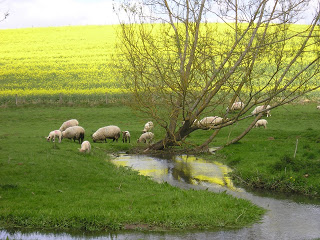
Like many of you, I write for my own pleasure but, knowing that the words are read, I do make some effort to write coherently and, hopefully, interestingly – not always, I fear, with success. The secret valley is always a source of inspiration and, sitting at my computer, I look out across the fields to the trees and the little, winding river. The photo below is what I see every day and never forget just how lucky I am.
.
.
view of the secret valley from my desk
.
And so, one year on, you have followed me through the seasons:
.
.
in the cold
.

.
and as the weather warms
.
You have followed me on my travels:
.
.
Grafton Street, Dublin, Ireland
.
.
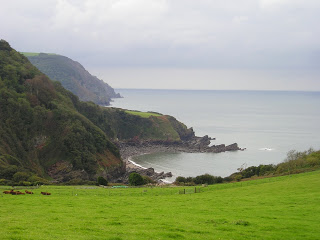
Lee Bay, Exmoor
.
You have met my family:
.
.
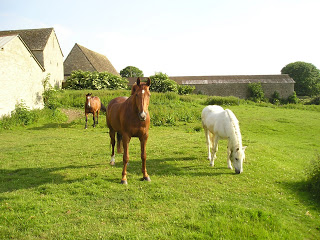
The old nags
.
.
and the very special She-dog
.
And you have witnessed my gardening:
.

.
my successes….
.
.
….and my failures
.
But best of all, through blogging, I have met interesting people from all over the world, from all walks of life and I am all the richer for it.
.
.
and sometimes I still can’t get the spacing right between paragraphs – is it me or is it Blogger?!
It has been a good year for cherries. Despite the hard and late frosts, which continued well into May, there has been a bumper crop. And, for some reason, the birds have been kind enough to leave them for us humans to harvest. There is the appearance of something exotic, or even of decadence, in the cherry’s shining, red orbs hanging in profusion. Perhaps because we see it all to rarely.
.
.
One rather plump bird has developed the taste for cherries. Henrietta, the tamest of our Lavender Pekin bantams just can’t get enough of them! Fortunately, the others show no interest and, not being the brightest of creatures, Henrietta hasn’t considered flying into the trees to eat even more.
.
.This year is proving to be one of extremes. Weather wise, first it was snow, then late frosts, then rain, more recently drought and scorching temperatures. And it also seemed to be a similar situation with wildlife. The tree blossom and wild flowers have been amazing with every month some new blooms outrivalling those of the previous month’s.
.
.
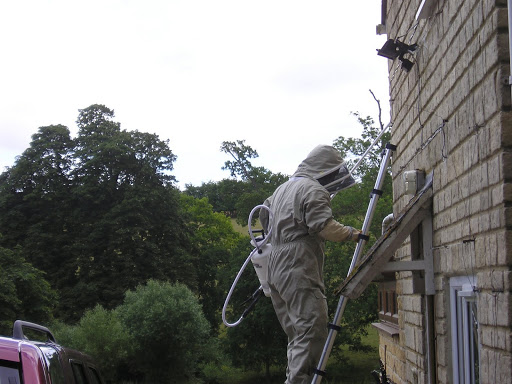
Now it seems July is to be the month of wasps. There are hundreds in the garden, indeed probably thousands, and they are everywhere. And if that isn’t bad enough, the very hot weather we’ve been having seems to have made them far more aggressive. Normally they do not prove to be troublesome until the fruit ripens in late summer, this year it’s different. And I’ve already been stung once this week which is very bad news for me – I suffer from a severe reaction, although never yet been hospitalised, fortunately. I keep my drugs and sprays with me – and a mobile phone, in case help is needed – and also keep my fingers tightly crossed. This, like the recent advice from a doctor to stay indoors, is not too much help for someone who earns their living by gardening.
.
.
Fifteen wasp nests in four days has surely got to be a record and so I have been keeping the pest control man busy. It’s a pity to destroy them but better I get them first than the other way round! I remind myself that during the spring they live on aphids and the like and are, therefore, valuable pest controllers themselves. Then I remind myself of the pain, discomfort and swelling, and sometimes injections I get, and they have to go.
.
.
I commended myself on my bravery, taking these photos, as the wasps went into the attack as the chemical jet entered their nest. But such is my devotion to get a new post out – I’m becoing a true blogger news hound!
My heightend awareness of wasps this week made me also notice these holes in a deserted timber garage. They were the homes of a small colony of wood wasps. Unlike the common wasp which live communally in their hundreds (the largest of our nests turned out to be the size of a football), wood wasps are more solitary, each one occupying their own chamber.
They are quite placid compared to their aggressive cousins and, I believe, unable to sting a human being. The largest ones look terrifying but this species was small, about half the size of the common wasp. There are about 500 species of solitary wasp in Britain and I can’t identify any of them. I felt totally at ease photographing them inches away and they completely ignored me. Perhaps word had got round what I did to them further down the secret valley!
.
I’m now looking forward to the first frosts and a wasp free winter!


.
.
Going…..

We all lead busy lives these days and often don’t have time to sow seeds, despite our best intentions. I garden for my living and, in the tradition of cobbler’s children, my own garden is, more often than not, far from text book perfect. I simply do not have the time for all that seed sowing and pricking out even though I spend all day encouraging others to do it!
Raised beds are often described as labour and space saving and, indeed, they are. They are hugely productive and can look lovely, as the many posts and photographs by fellow Bloggers prove. But what if you don’t have the time even for that?
Here is my recipe for growing summer suppers…..
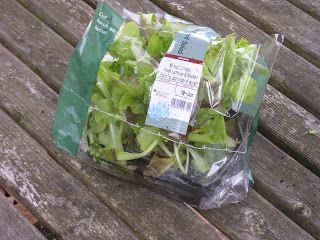
1. Purchase a box of lettuce. No, not joking! Supermarkets sell a wide range of salad ingredients including growing pots of near full grown lettuce. Recently they have started to sell mixed leaves as seedlings, the idea being to keep them fresh for a few extra days.

2. Carefully remove all wrappers and tip out of their packaging. There is quite a good root system already started.

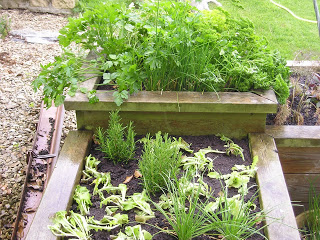
3. Divide carefully and, just by using your fingers, plant direct into your soil or compost. Water well. In the photo below, for even more speed, I just pinched a few plants out of the growing medium and planted together in one hole. I ended up with about twenty groups – planted separately I would probably have had nearer a hundred. Note the herbs behind the lettuce, all grown the same way.

4. The lettuce in the photo above may have looked a little sad but within a day, the seedlings perked up. Ten days later here are some of them again below. Enjoy!

Recently I have been taking the idea of raised beds a stage further and creating much higher raised beds that avoid the hardship of bending. I use them as ‘walls’ to separate different levels of a garden, I use them on the flat and I use them where the client is elderly or has a disability.
Made from chunky timber so they won’t rot for years, I also make them bottomless as that is always the first place to go. They require less watering that way too. Lining them with black plastic prevents water seeping through and disfiguring the boards which is important if they have been painted or stained. And the boxes just seem to be getting ever bigger!

This box separates the lower dining terrace from the house level and creates a sense of enclosure when seated below. As it is situated close to the kitchen door, the box is planted with a mix of herbs as well as garden flowers. The twisted stemmed bay gives a degree of formality as well as height.

Exotic planting works well in this square box. A hardy palm is underplanted with coleus, the magenta splashes of the leaves are emphasised by the identical colour of the petunias and of this favourite plant of mine, Lythrum. Lythrum is native to the British Isles and grows besides streams and in boggy places. This variety, ‘Robert’, is identical in every way except for its shorter height and is a great garden plant. I’ve found that it grows in quite ordinary soil in the border and it certainly thrived here in these conditions.

PS I’ve just remembered! Spring Onions (Scallions) bought as bunches from the supermarket: when planted out early in the year, grow to become reasonable sized onions. They don’t store well but help to bridge the gap that occurs before those grown from sets are ready for harvest. Try some in your boxes!
Watercress works as well: eat most of the stems you buy and plant just the last 2 – 3 inches in ordinary compost. Keep moist and it will provide food up until the first frosts.

Last May, Archbishop Desmond Tutu gave the Bynum Tudor Lecture at Kellogg College, University of Oxford in the historic Sheldonian Theatre.
The lecture, “Lessons from the truth & reconciliation process for 21st century challenges”, was thought provoking and fascinating. Although I have written of the lecture at the time – the post and photographs of the Sheldonian Theatre can be seen here – it is only now that the video of the lecture has become available.
For those of you that would like to view it, click on this link to Kellogg College, here.
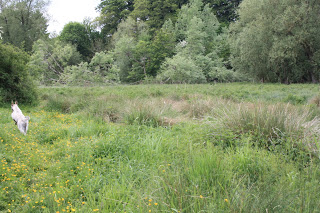
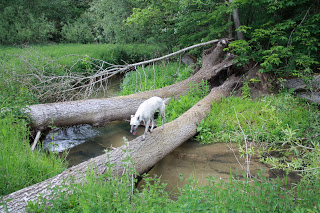
…go out in the midday sun, according to the song sung by Noel Coward. But I don’t think it was the noon heat that made She-Dog behave more like a deranged She-Devil, I think it was an extremely herb scented and squelchy bog that got her all worked up. Although she does certainly looks completely mad in this photo!


One of the pleasures of living on a small island is that you are never far from anywhere – except another country (apologies to Wales and Scotland, I know that you are proud of your separate identities and rightly so).
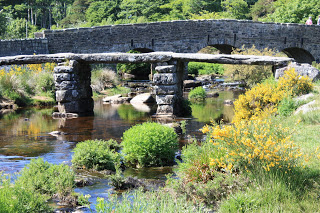
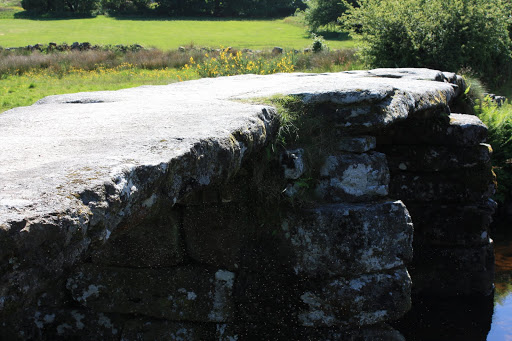
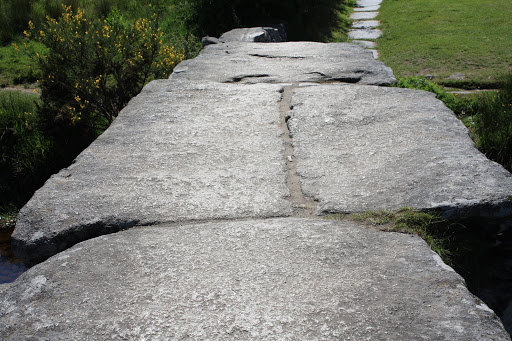
So last Friday I spent at home in the Cotswolds – limestone country, wide open views and rolling pastures. Saturday I spent walking across Dartmoor (post to follow) – granite country of bleak, open moorland and few trees. Today I spent walking in the Chiltern Hills, my birthplace, a chalk country, densely wooded and secretive. All are beautiful in their own way.

And today was especially special for I was on a mission: looking for rare plants. And with some success, although just as much delight was found in the more common ones, for seeking pleasure from rarity for rarity’s sake is a poor emotion. What could be more charming a discovery than this group of foxgloves in a woodland glade? A common enough plant: I prefer the wild to the garden varieties, that have been bred to have ever larger ‘cups’. Here, the wild plants have a grace and delicacy that is so unlike their brasher relatives.

The group of thistles didn’t seem to be of special interest other than for the pleasure of watching the bumble bees feed from their flowers. But when seen in close detail the flowers really are quite spectacular. Most of these were purple but some that, from a distance, appeared to have prematurely gone to seed turned out to be a variant – they had white flowers. How glad I was that I had dawdled and not just rushed past without giving them a second glance!


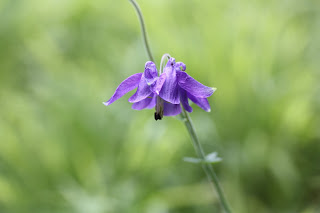
Further into the woodland and growing in dappled shade was the first of the ‘finds’. Our native Columbine (Aquilegia vulgaris) is not often seen. Many that appear wild are garden escapes and are usually close to roads or houses but these were a long way from either. And, again, the flowers have a delicacy and lightness about them. Ladies Bonnets is another country name for them – it is easy to see why.

The Narrow Leaved Helleborine (Cephalanthera longifolia) is also uncommon and it was only after this one was found that we realised that there were over forty plants scattered over the area. Like the Columbine, where the plants were not sheltered by scrub or ferns, the deer had eaten the tops off. The flowers remain closed, making them unavailable to insects so, I assume, the plants self pollinate – perhaps that is why they are not at all common.

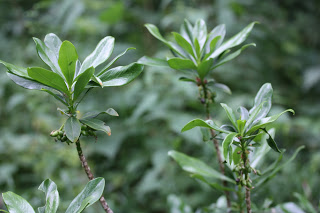
Further still along the path, was this solitary speciman of Daphne laureola, the Spurge Laurel. Although this plant grows quite widely in the Chilterns, this was the only specimen seen today. It flowers in late winter, it’s greenish-yellow flowers lacking the sweet scent of its garden cousins. Already the berry seedheads are forming, these will turn black later in the year. The Mezereon, a popular garden shrub in the past but not grown so widely these days, is also a native but extremely rare. It is known to grow in the Chilterns although I’ve never found one.

Returning once more to open meadows the woodland gave one last surprise: tall Field Maples, Acer campestre, usually grown as a hedging plant. And this is how it would have started out: one trunk, coppiced and layed to create sturdy, stockproof fencing. The original trunk has long disappeared and the ‘new’ stems from around its base have grown to be trees in their own right. For a maple to be of this size – and they rarely are – it would have been planted in Medieval times and it is known that the field that it borders was first created by the Saxons, 1000 years ago.

And as a grand finale, the meadow gave us dozens of Common Spotted Orchids – only common in favoured places, the spots refer to those on their leaves. The Chilterns are a great place for orchids and are home to some of the rarest species – their sites a closely guarded secret.
A most successful and satisying day!