2024: A Year in Review – part 2

In Part 1 of my review I began by saying words to the effect of life is for living – and when you become older there’s even less time to waste! The result of following my own advice is that part 2 of the review is a couple of weeks late in being published. than I would have liked

Keeping active was also part of the theme of a couple of my blog posts last year, specifically about England’s network of public footpaths. Although we Brits just accept them as part of our historic right to walk across privately-owned land, it seems that for a great part of the world, this would not be an option. My American friends and readers in particular find it hard to comprehend that we can walk across someone else’s property at will (assuming a public footpath crosses it) without confrontation. Many of our footpaths link villages and farms and so, on occasion, you may find yourself walking through someone’s garden or farmyard. The history behind the right to walk and what you can and can’t do was discussed in November’s post which can be found by clicking the link here.

Walking on designated footpaths across privately-owned land is a basic right in England and Wales

A few month’s earlier in August, I wrote of a walk that I had taken across fields, through woods and down country lanes back to my home in the secret valley. It was a lovely walk with the first signs of autumn colouring the trees and hedgerows which were laden with wild fruits and berries. After the noise and bustle of harvest, the fields were quiet and I met no-one for much of the walk. I prefer it that way for it is then, walking in silence, that you are likely to come across the wild birds and animals that also share this space, To follow the route that I took and to see the beautiful creatures I encountered click here.

When walking quietly you come across the wild creatures that live there

I have lived in the country all my life and my father was very much the epitome of the ‘English country gent’. My mother remained a ‘townie’ all her life (she had been brought up in the West End of London) and we both teased her mercilessly about her lack of knowledge of country ways. When she met and married my father it must have come as quite a culture shock to find herself living in a small, close-knit community where everyone knew one another and one another’s business. Neither of my parents were walkers but as a child they would drive my sister and I out to Turville Heath. Over time the heath became my place of refuge whenever I was in need of comfort or in need of re-charging the batteries. It would also be the place for summer walks, playing cricket and picnics. Of equal importance as the heath itself was the car journey out to it – past miniature farm and other magic moments that we children couldn’t get enough of. Click October’s link here to find out more.

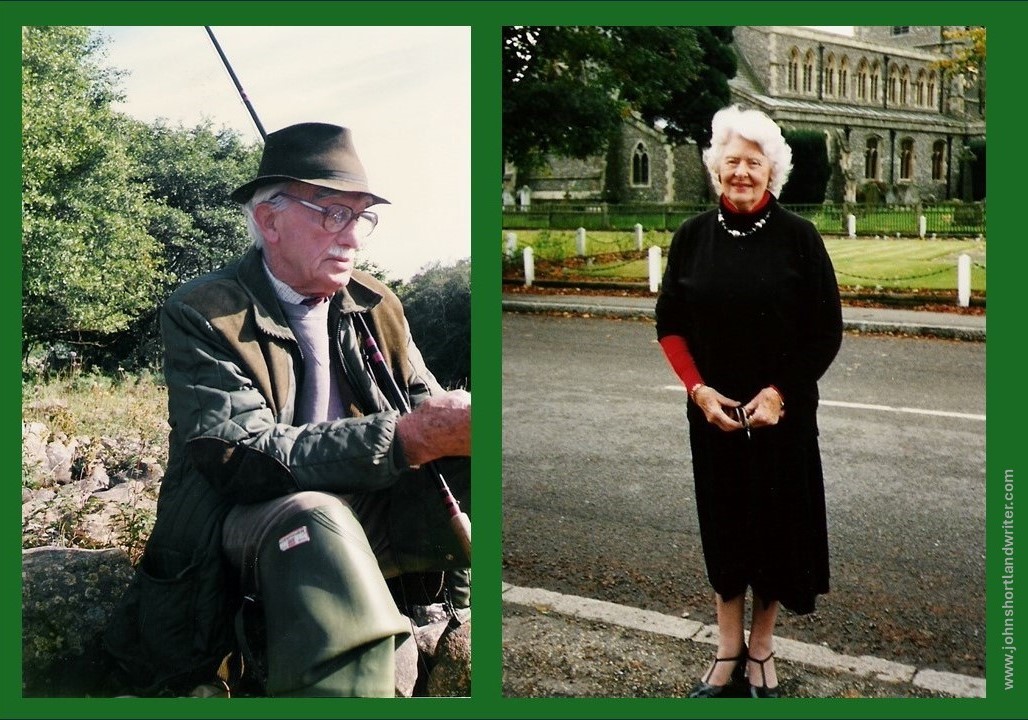
My father, very much the country gent despite not liking guns!

Looking back even further in time, I explored the lives of ancestral aunts, uncles and cousins. They had been born, married and died in a village very close to the where I had been raised for our family have lived in the area for at least five hundred years. Discovering their stories had been quite a revelation – for my 3rd great-grandaunt had been about to marry in the local church when she gave birth to a child. The repercussion of this – for the child was obviously not that of the grooms – was far-reaching. Devastated Thomas cancelled the wedding and did something rather surprising shortly afterward, as told in September’s blog post. What happened to disgraced Ann? And what happened to poor Henry, the baby boy, who lived with the stigma of his birth? Was it this that took him down the path of self-destruction and a young death many thousands of miles from home in ….. – well, you’ll need to click on the link to find out what, when and where!

The village church where Thomas & Ann were to wed in 1809


So, what will 2025 bring, I wonder? World politics seems to be on the news with constant and often seemingly bizarre twists and turns unsettling many of us. I’m quite good at not getting too worked up about things that I have no control over. Fortunately, I live and work in stunningly beautiful countryside and my interest in family history has taught me that life carries on regardless of turmoil all around us. I shall continue to write about my adventures (if that isn’t too strong a word to describe them). I also have a couple of writing projects to see to, and of course, there are my garden projects too. In dues course, they may appear on these pages. As with all my blogs, there are lots of photos to view so why not take a look and please do comment as appropriate.

2021: A Year in Review – part 1

With restrictions on movement and socialising for much of the year, 2021 was definitely the year to remember times past, be it visits to favourite haunts or thinking about friends and family. As it was in the real world so it was in the blogging world.

In January my memories took me across the sea to Ireland and a visit to Clonegal, in Co. Carlow. Ireland is a beautiful country with an ancient history. The visit to Huntington Castle, very much still a family home, was very worthwhile as the building itself was interesting, and the gardens, perhaps because they weren’t ornate, relaxing to walk around. A visit to the cellars is a must for it is now a Temple dedicated to Isis. The Fellowship of Isis, started by members of the family, was recognised as a world faith in 1993. I found the ornate decoration rather too theatrical for my taste, reminding me of a scene from an Agatha Christie novel. Take a look at the post by clicking on the link here and tell me what you think.

Huntington Castle in the south of |reland

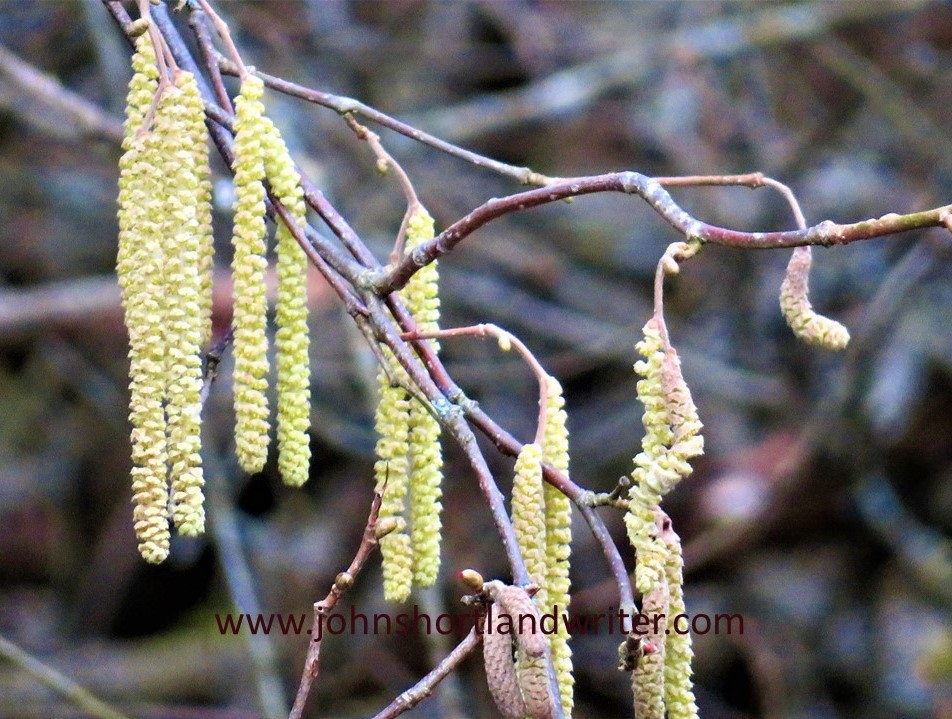
By February the earliest signs of the forthcoming spring are beginning to show. In the garden snowdrops and aconites are in full flower; in favoured spots early daffodils are starting to bloom. In the hedgerows hazel catkins hang in clusters shedding clouds of their golden pollen in the slightest breeze. Hazel, a native shrub, is also a useful one to grow in the garden. It’s pliable stems can be used in a myriad of ways – cut as pea-sticks, or growing into intriguing living tunnels. February’s blog post concentrated on these uses and looked at the ancient art of coppicing – a method of extending the life of the plant and providing plentiful cover for wild birds, animals and flowers. Described as an art, it is however, a very simple technique. Click on the link here to find out more.

Catkins or Lamb’s Tails – harbingers of Spring

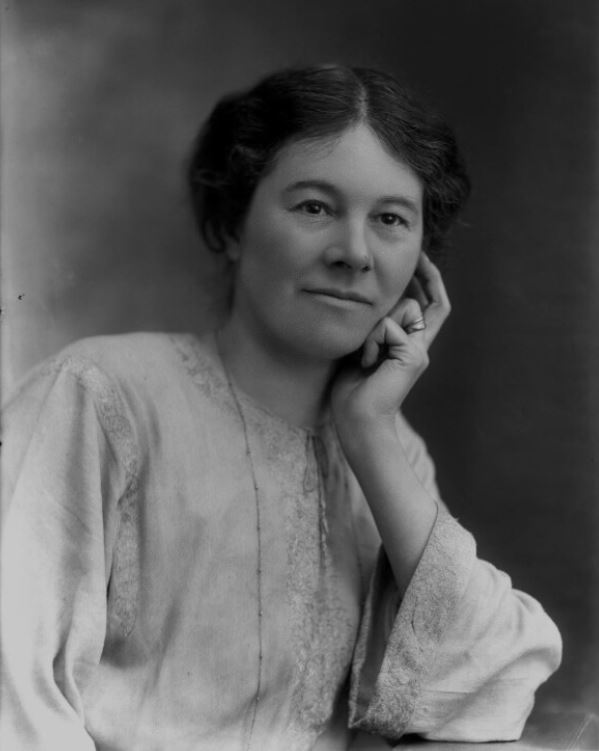
International Women’s Day occurs in March and I focused on the life of Lettice Fisher, the founder of the National Council for the Unmarried Mother & Child in 1918. Later, the charity changed its name to Gingerbread. A suffragette and economist, Lettice was also a cousin of my father and so family history came to the fore in this post (link here). Later in the year, the focus turned to her husband, H A L Fisher and his story but for March Lettice was the rightful star of the show.

Lettice Fisher, an ancestral cousin

In April, I was able to visit friends for a long weekend, a real treat after all the restrictions. I took the opportunity to go for a long walk in beautiful countryside. Rutland is England’s smallest county and was also the home of the poverty-stricken ‘peasant poet’ John Clare born in 1793. The walk took me past the old lime kiln where he worked and the village where he was raised – his poem The Ruins of Pickworth can be read in the blog post (link here) and there are lots of photos of the ruins as well as views along the paths and byways I walked. Several hours later, when I returned to my friend’s home, I was especially thrilled to have seen a group of wild fallow deer which included amongst them, a rare white hart,

The ruins at Pickworth were familiar to John Clare, the Peasant Poet

By May, spring is well and truly established and plants in the garden are flourishing. Everything is growing so fast that it can become overwhelming and with so many tasks to carry out, early supporting with canes and twigs can easily be forgotten until it is too late. Although this can’t be done to every tall plant in the garden, the Chelsea Chop is a drastic but very successful method of treating herbaceous plants so that they don’t need staking at all. The biggest hurdle to overcome with this technique is finding the courage to actually do it! By clicking on the link here you will find a step-by-step guide. Even if you don’t do it to many plants, I would highly recommend that you do it to the Ice Plant, Sedum spectabile which always collapses just as it comes into flower – once you have, you’ll wonder why you’ve never done it before.

Sedum, the Ice Plant – the perfect candidate for the Chelsea Chop

For June, it was back out into the countryside to check the state of a venerable old ash tree. Ash Dieback is a serious, recently imported disease that threatens to eradicate one of the most important trees in the British landscape. Younger trees in our parts of the Cotswolds are already showing signs of it, some much more severely than others. The farm where we keep our horses has one ancient tree that has stood sentinel over the adjoining fields for centuries (lots of pictures on the link here). It’s trunk is hollow and owls and bats roost within it; it must have seen generations of them leave its shelter at night. Likewise, it must have sheltered in the day many a farm labourer seeking shade during hot, summer harvests. It will be a sad day when it dies and we just have to hope that it may show some resistance to this new disease. I, all too well, remember as a child when a similar fate overtook elm trees and changed the English landscape forever. Let’s pray that it doesn’t come to that.

We ride past an ancient ash tree most days

If it sounds as if this review is ending on a sad note, don’t despair – July to December will be following shortly and there’s plenty of posts on an upbeat note there. My family’s fascinating exploits feature in some of them. Covid restrictions have given me plenty of time to root out the old stories of them – to be honest, I never knew what an interesting and, sometimes, brave bunch they are!!

A Year in Review: Jan- Jun 2015

So another year has gone by and as New Year’s Eve fast approaches it is time to reflect on the one past and look forward to the one to come.

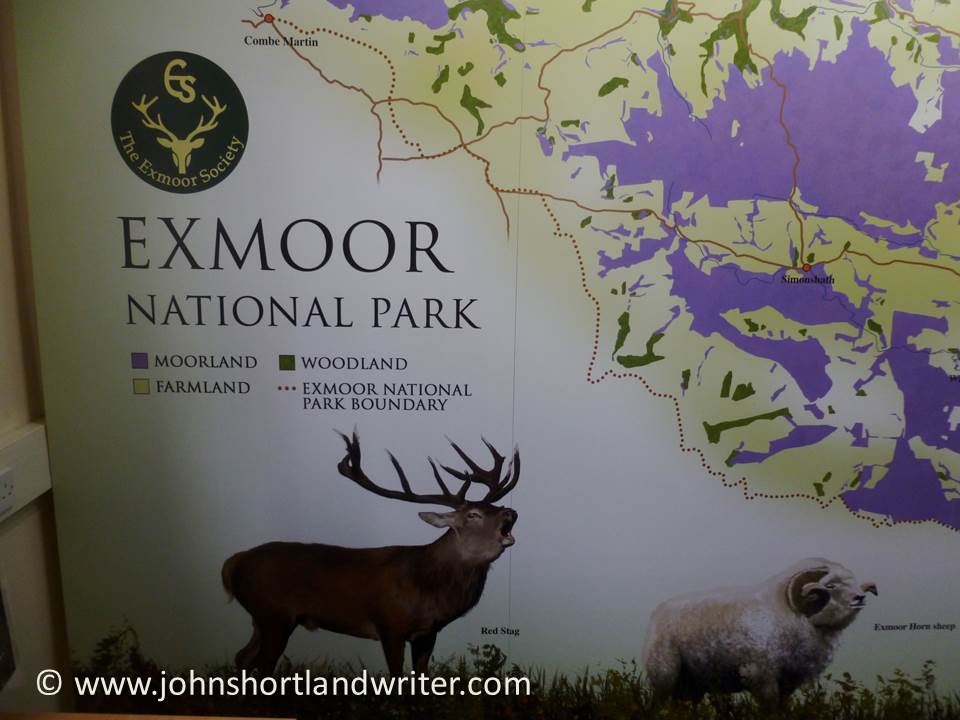
I try to visit Exmoor National Park as often as possible for I consider it to be “home from home”.  I spent a lot of my youth and early adulthood there on a remote farm not realising that I was witnessing a way of life now gone.  With the benefit of hindsight I wish I’d taken many more photographs but, in the days before digital, films were both precious and expensive.

binder copyright

In January, I made a special trip to take a look at the new headquarters of the Exmoor Society in the pretty, little town of Dulverton. The enlarged space that they now have has meant that they it is now much easier to access the archives and seek information.  If you are planning a holiday on the moor, it is well worth visiting.  Click here to find out more about my day there.

Exmoor Society HQ (3)   copyright

February found me walking along the edge of a precipice and seeking an elderly great-aunt, fortunately not at the same time.  I met Ba-ba (how she got this name is still a complete mystery) once as a boy when she was in her late nineties and she left a lasting impression on me.  With everyone else that knew her now dead (I’m now the ‘old’ generation) I’ve been trying to research her.  Despite the post creating a lot of interest it ended sadly without much success.  Perhaps, this post might reach someone who knows who she was.  To check out the detective work so far take a look here.

Gt Aunt Baba (Frances White) 90th bithday about 1965

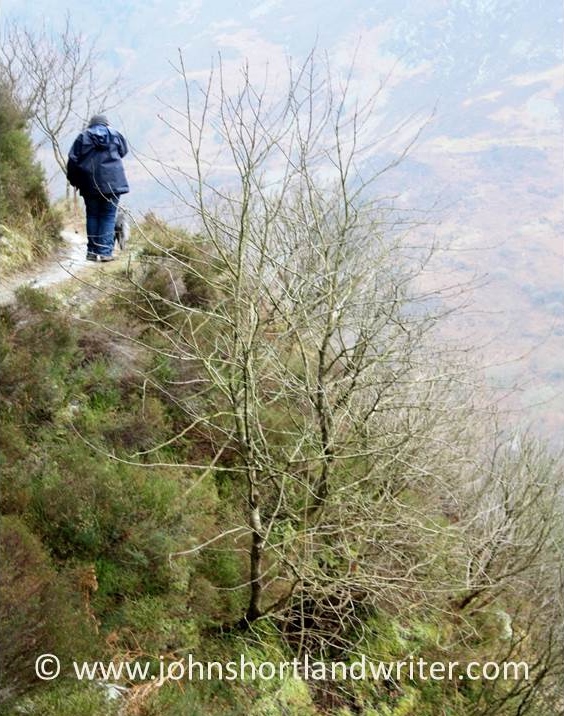
The Precipice Walk in Snowdonia, although not overly strenuous, is not to be attempted by the faint-hearted.  Travelling clockwise, the path clings to the edge of the drop before turning back on itself alongside a more gentle and peaceful lake.  If you’re afraid of heights go anti-clockwise for a delightful, if somewhat short, walk and turn around when you dare go no further.  Alternatively, sit back in your armchair and take a look at the photos here.

Precipice Walk (8)   copyright

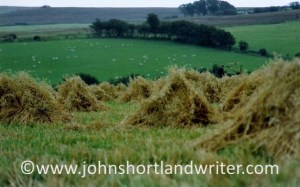
A much longer walk, completely different in character, was described in two March posts.   Dartmoor is another national park in the West Country but much harsher than Exmoor.  Despite its bleakness now, in the past the climate was kinder, confirmed by the large number of Neolithic remains there.

Beehive Hut (2)   copyright

The walk starts at  a pub where according to tradition the fire has never been allowed to go out in the past two hundred years.  Our path crosses the moor to the village of Postbridge, home of the famous medieval stone clapper bridge.    The second part of the walk follows the river before continuing across the moor, taking in beehive huts dating back to 1500AD before arriving at the Grey Wethers stone circles.  The twin circles are about two thousand years old.  Reaching the stones is described here.Grey Wethers Stone Circle (2)   copyright

The history of the United States and Ireland are intertwined by mass emigration.  In April I visited New Ross in the south of Ireland and the birthplace of John F Kennedy’s great-grandfather.  Fifty years after JFK’s visit his sister came to light…  Well, read here to find out exactly what she did.  The image below might give you a clue.New Ross (6)   copyright

I stayed with the Irish theme in May and wrote about the lovely village of Castlelyons where a friend spent her early childhood.  Well off the tourist trail when you red about the place you’ll wonder why.  In the meantime, we had the place to ourselves.

Castlelyons (5)   copyright

June is a lovely month both for walking and also for garden lovers, with hedgerows and gardens smothered in rose blossom.  Continuing the theme of elderly ladies and ancient times the month’s post explored the history of Rosa de Rescht – fascinating for the mystery it holds.  Incidentally, even if you a hopeless gardener (and no-one is completely so) this is the simplest of roses to grow…

Rosa 'de Resht'   copyright