Unknown's avatar

About johnshortlandwriter

John the Writer: It is as natural for me to write as it is for me to eat or drink (sometimes I forget to do both when the ink is flowing). For years I would write – then shuffle the words until satisfied - then shred it. The act of writing was enough. One day I thought that seemed just a tiny bit silly so saved them on the computer and Life in the English Cotswolds was born. That was in 2009 and to my surprise people like you came along and liked what you saw. Since then, over 180,000 of you have visited, commented and become ‘friends’. Thank you! 2012 saw the very first Chipping Norton Literary Festival take place with which I was closely involved for several years. It was there that I was approached to write my book, Why Can’t my Garden Look Like That?, published a year later by How To Books, an imprint of Constable & Robinson and now part of Little, Brown. Over the years, my blog has expanded to cover many topics ranging from travel to family history and much else. This has brought a new audience with it for which I am both delighted and grateful. John the Gardener: The earliest image of me gardening is one of me as a child of about four using – well that’s too strong a word for it – a rake. Gardening is in my blood for every member of my family have been keen amateur gardeners (I am the only one doing it for a living). Whether it was aunts, grandparents or my father, everywhere I went they were in the garden tending flowers and vegetables or in the greenhouse potting up seedlings. Indoors, around the table, the talk was all about plants. Despite that, I started off my working life (apart from a short stint on a remote Exmoor farm) in the rag trade – selling men’s and women’s fashions. All the time, the great outdoors beckoned so it was off to horticultural college as a mature student before becoming Head Gardener to several large, country estates. That was twenty years ago now and every day I realise that not only did I make a great career move but just how lucky I am. Another sideways step brought me to where I am now – designing gardens, showing others how to garden and looking after gardens. And, of course, writing about it. John the Countryman: I have lived in the country all my life. As a child I spent my time exploring the lanes, woodlands and orchards of the Chilterns, that range of glorious, chalk hills cloaked with beech trees. Each spring they become carpeted with tens of thousands of bluebells. It was here, as a small boy, that I learnt about the wild plants and animals that share our world, a magical place. In more recent times I moved to the Cotswolds – only 50 miles away yet a completely different range of hills both geologically and in character. Here, there are wide open views and skyscapes, dry stone walls and rushing streams and some of the prettiest towns and villages in Britain. I now live in a tiny stone cottage beside the winding river in the photo above, all tucked way in a secret valley. Bliss. Horses and dogs play an important part in my life too. More bliss. John the Explorer: The description is a tad exaggerated but I have had my moments. I guess that spending a night in a hostel for down and outs in the Rocky Mountains (how did I mistake it for a hotel and why didn’t I leave, I often ask myself), being stuck in a blizzard in an Indian reservation at 3 am in the morning in the far north of Canada or getting caught up in an attempted coup in Sudan probably allows me some claim to the title. Recent years have seen my exploring closer to home, in considerably more comfort and a lot less scary. Well, in principle, it is. I spend a lot of time on Exmoor, my spiritual home of over 45 years, and Ireland is another place that I visit frequently. Strangely, things still don’t always seem to go quite to plan …

Bonkers about Conkers!

Every little boy – and many a gown-up one as well – loves toplay conkers at this time of year.  Or at least, I assume they still do; it is possible that it may have been banned from the school playground under health and safety grounds.  When you think of it – not only did we frequently impale our hands with the meat skewer we had pinched from the kitchen drawer to pierce the conkers with, we quite often cut ourselves with our penknives as we trimmed the strings to the right length. And what about those shattered splinters flying through the air like vegetative shrapnel – no-one thought about wearing eye protection then.

However, the traditional sport of conkers isn’t threatened so much by legislation as by the recently imported leaf miner moth (Cameraria ohridella) which first appeared in southwest London in 2002.  With no predators it has spread at an alarming rate and now it is reckoned that nearly all trees in England and Wales are infected by it.  The moth’s presence can be detected by the brown-black blotches that cover the leaves, disrupting the trees ability to synthasise fully.  This in turn weakens it which has made them much more susceptible to disease, especially bleeding canker which is now threatening their very existence.   In some years, leaf damage is more severe and the leaves can drop very early indeed.  As a consequence, some trees are looking in very poor shape.


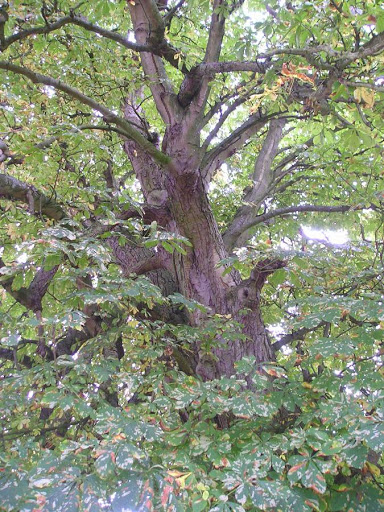
The secret valleyhas numerous mature Horse Chestnuts.  They are fine trees, up to 100ft or more tall and look especially splendid in spring, their white flower spikes contrasting with the freshness of their newly opened green leaves which, at that time of year, are still unblemished.  In the 400+ years since they were introduced to Britain from the Balkans, they have become an integral part of a child’s growing up.  We learnt how branches of the ‘sticky’ buds, the dormant leaf buds, becoming ever more shiny and sticky as the sap rises within the tree, can be cut and forced to open into leaf early in a jam jar of water.  On hot summer days we learnt, usually when lying beneath the trees in their cooling shade, how to make ‘fish bones’ by shredding the leaves with our fingers until just the skeletal veins of the leaves remained.  When we wanted to be nasty we knew that we could hurl the hard, green nutshells armed with their sharp spikes to embed in our enemy’s backs or scratch their legs if they were wearing shorts.  And, of course, we held conker competitions.

Horse Chestnuts in full bloom on a fine late spring day
 
Now with all the trials of pests and disease plus the dreadful summer weather, conkers are few and those that have matured barely half their normal size.  It has even been suggested that brussel sprout competitions may have to be held instead although I doubt if they will give the satisying dull thud of the real thing even if they were frozen first.  However, this years World Conker Championships have taken place this month as normal – it was first held in 1965 and, unlikely as it seems, attracts competitors from all around the world.  You can find out more by clicking on the link below.
Not all is gloom and doom for the Horse Chestnut for it is now thought that some bird species are beginning to learn about this new food source and research is being carried out by the University of Hull and others to monitor this suspected behaviour.  There is little that we, as gardeners or conservationists can do at this stage to assist other than to report any signs we see of birds feeding on the trees.  We just have to hope that the Horse Chestnut doesn’t disappear from our countryside in the same way that the Elm did in the 1970’s and 80’s.

The difference in size between the two trees is quite marked – as is the autumnal tints of the frost damage part of the smaller one 
 
In the secret valley, we also have a number of the smaller, red flowered Horse Chestnut, Aesculus x carneaca, and this does not seem to become infected to the same degree as the white flowered, Aesculus hippocastanum.  Although they do produce conkers unfortunately they are neither of a size or quality suitable for a serious round of conkers.  Horse Chestnuts, by the way, are poisonous to horses – they get their common name by the scars on the branches where the leaves once were: a perfect horseshoe complete with marks where the nails would be. 
 
When you get to know a place intimately – whether it’s a garden or a landscape – you notice things that the casual observer misses.  In the late spring of 2011, we had a biting frost that killed off not all but some of the new young growth of numerous trees – just where it touched.  Some trees remained unscathed, others  were totally destroyed and some just part.  This is what happened to one of a pair of Horse Chestnuts visible from our little stone cottage.  One tree has always been much more stunted than the other, although as their girths are the same, I assume they were planted at the same time.  They stand side by side but one, when the river bursts its banks is under water for a few days longer than the other.  Is it this that has caused it to be so much shorter or is it this rare burning of the leaves by frost?  It took months for the tree to recover, finally sending out new spring green leaves and flower buds at the end of July contrasting greatly with the remainder of the tree whose leaves had not been harmed.  Likewise, the older leaves turned their autumn colours and fell earlier than the newer ones.  This year the tree, which now looks quite poorly, has reversed with the damaged leaves turning golden – in the ten days since the photograph was taken, they have fallen while the remaining leaves are yet to get their autumn tints.
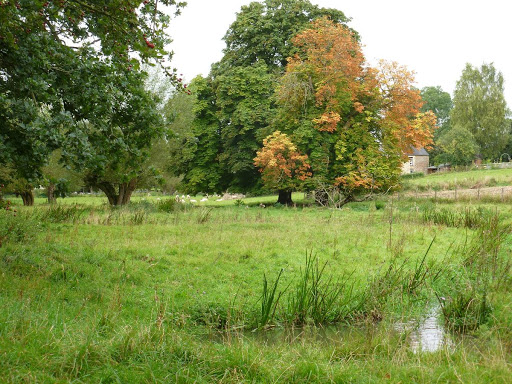
Almost hidden from view, our old stone cottage stands well above the little winding river
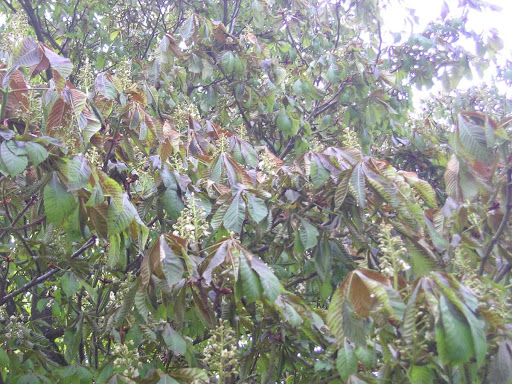
 In 2011, we had a very late frost blackening both the leaves and flowers – it took months for the tree to recover


The secret valleywill be a much poorer place if all the Horse Chestnuts succumb to disease and have to be felled.  Let us hope that future generations can play beneath them as we have done.

Sources:
British conkers getting smaller
World Conker Championships
Conker Tree Science Project

Add to Technorati Favorites

The Roman Mosaics of Cirencester

The making of mosaic patterns is often associated with the Romans although the earliest known examples pre-date them to 3000BC.  Associated with many cultures, mosaic artists still flourish today, an unbroken tradition of five thousand years.

The Hunting Dogs mosaic: head of Oceanus  2nd century AD

In Britain, one of the finest collections of early mosaics can be found in the Cotswold town of Cirencester, situated 93 miles west of London.  With a population of 18000, it is one of the larger hubs in the Cotswolds yet has maintained a lot of its old charm for there are still many independent shops as well as the usual High Street chain stores.

History oozes from the very fabric of Cirencester: home to the the oldest agricultural college (Royal Agricultural College) in the English speaking world, founded in 1845; it is also home to the oldest polo club in England (Cirencester Park Polo Club) which was founded in 1894.  The charter for the market, still held twice weekly, was first mentioned in the Domesday Book in 1086.

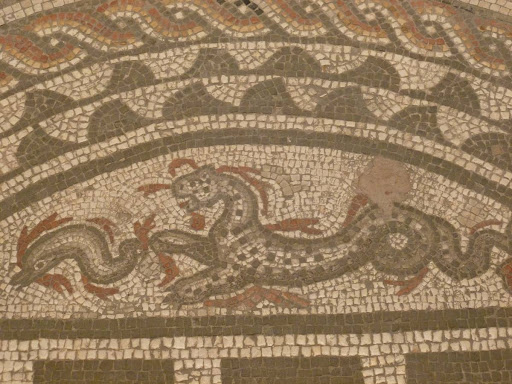
The Hunting Dogs mosaic:  Sea Leopard   3rd century AD

However, when the words Cirencester and history are linked together it is the Romans that predominate for their town, Corinium – now modern day Cirencester – was the second most important city in Britain.  Corinium lay at the centre of their great road network where Akeman Street,  Ermine Street and the Fosse Way all meet, still busy roads today.  There are still the remains of a number of  their villas in the region that are possible to explore.

The great Roman ampitheatre here was also the second largest in the country with tiered wooden seating for eight thousand spectators.  Today, all that remains are a series of banks and ditches, still impressive and well worth visiting.

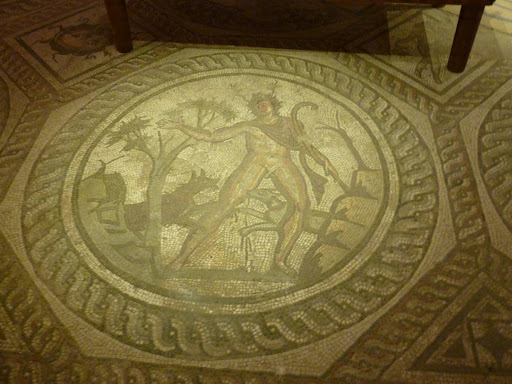
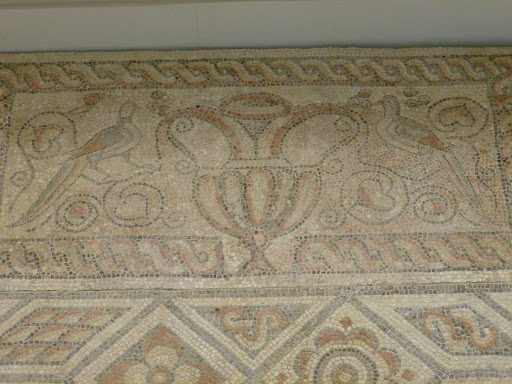
The Seasons mosaic:  2nd century AD   Actaeon being attacked by his own hunting dogs

If there is not a huge amount to see of the original splendour of the ampitheatre, you will not be disappointed by a trip to the town’s Corinium Museum which has recently been extended and refurbished making it one of the best museums in the country.  The museum holds over one and a half million artefacts but the most impressive of all of their exhibits have to be the Roman mosaics.

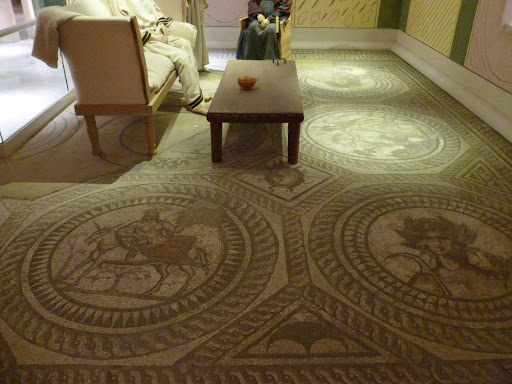
The Seasons mosaic: 2nd century AD

The Seasons  is one of the most impressive mosaics in Britain, discovered in Cirencester in 1849, with pictures of goddesses depicting spring, summer and autumn.  Winter is missing.  In the museum the floor has been laid in an area reproducing a room in a Roman villa.

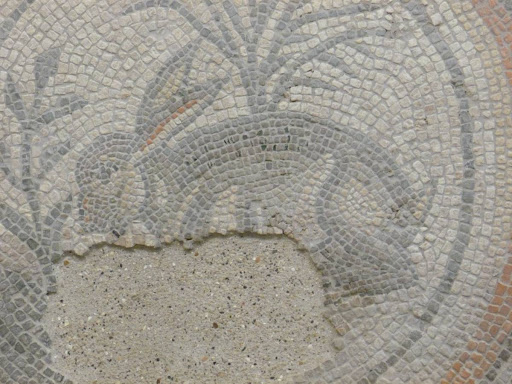
Detail from the Hare mosaic, 4th century AD

The hare is frequently used in Celtic art and fables but was rarely used by the Romans, making this central motif of the mosaic floor unique.  If you click on the photo above to enlarge it, you will see that there have been shards of green glass laid into the hare’s back.

Detail from the Hare mosaic, 4th century AD

The Hare mosaic, 4th century AD

The museum does not just hold Roman aretfacts, it also covers finds from pre-history as well as more recent times such as Saxon brooches and a large hoard of coins dating back to the English civil war, subjects of a later post.  The Cirencester Museum is really worth making the effort to visit – you can find out more details by visiting their website, here.

Add to Technorati Favorites

At the Warwickshire Hunt Team Chase

Horses play an important part of our everyday lives and with my partner having spent a lifetime involved with riding for both pleasure and competitively, it is not surprising that so many of our friends are ‘horsey’ too.

I took up riding rather late in life compared to most and although I’m a competent rider, I’ve never been tempted to do anything that remotely involves winning a rosette.  I value my life too much.  However, if I thought I could skip the rosettes part and go straight into winning big prize money, I might just give it a try…

Over the years I’ve had my share of falls – this is a good thing for it means that I can recount them at every available opportunity.  Horse fall stories are rather like fisherman’s tales – it isn’t just the fish that get larger with every telling, so do the fences, gates and hedges where I met my comeuppance.  The story, for example, where I managed to fall off twice jumping a set of rails: the first time I got back on the horse and tried to jump them again  – only to land head first in the biggest pile of cow shit for 30 miles. No embellishments there but actually (and don’t tell anyone) the rails were really quite low.  I probably could have jumped them even if I hadn’t been on a horse.  The most irritating fall story of them all is the time I jumped a hedge to find rather a drop on the landing side. The horse stopped on landing and I sailed straight on, managing to do a double somersault before landing on my feet looking at the other riders jumping towards me.  Irritating because although accurately told no-one, apart from the few that witnessed it, believe it.

One way of ensuring numerous falls and a good way to stack up a whole wad of stories for future dinner parties is to take part in team chasing.  This is, for the uninitiated, where a team of usually four riders jump a cross country course at a hell-for-leather pace against the clock.  The time of the third rider to complete the course is the one that counts.  My partner has done this on numerous occasions but these days we are both happy to watch.

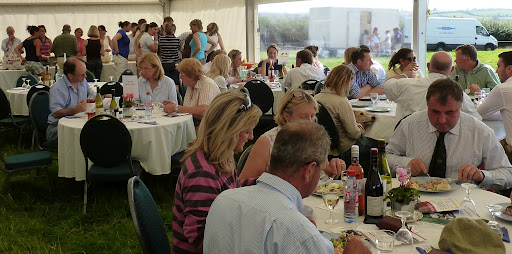
A good friend of ours who is a very successful saddler sponsored one of the classes at the Warwickshire Hunt Team Chase two Sunday’s ago and we were invited to join him and his partner for lunch.  I’m afraid to admit that like most events that include food and drink, I spent more time inside the marquee than on the actual course itself.

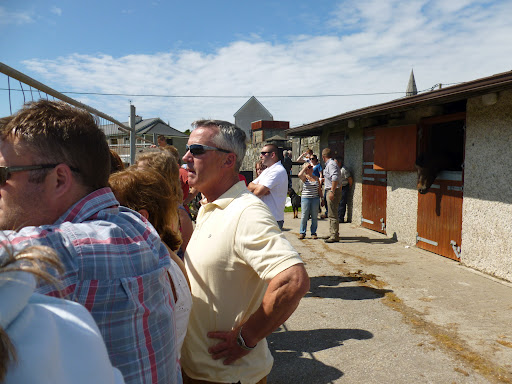
These sorts of occasions, rather like any other horse events, are very sociable for it is where a widely scattered country population can come together and meet up with old friends and neighbours and exchange news.  As I sat at the table pondering upon this and how traditional it is – for country gatherings haven’t really changed that much over the years – I also wondered if this was a worldwide  phenomena or whether it was yet another example of British eccentricty.  At that moment I noticed one of the guests was sitting at the table astride a pony  so I decided it must be the latter.  Ok, so the guest and the pony were very small but does that really matter?  Of course not, we wouldn’t have cared if it had been a 17 hands stallion (well, we might just, I suppose).

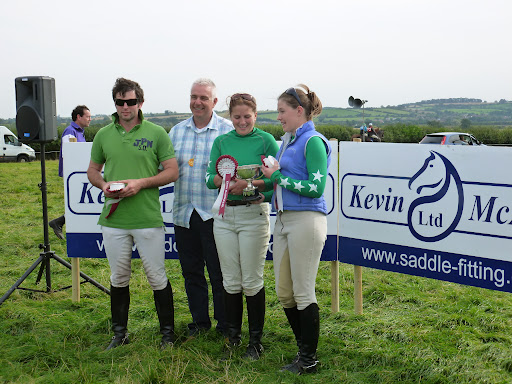
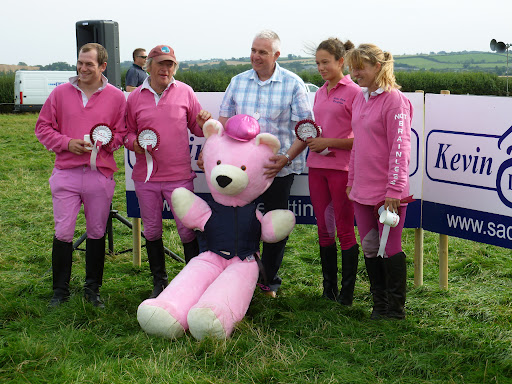
Once lunch was over it was time for the prize giving.  The team in pink,, who came second, were riding to raise money for Breast Cancer Awareness.


You can see more photo’s of the day on my Facebook page – click the FB icon at the top right of this page to go there – and don’t forget to ‘like’ me at the same time!


Add to Technorati Favorites

Heading for the Sky

The west coast of Ireland is renowned for its beauty for the crashing waves of the Atlantic Ocean, with nothing to slow them down from the shores of America, have created inlets and pools, islands and crumbling rock face.  It is a wild place with mile after empty mile of high cliffs, sandy coves and sheltered bays.  Like the shadows that play on the surface of the water, the weather is forever changing as rain and sun alternate produce the contrast of lush green against granite outcrops.  All along this coast there are ruins of the old crofts, now long deserted as the population left to find work and comfort elsewhere.  Those that remained moved into more modern homes that look as if they have been dropped into the landscape for they sit at all angles, some looking out to sea, some with their backs firmly set to it as if hunkered down waiting for the next battering storm.  
 
 
One of the most picturesque towns on the coast is Clifden in Connemara whose population swells threefold during the busy summer months to 6000 or so.  The region described as Connemara is undefined, being part of County Galway, but is generally accepted to be the remote, westernmost area, where mountain, bog and sea all jostle for space and attention.  This remoteness has helped to save the Irish lannguage and Connemara has the highest percentage of Gaelic speakers in Ireland.


 We – my partner, myself and some friends – had come to stay high on the cliffs outside Clifden specifically to visit the annual Connemara Pony Show, where the native ponies are put through their paces over three days.  I have written of this in my last post (click here) and also mentioned how we came expecting rain and cool temperatures only to be blessed with such hot weather that we actually swam in the sea.   The fine weather meant that we were treated to some spectacular sunsets.
 
There are two roads that lead west out of Clifden, the Beach road and the Sky road.  The first only goes a short distance but the Sky Road is an 11km loop that is a popular destination for both tourist and local alike on a clear evening.


As the light begins to fade there is little to prepare you for the spectacle that will come later.  A greying of the sky with just the merest hint of colour as if an artist has slashed the palest of pink washes in a quick ‘Z’ shaped stroke. 


As the sky darkens further it would appear that the sunsets we have been promised will not materialise.  The sea changes in appearance at this point and becomes almost glassy or mirror like.  The dark line stretching across the water in the photo below is made by fishing nets stretched across the bay, invisible at any other time of day.  Trees, too, standing on the edge of the water cast their reflection in the stillness.


A shaft of light suddenly appears along the horizon, lightening up the landscape once again only to be hidden by a bank of seafog rolling in, determined to spoil our evening display, leaving just a hint of gold cloud rising above it.  But, just as quickly it disappears again to reveal the sun disappearing over the horizon beyond the islands.


We stay until the sun disappears completely and drive on imagining that the show is over  but nothing has prepared us for this last finale seen as the road rounds a bend.  The combination of cloud, light and darkness, of navy blue, black and pink, mirror imaged in the still water is quite breath taking.  It seems unreal, as if it should be the backdrop to a Wagnerian opera; we stand on the sand speechless for no words are adequate.


I had to share the sunset with others but waking early the next morning I stepped outside to be greeted by an almost equally spectacular dawn.  And what phenomenon created this vertical shaft of colour coming straight up from the sea? 


Add to Technorati Favorites

Ireland’s Connemara Ponies

Rugged and beautiful, Connemara is situated on Ireland’s west coast.  It’s a wild place: a rock strewn landscape softened by the lush green of field and bog; of purple heather interwoven with the golden flowers of gorse; of towering scarlet and purple fuchsia hedges; of blue sea and empty, sandy beaches and of vast skies.  On a warm, summer’s day there can be no more benign a place yet when the gales and driving rain arrive, you are reminded that there is nothing but open Atlantic until you reach the shores of America. It is here that the Connemara pony, as enigmatic as the land that produced it – gentle but tough – developed.

The origins of the ponies are lost in time.  Some believe that they date back to the Vikings, others that the local breed crossbred with shipwrecked Spanish Armada horses.  What is known with certainty is that during the 19th century they were crossbred with Hackneys, Thoroughbreds and Arabians until by the early 1900’s the pony bloodlines were being lost.  In 1923 the Connemara Pony Breeders Society was set up to preserve the breed, the result being that the Connemara is now thriving with societies, clubs and shows worldwide. 

The most important of all of these shows – and rightly so – is the one of its birthplace, the Connemara Pony Festival at Clifden, held each year during August.  It is to the Festival that I was lucky enough to be invited last week.

 
My interest in horses, I have to admit, is somewhat limited.  I ride and (even if I say so myself) am quite good at it, despite only learning ten years ago but I do find the prospect of sitting watching horses for three days going around a ring rather daunting.  But this is Ireland and the craic is as good as you would expect it to be – here you can wander in and out of the showground, the locals are happy to chat to you about anything and everything and the setting is superb: a small showground in the centre of a pretty, brightly coloured town bounded by a dark brown, peaty watered river and backed by mountains.  And of course, there is Guinness!  A bonus was the weather – hot and sunny, every day.

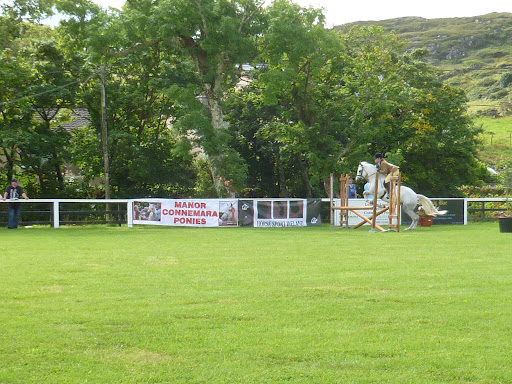
I stayed and watched some of the jumping competitions before my attention waned.  The standard of the riding was very mixed but fun was had by all and it was interesting to see how the children just climbed back on board and carried on without, it seems, a second thought.  Perhaps that is why so many of the top jockeys are Irish ….

However, when it comes to ‘loose’ jumping, I can stay all day.  To watch the ponies move without the restraints of rider and tack, I find fascinating.  Here, the atmosphere is very much more relaxed and the banter never ending.

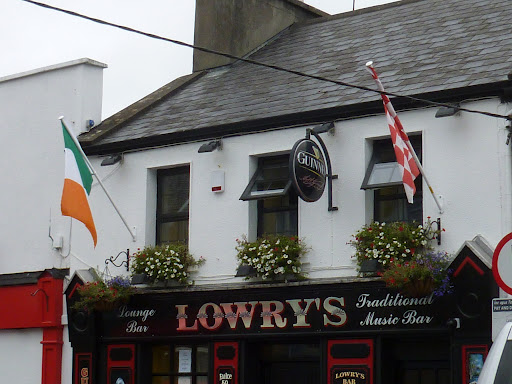
After a long day, what better way can there be than to end it with a stroll through the town, visiting a bar or two along the way?  Clifden is also a stronghold of traditional Irish music and from every open doorway the sound of the fiddle eminates.  Traditional music has been a lifelong interest of mine and I have had all the elements of a terrific day out – horses, Guinness, Ireland, song and warmth.  I walk back to my house, twenty-five minutes outside the town, set high up on the cliffs, as the sun begins to set.  The perfect end to a perfect day.

This seems an opportunity to talk of my own horse, Barney.  A giant of a horse (who, by coincidence, also came over from Ireland), gentle, wicked and a lot of fun, he helped teach me to ride by ensuring, I like to think, that the saddle was safely underneath me when I landed after a jump.  After months of treatment for lameness, he was ‘put down’ – a very sad day.  However, I now have Bart who compared to Barney goes like a Ferrari.  An ex-eventing horse, he is beautifully schooled and very disciplined, it has taken me a while to feel comfortable with his power and speed.  More of all this on a later post – below is an image of him and Ernie, our other horse, as a taster!

Add to Technorati Favorites

Dropping In Unexpectedly

We are sociable animals here in the secret valley and nothing pleases us more than when friends call in unexpectedly as they pass by.  It doesn’t matter whether there is just one or twentyone, we can always find enough in the store cupboards to water, and feed them too if needbe.  More often than not, they are on their way somewhere so a cup of tea, or something a little stronger, is all that is required.

Not the secret valley but still in the Cotswolds.  If you click on the photo to enlarge it you can see that the river Windrush has as many twists and turns in it as our little river

Most of the time visitors arrive by car or on foot for the lane that brings you into the valley is as inviting and sinuous as the little winding river itself: it takes you across cornfields, through trees which create, at this time of year, a leafy tunnel before entering a fold in the hills lined with an avenue of cherry and lime trees.  It is here that you get your first glimpse of the river and beyond the meanders the lane turns sharply over the bridge taking you a few more yards to the door of our home.

The villages of Lower and Upper Oddington – you can clearly see the lines of the old ‘ridge and furrow’ field plough marks that can date back a thousand years or more

The secret valley, as I have mentioned before, is a landscape in miniature.  Everything is small – the road, the hills, the views, the river, even the stone built bridge you can pass over without noticing it.  If it all sounds very idyllic that is because it is.

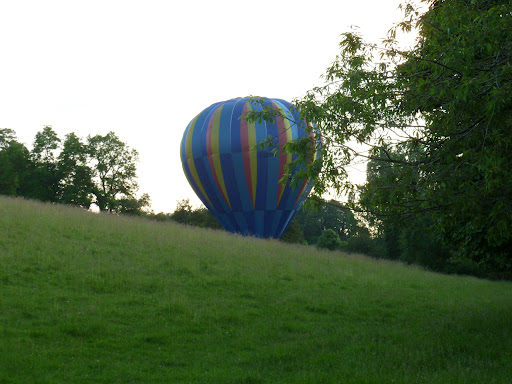
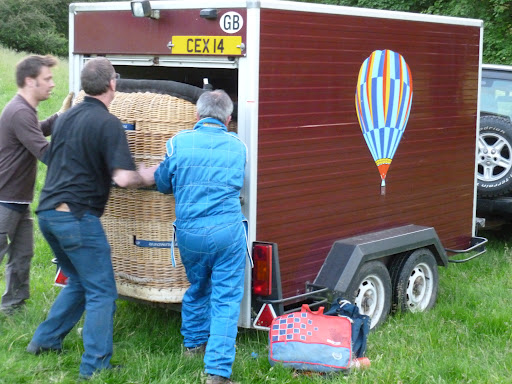
A couple of weeks ago we had some very unexpected guests although we could hear them arriving for quite a while before they finally did so.  It was the unmistakeable sound of a hot air balloon losing height.  Hidden by trees we could not see who was landing but went off to investigate – She-dog leading the way – and to assist if required.  The multicoloured stripes told us it belonged to Charles Teall who lives some miles away and who had once taken me for a flight, although on that occasion we had not landed on our doorstep – for details of that flight click here.

Charles’ wife, Liz, incidentally, is a very talented potter and we have some very nice pieces of her work.  She, like myself, is interested in traditional folk music but, unlike me, she can sing and play the whistle and tabor; she also belonged until recently to a local Morris dancers side.  Have a look at her work by clicking here.

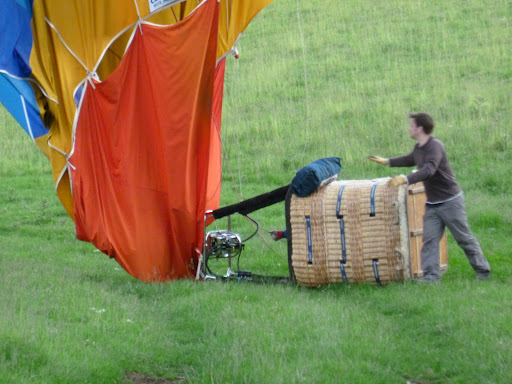
By the time we reached it, the balloon had already landed.  It never fails to surprise me just how large it is and just how small the basket is.

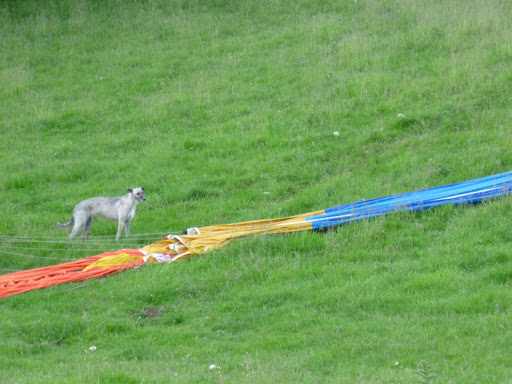
She-dog is normally fairly cautious and we thought that she would be nervous of the balloon.  As always, she proved us wrong and felt it important to inspect every part of the balloon: below, the folding meets her approval.  Talking of approval, those of you that follow She-dog’s exploits may have been wondering what is the latest on puppy news: there isn’t any.  On the last two occasions she has refused to co-operate.  She obviously felt that once was quite enough!

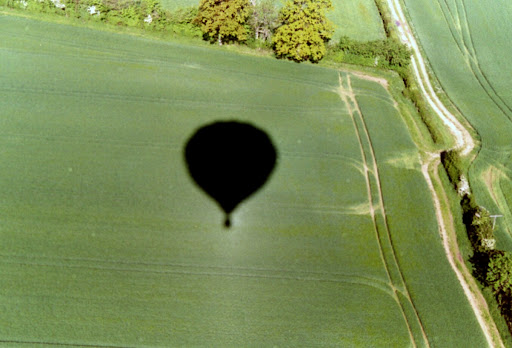
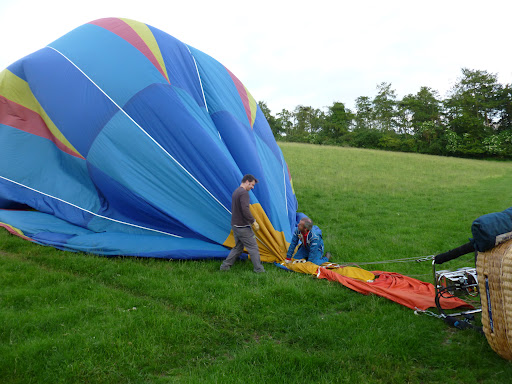
I am always surprised how neatly everything folds away and into such a small space.  There is always a mobile support team to assist where necessary so our help wasn’t required.  Once packed we were able to catch up with the latest news over a drink and reminisce about our trip flying over the Cotswolds.  The aerial shots were all taken on that day.

The counties of Oxfordshire and Gloucestershire, which form the greater part of the region known as the Cotswolds, have some of the best surviving examples of ridge and furrow.  To find out how these were created, click here.

Add to Technorati Favorites

The Day I Became a Mother!

I have kept poultry since childhood ever since returning with my parents from a farm on Exmoor with a box containing half a dozen bantams smuggled into the back of their car. When one laid an egg en route and started cackling, my mother was furious. Fortunately we were too far into our journey for them to be taken back.  In time, she became equally fond of them and even allowed them to wander into the house to be given scraps of food.

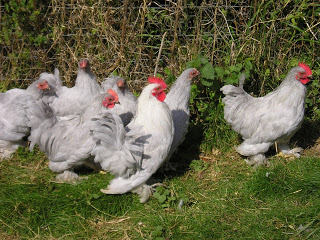
The original bantams were farmyard mongrels but since I came to live in the secret valley I have kept Lavender Pekins.  These are allowed to wander the fields, even though they become supper for the fox, for there is nothing more delightful than to see happy hens striding down to the river or up the valley and (hopefully) back again. 

Bantams – or Cochins, as they are called in Canada and the USA – are ideal as garden birds for they do very little damage unlike their full sized relatives.  We keep those too but they are – with difficulty – kept firmly beyond the fence. I have written about the bantams in an earlier post and this can be seen by clicking here.

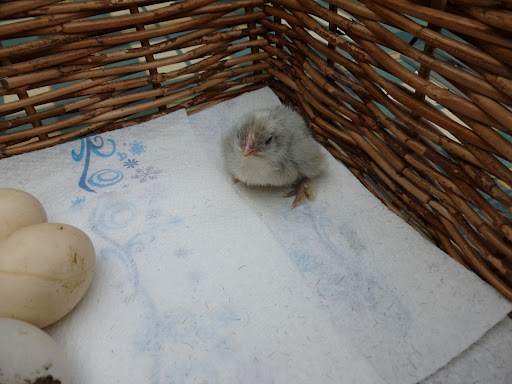
The other day I came across a couple of abandoned bantam eggs put them into a basket, kept them warm and waited to see what happened.

What a result!  An hour later it was dry and fluffy ….. and making even more noise!

Add to Technorati Favorites

"The Most Beautiful English Village"

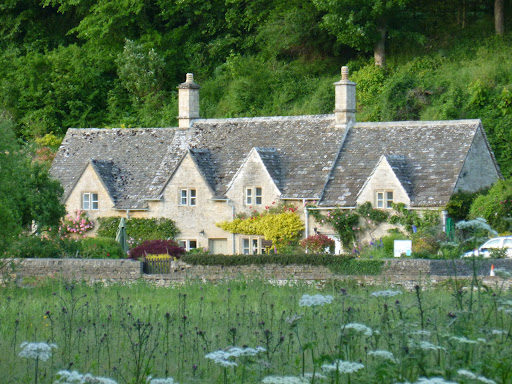
The tiny village of Bibury has long been recognised as one of the prettiest places in the Cotswolds and is much visited by tourists.  It is everything you might magine an old English village to be; so much so that some visitors, according to local gossip, not realising that it isn’t a theme park creation, walk into people’s homes to have a look around.

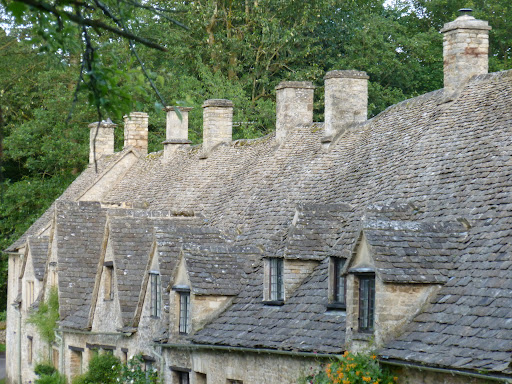
Ancient cottages in mellow Cotswold stone, a crystal clear, trout-filled river running alongside the main street, an old mill and a great pub offering food and accomodation all make Bibury “the most beautiful English village” as William Morris, the Arts and Crafts textile designer described it when he visited during the 1800’s.

The old cottages are so perfect and their setting so tranquil that they appear to have created an ethos amongst their owners: each house and garden has to be more well maintained than their neighbours.  The only weeds I saw there were across the river in the marsh and, of course, not only were they growing where they belong – in a wild setting – but there were only the most attractive ones such as Yellow Flags, the bog irises and the flat, white heads of the hogweeds.


No English village is complete without its church and pub and Bibury has both.  The church of St Mary’s dates back to the 12th century and is well worth seeking out for it is tucked away down one of Bibury’s few side streets.


If the church tries to remain hidden, no such claim can be made for The Swan, one of the landmark buildings situated on the bend where the road crosses the River Coln.  The creeper covered pub/hotel is a good place to watch the world go by although, rarely does a car go by without its occupants stopping to explore the village.  This is quite a problem for there are so many visitors and cars that to experience the tranquility of the place, or to get photographs such as those on this blog, you either need to stay overnight or to visit the village early in the day.  Looking at the online reviews for the Swan, I was amused to see that the only gripes were complaints about old furniture, no street lighting and no wifi or mobile phone signals – surely, some of the very best reasons for visiting!


It can almost be guaranteed that every calander of the Cotswolds will have a photograph of Arlington Row – probably on it’s front cover.  Set back away from the road, it is reached by a footbridge: a terrace of former 16th century weavers cottages which, in turn, were converted from a 13th century wool store.  The importance of wool in creating the wealth of the Cotswolds and its churches, including the development of the Cotswold breed of sheep, now endangered, has been described in earlier posts on this blog (click here).  For more on the Cotswold sheep and the work of the Rare Breeds Survival Trust to preserve them, click here.
Arlington Row’s importance in history of vernacular architecture was recognised by the Royal Society of Arts in 1929 when they purchased and restored it.  A plaque, commemorating this is set into a nearby wall.

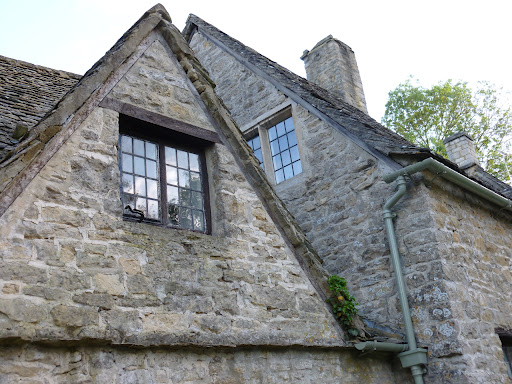
Exploring Arlington Row gives visitors an opportunity to see just how higgledy-piggledy the construction of old house are.  The old stone walls and mismatched rooflines and windows are juxtaposed seemingly at random – a modern planning departments nightmare.

Despite, the large numbers of tourists (for we all like to believe that we fall out of that category and will be the only persons there), Bibury is well worth making the effort to visit.  It is situated close to Cirencester, one of the most important Roman towns in the UK, with its wealth of history and it is also within easy reach of Oxford.  If I had to choose only one place to take a visitor to see, I think that Bibury would be highly placed on the list. 

Let me know – especially overseas readers, please – which would be the one place that epitomises old rural living in your country.

Add to Technorati Favorites

The River Pageant

In 1717, a musical pageant was held on the River Thames for King George I and was captured on the famous canvas by Canaletto.  This was not the first time that there had been royal river pageants but it was this painting that was the inspiration for the Diamond Jubilee River Pageant for Queen Elizabeth.  

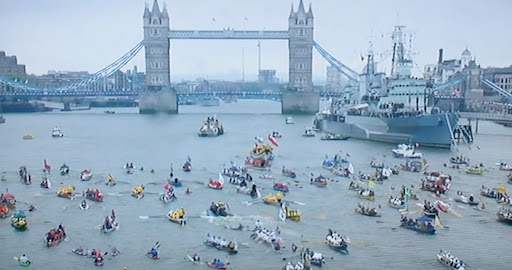
A major feature of the pageant was again music but the number of boats on the river was to outrival all the previous pageants of the past.  Over 1000 boats took part, breaking not just the record for London but becoming the largest ever in the world.  The oldest boat dated back to 1740 and one, the Amazon, had taken part in the celebrations to mark Queen Victoria’s diamond jubilee(the present Queen’s great-great grandmother) in 1897.
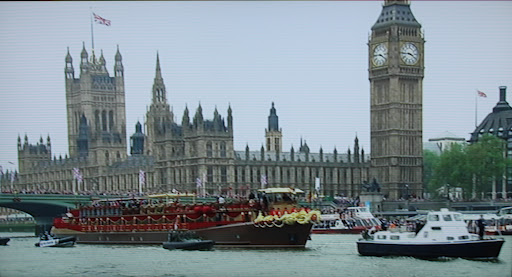
 Central to the parade was the Royal Barge that carried the royal party.
 
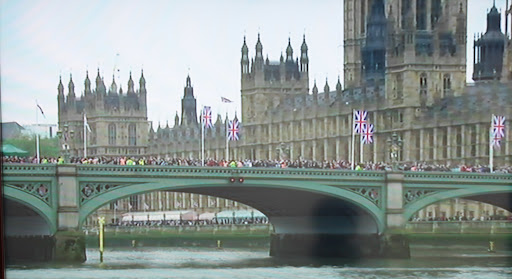
The barge sailed past many of the iconic images of London – The Houses of Parliament and Big Ben, St Paul’s Cathedral which can also be seen  in the Canaletto painting.  Crowds lined the banks of the river and also the bridges – they can just about be seen through the torrential rain that fell for most of the day.  Despite that nearly one and a quarter million people came to see the pageant and wish the Queen well.  The boats sailing in front of St Paul’s are bearing all the flags of the Commonwealth countries.


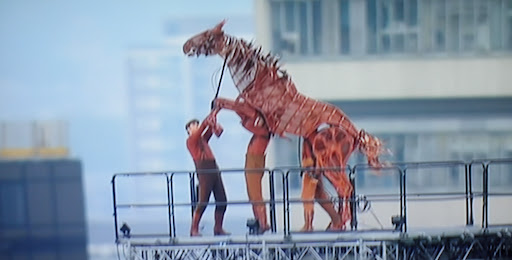
All  along the banks, tributes were made to the Queen ranging from military salutes to one from War Horse on the roof of the National Theatre.


Every church bell along the river answered the peal from the barge leading the procession.  The floating belfry was carrying a specially comissioned set of eight bells – these were later hung in the Church of St James at Garlickhythe.
 

 The fire boats also gave their salutes wetting already soaked participants even more ……


 And Tower Bridge raised its bascules to their highest point in acknowledgement …..


Despite the grey, dreary weather the river – it is rarely given its full title of the River Thames – was a spectacle of colour, of bells ringing, of music coming from one of several orchestral barges and the sound of the crowds cheering, clapping and singing the national anthem, “God Save the Queen”.


 Once the Royal party had passed through Tower Bridge, the pageant came to an end.  It concluded with the choral barge singing patriotic songs with great fervour despite the choir being drenched to the skin.  Never had the words of “Rule Brittania” seemed more pertinant:  “Rule Brittania, Brittania rule the waves ……”


 For more details of the procession or to read about the individual boats that took part, visit the official website of the river pageant:  http://www.thamesdiamondjubileepageant.org/ .  Much of the information above has been taken from their very informative site.


The Gloriana (above) is the first Royal rowbarge to have been made in over 100 years.  Covered in gold leaf it lived up to its name.  Pphotographs can be found on an online article of the Daily Mail – and more information – by clicking here.
  
Add to Technorati Favorites

Around the World with Queen Elizabeth

Last October my partner and I were surprised and delighted to receive an invitation from the Duke of Edinburgh to a reception at Windsor Castle.  It seemed unreal passing through the State Entrance, walking up the Grand Staircase to the magnificently restored St. George’s Hall and spending several hours being able to explore the historic rooms at leisure.  To read more about that evening, click here.

This weekend, the whole country is in a Royal frenzy as there is a four day holiday break from routine to celebrate the Queen’s Diamond Jubilee.  Everywhere, there is red, white and blue bunting and Union flags flying in preparation for street parties, village dances and fetes.  For many of us, the Queen represents more than just our Country, partly because, having been there for sixty years, the majority of us have no memory or knowledge of any other monarch.  She has always been there, always consistent and that is quite a comfort when the news is full of political and monetary chaos throughout the world.

Windsor Castle is not just a grand, old building; it is also a much loved home to the Royal Family, so it was only natural that it would play a lead role in the Jubilee celebrations.  “Around the World in 60 Years” was an extravaganza that celebrated not just the Queen’s achievement (Queen Victoria, the present Queen’s great-great-grandmother is the only other monarch that reigned for over 60 years) but also
a record of the many countries that she has visited during that time.  When we had the opportunity to be at Windsor for this once-in-a-lifetime treat we leapt at the chance.

The performance, which took place in the private grounds of the castle, began with the entrance of the Household Cavalry and King’s Troop, which is always guaranteed to whip up a fervour of patriotism.  Behind the arena, the stage was a massive recreation of the facade of Buckingham Palace. 

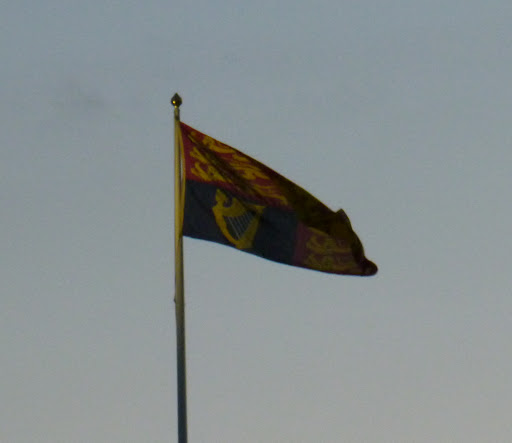
The arrival of the Queen and Prince Philip brought everyone to their feet.  The British don’t display their patriotism openly very frequently but when the band played the National Anthem, “God Save the Queen”, there were many – men and women – whose voices faltered over the words “long to reign over us”….  For me, the raising of the Royal Standard above the mock Buckingham Palace, which is only ever flown in the presence of the Queen, was my emotional downfall, for I am always aware how fortunate I am to live in a free democracy:  one half of my family did not and perished because of it.  My friends tease me, saying that now my family have lived here for 100 years, I will soon be a ‘proper’ Englishman!

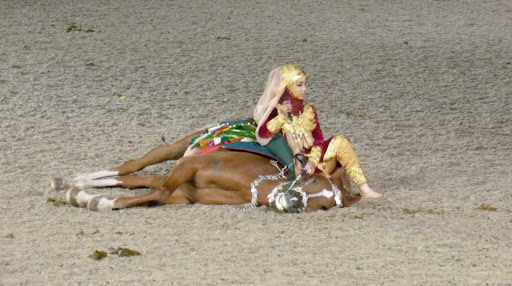
Over 550 horses and 1000 people took part in the Pageant.  Performers from every continent and the numerous countries the Queen has visited, displayed their horsemanship, danced or sang.
  
North America was represented by cowboys, by native Americans and by the Canadian Mounties. The Mounties are always very popular with the British and played a leading role in the Pageant. They also mounted guard at (the real) Buckingham Palace, a great honour (click here).

 
Two hundred men and women from the Omani Royal Cavalry were a colourful addition, wearing their green, burgundy and gold colours and riding barefoot.
 
Towards the end of the evening  all of the Queen’s own horses were paraded – or in the case of her racehorses, galloped – through the arena.  Even her ponies from Balmoral in Scotland were brought to Windsor.
The finale was the most incredible sight as all 550 horses and the performers came into the arena together along with the Royal State Coach. 

We were one of the last to leave the arena and as we sat we were noticed by the Cook Islanders who performed a ‘haku’ especially for us.  It was very exciting to have our own private performance and made our evening even more memorable.

And just when the evening could hardly be even more magical, we stepped outside to see the castle lit up in  a dark sky.  Breathtaking!

My photographic skills couldn’t cope with the extraordinary horsemanship of the Cossack riders – to see them rehearsing for their performance, click on the link here.

The Diamond Jubilee Pageant “Around the World in 60 Years” is to be shown this coming Sunday on television: ITV 6.30pm – 8.30pm.

Add to Technorati Favorites