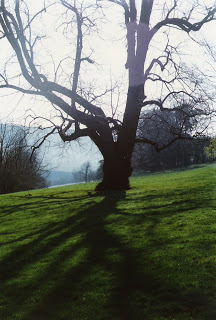
‘We’re off to the heath!” Such excitement whenever my father made this announcement. It happened perhaps just three or four times a year and when it did it was always a special day. Almost seventy years of summer sun – for we only ever went there when the sun was shining – have passed and the memory of those innocent days still bring joy. Much later the heath became my place of refuge when sadness threatened to overwhelm me; under the great tree that had witnessed my journey into adulthood, its shade restored and healed me.

Going to the heath involved ritual. The ritual included packing the picnic that my mother had been busy making; the ‘paste’ and cheese sandwiches, rock cakes that required the currants to be removed before being eaten (“no, mummy, they look like eyes”) and the steel Thermos flasks of scalding hot water for tea. No tea bags in those days so teapot, loose tea and strainer were all added to the basket along with the rug for sitting on. The rug fascinated me for it was of coarse wool and a faded khaki in colour but, most of all, it had my father’s name written on it in capitals: SHORTLAND H A 174445, the numbers being those from his army days. The blanket, he would tell us, had seen the Holy Land, Tripoli, the Pyramids of Egypt and the ancient ruins of Rome. Being spared the horrors he’d witnessed during World War 2, it seemed to us as if the rug had magical qualities, perhaps it was the carpet that would one day take us to these far-off places as well. Of equal importance to the outing was the cricket bat, ball and stumps, all to be placed in the boot of the cream Consul car – but only after I’d been lifted out of it for my jumping into the boot was all part of the ritual too.


Driving along the narrow country lanes my sister and I, noses pressed hard against the car window, would comment on every house made of flint, or with a thatched roof, that we passed for we knew the journey so well. “Oooh, I so wished we lived there…” After a few miles the car would begin to slow and we eagerly awaited the moment it would stop and we could all clamber out. Hoisting me onto his shoulders so that I could see over the high hedge, we would look down onto the ‘model farm’. How I loved it for it looked so much like my toy farm at home with its cows, sheep and horses enclosed by beautifully painted white wooden rails. Of course, it wasn’t really the miniature farm that my father claimed it to be but set in a deep and steep-sided valley gave it the illusion of being on a much-reduced scale. One day, I’m not sure how or why, we visited the old farmhouse with its ancient, beamed ceilings. In one room the main beam was much split with age into which coins had been hammered. It only added to my sense of awe as the farmer showed me the oldest coins, some of which dated back three hundred years or more. He also showed me the one he’d placed with the ‘new’ queen’s head on it, the first he’d seen, for Elizabeth the Second had only come to the throne in the year of my birth.

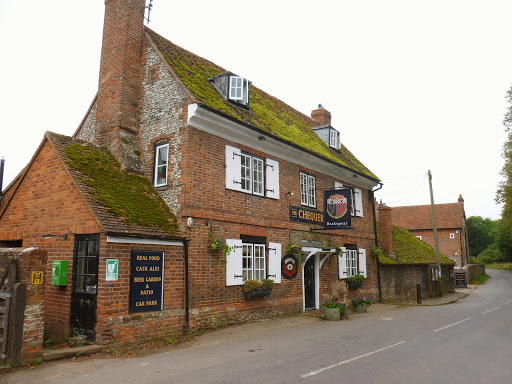
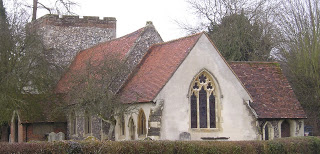
Our next stop would be for a stroll around the village of Fingest. The church fascinated me for it had beautiful, honey-colour rendered walls quite unlike the other churches in the area. Its other unique feature was its bifurcated tower which to childish eyes looked as if it was splitting in half. Best of all, inside the church, was a ladder, so tall that I was sure it must be Jacob’s ladder that I’d learnt about in Sunday School. I never saw any angels climbing it but I was convinced that if I was allowed to do so I would reach Heaven. In adulthood, I would live in the village for a short while although by then, it was the excellent inn where they served great ale and delicious suppers that I eagerly sought after a long day at work.


Fingest’s neighbouring village of Turville would only be visited on our way back from the heath, my parents stopping off at The Bull & Butcher. In those days, children were not allowed in pubs and so we were left outside to explore its two streets and to clamber up the steep hill to the windmill. How carefree those far-off days now seem when small children could be left to freely wander without fear. The village now is famed for it being the village of the film ‘Goodnight, Mr Tom’, the windmill featured in Chitty Chitty Bang Bang and the church in the Vicar of Dibley. After I moved from Fingest, I had the pleasure of living within a couple of miles of the windmill (and so close to the heath) for eighteen years.


The lanes beyond Fingest become narrower and more enclosed by hedgerow and woodland as you approach the heath, all of which adds to the excitement of finally arriving at its wide-open expanse. The car parked, out we would spill while mother busied herself with the picnic and my father set up the cricket. We only had one wicket and so the match didn’t consist of ‘runs’ – our reward was in actually managing to hit the ball at all and the praise we would receive for our skill. Perhaps this is why the heath holds such affectionate memories for, back in the fifties, fathers didn’t interact hugely with their children – mine was too busy working or tending the garden to make trips out a regular occurrence and my mother, like most women, was unable to drive. Finally, we would hear mother calling us for tea and after devouring everything in sight we would lie back on the short turf replete and happy. On one occasion my mother had packed roasted chicken legs, a rare treat for chicken was, in those days, a luxury meat. Before we had the chance to try them, our little mongrel dog Tammy had snatched them away and into the bracken to eat out-of-sight. Chicken never again appeared on picnics.

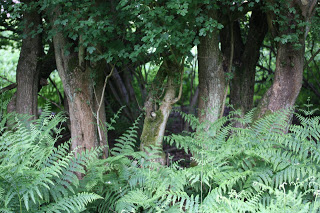
Soon we would be up and eager to explore. The heath was beautifully unkempt; the rabbits cropped short the wide grass rides allowing the bracken and scrub to grow elsewhere, untouched so it seemed by man. Along the western edge of the heath an ancient avenue of lime trees grew, their limbs now left to grow in a haphazard, twisted way. From time to time one of these great boughs would fall to the ground there to gently lie and rot and return to the soil. By summer, the bracken would have grown tall enough to obscure them from view. We knew where to find them and would crawl alongside beneath a green tunnel of fern fronds. Tiny, pale toadstools grew from moist fissures in the bark, beetle scurried away from our disturbance and here we learned about nature., much of which seemed magical to young eyes Later, as I learned patience, I would sit quietly to watch for wildlife: a wren chattering away as it searched for insects, the occasional slow-worm hunting for slugs and not as slow as its name suggests. Once I was rewarded by a family of stoats moving like a sinuous string of sausages as they followed one another each holding the tail of the one in front in its mouth. Such excitement!

Magic played an important part in our young lives for everything we didn’t understand surely had to be caused by magic? We saw regular proof of this in our painting books for they had the word ‘magic’ written across the front cover. A blank page of paper would be transformed into a colourful picture by just brushing with water from the empty paste jars. The paste jars held the exact amount of water required for ‘art’ without too much risk of spills. In those days of necessity, although the word recycling hadn’t been invented, everything – paper, string, milk and other bottles – were all carefully saved or returned for re-use. Plastic wrapping and the throw-away society was still to come.

Further proof of the magical world around us came one day when exploring a new part of the heath. We’d always thought that one dark, wooded corner looked rather forbidding but like all small boys, I knew better. Venturing deep inside it, with every twig snapping under my feet making me jump, I came across a small, black pond besides which stood an old hollowed oak. I squeezed inside the trunk to look up expecting to see sky. Instead, there was darkness followed by much scrabbling and hissing as dust and twigs dropped onto my head. Running as fast as I could I found my sister to tell her all about it. Unbelieving, she and I returned and this time it was she who was hissed at. Scared witless, we ran back to our parents. Just an old barn owl we’d disturbed my father had said. But we knew better, we’d found the door to the magic kingdom of elves and goblins. How lucky were we that the door hadn’t snapped shut with us inside, never to return, as described in the numerous books that we had read. Utter nonsense we were told. That, we realised, was the trouble with grown-ups: they didn’t believe and that was why the magic was hidden from them.
*

From time to time, I still return to the heath although I now live many miles from there. Whenever I do, I am struck at how small this ‘giant’ area to children’s eyes actually is. The difficult stage of my life, where the old tree supported me through despair, have long passed and the memory of it does not overshadow the pleasure that revisiting brings. Despite being a grown-up, I can still feel its magic. I’m not alone in this for recently I read Hugh Thomson’s book, The Green Road Into The Trees, in which he crosses southern England on foot. He too, feels the need to return to this very same heath in search of healing and finds it. He believes that the mysteries of the Ancient World are not as far away from us as we tend to think for our mixed Celtic, Saxon and Viking heritage shapes not just the British landscape but also our souls. Perhaps that’s where the magic comes from?


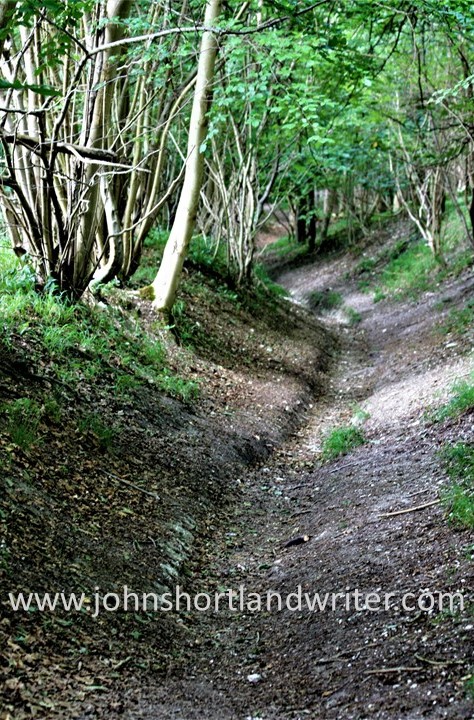



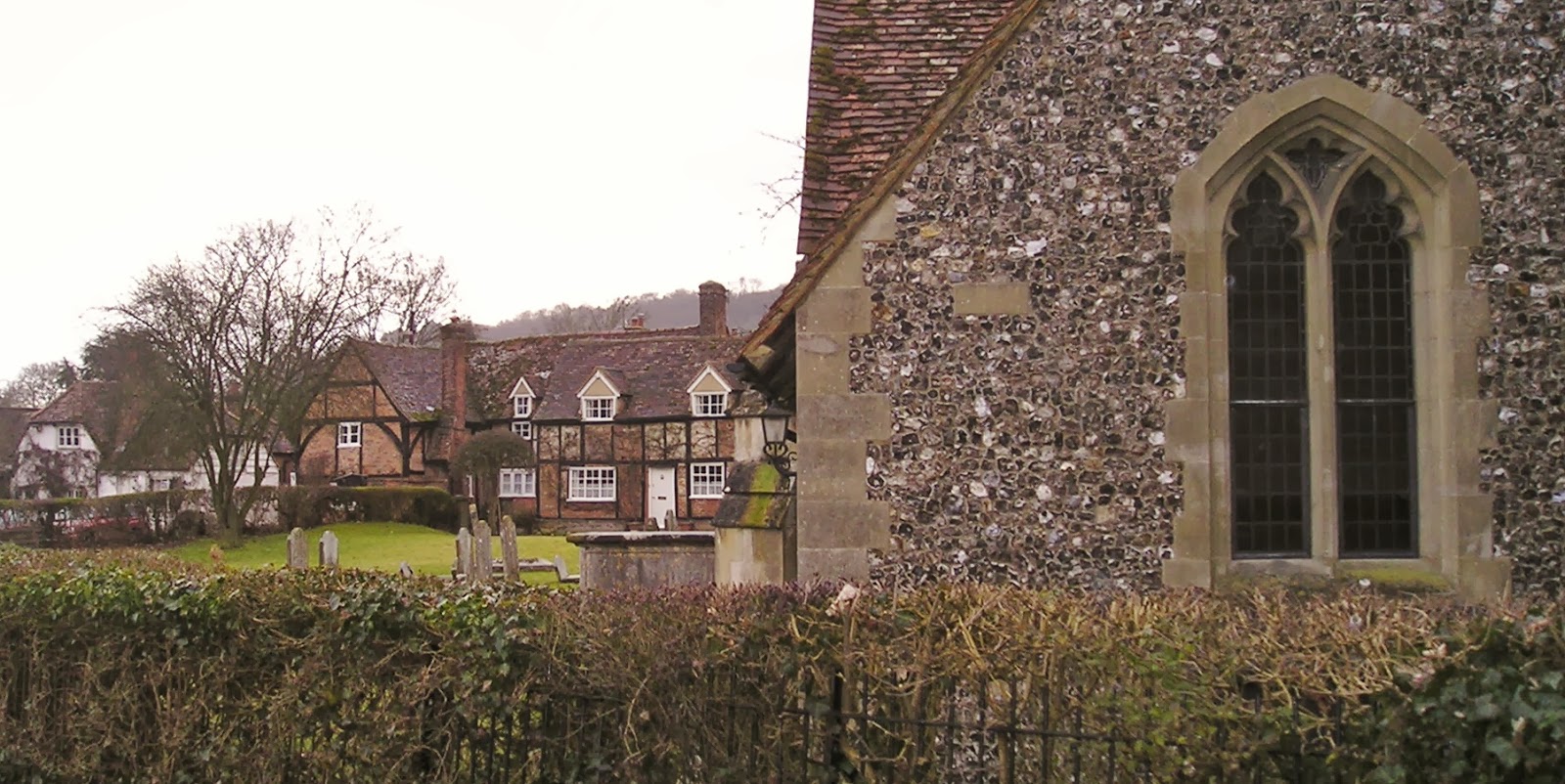




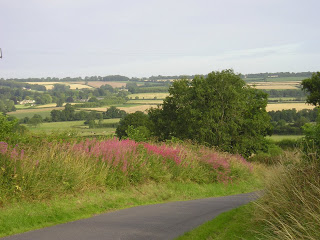




 Turville, is a tiny village, hidden deep in a valley in the Chiltern Hills and is close to where I was born and spent the greatest part of my life (I only came to the secret valley nine years ago). The Chilterns is a place of steep hills, thick with beechwoods that seem to hang onto their very sides – many use the word in their names: Old Hanging Wood near Hughenden, for example. The villages, as a consequence, seem tucked away and forgotten, yet they lie only some 30 miles west of London.
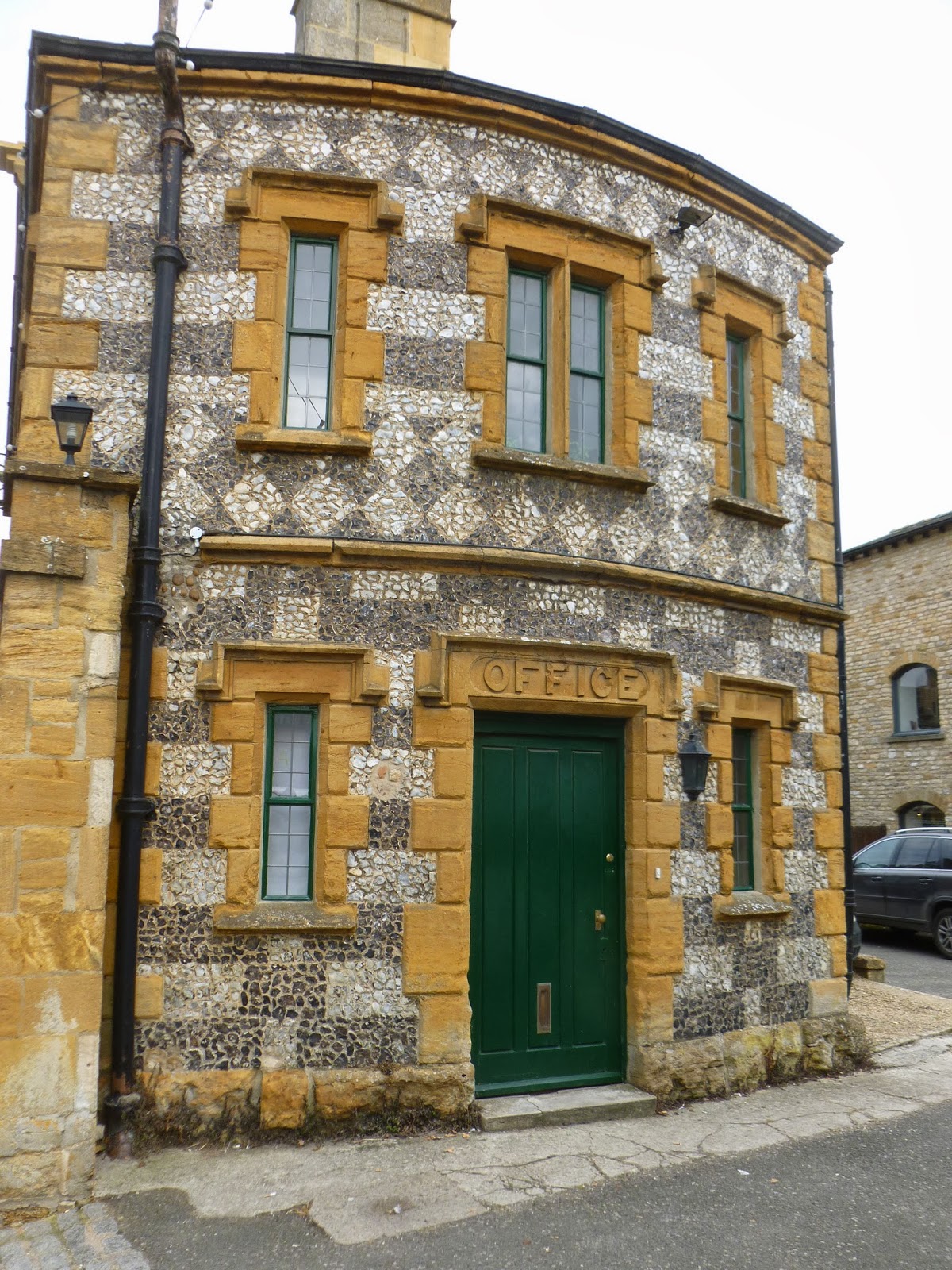
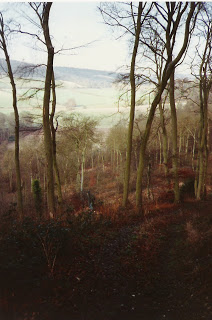 Chalk and flint are the geological features that make the Chiltern Hills what they are and you are never far from them for the topsoil is thin, as all Chiltern children soon learn. Childhood games need chalk for drawing hopscotch and the flint cuts deep into knees when falling over. Flint also is, or was, the favoured building material for houses and Turville has plenty of fine examples, even the church is made from it.

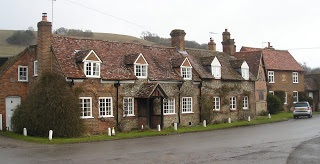 No English village is complete without its pub and Turville is no exception. The Bull and Butcher stands almost in the road. Less common are windmills and Turville lays claim to Cobstone Mill (which really ‘belongs’ to the neighbouring village of Ibstone), standing high above on a steep hilltop. The windmill, like the village has been used in many films such as Chitty, Chitty, Bang Bang and the 101 Dalmatians. In the latter, when the road outside became covered in machine made ‘snow’ I drove past confused – for there were still traces of the snow and it was midsummer. We also had no water for several hours as the filming had used up the village supply in the making of it.
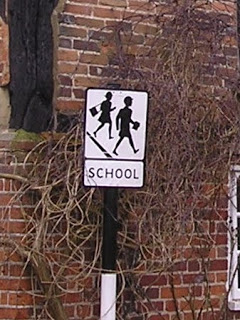
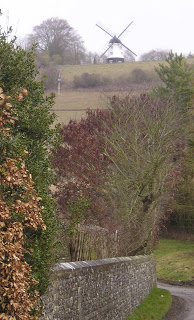 Turville is popular both with the film crews and visitors because it is so ancient and unspoilt. To get photos like these you have to visit on a grey, winter’s weekday as weekends, especially fine, summer ones, find the narrow lanes choked with cars. The village is so unchanged that even the warning roadsigns, like this old schoolchildren one are decades out-of-date!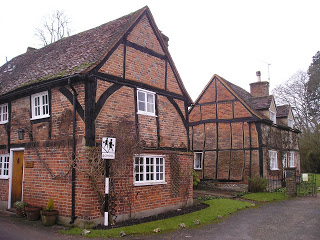
 winter sunshine on silver birch
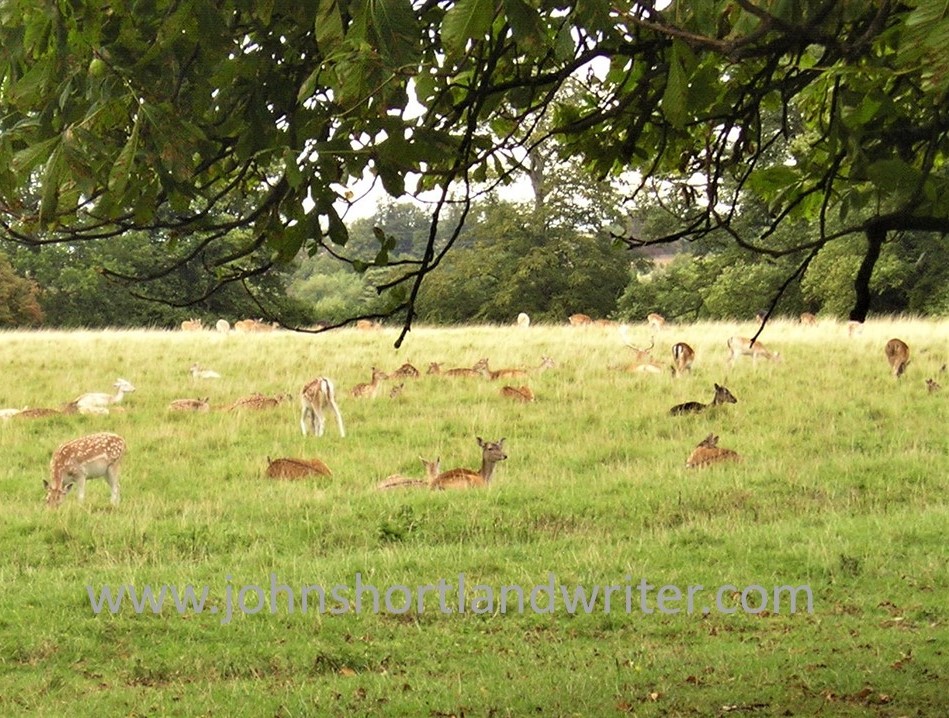
 Fallow Deer – one of the larger species of deer to be found in England and quite common throughout the country. But like all deer, despite their size, they are remarkably difficult to see and watch. When I lived in the Chiltern Hills, 50 miles to the east of the secret valley, they grazed the field close to my windows, making watching easy. Here, we see them occasionally from the cottage – yesterday was one of those days. In winter, their coats lose their lovely dappled spots and become quite dark – the two pictures below show this, the lower one being taken last summer.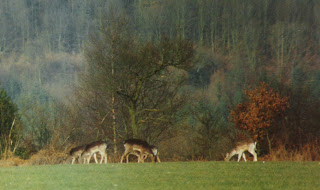
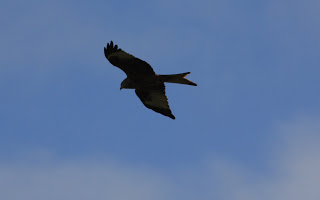
 The Red Kite is one of the great conservation success stories of recent times. Once so common they scavenged in the streets of London (and had a reputation for stealing hats off people’s heads to decorate their nests with. These days they often use plastic instead – the Kites, not the people, I mean, of course). By the 1970’s numbers were down to just a few pairs living in the remotest parts of Wales. A breeding and reintroduction programme started in the 1980’s centered on the village in the Chilterns where I lived. Soon they were a relatively common sight in that area but they have been slow to extend their range. Now we are seeing them much more frequently in the secret valley and they never fail to thrill. The full story of the Red Kite can be found on the Chilterns website
 This photo is most definitely poor quality – I only have a small ‘aim and fire’ camera and took this from an upstairs window. I am hoping to buy a more sophisticated camera with telephoto lenses very soon: another unexpected side effect of blogging has been a rekindled interest in photography. Who knows what will show up on this blog then?
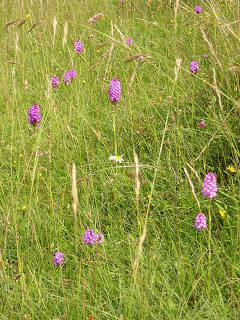
 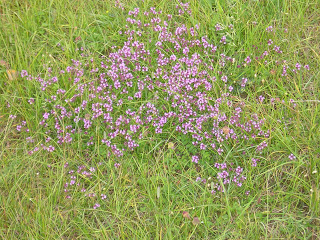 Wild flower meadows are quite easy to create whether on the big scale or in the garden. Of course, the species rich meadows of the Chilterns and Cotswolds have evolved over centuries and have a wealth of insect and plant life to show for it. In the garden you just have to be a little more realistic and be grateful for every bug and butterfly that comes along and colonises it. Hopefully wild orchids, like the Pyramidal orchids below, will arrive too.
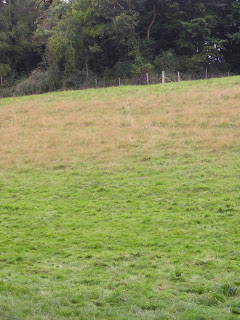
 The golden rule of all meadows is to reduce fertility. As soon as fertility rises, usually through feeding, the grass sward thickens and out competes the flowers. The photo below is of ‘our’ bank and shows, as a golden haze, the unimproved grassland – thin, tall and sparse and too steep for the tractors to get onto and spray. The brighter green grass above and below is where the tractors can reach, the grass has been fed and, consequently, there are few wild flowers.
 Late summer wild flower meadows require a different maintenance regime to those which have an abundance of spring flowers and, as it is that time of year, I shall concentrate on the former. Now is the time to cut the ‘hay’ whether on the bigger scale such as in this orchard or, by hand, in the garden. It is important to get the timing right – you need to leave it late enough for the seeds to fall from their heads to increase more. Leave it too late and bad weather knocks the grass and plants flat to the ground when it becomes a devil of a job to cut. The difference is a task that is a joy to do or one that is totally hateful!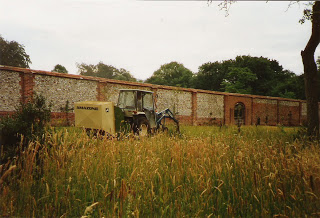
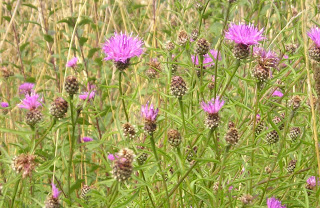 Hardheads, the local name I learnt for Knapweed in my Chiltern Hills childhood, is a favourite flower of mine. Although normally purply-mauve (above), I found this bi-coloured one and some pure white flowered ones growing in an old meadow – rarities, indeed. I live in hope that they might appear one day in the secret valley!
 Neglect does not create a meadow. If you don’t work at it all you will end up with is a sheet of docks, nettles and thistles as has happened in this garden here – not a pretty sight!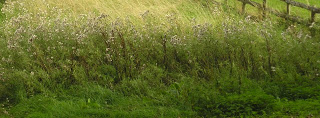
 Life in the English Cotswolds