
It is a family joke that whenever a large piece of stone is seen, one person asks “What is it?” and the other answers – slowly and after much deliberation and head scratching – “well, it’s a massive piece of granite”. For, many years ago, this was the only answer we got from an old countryman at an ancient stone burial chamber that towered above us.
.
Burial chambers, stone circles and other standing stones, which mostly date back 5000 years or so are reasonably common around Britain,and a surprising number of them are quite impressive. There are several scattered around the Cotswolds and I have written about our little known and little visited Old Soldier and also the very well known and very much visited stone circle, the Rollright Stones.
.
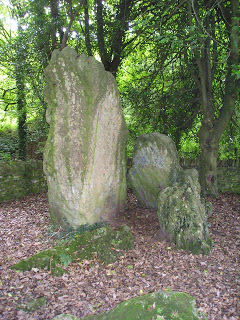
.
The Old Soldier
.
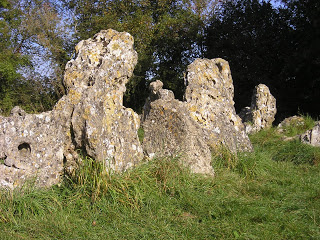
.
The Rollright Stones
.
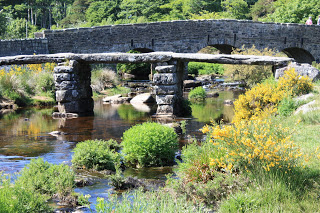
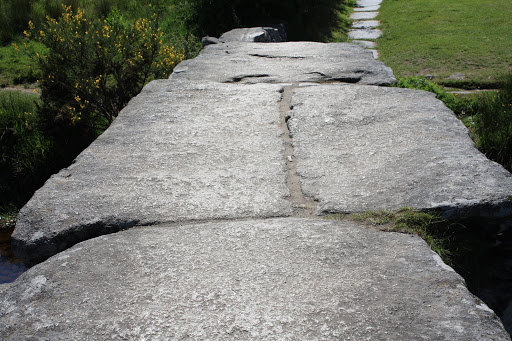
Far more scarce and, perhaps even more impressive, are the stone ‘clapper’ bridges. These are often not as old as they look although, even these, were probably built the best part of a 1000 years ago. I find these bridges, which are mostly in the West Country on Dartmoor and Exmoor, just as impressive as Stonehenge, England’s world famous ancient stone monument. The clapper bridge in the photoographs below is at Postbridge, on Dartmoor, in the county of Devon. This clapper bridge was built to aid the transport of tin from moorland mines about 1200AD.
.
.
The ‘new’ bridge in the background, which carries the road and car traffic over the East Dart river is a mere upstart, having been built about 1780. In the photo below, I love the way the arch of the new bridge is framed by the ‘arch’ of the old one.
.
 .
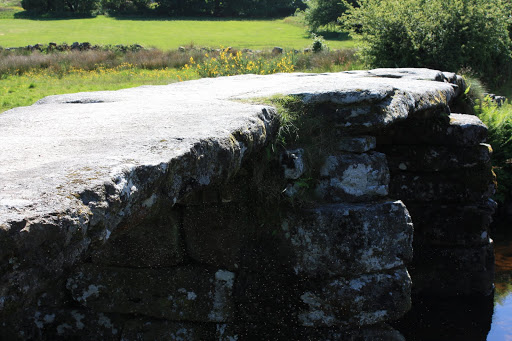
.The granite slabs measure over 4 metres (13ft) long and are over 2 metres (6ft 6in) wide and weigh over 8 tons each. Despite this, over the centuries they have been swept away downstream by floods. Some have been rebuilt many times, others lost forever. However did they, without modern technology, transport them?
.
 .
.
 .
.
 .
.
 .
.

.
 .
. .
.The bridge just invites you to step onto it and it can be the starting point of many walks that lead across the open moorland. It was for me, a couple of months ago. On that walk, I found deserted settlements and the most incredible stone circle – unusual in that there were two circles side by side. I shall write more of this soon.
.
 .
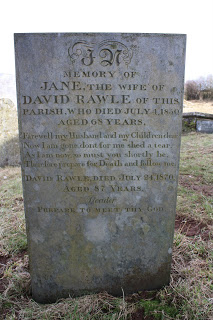
.Even now, when a special occasion needs to be commemorated it is to stone that we often turn to. To my knowledge, no modern material is in common use to mark the burial place of a loved one: we mark our graves in a very similar way as our most distant ancestors, with stone slabs.
.
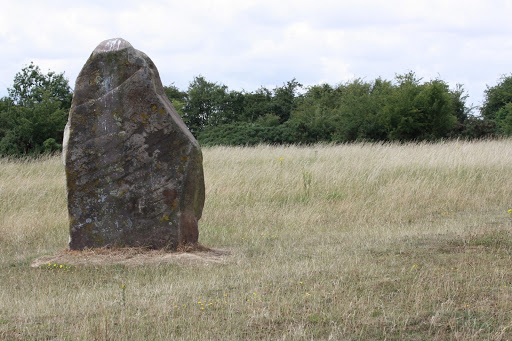
We also use stone to mark more joyous occasions. This standing stone was placed on Ibstone Common, high in the Chiltern Hills, to commemorate the millenium. A small thread that unites us through 5000 years of history and far into the future – a comforting thought.
.
.
 .
.
 .
. .
.

 .
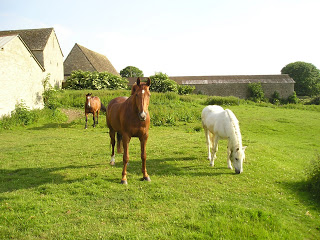
.
 .
.

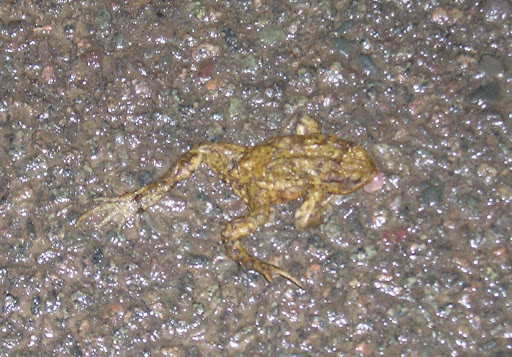


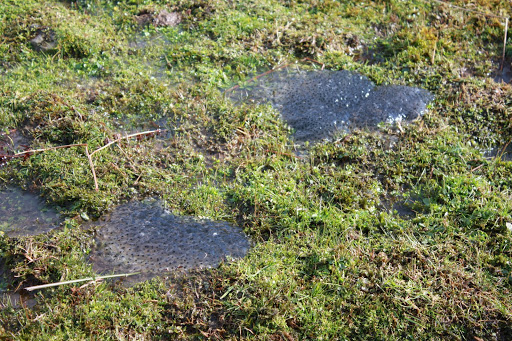
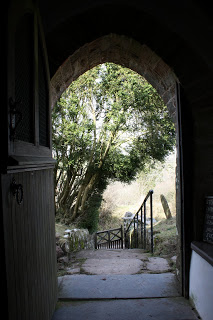
 When you arrive at Stoke Pero, there is no cosy village green scene to greet you, for the church serves a widely scattered community. The wind cuts across the open land with an icy blast and even the church seems to be hunkered down against it, squatting in a dip in the land. As you enter the porch an old sign reminds you why.

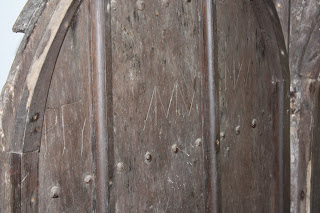
 The doorway to the belltower is tiny – so narrow that only the slimmest can enter. Despite its size it has a degree of solidity about it. The main door to the church is the opposite – a massive piece of oak with letters and symbols scratched into its surface. To date, the meaning of these remain unknown. Any ideas, anyone?
 The tiny clifftop hamlet of Countisbury – the far distant horizon is the south coast of Wales


 Getting too close for their comfort, they were soon up on their feet and ambling away. In a matter of moments their camouflage made the moorland look empty once again.



 The blackened faces of morris men, that attend some wassails, are also there to frighten evil spirits, for this has it’s roots in pagan times and has nothing whatsoever to do with race, as is now sometimes thought. PC means that many morris men no longer do this. The ceremony shown on the video below has both morris men and a wassail queen. I don’t recall seeing the morris when I took part, or a young virgin for that matter, but perhaps that is due to too much cider and too many years passing. There is no wassail singing on the video and only a glimpse of morris dancing – the latter I hope to write about, with other local customs, in the future.
 October on Exmoor saw weather changes from day to day: one moment mists, another driving rain and cold winds but, more often than not, warm sunshine. How many times do walkers get fooled into wandering on the moor only to find the mists creeping up the deep coombes (as the valleys are called here) before spreading out across the wider, open spaces where landmarks are few and bogs many? To my knowledge, deaths in the bogs only happen in fiction but a cold plunge to chest height in sticky, peaty water and a twisted ankle miles from anywhere has the potential to be fatal.
 The wild ponies of Exmoor are one of Britain’s oldest native breeds and survive all year finding their feed on the moor. During this month they are gathered up by the local landowners and checked over, branded and the foals weaned. These are normally sold at the annual, local pony sales although this year, for various reasons, the sales have been cancelled leaving a gap in the social calendar, for the sales are one of the great meeting places of the widely scattered population.
 Another meeting point is the local hunt. On Exmoor, there are packs of staghounds as well as fox, for the moors are one of the few places where the Red Deer still run wild in England. With the change of law, only two hounds now hunt the deer, the unfortunate creature having been selected by the Harbourer – a local person who knows both the deer and the moor inside out. Once the correct deer has been found and separated from the rest of the herd, the beast is shot. This is a necessary culling as the population is continually increasing to the detriment of both the moor and the deer themselves.
  Hunting is becoming ever more pouplar as the crowds and cars, pictured, prove. As soon as the hunt moves off across the moor the crowds get left behind and, with the hunt hidden deep in the coombe, the moor seems deserted once again.
 More on Exmoor to follow…..
 All the rain we have had this July – the wettest since the late 1800’s – has held up the start of the harvest and the machines have sat idle while the farmers have watched their golden corn, (in England we call wheat ‘corn’), turn black with moulds and the price fall, along with the quality. With modern drying techniques and machinery the crop can be salvaged but how terrifying it must have been, just a few centuries ago, knowing that hunger and possibly starvation was the only certain outcome.
 Now the rape is safe in the barns, the wheat is on its way and the barley, still to cut, hopefully before it is lost completely to the weather.

 The practice of stubble burning is also lost but this is due its being made illegal, except under special circumstances. Used mostly to get rid of pests and diseases and excess straw, it was an exciting if somewhat frightening sight. Occasionally these fires would get out of control but our changeable climate meant that there was no risk of the ‘wild’ fires of elsewhere in the world, with the
  Fingers crossed for a few more dry days and the harvest safely in – then we can all celebrate with the Harvest Home.
 Life in the English Cotswolds