Where No Priest Will Go

“Culbone, Oare and Stoke Pero – places where no priest will go-o” says the old Exmoor rhyme about three of the moor’s remotest churches.  That’s not totally surprising for they must be some of the most isolated in England and all involve considerable effort to reach even with today’s modern transport.  Or, perhaps, it was because of their association with witches, bandits and lepers that made them reluctant to go. In his book, Exmoor Memories, A(rthur) G(ranville) Bradley writing of his time spent on Exmoor in the 1860s, tells of how the parson of Simonsbath church wouldn’t stay on the moor during the winter, leaving his parishioners to spiritually fend for themselves.  With no roads at that time crossing the moor, one can hardly blame him.

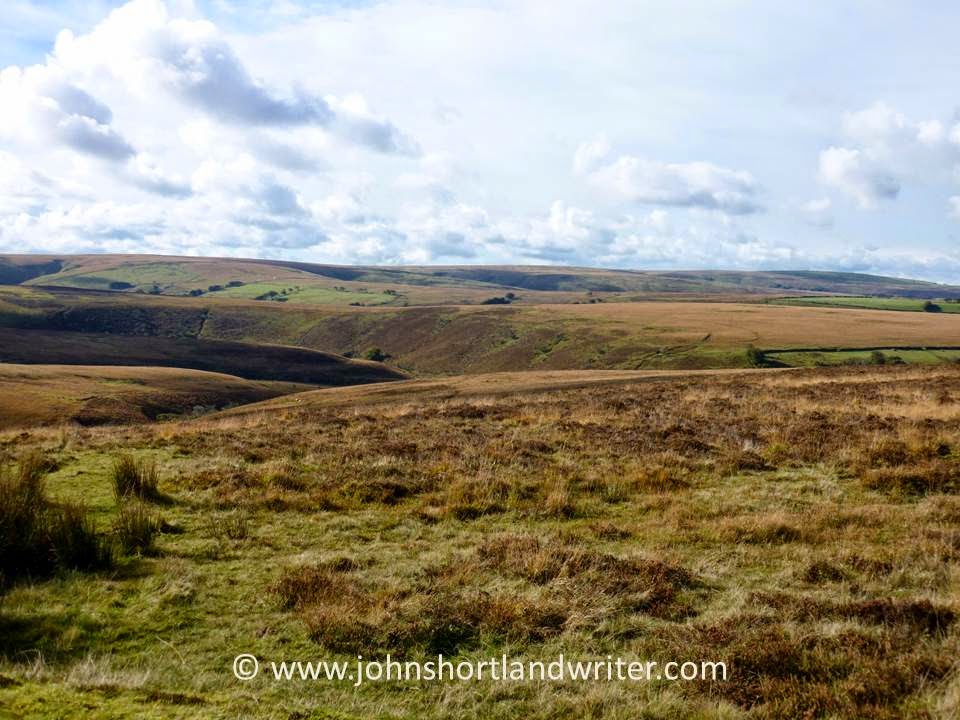
even today, Exmoor is a wild and rugged place

I recently visited Culbone church which can still only be reached on foot.  Whichever of the two routes you take, a very steep climb is involved but the effort is well worthwhile when you finally get there.  The deep wooded combe opens up just enough to allow room for the church and two houses.  It is a very tranquil spot and, resting there in an attempt to recover breath, it did feel very spiritual too – perhaps because records show that it has been a place of worship and meditation for over sixteen hundred years.  The present church was mentioned in the Domesday Book so is just a mere one thousand years old!

Culbone has been a place of worship & silent contemplation for over sixteen hundred years
the private box pews where only the gentry would sit

Claiming to be the smallest parish church in England – it is only 35 foot x 11 foot in size – it can seat about thirty on its hard, wooden pews.  It also has a small box pew where the family of Ashley Combe House once sat.  Like many of the buildings that must have once populated the area, Ashley Combe House has long since disappeared.  Entering the church through its thirteenth-century porch two things are immediately noticeable: first that it is still lit by gas and secondly, the ancient, stone font, now also well over a thousand years old.

the church is still let by gaslamp
the one thousand year old font – how many baptisms has it seen?

Despite the hardship in reaching the church and its very few houses, it is still very much a living church with services held there fortnightly.  However, the priest, perhaps mindful of the old rhyme or the lepers that once roamed the woods lives elsewhere.  To visit Culbone it is possible to park the car by the sea at Porlock Weir and climb 400 feet to reach it or, as we did, park at the top and walk down.  If that sounds the easy option, remember there is still the steep climb back!  Either way you’ll be rewarded with breathtaking sea views and the chance to glimpse a way of life (and worship) now almost totally past.

the church is hidden in a deep, wooded combe
Porlock Weir

Oare church, these days is by far the easiest of the three churches to reach for it is just a short drive down a narrow lane from the A38 Porlock-Lynmouth coastal road.  Famed for its association with Lorna Doone, the novel by R D Blackmore, Lorna was shot at the altar on her wedding day by the wicked outlaw Carver Doone.  A pretty, riverside walk through the stronghold of the Doones, the Doone Valley, is possible from nearby Malmsmead where there is camping as well as an art gallery and coffee shop named the Buttery.  Overlooking the picturesque bridge and ford, it also serves great food and is well worth a visit.

Oare church is easily approached by a narrow lane
the bridge and ford at Malmsmead

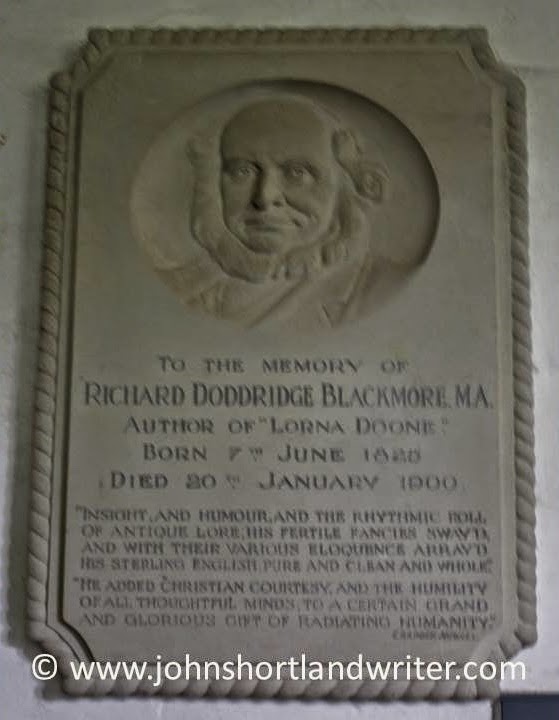
Compared with the church at Culbone, Oare is a relative newcomer having been built in the 1400s and then partially rebuilt four hundred years later.  Inside, it is light and airy with memorials to Blackmore and also to the Snow family who feature in the novel.  Blackmore tended to use local family names and traditions in his writing and mixing fact with fiction.  Ridd is another local name; its variation Red is recorded on many of the gravestones at Culbone. For those not too familiar with the tale of Lorna Doone, or to see photos of the Doone Valley take a look at my earlier blogs, The Story of Lorna Doone – just a myth? and A Walk in the Doone Valley.

the interior of Oare church is very light and airy
the window through which Carver Doone shot Lorna on her wedding day as she stood at the altar

There are wonderful, albeit rather long, walks to Stoke Pero church from Horner Woods (car park at Webber’s Post or in the village of Horner), taking in the ‘four corners of Horner’ and distant views of Dunkery Beacon, the highest point of Exmoor. It is well worth the effort for apart from the views there is a good chance, providing you walk quietly, of spotting red deer, the largest of our wild deer and for which Exmoor is now one of its few remaining strongholds.  There is plentiful wildlife to be seen along the river too – Dippers and Kingfishers and with Buzzards soaring overhead.  You may even be lucky enough to see Red Kites or even White-tailed Sea Eagles which are becoming ever-more frequent visitors to the area.

Dunkery Beacon from Webber’s Post
wild red deer hind with its calf half-hidden in the deep woodland

It is possible to drive to Stoke Pero although the lanes are long, winding and narrow.  The road even passes through a working farmyard which confuses many, especially visitors from overseas who find our narrow lanes scary enough at the best of times! If you choose to reach the church this way you will fully understand why a priest might not want to be bothered to travel there. Below is an Ordnance Survey map showing the three churches; I would strongly advise to carry a paper, rather than digital, version of the map for phone signals can be a bit erratic in such remote countryside.

the three churches – a good map and equally good boots are essential if travelling by foot

We’ve had lepers and bandits with our previous two churches which only leaves witches as a possible reason (other than the journey) why Stoke Pero might have been clergy-less.  Look closely at the old oak door and scratched into its surface are a series of lines: witches marks.  ‘Apotropaic’ marks to give them their correct name are symbols carved into buildings to ward off witches and protect people from evil spirits.  They are usually found wherever there is a point of entry such as doors, windows or chimneys and usually date back many centuries when belief of the supernatural was commonplace.  It is not known when the marks at Stoke Pero were made or what they mean but they may well have literally put the fear of God into any visiting priest.

witches marks – apotropaic marks – on the church door at Stoke Pero

The church at Stoke Pero lays claim to being the highest on Exmoor for it stands, isolated at over 1000 feet above sea level.  Although much of the building is only a couple of hundred years old, the church tower dates from the 1200s, as does a list of the rectors which rather belies the story of lack of clergy.  Like Culbone, an earlier church here is mentioned in the Domesday Book and, also like Culbone, services are held here lit by candles or gas lamps.

old sign staking its claim as highest church!
Stoke Pero church sits high on a bank

I blogged about Stoke Pero over fifteen years ago (link here) and mentioned how simple its interior is with its whitewashed walls, the only colour being the splash of red from the altar cloth.  Revisiting recently, unsurprisingly the place hasn’t changed, and the barrel roof is as spectacular as ever.  However, this time I noticed other things too such as the delicate ferns growing inside the window of the ancient bell tower and the contrast between the rough-hewn stone windows and the smooth white plasterwork.

the magnificent barrel roof of Stoke Pero church
ferns grow in the cool shade found inside the ancient bell tower

If you have the opportunity to visit Exmoor, now protected by its National Park status, there is much to see – but only if your pleasure comes from the joy of being in wild, open places for it remains remarkably uncommercialised.  It has much to offer apart from the moorland (spectacular at this time of years smothered in purple heather) for it has the sea, rugged cliffs, fast-running boulder-strewn rivers and the unspoilt little towns of Porlock, Lynton and Lynmouth. It is a walker and nature lovers paradise.

the heather moorland tumbles away to the sea
Lynmouth

Regular readers of my blog will know of my love of Exmoor which I discovered now nearly sixty years ago.  They may even recall how through a chance meeting it changed the direction of my life, giving me an outdoor career as well as many Exmoor friends.  More remarkably, I have found numerous family references to the moor, unknown at the time, for A G Bradley was my grandmother’s cousin and other family members lived and are buried at Luccombe, a village not too far from Stoke Pero.  An uncle was involved with the rebuilding of Lynmouth after the devastating floods and loss of life in 1952 and a few years prior to that my parents honeymooned on the moor.  A small world indeed and one in a small way I have been privileged to be part of.

my first night spent on Exmoor – many, many years ago!
old postcard of the cottage in Luccombe where my ancestors lived in the early 1900s

Conceived on Exmoor?

There used to be a standing joke between my mother and I that I must have been conceived on Exmoor as it has such a magnetic hold on me.  My parents had honeymooned there, staying at Ye Olde Cottage Inne at Barbrook in the mid-1940s – the fact that I was born in the early 50s and had an older sibling we conveniently overlooked.

Mum & H wedding photo watermark

Wedding Day

When I first came across Exmoor, in the summer of ‘68, I thought I had stumbled into a paradise, if not unknown to others, certainly unknown to members of my family.   “Stumbled” is an accurate description. My intention had been to cycle further west into Cornwall before returning south to Exeter for the train journey home.  Poor map reading skills took me instead to the North Devon Coast at Westward Ho!.   During my final term at school we had studied the novel Lorna Doone and now seeing Doone Valley, Exmoor marked on the map it seemed logical to visit despite it being way off to the east.

Badgworthy Water watermark

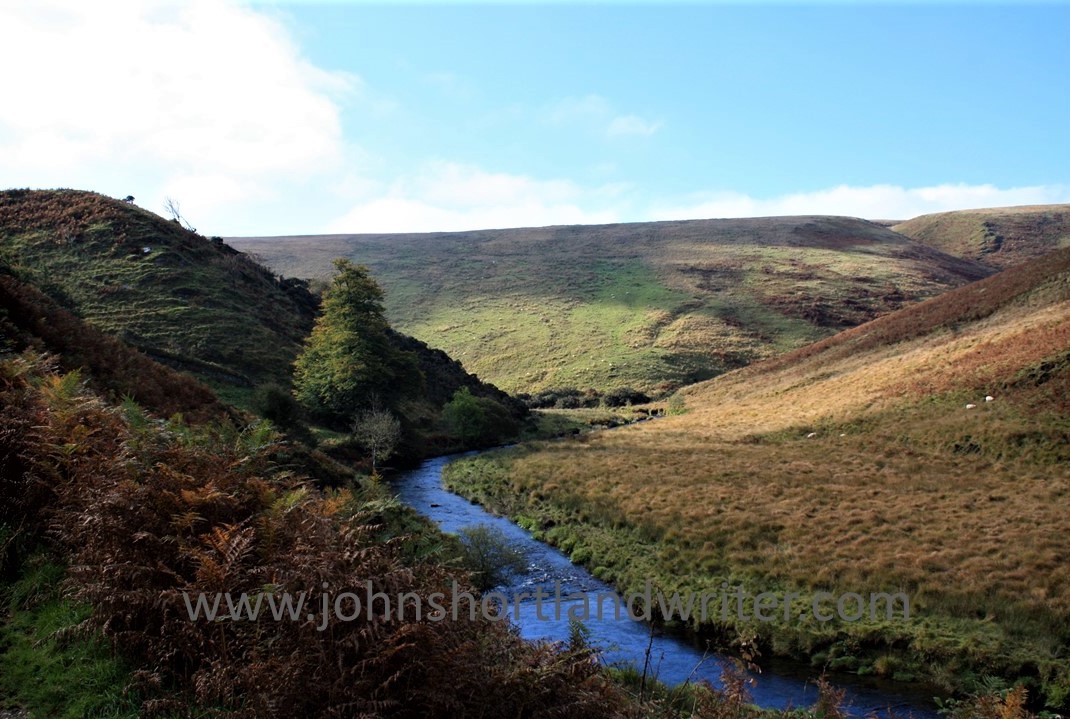
Badgworthy Water, Doone Valley

Brought up in the Chiltern Hills, I was used to a hidden landscape of narrow lanes, high beech hedges and dense and extensive beech woodlands.  Rarely, was there an unbroken view of far-distant places and, almost as rarely, large expanses of sky and cloud.  Cycling across Exmoor with its open, rolling landscape ablaze with heather and gorse and views across the sea to the Welsh coast was unlike anything I’d ever experienced.  Sometimes the lanes would pass between high banked hedgerows or descend into well-wooded coombes reminding me of home.  I came across a farm where I pitched my tent intending to stay two days before leaving for Exeter.

Nr Fingest 2 watermark

A Chiltern lane winds its way through dense woodland


River Barle watermark

The open views of Exmoor

Helping on the farm, two days turned into weeks and then into months by which time I had moved into the farmhouse and embraced Exmoor life.  I occasionally telephoned my parents, or sent a postcard, always being evasive about where I was staying and only telling them I was working on a farm and being well cared for.  With the benefit of maturity, I sometimes wonder how they coped with their sixteen-year old son, on his first lone holiday, disappearing for so long in an era of no mobile phones or credit cards for them to track my progress.  They only succeeded in finding me after I foolishly reversed the telephone call charge and soon after arrived on the doorstep to drag me away, kicking and screaming.  It was time to get “a proper job” but Exmoor and the farm had completely changed my outlook on life as well as the direction it would ultimately take.  After twenty years of “a proper job” I finally escaped to agricultural college and a life of outdoor work.

Brendon Barton 1968 (4a) watermark

Brendon Barton 1968

Pruning watermark

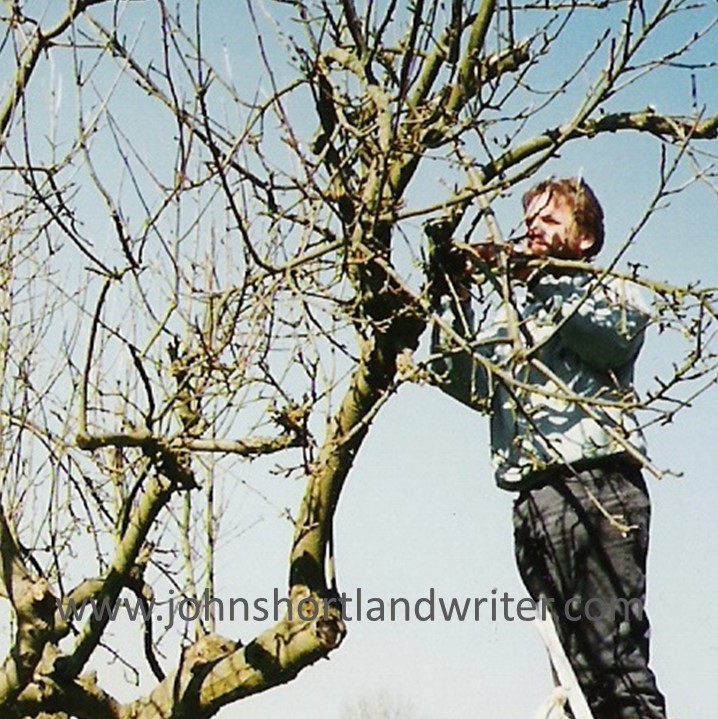
At agricultural college 1994

I had been surprised and a little disappointed when I first discovered my parents also knew Exmoor.  Despite not having been conceived there, my attachment to Exmoor has never waivered and more than fifty years later I regularly return.  Upon entering the moor the same emotion of discovery, as if seeing it for the first time, remains.  Many of the old friends that I made in those early years and their unique way of life that I was privileged to be part of, albeit in a small way, have gone but the landscape remains remarkably unchanged.  The heather and gorse are still a carpet of purple and gold, the sea (at least, on a fine, sunny day) still blue.

Countisbury (15) watermark

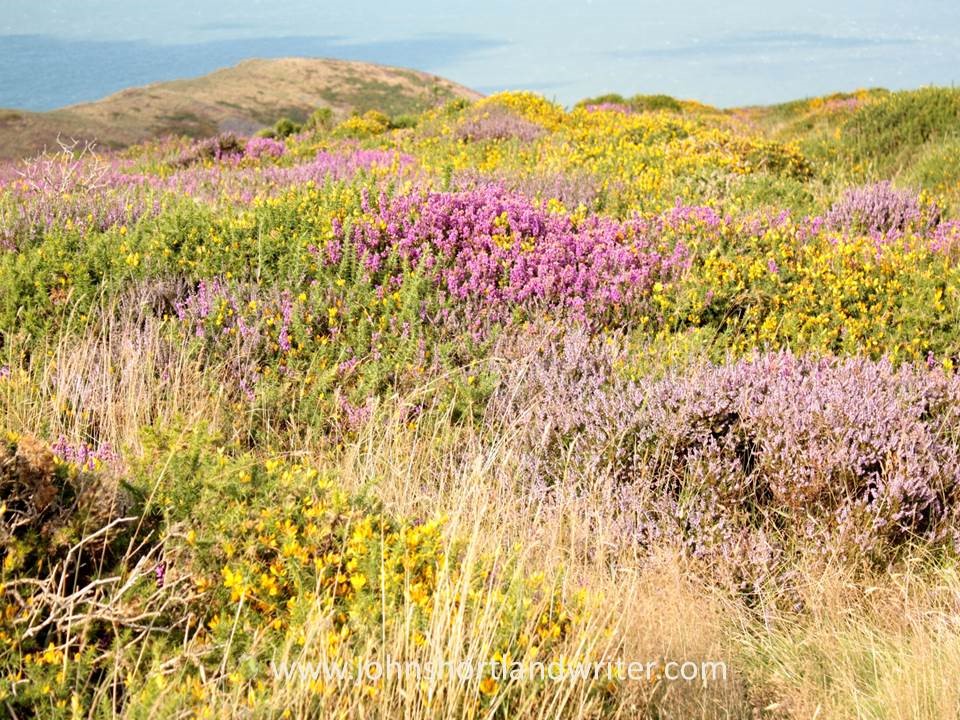
Countisbury Common, where the moor falls into the sea

Very recently, through researching my family history, I have found that an earlier cousin, at a similar age to myself, had also discovered Exmoor.  He too had never settled in school and life on Exmoor changed him.  He also chose to write about his time on the moor, something else we have in common. Although I was surprised to learn of his life and his book, this time I am delighted!

002

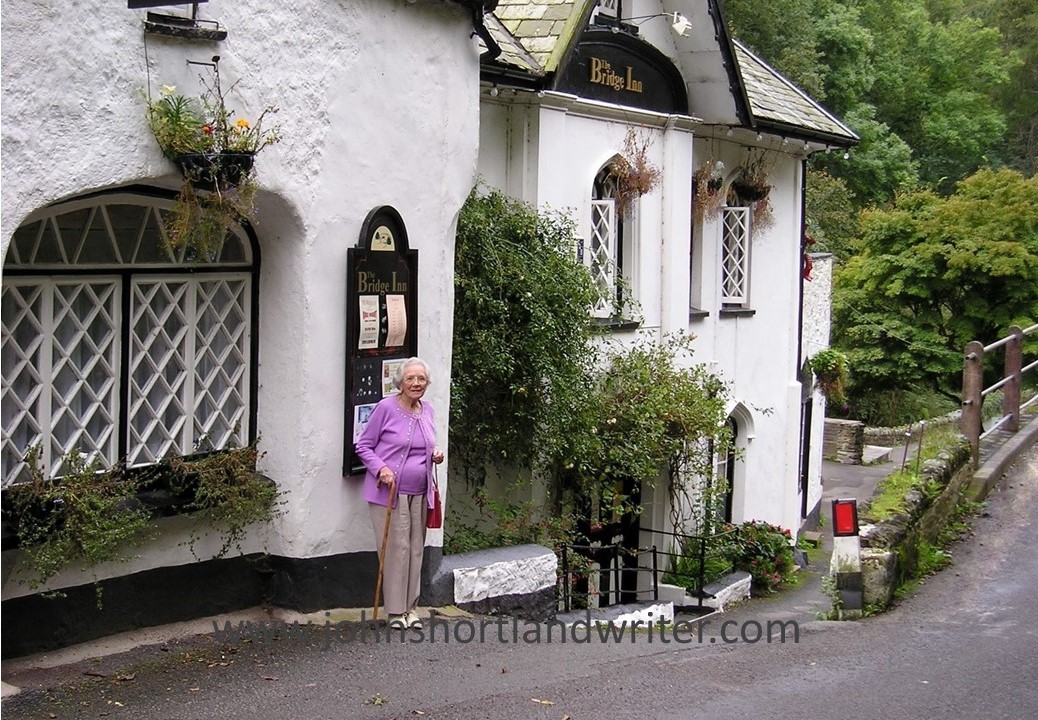
PostscriptJust a few years before she died at the age of 93, I spent a few days on Exmoor with my mother and took her to revisit the honeymoon hotel.  Long widowed, the day must have been a mix of emotions.

Honeymoon Hotel watermark

At Ye Olde Cottage Inne, renamed The Bridge Inn


The Story of Lorna Doone – just a myth?

 Lorna Doone is the tale of a young boy, John Ridd, whose father is killed by Scottish outlaws – the Doones.   Exiled to a remote part of Exmoor (which is in England’s West Country and now a National Park), they rob travellers and local farms.  Living amongst them is the pretty Lorna Doone, kidnapped by them as an infant.  John enters the forbidden Doone Valley by climbing a steep and difficult waterfall, the ‘waterslide’, and meets Lorna for the first time.  Some years later he rescues her and as they marry Lorna is shot through the window of Oare church by the wicked Carver Doone.  John pursues him and after a struggle Carver perishes in a bog.  Lorna recovers from her wounds and so the story has a happy ending.

Oare Church

But is it true?  The simple answer to the question is that the answer isn’t simple.  When Richard Dodderidge Blackmore wrote his historic novel in the late 1800’s he mixed fact with fiction and local legend with the names of local people.

Blackmore placed the Doone stronghold beside Badgworthy (pronounced ‘Badgery’) Water.  There is a deserted medieval village beside a tributary in Hoccombe Combe and it is very probable that this is the site for the ruins were still visible in Blackmore’s day.  However the Waterslide is not found there but in another side valley, Lank Combe. Nowhere as sheer as described it is, however, an impressive sight with its three smooth slabs of rock especially when the river is in spate.  I like to think that he also had in mind the waterslide at Watersmeet a few miles further downstream which would be much more of a challenging climb.
The waterslide at Watersmeet
 

Because the precise location of the Doone Valley is uncertain it is no longer described as such on maps, the Ordnance Survey now describing the area more accurately as Doone Country.  A rewarding walk can be taken along the whole length of Badgworthy Water starting from Brendon Common by parking the car at Brendon Two Gates.  Here there are wide views of both the open heather moorland and also the grass moor of the Royal Forest ‘improved’ in the nineteenth century.  Badgworthy Water changes in character along its length from fast running rapids to smoother, deeper pools.

Badgworthy Water

The above walk is rugged and long but a more gentle approach is from Malmsmead with its much photographed packhorse bridge and ford that also denotes the county border between Devon and Somerset.

Malmsmead where Badgworthy Water crosses the road
 

Further along the lane nestles the village of Oare and the church where Lorna and John wed.  Inside is a memorial to Blackmore, a smaller copy of the one in Exeter cathedral.  A memorial can also be seen to the Snow family who lived at Oare manor and also feature in Lorna Doone. It is recorded that as Blackmore didn’t write kindly of the Snows he was afterwards much disliked by them.  Other local characters also existed: Tom Faggus, the highwayman was – in real life – from nearby North Molton and Ridd is still a local surname. 

Oare village and church nestle in a deep combe

Is Lorna Doone a story based on truth?  That is for the reader to decide, perhaps after visiting Mother Meldrum’s cave in the Valley of Rocks, for both are mentioned in Blackmore’s book.

The Valley of Rocks

Add to Technorati Favorites

A Walk in the Doone Valley

Exmoor is one of England’s smaller National Parks and it is also has one of the most varied landscapes: heather moorland, grass moorland, wooded combes, rushing streams and waterfalls, the lush farmland of the Porlock Vale, high cliffs and sea views.

The moor is especially beautiful at this time of year now the heather flowers, which in midsummer had turned hundreds of acres purple, have changed to a golden bronze. The bracken, also yellowing as the autumn progresses, helps to make the landscape a combination of coppers, oranges, golds, browns and greens.

I had returned to my spiritual home to refresh my soul, as well as my body – for I was pretty knackered after a hard summer of gardening – hence the lack of posts recently. I always stay at the Blue Ball Inn, a traditional pub with rooms, where you can be certain of a warm welcome from the blazing log fire in the 13th century inglenook and an even warmer welcome from the owners, Phil, Jackie and Nick. An added bonus of being on Exmoor is that my mobile phone does not pick up a signal for miles so I am isolated from the world.

For an English holiday at this time of year, I couldn’t have been luckier with the weather either: day after day pleasantly mild and with only a couple of days rain. Perfect conditions for walking and, because it is now ‘out of season’ with the summer visitors long departed, the moor was even more empty of people than usual.

There must be many people that have read R D Blackmore’s great Victorian novel, set in the 1600’s, or seen the film ‘Lorna Doone’, yet never visited the area where the action took place or, perhaps, realise that it is an actual place. It is a tale of the Doone’s of Badgworthy (pronounced Badgery), wicked outlaws terrorising a remote rural community, of kidnap, love and, best of all, it has a happy ending. It is questionable how much is fact and how much is fiction but the places exist and, even now, there are Ridd’s (the hero’s family name) living on the moor. The Doone’s, if they existed at all, are all long gone.

One day, the Doone Valley, their remote moorland stronghold beckoned, a walk of some 15 miles. There are two ways into the valley, the easiest is at Malmsmead, a pretty little place with a couple of houses, farms and coffee shop. I chose the more difficult – and to my mind, more exciting, way across some of the wildest moor, Exmoor can offer. Parking the car at Brendon Two Gates (there isn’t a gate in sight – I’ll explain how it got it’s name another time!), my choice proved wise for I was met by the sound of the wild red deer stags calling, for this was the start of their breeding or ‘rutting’ season. Standing on the skyline a stag roared, keeping his herd of hinds close and to fend off rivals. As I took a photograph, a flock of curlew flew past, a lucky coincidence and a great start to the walk. The photo is rather small but I doubt if I will have the chance to take a second, larger one!

The moorland here, is a vast, open and empty space, full of bogs to catch the unwary. Although not dangerous in themselves, it is unpleasant, to say the least, to be up to your knees in cold, black, peaty water. A minor injury such as a twisted ankle in bad weather, or as dusk falls, could become potentially life threatening. Squelching my way along, my strong, waterproof boots made light work of this first stage and after an hour or so the first fold of the combe appeared – I had reached the head of the Doone Valley.

The path from here is well marked, yet even in midsummer, few but the intrepid walk as far. The only sounds are of water rushing over rocks and the occasional calls of sheep, ravens and buzzards. The walk is now downhill all the way as the path follows the river back to Malmsmead although it is still far from an easy stroll. As the walk continues, more and more side streams meet the main river and Badgworthy Water becomes faster flowing and wider, although two or three bounds and you would be across it. This time it was gentle and the sound relaxing: after heavy rains it will become thunderous and capable of sweeping you away.
A third of the way down the Doone Valley, Hoccombe Combe is reached, said to be the site of the Doone’s village although the ‘waterslide’ that John Ridd climbed to reach Lorna is not here. Some say that it is based on the river that runs through Lank Combe a little further to the north.

The photograph below is of the waterslide at Watersmeet some miles further west and not part of the Doone country.

Soon the valley becomes more gentle and lush although the hills of the moor still tower above. There are trees too: larch, beech and rhododendron. Soon the river will run through farmland and to Malmsead itself, a good place for a rest and a coffee. It is also a place where the walk could stop if another car was available to take you back to your starting point. However, I was only halfway and so turned up the steep lane making my way back to the open moorland.

It was a long and tiring walk back across the heather. In the distance a small group of the wild Exmoor ponies, the oldest native breed in the UK and virtually unchanged from pre-history. Athough free to roam the moors they tend to keep to their own territories and are quite tolerant of strangers approaching. Only those that live in the tourist ‘hotspots’ will allow themselves to be touched and these ones soon galloped off once I got too close.

By the time I reached Brendon Two Gates, a pint of ale at the Blue Ball and a hot bath beckoned. It was almost dark when I returned to be greeted by a spectacular sunset, the perfect end to a very satisying day.

Add to Technorati Favorites