The Heath

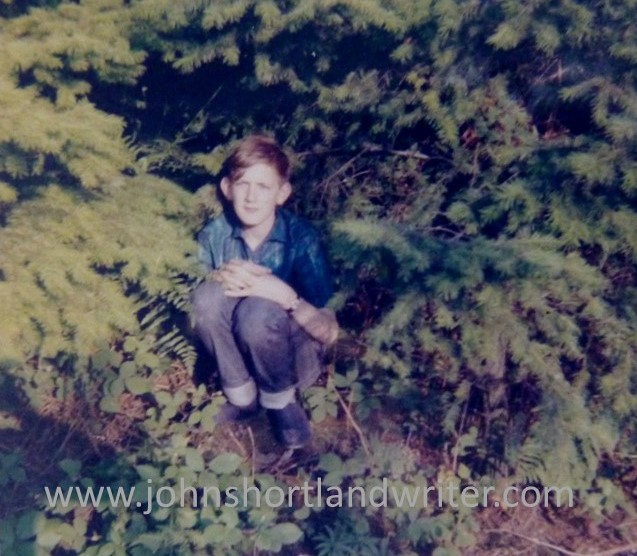
‘We’re off to the heath!” Such excitement whenever my father made this announcement.  It happened perhaps just three or four times a year and when it did it was always a special day.  Almost seventy years of summer sun – for we only ever went there when the sun was shining – have passed and the memory of those innocent days still bring joy.  Much later the heath became my place of refuge when sadness threatened to overwhelm me; under the great tree that had witnessed my journey into adulthood, its shade restored and healed me. 

Many summers have passed since I last sought the shade of the great tree

Going to the heath involved ritual.  The ritual included packing the picnic that my mother had been busy making; the ‘paste’ and cheese sandwiches, rock cakes that required the currants to be removed before being eaten (“no, mummy, they look like eyes”) and the steel Thermos flasks of scalding hot water for tea.  No tea bags in those days so teapot, loose tea and strainer were all added to the basket along with the rug for sitting on.  The rug fascinated me for it was of coarse wool and a faded khaki in colour but, most of all, it had my father’s name written on it in capitals:  SHORTLAND H A 174445, the numbers being those from his army days.  The blanket, he would tell us, had seen the Holy Land, Tripoli, the Pyramids of Egypt and the ancient ruins of Rome.  Being spared the horrors he’d witnessed during World War 2, it seemed to us as if the rug had magical qualities, perhaps it was the carpet that would one day take us to these far-off places as well.  Of equal importance to the outing was the cricket bat, ball and stumps, all to be placed in the boot of the cream Consul car – but only after I’d been lifted out of it for my jumping into the boot was all part of the ritual too.

Being packed into the car boot was all part of the ritual in 1955!
These days, picnics are taken in a lot more comfort…

Driving along the narrow country lanes my sister and I, noses pressed hard against the car window, would comment on every house made of flint, or with a thatched roof, that we passed for we knew the journey so well.  “Oooh, I so wished we lived there…”  After a few miles the car would begin to slow and we eagerly awaited the moment it would stop and we could all clamber out.  Hoisting me onto his shoulders so that I could see over the high hedge, we would look down onto the ‘model farm’.  How I loved it for it looked so much like my toy farm at home with its cows, sheep and horses enclosed by beautifully painted white wooden rails.  Of course, it wasn’t really the miniature farm that my father claimed it to be but set in a deep and steep-sided valley gave it the illusion of being on a much-reduced scale.  One day, I’m not sure how or why, we visited the old farmhouse with its ancient, beamed ceilings.  In one room the main beam was much split with age into which coins had been hammered.  It only added to my sense of awe as the farmer showed me the oldest coins, some of which dated back three hundred years or more.  He also showed me the one he’d placed with the ‘new’ queen’s head on it, the first he’d seen, for Elizabeth the Second had only come to the throne in the year of my birth.

Everything about the farm seemed to be in miniature….

Our next stop would be for a stroll around the village of Fingest.  The church fascinated me for it had beautiful, honey-colour rendered walls quite unlike the other churches in the area.  Its other unique feature was its bifurcated tower which to childish eyes looked as if it was splitting in half.  Best of all, inside the church, was a ladder, so tall that I was sure it must be Jacob’s ladder that I’d learnt about in Sunday School.  I never saw any angels climbing it but I was convinced that if I was allowed to do so I would reach Heaven. In adulthood, I would live in the village for a short while although by then, it was the excellent inn where they served great ale and delicious suppers that I eagerly sought after a long day at work.

The church at Fingest
Jacob’s Ladder – was heaven just beyond the top rung?

Fingest’s neighbouring village of Turville would only be visited on our way back from the heath, my parents stopping off at The Bull & Butcher.  In those days, children were not allowed in pubs and so we were left outside to explore its two streets and to clamber up the steep hill to the windmill.  How carefree those far-off days now seem when small children could be left to freely wander without fear.  The village now is famed for it being the village of the film ‘Goodnight, Mr Tom’, the windmill featured in Chitty Chitty Bang Bang and the church in the Vicar of Dibley.  After I moved from Fingest, I had the pleasure of living within a couple of miles of the windmill (and so close to the heath) for eighteen years.

Time stands still in the ancient village of Turville
The windmill stands high above Turville village

The lanes beyond Fingest become narrower and more enclosed by hedgerow and woodland as you approach the heath, all of which adds to the excitement of finally arriving at its wide-open expanse.  The car parked, out we would spill while mother busied herself with the picnic and my father set up the cricket.  We only had one wicket and so the match didn’t consist of ‘runs’ – our reward was in actually managing to hit the ball at all and the praise we would receive for our skill.  Perhaps this is why the heath holds such affectionate memories for, back in the fifties, fathers didn’t interact hugely with their children – mine was too busy working or tending the garden to make trips out a regular occurrence and my mother, like most women, was unable to drive.  Finally, we would hear mother calling us for tea and after devouring everything in sight we would lie back on the short turf replete and happy.  On one occasion my mother had packed roasted chicken legs, a rare treat for chicken was, in those days, a luxury meat.  Before we had the chance to try them, our little mongrel dog Tammy had snatched them away and into the bracken to eat out-of-sight.  Chicken never again appeared on picnics.

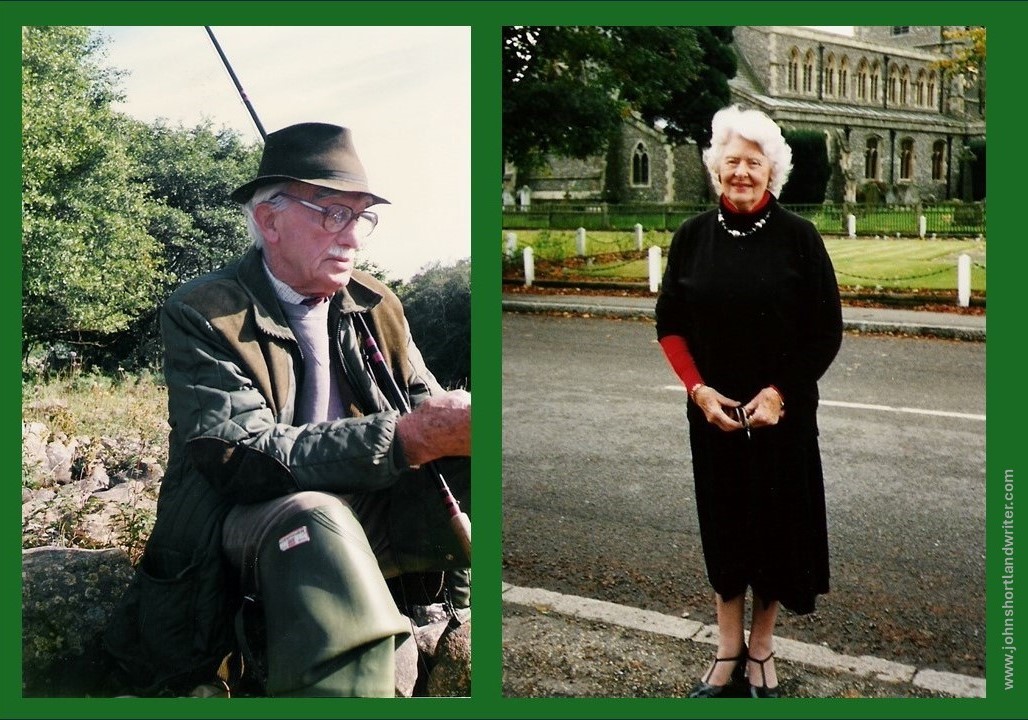
My father in 1963 – a tie was required even for casual dress in those days…

Soon we would be up and eager to explore.  The heath was beautifully unkempt; the rabbits cropped short the wide grass rides allowing the bracken and scrub to grow elsewhere, untouched so it seemed by man.  Along the western edge of the heath an ancient avenue of lime trees grew, their limbs now left to grow in a haphazard, twisted way.  From time to time one of these great boughs would fall to the ground there to gently lie and rot and return to the soil.  By summer, the bracken would have grown tall enough to obscure them from view. We knew where to find them and would crawl alongside beneath a green tunnel of fern fronds.  Tiny, pale toadstools grew from moist fissures in the bark, beetle scurried away from our disturbance and here we learned about nature., much of which seemed magical to young eyes  Later, as I learned patience, I would sit quietly to watch for wildlife: a wren chattering away as it searched for insects, the occasional slow-worm hunting for slugs and not as slow as its name suggests.  Once I was rewarded by a family of stoats moving like a sinuous string of sausages as they followed one another each holding the tail of the one in front in its mouth.  Such excitement!

Casual wear for ladies in 1963: my mother out for a picnic in the country

Magic played an important part in our young lives for everything we didn’t understand surely had to be caused by magic?  We saw regular proof of this in our painting books for they had the word ‘magic’ written across the front cover.  A blank page of paper would be transformed into a colourful picture by just brushing with water from the empty paste jars. The paste jars held the exact amount of water required for ‘art’ without too much risk of spills. In those days of necessity, although the word recycling hadn’t been invented, everything – paper, string, milk and other bottles – were all carefully saved or returned for re-use.  Plastic wrapping and the throw-away society was still to come. 

Evidence of magic could be easily found within these pages!

Further proof of the magical world around us came one day when exploring a new part of the heath.  We’d always thought that one dark, wooded corner looked rather forbidding but like all small boys, I knew better.  Venturing deep inside it, with every twig snapping under my feet making me jump, I came across a small, black pond besides which stood an old hollowed oak.  I squeezed inside the trunk to look up expecting to see sky.  Instead, there was darkness followed by much scrabbling and hissing as dust and twigs dropped onto my head.  Running as fast as I could I found my sister to tell her all about it.  Unbelieving, she and I returned and this time it was she who was hissed at.  Scared witless, we ran back to our parents.  Just an old barn owl we’d disturbed my father had said.  But we knew better, we’d found the door to the magic kingdom of elves and goblins.  How lucky were we that the door hadn’t snapped shut with us inside, never to return, as described in the numerous books that we had read.  Utter nonsense we were told.  That, we realised, was the trouble with grown-ups: they didn’t believe and that was why the magic was hidden from them.
                                                                                     *

I have to admit that it probably was a Barn owl that scared us

From time to time, I still return to the heath although I now live many miles from there. Whenever I do, I am struck at how small this ‘giant’ area to children’s eyes actually is. The difficult stage of my life, where the old tree supported me through despair, have long passed and the memory of it does not overshadow the pleasure that revisiting brings. Despite being a grown-up, I can still feel its magic.  I’m not alone in this for recently I read Hugh Thomson’s book, The Green Road Into The Trees, in which he crosses southern England on foot.  He too, feels the need to return to this very same heath in search of healing and finds it.  He believes that the mysteries of the Ancient World are not as far away from us as we tend to think for our mixed Celtic, Saxon and Viking heritage shapes not just the British landscape but also our souls.  Perhaps that’s where the magic comes from?

Life Stories

Nearly all of us have family stories passed down to us through the generations but gradually some element of the story, if not all of it, becomes lost. Over the past twenty years or so our family have written down not only these tales but also a detailed account of our own lives to pass onto future generations. Whether, of course, they will be that interested who can tell but it is quite likely that someone one day will be.

When the family first began to write their life history it felt self-indulgent and embarrassing, and these emotions must be overcome if it is to be successful. Then, of course, there are decisions to be made as to what to include and what to leave out, after all, we all have moments in our lives that we’d rather forget. So, a decision needs to be made whether to go for the ‘warts and all’ approach or to be a little more restrictive in what you have to say. I think it’s important to be cautious, for no-one wants to intentionally hurt others through careless writing or cause a family rift – unless, of course, you seek revenge! If it is selective memories you decide to write about it is equally important to include the lows as well as the highs, otherwise the writing will not sound genuine. None of us, sadly, just sail through life, after all.

My first big low – the death of my girlfriend, Carolyn, aged 14

Your life hasn’t just been one of relationships with people. It has included the places where you have lived, where you studied, where you worked, where you holidayed. I was 37 when I first wrote my story, now aged 70 it’s time for an update. In that thirty-three-year gap I have moved westwards from the Chiltern Hills, where I had lived all my life, to the Cotswolds. I changed careers from the indoor world of retail fashion to my present one of designing and managing gardens. It also includes a two-year stint studying as a full-time student at horticultural college, a couple of years of being involved with the Chelsea Flower Show and working on one of the first garden makeover programmes, Garden Doctors, for Channel 4 television. You and I have lived through a Covid epidemic, witnessed the recent death and funeral of Queen Elizabeth, and part of Europe is at war – all proof that we don’t need to be in our dotage to write down our history. There is no shortage of things to write about!

College days – which one is me?!!


It was my sister who first persuaded my mother and then me
to write our life stories. Strangely, she was surprisingly reticent when it came to writing her own and took some persuading to take part! However, what we have now is a potted history not only of our lives, but also social conditions and changes that span well over one hundred years. An aunt and an older cousin have both added some of their memories too and now that some years have passed since their deaths, as well as my mother’s, these documents become more interesting and more precious with each passing year.

Extract from my mother’s memoir detailing the moment in 1945 when she regained consciousness
from a coma – for the full story of the pioneering treatment she received, click here

One of the stories that had been passed down from my paternal grandmother was the tale of the family’s friendship with a famous poet. The bulk of the story was lost, and we had always assumed that the connection must be with Shelley as the poet’s mother had lived in Marlow, where my grandparents also lived. It was only relatively recently, when researching the family history, that the connection became clear. My grandmother’s cousins had been a close friend of Alfred, Lord Tennyson, the Victorian Poet Laureate. I discovered through this research that our generations weren’t the only ones with lives documented for their friendship with Tennyson, as well as several letters between them, survived in the National Archives. Even better, a memoir had been written by the cousin, later published, which gave delightful insights into their lives: “…there was a constant coming and going between the children of each house, all being equally at home in the other…”

The start of a friendship – to read more about our family connection with Tennyson click here

Regular readers of my blog will know that I spent a lot of my time as a very young man (and now as an old one!) on Exmoor staying and working on a remote hill farm. Although so very different to my own home background and upbringing, I loved the traditional, farming life despite it being such hard work, sometimes in very bleak weather. Now, much of that lifestyle has gone which makes a written record of it all the more valuable – and it is all included as part of my life story. I hadn’t anticipated discovering yet another ancestral cousin had written about his teenage life on Exmoor a hundred years earlier. I also discovered that his sister married and emigrated to New Mexico and published a memoir of her life there in 1898. It seems that writing life histories is a long-established tradition in our family after all! I hadn’t known of the New Mexico connection when I visited there in 1994 – visiting a cousin from another branch of the family who had also emigrated there – even more to go into my updated memoir.

A memoir from an earlier generation

So now that you’re going to write your own historical record what is the best way to preserve it for posterity? A blog, such as this one is a possibility, and it is an easy way to record events along with appropriate photographs. It may not survive long-term as it depends upon the blog hosting company continuing indefinitely to exist. The same applies to any form of digital storage: in my lifetime we’ve gone from reel-to-reel tape recording to cassette tape recording. Then we became computerised, and storage moved from floppy disk to cd-rom to memory stick. Now only the latter is in common use (how many younger people even know what a floppy disk is?) and that is almost certainly to change. I shall continue to type my memoir with photos attached although hand-written would be even better for it gives a deeper insight into someone’s character as well as looking nicer on the page. Part of the pleasure of reading my mother’s story is that it is in her own handwriting, and it is easier on the eye. We have digitally copied it which means that it can be shared easily amongst the family. Publishing it in book form, as my ancestral cousins did (for it was their only option) is a good way to preserve it. These days it is much harder to find a publisher that is interested although self-publishing could be an option. Lastly, a copy lodged with your local museum or County archive should ensure its survival and many are very interested in receiving a record of everyday life and lives. Go ahead and do it!

Include photos, newspaper cuttings, invitations – anything that helps to tell the story

Darts, Hardheads & Rocket

I was fortunate in having a country childhood where roaming the fields and woodlands was the norm.  My early schooling was often held outdoors on sunny days, sitting on a warm, grassy bank; best of all, were the long, nature-study walks we were occasionally taken on.  At the age of ten my schooling changed and the open space and fresh air was replaced by a concrete yard separated from a railway line by a high, chainlink fence.  The only shades of green to be seen were the short spikes of Wall Barley Grass that grew wherever they could find a place to take root.  Later, I changed schools again and, although still in the centre of a town, at least now there were extensive playing fields as well as a small wooded area. In the no-man’s land between the closely-mown sports grounds and the trees Hardheads and Rocket grew.   Against the school walls, Wall Barley Grass could be found.

always crawling about the woods and hedgerows!

Wall Barley Grass, which as children we called darts, is a short, annual grass that thrives on waste ground.  It frequently sows itself in cracks in pavements or, as at my old school, the gap between the tarmac playground and the wall.  Despite frequently growing at the base of walls which its common English name recognises, the botanical name for the grass Hordeum murinum means something quite different: murinum = mouse.  So why darts and, for that matter, why mouse?  Surprisingly the reasons behind both names are unwittingly known by countless generations of children.  Our favourite ‘weapon’ of choice, the seedheads when separated from the stalk, can be thrown just like a dart, the point not sticking into a bullseye but on articles of clothing, especially knitwear.  The pinnacle of childish achievement was to attach it unknown to someone at the base of their back.  Over time, with their body movement, the dart would slowly creep upwards until it arrived to prickle their ear or neck in the same way as a pet mouse might.

Wall Barley Grass prefers to grow in the dry cracks of paving and concrete

In researching for this blog, I was surprised to discover that Wall Barley Grass, so commonly seen throughout my (Home Counties) life, is rarely found in Scotland and Ireland.  It is a plant of drier, warmer regions and grows across the Mediterranean area, North Africa, parts of Asia as well as Central and Western Europe.

its old country name is Mouse Grass as it climbs up clothing in a mouse-like way

It is sometimes hard to believe that Centaurea nigra, Knapweed – or as we called it, Hardheads – is a wild flower; it seems to be far too beautiful to be a ‘mere weed’!  A great bee and butterfly plant it grows to about two feet tall and flowers throughout the summer months.  As children we cared not one jot about the flowers, it was the flower buds that we coveted.  A tight, hard ball (hence the name) on a long pliable stalk made them another ideal weapon once we’d tired of darts.  Perhaps ‘bullets’ might have been a more appropriate name for when the stalk was looped around the bud and pulled tightly the bud would ping off at quite some speed.  Unlike darts where stealth was required, hardhead battles were fought openly and at close quarters.  The closer to the opponent the more they stung when a strike was made.

Knapweed or Hardheads has to be one of the most beautiful of British wild flowers
wrapping the stem around the head and pulling sharply to ‘shoot’ your opponent…

On rare occasions, pure white flowers can be found.  These were always treated with respect and never picked.  Even rarer – and I know of only one place where they can be found – bi-coloured hardheads grow.  Hardheads grow throughout Europe, elsewhere in the world it is an introduction.  For me, the first of its flowers are a sure sign that summer has arrived.  A plant of old meadows and chemical free waysides, their purple flowers brighten up many a roadside verge.

a very rare bi-coloured Hardhead

The last of this trio of childhood plants, Rocket, is the only one that we never picked.  They were loved for their appearance reminding us of the sparkler trail of the cheap, unsophisticated fireworks that were the norm in the 50s and 60s.  Rocket, bears no resemblance in any way to the herb that we eat in salads, in fact it has been used as a medicinal herb to relieve many complaints ranging from gallstones to treating snake bites.  Agrimony, Agrimonia eupatoria, to give it its correct English and botanical names, grows to about two feet tall and flowers in mid-late summer on a single stem.  Its pretty, pale yellow flowers are followed by sticky burr-like seedheads that attach themselves to animals and clothing.  They grow on roadside verges and grassland but unlike so many of our native wild flowers that require ancient, unimproved meadows, they prefer relatively young ones of less that fifty years of age.

the long flower stalks reminded us of the cheap rockets of our childhood
close-up, the flowers of Agrimony are really pretty

Just as garden plants can often remind us of people, times and places of the past so darts, hardheads and rocket transport me back to my childhood.  I no longer pluck darts to throw but I do admit that rarely a summer goes by when I don’t check that my knack of firing hardhead bullets hasn’t been lost.  In doing so I remember a time of innocence, old friends and a life of simple pleasures.

carefree days!