Living with Nature

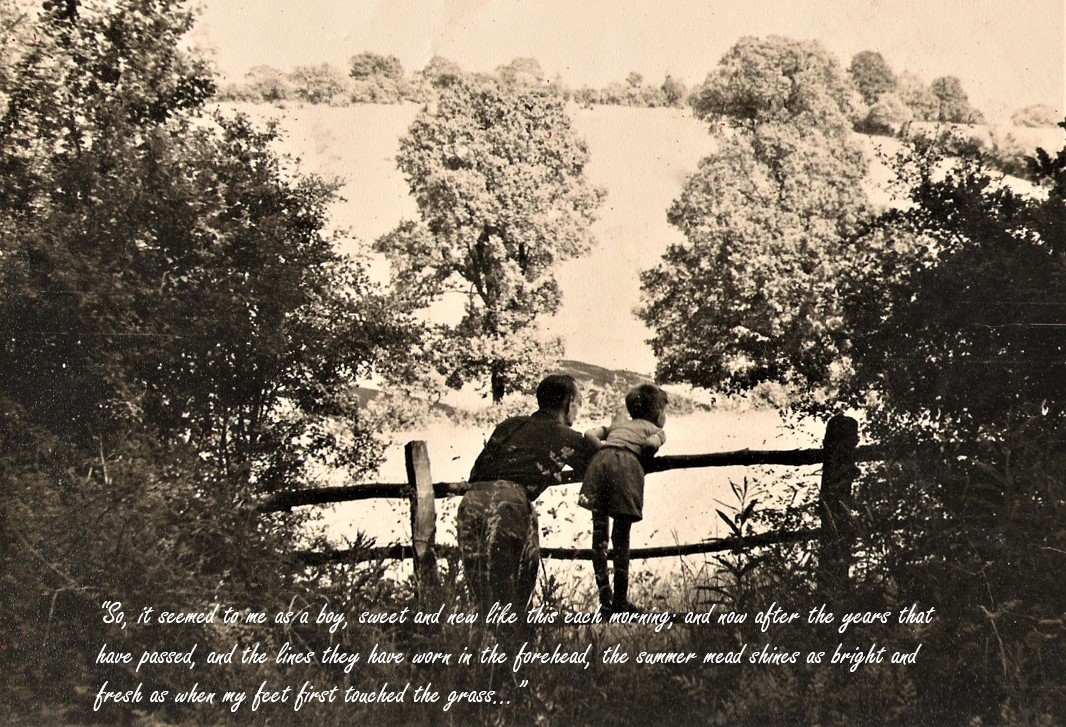
The tag line of my blog and other social media platforms describes me as ‘countryman’ and that’s how I see myself for I have lived in the countryside all my life.  One of my earliest memories is at kindergarten, aged four, and being taken on a nature walk.  There our teacher introduced us to a row of larch, the perfect tree to spark a small child’s imagination.  Soaring into the sky, straight and tall, their drooping branches almost touch the ground – “like gracious ladies curtseying to the mighty oak, the king of trees,” she told us, a description I have never forgotten.  An older cousin introduced me to butterflies and birds, collecting eggs and catching butterflies to mount on a board.  Back in the 1950s there were no concerns about such things, it was only later that the practice became frowned upon.  In my twenties I discovered the writing of Richard Jefferies, the Victorian naturalist; his quote below (and also attached to this favourite photo of myself with my father) sums up so accurately my feelings today.
My childhood home backed first onto wheatfields and later onto a cherry orchard under-grazed by a herd of gentle Guernsey cows.  We would walk to the farm to collect pints of their rich, creamy milk and eggs.  The first home of my own looked out towards Watlington Hill, one of the high points of the Chilterns and one which I knew well from long walks and family picnics.  After a few years I moved up the hill to a home fronting a wild bracken-covered common, its scrubby hawthorn trees the home of dormice.  Behind the house were the bluebell beechwoods for which the Chilterns are so famed.  After eighteen years there, I moved fifty miles up the road to the Cotswolds and the secret valley, a very different landscape of which I have so often written and blogged about.
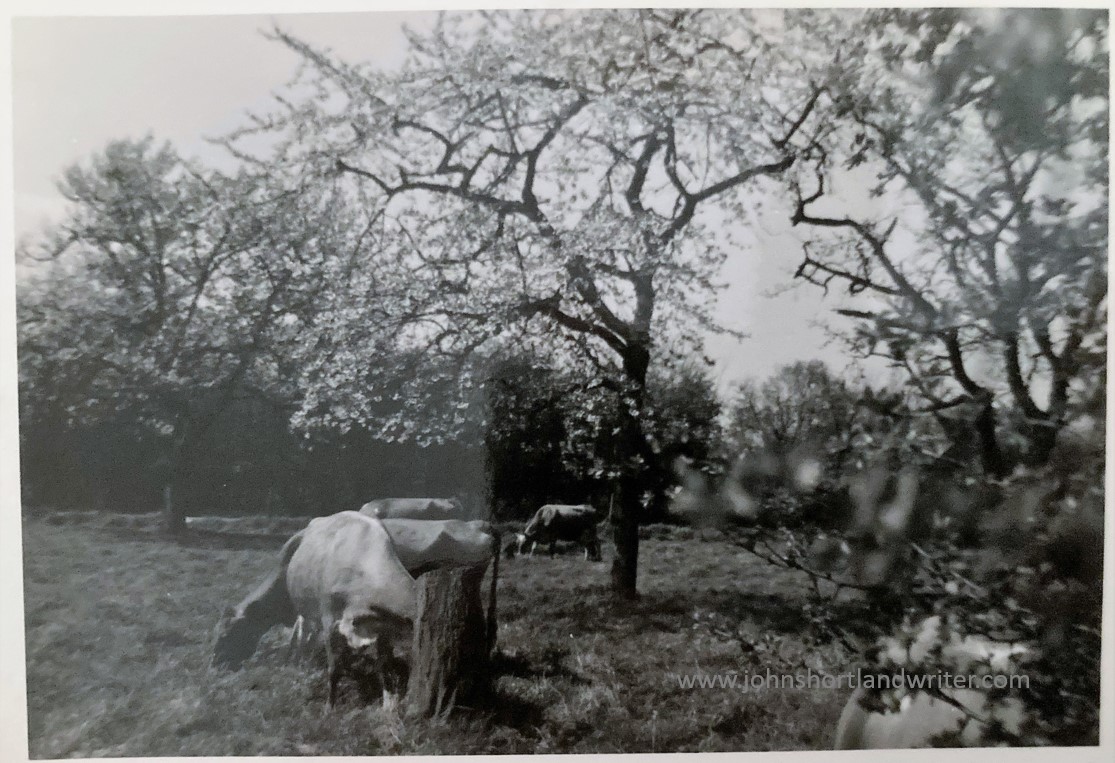
A herd of gentle cows grazed the cherry orchard behind my childhood home
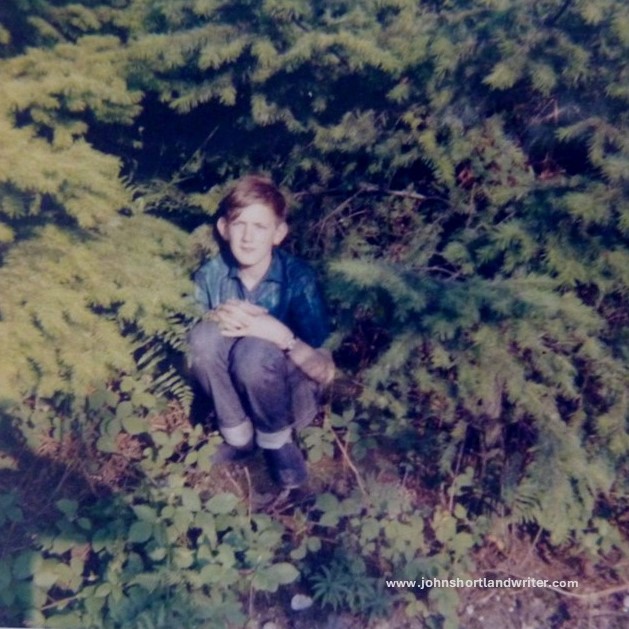
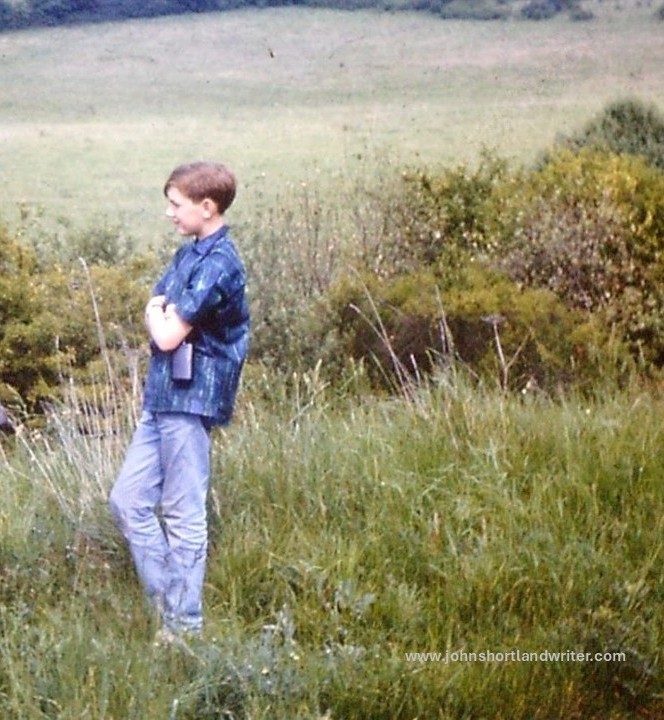
John on Watlington Hill, c1965 – I was rarely without binoculars or camera in my hand
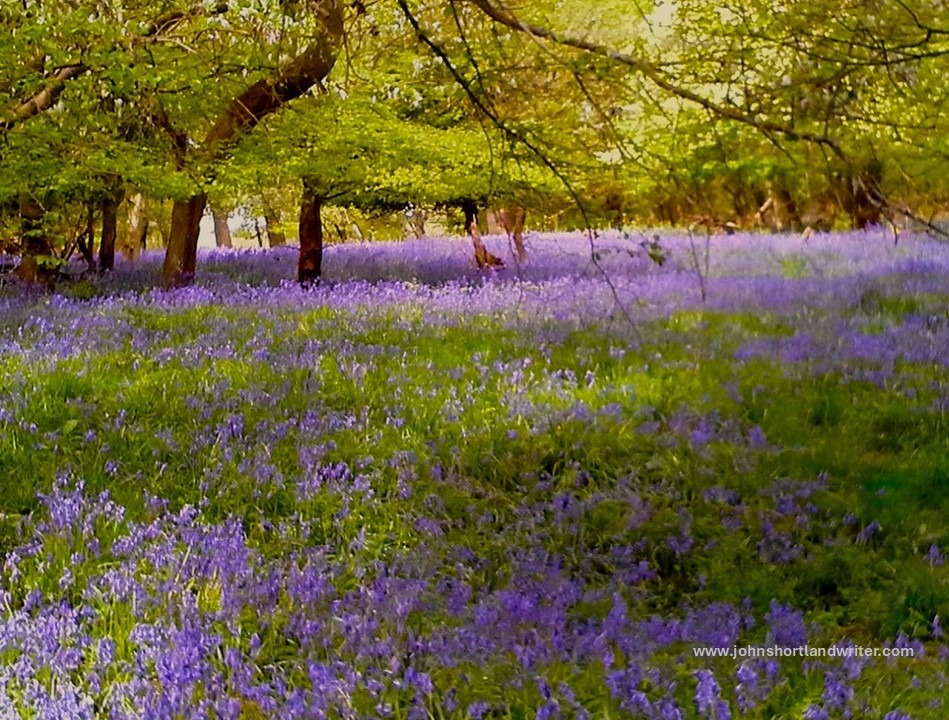
Behind my Chilterns home were bluebell woods, the glory of spring

It was here, in this tiny, hidden Cotswold valley, that my horticultural career developed beyond my wildest expectations, where I finally learned to ride a horse properly (I’d ridden badly from childhood) and where I became involved with both the Blenheim and Burghley International Horse Trials.  It was here where I was instrumental in the founding of both a County Gardens Trust and a Literary Festival, and where I received my commission to write my book, Why Can’t My Garden Look Like That?  It was here where I made new friends and became part of a new family: all of this wouldn’t have been so readily obtained without the constant support and encouragement of my long-suffering partner.  In fact, it was him seeing me writing away in a corner one day and asking what is the point if no-one ever read it, that sparked the idea of blogging regularly.
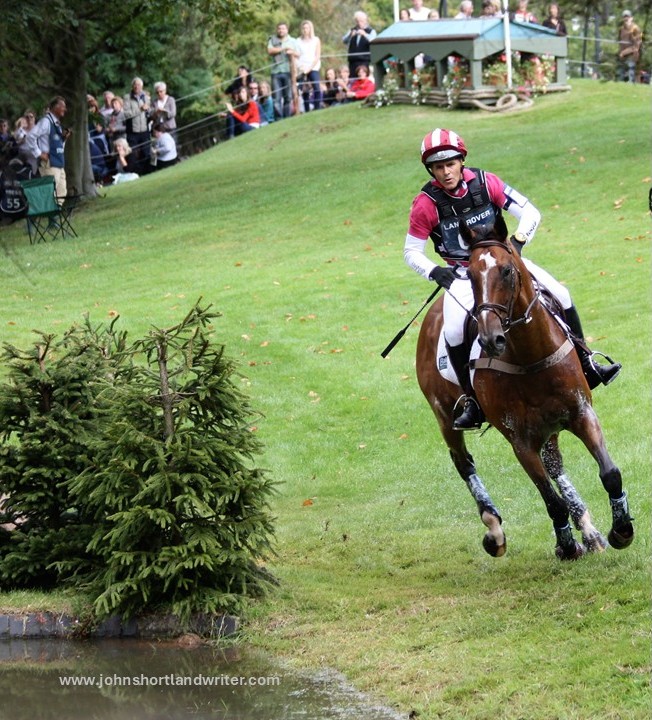

Working behind the scenes at the Burghley Horse Trials gave me a close-up view of the action
Being interviewed at the Chipping Norton Literary Festival

Considering all of the above, along with my passion for the remote and seemingly empty landscape of Exmoor, a National Park in England’s West Country, it comes as a surprise to many others – and perhaps even more to myself – that I/we shall be moving very shortly not just to a built-up area but to the very centre of a town, Cheltenham.  So after twenty-five years in the secret valley I am becoming a ‘townie’. Or, perhaps, a fish out of water?  I doubt it somehow for Cheltenham has some very special and unique qualities which I am looking forward to exploring.  It will be interesting to see how I adapt to town life and I am also looking forward to sharing my discoveries and thoughts through my writing, so watch this space…
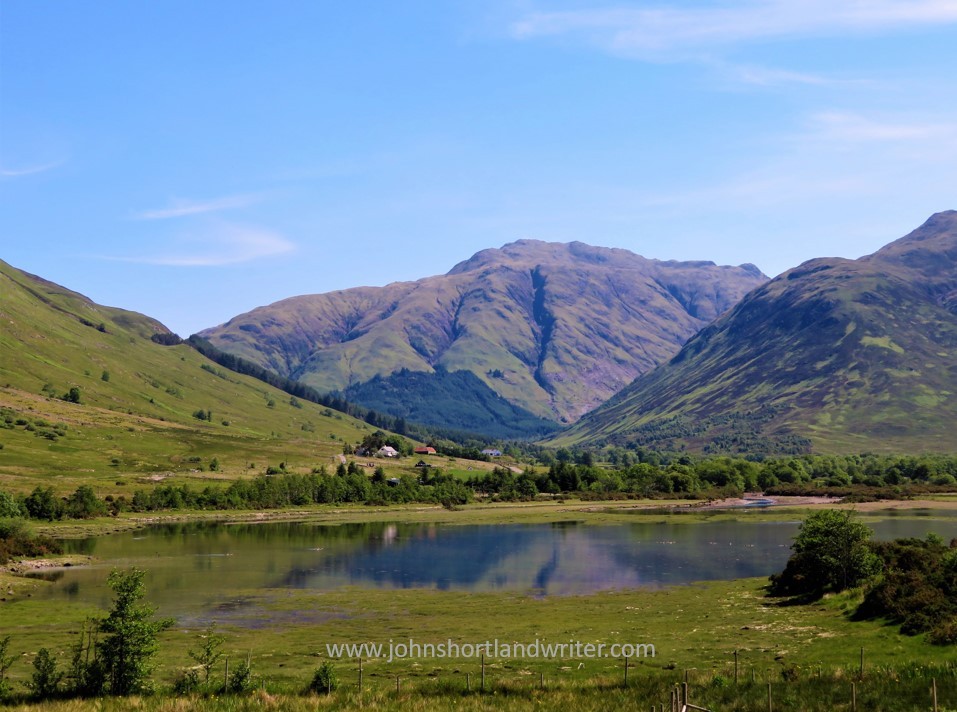
I feel so at home in remote countryside, how will I fare living in a town? This is Scotland, not Exmoor!
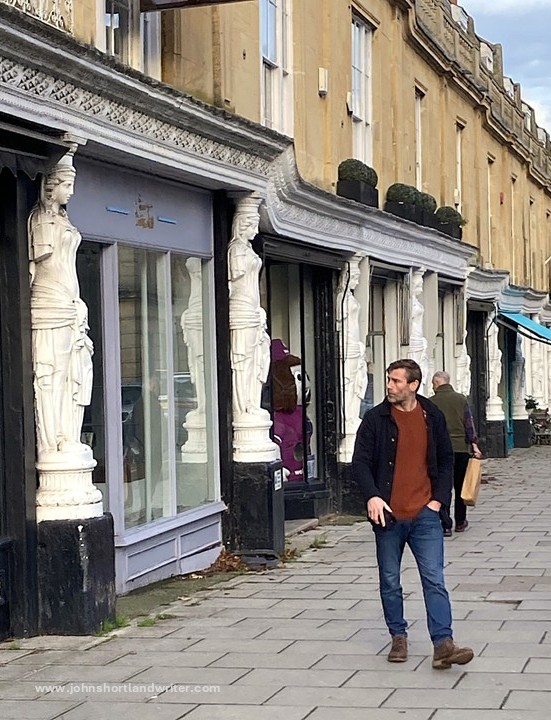
Perhaps the Caryatids – all thirty-two of them – will watch over me when living in Cheltenham

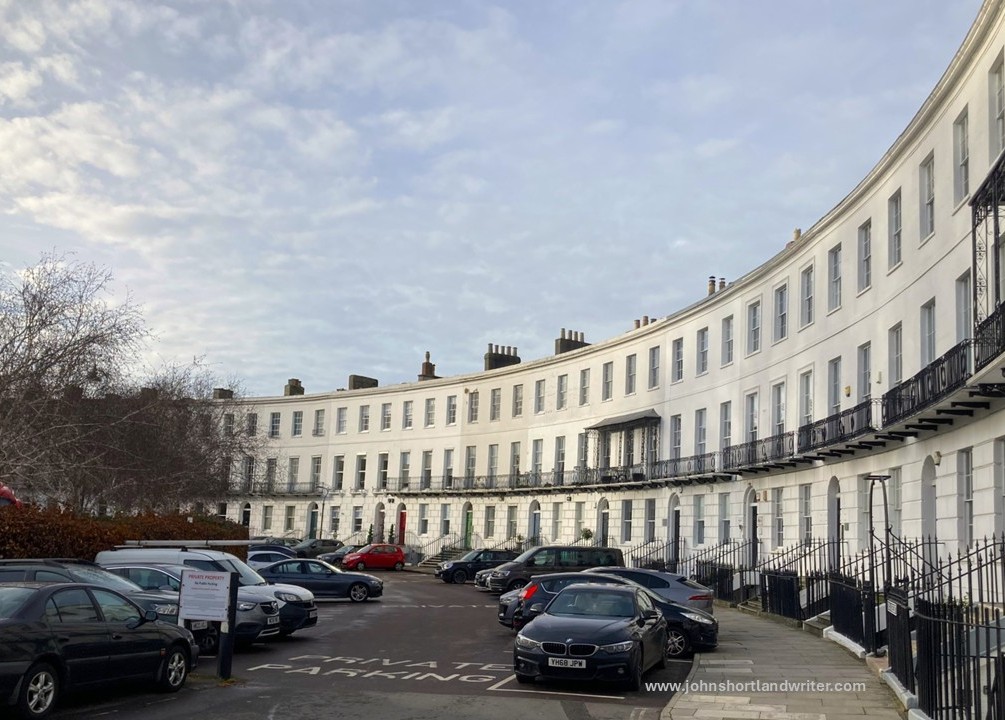
Here are a few facts that I have gleaned during my time visiting Cheltenham.  First and perhaps of the greatest importance to me, it is very leafy for it boasts more trees than people.  It also has numerous green spaces, many award winning and these along with the little river that flows through the town are home to a great array of wildlife: I have been told of brown trout, kingfishers, otters and badgers all living there and, of course, foxes I am sure will pop up everywhere. Peregrine falcons breed on the church towers and, to my surprise, seagulls can be heard with their constant mewing. Another surprise has been the numerous fountains in the town although, perhaps I shouldn’t be, for it was developed in Georgian times for its natural mineral waters, very much like the more famous city of Bath. As a result of this, Cheltenham also boasts some very splendid architecture including its own version of the famous Bath crescent. Finally, Cheltenham is considered one of the Cotswold Gateways for the hills rise steeply from the town’s edge. To the west flows the River Severn, and the Malvern Hills and the Welsh Black Mountains are not far either. There will be so much to explore and write about both of town and of country so Life in the English Cotswolds, after seventeen years, is very much set to continue. I very much hope that you will be joining me on my latest adventure.
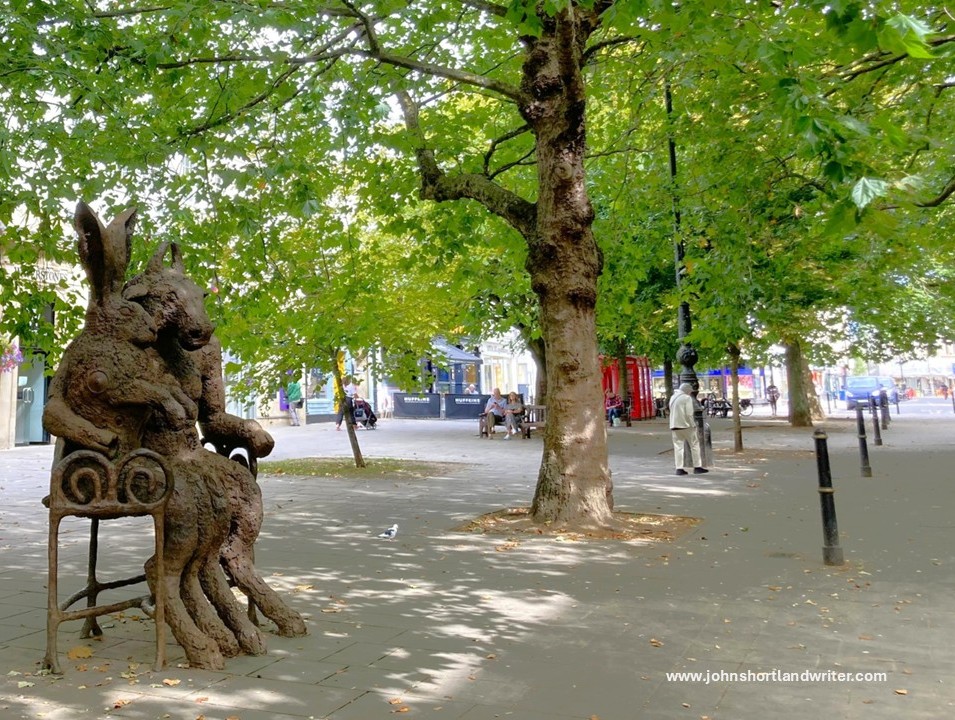
There are more trees than people in Cheltenham. This is one of the main shopping streets, Promenade
The Royal Crescent – splendid Georgian architecture lines the streets of Cheltenham

With so many open, green spaces, walks along the river that made the town so famous (more of that to come in the future), the architecture and fountains, let alone all the festivals and restaurants of which there are many, I think I’ll be fine. In the meantime, I shall remember my two favourite quotes from Richard Jefferies both written in 1885:

i) Those who love nature are the real artists

ii) So it seemed to me as a boy, sweet and new like this each morning; and now after the years that have passed, and the lines they have worn in the forehead, the summer mead shines as bright and fresh as when my foot first touched the grass…

Life Stories

Nearly all of us have family stories passed down to us through the generations but gradually some element of the story, if not all of it, becomes lost. Over the past twenty years or so our family have written down not only these tales but also a detailed account of our own lives to pass onto future generations. Whether, of course, they will be that interested who can tell but it is quite likely that someone one day will be.

When the family first began to write their life history it felt self-indulgent and embarrassing, and these emotions must be overcome if it is to be successful. Then, of course, there are decisions to be made as to what to include and what to leave out, after all, we all have moments in our lives that we’d rather forget. So, a decision needs to be made whether to go for the ‘warts and all’ approach or to be a little more restrictive in what you have to say. I think it’s important to be cautious, for no-one wants to intentionally hurt others through careless writing or cause a family rift – unless, of course, you seek revenge! If it is selective memories you decide to write about it is equally important to include the lows as well as the highs, otherwise the writing will not sound genuine. None of us, sadly, just sail through life, after all.

My first big low – the death of my girlfriend, Carolyn, aged 14

Your life hasn’t just been one of relationships with people. It has included the places where you have lived, where you studied, where you worked, where you holidayed. I was 37 when I first wrote my story, now aged 70 it’s time for an update. In that thirty-three-year gap I have moved westwards from the Chiltern Hills, where I had lived all my life, to the Cotswolds. I changed careers from the indoor world of retail fashion to my present one of designing and managing gardens. It also includes a two-year stint studying as a full-time student at horticultural college, a couple of years of being involved with the Chelsea Flower Show and working on one of the first garden makeover programmes, Garden Doctors, for Channel 4 television. You and I have lived through a Covid epidemic, witnessed the recent death and funeral of Queen Elizabeth, and part of Europe is at war – all proof that we don’t need to be in our dotage to write down our history. There is no shortage of things to write about!

College days – which one is me?!!


It was my sister who first persuaded my mother and then me
to write our life stories. Strangely, she was surprisingly reticent when it came to writing her own and took some persuading to take part! However, what we have now is a potted history not only of our lives, but also social conditions and changes that span well over one hundred years. An aunt and an older cousin have both added some of their memories too and now that some years have passed since their deaths, as well as my mother’s, these documents become more interesting and more precious with each passing year.

Extract from my mother’s memoir detailing the moment in 1945 when she regained consciousness
from a coma – for the full story of the pioneering treatment she received, click here

One of the stories that had been passed down from my paternal grandmother was the tale of the family’s friendship with a famous poet. The bulk of the story was lost, and we had always assumed that the connection must be with Shelley as the poet’s mother had lived in Marlow, where my grandparents also lived. It was only relatively recently, when researching the family history, that the connection became clear. My grandmother’s cousins had been a close friend of Alfred, Lord Tennyson, the Victorian Poet Laureate. I discovered through this research that our generations weren’t the only ones with lives documented for their friendship with Tennyson, as well as several letters between them, survived in the National Archives. Even better, a memoir had been written by the cousin, later published, which gave delightful insights into their lives: “…there was a constant coming and going between the children of each house, all being equally at home in the other…”

The start of a friendship – to read more about our family connection with Tennyson click here

Regular readers of my blog will know that I spent a lot of my time as a very young man (and now as an old one!) on Exmoor staying and working on a remote hill farm. Although so very different to my own home background and upbringing, I loved the traditional, farming life despite it being such hard work, sometimes in very bleak weather. Now, much of that lifestyle has gone which makes a written record of it all the more valuable – and it is all included as part of my life story. I hadn’t anticipated discovering yet another ancestral cousin had written about his teenage life on Exmoor a hundred years earlier. I also discovered that his sister married and emigrated to New Mexico and published a memoir of her life there in 1898. It seems that writing life histories is a long-established tradition in our family after all! I hadn’t known of the New Mexico connection when I visited there in 1994 – visiting a cousin from another branch of the family who had also emigrated there – even more to go into my updated memoir.

A memoir from an earlier generation

So now that you’re going to write your own historical record what is the best way to preserve it for posterity? A blog, such as this one is a possibility, and it is an easy way to record events along with appropriate photographs. It may not survive long-term as it depends upon the blog hosting company continuing indefinitely to exist. The same applies to any form of digital storage: in my lifetime we’ve gone from reel-to-reel tape recording to cassette tape recording. Then we became computerised, and storage moved from floppy disk to cd-rom to memory stick. Now only the latter is in common use (how many younger people even know what a floppy disk is?) and that is almost certainly to change. I shall continue to type my memoir with photos attached although hand-written would be even better for it gives a deeper insight into someone’s character as well as looking nicer on the page. Part of the pleasure of reading my mother’s story is that it is in her own handwriting, and it is easier on the eye. We have digitally copied it which means that it can be shared easily amongst the family. Publishing it in book form, as my ancestral cousins did (for it was their only option) is a good way to preserve it. These days it is much harder to find a publisher that is interested although self-publishing could be an option. Lastly, a copy lodged with your local museum or County archive should ensure its survival and many are very interested in receiving a record of everyday life and lives. Go ahead and do it!

Include photos, newspaper cuttings, invitations – anything that helps to tell the story