Living with Nature

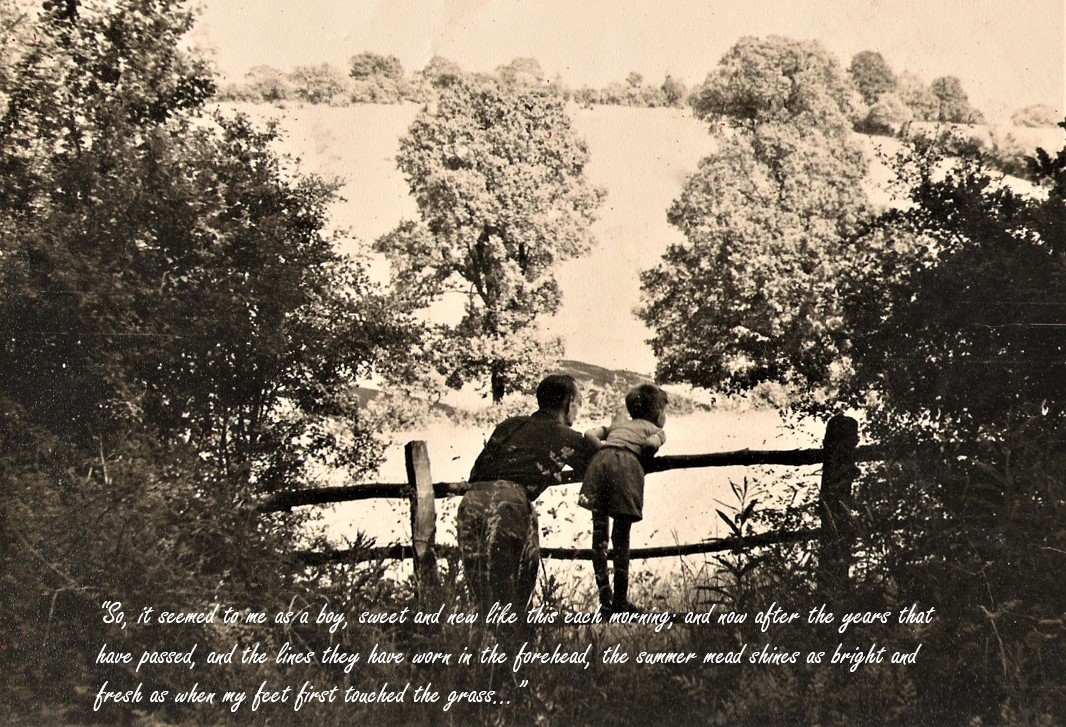
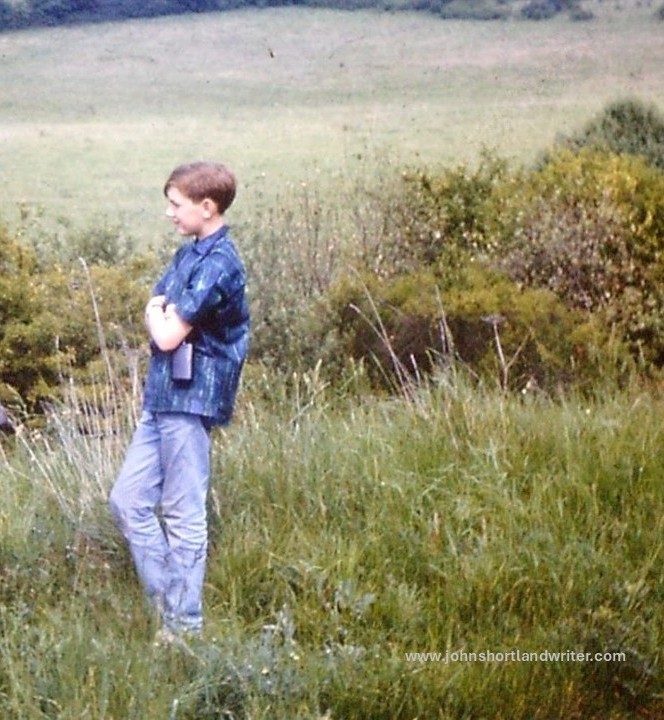
The tag line of my blog and other social media platforms describes me as ‘countryman’ and that’s how I see myself for I have lived in the countryside all my life.  One of my earliest memories is at kindergarten, aged four, and being taken on a nature walk.  There our teacher introduced us to a row of larch, the perfect tree to spark a small child’s imagination.  Soaring into the sky, straight and tall, their drooping branches almost touch the ground – “like gracious ladies curtseying to the mighty oak, the king of trees,” she told us, a description I have never forgotten.  An older cousin introduced me to butterflies and birds, collecting eggs and catching butterflies to mount on a board.  Back in the 1950s there were no concerns about such things, it was only later that the practice became frowned upon.  In my twenties I discovered the writing of Richard Jefferies, the Victorian naturalist; his quote below (and also attached to this favourite photo of myself with my father) sums up so accurately my feelings today.
My childhood home backed first onto wheatfields and later onto a cherry orchard under-grazed by a herd of gentle Guernsey cows.  We would walk to the farm to collect pints of their rich, creamy milk and eggs.  The first home of my own looked out towards Watlington Hill, one of the high points of the Chilterns and one which I knew well from long walks and family picnics.  After a few years I moved up the hill to a home fronting a wild bracken-covered common, its scrubby hawthorn trees the home of dormice.  Behind the house were the bluebell beechwoods for which the Chilterns are so famed.  After eighteen years there, I moved fifty miles up the road to the Cotswolds and the secret valley, a very different landscape of which I have so often written and blogged about.
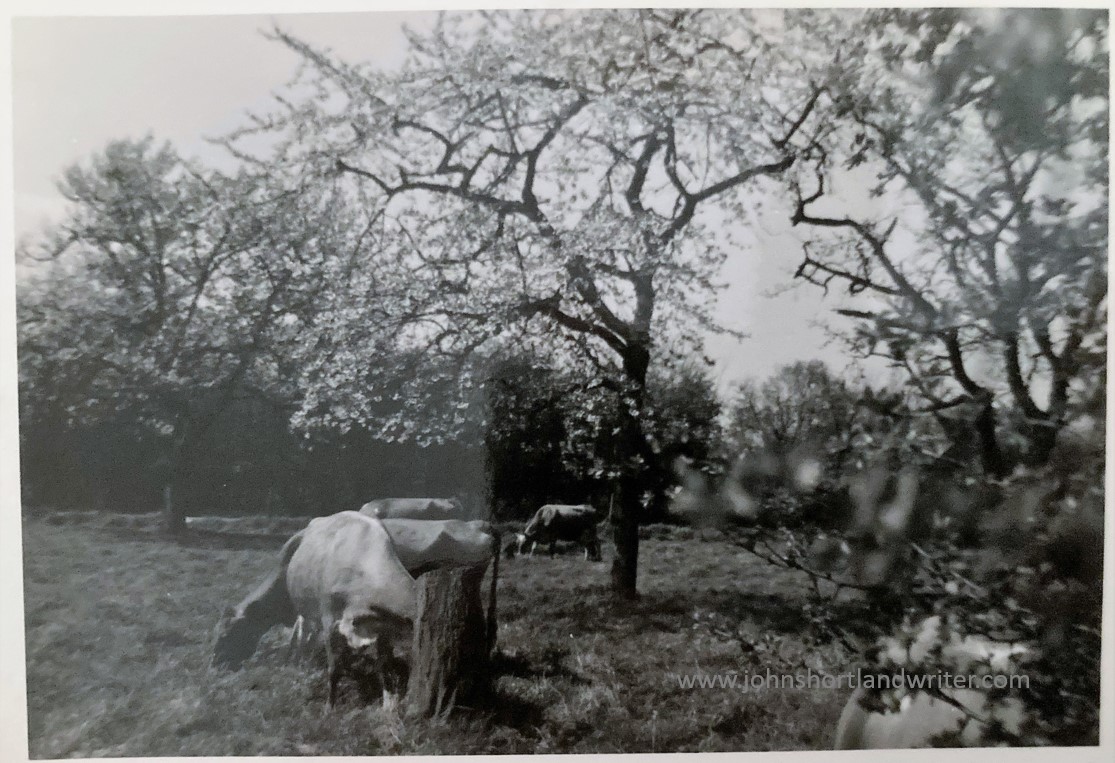
A herd of gentle cows grazed the cherry orchard behind my childhood home
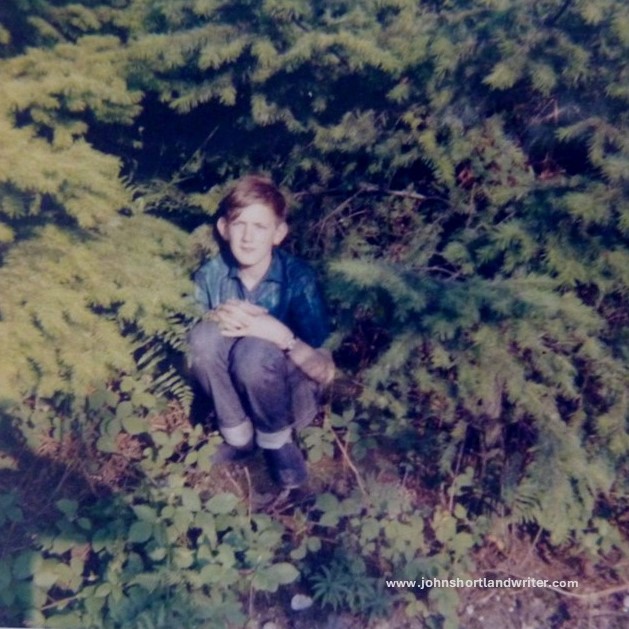
John on Watlington Hill, c1965 – I was rarely without binoculars or camera in my hand
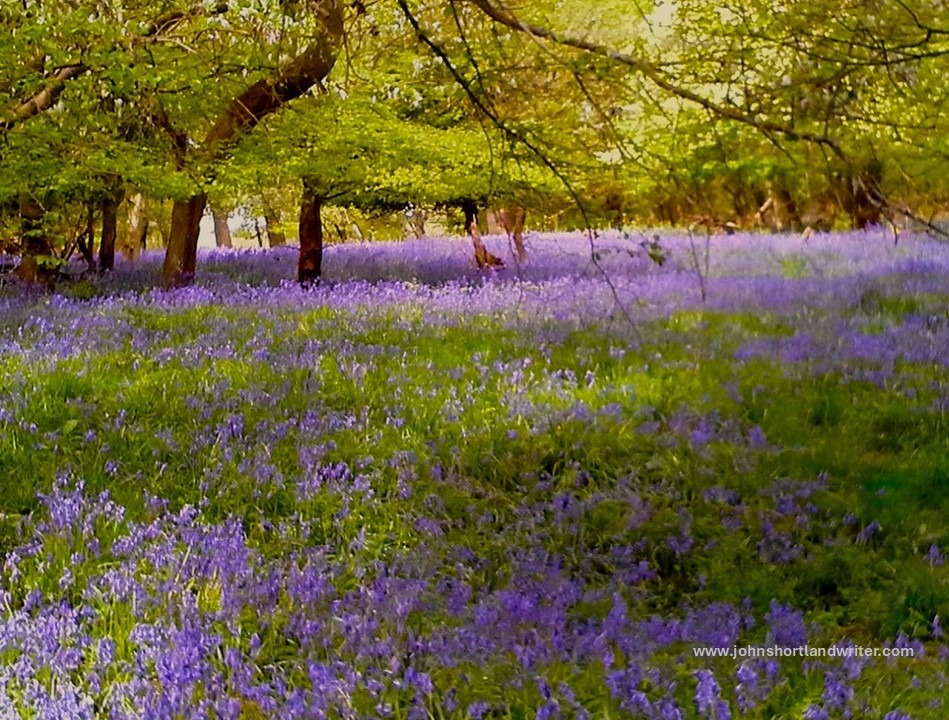
Behind my Chilterns home were bluebell woods, the glory of spring

It was here, in this tiny, hidden Cotswold valley, that my horticultural career developed beyond my wildest expectations, where I finally learned to ride a horse properly (I’d ridden badly from childhood) and where I became involved with both the Blenheim and Burghley International Horse Trials.  It was here where I was instrumental in the founding of both a County Gardens Trust and a Literary Festival, and where I received my commission to write my book, Why Can’t My Garden Look Like That?  It was here where I made new friends and became part of a new family: all of this wouldn’t have been so readily obtained without the constant support and encouragement of my long-suffering partner.  In fact, it was him seeing me writing away in a corner one day and asking what is the point if no-one ever read it, that sparked the idea of blogging regularly.
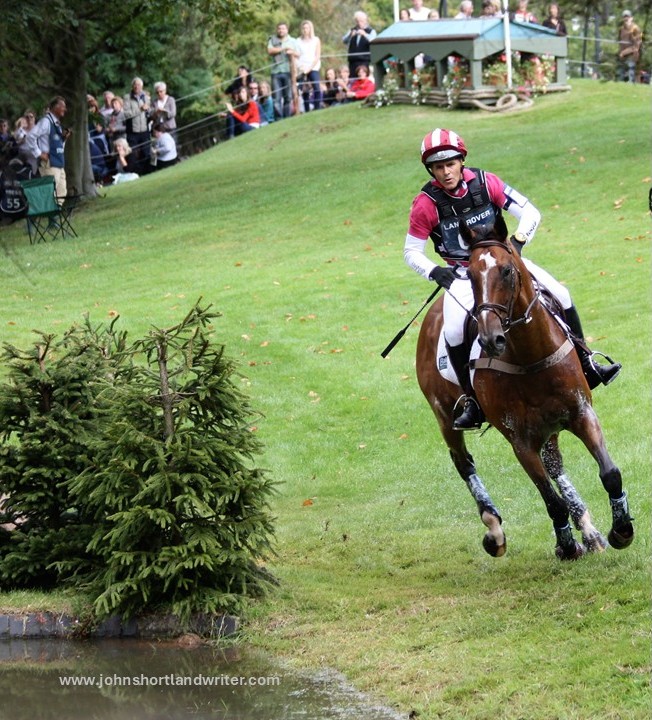

Working behind the scenes at the Burghley Horse Trials gave me a close-up view of the action
Being interviewed at the Chipping Norton Literary Festival

Considering all of the above, along with my passion for the remote and seemingly empty landscape of Exmoor, a National Park in England’s West Country, it comes as a surprise to many others – and perhaps even more to myself – that I/we shall be moving very shortly not just to a built-up area but to the very centre of a town, Cheltenham.  So after twenty-five years in the secret valley I am becoming a ‘townie’. Or, perhaps, a fish out of water?  I doubt it somehow for Cheltenham has some very special and unique qualities which I am looking forward to exploring.  It will be interesting to see how I adapt to town life and I am also looking forward to sharing my discoveries and thoughts through my writing, so watch this space…
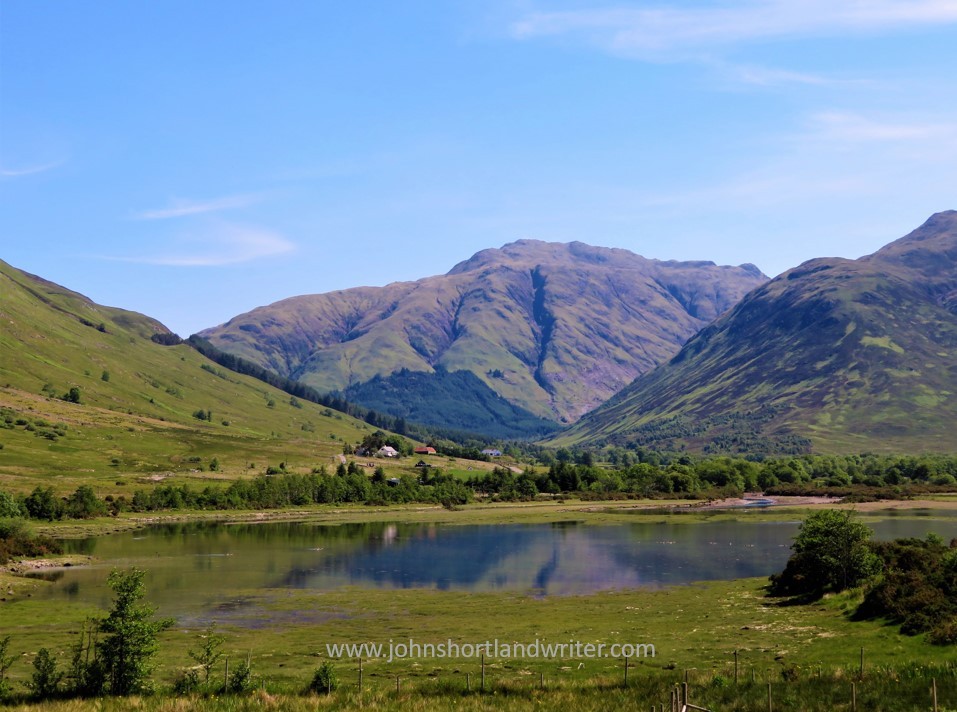
I feel so at home in remote countryside, how will I fare living in a town? This is Scotland, not Exmoor!
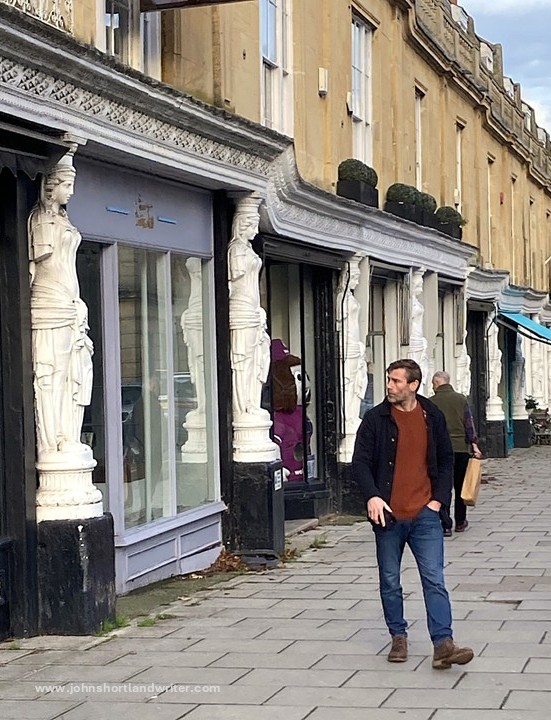
Perhaps the Caryatids – all thirty-two of them – will watch over me when living in Cheltenham

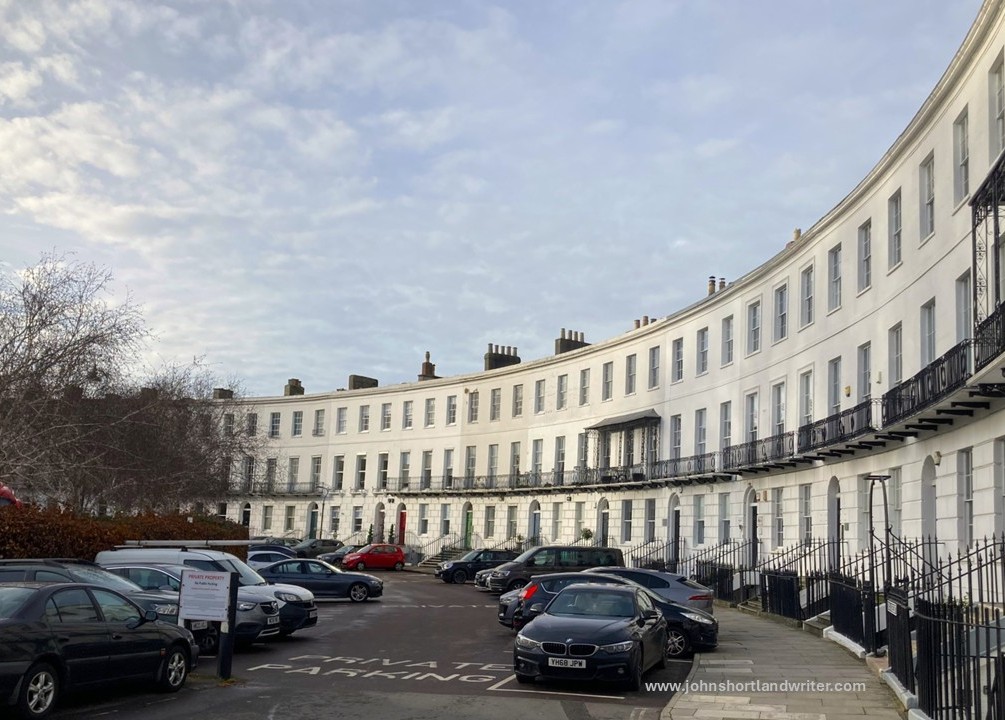
Here are a few facts that I have gleaned during my time visiting Cheltenham.  First and perhaps of the greatest importance to me, it is very leafy for it boasts more trees than people.  It also has numerous green spaces, many award winning and these along with the little river that flows through the town are home to a great array of wildlife: I have been told of brown trout, kingfishers, otters and badgers all living there and, of course, foxes I am sure will pop up everywhere. Peregrine falcons breed on the church towers and, to my surprise, seagulls can be heard with their constant mewing. Another surprise has been the numerous fountains in the town although, perhaps I shouldn’t be, for it was developed in Georgian times for its natural mineral waters, very much like the more famous city of Bath. As a result of this, Cheltenham also boasts some very splendid architecture including its own version of the famous Bath crescent. Finally, Cheltenham is considered one of the Cotswold Gateways for the hills rise steeply from the town’s edge. To the west flows the River Severn, and the Malvern Hills and the Welsh Black Mountains are not far either. There will be so much to explore and write about both of town and of country so Life in the English Cotswolds, after seventeen years, is very much set to continue. I very much hope that you will be joining me on my latest adventure.
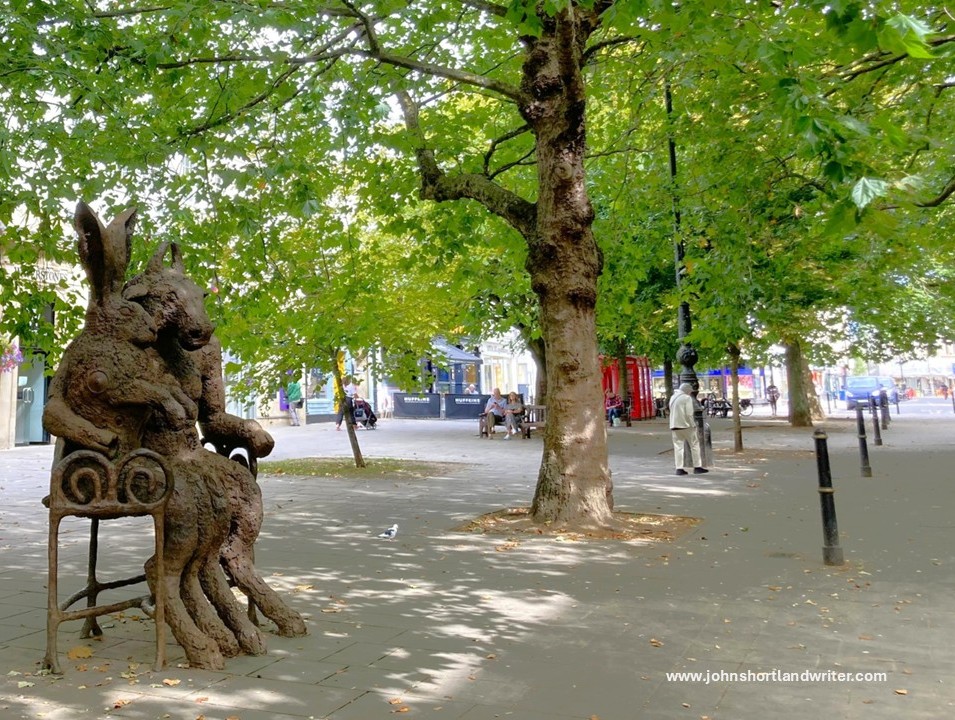
There are more trees than people in Cheltenham. This is one of the main shopping streets, Promenade
The Royal Crescent – splendid Georgian architecture lines the streets of Cheltenham

With so many open, green spaces, walks along the river that made the town so famous (more of that to come in the future), the architecture and fountains, let alone all the festivals and restaurants of which there are many, I think I’ll be fine. In the meantime, I shall remember my two favourite quotes from Richard Jefferies both written in 1885:

i) Those who love nature are the real artists

ii) So it seemed to me as a boy, sweet and new like this each morning; and now after the years that have passed, and the lines they have worn in the forehead, the summer mead shines as bright and fresh as when my foot first touched the grass…
The Boy from London

I am a hills person.  I love walking – or even better – cross-country skiing in the mountains. I can also admire the huge skies and vistas of flat country.  However, it is with hills that I have always strongly identified with.  So, when I’m asked “where was home for you?” it isn’t the county of Buckinghamshire, or even the village I was brought up in that I respond with, it is the hills and the Chiltern Hills in particular.

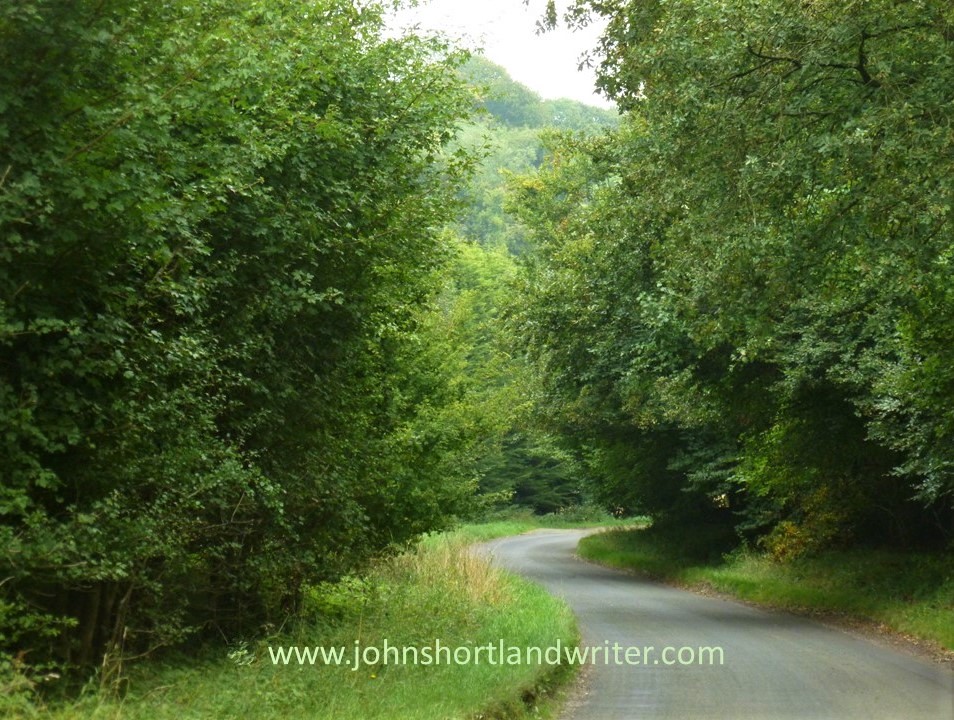
A country lane in the Chiltern Hills winds its way through dense woodland

As a child, I lived on the very edge of the village and not being schooled locally and with no children of my own age nearby anyway, I learnt to spend many hours on my own during the lengthy holidays. Although our house was close to the River Thames I found fishing of limited interest preferring always to be out walking or cycling.  As I grew older I travelled further afield exploring the lanes, fields and woodlands, learning all the time about the ways of nature.  Back in the fifties and early sixties people seemed to have more time to answer inquisitive children about these things or, perhaps, it was just that in those days people were more connected with the natural world so were able to answer their questions.  Whatever the reason, I became more knowledgeable and enthusiastic about country ways than I ever did with schoolwork.  A consequence of this is, when asked the question, “where are you from?” I respond without hesitation (and with a certain degree of pride), “I’m a Chilterns man.”

A childhood spent exploring the fields and woodlands that surrounded home

It was not until I reached the ripe old age of 49 that I moved away from the Chilterns to start a new life in the Cotswolds.  Although as the crow flies, the Cotswolds are not many miles away (I can even see the distant Chilterns from the top of my lane) they are very different in character, the former being chalk and flint country, the latter limestone.  But it wasn’t the exchange of deep, wooded valleys with few, if any, streams for a landscape of far-reaching views, fast-running brooks and drystone walls that I noticed most of all, it was the language.  When I moved to this then unfashionable part of the Cotswolds twenty years ago it was still a forgotten corner of the world where, even if the local dialect had mostly died out, the twang of local accent hadn’t.  It reminded me of, for it is related to, the south-western tongue spoken by many of my country cousins and also by my friends further west still.   So, when I gave my usual response to the question, I was rather peeved to hear it acknowledged by the words, “so you come from London way, then.” 

A Chilterns cottage built using the local flint
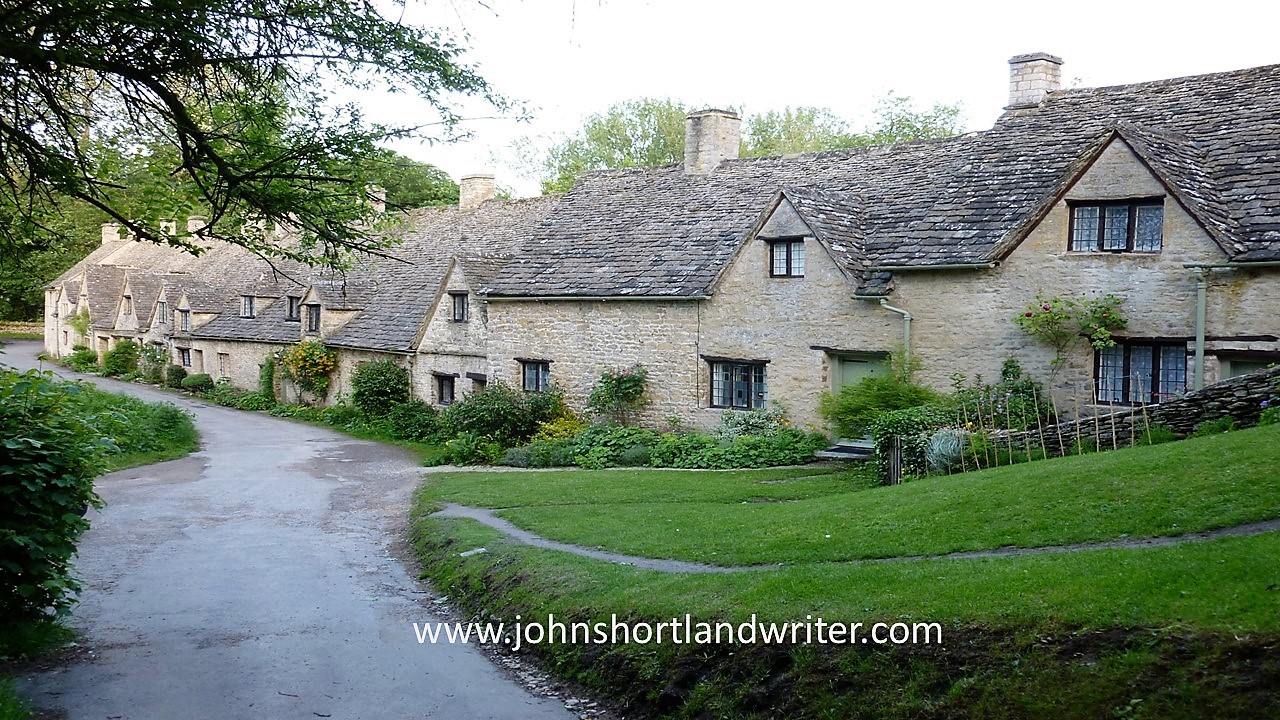
Cotswold cottages look very different and are made with local limestone

Now, I hasten to say, that there is nothing wrong about being referred to as a Londoner.  It’s just that our capital city is as much a foreign land to me as it would be to an overseas visitor.  Ok, so that might be a slight exaggeration, but somehow, I just don’t relate to city life despite my mother being born and raised in London’s West End.  She had come to the Chilterns as an evacuee from WW2 through her war work and there met my father, a local boy – but that’s another story.  Suffice to say, that I am a child of two halves – I have country family and I have city family much in the same way as I am a child of two cultures and two religions.  Despite my relating to country ways and to complicate matters further, (although I should be used to it by now), it is to my mother’s culture and religion that I feel a closer affinity to.  It still grates, ‘though, when I’m thought of as a townie.

City girl sophistication meets country gent: my parents soon after marriage

As I mentioned earlier, school life didn’t hold much appeal and so I persuaded my parents that I should leave aged sixteen.  As soon as I could, I took myself off on my bicycle to holiday in Devon.  Leaving Exeter with tent, camping gas stove and billy cans loosely tied to the crossbar I clanked and clattered my way along the lanes of Dartmoor.   At the end of each day I would pitch my tent wherever I could and reflect with delight upon all the new experiences that had come my way.  Getting hopelessly lost, I ended up at Westward Ho!, a small seaside town on on the north Devon coast.  From there I travelled east finding the hills becoming ever steeper and the villages further and further apart.  One day, I ended up on a remote farm on Exmoor where I decided I would spend two days to recuperate before heading for home.  It didn’t happen. 

The 16 year old hits the road!
Remote hill farm, Brendon Barton where I intended to stay for only two days

Looking back, I can’t imagine what my poor parents were thinking for there were no mobile phones or credit card statements for them to track my progress or whereabouts.  I would telephone them occasionally or send a postcard always being deliberately vague as to where I was staying.  In the meantime, I remained at the farm working – at first for food then, as I became more established and with the tent discarded, for a bedroom and beer money.  By the time my parents turned up at the door several months later (after some shrewd detective work) I had settled into my new life and rapidly adopting the ways of the hard but exhilarating Exmoor life.  Dragged back home to “get a proper job” I never completely left Exmoor behind.  Every spare moment was spent on the farm and, as regular readers of my blog will know, I still spend as much time on Exmoor as possible.  Being a National Park, the landscape and buildings of Exmoor haven’t changed very much over the 50+ years since I turned up on Lorna and Dick French’s doorstep although they have, as have most of the others I knew in those early days, since died.  To my dismay, there is one other thing that hasn’t changed at all: when I respond proudly to the inevitable question with “I’m a Chilterns man”, their response remains the same: “So up-country then?  London?”  Over the years, the ‘boy from London’ has become ‘the man from London.’    And I’m sorry, Londoners, Mum and cousins – I don’t like the label!

Dick & Lorna French who welcomed me into their lives and in the process changed mine