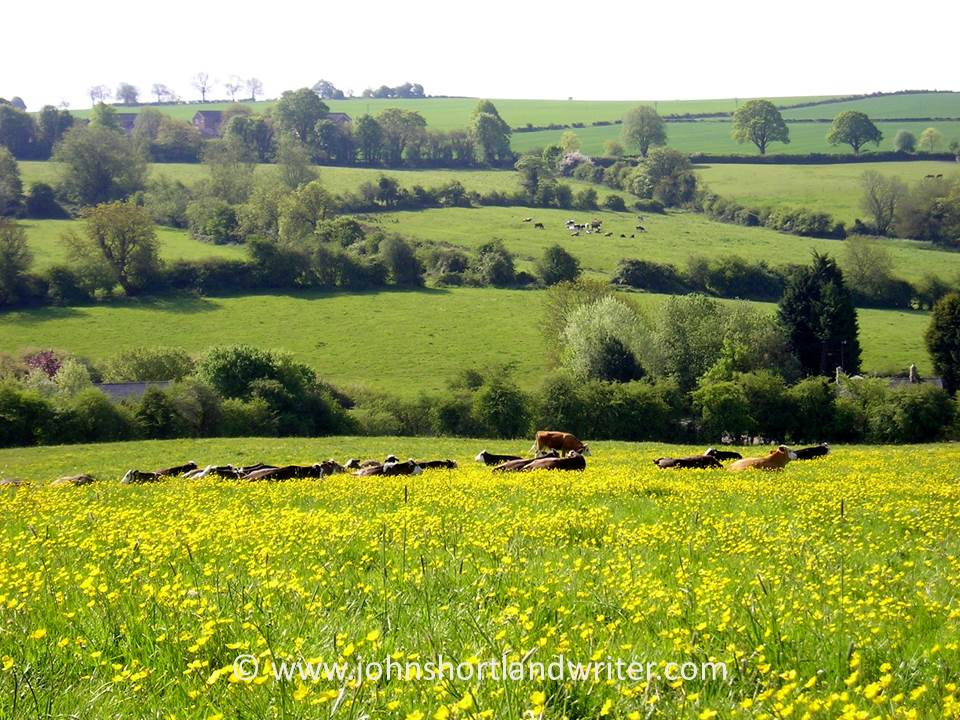
Living with Nature

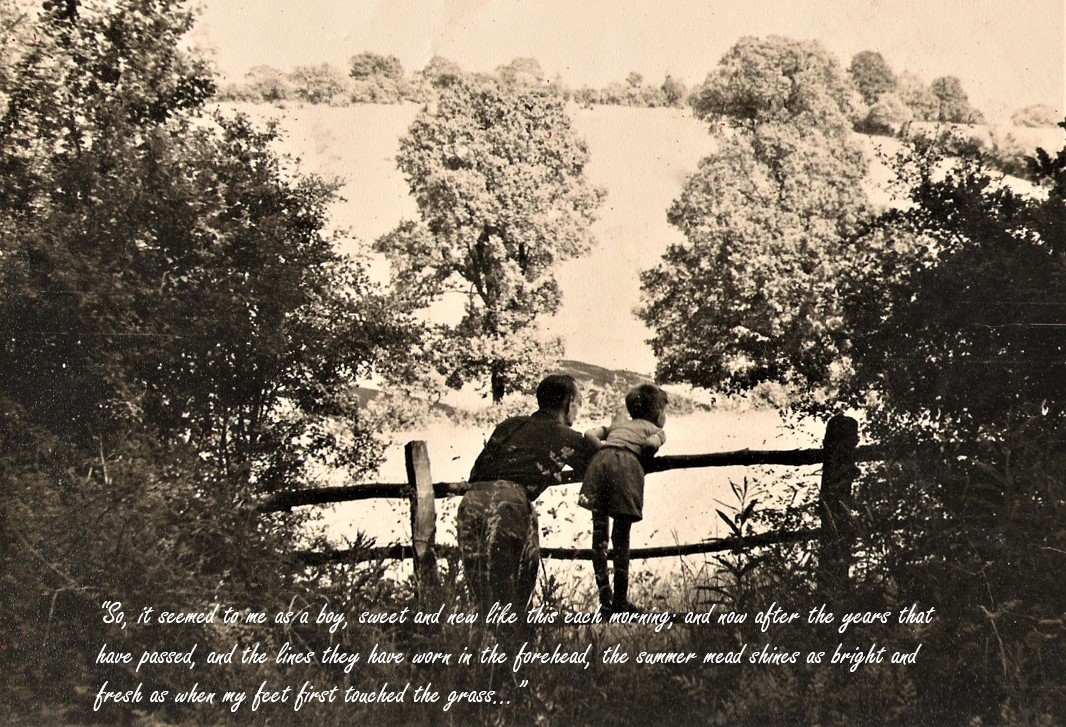
The tag line of my blog and other social media platforms describes me as ‘countryman’ and that’s how I see myself for I have lived in the countryside all my life.  One of my earliest memories is at kindergarten, aged four, and being taken on a nature walk.  There our teacher introduced us to a row of larch, the perfect tree to spark a small child’s imagination.  Soaring into the sky, straight and tall, their drooping branches almost touch the ground – “like gracious ladies curtseying to the mighty oak, the king of trees,” she told us, a description I have never forgotten.  An older cousin introduced me to butterflies and birds, collecting eggs and catching butterflies to mount on a board.  Back in the 1950s there were no concerns about such things, it was only later that the practice became frowned upon.  In my twenties I discovered the writing of Richard Jefferies, the Victorian naturalist; his quote below (and also attached to this favourite photo of myself with my father) sums up so accurately my feelings today.
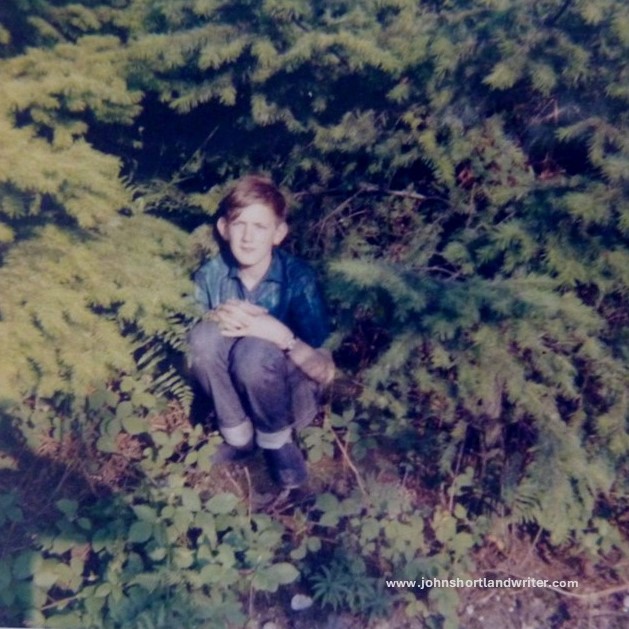
My childhood home backed first onto wheatfields and later onto a cherry orchard under-grazed by a herd of gentle Guernsey cows.  We would walk to the farm to collect pints of their rich, creamy milk and eggs.  The first home of my own looked out towards Watlington Hill, one of the high points of the Chilterns and one which I knew well from long walks and family picnics.  After a few years I moved up the hill to a home fronting a wild bracken-covered common, its scrubby hawthorn trees the home of dormice.  Behind the house were the bluebell beechwoods for which the Chilterns are so famed.  After eighteen years there, I moved fifty miles up the road to the Cotswolds and the secret valley, a very different landscape of which I have so often written and blogged about.
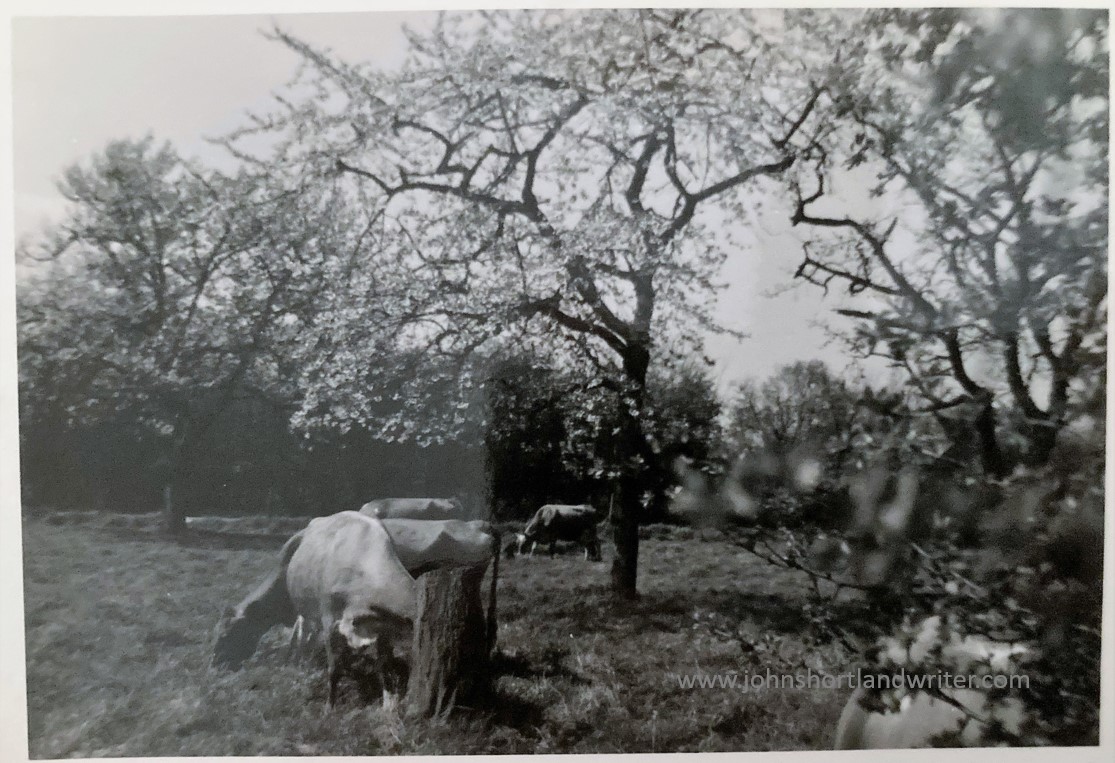
A herd of gentle cows grazed the cherry orchard behind my childhood home
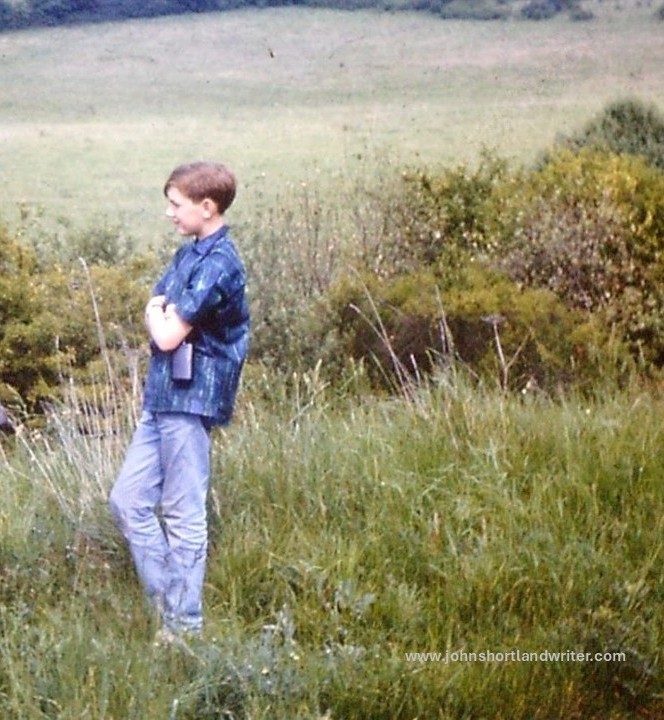
John on Watlington Hill, c1965 – I was rarely without binoculars or camera in my hand
Behind my Chilterns home were bluebell woods, the glory of spring

It was here, in this tiny, hidden Cotswold valley, that my horticultural career developed beyond my wildest expectations, where I finally learned to ride a horse properly (I’d ridden badly from childhood) and where I became involved with both the Blenheim and Burghley International Horse Trials.  It was here where I was instrumental in the founding of both a County Gardens Trust and a Literary Festival, and where I received my commission to write my book, Why Can’t My Garden Look Like That?  It was here where I made new friends and became part of a new family: all of this wouldn’t have been so readily obtained without the constant support and encouragement of my long-suffering partner.  In fact, it was him seeing me writing away in a corner one day and asking what is the point if no-one ever read it, that sparked the idea of blogging regularly.
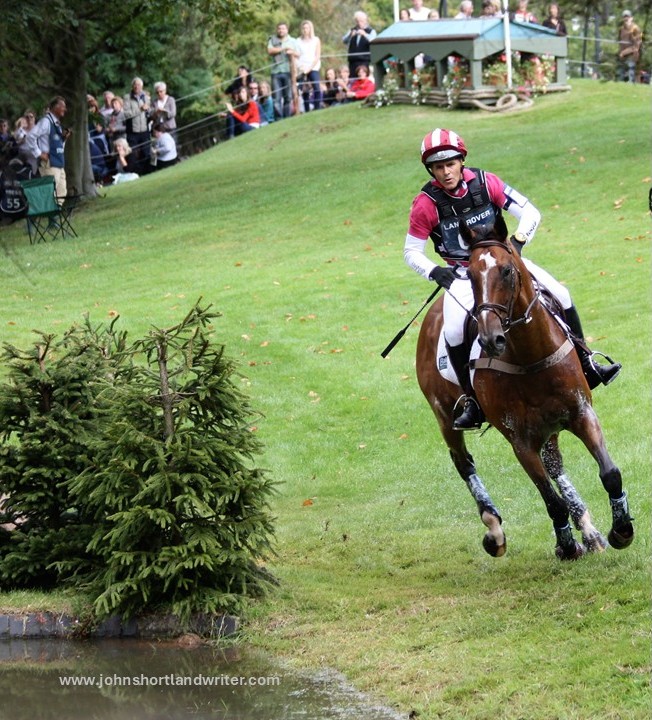

Working behind the scenes at the Burghley Horse Trials gave me a close-up view of the action
Being interviewed at the Chipping Norton Literary Festival

Considering all of the above, along with my passion for the remote and seemingly empty landscape of Exmoor, a National Park in England’s West Country, it comes as a surprise to many others – and perhaps even more to myself – that I/we shall be moving very shortly not just to a built-up area but to the very centre of a town, Cheltenham.  So after twenty-five years in the secret valley I am becoming a ‘townie’. Or, perhaps, a fish out of water?  I doubt it somehow for Cheltenham has some very special and unique qualities which I am looking forward to exploring.  It will be interesting to see how I adapt to town life and I am also looking forward to sharing my discoveries and thoughts through my writing, so watch this space…
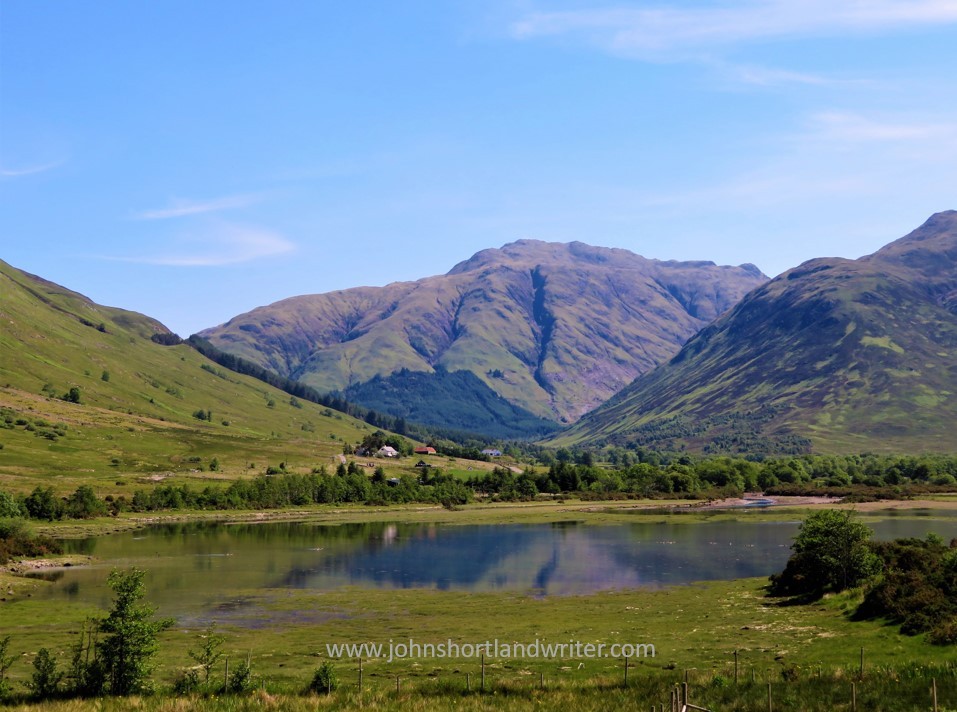
I feel so at home in remote countryside, how will I fare living in a town? This is Scotland, not Exmoor!
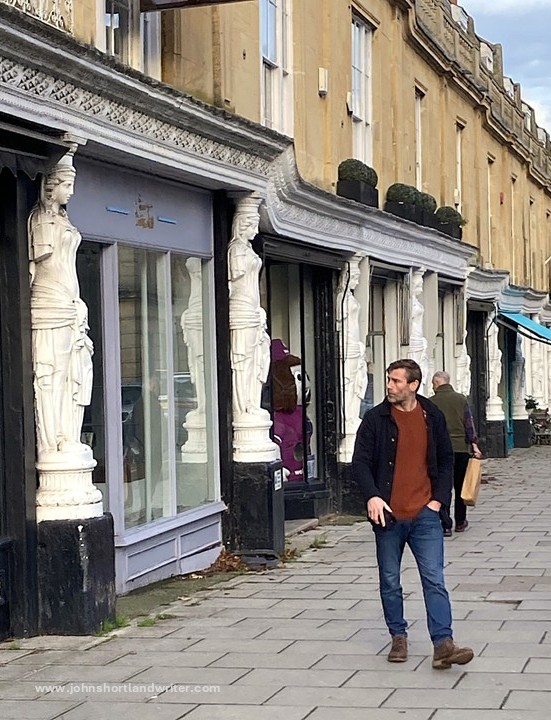
Perhaps the Caryatids – all thirty-two of them – will watch over me when living in Cheltenham

Here are a few facts that I have gleaned during my time visiting Cheltenham.  First and perhaps of the greatest importance to me, it is very leafy for it boasts more trees than people.  It also has numerous green spaces, many award winning and these along with the little river that flows through the town are home to a great array of wildlife: I have been told of brown trout, kingfishers, otters and badgers all living there and, of course, foxes I am sure will pop up everywhere. Peregrine falcons breed on the church towers and, to my surprise, seagulls can be heard with their constant mewing. Another surprise has been the numerous fountains in the town although, perhaps I shouldn’t be, for it was developed in Georgian times for its natural mineral waters, very much like the more famous city of Bath. As a result of this, Cheltenham also boasts some very splendid architecture including its own version of the famous Bath crescent. Finally, Cheltenham is considered one of the Cotswold Gateways for the hills rise steeply from the town’s edge. To the west flows the River Severn, and the Malvern Hills and the Welsh Black Mountains are not far either. There will be so much to explore and write about both of town and of country so Life in the English Cotswolds, after seventeen years, is very much set to continue. I very much hope that you will be joining me on my latest adventure.
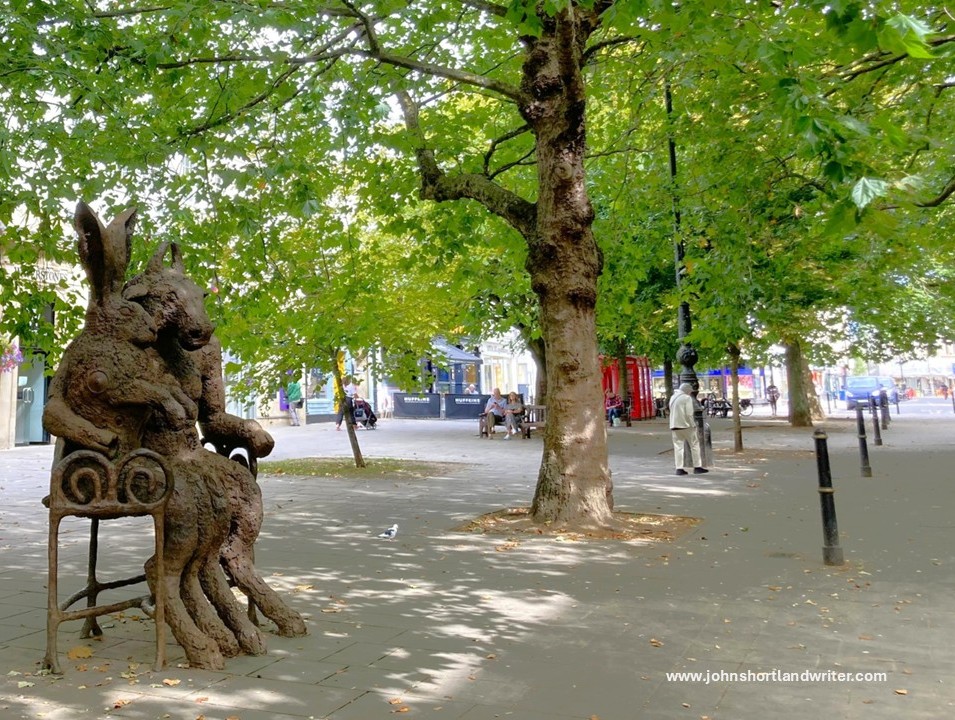
There are more trees than people in Cheltenham. This is one of the main shopping streets, Promenade
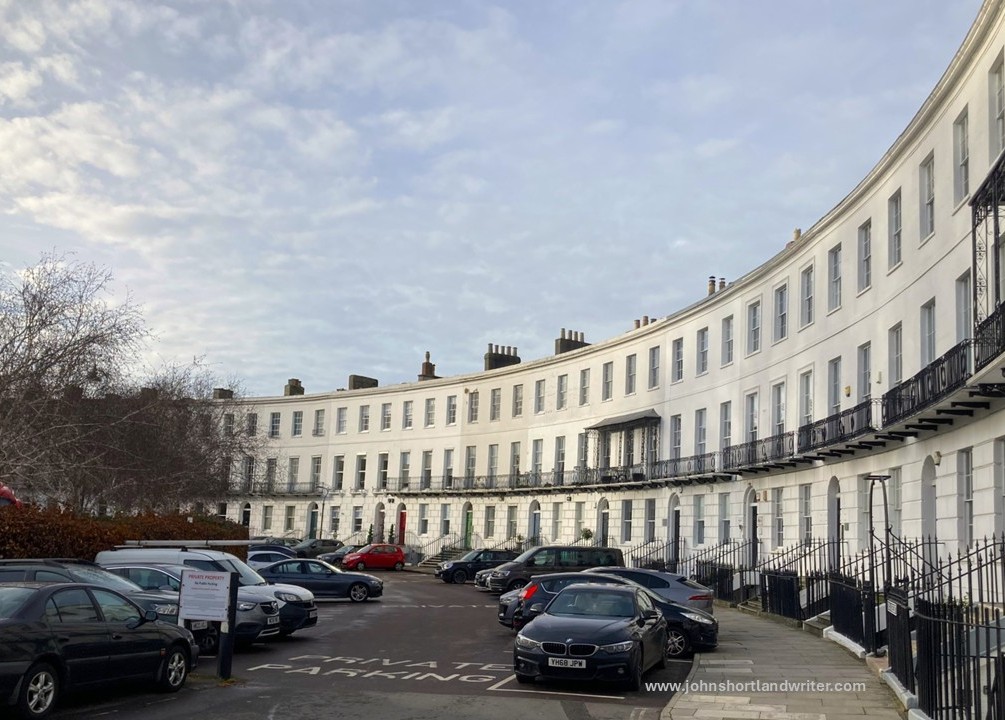
The Royal Crescent – splendid Georgian architecture lines the streets of Cheltenham

With so many open, green spaces, walks along the river that made the town so famous (more of that to come in the future), the architecture and fountains, let alone all the festivals and restaurants of which there are many, I think I’ll be fine. In the meantime, I shall remember my two favourite quotes from Richard Jefferies both written in 1885:

i) Those who love nature are the real artists

ii) So it seemed to me as a boy, sweet and new like this each morning; and now after the years that have passed, and the lines they have worn in the forehead, the summer mead shines as bright and fresh as when my foot first touched the grass…

In Praise of Bluebells

Can there be a more delightful spot to linger than a bluebell wood in spring?  The intensity of their colour when seen growing in their tens of thousands would hurt the eyes if not offset by the citrus green of the beech trees they favour growing under.  With early morning sunlight filtering through the branches to strike the woodland floor below, both leaves of beech and ‘bell shimmer and sparkle in the clear light.  As the forest warms the bluebells release their scent but not the heavy, redolent perfume that one might expect. Instead, a fragrance so soft and gentle that for a moment it seems to come from elsewhere; all too quickly it melts away, dispersed by the increasing heat.

Bluebells are one of the key indicator plants of ancient woodland, a term that refers to woodland that pre-dates AD1600, for their bulbs prefer to remain undisturbed where they can slowly establish huge colonies.   Here, in the secret valley where they grow in hedge banks, they can be used to trace the line of an equally ancient drove road for it is thought that the hedgerows and trees that line it are remnants of Wychwood Forest.  Over centuries, the boundaries of the Forest have shrunk as fields were created and the trees cleared for arable land or pasture.  By leaving the field edges untouched the early farmers saved themselves both time and labour and in doing so preserved the bluebells that give me so much pleasure each spring.  The drove road – primarily used for herding livestock long distances to market – passes our little stone-built cottage before diverting across open country.  It is still used as a public right of way.

Bluebells line the old drove road that passes my house

Unsurprisingly for a plant that has been around from time immemorial, the bluebell has numerous regional names – Common Bluebell, English Bluebell, Fairy Bell, Wild Hyacinth to name a few.  Perhaps the best has to be Granfer Giggles.  In Scotland they are known as harebells although to an Englishman harebell would be a completely different plant that grows later in the summer when the bluebells have long ended.  Even the Latin name which is supposed to prevent confusion has changed over time – it is now known as Hyacinthoides non-scripta.  I much prefer the earlier name of Endymion non-sciptus, it sounds more attractive as well as having a romantic Greek legend attached to it.  Illegal to dig up plants from the wild, bluebells are sometimes offered for sale from cultivated stock under either of these names.

Occasionally you may find a white, or even a pink bluebell

For such a well-loved plant – it has been voted England’s unofficial national flower – bluebells do not seem to feature much in poetry.  They are frequently mentioned by name but no-one, as far as I can tell, seems to have written poems specifically about the plant.  Perhaps it is because they are such a common sight and have none of the delicacy of the wild rose, the scent of the honeysuckle or the diminuity of wild thyme. Shakespeare, who seems to have written about absolutely everything (including thyme), only mentions it once: “the azur’d harebell” in Cymbeline.  The Brontë sisters both wrote of bluebells but I’m not sure they weren’t describing later flowering harebells. Emily’s description “waves in summer air”, and Ann talks of a single flower and of its trembling.  Bluebells are quite a stiff flower that don’t wave or tremble that readily whereas Campanula harebells fit the description nicely. I can’t recall even my beloved Richard Jefferies, the Victorian naturalist, waxing lyrical over them as he did over so many other things.  I may be wrong about this for I can hardly call myself a Jefferies’ scholar, more an enthusiast. However, Cicely Mary Baker created a delightful illustration of the flower in her set of Flower Fairies published in 1923 where she describes the bluebell as the king of flowers.

The less-common Harebell – Campanula rotundifolia
It flowers later in the summer and in more open places

It is to the Georgians that I have turned to illustrate our love of bluebells for I have found frequent references to them in old newspapers and periodicals not just in published poetry but also in their fashions.  This description of the sumptuous gown worn by the Princess of Wales when attending the King’s Birthday in 1795 is worth reproducing here: “A gown of superb, embroidered crepe imitating the rays of the sun and intertwined with embroidered white lilies.  Over which a cape of Venetian net embroidered with laurels and Diana’s (presumably the Goddess) crescent”.  Finally, there was another over-cape “embroidered with bluebells (yes!) and held in place by rich cords and tassels”.  As if this wasn’t splendid enough there was “a long train of silver gauze bordered in purple and silver”.  Having spent twenty years in the world of fashion (before I switched careers to horticulture) this has sent me into overdrive!  Sadly, I haven’t found any illustrations for this ensemble but I do have photos of the ‘draft’ for equally exquisite embroidery designed by Norman Hartnell for a robe for Queen Elizabeth II.

Embroidery design by Norman Hartnell for Queen Elizabeth II

Even earlier, in 1786, Mrs Charlotte Smith was publishing her sonnets.  A remarkable woman for the age, she left an unhappy and violent marriage and campaigned for women’s rights and the abolition of slavery.  She wrote fiction and poetry to financially support herself and her children.  This sonnet reminds me so much of my youth where I roamed the bluebell beechwoods of the Chiltern Hills, for which they are renowned.

“Ah, Hills belov’d!  where once a happy child,
Your beechen shades, your turf, your flowers among,
I wove your bluebells into garlands wild,
And woke your echoes with my artless song.
Ah! Hills, belov’d! your turf, your flowers remain;
But can they peace to this fad’ breast restore?
For one poor moment soothe the sense of pain,
And teach a breaking heart to throb no more?

I’m glad to say that my heart is no longer breaking so perhaps the bluebells worked their magic!

A very old photo (hence the strange colour!) of me and my two deerhounds in a Chilterns beechwood at bluebell time

.
.
.

Spring Reigns Eternal

Alexander Pope’s hope springs eternal, is so often misquoted as hope reigns eternal that I thought I would take the misquoting one step further with the title of this blog post. Over the years, having witnessed more change of seasons than I care to admit to, the transition from winter to spring has to be the one that I long for the most. As the frosts and snows melt and the sun’s rays warm both the soil and the soul nature and humans alike are energised.

Comma Butterfly (4) watermark

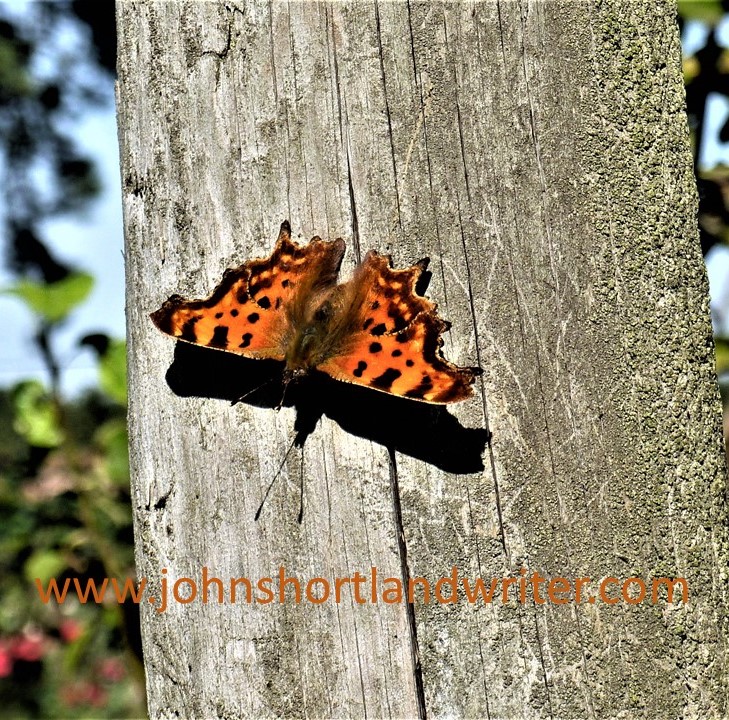
A Comma Butterfly, fresh from hibernation, warms itself in the spring sun

There are so many aspects of spring that bring joy: the intensity of colour in the chartreuse green of new shoots; the translucency of the young leaves as they filter the strengthening sunlight before it reaches the forest floor. The first bluebells; the starry golden celandines; the skylarks tumbling song all vie with the myriad of new life crying out the same positive message.

Acer pseudoplatanus watermark

The intensity of spring colour feasts the eyes after months of grey

Autumn, of course, also gives moments of pleasure with the splendour of its glowing oranges, tawny browns and fiery reds but, compared with spring, these are but fleeting and only serve as a reminder of the dark, cold days of winter to come. Spring offers not just new life and beauty but also the hope of better days – perhaps this is why Pope is misquoted. Hope springs eternal is such a positive message.

Chilterns Beechwood copyright

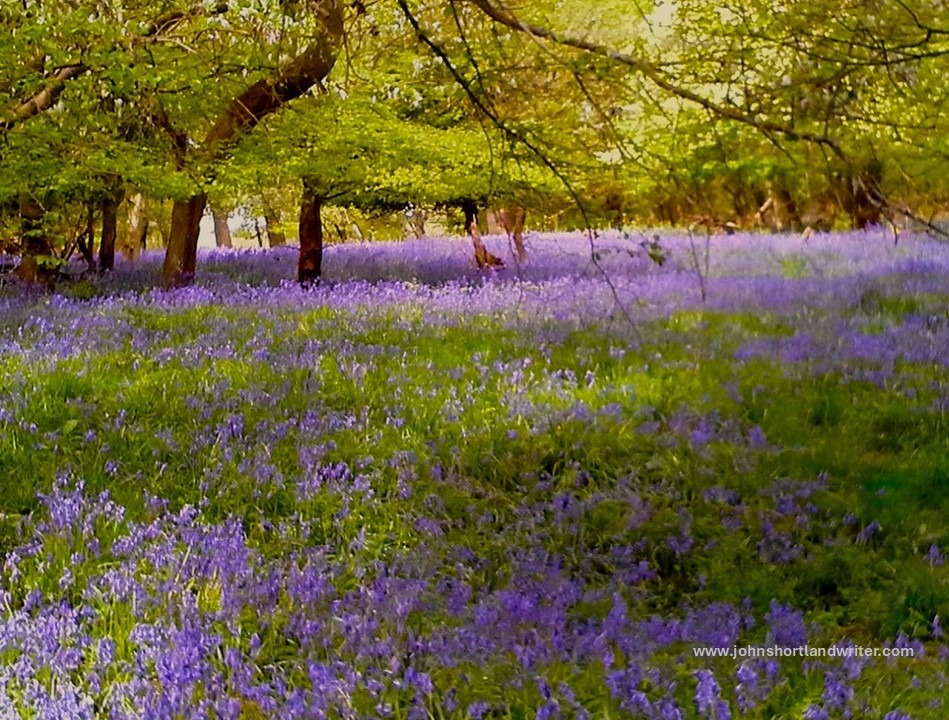
Bluebells and beech woods in spring – can there be a more joyous sight?

Richard Jefferies, the Victorian naturalist, wrote eloquently of the joy of watching spring move towards summer in his book The Life of the Fields. “…every blade of grass, each leaf, each separate floret and petal, is an inscription speaking of hope…there is so much for us yet to come, so much to be gathered, and enjoyed.”

Scarlet Pimpernel (2) copyright

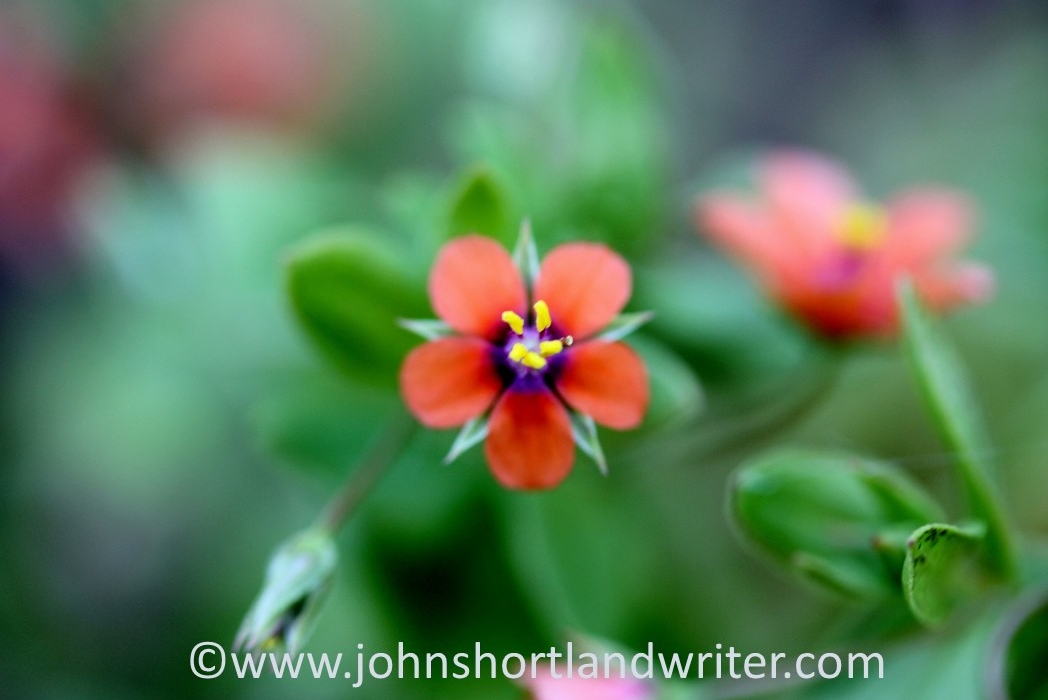
Poor-man’s-weather-glass, the scarlet pimpernel, opens its flowers on fine days

The cup of spring is never half-empty, neither is it half-full. It is always overflowing. Let us drink from it whilst we can.

ABOVE BARTON II copyright

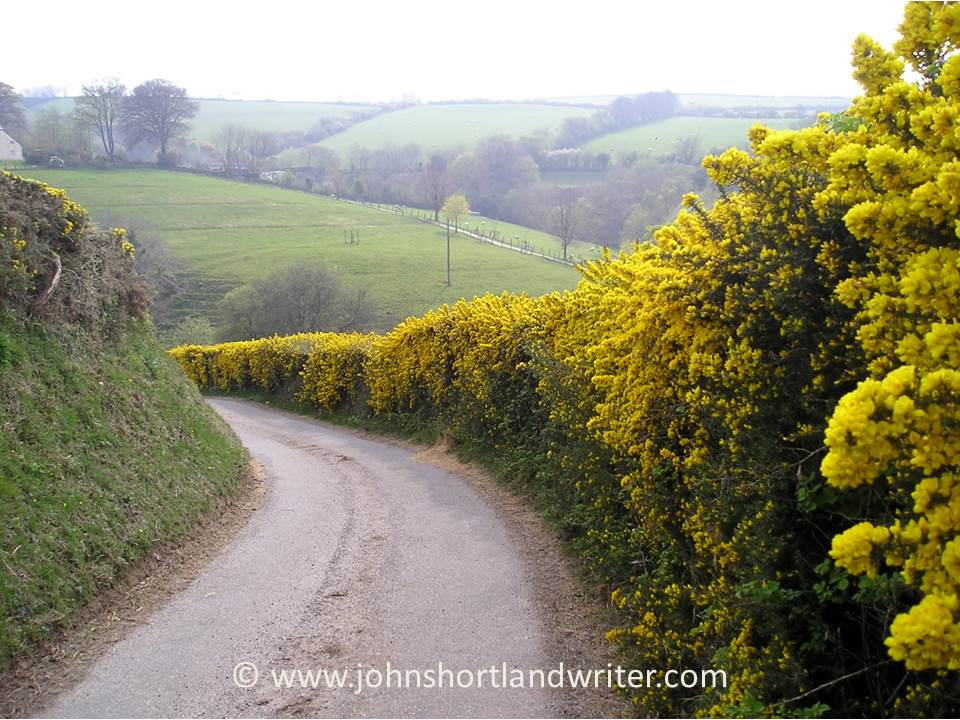
Ablaze in the spring, gorse hedges are at their very best

2014 in Review: the first six months

So another year is almost over and it certainly has been a busy one for me.  Living and working in the spectacular Cotswold countryside, a classified area of Outstanding Natural Beauty (AONB) is a great treat and one of which I never tire.  It’s also nice to go off exploring other places so 2014 found me in other parts of the UK and  Ireland too.  One of the first places I visited, however, was only twenty miles down the road but light years apart in reality!

a typical Cotswold scene   copyright

typical Cotswold countryside

Like many people that live close to tourist attractions I don’t often visit the ones on my doorstep but last January found me walking the streets of Oxford.  I hadn’t come to explore the colleges but the covered market which dates back more than two hundred years.   The history of the market and the building is fascinating and is well worth making the time to visit – especially if you like a bargain.  To read more about it and to see other photos click here.

0bab1-copyrightjjj

One of the fathers of ecological writing died tragically young and in February I matched quotations from his work to images I had taken (to see them, click here).  My favourite was noticed by the Society that bears his name and reprinted in their journal.  I felt very honoured!

7d91b-hmecopyright

Wild and rugged scenery is often best appreciated over cake and coffee and at Watersmeet in Exmoor National Park you can do just that.  Two rivers collide spectacularly besides the Victorian fishing lodge that is now owned by the National Trust and run as a café. March found me walking through beautiful scenery as well as indulging myself and the link to this remote but very accessible place is here.

c6c63-watersmeet5copyright

Dublin, the capital city of Ireland is a favourite place of mine and in April I visited the Casino Marino, one of the most impressive and perfect neo-classical buildings in Europe.  Everything about it was designed to deceive so although you only see one window on each side you actually have – well, click here to find out what plus all the other deceptions the Georgian architect managed to fit in.

Casino Marino

Planting trees is a long term project for they rarely mature during the life of the planter.  Of all the hundreds I have done in my professional life none has given me as much pleasure as this particular one.  I have waited for years for it to flower and in May it did so for the first time.  I felt quite emotional – it was a case of finding a handkerchief.  Take a look by clicking the link here.

Davidia involucrata   copyright (2)

The Cotswolds are world renowned for their ‘chocolate box’ village scenes and Lower Slaughter must be one of the contenders.  Despite its name it is a beautiful and tranquil place to visit for it has everything from crystal clear trout streams to olde-world stone cottages to a mill complete with working water wheel. If you choose the right time to explore you can have the place to yourself.  To learn more click the June link here.

2d910-lowerslaughter3copyright