Living with Nature

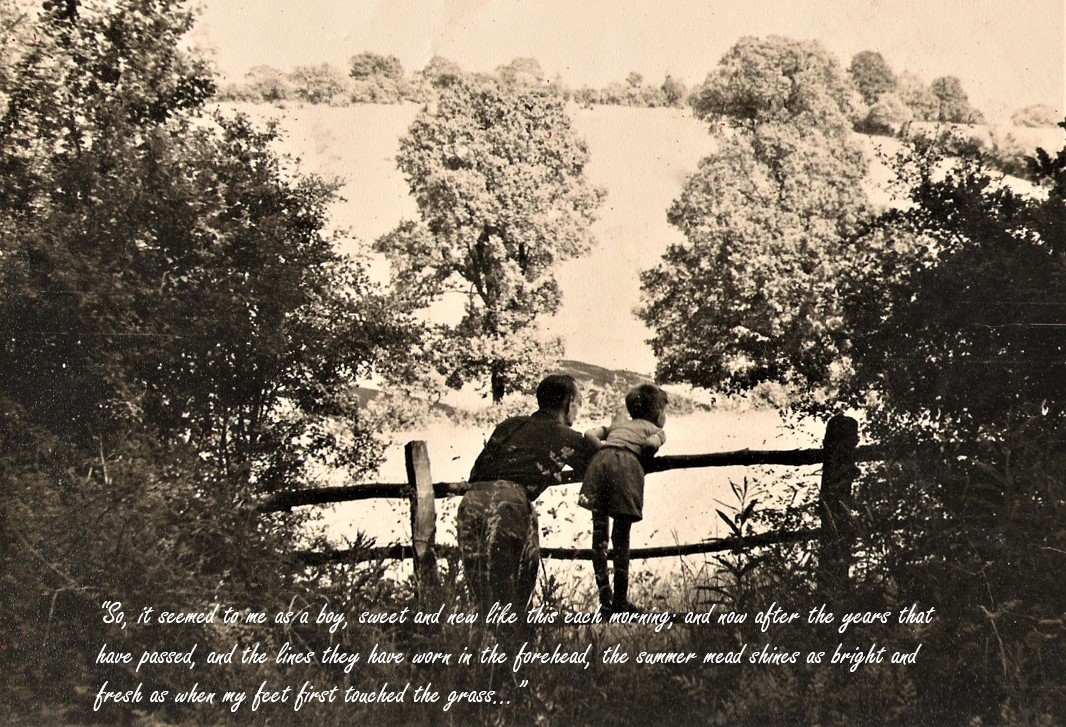
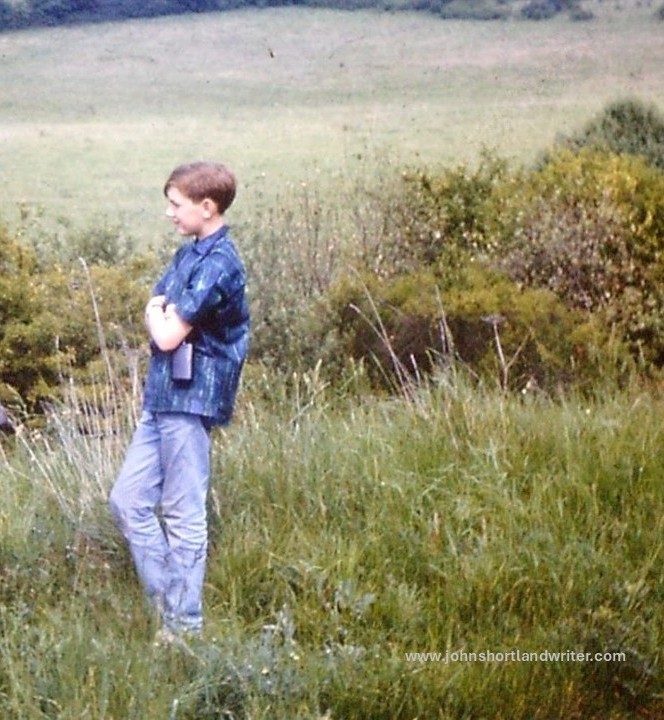
The tag line of my blog and other social media platforms describes me as ‘countryman’ and that’s how I see myself for I have lived in the countryside all my life.  One of my earliest memories is at kindergarten, aged four, and being taken on a nature walk.  There our teacher introduced us to a row of larch, the perfect tree to spark a small child’s imagination.  Soaring into the sky, straight and tall, their drooping branches almost touch the ground – “like gracious ladies curtseying to the mighty oak, the king of trees,” she told us, a description I have never forgotten.  An older cousin introduced me to butterflies and birds, collecting eggs and catching butterflies to mount on a board.  Back in the 1950s there were no concerns about such things, it was only later that the practice became frowned upon.  In my twenties I discovered the writing of Richard Jefferies, the Victorian naturalist; his quote below (and also attached to this favourite photo of myself with my father) sums up so accurately my feelings today.
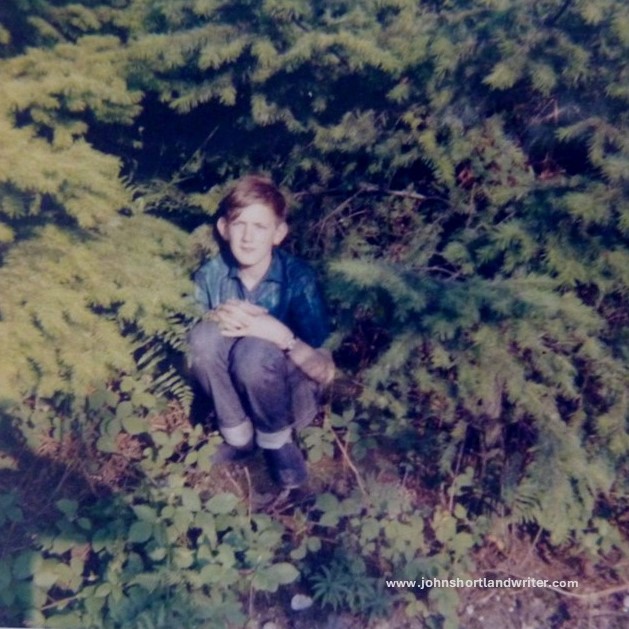
My childhood home backed first onto wheatfields and later onto a cherry orchard under-grazed by a herd of gentle Guernsey cows.  We would walk to the farm to collect pints of their rich, creamy milk and eggs.  The first home of my own looked out towards Watlington Hill, one of the high points of the Chilterns and one which I knew well from long walks and family picnics.  After a few years I moved up the hill to a home fronting a wild bracken-covered common, its scrubby hawthorn trees the home of dormice.  Behind the house were the bluebell beechwoods for which the Chilterns are so famed.  After eighteen years there, I moved fifty miles up the road to the Cotswolds and the secret valley, a very different landscape of which I have so often written and blogged about.
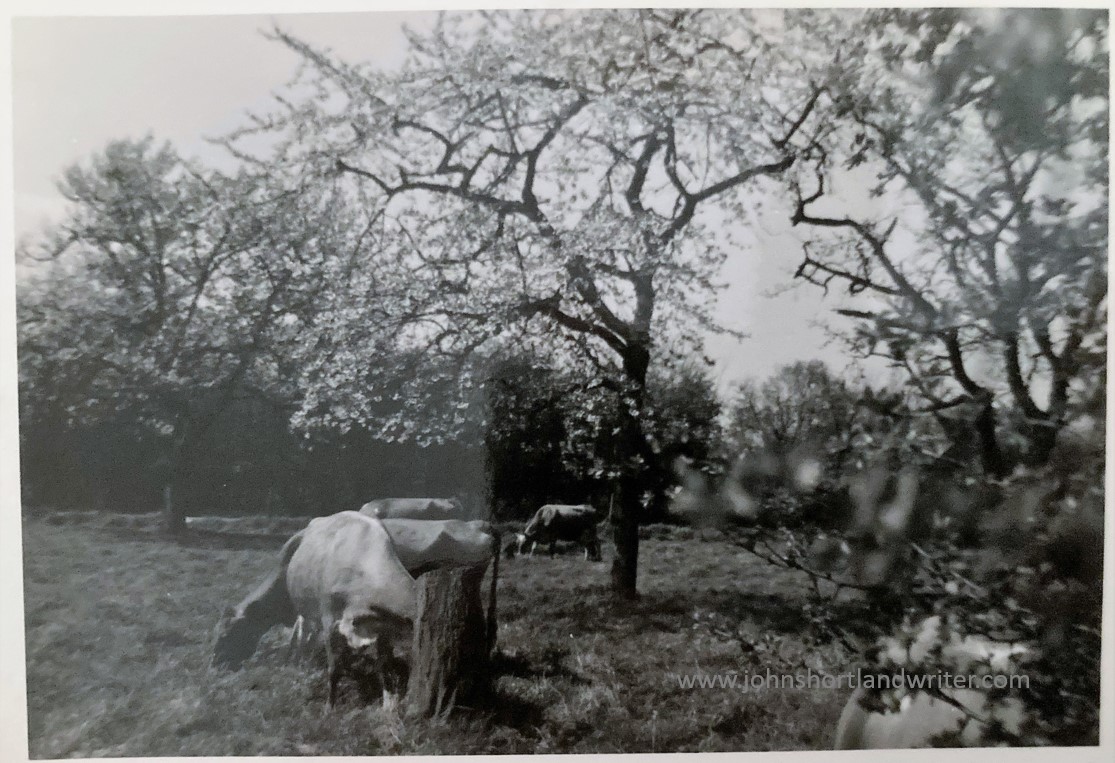
A herd of gentle cows grazed the cherry orchard behind my childhood home
John on Watlington Hill, c1965 – I was rarely without binoculars or camera in my hand
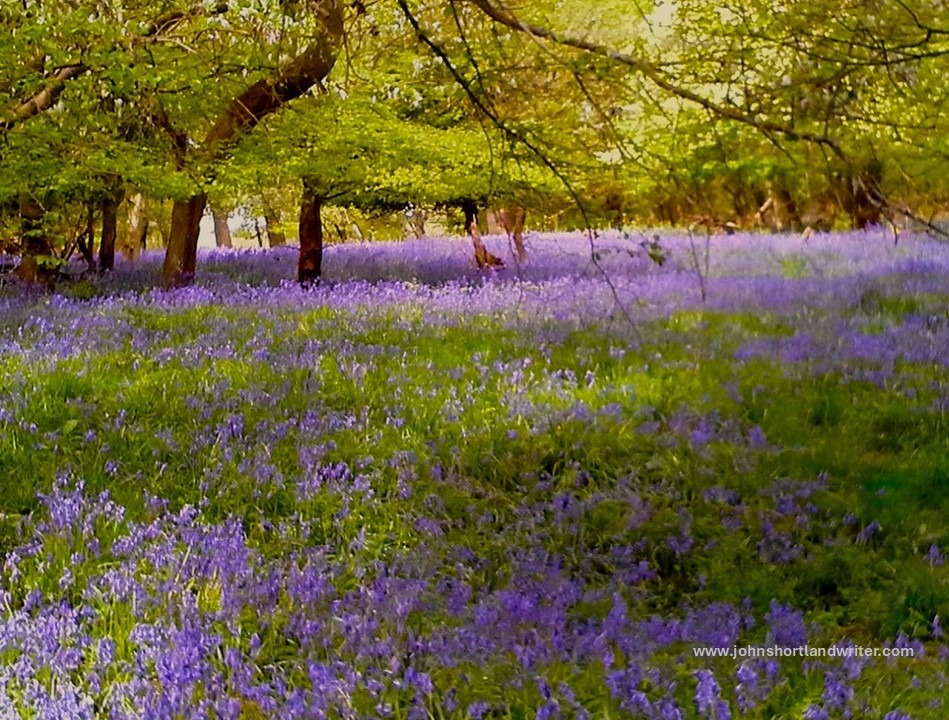
Behind my Chilterns home were bluebell woods, the glory of spring

It was here, in this tiny, hidden Cotswold valley, that my horticultural career developed beyond my wildest expectations, where I finally learned to ride a horse properly (I’d ridden badly from childhood) and where I became involved with both the Blenheim and Burghley International Horse Trials.  It was here where I was instrumental in the founding of both a County Gardens Trust and a Literary Festival, and where I received my commission to write my book, Why Can’t My Garden Look Like That?  It was here where I made new friends and became part of a new family: all of this wouldn’t have been so readily obtained without the constant support and encouragement of my long-suffering partner.  In fact, it was him seeing me writing away in a corner one day and asking what is the point if no-one ever read it, that sparked the idea of blogging regularly.
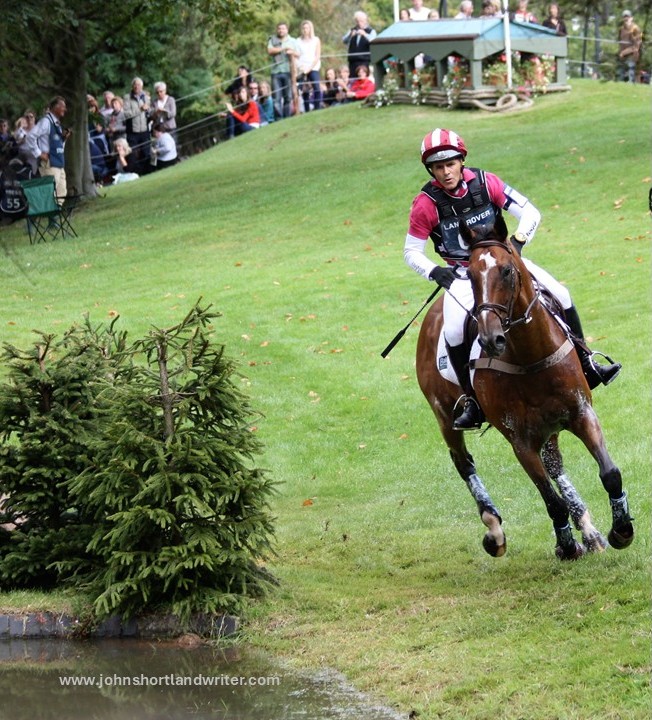

Working behind the scenes at the Burghley Horse Trials gave me a close-up view of the action
Being interviewed at the Chipping Norton Literary Festival

Considering all of the above, along with my passion for the remote and seemingly empty landscape of Exmoor, a National Park in England’s West Country, it comes as a surprise to many others – and perhaps even more to myself – that I/we shall be moving very shortly not just to a built-up area but to the very centre of a town, Cheltenham.  So after twenty-five years in the secret valley I am becoming a ‘townie’. Or, perhaps, a fish out of water?  I doubt it somehow for Cheltenham has some very special and unique qualities which I am looking forward to exploring.  It will be interesting to see how I adapt to town life and I am also looking forward to sharing my discoveries and thoughts through my writing, so watch this space…
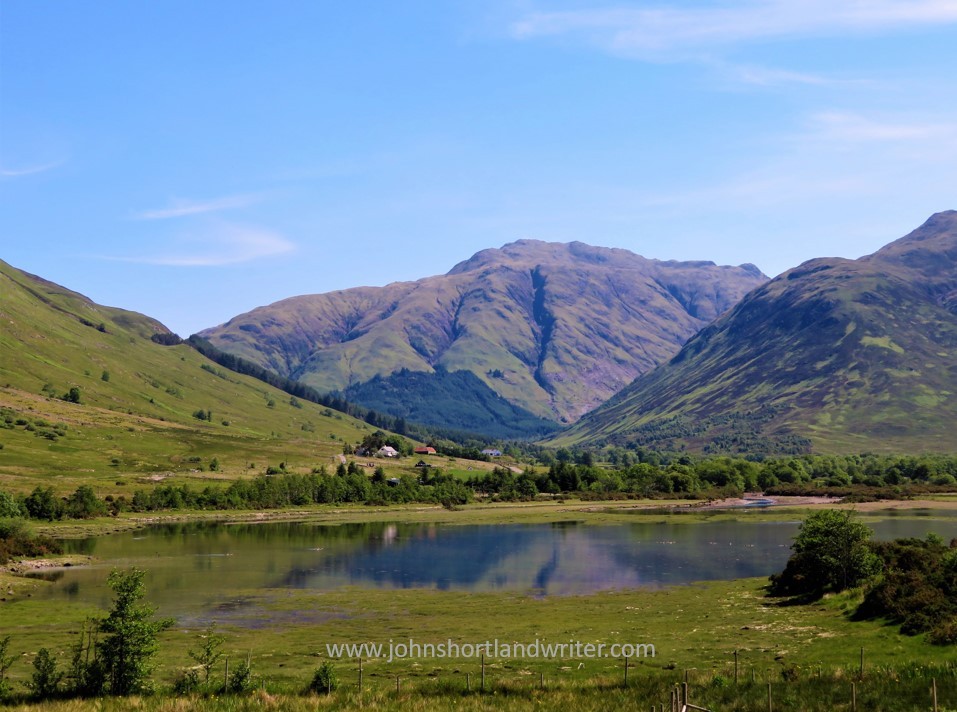
I feel so at home in remote countryside, how will I fare living in a town? This is Scotland, not Exmoor!
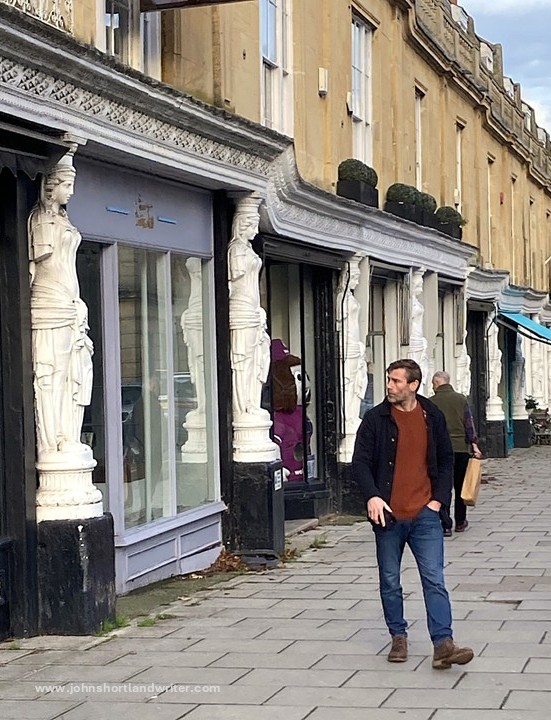
Perhaps the Caryatids – all thirty-two of them – will watch over me when living in Cheltenham

Here are a few facts that I have gleaned during my time visiting Cheltenham.  First and perhaps of the greatest importance to me, it is very leafy for it boasts more trees than people.  It also has numerous green spaces, many award winning and these along with the little river that flows through the town are home to a great array of wildlife: I have been told of brown trout, kingfishers, otters and badgers all living there and, of course, foxes I am sure will pop up everywhere. Peregrine falcons breed on the church towers and, to my surprise, seagulls can be heard with their constant mewing. Another surprise has been the numerous fountains in the town although, perhaps I shouldn’t be, for it was developed in Georgian times for its natural mineral waters, very much like the more famous city of Bath. As a result of this, Cheltenham also boasts some very splendid architecture including its own version of the famous Bath crescent. Finally, Cheltenham is considered one of the Cotswold Gateways for the hills rise steeply from the town’s edge. To the west flows the River Severn, and the Malvern Hills and the Welsh Black Mountains are not far either. There will be so much to explore and write about both of town and of country so Life in the English Cotswolds, after seventeen years, is very much set to continue. I very much hope that you will be joining me on my latest adventure.
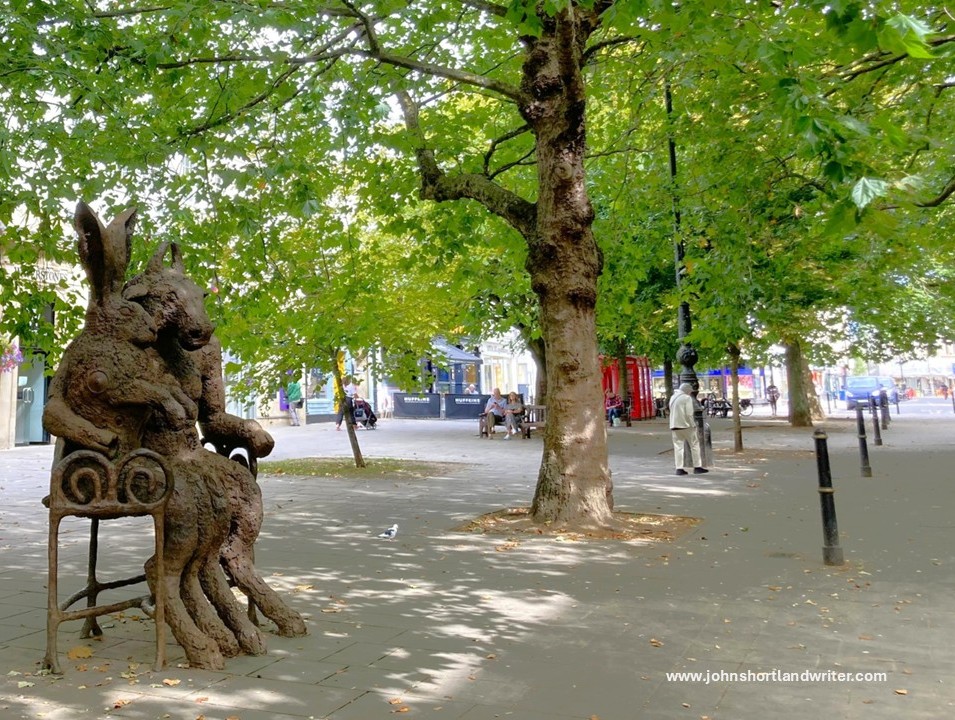
There are more trees than people in Cheltenham. This is one of the main shopping streets, Promenade
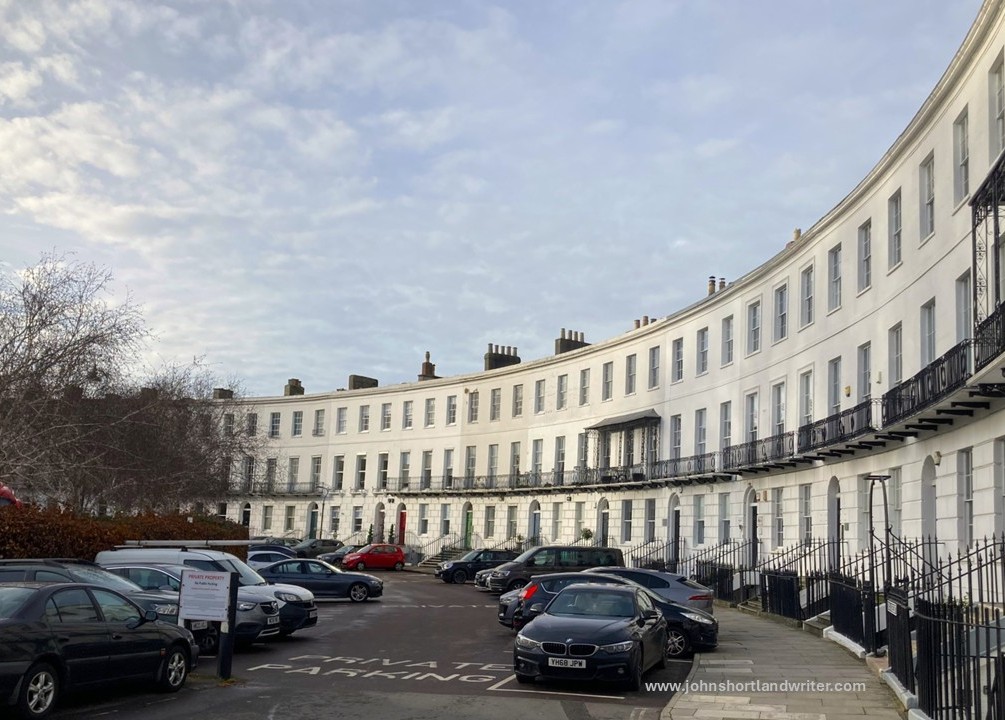
The Royal Crescent – splendid Georgian architecture lines the streets of Cheltenham

With so many open, green spaces, walks along the river that made the town so famous (more of that to come in the future), the architecture and fountains, let alone all the festivals and restaurants of which there are many, I think I’ll be fine. In the meantime, I shall remember my two favourite quotes from Richard Jefferies both written in 1885:

i) Those who love nature are the real artists

ii) So it seemed to me as a boy, sweet and new like this each morning; and now after the years that have passed, and the lines they have worn in the forehead, the summer mead shines as bright and fresh as when my foot first touched the grass…

2024: A Year in Review – part 1

As we enter the new year it’s always a good time to reflect on the past twelve months as well as to look forward to what 2025 may bring. For me, 2024 has been a busy year. I remember many years ago an ‘old boy’ telling me that when you reach the age of sixty, life is downhill all the way. I was in my thirties at the time and so believed him. I’m now in my early seventies and I can’t say that I agree with his pessimism. Funnily enough, he lived well into his nineties and, for most of that time, enjoyed rude health so he proved himself wrong too! The only way to tackle ageing, I’ve decided, is to embrace its positive aspects – no mortgage, wisdom (ha-ha!) and more time to do the things that matter to you. Of course, good health is important and maintaining balance and staying active helps no end. One of the reasons why I’ve not retired completely.

John Shortland, summer 2024

Tewkesbury, a town in Gloucestershire on the River Severn – the UK’s longest river – is just a few miles from the edge of the Cotswolds. It’s an ancient town that I have driven through dozens of times but early in the year I made the effort to actually stop and explore its narrow streets and abbey church. I hadn’t realised that when entering the church I would be staring at a suspended globe which, when standing 211 metres away from it, is the exact size and view of Planet Earth you would see if standing on the moon. When I first saw it ‘suitable’ music was being played but it was only after that had stopped that I found the exhibit strangely moving as it rotated slowly in total silence. That’s another thing I’ve noticed as I’ve grown older – how much I enjoy silence! The church is well worth visiting for it is now almost one thousand years since it was built and is one of the finest examples of early Norman architecture in Britain. Unable to visit? Then click on the link here to see lots of photos.

The abbey church looms over the ancient houses and narrow streets of Tewkesbury
Planet Earth, mysteriously beautiful

In March, we travelled north to the county of Yorkshire to watch a friend take part in the oldest horse race in the country. The Kiplingcotes Derby has been run annually since 1519. Tradition sys that if it ever stops taking place it will never happen again so all through the Covid restrictions only one horse took part! For this race, the 505th, dozens of riders took part for it is a horse race like no other: no finely maintained racecourse but a series of roads, lanes, field margins and tracks, a real test of endurance for both horse and rider. Our friend, who had never raced before was taking part to raise money in support of the local hospice. She reached the finishing post in good time and raised over ten thousand pounds in memory of a close friend. The race has one other completely bizarre quirk which makes it unique in the world of horse racing – to find out what that is you’ll need to click on this link here!

The oldest, continuously-run horse race in the UK
Safely past the winning post!

Later, in early summer we returned to Yorkshire for a week’s holiday spent in the pretty village of Austwick. We had planned to spend our time walking for it is excellent hiking country. However, my partner was nursing a broken foot and, later, during a hill walk on my own there, I hurt my knee badly so we were both hobbling about instead (what was I saying about staying active?!) There is always a positive outcome to everything, I find, and so we explored by car instead where we discovered the Courtyard Dairy. To misquote Paul Whitehouse, “if you like cheese, you’ll like these” for we’d stumbled across one of the top, award-winning artisan cheese makers in the country. With a restaurant, small museum, ice-cream and wine shops as well as a huge selection of cheeses, we were in our element. For lots of photos of the trip – and not just of blocks of cheese, click here.

The Courtyard Dairy – one of England’s finest artisan cheese shops
There are beautiful walks around the Yorkshire village of Austwick

I have been very fortunate in not just living in a beautiful part of the country but also being able to make my living from being in the midst of it. However, that hasn’t always been the case for before I embarked on my horticultural career I spent twenty years in the world of retail fashions. When I left school I spent some months on a sheep farm on Exmoor – the remote, hill country, now a National Park, in the West Country. That short time farming changed my life for I met some wonderful and inspirational people there who left me with a yearning for the outdoor life, However, I was dragged away by my parents to work in the small department store which had been central to my family for the best part of a hundred years. Fortunately, I had a happy time there but the desire to be spending my days outdoors never left me. This spring it was thirty years since I sold the business to follow my dream and so it seemed a good time to reflect on those retailing years.

How the family store began in 1904
The family store in 1994 when it was sold

A few months later the blog post (link here) had developed into a full-blown illustrated talk to over seventy people followed by press interviews and a printed history of the store which had been started by my great-grandfather. I am delighted that the story of the family’s endeavour has now been recorded for posterity. By complete coincidence, I was also contacted by Exmoor Magazine and my memories of farming at Brendon Barton have been included in an article on Dick and Lorna French who were the couple who welcomed me into their lives – and changing mine by doing so.

Recorded for posterity – the history of my family’s department store

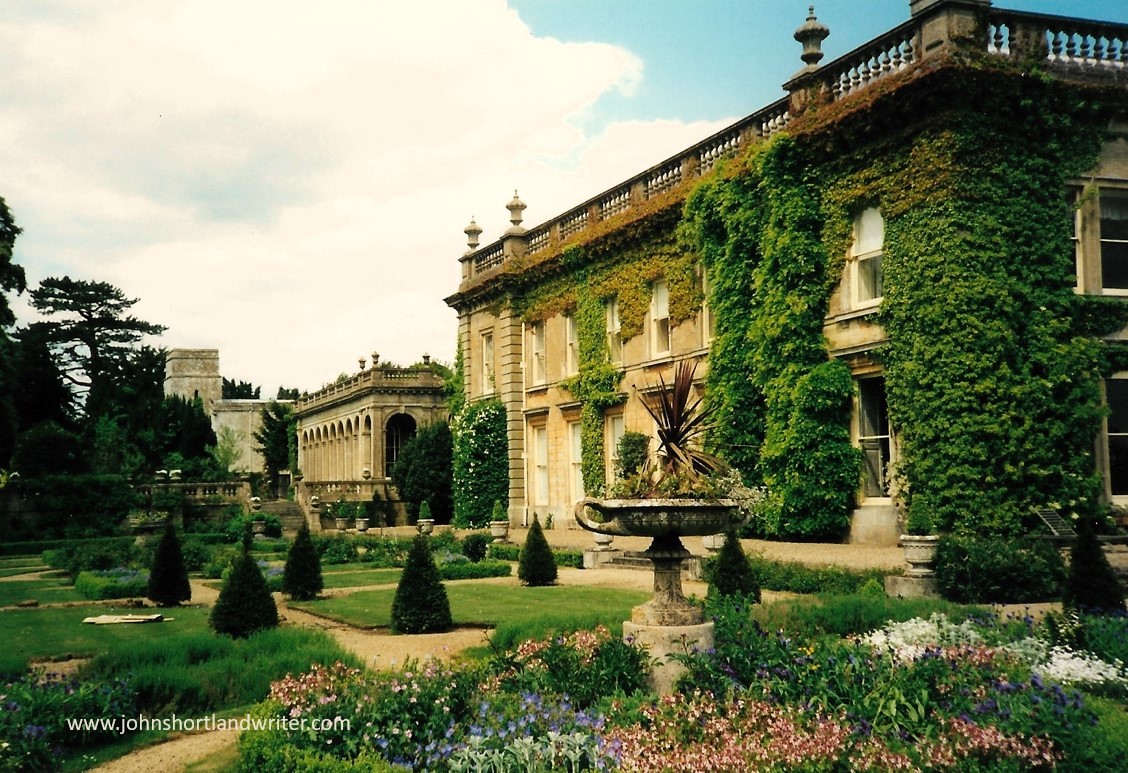
At the age of 42 I took myself off to study landscape and estate management for two years at agricultural college. It was a huge gamble and one that fortunately came off for I found employment as Head Gardener to the European Youth Parliament, an educational charity that brought teenagers from all over Europe to debate world affairs. With some Polish blood in me I liked the idea of being part of the organisation. Next, and still in England, I spent some happy years working for a delightful Swedish family – even after my role as Head Gardener had ended I maintained contact with them as Consultant overseeing projects such as the creation of a lake and an arboretum. My next move was to the Cotswolds to manage an historic garden, Kiddington Hall, designed by the architect who had created the Houses of Parliament. It was after that, that I decided to go freelance which culminated in the career in designing and creating gardens as well as the commission to write the gardening book.

The historic gardens at Kiddington Hall

Little did I think, when I began college that my career would include a stint at the Chelsea Flower Show, Channel 4 Television, creating a new literary festival and a study tour of Hungary. My latest – and final – garden project has been the most exciting to date. How fortunate have I been?! As before, the press picked up on the thirty year career change and a double-page spread in the Bucks Free Press newspaper followed. To read more about the gardens I’ve created, or just to enjoy the photos, click on the link here.

The newspaper article

Related links/websites

Tewkesbury Abbey Church
Gaia
The Courtyard Dairy, Settle, Yorkshire
Yorkshire Dales National Park
Exmoor Magazine
Exmoor National Park
John Shortland
Berkshire College of Agriculture
European Youth Parliament

Guiting Power, a Cotswold village

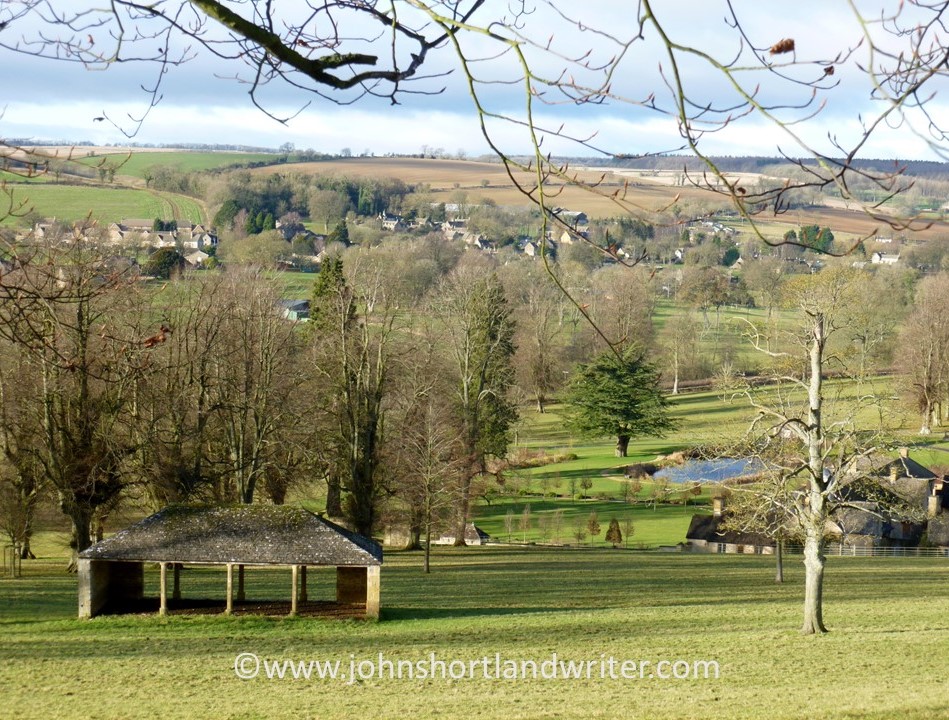
The Cotswolds (Cotswold Hills) are fortunate in having very many attractive stone built villages, protected by its AONB (Area of Outstanding Natural Beauty) designation.  One such place, and a little off the beaten track so not as well visited as some of its more famous neighbours, is Guiting Power.

guiting-power-2-copyright

A visit during the week, when most others are working, is like stepping back to a time when life was much slower and with fewer cars and people.  The village has a population of 300 and also lies on the Wardens’ Way, a fourteen mile footpath, but even during the busiest of times it is hardly bustling.  Linking with other public paths it is possible to make a circular walk centred on the village.

guiting-power-3-copyright

As well as for the building of modest cottages, the soft Cotswold stone is used everywhere – to enclose fields, to create stiles, churches, barns, pubs and the grand houses of the wealthy.

guiting-power-stone-stile-copyrightguiting-power-cotswold-barn-copyright

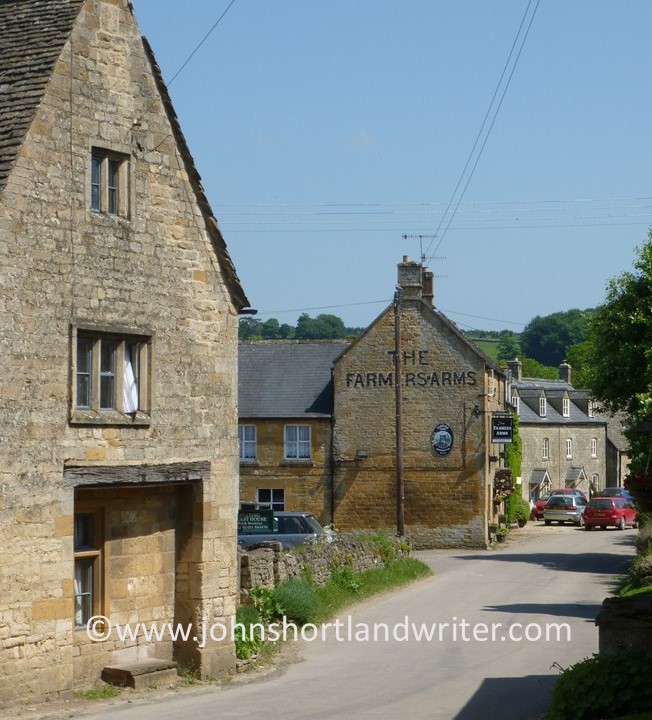
If long country walks aren’t your thing, there’s still plenty of things to do and see.  The church dates from the twelfth century and has the foundations of an earlier one nearby.  Sudeley Castle, near Winchcombe is just a few miles away.  Within the village, The Farmer’s Arms pub offers traditional beers and skittles; just outside the village The Hollow Bottom is a pub popular with the horse racing fraternity.   The Old Post Office, as well as continuing in its traditional role is also now a thriving coffee shop  For almost fifty years the village has hosted an annual music festival.  Adam Henson’s Cotswold Farm Park is also close by.
guiting-power-5-copyrightguiting-power-copyright

Useful links:
How to get there

The Wardens’ Way Footpath

The Hollow Bottom Pub with rooms

The Old Post Office

Guiting Music Festival

Sudeley Castle

Adam Henson’s Cotswold Farm Park