Spring Is Around The Corner!

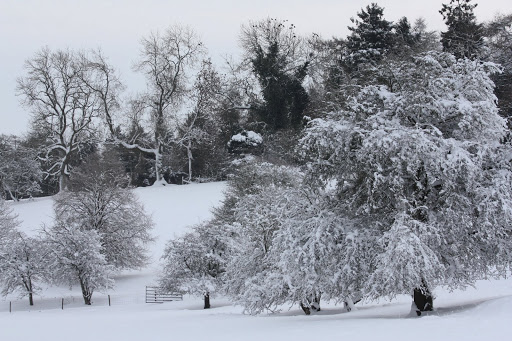
The first signs of spring are always welcome and especially so after the winter that we have had this time. Frosts arrived early in the season, followed by snow that lay both deep and long, which is unusual for the south of England.
.

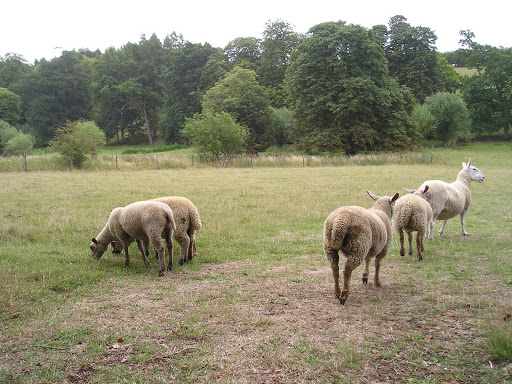
Winter in the secret valley: sheep wait patiently for food by our little winding river
.

The Cotswolds are known, however, for their colder and longer winters compared to the rest of the region. Here, about as far inland as you can be on a small island, we have little benefit from the warming effect of the sea and we are also hill country. Elsewhere may be showing signs of spring but in the secret valley these are still hard to find – an elder twig just breaking into leaf is the only green that I can find so far.

.

.

The aconite wood, ‘though, is a sight to behold and has been flowering for a couple of weeks now. How many plants can there be? Surely, tens of thousands. When and why were they planted here, for they are not native to this country. An old country chap told me it used to be called Summer House Woods but there is no sign of a building here and the ‘big’ house that owns the land is some distance away.

.

.

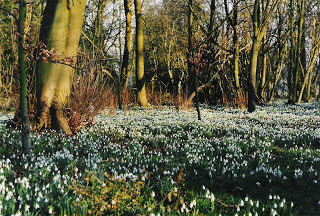
This snowdrop wood was planted by nuns over a hundred and fifty years ago and is attached to my ‘reincarnation’ house. Snowdrop woods, unlike aconite ones, are not uncommon but never fail to impress. Even a small group in a garden are eagerly awaited and we have plenty here where they spill out beyond the garden boundary and peep out from amongst the hedgerow that borders the lane.

.
.

The Cornus mas is also flowering now. It grows in our garden against the house wall, facing east. Despite this, it perfoms regularly and is easy to keep pruned to shape. This one, is the variegated leaf variety which is quite slow growing compared to the standard type and so is ideal as a wall shrub. In late summer it carries edible scarlet berries, hence its common name of Cornelian Cherry.

..

Also in the garden, I found a single, wild primrose, sheltered by the old garden roller, in flower. Later, the garden, and especially the lawn, will be covered with their flowers. Daffodils, although beginning to flower elsewhere will be a few more weeks before they do up here. But even in the Cotwolds they are showing colour in the warmth of our towns – which makes shopping just a little bit more enjoyable.

. .

.

When in town, I was surprised to find that oldest of symbols of spring – the green man. He was standing tall and lofty down a back street unnoticed and forgotten. Closer examination revealed that he was an old column and ball, the remaining one of a pair of stone entrance pillars from some long demolished house. Now covered in ivy, I wondered why it had been left and what was its history.
.

.

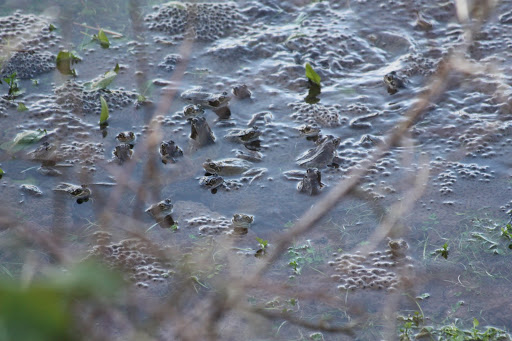
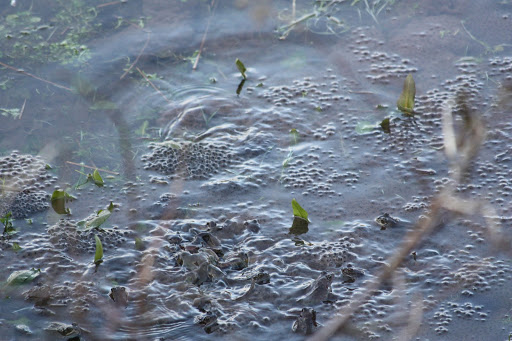
Further afield still, I came across a small pond in a field. The croaking of hundreds of frogs drew my attention to it and in the photo below there are over forty heads poking out above the water. As I approached, sensing danger, they fought one another to get below the surface, making the water look as if it was a boiling cauldron. A few days later, when I returned, all was quiet and the surface of the water completely covered in frogspawn. Like the daffodils, it will be some weeks before our secret valley frogs start marching across the lane and entering the house in their quest to reach the lake below our garden.

. . . .
.

.

.

Add to Technorati Favorites

Footprints of History

It is a busy time in the garden as the weather at the moment is quite mild and dry. This is an unusual combination for an English winter as warmer winds that come from the Atlantic Ocean also bring rain. It is the bitingly cold weather that comes from Eastern Europe or sweeps down from the Arctic that often brings dryness (and, if lucky, sunshine) with it.
.

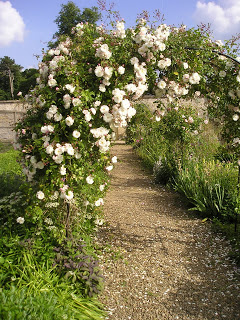
This photo is here because of the gravel path but the roses do offer a hope of things to come!
.
So I have been industrious with my digging, my pruning and my raking. And it is especially with the raking of the gravel paths that I often come across the footprints of history. No more than 10mm across, for they will have been graded along with the stones from whence they came, I find them quite regularly – although you have to train your eye to spot them. These are, I think, Tetrarhynchia, a fossil Brachiopod dating from the Jurassic period 200 million years ago.
...
But how did a marine bivalve come to be here high up in the Cotswolds, for the quarry from where the stone came from is several hundred feet above sea level and as far inland as it is possible to be in the British Isles? Most of southern Britain at that time was a vast, warm and shallow sea which, as it gradually drained and compressed created the limestone rocks and shales that give the Cotswolds their beautiful pale coloured stone that many of the local properties are built of.
..
Over the millenia , through movement of the Earth’s plates, the surface was pushed upwards to form the chain of limestone hills that is renowned for it’s beauty and, of which, the secret valley, is a tiny – but very special – part of.
.
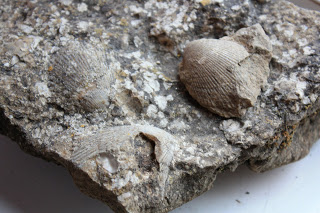
Sometimes, when I am digging I come across other fossils and, because I am working on the soil, these are much larger than our gravel finds. Usually these are fragments but my best find to date has to be this piece of rock with three Venericor huddled together. These are relatively recent fossils, from the Palaeogene period, just a mere 65 million years old!
.

.

Also quite commonly found in the region are fossilised Sea Urchins which are so unchanged from those today. These also date from around the Jurassic period. My specimens aren’t especially good ones for the best have all their markings still in place. If you look carefully, there is a sign of one of the five ribs that most sea urchins have. Locally these fossils, which are quite heavy, are called ‘Shepherd’s Crowns’. They make good paperweights!
.

.

.

I only have ever found one ammonite and then, only a small chunk of it. However, this was the very first fossil I ever found when I was still a child, so is my ‘very special’ one. At the time I had no idea what it was but it is part of the coiled tube that forms the outer shell. The ‘shadow’ of its ribs can be seen at one end. It would have lived about 200 million years ago.

. .

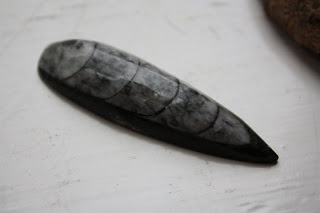
This small fossil was given to me as a gift and has been highly polished. It is a Belemnite, a type of squid that lived about 150 million years ago. It came from the Atlas Mountais in northern Africa. Although I love its colouring and smoothness it doesn’t give quite the same thrill and sense of awe that finding your own does: how extraordinary to be able to handle something that is of such an incredible age.

.

.
Depending on my mood, finding fossils gives me hope for the planet’s future or fills me with despair at what mankind is doing to it. Fortunately, by nature, I am an optimistic person so I like to think that Earth may continue even if the human race ends up as dead as the dinosaurs. Let’s hope it continues for it is a very lovely place!
.
.
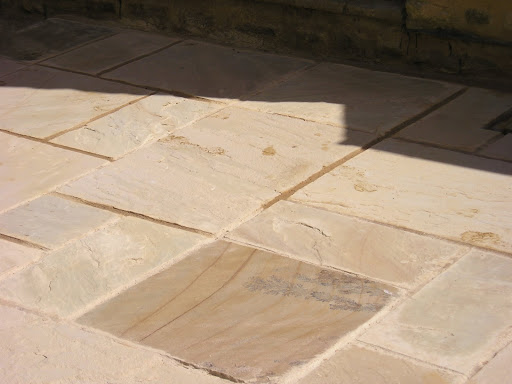
Indian sandstone paving slabs are so popular at the moment, partly because they look so good for their money. I have reservations about using them for the quality can be very variable and will they stand up to severe cold and frost? We might well know the answer after this winter. I also feel uncomfortable about the labour and air miles involved although I don’t know enough about it to make a qualified judgement.
.
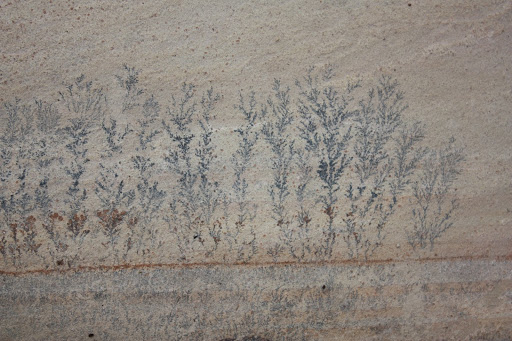
Fetching a premium and on everyone’s shopping list, are the slabs sold at a premium as ‘fossilised’. However, they are not true fossils but are created by crystals of manganes oxide growing in cracks of the limestone. ‘Pseudofossils’ they may be but they do look like the real thing. The fossil equivalent of ‘Fool’s Gold’, perhaps?
.
.
.
.
.
.
Add to Technorati Favorites

A New Year

The snow has all but gone from the secret valley, thanks to a sudden thaw, after the temperature rose from -15 centigrade to +6 centigrade. Some still clings to the gullies at the sides of the fields and on the colder banks of the hillside but elsewhere, in its place, is the battered appearance of a landscape after attack.
.

.
Last night, New Year’s Eve, was seen out at our neighbours and good friends 3/4 mile up the road, at the farmhouse that is the centre of our farming life here. Although a cold night it was good to be able to walk there effortlessly (after ploughing our way through snow for several weeks or sliding around in the car). As the chimes of Big Ben in London struck twelve o’clock we all sang ‘Auld Langs Syne’ to the traditional sound of a lone piper – in this case lone because there was only one Scotsman present and he could play the bagpipes. And a couple of hours later I stepped out into the cold, still air to walk back down the hill to home.
.
.
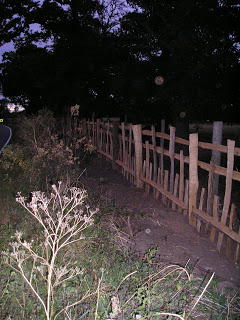
The secret valley at night – and some nights especially so – is a silent and dark place. Never menacing, it is a good time to reflect on times passed and to breathe in the air which seems to take on a different quality to daytime. Walking down the lane, with bands of snow periodically reminding me to watch my feet, I was aware that there were others on the move too. An alarmed rabbit shot across the road in front of me, diving into the hedge, it’s path being highlighted not by moonlight, for there was none, but by the sounds of leaves rustling and twigs breaking beneath it. The fox was far more discreet, the only witness to its passing, its distinctive musky scent.
. .
Our little river, now thawed out from the frozen state that it had been in gurgled and splashed its way into the distance. It had seemed odd not to be able to hear it when it had its lid of ice and snow for even in the hardest winters past it had not been known to freeze over.
.

.
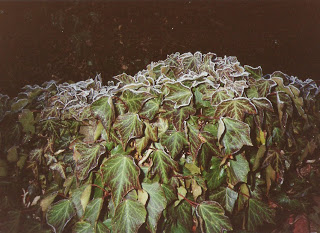
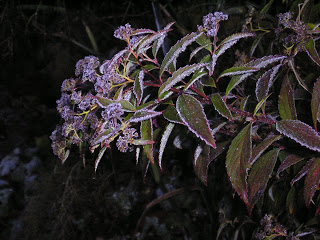
However, a touch of frost had given a magical dusting to the plants and fruits that had survived the onslaught of our early winter, for snow is rare at this time of year. January and February can be snowy and often we have none at all so who knows what the start of 2011 will bring?
.

.
.
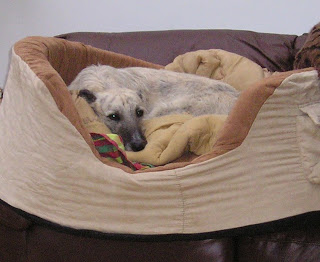
Approaching home, the reassuring smell of wood smoke drifted from the chimneys towards me. Warmth at last! And, as always, She-dog, our best companion, was there to greet us but not before raising a bleary eye from her bed, as if to say “what are you doing out at this time of day and at your age?”.
.

.

And so to bed tired but with a warm, contented feeling both inside and outside. To live in the secret valley, isolated but surrounded by beauty and good friends, is such a privelege. Who knows what 2011 may bring but if the first days sunrise is to go by, it should be a good one!

. .

Happy New Year to you all…..
.

.

.

Add to Technorati Favorites

Christmas Greetings

.
Christmas Greetings
.
from the
.
(very snowy)
.
Secret Valley
.

For the first time for very many years we have a white Christmas

.

Thank you for your continued support and interest – keep the comments flowing, I’m always interested to hear your views!

.

May you all have a very happy holiday

Johnson

Cotswold Hills, England

Add to Technorati Favorites

The North Wind Doth Blow…..

The other day I recalled one of the nursery rhymes that my mother used to sing to me when I was a small child sitting on her lap. Goodness knows why, after so very many years, but no sooner had I done so than the words became true:
.
“The north wind doth blow and we shall have snow and what will the robin do then, poor thing?”
.
Well, the answer is puff up its feathers and stand close to the bird feeding table until it gets fed!

.

.
It isn’t just the robin that demands food in these difficult conditions and there has been a constant stream of activity back and forth to the feeders. The tit family are always welcome – we get many different sorts here: blue, great, coal, willow and long-tailed.
.
.
It is often stated that British birds are rather dull compared to the exotica of warmer climes. We do have our share of ‘little brown jobs’ that aren’t too easy to identify but what can be more spectacular than the Greater Spotted Woodpecker? With it’s red cap and rump and black and white markings, it is a beautiful looking bird. We also have its diminutive cousin, the Lesser Spotted, but these tend to stay out of the garden and feed amongst the willows by the river.
.
.

.

The only other resident British woodpecker, the Green, never comes to the bird table or feeders but it does have a store of food available in the electricty pole by the house. Normally quite shy, most sightings of it are of it flying rapidly away in the typical undulating movement that is common to all of the woodpeckers – a useful identification aid. Country folk (I include myself here) always call the Green Woodpecker by its traditional name of Yaffle.
.

.

Often cited as the commonest Brititsh bird, the Chaffinch is also another colourful bird. Or, at least, the male is. In the photos below the rich salmon pink breast feathers are clearly visible, as are the wing markings, common to both sexes and making the rather dull female easy to identify. Bramblings come to our bird table as well. A less common winter visitor, they are similar to the male Chaffinch; however, the colour is richer and carried by both the sexes.
. .

.
The Thrush family are also well represented: here a cock Blackbird waits for food. its yellow bill contrasting with its black plumage (the hens are chocolate brown but still have a yellowish bill). In many birds, the Magpie for example, black becomes iridescent green when seen in certain lights. The Blackbird is jet black and all the more handsome for it.
.
.
Only coming into the garden to raid the shrubs of berries or fruit from trees, the winter visiting Redwings and Fieldfares (close relatives of the Blackbird) feed in large flocks throughout the secret valley. I managed to catch this photo of a Fieldfare eating our apples before it flew off.
.

.

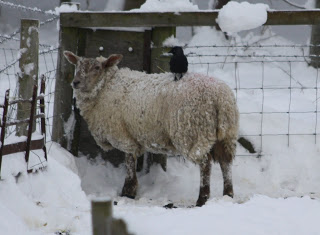
The sheep almost disappeared in the blizzard yesterday. Today the weather is calmer and this crow is taking advantage of searching for food in one of the ewe’s fleeces.
.

. .

The snow – which is very unusual around here before Christmas – looks to hang around for a while, with more forecast next week. I cannot remember the last time we had one but, perhaps, a white Christmas may be a reality rather than just a picture on a card. If so, I shall have to write a post quoting Bing Crosby…..

.

.
.
Add to Technorati Favorites

Life Behind Baas: A Story of Sheep Betrayal

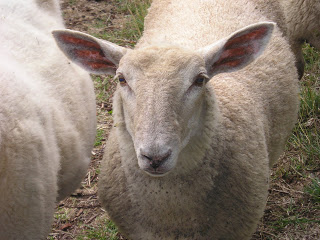
I love sheep! There is something about them. They are supposed to be stupid but I’ve known some clever ones in my time (like I’ve known lots of people who claim to be clever …..). They have exquisite faces, full of charm with a look in their eyes that just beg for a little more human understanding.
.

.
What more can I say about the joys of building a relationship with a sheep or, preferably, many sheep? They smell nice, especially when wet. They’re cuddly (when dry) once they’ve allowed you to become more intimate with them, an especial priviledge.
.
They have lovely voices – varying in tone from deep bass through alto to soprano – and there’s usually quite a few castratos among them too. Each morning, as soon as I step outside into the garden, I am greeted by uplifted heads and welcoming bleats, a sort of dawn chorus, an ovine welcome to another day. And as I enter their field to feed the bantams who are kept there, they gather around me pushing and jostling to have their noses scratched, their ears rubbed and to tell me the latest gossip and goings-on in their sheepy world.
.

.
Now there is one special reason that I haven’t mentioned yet about why I’m so fond of sheep: they taste great, well roasted with lashings of gravy and mint sauce. And that is the quandry. For the reason that these are here in the loveliest field in the secret valley is not for favouritism (as they think) – it is for the pot. And as they try to eat the poultry food I explain that they have no need for such processed feed, for they have the sweetest grass and the freshest river water, when replete they can rest in the shade of the finest trees, the secret valley can offer.
.

.
As if to make me feel even more gulity, they wander off to the empty, upturned feeders. Somehow, even the fattest ones can get inside them. For them, life behind bars is nothing more than a defiant gesture: they little know that judgement has been passed and they have been sentenced to death.
.
..
.
.

To end on an upbeat note, the tups have been put in with the stock ewes this week. Soon enough, the new season’s lambs will be born – something we always look forward too.
.
.
Add to Technorati Favorites

First Signs of Autumn

To quote from the Keats poem ‘To Autumn’, is rather cliched I know but it really is becoming the “season of mists and mellow fruitfulness” here in the secret valley. I have to admit until I decided upon the theme for this post that, although I had heard this line so many times before, I’d never read the poem. I suspect a large number of people would admit the same so I have included it here, in full, at the end.
.
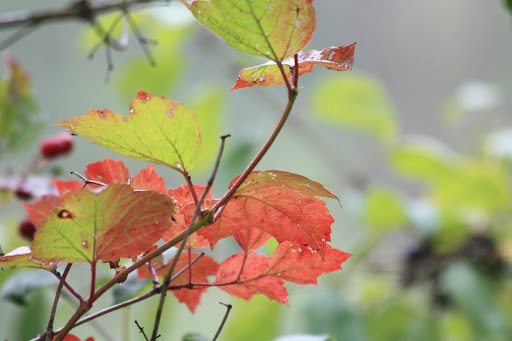
Almost imperceptably, the leaves have started to turn colour although they are still more green than yellow, orange or red. The most noticeable sign of the new season has been the berries and other fruits. Despite the heavy, late spring frosts we had, it seems to be a bumper crop this year although I have heard that commercial crops of apples are down by 30%.
..

The river a few hundred yards downstream from our little stone cottage broadens to become a small lake, created 100 years ago to attract duck and fish for the pot. Invisible throughout the summer months because of the leafy shrubs that shield it, it gradually comes into view as the foliage withers and falls and the water levels rise with the winter rain. Then it gives us what one of our friends describes as “the best view from any bath(wash)room in England” – and it is! What can be more decadent than lying in the bath with a glass of wine in hand, watching the wild geese and swans flying in from who knows where, for we rarely see them during the summer months?
.
.

And it is the river and lake that tends to give us the mists on cool mornings. There is such a subtle difference between these mists and the fogs that are much more widespread across the country. We can recognise the difference instantly but how do we describe it in meaningful words? Perhaps mists drift to rise and fall as strands of it are caught on the slightest breeze, an uplifting experience for the soul, whereas fogs sit heavily both on the ground and on our spirits?
.
.

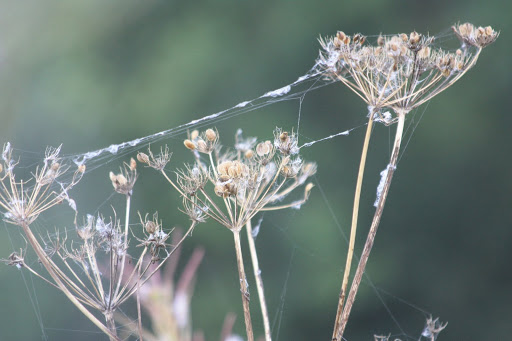
A few days ago, on such a misty morning, it was cool enough for a heavy dew to form transforming the scenery with its silver frosting. Cobwebs hung from every available perch: strands of wire, branches and twigs, even the dying flower stems of the wild plants were draped with them. The scene was of silence and stillness, no bird sang and even the brook seemed to gurgle and babble more quietly than normal, as if reluctant to wake the slumbering countryside.
.
.

.

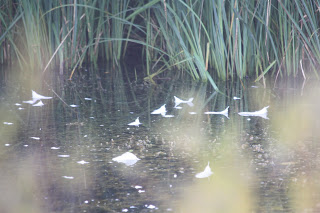
As if to confirm the silence and emptiness of the landscape, even the new seasons swan, that I had admired on the lake the day before, had gone. Heavily in moult, all there was to confirm its arrival were white feathers slowly drifting on the surface saying “Hush! Be still. All is calm”.
.

.

To Autumn
.
Season of mists and mellow fruitfulness
Close bosom-friend of the maturing sun
Conspiring with him how to load and bless
With fruit the vines that round the thatch-eaves run;
To bend with apples the moss’d cottage-trees,
And fill all fruit with ripeness to the core;
To swell the gourd, and plump the hazel shells
With a sweet kernal; to set budding more,
And still more, later flowers for the bees,
Until they think warm days will never cease.
For Summer has o’er-brimm’d their clammy cells.
.
Who hath not seen thee oft amid thy store?
Sometimes whoever seeks abroad may find
Thee sitting careless on a granary floor,
Thy hair soft-lifted by the winnowing wind;
Or on a half-reap’d furrow sound asleep,
Drows’d with the fume of poppies, while thy hook
Spares the next swath and all its twined flowers:
And sometimes like a gleaner thou dost keep
Steady thy laden head across a brook
Or by a cider-press, with patient look,
Thou watchest the last oozings hours by hours.
.
Where are the songs of Spring? Ay, where are they?
Think not of them, thou hast thy music too –
While barred clouds bloom the soft-dying day,
And touch the stubble-plains with rosy hue;
Then in a wailful choir the small gnats mourn
Among the river sallows, borne aloft
Or sinking as the light wind lives or dies;
And full-grown lambs loud bleat from hilly bourn;
Hedge-crickets sing; and now with treble soft
The red-breast whistles from a garden-croft;
And gathering swallows twitter in the skies.
.
.
Add to Technorati Favorites

A Walk Along the River Otter: Part 2

The lower reaches of the river Otter turn from fresh water to brackish as the river joins the sea. At low tide, mud and salt flats are exposed creating a safe habitat for the hundreds of seabirds and waders that feed, breed or rest on migration there. This area, including its wildlife, I have written about earlier – it can be found by clicking here.
.

This post describes a walk a little further upstream where the river flows through fertile fields of wheat and where cattle and sheep graze in lush riverside meadows.
.

.

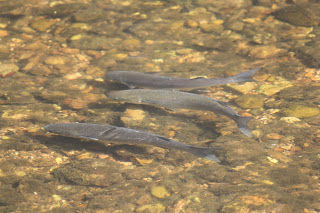
The river – which like our river in the secret valley – is really little more than a stream (or ‘brook’ as we say where I originate from – English dialect is another fascinating subject that I might write about one day!). One moment fast flowing, the next slow, but always crystal clear, the view is one of steep banks and stony bottom. It is here, in the shallower water, that the trout – huge in comparison with our tiny ones at home – sway in the current, waiting for food to be swept down towards them and their ever open mouths. At one place where the river runs across a steeply shelved weir, a salmon run has been built: a series of steps for the salmon to leap to reach the upper levels of the river for spawning after their long migration. Whether they still do, I do not know, for salmon stocks in England are dwindling fast.
.

.
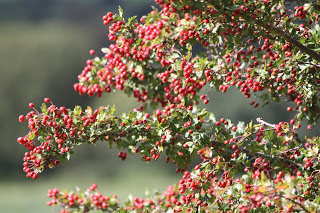
Wood and water, just nothing but water and wood, for the crowds of visitors that explore the river close to the beach and form long queues at the ice cream stalls have all been left far behind. Now the sights, sounds and smells are only those of nature on this glorious late summer’s day. The trees are only just beginning to show a hint of the autumn to come but, somehow, their berries have already stamped their mark on the autumn landscape, glowing in and reflecting the sun’s warmth.
.
.
.
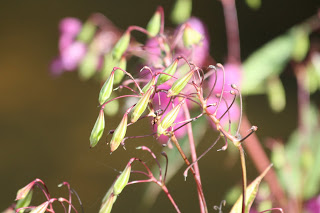
Along the river bank, swamping much of the native flora, the Himalayan Balsam is giving a final explosion of colour before the first frosts destroy them for another year. And explosion is the correct description of their bursting seed heads which throw the seed far and wide as they split open. Found in many damp places throughout the country, for its seeds are also dispersed by the movement of the water, the Himalyan Balsam is an unwelcome immigrant to Britain which is virtually impossible to control. A member of the Impatien family, its seedheads are similar to those of our familiar garden Busy Lizzie.
.

.

.

Along the final stretch of our walk, the river is backed by the same red sandstone cliffs that can be seen by the coast. How many millenia did it take for this gentle stream to cut its way through to its present level? My photography skills – or perhaps my patience – did not allow me to get shots of the kingfishers that darted up and down as a flash of azure along this reach of the river. High up in the rock face, their nesting holes (or were they the breeding sites of the sand martins that had already begun their long flight south to winter in Africa?) were more easily photographed.

.

..

The ten mile walk to the source of the Otter will have to wait for another visit to the West Country. Oh, and I nearly forgot to mention, otters can be found – but rarely seen – along the whole length of the river.

.

.

Add to Technorati Favorites

A Walk Along the River Otter: part 1

The River Otter although not long in length – barely 20 miles from its source in the Blackdown Hills to the sea – is rich in wildlife. Mostly flowing through Devon, in Britain’s West Country, it rises just over the border in the county of Somerset. Passing through rich and fertile farmland it enters the English Channel at Budleigh Salterton where its estuary is protected from the sea by a large pebble bank. It is here that this walk begins.
.
The mudflats, reedbeds and adjoining fields are all part of a relatively small nature reserve, backed by the town on one side and high red sandstone cliffs to the other. The whole area forms part of a World Heritage site for it is part of the English coastline known as the Jurassic Coast, famous for its rock formations, clear water and abundant fossils. The underlying stone of the Otter valley holds one of the most important aquifers in England supplying drinking water to 200,000 people (source: Wikipedia, where else do we go for this sort of infortmation?!).
..
The birdlife, especially at this time of year as migration takes place, is spectacular. In my excitement in trying out my new telephoto lens, I forgot to take general views of the coastline and town. However, as tourism plays such an important part of the Devon economy, it is easy to visit and stay locally – it is well worth adding to your ‘places to visit’ list.
.
There is no public access to the mudflats which means that the birds are relatively undisturbed. However, there are good footpaths along the edges and also hides, where it is possible to view the wildlife with the aid of good binoculars or camera. The Little Egret, below, was a rare visitor to England until very recently. Now, although still not often seen, they are more frequent and breed here. We have even had them occasionally visit us in the secret valley. The Canada Goose also was once a rare escapee from wildfowl collections – now they are seen everywhere and are one of our commonest geese.
.
.

.
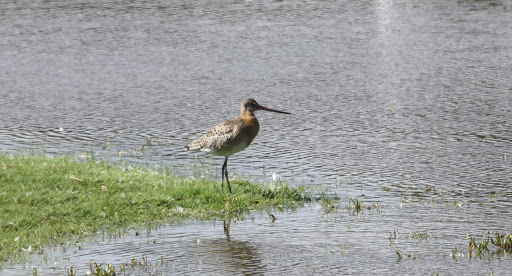
Glossy Ibis are an extreme rarity and thirteen had arrived here earlier a few days ago. If they were about they remained hidden from view. Strutting about – and unaware of how comical they look when away from water were a pair of Bar-tailed Godwits. These birds breed in Scandinavia and the Arctic and thousands pass through Britain on the migration back south with a few staying all year round but never breeding. Despite their numbers they are easily missed so being able to photograph this one was a real treat!
.
.

.
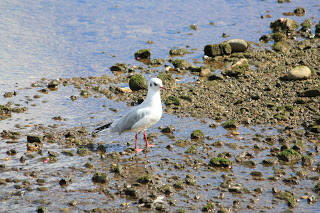
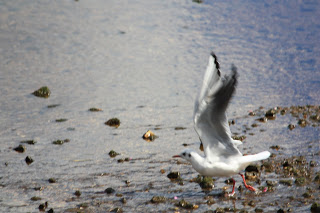
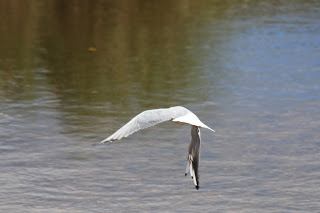
Of all the birds to be seen that day, none were so plentiful yet so beautiful as this Mediterranean Gull. Or, at least, that is what I think it is. Living as I do, as far inland as is possible in the British Isles, my seabird identification skills are not as good as they might be. No matter, it had a grace unlike the majority of the gull family, yet I don’t think it was a tern. I wait to be corrected.
..

.
.

Add to Technorati Favorites

Richard Long’s Extraordinary Land Art

2I have found that there are no shades of grey when appreciation – or lack of it – of Richard Long’s art is discussed. It seems that either, like me, you are swept away by it or you just cannot see the point of it at all. Whilst respecting this latter point of view, I ask myself, “Does art have to have a point”? For me, of all art forms , Richard Long’s work demonstrates that beauty can be appreciated just for it’s own sake.
.
British born (in Bristol, where he still lives and works), Richard Long studied art in both Bristol and London, giving his first solo exhibition in Germany in 1968, as he completed his studies. I imagine this is quite an achievement in itself. Since then he has exhibited regularly throughout the world.
.

.
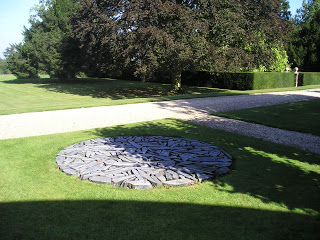
In the grounds of my ‘reincarnation’ house, I was fortunate to be involved in the placing of one of his slate circles (photo above). Sadly, I never met the great man himself, for I would have loved to have sat quietly and watched the stones being laid in place. My contribution was extremely modest: I only removed the turf and put down the base ready for the circle to be put in position. However, this did mean that the circle appeared as if by magic – and it has remained mysterious and magical ever since. And, as if by magic, the gaps between the stones have filled with leaves and debris and yellow lichens have started to colonise their surface.
.
.

.
Regular readers of this blog will know of my fascination for stone in all its forms, whether it is the earliest standing stones (and we have our own ancient stone circle here in the Cotswolds, the Rollright Stones), the dry stone walls of the secret valley or placing stone in the garden. But Richard Long’s stone work is different to all of these for each piece is meticulously shaped and honed – or left in its natural state – and crafted into position. To really appreciate it, you have to become part of the landscape yourself. When you lie on the ground looking across the surface of his work, it takes on a completely new appearance and meaning.
.

.

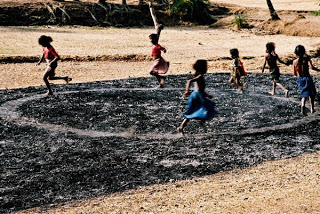
When I first came to know and love Richard Long’s work, I little dreamt that one day it would inspire me to incorporate land art into one of my own designs. Attached to a beautiful old farmhouse, belonging to a client, is a small, almost bottle shaped, raised area of land surrounded by the remains of a twelfth century moat and mill stream. It is too wild an area in which to create a conventional garden so the plan is to keep it as a simple wild flower area. A very low serpentine turf coverd bank will draw the eye – and, hopefully, the visitor – towards the bottle neck. Careful planting will bring you unwittingly into a living willow tunnel and, at the far end where the land broadens once again, will be a circle. Not a stone circle this time but a meditation circle inspired by the photograph below of children playing. This photograph is from the artist’s (or is it sculptor’s?) website; all the remaining photo’s are mine taken at the reincarnation house. To be redirected there just click and make sure you look at both the Exhibitions and the Sculptures pages.

.
.

As for my new design, work is due to commence at the end of this month and I shall report on progress some time in the future. One thing I am quite certain of is that I will not be asked to hold any exhibitions either in the UK or abroad!
.
.
.
2018 Update:   to see more of Richard Long’s work or to view the latest exhibition venues visit his page on Artsy by clicking on the link here
.
.
.
Add to Technorati Favorites