The Heath

‘We’re off to the heath!” Such excitement whenever my father made this announcement.  It happened perhaps just three or four times a year and when it did it was always a special day.  Almost seventy years of summer sun – for we only ever went there when the sun was shining – have passed and the memory of those innocent days still bring joy.  Much later the heath became my place of refuge when sadness threatened to overwhelm me; under the great tree that had witnessed my journey into adulthood, its shade restored and healed me. 

Many summers have passed since I last sought the shade of the great tree

Going to the heath involved ritual.  The ritual included packing the picnic that my mother had been busy making; the ‘paste’ and cheese sandwiches, rock cakes that required the currants to be removed before being eaten (“no, mummy, they look like eyes”) and the steel Thermos flasks of scalding hot water for tea.  No tea bags in those days so teapot, loose tea and strainer were all added to the basket along with the rug for sitting on.  The rug fascinated me for it was of coarse wool and a faded khaki in colour but, most of all, it had my father’s name written on it in capitals:  SHORTLAND H A 174445, the numbers being those from his army days.  The blanket, he would tell us, had seen the Holy Land, Tripoli, the Pyramids of Egypt and the ancient ruins of Rome.  Being spared the horrors he’d witnessed during World War 2, it seemed to us as if the rug had magical qualities, perhaps it was the carpet that would one day take us to these far-off places as well.  Of equal importance to the outing was the cricket bat, ball and stumps, all to be placed in the boot of the cream Consul car – but only after I’d been lifted out of it for my jumping into the boot was all part of the ritual too.

Being packed into the car boot was all part of the ritual in 1955!
These days, picnics are taken in a lot more comfort…

Driving along the narrow country lanes my sister and I, noses pressed hard against the car window, would comment on every house made of flint, or with a thatched roof, that we passed for we knew the journey so well.  “Oooh, I so wished we lived there…”  After a few miles the car would begin to slow and we eagerly awaited the moment it would stop and we could all clamber out.  Hoisting me onto his shoulders so that I could see over the high hedge, we would look down onto the ‘model farm’.  How I loved it for it looked so much like my toy farm at home with its cows, sheep and horses enclosed by beautifully painted white wooden rails.  Of course, it wasn’t really the miniature farm that my father claimed it to be but set in a deep and steep-sided valley gave it the illusion of being on a much-reduced scale.  One day, I’m not sure how or why, we visited the old farmhouse with its ancient, beamed ceilings.  In one room the main beam was much split with age into which coins had been hammered.  It only added to my sense of awe as the farmer showed me the oldest coins, some of which dated back three hundred years or more.  He also showed me the one he’d placed with the ‘new’ queen’s head on it, the first he’d seen, for Elizabeth the Second had only come to the throne in the year of my birth.

Everything about the farm seemed to be in miniature….

Our next stop would be for a stroll around the village of Fingest.  The church fascinated me for it had beautiful, honey-colour rendered walls quite unlike the other churches in the area.  Its other unique feature was its bifurcated tower which to childish eyes looked as if it was splitting in half.  Best of all, inside the church, was a ladder, so tall that I was sure it must be Jacob’s ladder that I’d learnt about in Sunday School.  I never saw any angels climbing it but I was convinced that if I was allowed to do so I would reach Heaven. In adulthood, I would live in the village for a short while although by then, it was the excellent inn where they served great ale and delicious suppers that I eagerly sought after a long day at work.

The church at Fingest
Jacob’s Ladder – was heaven just beyond the top rung?

Fingest’s neighbouring village of Turville would only be visited on our way back from the heath, my parents stopping off at The Bull & Butcher.  In those days, children were not allowed in pubs and so we were left outside to explore its two streets and to clamber up the steep hill to the windmill.  How carefree those far-off days now seem when small children could be left to freely wander without fear.  The village now is famed for it being the village of the film ‘Goodnight, Mr Tom’, the windmill featured in Chitty Chitty Bang Bang and the church in the Vicar of Dibley.  After I moved from Fingest, I had the pleasure of living within a couple of miles of the windmill (and so close to the heath) for eighteen years.

Time stands still in the ancient village of Turville
The windmill stands high above Turville village

The lanes beyond Fingest become narrower and more enclosed by hedgerow and woodland as you approach the heath, all of which adds to the excitement of finally arriving at its wide-open expanse.  The car parked, out we would spill while mother busied herself with the picnic and my father set up the cricket.  We only had one wicket and so the match didn’t consist of ‘runs’ – our reward was in actually managing to hit the ball at all and the praise we would receive for our skill.  Perhaps this is why the heath holds such affectionate memories for, back in the fifties, fathers didn’t interact hugely with their children – mine was too busy working or tending the garden to make trips out a regular occurrence and my mother, like most women, was unable to drive.  Finally, we would hear mother calling us for tea and after devouring everything in sight we would lie back on the short turf replete and happy.  On one occasion my mother had packed roasted chicken legs, a rare treat for chicken was, in those days, a luxury meat.  Before we had the chance to try them, our little mongrel dog Tammy had snatched them away and into the bracken to eat out-of-sight.  Chicken never again appeared on picnics.

My father in 1963 – a tie was required even for casual dress in those days…

Soon we would be up and eager to explore.  The heath was beautifully unkempt; the rabbits cropped short the wide grass rides allowing the bracken and scrub to grow elsewhere, untouched so it seemed by man.  Along the western edge of the heath an ancient avenue of lime trees grew, their limbs now left to grow in a haphazard, twisted way.  From time to time one of these great boughs would fall to the ground there to gently lie and rot and return to the soil.  By summer, the bracken would have grown tall enough to obscure them from view. We knew where to find them and would crawl alongside beneath a green tunnel of fern fronds.  Tiny, pale toadstools grew from moist fissures in the bark, beetle scurried away from our disturbance and here we learned about nature., much of which seemed magical to young eyes  Later, as I learned patience, I would sit quietly to watch for wildlife: a wren chattering away as it searched for insects, the occasional slow-worm hunting for slugs and not as slow as its name suggests.  Once I was rewarded by a family of stoats moving like a sinuous string of sausages as they followed one another each holding the tail of the one in front in its mouth.  Such excitement!

Casual wear for ladies in 1963: my mother out for a picnic in the country

Magic played an important part in our young lives for everything we didn’t understand surely had to be caused by magic?  We saw regular proof of this in our painting books for they had the word ‘magic’ written across the front cover.  A blank page of paper would be transformed into a colourful picture by just brushing with water from the empty paste jars. The paste jars held the exact amount of water required for ‘art’ without too much risk of spills. In those days of necessity, although the word recycling hadn’t been invented, everything – paper, string, milk and other bottles – were all carefully saved or returned for re-use.  Plastic wrapping and the throw-away society was still to come. 

Evidence of magic could be easily found within these pages!

Further proof of the magical world around us came one day when exploring a new part of the heath.  We’d always thought that one dark, wooded corner looked rather forbidding but like all small boys, I knew better.  Venturing deep inside it, with every twig snapping under my feet making me jump, I came across a small, black pond besides which stood an old hollowed oak.  I squeezed inside the trunk to look up expecting to see sky.  Instead, there was darkness followed by much scrabbling and hissing as dust and twigs dropped onto my head.  Running as fast as I could I found my sister to tell her all about it.  Unbelieving, she and I returned and this time it was she who was hissed at.  Scared witless, we ran back to our parents.  Just an old barn owl we’d disturbed my father had said.  But we knew better, we’d found the door to the magic kingdom of elves and goblins.  How lucky were we that the door hadn’t snapped shut with us inside, never to return, as described in the numerous books that we had read.  Utter nonsense we were told.  That, we realised, was the trouble with grown-ups: they didn’t believe and that was why the magic was hidden from them.
                                                                                     *

I have to admit that it probably was a Barn owl that scared us

From time to time, I still return to the heath although I now live many miles from there. Whenever I do, I am struck at how small this ‘giant’ area to children’s eyes actually is. The difficult stage of my life, where the old tree supported me through despair, have long passed and the memory of it does not overshadow the pleasure that revisiting brings. Despite being a grown-up, I can still feel its magic.  I’m not alone in this for recently I read Hugh Thomson’s book, The Green Road Into The Trees, in which he crosses southern England on foot.  He too, feels the need to return to this very same heath in search of healing and finds it.  He believes that the mysteries of the Ancient World are not as far away from us as we tend to think for our mixed Celtic, Saxon and Viking heritage shapes not just the British landscape but also our souls.  Perhaps that’s where the magic comes from?

The Boy from London

I am a hills person.  I love walking – or even better – cross-country skiing in the mountains. I can also admire the huge skies and vistas of flat country.  However, it is with hills that I have always strongly identified with.  So, when I’m asked “where was home for you?” it isn’t the county of Buckinghamshire, or even the village I was brought up in that I respond with, it is the hills and the Chiltern Hills in particular.

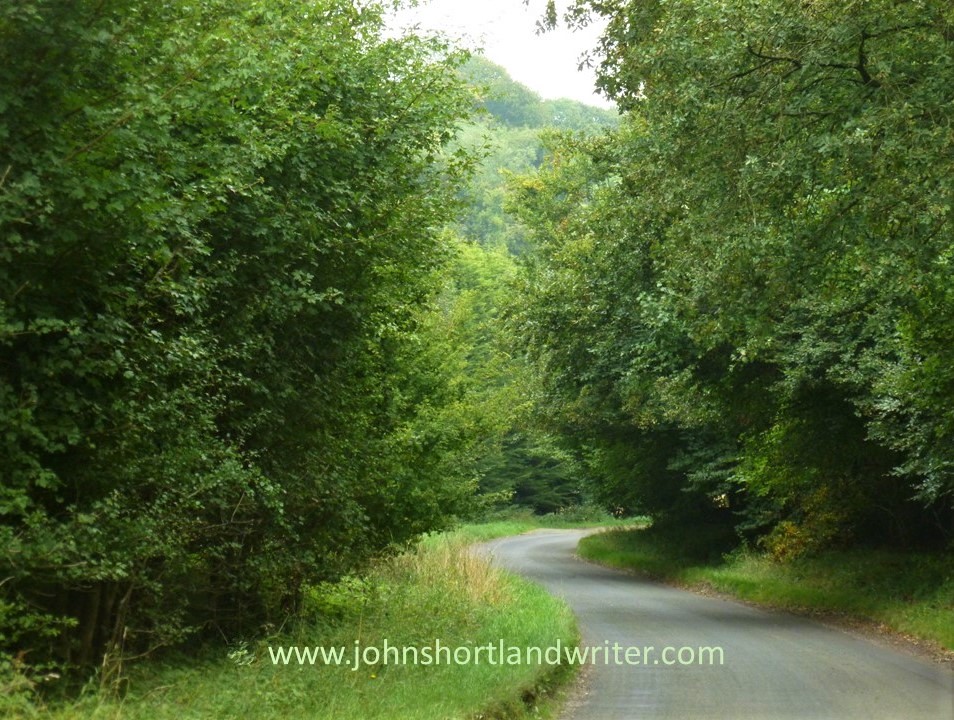
A country lane in the Chiltern Hills winds its way through dense woodland

As a child, I lived on the very edge of the village and not being schooled locally and with no children of my own age nearby anyway, I learnt to spend many hours on my own during the lengthy holidays. Although our house was close to the River Thames I found fishing of limited interest preferring always to be out walking or cycling.  As I grew older I travelled further afield exploring the lanes, fields and woodlands, learning all the time about the ways of nature.  Back in the fifties and early sixties people seemed to have more time to answer inquisitive children about these things or, perhaps, it was just that in those days people were more connected with the natural world so were able to answer their questions.  Whatever the reason, I became more knowledgeable and enthusiastic about country ways than I ever did with schoolwork.  A consequence of this is, when asked the question, “where are you from?” I respond without hesitation (and with a certain degree of pride), “I’m a Chilterns man.”

A childhood spent exploring the fields and woodlands that surrounded home

It was not until I reached the ripe old age of 49 that I moved away from the Chilterns to start a new life in the Cotswolds.  Although as the crow flies, the Cotswolds are not many miles away (I can even see the distant Chilterns from the top of my lane) they are very different in character, the former being chalk and flint country, the latter limestone.  But it wasn’t the exchange of deep, wooded valleys with few, if any, streams for a landscape of far-reaching views, fast-running brooks and drystone walls that I noticed most of all, it was the language.  When I moved to this then unfashionable part of the Cotswolds twenty years ago it was still a forgotten corner of the world where, even if the local dialect had mostly died out, the twang of local accent hadn’t.  It reminded me of, for it is related to, the south-western tongue spoken by many of my country cousins and also by my friends further west still.   So, when I gave my usual response to the question, I was rather peeved to hear it acknowledged by the words, “so you come from London way, then.” 

A Chilterns cottage built using the local flint
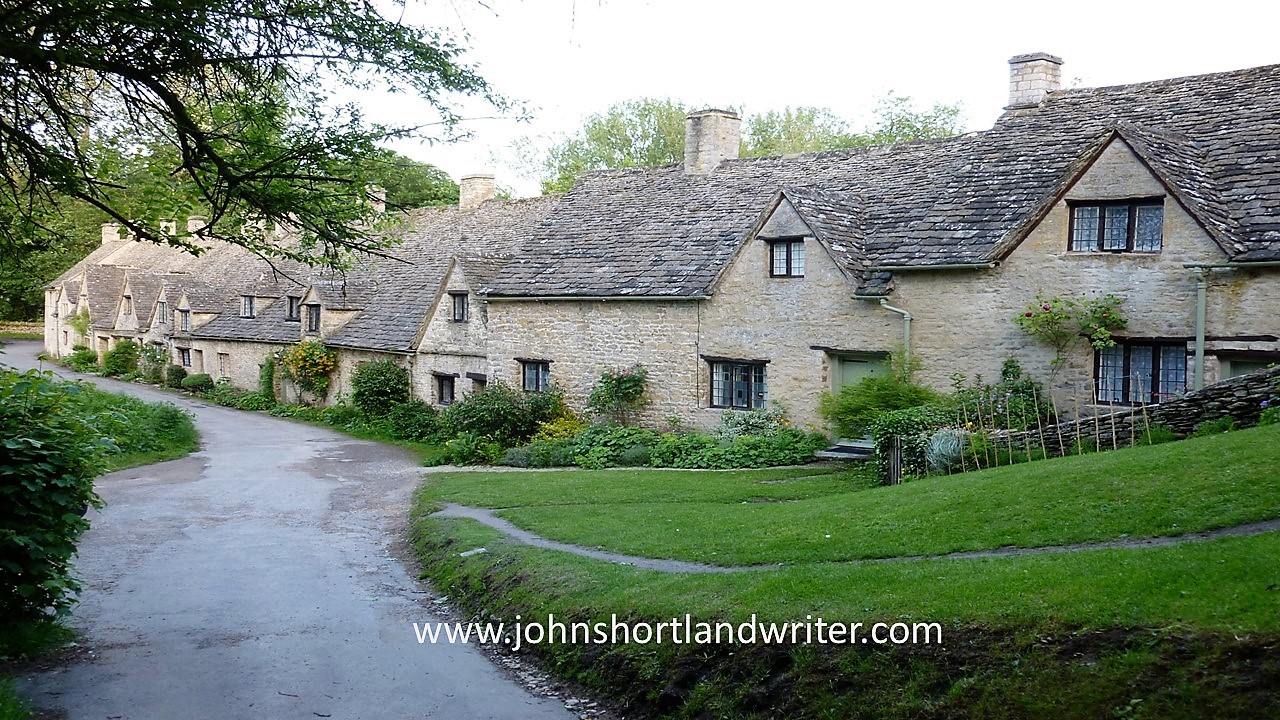
Cotswold cottages look very different and are made with local limestone

Now, I hasten to say, that there is nothing wrong about being referred to as a Londoner.  It’s just that our capital city is as much a foreign land to me as it would be to an overseas visitor.  Ok, so that might be a slight exaggeration, but somehow, I just don’t relate to city life despite my mother being born and raised in London’s West End.  She had come to the Chilterns as an evacuee from WW2 through her war work and there met my father, a local boy – but that’s another story.  Suffice to say, that I am a child of two halves – I have country family and I have city family much in the same way as I am a child of two cultures and two religions.  Despite my relating to country ways and to complicate matters further, (although I should be used to it by now), it is to my mother’s culture and religion that I feel a closer affinity to.  It still grates, ‘though, when I’m thought of as a townie.

City girl sophistication meets country gent: my parents soon after marriage

As I mentioned earlier, school life didn’t hold much appeal and so I persuaded my parents that I should leave aged sixteen.  As soon as I could, I took myself off on my bicycle to holiday in Devon.  Leaving Exeter with tent, camping gas stove and billy cans loosely tied to the crossbar I clanked and clattered my way along the lanes of Dartmoor.   At the end of each day I would pitch my tent wherever I could and reflect with delight upon all the new experiences that had come my way.  Getting hopelessly lost, I ended up at Westward Ho!, a small seaside town on on the north Devon coast.  From there I travelled east finding the hills becoming ever steeper and the villages further and further apart.  One day, I ended up on a remote farm on Exmoor where I decided I would spend two days to recuperate before heading for home.  It didn’t happen. 

The 16 year old hits the road!
Remote hill farm, Brendon Barton where I intended to stay for only two days

Looking back, I can’t imagine what my poor parents were thinking for there were no mobile phones or credit card statements for them to track my progress or whereabouts.  I would telephone them occasionally or send a postcard always being deliberately vague as to where I was staying.  In the meantime, I remained at the farm working – at first for food then, as I became more established and with the tent discarded, for a bedroom and beer money.  By the time my parents turned up at the door several months later (after some shrewd detective work) I had settled into my new life and rapidly adopting the ways of the hard but exhilarating Exmoor life.  Dragged back home to “get a proper job” I never completely left Exmoor behind.  Every spare moment was spent on the farm and, as regular readers of my blog will know, I still spend as much time on Exmoor as possible.  Being a National Park, the landscape and buildings of Exmoor haven’t changed very much over the 50+ years since I turned up on Lorna and Dick French’s doorstep although they have, as have most of the others I knew in those early days, since died.  To my dismay, there is one other thing that hasn’t changed at all: when I respond proudly to the inevitable question with “I’m a Chilterns man”, their response remains the same: “So up-country then?  London?”  Over the years, the ‘boy from London’ has become ‘the man from London.’    And I’m sorry, Londoners, Mum and cousins – I don’t like the label!

Dick & Lorna French who welcomed me into their lives and in the process changed mine

Darts, Hardheads & Rocket

I was fortunate in having a country childhood where roaming the fields and woodlands was the norm.  My early schooling was often held outdoors on sunny days, sitting on a warm, grassy bank; best of all, were the long, nature-study walks we were occasionally taken on.  At the age of ten my schooling changed and the open space and fresh air was replaced by a concrete yard separated from a railway line by a high, chainlink fence.  The only shades of green to be seen were the short spikes of Wall Barley Grass that grew wherever they could find a place to take root.  Later, I changed schools again and, although still in the centre of a town, at least now there were extensive playing fields as well as a small wooded area. In the no-man’s land between the closely-mown sports grounds and the trees Hardheads and Rocket grew.   Against the school walls, Wall Barley Grass could be found.

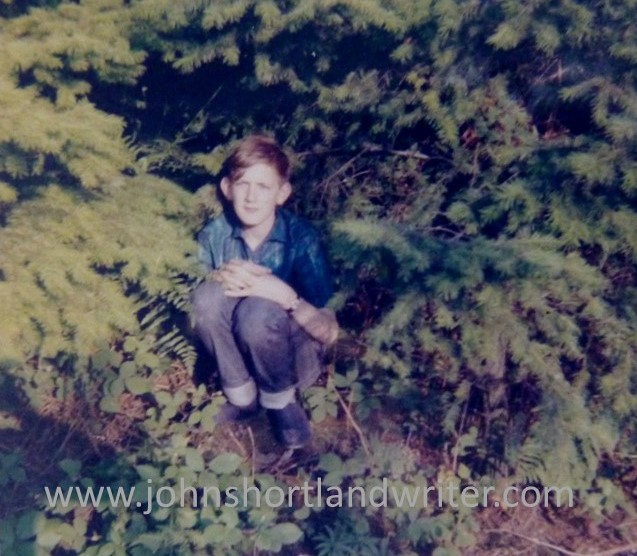
always crawling about the woods and hedgerows!

Wall Barley Grass, which as children we called darts, is a short, annual grass that thrives on waste ground.  It frequently sows itself in cracks in pavements or, as at my old school, the gap between the tarmac playground and the wall.  Despite frequently growing at the base of walls which its common English name recognises, the botanical name for the grass Hordeum murinum means something quite different: murinum = mouse.  So why darts and, for that matter, why mouse?  Surprisingly the reasons behind both names are unwittingly known by countless generations of children.  Our favourite ‘weapon’ of choice, the seedheads when separated from the stalk, can be thrown just like a dart, the point not sticking into a bullseye but on articles of clothing, especially knitwear.  The pinnacle of childish achievement was to attach it unknown to someone at the base of their back.  Over time, with their body movement, the dart would slowly creep upwards until it arrived to prickle their ear or neck in the same way as a pet mouse might.

Wall Barley Grass prefers to grow in the dry cracks of paving and concrete

In researching for this blog, I was surprised to discover that Wall Barley Grass, so commonly seen throughout my (Home Counties) life, is rarely found in Scotland and Ireland.  It is a plant of drier, warmer regions and grows across the Mediterranean area, North Africa, parts of Asia as well as Central and Western Europe.

its old country name is Mouse Grass as it climbs up clothing in a mouse-like way

It is sometimes hard to believe that Centaurea nigra, Knapweed – or as we called it, Hardheads – is a wild flower; it seems to be far too beautiful to be a ‘mere weed’!  A great bee and butterfly plant it grows to about two feet tall and flowers throughout the summer months.  As children we cared not one jot about the flowers, it was the flower buds that we coveted.  A tight, hard ball (hence the name) on a long pliable stalk made them another ideal weapon once we’d tired of darts.  Perhaps ‘bullets’ might have been a more appropriate name for when the stalk was looped around the bud and pulled tightly the bud would ping off at quite some speed.  Unlike darts where stealth was required, hardhead battles were fought openly and at close quarters.  The closer to the opponent the more they stung when a strike was made.

Knapweed or Hardheads has to be one of the most beautiful of British wild flowers
wrapping the stem around the head and pulling sharply to ‘shoot’ your opponent…

On rare occasions, pure white flowers can be found.  These were always treated with respect and never picked.  Even rarer – and I know of only one place where they can be found – bi-coloured hardheads grow.  Hardheads grow throughout Europe, elsewhere in the world it is an introduction.  For me, the first of its flowers are a sure sign that summer has arrived.  A plant of old meadows and chemical free waysides, their purple flowers brighten up many a roadside verge.

a very rare bi-coloured Hardhead

The last of this trio of childhood plants, Rocket, is the only one that we never picked.  They were loved for their appearance reminding us of the sparkler trail of the cheap, unsophisticated fireworks that were the norm in the 50s and 60s.  Rocket, bears no resemblance in any way to the herb that we eat in salads, in fact it has been used as a medicinal herb to relieve many complaints ranging from gallstones to treating snake bites.  Agrimony, Agrimonia eupatoria, to give it its correct English and botanical names, grows to about two feet tall and flowers in mid-late summer on a single stem.  Its pretty, pale yellow flowers are followed by sticky burr-like seedheads that attach themselves to animals and clothing.  They grow on roadside verges and grassland but unlike so many of our native wild flowers that require ancient, unimproved meadows, they prefer relatively young ones of less that fifty years of age.

the long flower stalks reminded us of the cheap rockets of our childhood
close-up, the flowers of Agrimony are really pretty

Just as garden plants can often remind us of people, times and places of the past so darts, hardheads and rocket transport me back to my childhood.  I no longer pluck darts to throw but I do admit that rarely a summer goes by when I don’t check that my knack of firing hardhead bullets hasn’t been lost.  In doing so I remember a time of innocence, old friends and a life of simple pleasures.

carefree days!