A Cotswold Tale for Halloween

The popularity of Halloween in the UK as a fun festival is always considered to be a relatively recent American import.  Nothing could be farther from the truth for it was only with the influx of Scottish and Irish immigrants to the USA during the 1800s that it became a major holiday there.  Halloween’s origins date back to pagan times but it was the Christian calendar that fixed the date for All Saints/Hallows Day as November 1st, (Halloween = Hallows Eve). The traditions that became attached to that, of which there are many, will have to wait another year to be written about.  This blog post is about the Witches associated with Rollright and Long Compton, our very own and tragically real Cotswold story of the Neolithic stone circle and village that lies just a few miles from our home in the secret valley.

Newspaper headlines from 1875
A section of the Kings Men stone circle at the Rollright Stones

The Rollright Stones, prehistoric standing stones dating back almost six thousand years (making them a thousand years older than Stonehenge) consist of a stone circle, and a separate group of three upright stones, plus one large, solitary stone.   Local tradition has it said that the circle known as The King’s Men, The Whispering Knights – the cluster of three upright stones, and the King Stone – the large, solitary stone were all turned to stone by a witch, Mother Shipton.  As early as the 1600s the rhyme (see below) was printed telling of how Mother Shipton challenged the King to take seven steps forward to view the village of Long Compton in the valley below.  He moved forwards but failing to see it the witch turned him, his army and his scheming knights into stone.  All seems too far-fetched and unbelievable?  Then read on…

The Whispering Knights, turned to stone by witch Mother Shipton. They are a thousand years older than Stonehenge
The King Stone stands alone on the hill, still hoping to glimpse the village of Long Compton


In the autumn of 1875 80-year-old Ann Tennant left her home in the village of Long Compton to walk the few hundred yards to the bakers to purchase some bread for her husband’s tea.  It was just like any other day until she met her neighbour’s son, James Heywood.  For many years he had accused her and others in the village of witchcraft, blaming them for various deaths of both people and livestock.  He believed that their evil-eye had prevented him from completing his work in the fields.  He also claimed that they had got inside his drinking water and that was the way they were able to get inside his body and control him.  Meeting her that afternoon on the path he took his opportunity and stabbed her multiple times in the legs with his pitchfork before giving her a blow to the head and stabbing her again.  All this time, Heywood’s father stood nearby not attempting to stop him for he was also convinced there were many witches in the area.

The 17th century lychgate leading to the churchyard where Ann Tennant is buried

It was local farmer James Taylor, hearing her cries, who disarmed James and poor Ann was carried home to die from shock and loss of blood some hours later.  At the inquest, Taylor and a fifteen-year-old lad who had also witnessed the murder gave evidence.  Held in the village pub, The Red Lion, they told of the scene they had witnessed.  Ann’s husband spoke next telling of how the boy’s parents had always said witches wouldn’t leave their son alone.  He also told of how a limb from a tree had fallen onto the boy, leaving him with a scar, and that, too, was blamed on witchcraft.  When Ann’s daughter gave evidence Heywood shouted out, “she’s one as well.  I can name them all and will kill them all.”  Later, at his trial at Warwick Assizes, he was acquitted on grounds of insanity and sentenced to life in Broadmoor mental asylum where he died in 1890.

The Red Lion pub at Long Compton where the inquest into Ann Tennant’s killing took place

You would be forgiven to think that witchcraft and superstition died out with the death of poor Ann Tennant.  Move forward to 1945 – so within living memory for some – to the village of Lower Quinton, some fifteen miles away from Long Compton.   Farm labourer Charles Walton failed to return home from work.  His body was found later that day: his neck had been slashed using his bladed hedging tool and he had been stabbed and pinned to the ground by his pitchfork.  Some reports state that a cross had been cut into his chest.  Several days later a black dog was found hanging from a tree near to the murder scene.

Hedging tools like the ones used by Charles Walton. It was the long-handled slasher on the left
that was used in his killing

It was not until twenty-five years later that Chief Inspector Fabian of Scotland Yard who had led the investigation spoke openly of links to witchcraft.  Apart from warning others not to take part in it he also told of how, when searching the area, he saw a large black dog run past him.  When he mentioned it to a farm lad the boy had turned pale and ran away.   Fabian also told how when questioning local people about the murder, he’d been told that some years earlier a headless black dog had been seen by Charles Walton on nine consecutive days – the following day Walton’s sister died.  Perhaps it was this and his keeping of toads as pets that made some wonder about witches.  However, it was only after Fabian’s public statement that links between Walton’s murder and Elizabeth Tennant’s, all those years earlier, were made.

Handwritten witness account of the murder of Ann Tennent [source: Rachel Cortese-Healey]

So, this is my tale for Halloween.  There is no need for fiction when we live in an area where the belief is still widespread, although rarely openly talked about.  The mystery sightings of black dogs have changed to sightings of large, black cats – are they two of the same?  I visited the Rollright Stones this week and there on one of the stones of the Whispering Knights an offering of thorny, berried hawthorn twigs had been placed.  I’m just glad that a headless, black dog didn’t cross my path.  Do I believe in it all?  Let’s put it this way, I shan’t be venturing anywhere near the Stones on All Hallow’s Eve.

Offerings laid on the Whispering Knights – but are they pagan or witchy?

“…as Long Compton thou cannot see, King of England thou shall not be
Rise up stone to stand alone for thee and thy men shall hoar stone be…”


With special thanks to Rachel Cortese-Healey for permission to reproduce her copy of the handwritten witness account of Ann Tennant’s murder.  Ann is Rachel’s 4x great-grandmother

Sources:
British Newspaper Archive
Wikipedia
Ancestry UK
In The Footsteps of Clare

The days have been unseasonably dry and the nights exceptionally cold for April but day after day of unbroken sunshine has meant that it has been particularly good to be outdoors.  The warmth tempered by a gentle north-easterly has created perfect walking conditions.    However, as is so often the way, the day I chose to wander along the byways that criss-cross the border of Lincolnshire, one of England’s largest counties, and Rutland, England’s smallest, there was more cloud to be seen than for weeks.

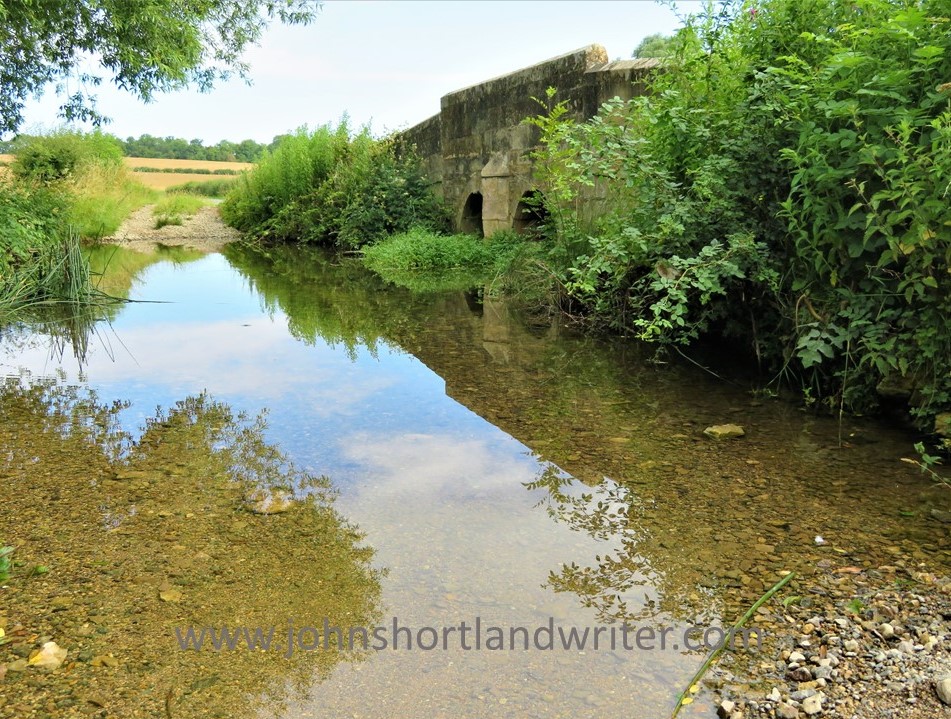
The Ford at Aunby – where the walk begins and ends

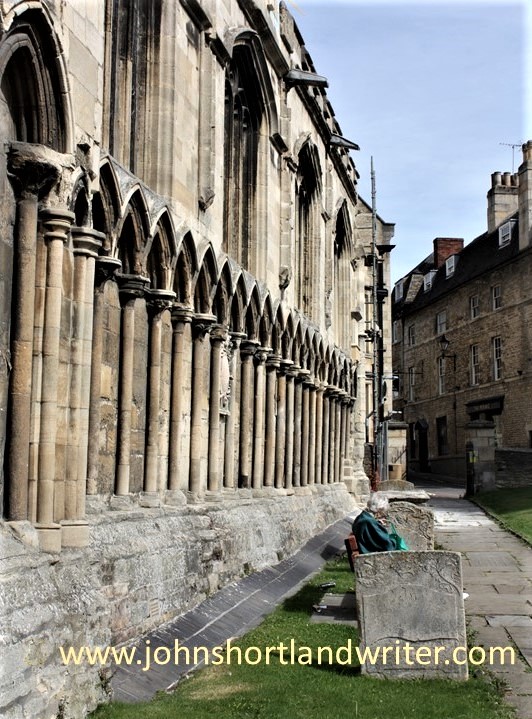
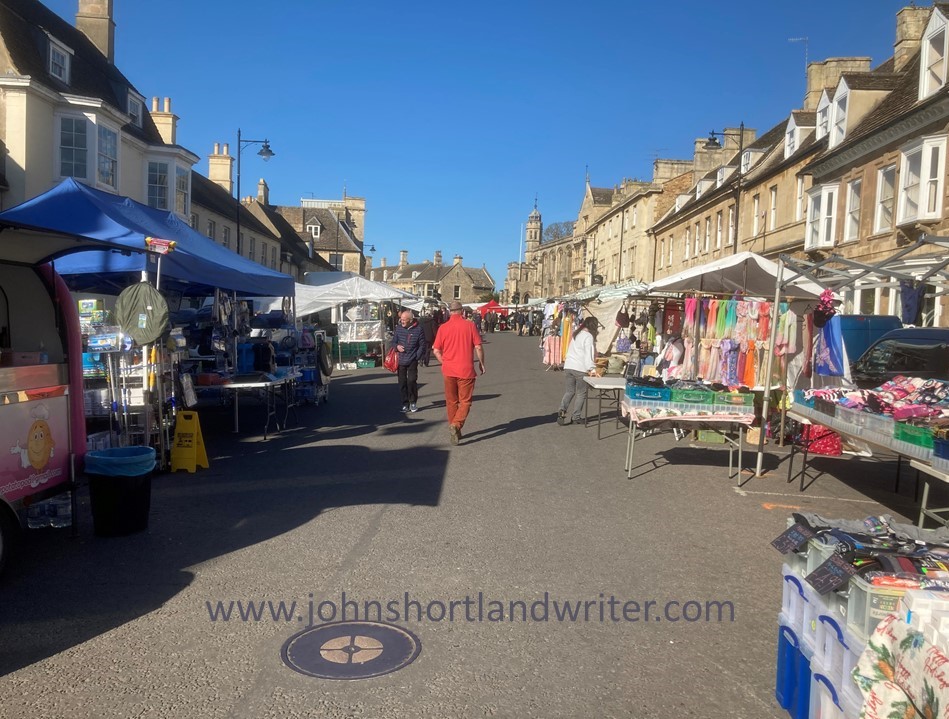
My walk began at the ford by the tiny hamlet of Aunby, a few miles north of Stamford.  Stamford has been described as “the most perfect stone town in England” as well as being voted the best place to live.  It certainly is a beautiful place to explore with numerous, fine churches as well as a great Friday market and a wealth of independent shops.  Whereas Stamford has prospered through the centuries, Aunby suffered a dramatic decline: in the fourteenth century there were numerous houses and a church; today, apart from a few cottages, they only show as cropmarks.

A quiet seat in Stanford
Stamford Market before the crowds arrive…

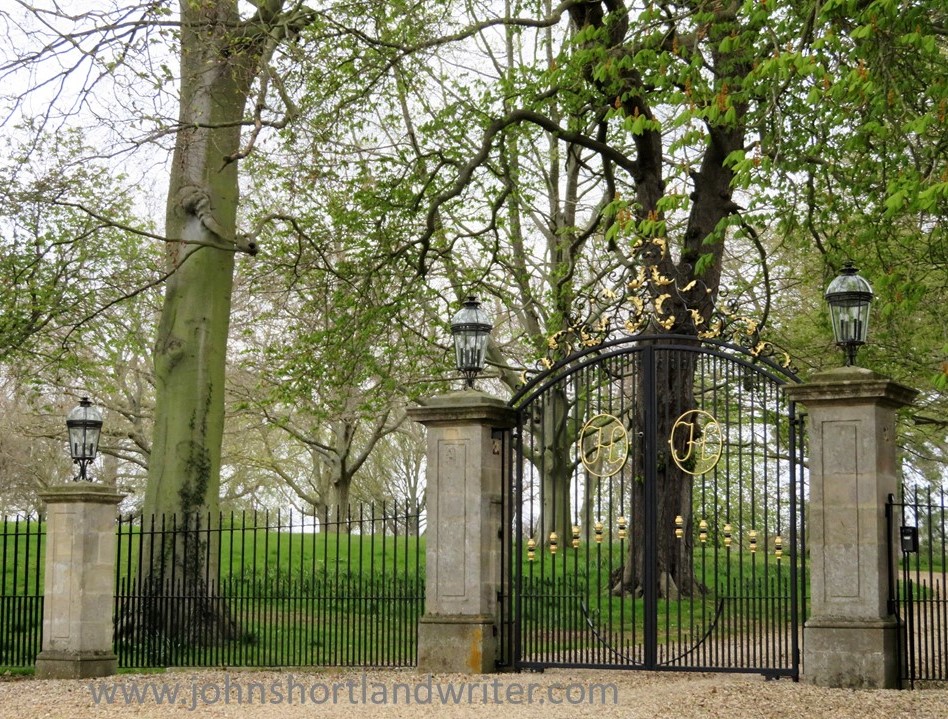
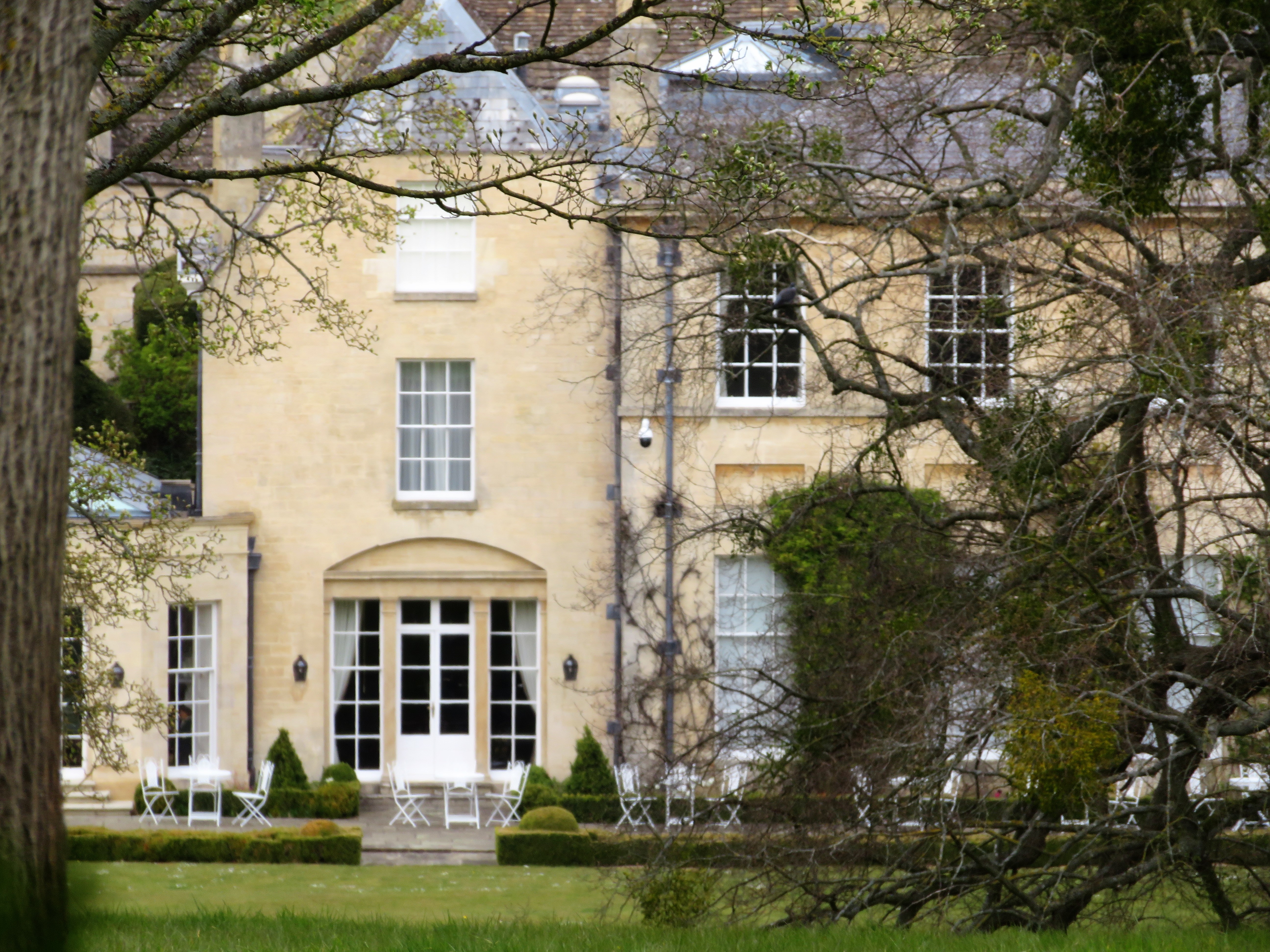
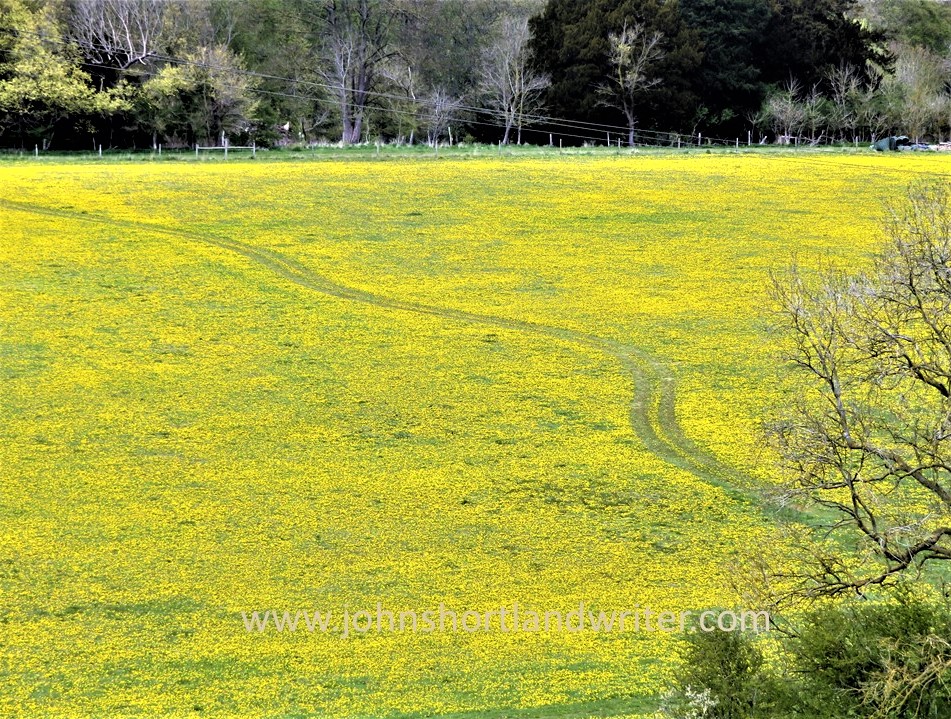
Heading north-west along a grassy bridleway, the path climbs gently until a narrow lane with wide, grassy verges is reached.  One of the many roadside nature reserves in the county, the late spring meant that the only wildflowers to be seen were cowslips which grew in plentiful splendour.  Following this lane uphill  to the elaborate, black and gold entrance gates of Holywell Hall where I turned left, glimpses of the mansion could be seen through the hedgerow that lined the lane. Both the house and grounds are immaculately cared for although I admired most of all the winding path cut through a splendid swathe of dandelions in full bloom.  Considered by many a nuisance ‘weed’ to be sprayed out rather than a wildflower to be kept, dandelions are a great source of early nectar for bees and other insects as well as looking beautiful in their own right.

The entrance to Holywell Hall
Holywell Hall
The dandelion meadow at Holywell Hall

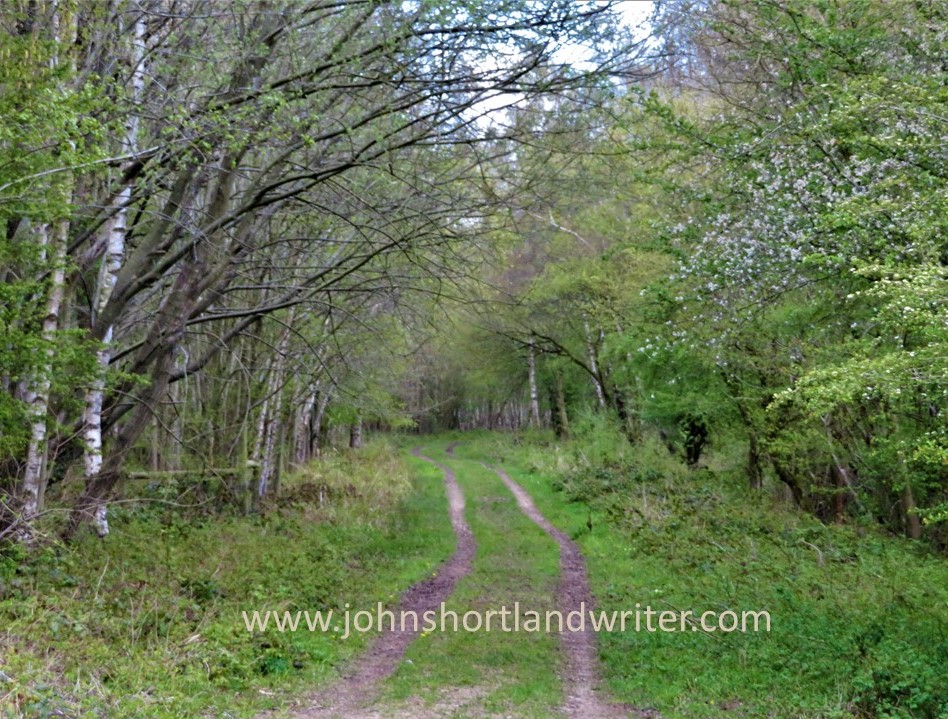
Crossing the county border into Rutland my route immediately turned left onto a forest track to take me up to Holywell Wood and into Pickworth Great Wood.  It was here that I met a local couple exercising their black Labrador dogs, the only people I saw on the whole of my eight-mile walk. They told me that the area was one of the largest woodlands locally as well as being a Site of Special Scientific Interest, designated for its geology as well as its wildlife – a fact confirmed by the NatureSpot website (click here for more information). The woodland path was lined with primroses, the trees just breaking bud and coming into leaf but, sadly, I was too early to hear the nightingales sing. 

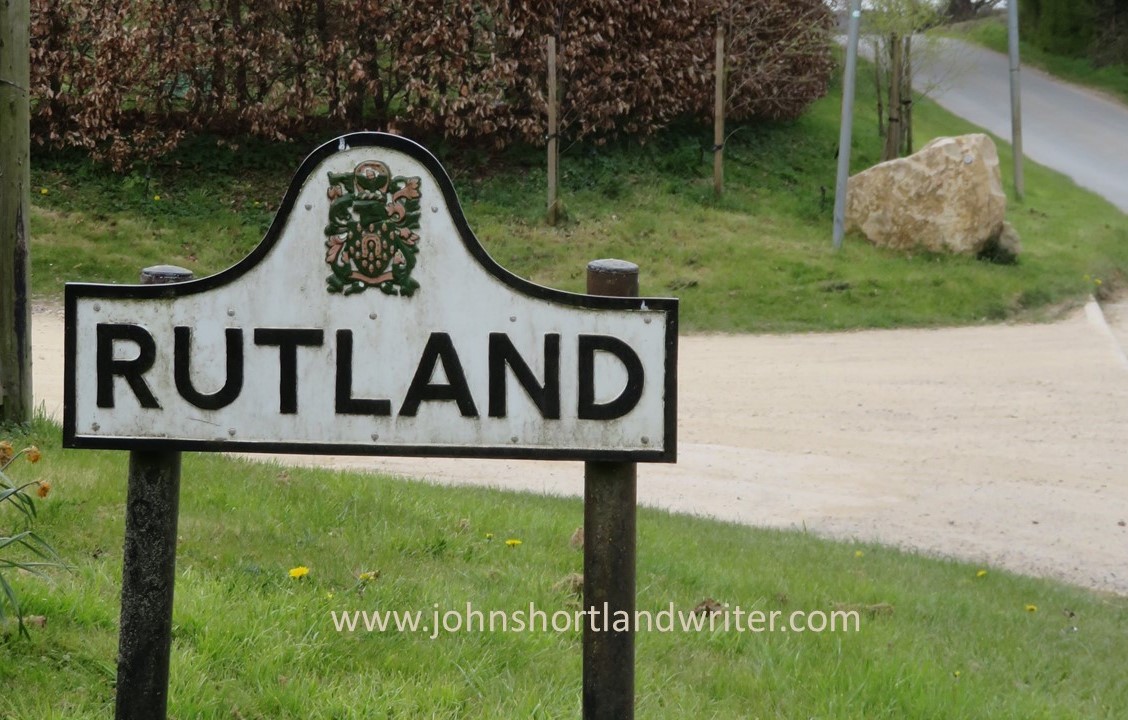
Crossing into England’s smallest county
The path through Pickworth Great Wood

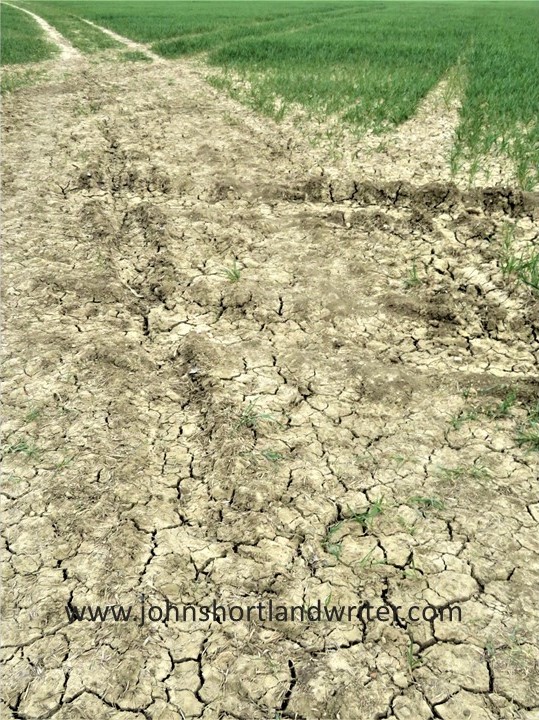
Beyond the wood, the path crossed diagonally over unseasonably dry arable land to the village of Pickworth.  It was at this point that I really felt that I was walking in Clare’s footsteps although we can safely assume that he knew most, if not all, of the paths that I would be taking that day.  John Clare, the Peasant Poet, born into poverty and distraught by the destructive changes to the countryside and its people at that time, died in 1864 in the Northampton General Lunatic Asylum.  It was at Pickworth where he laboured in the lime kiln which inspired him to write the poem The Ruins of Pickworth (click link here to read).  The lime kiln still stands although it is barely visible through a thicket of blackthorn.

No muddy boots this unseasonably dry Spring
The barely visible lime kiln where the Peasant Poet, John Clare, toiled

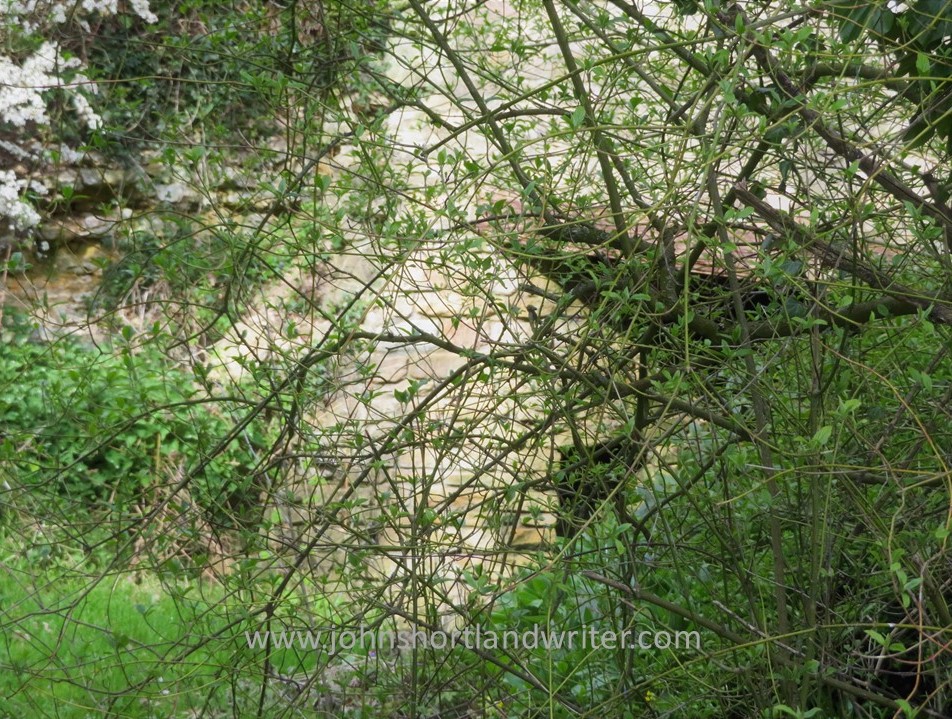
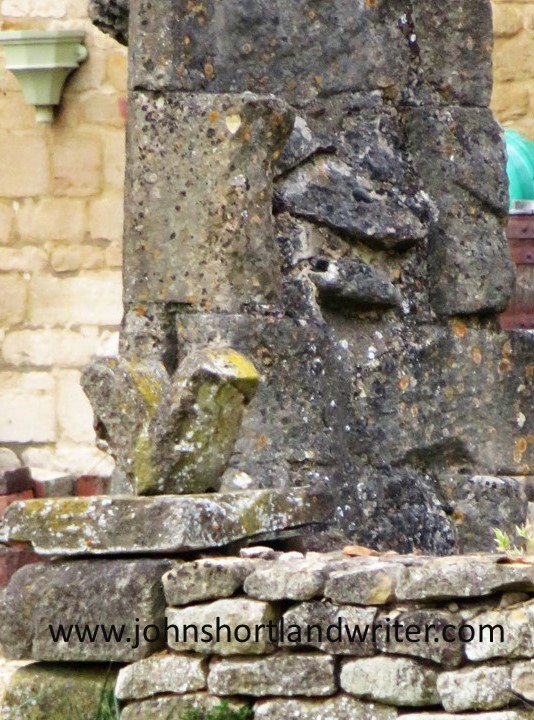
 Pickworth, like Aunby, is another village that has almost disappeared.  Thriving in the 1300s, it now has a population of less than a hundred.  The only sign of the old village is the crumbling stone arch of the church and various grassy mounds and ruts in the surrounding fields. The arch stands on private property but with the help of the camera, details of ornate mouldings and leaves could be seen. It is thought that the Battle of Losecote Field in 1470 fought two miles from the village may have been the cause of its depopulation.

All that remains of the old church at Pickworth is the 13th century arch
Pickworth Old Church – detail

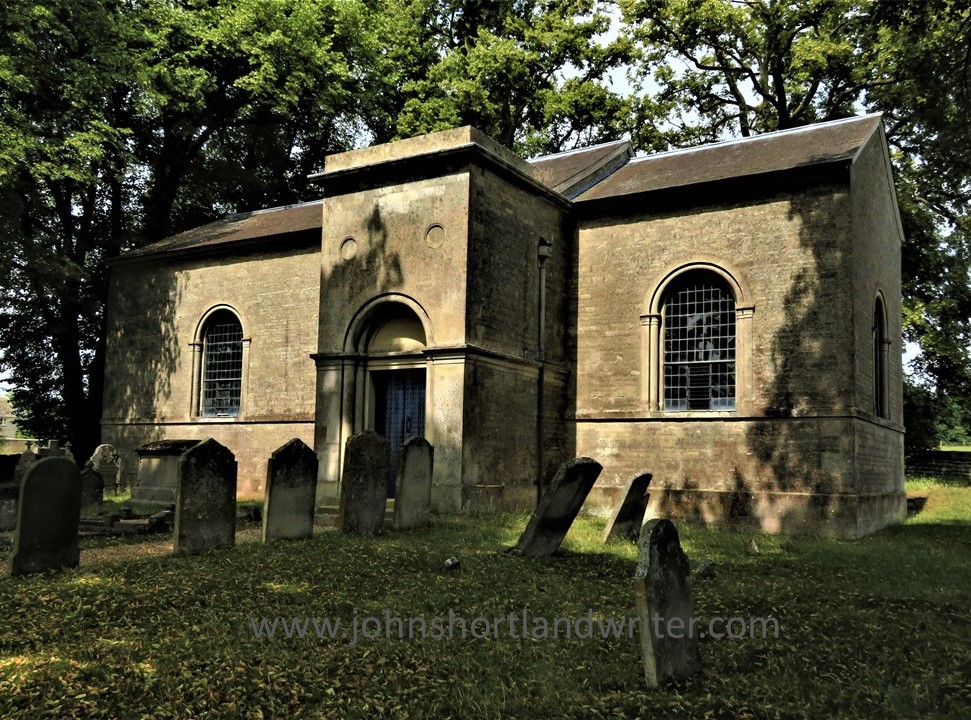
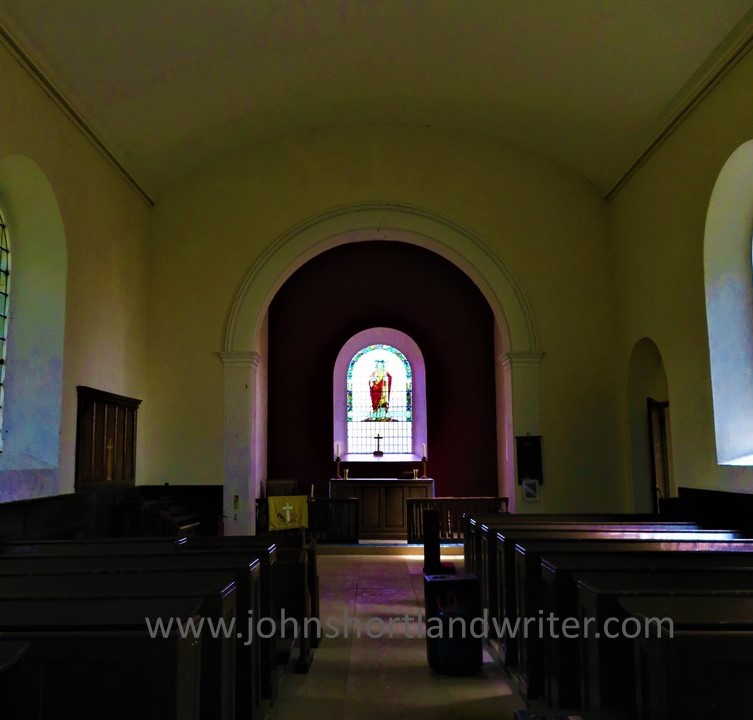
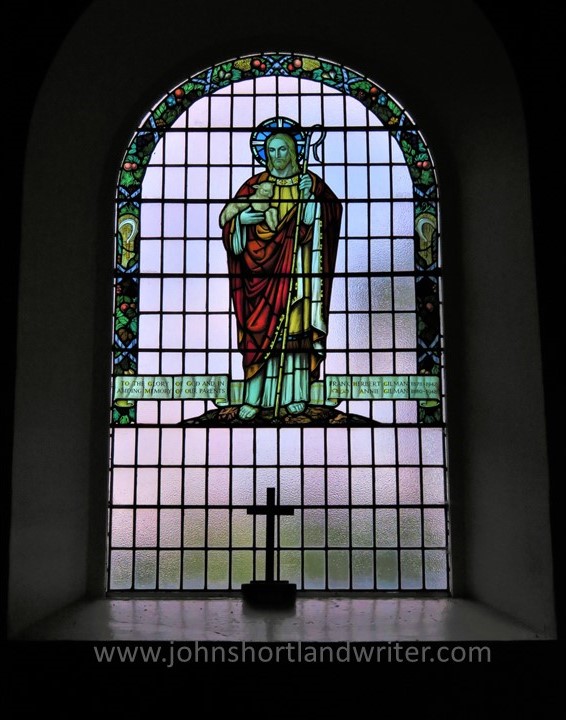
Although the association of Pickworth with Clare is important, to visit the Church of All Saints was the main purpose for my walk.  Built in 1822 at the bequest of Joseph Armitage of Wakefield, Yorkshire, it is a rectangular, stone building of plain beauty and fine proportion.  Set high on a bank and surrounded by trees, the interior is simply lime-washed, the only colour a small amount of stained glass above the altar.

The Church of All Saints, Pickworth
The simple interior of All Saints, Pickworth
The understated beauty of the only stained glass at Pickworth, All Saints

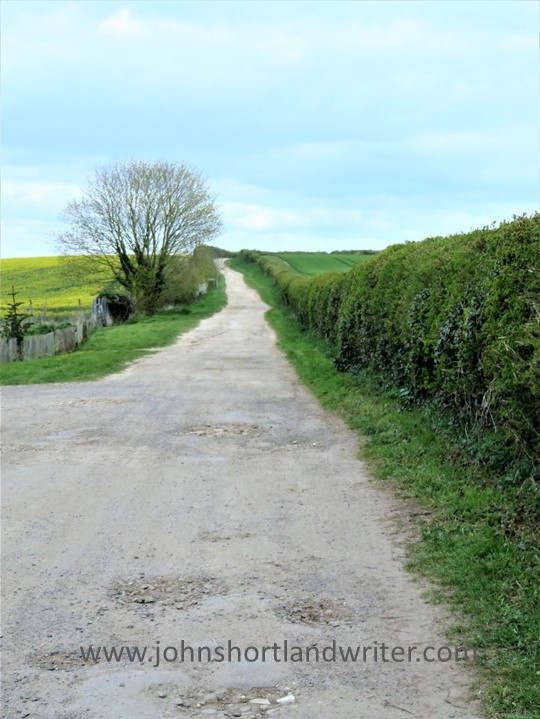
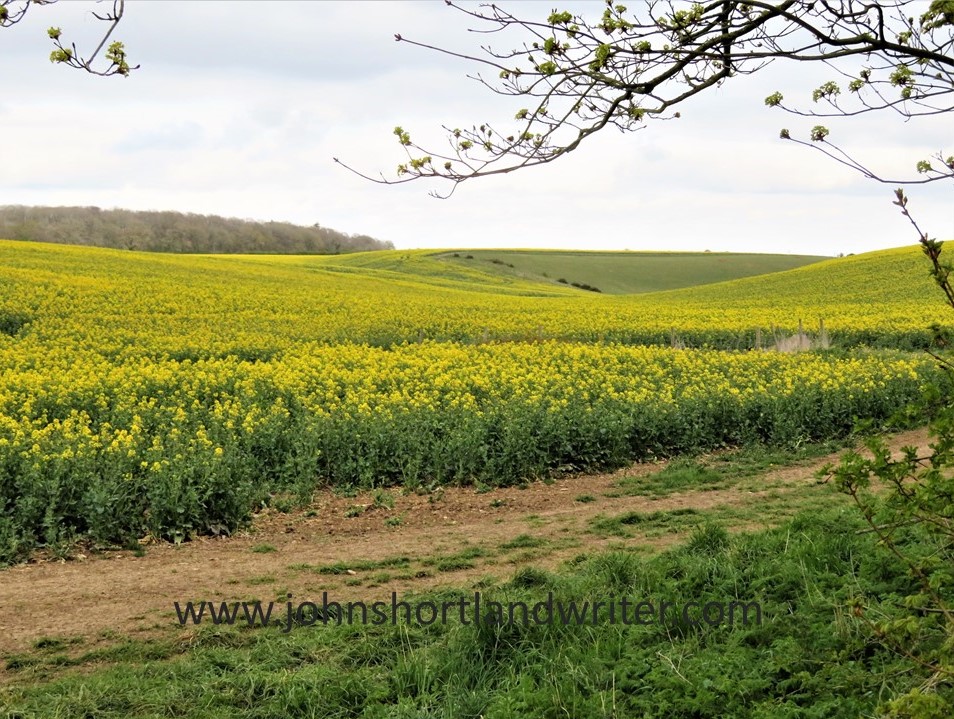
From Pickworth, an old drove road, The Drift, leads back towards Aunby by crossing Ryall Heath.  The road, now another old track, offers pleasing views across arable land, hedgerows filled with wildflowers and the sound of skylarks showering you from high with their song. The Drift ends at the junction with the road that takes you directly back to the start of the walk (turn left here).   Although the B4116 can be quite a busy road at times there are wide grass verges to make walking feel safe.  Finally, you reach the ford at Aunby, where this walk began.  Alternatively, a few yards before the ford you can take the lane that leads to Clematis Cottage, where I stayed for the duration of this oh-so-welcome-after-lockdown short break.

Pickworth Drift, the old drover’s road leads across Ryall Heath
Pickworth Drift, an ancient drover’s road

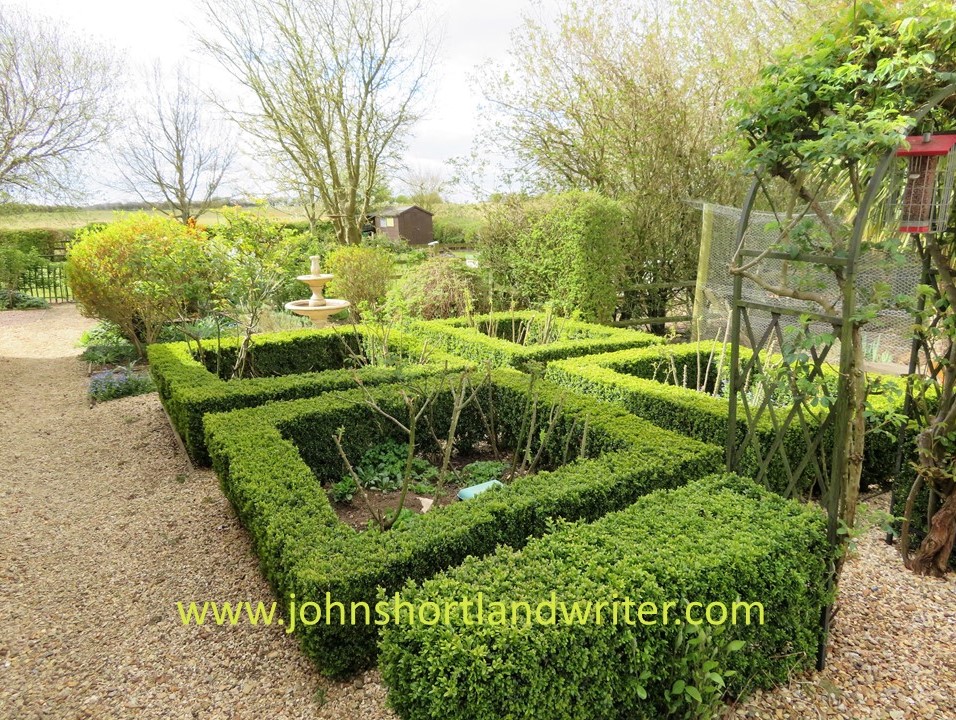
Clematis Cottages at Lodge Farm, Aunby is a small group of buildings converted into delightful, self-catering holiday accommodation.  Richard and Kaye Griffin, friends as well as the owners, live in the farmhouse where they provide every comfort to make a stay enjoyable.  Set in extensive gardens, their aim is to be self-sufficient in vegetables, eggs and honey.  Throughout the gardens there are paths and seating areas – one of my favourites is the summerhouse overlooking the small lake, a haven for wildlife.  Although set on its own and surrounded by fields, Stamford is only six miles away and the internationally renowned Rutland Water, where you can watch rare ospreys nest and fish, ten miles away.  It’s also the perfect base for the nearby Burghley Horse Trials.  To find out more about staying in one of the cottages and their range of home-produced chutneys, preserves and honey click this link here.

A corner of the pretty gardens at Clematis Cottages, Aunby
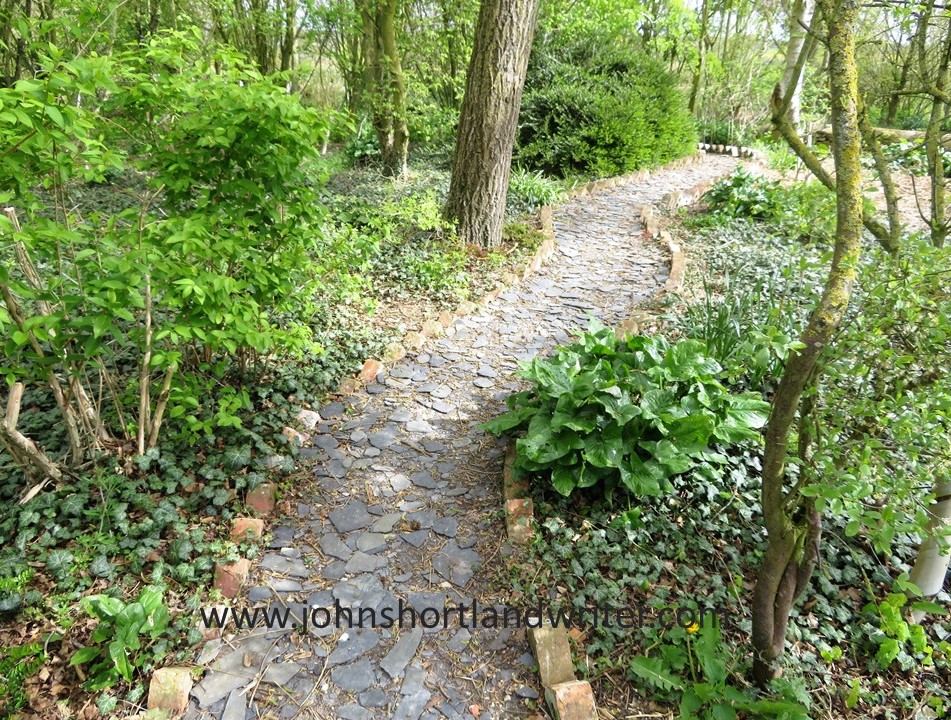
A winding woodland path in the gardens of Clematis Cottages, Aunby
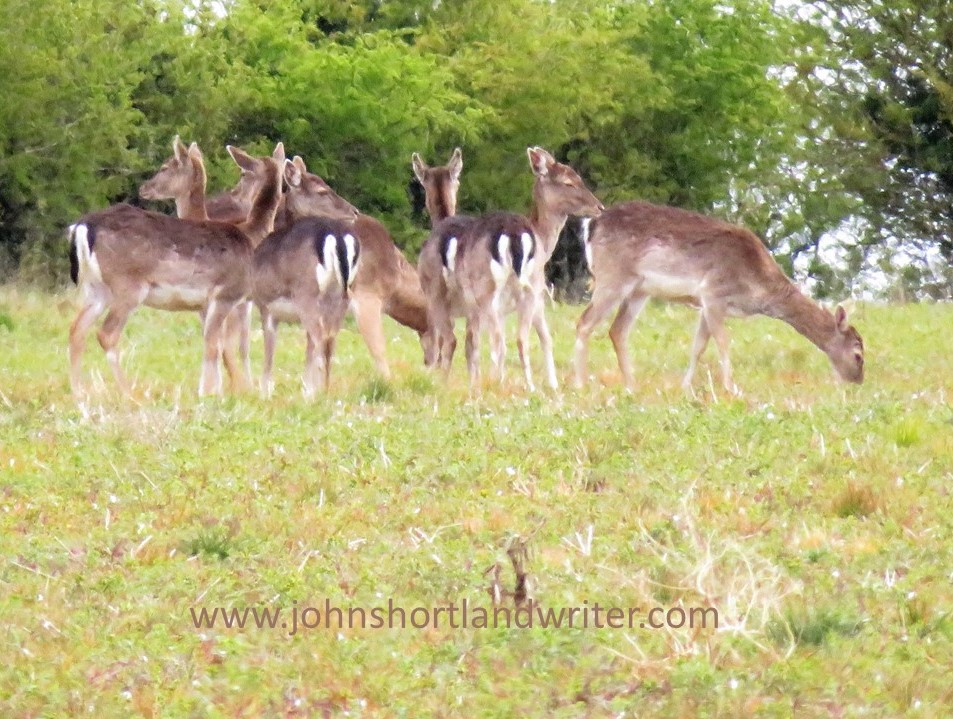
Deer are frequently seen in the fields adjacent to Clematis Cottages, Aunby

Notes:  the walk is a relatively easy and gentle route mostly along roads and tracks.  In places the paths can be uneven and/or muddy but neither should deter anyone with average health and mobility.  Although there are some inclines none are prolonged or steep.  However, as always, care should be taken and appropriate clothing and footwear worn.  It is approximately eight miles in length so allow a good three hours to complete.