2025: The Year in Review – part 2

2026 has come in with a bit of a blast quite literally for we are experiencing a blast of cold air and snow that has swept down from the Arctic.  Here, in our part of the Cotswolds, the snow and ice are more of a nuisance than anything else for there is very little snow cover and the roads have been quite treacherous.  The country folk of yesteryear always said that if the snow hangs around there’s more on the way – time will tell.  It’s been some years since we had deep snow blocking the lanes.
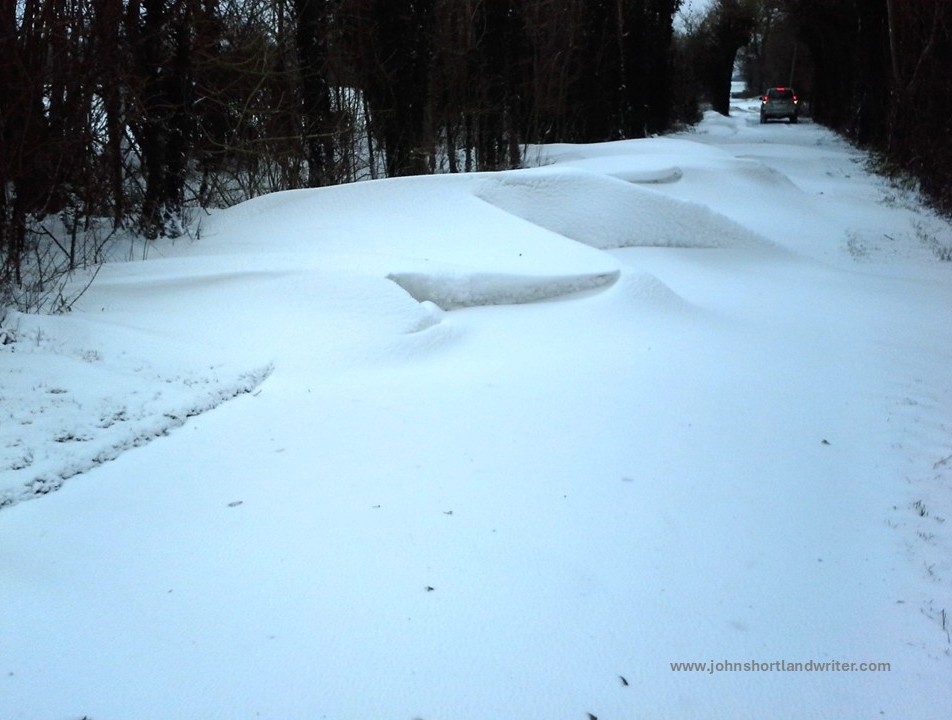
It’s been a few years since we had snow like this

In part 1 of the review (link here), I reflected on the first six months of the year.  It had been quite a successful year for me researching my family history.  I’m fortunate for I can trace them back very many centuries – at the moment I’m reading a book about them in the 1400s!  I also took the opportunity to finally visit the chapel (link here) where one is buried and nothing had prepared me for the splendour of it or how strangely moving the experience was.  I also met with Canadian cousins (this time, living ones!) for the first time and we all commented how strong family bonds can be.  That, and a prompt from you, one of my readers, made me reflect on those other great influencers in our lives, mentors.
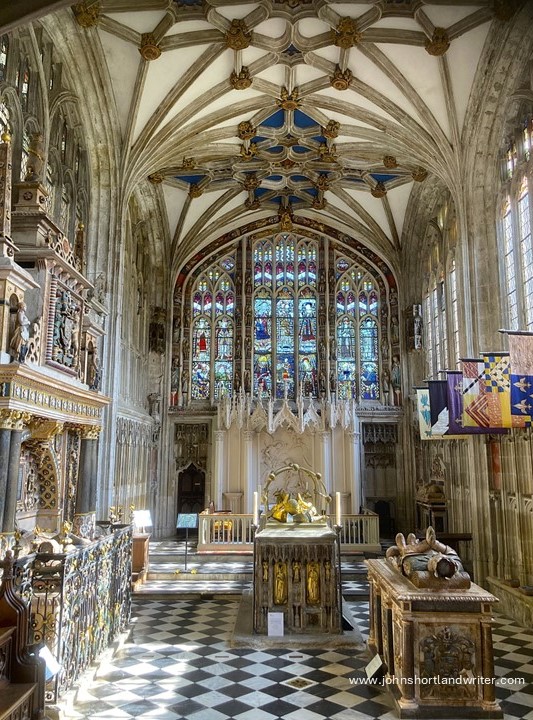
The Beauchamp Chapel, named after one of my ancestors, Richard Beauchamp

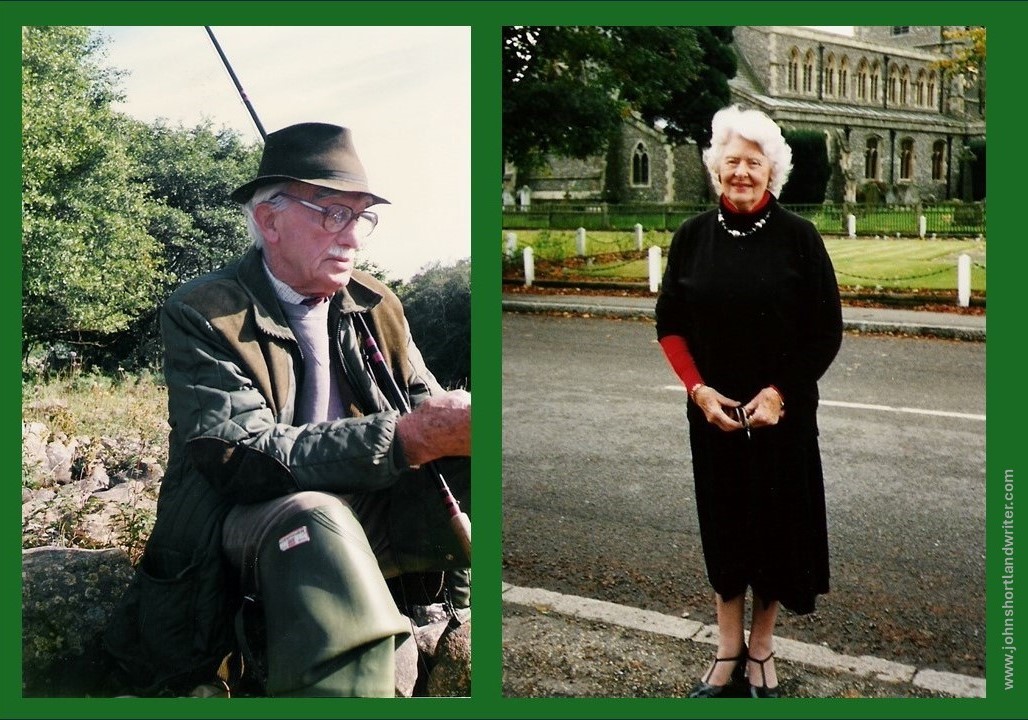
In June I had written about my first pair of mentors, Dick and Lorna French who lived on a remote farm in Exmoor National Park.  Their story can be found here.  The following month, I wrote about Cyril and Pamela Heber Percy who I first met in my early thirties.  How different they were from Lorna and Dick but how equally valuable were the life lessons they taught me!  The Heber Percy’s had both been brought up by wealthy, landed parents.  Cyril, who was born in 1908, had come from a background that we now associate more with Royalty: it was a house with liveried footman and a strict regime.  Pamela’s family were very different for she was brought up in Ireland where the discipline was far more relaxed.  Both had a deep love for nature and a huge interest in people.  They, like most mentors, had the ability to make you feel very special.  It was with Cyril that I first learnt to fly fish, and it was he that gave me the ability to recognise where the fox had lain and the badger pushed through a hedgerow – more of them in this link here.
It was back to Exmoor for August (link here) to explore the three churches where according to local rhyme and legend no priest would ever go to.  Was it due to them being so remote or was it due to witchcraft?  Or bandits?  Or lepers? Whatever the reason, they are well worth visiting today for they sit in some of the most stunning countryside that you’ll find in England, and in August the hills are cloaked in a purple haze of heather flowers.  One of the three churches is world famous for it was at Oare that Lorna Doone was shot as she stood at the altar on her wedding day.  As with all my blog posts, there are lots of photos to demonstrate what a beautiful area I have been lucky enough to have spent so much time in since my teens.

Oare Church on Exmoor where Lorna Doone was shot on her wedding day

September found me writing about the chance contact by a Cheltenham art gallery asking me for help with a series of watercolours of London street scenes they had acquired.  It turned out that they had been painted by yet another ancestor of mine (they have since been sold and are now in the United States).  My own artistic talent is restricted (as one kind person described it) to painting with plants – I can visualise garden design and create it but I could never offer clients an artist’s impression!  In the blog I explored the various connections I have to people that are skilled artists ranging from present day to those in the past.  It was a fascinating task and not one I’d ever thought much about until I received the prompt from Cheltenham.  To see the London paintings as well as the others I found click on the link here.

One of the four paintings of London that are now in the USA

It was very much back to the Cotswolds for Halloween.  We live very close to the Rollright Stones, parts of which date back six thousand years – so older than Stonehenge.  It has long been a place of ritual and superstition and Rollright and its surrounding villages have an equally long association with witchcraft.  In 1875, a ritual murder was committed.  Poor, elderly Anne Tennent was harmless enough but accused of witchcraft with brutal consequences.  In my research for the blog, I came across a hand-written eye-witness report and had email correspondence with her 4xgreat-grandaughter.  What I hadn’t expected to find was that a similar murder was committed very many years later although the connection to witchcraft was not disclosed until the late 1960s, so well within my lifetime.  And then there are the tales of the mysterious black, headless dog being seen…  When I visited the stones in October offerings had been lain upon them.  Intrigued?  Click on the link here to find out more.

The mysterious Rollright Stones, over 5000 years old and a centre for witchcraft

It had been some time since I last wrote about gardening which is, of course, my hobby turned profession.  One of the constant questions I’m asked – and often a tricky one to answer – is how to screen an unwanted view.  November would be the perfect month for dealing with a problem like that so in Hide that Ugly Wall I looked at the various options.  In the blogpost (link here) we looked at trellis, climbing plants, and ideas for planting in front of the wall, fence or whatever else needed screening.   At the end of the post there is a list of plants of all types and sizes to help with selection.

Screening an ugly wall – in gardening, there is a solution to every problem!

So the year came to an end with reflection upon what had been and 2026 begins a new year of blogging.  As Life in the English Cotswolds enters its seventeenth year all that is left is for me to thank you all for helping to make it such a success.  When I began in 2009 it was to be a short-lived experiment in combining text with images.  I never anticipated that it would be read let alone develop into this!  Now, I hear from people all over the world and have even met a few of you.  It has received awards and featured in national newspapers, and it led to my being involved in setting up a literary festival. It was through this that I was approached to write my book on gardening, Why Can’t My Garden Look Like That?  Who would have thought it?!
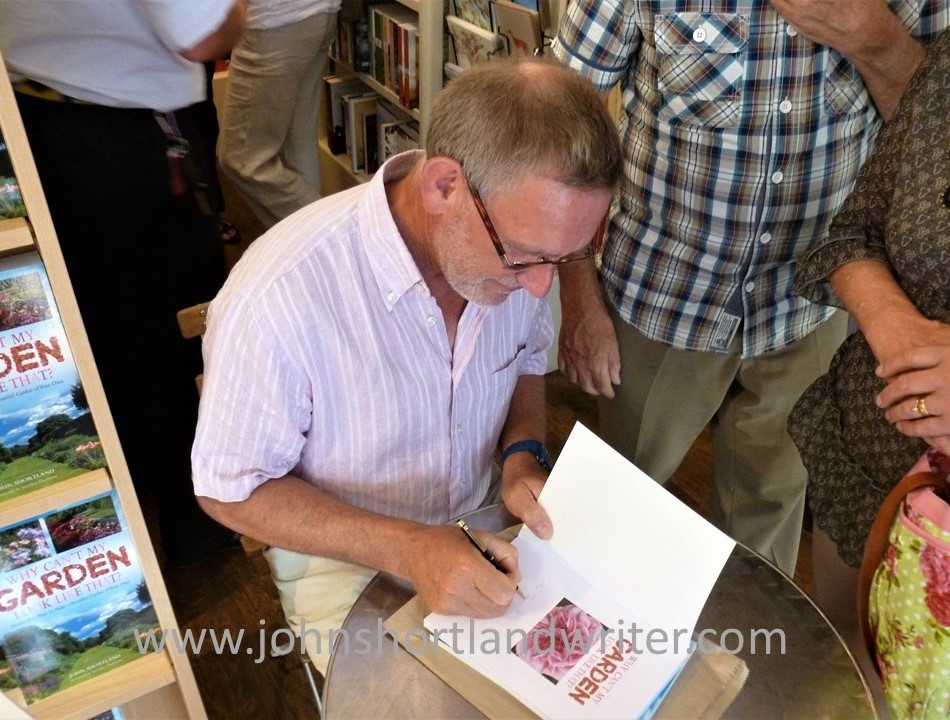
Book signing – the publishing contract came as a direct result of blogging

With every good wish for a happy, healthy and peaceful 2026.  I’m very much looking forward to seeing what adventures arise and sharing them here.  If you have any thoughts on topics, ask questions or just fancy a natter I can be contacted through the Get in Touch tab at the top of the page.
An Arty Family?

Eighteen months ago I was contacted by a gallery in Cheltenham about their researching an artist for they had acquired four watercolours of London street scenes painted during a ten-year period from 1885.  They were by Edward Angell Roberts who had lived with Mary Ann Shortland, an ancestral cousin of mine.  Although they described themselves as husband and wife in official documents, Edward was already married to the exotically named Josephine Bartolozzi Vestry Anderson.

New Street, Spring Gardens
Edward Angell Roberts, 1885

Edward was born in Kennington in the English county of Surrey in1836.  His father was a tea merchant and aspiring gentleman which presumably he became for by the age of fifteen, Edward was being educated at Christ Church Hospital, a school for sons of clergy and gentlemen.  It was a good springboard for Edward for in 1855 he was promoted to Deputy-assistant to the Commissary of the Inland Revenue before proceeding to becoming Clerk to the War Office.  In his spare time, he painted.

Old Wooden Houses, The Strand
Edward Angell Roberts, 1887

The four watercolours show great artistic detail of places within a stone’s throw of the War Office, in London’s Pall Mall.  They are New Street, Spring Gardens (1885), Old Wooden Houses, The Strand (1887), Garden House, Clements Inn (1895) and Pump Court, Temple (1895). They have since been sold at auction to a buyer in the United States.

Garden House, Clements Inn
Edward Angell Roberts, 1897

Edward had married Josephine in 1858 and the census, three years later shows them living apart.  Whether that was a temporary separation is not known for shortly after they had two children, a girl in 1864 who died in infancy and a boy in 1866. However, by 1871 he was living with Mary Ann and Josephine and the son disappear from record.  It is thought that they may have moved to Ireland for the son reappears in the English 1901 census return and claimed to have spent time there.  As for Edward and Mary Ann, they never married (or had children) for in his will, Edward leaves his estate to Mary Ann Shortland, spinster.

Pump Court, Temple
Edward Angell Roberts, 1897

I began to wonder if we had other artists in the family for several of my cousins, my sister and my father were all artistic,  I always felt that the skill had passed me by until some kind person exclaimed that through my career as a garden designer,  I paint with flowers, a description I rather hold onto.  It is true that there are some similarities for a new garden is a blank canvas waiting to be given a backwash of green and then daubed with the colour shapes and textures of flowers.  Below is a rather poor quality photo of one of my early designs inspired by a Japanese Imari plate which was, I suppose, quite any arty approach to take!!

Garden design inspired by Japanese Imari Plate
John Shortland, 1999

Another ancestral cousin painted and illustrated books on the town of Rye.  Marian Eleanor Granville Bradley was the granddaughter of the Dean of Westminster Abbey, George Granville Bradley.  Mostly remembered for her line drawings, occasionally they or paintings of hers are available for sale at auction.  An only child, born in the United States, she returned to England sometime during the 1880s.  She never married and died in 1951.  Her pencil sketches of Rye appear very simple at first sight and, like Edward Angell Roberts, belie the attention to detail that is executed.  Interestingly, a couple of her close relatives are described as ‘oil and colour merchants’ so it seems that art provided a living for my family in more ways than one…

Ship and Anchor, Rye
Marion Eleanor Granville Bradley,1920

And finally, there is Uncle Les – not my uncle at all but (yet another) cousin of my father and, in the convention of the time, known to me as Uncle.  I only met Les the once for he died quite suddenly when I was young.  However, I did get to know his widow well, so it came as rather a surprise when I was sent this little pen and ink drawing of (I think) a house in Kingston-upon-Thames many years after her death. 

Edwardian House
Arthur Leslie Shortland, 1935

A few lines on Josephine.  With a name like hers, curiosity got the better of me and so enquiries were made and she turned out, as hoped, to be ‘interesting’.  She was a close relative of Madame Vestris, a famous, if not infamous actress, contralto opera singer and theatre manager.  Madame Vestris probably deserves a full article of her own!

Madame Vestris, c1831 [Wikipedia]

Family history research is always uncovering something fascinating, puzzling or new – I wonder what it will turn up next?

With thanks to Andy Shield of Brave Fine Art , Cheltenham www.bravefineart.com }for sending me copies of the four paintings

Brasserie Blanc Cheltenham

Cheltenham, on the western edge of the Cotswolds, is full of historic Georgian buildings which make it an interesting place to visit if you are readily bored by the now characterless towns that have had their hearts ripped out in the interest of modernisation.  Although it has all the major chain stores there are still very many smaller, independent shops which help to make the centre busy and vibrant.  There are, however, plenty of opportunities to escape the throng of shoppers by relaxing in its parks and green spaces which are close to hand and beautifully maintained.  With so many positive attributes, it is not surprising to find that there are also numerous cafes, bistros and restaurants – great news if, like me, you prefer your relaxation to revolve around food and drink.

Cheltenham (3)   copyright

One street that incorporates all of the above elements is The Promenade, a wide tree-lined boulevard.  We made our way to the top end of it, walking past the splendid Town Hall with its fountains, to reach Brasserie Blanc where we had booked a table for a Saturday lunch.  Set in a delightful Georgian townhouse, it has very recently been completely refurbished and, judging by the number of diners there, has retained its loyal clientele.

Cheltenham (4)   copyright

Any culinary venture that has Raymond Blanc’s name attached to it is bound to be a good choice and Brasserie Blanc didn’t disappoint whether in its understated interior design, the friendliness and efficiency of the staff and, most important of all, the quality of the food.

Slide1

The huge arched windows and high ceilings give a feeling of space and natural light, both of which prevent the L-shaped marble bar, which runs almost the full length of the building, being too dominant.  It is visually impressive and imparts a delightfully informal atmosphere to the dining area.

Slide2

Our Italian waitress, Chiara, who was both charming and efficient, guided us through an extensive menu.  For the starter my partner selected the cheese soufflé with a rich cheese sauce which came with the most wonderful, crispy outer crust.  I went for the salt beef salad, chosen to test the chef’s expertise for, having a Jewish grandmother, I consider myself to be rather an expert when it comes to salt beef.  It didn’t disappoint, the combination of flavours being both subtle and mouth-watering.

Slide5

For our mains, I chose the slow-braised Scottish venison casserole.  I was impressed when Chiara advised me that it was both quite gamey and rich which wouldn’t suit everyone’s taste but was just perfect for me.  My partner had scallops with poached, smoked bacon.  In the interest of research, I insisted upon tasting and it was beautifully soft and tender.  Puddings also didn’t disappoint.  My pears with salted caramel would be worth a special trip to Cheltenham just for those and my partner’s meringues were just as they should be, soft and chewy.

Slide3

Brasserie Blanc Cheltenham is one of twenty mostly situated in London or the south of England.  This does, for me, create rather a problem: do I return to Cheltenham or do I try some of the other locations?  One thing is certain, I will definitely be returning!

Slide4

Brasserie Blanc Cheltenham is located at The Promenade, Cheltenham GL50 1NN

All photographs of Brasserie Blanc are taken from their website.  More information including booking details can be found here