Hide That Ugly Wall

We nearly all have one – or, at least, if we haven’t, we have an unwanted view that needs disguising.  Now is the perfect time to deal with it for, if you decide to plant some screening, the soil is moist and still retains some stored summer warmth.  Wait until spring – which you can do – and you run the risk of summer drought and the need for more careful and regular watering.  In the perfect conditions of late autumn/early winter the plant’s roots begin to establish even if you’re unaware of anything happening above ground.

However difficult the position, there is almost always a way to enhance an ugly wall

There are several questions to ask before rushing to the garden centre.  The first is to decide which way the wall faces for the amount of sunlight hitting it will influence the choice of plant – more about that later.  Other factors to consider are will the plants need to be tied into place with strings and wire, and will they need regular maintenance to keep them looking nice and within bounds?  If you’re already beginning to think this sounds like too much hard work or is too complicated, don’t despair – there’s a list of planting options below.  Still baulking at the thought?  An alternative question is, would some sort of decorative screen do the job instead?

A decorative screen masks this unwanted view

One more option to consider is planting in front of the wall, rather than against it.  If there’s room a low maintenance shrub border might be possible.  If space is really tight, then one or two well-chosen plants may work just as well.  For example, trees trained to grow flat against a wall are readily available and can make a statement without hiding the wall completely. Some shrubs will also do this; they are a much cheaper option and usually grow quite rapidly.  In the photo below forsythia, an unusual choice, has been grown against an ugly garage constructed from concrete blocks.  Although it loses its leaves in the winter its dense network of twigs continues to disguise the wall.  For a few weeks in the spring, it looks both exotic and stunning.

Flowering forsythia suddenly looks exotic grown against this ugly garage wall
The Judas Tree (Cercis) flowers on bare wood, its leaves will appear shortly. It has been fan-trained to remain flat against the wall
If space allows, a low maintenance shrub border can work well

For most people, the decision made is to grow a plant that will climb as well as cover the wall.  The plants available can be broken down into two groups – the true climbers (that will need wires on the wall for support), or the ‘clingers’.  These attach themselves to the wall by little sucker-like pads or by hair-like roots.  With the latter it is essential that the wall is in good condition although it is rare for serious damage to happen.  Both types can be sub-divided into deciduous (lose their leaves in winter) or evergreen.  I have found that the majority of clingers benefit from having some wall ties when first establishing to keep them in close contact to the wall.  Once they start climbing they’ll cling without help.

The climbing hydrangea clings to the wall by tiny hair-like roots
Honeysuckle is an example of a climber that needs wires to support it

One option often recommended, is to fix trellis to a wall and it does sound like a quick fix.  My experience is that the plants weave through it – which is, of course, the idea – but that makes for difficult pruning when it is required for it can be tricky to work out which stems need removing and even trickier to disentangle them.  Worse still, trellis has a tendency to rot or break after some years, usually just when the climber has reached its prime.  Replacing it involves cutting the plant back very hard or replacing it along with the trellis.  However, decorative trellis may be an alternative form of wall disguise to consider with, perhaps, just a large pot of plants standing in front of it.

Trellis helps mask this unwanted view. By creating a focal point of the attractive tree, the trellis becomes a feature in its own right and so no plants are being grown on it

Wires are normally very straight forward to fit providing it is done before planting.  I prefer to use a screw-in ‘eye’ rather than the hammer-in ‘vine eyes’ that are the traditional method of fixing.  All that is needed is a drill and a rawlplug and some very basic handyman skills.  The wires should be fitted horizontally and there is no need to create a network of wires heading off in all directions.  The golden rule is to stretch the wire taut and make the plant grow to the wire, don’t add random wires that follow the growth.  Stems should always be tied to the wire rather than pushed behind it and use ties that will stretch or perish in time otherwise they will become strangled as they grow.  It is all much easier in practice – writing down every step makes it sound more difficult than it really is!

A well-trained rose growing on supporting wires. I have enhanced these for clarity they want to be stretched horizontally and spaced about 18″ (45cms) apart
This poor plant has been strangled by its tie; all the upper growth has died

When it comes to planting, whatever the type of plant it is, make a generous planting hole and mix a good quality compost in with the soil.  Often the ground by a wall is dry and full of builder’s rubble or compacted so having a good planting medium around the new plant will set it off on a good start.  At planting, keep the base of the plant at least a foot (30cms) away from the wall if there’s room.  That way it will receive more water when it rains.  One major cause of failure is planting too deep – make sure that the soil is at the same level as the top of the compost that the plant is growing in.  Standing the plant pot in water for a few hours before planting is a good idea too so that the plant is well-watered before it is disturbed – and, if you’re a real beginner to gardening, don’t forget to remove the plant from its pot keeping its soil intact around it.

Solanum crispum (blue) & Clematis montana (white) hiding a garden shed

A list of plant suggestions:
E=evergreen, CL=clinger, N=will cope with north facing wall, Sh=shrub, T=tree

Large walls:
Carpinus (Hornbeam) – N, T, buy pleached or ready shaped
Cercis- T, more tricky to find and you may have to train it yourself but lovely flowers in pink or white and good autumn leaf colour – see photo
Clematis montana – clip back the growth immediately after flowering to keep tidy and within bounds
Ficus (Fig) – N (but won’t fruit), if you like Figs to eat, Ficus is worth considering
Fremontodendron – E, Sh, colourful yellow saucer-like blooms
Garrya – N, Sh, dark green leaves with long green catkins in late winter
Hedera (Ivy) – Cl, E, N, easy to keep under control and provides late nectar sauce for bees and other insects.  Make sure that wall mortar is sound before planting
Hydrangea petiolaris – Cl, Sh, prune after flowering if necessary
Jasminum (Jasmine) – both evergreen and deciduous types are available with scented flowers.  The evergreen (sold as Trachelospermum) needs a warm wall for best results
Magnolia grandiflora – E,Sh, for a high, warm wall.  They need lots of space to thrive
Parthenocissus (Virginia Creeper) – Cl, magnificent autumn color
Prunus lusitanica (Portuguese Laurel) – E, Sh, T, can be grown as a shrub or purchased as a trained tree (see photo)
Solanum crispum – blue or white clusters of flowers.  Vigorous but easily pruned
Vines – prune in winter if necessary
Wisteria – prune twice yearly, midsummer and midwinter

Medium walls:
Actinidia kolomikta – Sh, pretty multi-cloloured leaves best when avoiding strong sunshine
Azara – E, Sh, for a warm wall
Berberis – E, N, Sh, very spiny branches are a good reason for not growing it!  Magnificent red or yellow berries in autumn, much loved by birds
Campsis (Trumpet Vine) – orange trumpet flowers and attractive leaves for a sunny wall
Ceonothus – E, Sh,  smothered in powder-blue flowers during summer
Chaenomoles – E, Sh, white or pink flowers in late winter/early spring
Clematis – plenty of varieties to choose from including evergreen ones – check labels for size as some can require a lot of space
Forsythia – Sh, prune after flowering which takes place in early spring – see photo
Jasminum nudiflorum (Winter Jasmine) – N, Sh, flowers throughout winter
Osmanthus – E, Sh, early-flowering, scented – clip immediately after flowering ends to keep flat against wall
Rhamnus ‘Argenteovariegata’ – E, Sh, variegated foliage, prune to keep flat against wall in spring

Low Walls:
Daphne – E, Sh, very scented flowers but very slow growing
Euonymus – E, N, Sh, Cl, can be grown a sa shrub or clipped flat against a wall, some are self-clinging
Fuschia – Sh, varying heights, the smaller-flowered varieties are more suited for growing against walls
Helianthemum – E,Sh, very low growing but smothered in flowers through summer, clip after flowers to keep tidy
Lavender – E, Sh,likes sunshine for best flowering
Nandina – E, N, Sh – trouble-free, needs no  pruning
Perovskia (Russian Sage) – Sh, silvery foliage and blue spires of flowers from mid-summer.  I’ve grown it successfully on a shady wall although not usually recommend for this.  Prune back by half in late autumn and then again in early spring to keep bushy
Potentilla – E, Sh, bushy long-flowering plants in varying colours

I recommend looking up these plants on Google to see more detail.  Also, there are many roses that can be considered including some that are fine for north walls.  Apples, pears and plums fruit well when grown against walls of any aspect, as do apricots and peaches if the wall is warm and sunny enough.

For similar information on how to make both your garden and gardening more pleasurable, why not take a look at my book Why Can’t My Garden Look Like That? It’s written for newbie gardeners as well as those with more experience and covers everything from design to planting and maintenance.  In it, I reveal some of the secrets that I used when Head Gardener to large, country estates with gardens open to the public, where the garden had to look great all the time.  All written in an informal, no-nonsense approach.  Makes a great gift and is available from bookshops and, of course, Amazon.


Winter Pruning of Limes, Hazels & Dogwoods

Hard pruning takes courage and gardeners are often reluctant to carry it out for fear of harming or, even worse, killing the plant. Once it is understood that more trees and shrubs are lost through neglect than by pruning the task becomes somewhat easier. In far too many gardens woody plants are grubbed out because they have outgrown their allotted space when judicious pruning at an earlier stage of their life would have allowed them to thrive and give pleasure for many more years.

Outgrown its space? Don’t remove it, prune it!

January and February are the perfect months for carrying out coppicing and pollarding and some shrubs like willow and dogwoods, grown for the winter colour of their bark, are actually improved by the process. Coppicing and pollarding are traditional techniques that have been carried out for centuries in woods and forests to provide a plentiful supply of fuel and fencing materials. As with all procedures, jargon evolves and coppicing and pollarding are just words that describe the removal of branches back to the tree trunk (coppicing) or, in the case of pollarding, the removal of stems to ground level. Somehow, if you just say to yourself, “cut off every branch” the mystery of the process disappears and becomes less intimidating.

Willows – some newly pollarded line a riverbank

Limes (Tilia) are very beautiful when grown as full-sized trees but become far too large for most gardens. They are better planted as parkland trees in a field, if you are lucky enough to own one, where there stature and grace can be appreciated from a distance. Too often they are grown where their branches overhang driveways where they drop their sticky honeydew over vehicles and become a nuisance. Most limes are host to tens of thousands of aphids (greenfly) which feed on its sap and then secrete the unwanted waste. Somehow, the gardener’s jargon word ‘honeydew’ sounds so much nicer than ‘greenfly crap!’ If you are determined to plant a lime tree in a confined space the Caucasian Lime, Tilia x euchlora which doesn’t have this problem is the one to go for. Remember that any tree in a confined space will need its size controlled so read on to find out how to pollard it.

Limes, when mature, are beautiful but very large trees

The time to pollard a tree is winter and January, when there isn’t too much to do gardening-wise, is the perfect month. I always aim to complete by the 31st which allows time to continue into February, if need be. By the middle of that month the sap will be starting to rise within the tree so it is sensible to complete the task by then. It is very straightforward to remove the branches for which you will need secateurs for smaller twigs, loppers for larger ones and a sharp pruning saw for anything bigger still. Which tool to use when? That too is easy to know. Secateurs and loppers should cut through the stems easily – if you need to twist the tool or the stem, you should be using the saw.

By midsummer there is plenty of new growth on this old willow pollard

Common sense will tell you that if you remove all branches from a tree there will be nothing left to offer any screening. This isn’t always important and coppiced trees send out new growth very rapidly as the weather warms up. However, for privacy or a different ornamental effect more careful pruning is required. All that needs to be done is to cut back any branch or twig that has grown beyond the space you have allocated for it.

A pollarded lime allee provides drama and a focal point
This lime allee has had its side branches retained to give denser summer screening

Limes are not often grown for the colour of their winter twigs probably as they are up rather high and so less noticeable. Willows (Salix) (when coppiced, for they can also be pollarded) and dogwoods (Cornus) are very different for their bright yellow, orange or scarlet stems are very visible and a mainstay for any winter garden. They are also quite simple to prune as it is all carried out at ground level. When the plants are mature, I prefer to cut them over a three year period as this retains their overall height. Quite simply, it means that only a third of the stems are removed or, if you have plenty of shrubs, completely prune one in every three to their base. The purpose behind this pruning is not so much to control their size but to maintain the strength of colour which is at its best on younger shoots. If left, they gradually become quite dull.

The coloured stems of dogwoods

Hazels are treated very much like willows and dogwoods, although the usual purpose is purely to maintain a convenient size or to provide ‘pea sticks’ to be used for supporting summer plants as well as peas and beans. For guidance take a look at my earlier post from 2021 which can be read by clicking on the link here.

A hazel tunnel is created by partial coppicing to reduce the number of tall stems

On The Verge of Extinction?

In the present climate of anxiety and fear that is sweeping the world, and with the daily news being dominated by coronavirus, it is very easy to wish to be spirited away to a remote and sparsely populated desert island. Although it may seem unlikely that such places still exist, Pitcairn Island in the South Pacific is open to immigrants and offering free land upon which to build a house. With its benign climate and a population of just fifty people the dream could become a reality. Sadly, however, from the day when Fletcher Christian, the mutineer of the Bounty landed and populated the uninhabited island in 1790 its history has been one of almost continuous suffering. It is, in part, because of this history of trauma that the island’s immigration scheme has been largely unsuccessful.

Moyenne Island (3) watermark

If you fancy living on a Pacific island click on the link at the bottom of this page

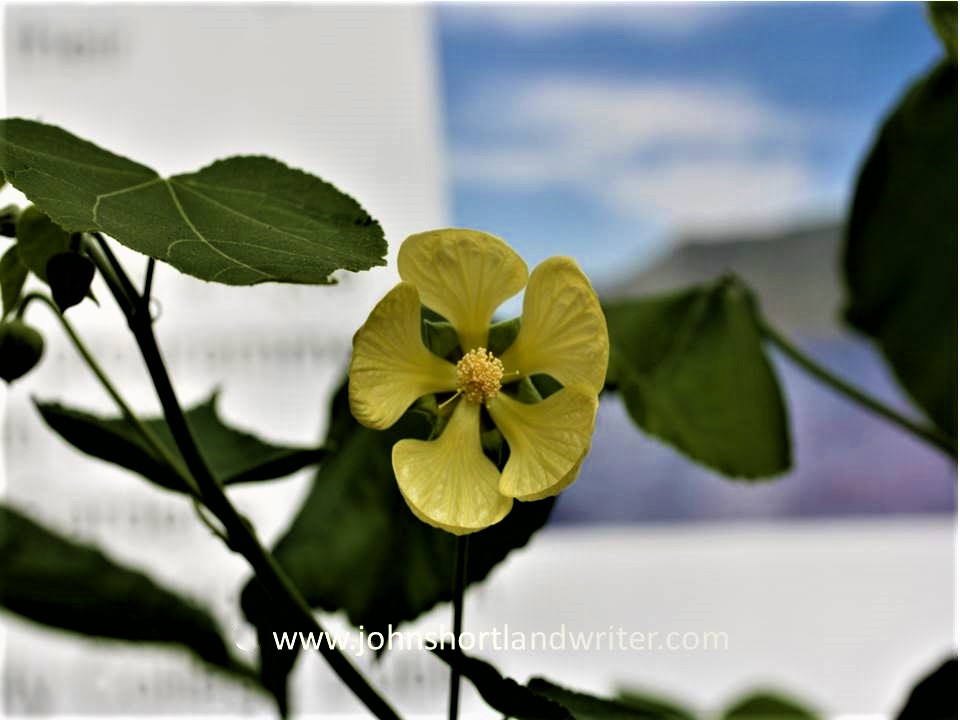
The Pitcairns consist of four islands, all of which are home to some unique flora and fauna. Shadowing the story of its human history, some of these endemic species are now also on the brink of extinction. One that has fared even more badly, is the now extinct abutilon that shares its name with the islands, Abutilon pitcairnense, a small shrub. Although lost to the islands in 2005 it is fortunately being conserved and propagated in botanical gardens – the image of the one below can be found in Ireland, in the glasshouses at Glasnevin, Dublin. From these plants, cuttings were transported to Kew Gardens, London and it is hoped that it may be possible to re-establish the plant in its native habitat sometime in the future.

Abutilon pitcairnense copyright

Abutilon pitcairnense

Although it is not possible for the Pitcairn abutilon to be grown other than under very specialist conditions, other abutilons can be grown quite happily in the UK. Some are reasonably hardy whereas others benefit from the frost protection of a greenhouse; they can even be grown as a large house plant. The closest in appearance, although the flower is nowhere as refined, is the somewhat blousy cultivar ‘Canary Bird’. It is quite floriferous and grows readily from cuttings.

Abutilon 'Canary Bird' watermark

Abutilon ‘Canary Bird’

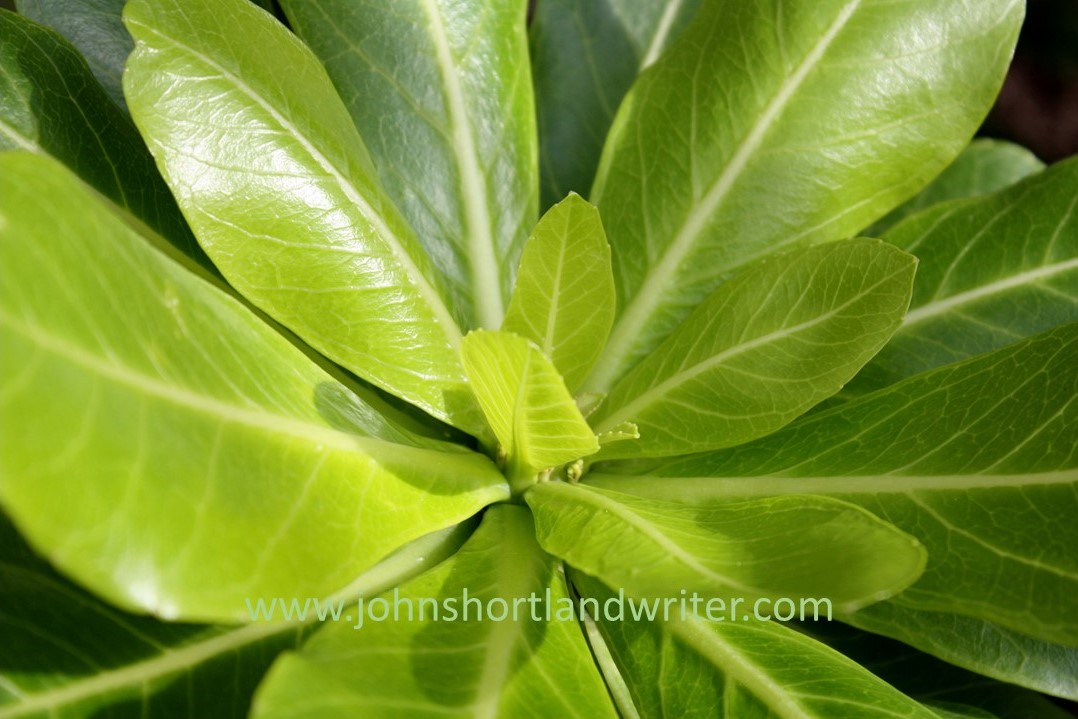
A rare plant that can be purchased to grow at home is the ‘Cabbage on a Stick’, Brughamia insignis. Once only found on the Hawaiian islands of Kaua’i and Ni’ihau the last known sighting in the wild was in 2014. A relatively short-lived perennial its sweetly scented flowers require pollination by a hawk-moth now also extinct. Without the moth to fertilise the plant its survival depends upon hand pollination.

Brighamia insignis (5) watermark

The ‘Cabbage-on-a-Stick’ – Brighamia insignis

Brighamia insignis (3) watermark

Moving from the Pacific to the Indian Ocean, Hibiscus boryanus is a critically endangered shrub in its native Mauritius. With its exotic, scarlet flowers its fate is happier than others for it has been grown widely in warmer climates as a garden shrub up to 8 feet in height. It is one of the parents from which the familiar house plant, Hibiscus rosa-sinensis, was bred.

Hibiscus boryanus (3) watermark

Hibiscus boryanus

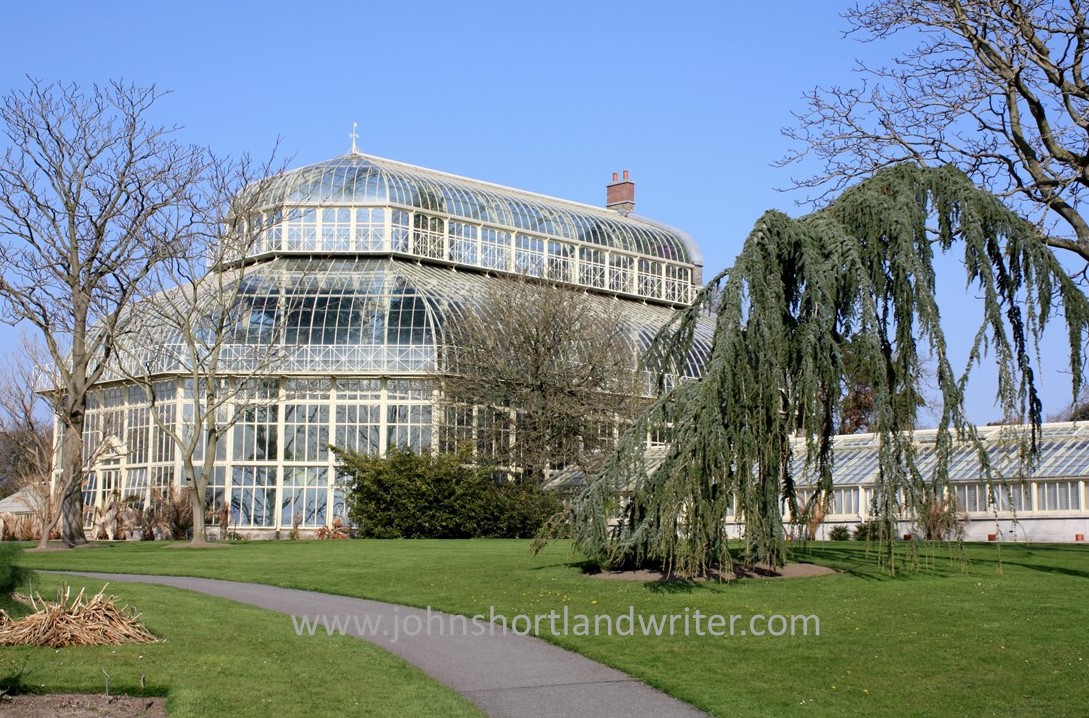
The Botanic Garden of Glasnevin holds many collections of rare and interesting plants, both tender and hardy. They are well worth exploring when paying a visit to Dublin. Apart from numerous glasshouses the grounds are set along the banks of the River Tolka, itself the home to kingfishers and many other birds.

Glasnevin watermark

Glasnevin Botanic Gardens, Dublin, Ireland

If you fancy emigrating to the Pitcairn Islands then take a look at their website by clicking here. There is much fascinating history recorded on the site telling how the islands developed after the Mutiny on the Bounty.

For more information on visiting Glasnevin Botanic Gardens, click on the link here.