A Cotswold Tale for Halloween

The popularity of Halloween in the UK as a fun festival is always considered to be a relatively recent American import.  Nothing could be farther from the truth for it was only with the influx of Scottish and Irish immigrants to the USA during the 1800s that it became a major holiday there.  Halloween’s origins date back to pagan times but it was the Christian calendar that fixed the date for All Saints/Hallows Day as November 1st, (Halloween = Hallows Eve). The traditions that became attached to that, of which there are many, will have to wait another year to be written about.  This blog post is about the Witches associated with Rollright and Long Compton, our very own and tragically real Cotswold story of the Neolithic stone circle and village that lies just a few miles from our home in the secret valley.

Newspaper headlines from 1875
A section of the Kings Men stone circle at the Rollright Stones

The Rollright Stones, prehistoric standing stones dating back almost six thousand years (making them a thousand years older than Stonehenge) consist of a stone circle, and a separate group of three upright stones, plus one large, solitary stone.   Local tradition has it said that the circle known as The King’s Men, The Whispering Knights – the cluster of three upright stones, and the King Stone – the large, solitary stone were all turned to stone by a witch, Mother Shipton.  As early as the 1600s the rhyme (see below) was printed telling of how Mother Shipton challenged the King to take seven steps forward to view the village of Long Compton in the valley below.  He moved forwards but failing to see it the witch turned him, his army and his scheming knights into stone.  All seems too far-fetched and unbelievable?  Then read on…

The Whispering Knights, turned to stone by witch Mother Shipton. They are a thousand years older than Stonehenge
The King Stone stands alone on the hill, still hoping to glimpse the village of Long Compton


In the autumn of 1875 80-year-old Ann Tennant left her home in the village of Long Compton to walk the few hundred yards to the bakers to purchase some bread for her husband’s tea.  It was just like any other day until she met her neighbour’s son, James Heywood.  For many years he had accused her and others in the village of witchcraft, blaming them for various deaths of both people and livestock.  He believed that their evil-eye had prevented him from completing his work in the fields.  He also claimed that they had got inside his drinking water and that was the way they were able to get inside his body and control him.  Meeting her that afternoon on the path he took his opportunity and stabbed her multiple times in the legs with his pitchfork before giving her a blow to the head and stabbing her again.  All this time, Heywood’s father stood nearby not attempting to stop him for he was also convinced there were many witches in the area.

The 17th century lychgate leading to the churchyard where Ann Tennant is buried

It was local farmer James Taylor, hearing her cries, who disarmed James and poor Ann was carried home to die from shock and loss of blood some hours later.  At the inquest, Taylor and a fifteen-year-old lad who had also witnessed the murder gave evidence.  Held in the village pub, The Red Lion, they told of the scene they had witnessed.  Ann’s husband spoke next telling of how the boy’s parents had always said witches wouldn’t leave their son alone.  He also told of how a limb from a tree had fallen onto the boy, leaving him with a scar, and that, too, was blamed on witchcraft.  When Ann’s daughter gave evidence Heywood shouted out, “she’s one as well.  I can name them all and will kill them all.”  Later, at his trial at Warwick Assizes, he was acquitted on grounds of insanity and sentenced to life in Broadmoor mental asylum where he died in 1890.

The Red Lion pub at Long Compton where the inquest into Ann Tennant’s killing took place

You would be forgiven to think that witchcraft and superstition died out with the death of poor Ann Tennant.  Move forward to 1945 – so within living memory for some – to the village of Lower Quinton, some fifteen miles away from Long Compton.   Farm labourer Charles Walton failed to return home from work.  His body was found later that day: his neck had been slashed using his bladed hedging tool and he had been stabbed and pinned to the ground by his pitchfork.  Some reports state that a cross had been cut into his chest.  Several days later a black dog was found hanging from a tree near to the murder scene.

Hedging tools like the ones used by Charles Walton. It was the long-handled slasher on the left
that was used in his killing

It was not until twenty-five years later that Chief Inspector Fabian of Scotland Yard who had led the investigation spoke openly of links to witchcraft.  Apart from warning others not to take part in it he also told of how, when searching the area, he saw a large black dog run past him.  When he mentioned it to a farm lad the boy had turned pale and ran away.   Fabian also told how when questioning local people about the murder, he’d been told that some years earlier a headless black dog had been seen by Charles Walton on nine consecutive days – the following day Walton’s sister died.  Perhaps it was this and his keeping of toads as pets that made some wonder about witches.  However, it was only after Fabian’s public statement that links between Walton’s murder and Elizabeth Tennant’s, all those years earlier, were made.

Handwritten witness account of the murder of Ann Tennent [source: Rachel Cortese-Healey]

So, this is my tale for Halloween.  There is no need for fiction when we live in an area where the belief is still widespread, although rarely openly talked about.  The mystery sightings of black dogs have changed to sightings of large, black cats – are they two of the same?  I visited the Rollright Stones this week and there on one of the stones of the Whispering Knights an offering of thorny, berried hawthorn twigs had been placed.  I’m just glad that a headless, black dog didn’t cross my path.  Do I believe in it all?  Let’s put it this way, I shan’t be venturing anywhere near the Stones on All Hallow’s Eve.

Offerings laid on the Whispering Knights – but are they pagan or witchy?

“…as Long Compton thou cannot see, King of England thou shall not be
Rise up stone to stand alone for thee and thy men shall hoar stone be…”


With special thanks to Rachel Cortese-Healey for permission to reproduce her copy of the handwritten witness account of Ann Tennant’s murder.  Ann is Rachel’s 4x great-grandmother

Sources:
British Newspaper Archive
Wikipedia
Ancestry UK

Not So Mad After All

“ As mad as a March hare” so the old saying goes and at this time of year they certainly seem to be a little bonkers with their racing around, boxing and generally erratic behaviour.  However, it isn’t spring madness but sex that is on their minds – rather than being ‘a little bonkers’ it is their desire for a little bonking that drives them to the verge of insanity.

Here in the secret valley, as elsewhere, the hare population in some years is greater than others.  It looks as if 2022 is going to be a good year for them for there were eight in the field by our house a couple of days ago.  This gave great opportunities to watch them from relative comfort as they hurled themselves at one another and galloped around the field at great speed.  Of course, as soon as I reached for the camera they disappeared almost as if they thought that filming hare porn was rather distasteful and embarrassing.  After a while I realised there was one keeping well-hidden watching me. 

The hare forgot to hide its ears…

This ability to disappear has over the years given rise to many superstitions and old wives’ tales.  They were thought to have mystical properties too and I did on one occasion experience this myself.  I was visiting the ancient, subterranean earthwork, New Grange in Ireland.  If ever you were going to have a mystical experience it would be here for you enter the tomb by a long, low and very narrow passageway before entering a large stone chamber.  With almost no natural light it takes a while for your eyes to grow accustomed to the semi-darkness.  The friend that I was with said that she thought she’d fleetingly seen two hares which, of course, was impossible for we were blocking the only exit.  Back outside, we came to the spot where the two hares should be and there, at our feet they rested, two baby leverets, completely unafraid of our presence.

The entrance to the prehistoric burial chamber at New Grange
The two baby hares were nestling in the grass…

The hare has been revered and feared in equal measure throughout the world.  It was considered an ill-omen to meet one upon the road; there are myths concerning the cycles of the moon and the hare both connected to lunacy.  It has been much connected with ancient art and can be found in prehistoric rock paintings; in England in the Cotswold town of Cirencester (originally a Roman town known as Corinium) we have the magnificent Roman Hare mosaic now on display in the local museum (link here).  Discovered fifty years ago, it dates from 400AD and shows the animal feeding.

Hares are considered to be very nervous and flighty animals that also have the capacity to do huge amounts of damage if they should enter gardens or orchards.  Some years ago, one took up residence in a garden I cared for and I found, at least in this instance, that this was quite untrue.  Admittedly, if anyone entered the garden it would quickly hide but It accepted me as part of the garden and would hop around my feet quite happily.  It must have been feeding within the garden but I never found this to be a problem.  It is always a huge privilege when a wild creature trusts you and to be able to observe one at such close quarters especially so.  I always hoped it would raise a family there but I was more than satisfied with having just the one.

‘My’ hare would rest beneath a flowering jasmine but come out to join me in the garden
The hare would hop around my feet…

My’ recent hares finally couldn’t resist returning to their antics. Outrunning one another with their great speed and ultra-quick turns they, at last, didn’t notice me reaching for the camera. Although tricky to capture on film I finally succeeded.  As I did so, I thought of the thirteenth-century poem that I was supposed to recite to avoid bad luck.  The Names of the Hare, written in Middle English, lists seventy-eight names – With no memory for lengthy poems, I had to rely upon my previous friendship with the hare and the hope that would hold me in a special, protected place.  It seems to have done so but just as the myths claim, today when I went to bid them ‘good-day’, not a hare was in sight.

Success!
Time to go!

.

Grandma and The Man Who Never Was

Grandma was full of sayings that either puzzled us as children, made us laugh or made us think “silly, old Grandma” – often it was all three.  One was that you should always go out wearing clean underwear in case you got run over by a bus.  The story below just goes to prove that, as always, Grandma was right, well almost right.

Grandma was full of funny sayings & superstitions

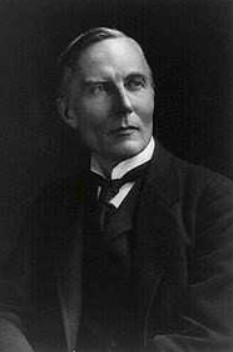
Herbert Fisher (HAL Fisher), husband of Lettice Ilbert – whose own, remarkable story can be read here – was on his way to work during a WW2 blackout.  Warden of New College, Oxford and Chairman of the Conscientious Objectors Tribunal, he was in London for the latter when hit, not by a bus but by a lorry.  He died in hospital several days later on the 18th April 1940.  Little would he have thought, or Grandma for that matter, that his underwear would play a prominent part in the history of defeating Nazism.

HAL Fisher [Source: Ancestry]

About the same time as Fisher’s demise, in south Wales, the mother of Glyndwr Michael also died.  Michael had always lived with her but now homeless, he made his way to London.  It was here, aged 34 and depressed, penniless, and hungry, that he was found two years later in an abandoned warehouse.  He was dying from having eaten rat poison, the bait having been left, smeared on bread.  The phosphorus in the poison when ingested reacts with the naturally acting stomach acids to produce phosphine gas.  The slow death made his body ideal for the purpose that lay ahead.

The British Security Service had been waiting for some time to obtain a body that could be used in an elaborate hoax against the Germans.  Operation Mincemeat, as the top-secret plot became known, intended to release false papers on the body of a drowned officer of the British Army.  The aim was to deceive the German Military Intelligence into believing plans for the invasion of Greece and Sardinia, whereas in reality, the intention was to invade Sicily.  However, it was not felt possible to use the body of a serving officer whilst maintaining the secrecy required.

Major William Martin RM, as Glyndwr Michael’s corpse was to become, was released into the sea off the coast of Spain on the 30th April 1943 for the tide to carry him ashore.  About his person were various personal effects: letters and a photograph from his fiancée, theatre tickets and identity papers.  A briefcase had been attached to him carrying the false invasion plans, all with the purpose of making the Germans believe that he had been drowned at sea whilst delivering documents to a British General.  The ruse worked and the invasion of Sicily was carried out with considerable ease.

False papers of Major William Martin, RM [Source: Wikipedia

Major Martin was buried with full military honours on the island of Huelva, Spain, the deceit engraved into the grave’s headstone.  Over the years that followed rumours spread about the true identity of the body.  In 1996, an amateur historian Roger Morgan, discovered documents in the Public Records Office and it was later confirmed that the body was indeed that of Glyndwr Michael.  Soon after, an additional inscription was added to the headstone:  Glyndwr Michael Served as Major William Martin, RM.  Back in his hometown of Aberbargoed, Wales his name was added to the war memorial along with the name in Welsh by which he had become known – The Man Who Never Was.

Grave of The Man Who Never Was, island of Huelva, Spain [Source: Wikipedia]

Back to Grandma’s warning and HAL Fisher.  One of the problems in maintaining the secrecy of Operation Mincemeat was how to find clothing for Major William Martin.  Army uniform was not a problem to obtain but how could they find undergarments of suitable quality for someone of middle rank yet without risking a breach of security?  HAL Fisher’s New College rooms had been left untouched since his death where items of the required quality could be removed without raising suspicion.  If Grandma had lived long enough to have heard the tale, she would have been even more surprised, that HAL Fisher had married into her grandson’s family.  He may only have been a distant cousin of my father, but I can imagine her kvelling with pride and nodding with satisfaction.  There is no doubt that she would also have given a huge sigh of relief that HAL had heeded her advice.


Sources: Wikipedia, Ancestry, Commonwealth War Graves Commission