In Praise of Bluebells

Can there be a more delightful spot to linger than a bluebell wood in spring?  The intensity of their colour when seen growing in their tens of thousands would hurt the eyes if not offset by the citrus green of the beech trees they favour growing under.  With early morning sunlight filtering through the branches to strike the woodland floor below, both leaves of beech and ‘bell shimmer and sparkle in the clear light.  As the forest warms the bluebells release their scent but not the heavy, redolent perfume that one might expect. Instead, a fragrance so soft and gentle that for a moment it seems to come from elsewhere; all too quickly it melts away, dispersed by the increasing heat.

Bluebells are one of the key indicator plants of ancient woodland, a term that refers to woodland that pre-dates AD1600, for their bulbs prefer to remain undisturbed where they can slowly establish huge colonies.   Here, in the secret valley where they grow in hedge banks, they can be used to trace the line of an equally ancient drove road for it is thought that the hedgerows and trees that line it are remnants of Wychwood Forest.  Over centuries, the boundaries of the Forest have shrunk as fields were created and the trees cleared for arable land or pasture.  By leaving the field edges untouched the early farmers saved themselves both time and labour and in doing so preserved the bluebells that give me so much pleasure each spring.  The drove road – primarily used for herding livestock long distances to market – passes our little stone-built cottage before diverting across open country.  It is still used as a public right of way.

Bluebells line the old drove road that passes my house

Unsurprisingly for a plant that has been around from time immemorial, the bluebell has numerous regional names – Common Bluebell, English Bluebell, Fairy Bell, Wild Hyacinth to name a few.  Perhaps the best has to be Granfer Giggles.  In Scotland they are known as harebells although to an Englishman harebell would be a completely different plant that grows later in the summer when the bluebells have long ended.  Even the Latin name which is supposed to prevent confusion has changed over time – it is now known as Hyacinthoides non-scripta.  I much prefer the earlier name of Endymion non-sciptus, it sounds more attractive as well as having a romantic Greek legend attached to it.  Illegal to dig up plants from the wild, bluebells are sometimes offered for sale from cultivated stock under either of these names.

Occasionally you may find a white, or even a pink bluebell

For such a well-loved plant – it has been voted England’s unofficial national flower – bluebells do not seem to feature much in poetry.  They are frequently mentioned by name but no-one, as far as I can tell, seems to have written poems specifically about the plant.  Perhaps it is because they are such a common sight and have none of the delicacy of the wild rose, the scent of the honeysuckle or the diminuity of wild thyme. Shakespeare, who seems to have written about absolutely everything (including thyme), only mentions it once: “the azur’d harebell” in Cymbeline.  The Brontë sisters both wrote of bluebells but I’m not sure they weren’t describing later flowering harebells. Emily’s description “waves in summer air”, and Ann talks of a single flower and of its trembling.  Bluebells are quite a stiff flower that don’t wave or tremble that readily whereas Campanula harebells fit the description nicely. I can’t recall even my beloved Richard Jefferies, the Victorian naturalist, waxing lyrical over them as he did over so many other things.  I may be wrong about this for I can hardly call myself a Jefferies’ scholar, more an enthusiast. However, Cicely Mary Baker created a delightful illustration of the flower in her set of Flower Fairies published in 1923 where she describes the bluebell as the king of flowers.

The less-common Harebell – Campanula rotundifolia
It flowers later in the summer and in more open places

It is to the Georgians that I have turned to illustrate our love of bluebells for I have found frequent references to them in old newspapers and periodicals not just in published poetry but also in their fashions.  This description of the sumptuous gown worn by the Princess of Wales when attending the King’s Birthday in 1795 is worth reproducing here: “A gown of superb, embroidered crepe imitating the rays of the sun and intertwined with embroidered white lilies.  Over which a cape of Venetian net embroidered with laurels and Diana’s (presumably the Goddess) crescent”.  Finally, there was another over-cape “embroidered with bluebells (yes!) and held in place by rich cords and tassels”.  As if this wasn’t splendid enough there was “a long train of silver gauze bordered in purple and silver”.  Having spent twenty years in the world of fashion (before I switched careers to horticulture) this has sent me into overdrive!  Sadly, I haven’t found any illustrations for this ensemble but I do have photos of the ‘draft’ for equally exquisite embroidery designed by Norman Hartnell for a robe for Queen Elizabeth II.

Embroidery design by Norman Hartnell for Queen Elizabeth II

Even earlier, in 1786, Mrs Charlotte Smith was publishing her sonnets.  A remarkable woman for the age, she left an unhappy and violent marriage and campaigned for women’s rights and the abolition of slavery.  She wrote fiction and poetry to financially support herself and her children.  This sonnet reminds me so much of my youth where I roamed the bluebell beechwoods of the Chiltern Hills, for which they are renowned.

“Ah, Hills belov’d!  where once a happy child,
Your beechen shades, your turf, your flowers among,
I wove your bluebells into garlands wild,
And woke your echoes with my artless song.
Ah! Hills, belov’d! your turf, your flowers remain;
But can they peace to this fad’ breast restore?
For one poor moment soothe the sense of pain,
And teach a breaking heart to throb no more?

I’m glad to say that my heart is no longer breaking so perhaps the bluebells worked their magic!

A very old photo (hence the strange colour!) of me and my two deerhounds in a Chilterns beechwood at bluebell time

.
.
.

A Rebel in the Family

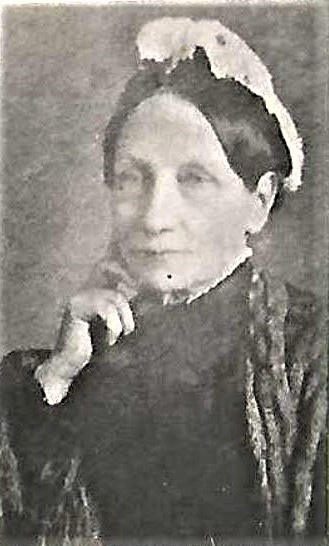
A photograph came winging through the ether to me via email recently of a rather severe looking lady, taken in her later years. As is often the case when meeting an older person for the first time it is all too easy to forget that they had a past; that they were young once and, perhaps, hold a huge store of memories and tales. Sometimes, the stories they tell surprise you and seem more in keeping with today rather than decades before. It was (as it turned out) the same with this lady – Sophia Bradby.

1890 LANGSTON (BRADBY) Sophia B14

Sophia Langston nee Bradby

I had never seen a photograph of Sophia before although I knew of her existence for she was my great-great grandmother. The only tale I knew was that she came ‘from a good family’, the friend of a great poet and the giver of a ‘middle’ name for succeeding generations. Numerous boys, although for some reason, neither my father or myself (for which I’ve always felt rather cheated), sported the name Bradby immediately before the surname. Now that this unexpected image had landed in my inbox I began to dig a bit deeper.

Sophia was born on Christmas Day 1828 in Theale, Berkshire, the third daughter of William Bradby and Mary Shepherd. William had been born in Derbyshire, his parents of Yorkshire origin. Why or when he came south is unknown but in 1814 he married Mary in Reading. We also know that by then he had changed his surname from Bradley to Bradby. The reason behind the name change is unclear for he remained on friendly terms with other members of the Bradley family. In their day, the Bradleys were well-known nationally and, later, internationally. Perhaps the name change was to give his own, immediate family a degree of anonymity. Whether the family were upset and/or disappointed by his decision is unrecorded but perhaps this is the first sign of a rebellious streak that would continue to run through the family to this day.

1863 LANGSTON Charles Samuel L18

The date on this old image is wrong for he was baptised on 3rd September 1823


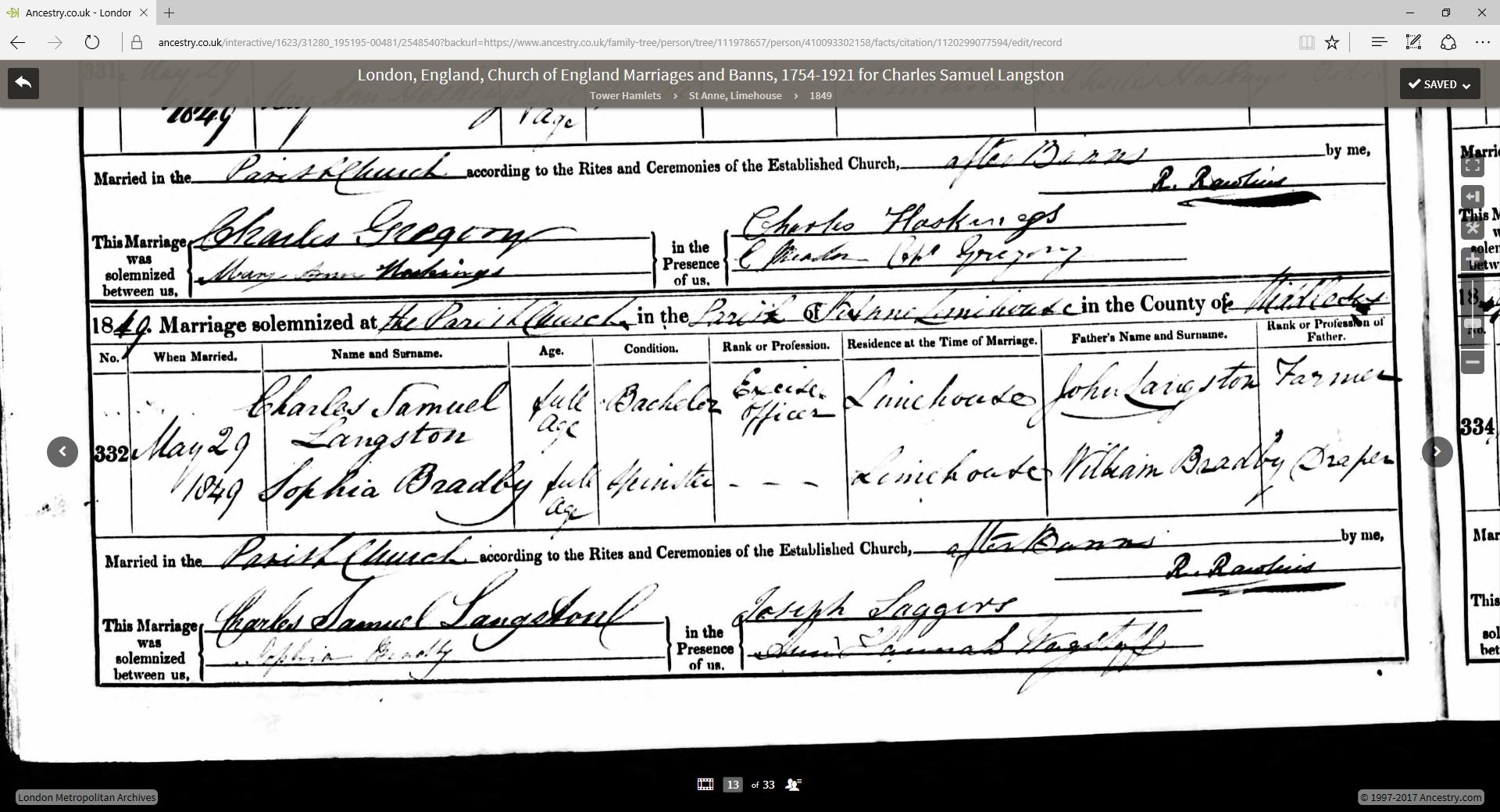
In 1849 it was Sophia’s turn to rebel. On the 29th May she eloped to London to marry Charles Samuel Langston, a union disapproved of by her family. These days, the journey would take no longer than an hour but in the mid-1800s it would have been quite an undertaking. Her travel may have been by coach and horses although the new Great Western Railway line had opened in the early 1840s so she might have travelled by train. Whichever mode of travel she chose she would have been all too aware that her path crossed both an area that had been notorious for highwaymen and footpads and, in more recent times, the scene of a landslide that had derailed a train, killing ten passengers. Whether Sophia ever met her parents again is unknown.

1849 Langston Charles Samuel L18, Bradby Sophia B14

The marriage of Charles Samuel Langston to Sophia Bradby 1849, St Anne’s, Limehouse, London


St_Anne,_Limehouse, London - copyright Amanda Slater

St Anne’s, Limehouse, London  (photo Wikipedia/Amanda Slater)

It turned out that Charles, too, had rebelled, leaving his parents’ home in Cranfield, Bedfordshire because of religious differences. Quite what these might have been is unrecorded.  We know from old records that Charles had been baptised into the Church of England and he also married Sophia within the Church of England so there seems to be no conflict there. Whatever the reason, in 1843 he became an Excise Officer and his application papers are held by the National Archive in Kew, London.  At a later date, this side of the family must have been reconciled for Charles’ father died when visiting Sophia in 1865.

Rectory Farm, Cranfield (3) copyright

The childhood home of Charles Samuel Langston

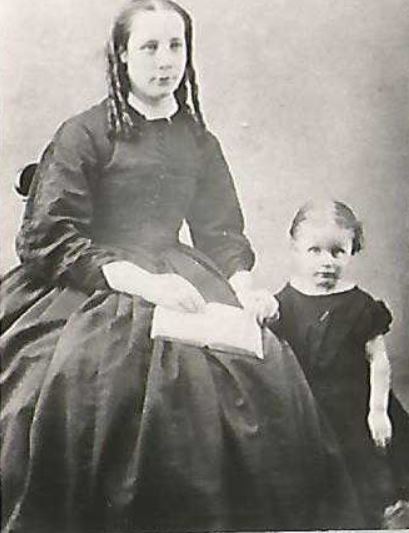
Sadly, Charles and Sophia’s marriage turned out to be fairly short-lived for Charles died aged 40 from cancer of the throat. Their 14 years of marriage produced eight known children, my great-grandfather William Bradby Langston was just twelve months old at the time of his father’s death and poor Sophia was some months pregnant with another daughter, Agnes. The photo below shows Sophia – wearing a crinoline – with one of her children, probably Christiana and taken in 1865. By 1871 she had established a drapery business with her eldest son, Ernest in Reading. By 1891 she had been successful enough to retire to the south coast where she died in 1916; the business that she had founded also prospered and became the largest department store in Reading before it finally closed its doors 120 years later.

LANGSTON (BRADBY) Sophia B14, probably Christiana abt 1865

Sophia with (probably) Christiana, 1865

Many thanks to Jo Liddement who, like me, is a great-great grandchild of Sophia. Not only did she send me the two photographs of Sophia which set me on the journey to find out more about the life of our remarkable ancestor, she also became a newly-discovered cousin.


The Fortune in Your Garden

The garden in winter; not the place where many of us loiter.  Instead we race back to the house for a nice, warming cup of tea.  On the way, we catch the scent from the Mahonia bush that thrives year after year on neglect.  Hinting of lily-of-the-valley, it’s fragrant, primrose yellow sprays of flowers will continue to give pleasure until the spring, as will the white, winter-flowering honeysuckle.  We stop just long enough to pick a few sprigs of jasmine, also pale yellow, to put in a vase.  The list of so many of our favourite plants could go on and on.

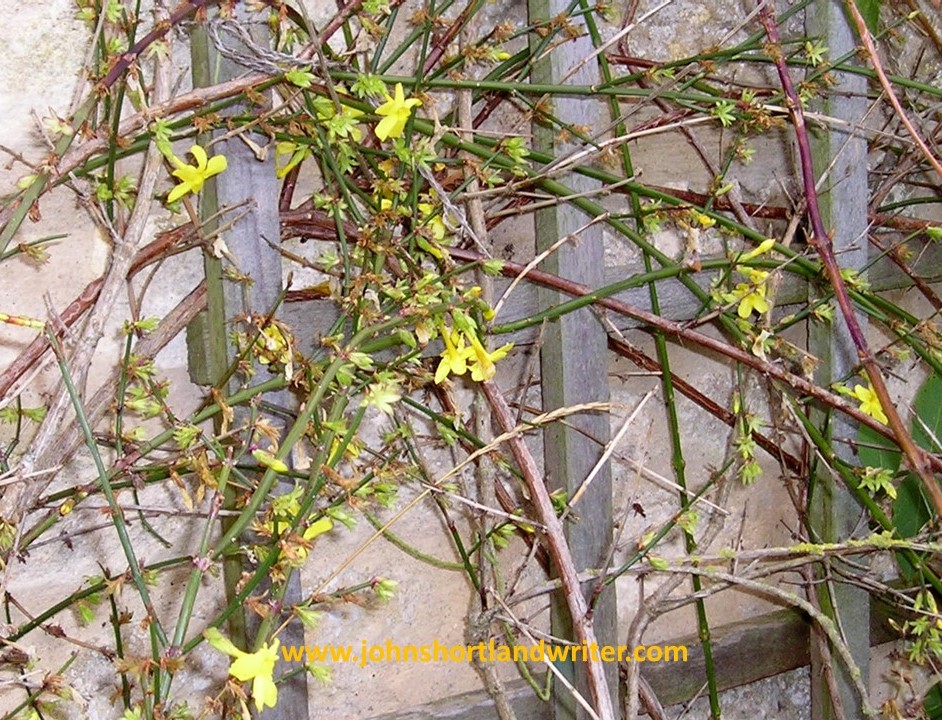
jasminum-nudiflorum-copyright

Winter Jasmine, Jasminum nudiflorum

What do all these plants have in common apart from being easy to grow?  They were all collected by a dour Scotsman in the mid-nineteenth century, Robert Fortune.  Despite being garden favourites and he being heralded as one of the heroes of the Victorians his name today is all but forgotten.  Even more remarkable, his discoveries changed society’s values, values that we now take for granted.  And the cup of tea?   Before Robert Fortune’s expedition to China, tea was an expensive commodity drunk only by the privileged few; soon it was to become the everyday drink of the masses.

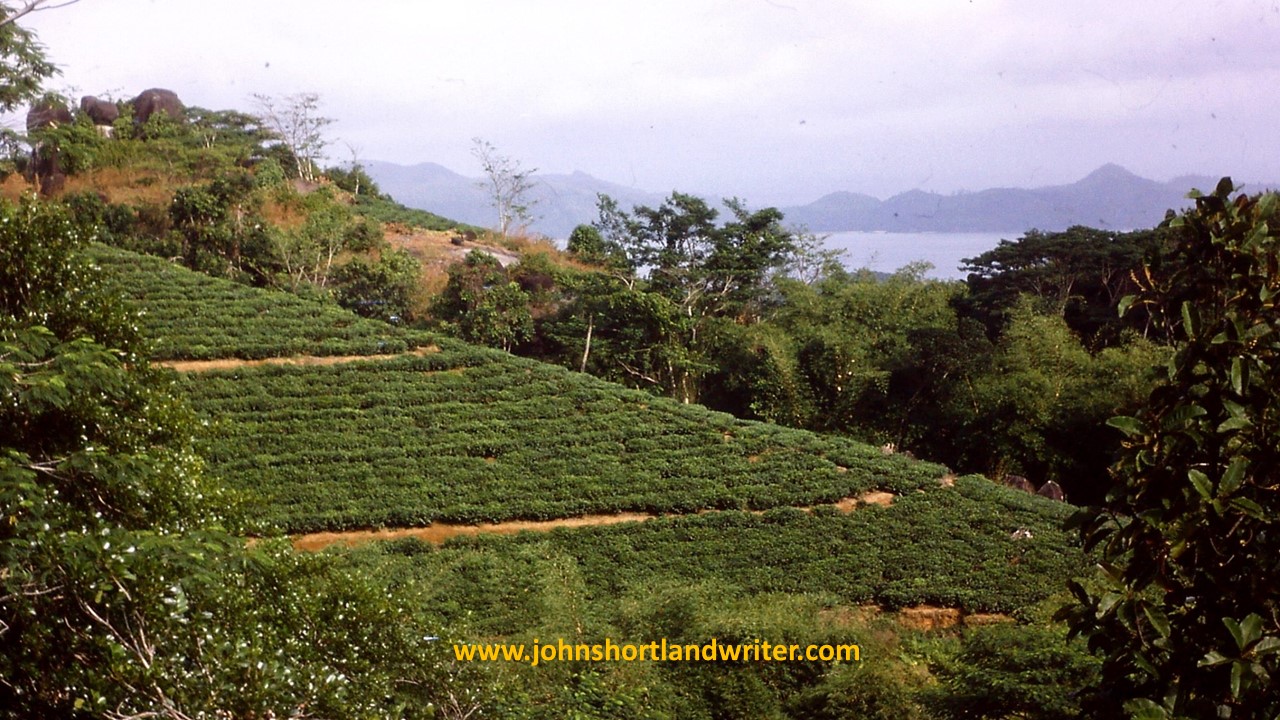
tea plantation copyright.jpg

Tea plantation

In 1843, having shown great ability as a plantsman, first in Edinburgh and then at Chiswick, Fortune was sent to China with the instruction to learn about the practice of using bonemeal and to collect “tea of differing qualities.”  Commissioned for twelve months with a salary of £100 plus expenses, he proved so successful that he travelled for almost twenty years.  Upon his arrival, he disliked both China and the Chinese intensely; their dislike of him (and foreigners, in general) was even greater.  They refused to tell him where to find plants.

Dicentra spectabilis   copyright.jpg

Bleeding Heart, Dicentra spectabilis, another Fortune introduction

Fortune, although rude and unsmiling, was also brave and on numerous occasions had to fend off thieves and pirates.  Confined to his cabin, ill with a fever, his boat was abandoned and he was left to face his forty attackers singlehandedly.  Firing into their midst he survived both the attack and the fever and continued to Shanghai.  There he discovered the ‘Japanese’ Anemone, Anemone japonica, growing in great profusion on disturbed graves.  Now popular in the autumn border, anyone who has tried to eradicate it knows that the brittle root breaks to regrow in even larger numbers.  The graveyard story gave us ample warning of this.

japanese-anemone-copyright

Japanese Anemone

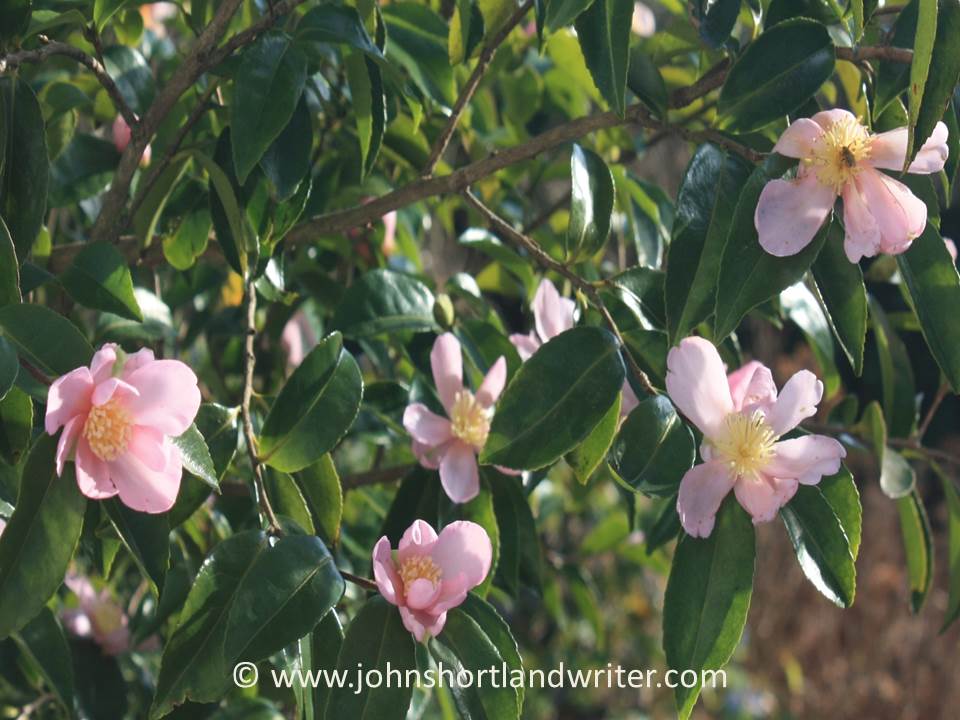
It is for tea that Robert Fortune really deserves greater recognition.  The gardens of the tea plant, Camellia sinensis, were closely guarded by the Chinese.  On a further expedition to China and disguised as a peasant, complete with shaved head and pigtail, he succeeded in sending over 100,000 seeds and seedlings to the East India Company.  It was the foundation of an industry that would create great wealth for both individuals and Britain and reinforced the British belief in Empire.

camellia-sasanqua-peach-blossom-copyright

Apart from the ‘tea’ camellia, Robert Fortune also introduced a number of ornamental varieties

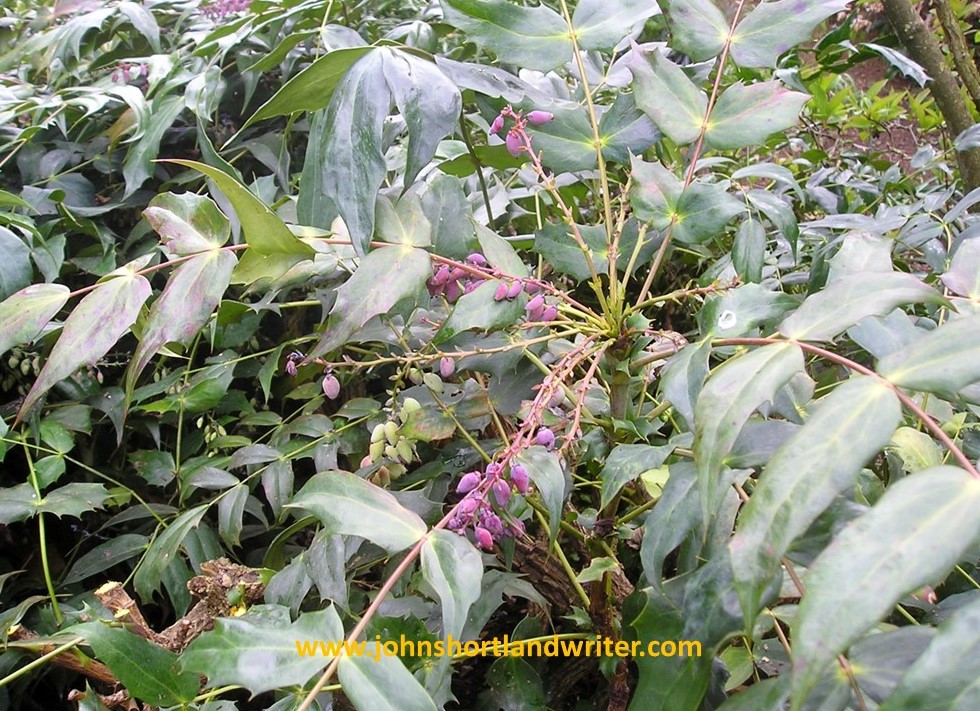
The winter-flowering Mahonia was also collected at this time.  Believed to have magical properties it was almost unobtainable; in consequence, the entire stock of Mahonia in Europe and the USA descend from just three small plants.  During Fortune’s fourth and final visit to China, Japan in 1859 opened its borders for the first time.  One of the first Europeans to enter the country he collected large numbers of plants then unknown to Europe, including many types of chrysanthemum.

Mahonia x media 'Charity'   copyright.jpg

The purple berries of Mahonia appear after flowering

Robert Fortune’s legacy didn’t stop with the plants he introduced.  The wonder his plants created when exhibited in London established the international reputation of the Horticultural Society as the centre of excellence.  As the plants began to be distributed amongst the big, country estates the gentry started to take an interest in the growing of the plants themselves, something hitherto unknown.  Soon they began to assist and then direct their garden staff, culminating in the revolutionary style of Gertrude Jekyll.  Her approach is still a major influence on garden style and practice today.  This, in turn, led to even greater demand for plants.  To meet these needs, the horticultural industry worldwide is now a multi-billion pound industry.  Amongst the thousands of plant types propagated for sale each year, Robert Fortune’s introductions are amongst the most popular and enduring.

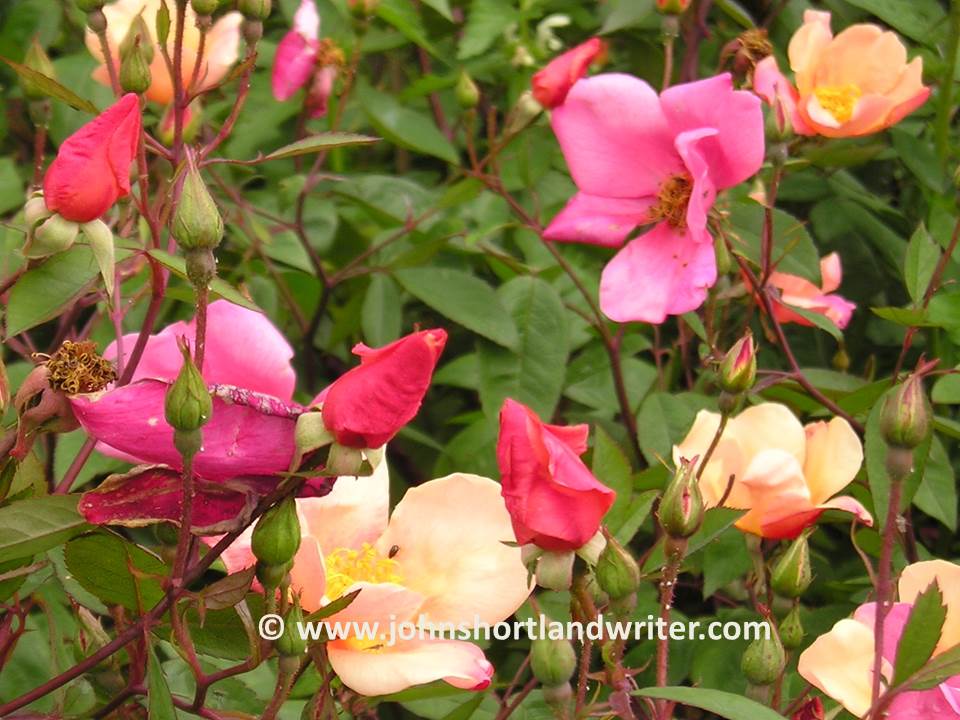
rosa chinensis 'mutabilis' copyright.jpg

Rosa chinensis ‘Mutabilis’ whose flowers start with a deep pink bud before slowly fading to apricot

recommended reading:

A Journey to the Tea Countries of China, Robert Fortune, 1852

Life in the English Country House, M Girouard, 1979

The Plant Hunters, T Whittle, 1970

The Plant Hunters, C Lyte, 1983

and, of course, Wikipedia