Mad Dogs and Englishman…

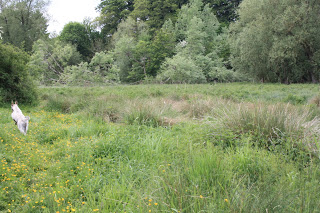
…go out in the midday sun, according to the song sung by Noel Coward. But I don’t think it was the noon heat that made She-Dog behave more like a deranged She-Devil, I think it was an extremely herb scented and squelchy bog that got her all worked up. Although she does certainly looks completely mad in this photo!

I had gone to investigate the wetland that is below the fields where we keep the horses. The horses have access to this area too and, like She-Dog, become totally hyper when they have been grazing it. It is necessary to keep your wits, as well as your nerve, when Henry, Barney and Rambo come galloping and bucking and rearing their way up to you after they have spent time in there. The overwhelming scent is of water mint but meadowsweet is also very dominant – perhaps it is one of these that gives them all this burst of energy. If so, I should try eating some too.
.

The purpose of the visit was to photograph dragonflies but, needless to say, thanks to She-Dog, it proved virtually impossible. She turned what is usually a peaceful, rarely visited by humans, wildlife haven into a race track. However, I did manage to get this photo of the Common Blue Damselfly, Enallagma cyathigerum. It is found near water everywhere. In fact, it is one of those few species in the animal kingdom that is found virtually throughout the northern hemisphere.

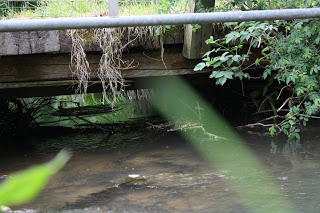
A lurcher and part whippet, She-Dog can run pretty fast but I have never seen her move so rapidly and for as long as this day. Back and forth, round and round – even when we came to the river she couldn’t stop galloping through it. It reminded me of when we had deep snow, the first she had ever seen, earlier this year.
.

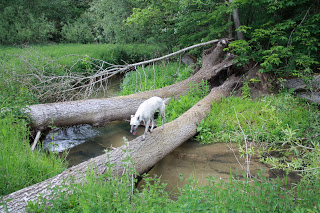
A fallen tree brough about another burst of energy, just when I thought she had settled down. Ignoring her as she investigated the bridge that it had created, I was surprised and somewhat alarmed to discover her seven foot up in the canopy. Before she could be rescued she took a flying leap to the ground below, landing in a heap, before accelerating into the distance.

She-Dog’s madness meant that very little in the way of wildlife was seen. I had to content myself with being in peaceful surroundings on a warm summer’s day, listening to the brown trout rising for mayfly. I spent some time trying to catch both trout and fly on camera and just about managed to get a trout breaking the surface of the water.

It was only when I returned to the car I was able to get a picture of the elusive mayfly – there was one resting on the door. The vagaries and frustrations of being a wildlfe photographer, I suppose. I think I shall stick to gardening for a living!

Add to Technorati Favorites

A Day’s Plant Hunting

One of the pleasures of living on a small island is that you are never far from anywhere – except another country (apologies to Wales and Scotland, I know that you are proud of your separate identities and rightly so).

So last Friday I spent at home in the Cotswolds – limestone country, wide open views and rolling pastures. Saturday I spent walking across Dartmoor (post to follow) – granite country of bleak, open moorland and few trees. Today I spent walking in the Chiltern Hills, my birthplace, a chalk country, densely wooded and secretive. All are beautiful in their own way.


And today was especially special for I was on a mission: looking for rare plants. And with some success, although just as much delight was found in the more common ones, for seeking pleasure from rarity for rarity’s sake is a poor emotion. What could be more charming a discovery than this group of foxgloves in a woodland glade? A common enough plant: I prefer the wild to the garden varieties, that have been bred to have ever larger ‘cups’. Here, the wild plants have a grace and delicacy that is so unlike their brasher relatives.


The group of thistles didn’t seem to be of special interest other than for the pleasure of watching the bumble bees feed from their flowers. But when seen in close detail the flowers really are quite spectacular. Most of these were purple but some that, from a distance, appeared to have prematurely gone to seed turned out to be a variant – they had white flowers. How glad I was that I had dawdled and not just rushed past without giving them a second glance!


Further into the woodland and growing in dappled shade was the first of the ‘finds’. Our native Columbine (Aquilegia vulgaris) is not often seen. Many that appear wild are garden escapes and are usually close to roads or houses but these were a long way from either. And, again, the flowers have a delicacy and lightness about them. Ladies Bonnets is another country name for them – it is easy to see why.
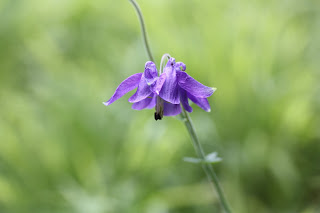

The Narrow Leaved Helleborine (Cephalanthera longifolia) is also uncommon and it was only after this one was found that we realised that there were over forty plants scattered over the area. Like the Columbine, where the plants were not sheltered by scrub or ferns, the deer had eaten the tops off. The flowers remain closed, making them unavailable to insects so, I assume, the plants self pollinate – perhaps that is why they are not at all common.


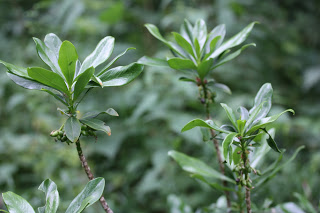
Further still along the path, was this solitary speciman of Daphne laureola, the Spurge Laurel. Although this plant grows quite widely in the Chilterns, this was the only specimen seen today. It flowers in late winter, it’s greenish-yellow flowers lacking the sweet scent of its garden cousins. Already the berry seedheads are forming, these will turn black later in the year. The Mezereon, a popular garden shrub in the past but not grown so widely these days, is also a native but extremely rare. It is known to grow in the Chilterns although I’ve never found one.

Returning once more to open meadows the woodland gave one last surprise: tall Field Maples, Acer campestre, usually grown as a hedging plant. And this is how it would have started out: one trunk, coppiced and layed to create sturdy, stockproof fencing. The original trunk has long disappeared and the ‘new’ stems from around its base have grown to be trees in their own right. For a maple to be of this size – and they rarely are – it would have been planted in Medieval times and it is known that the field that it borders was first created by the Saxons, 1000 years ago.


And as a grand finale, the meadow gave us dozens of Common Spotted Orchids – only common in favoured places, the spots refer to those on their leaves. The Chilterns are a great place for orchids and are home to some of the rarest species – their sites a closely guarded secret.
A most successful and satisying day!

Add to Technorati Favorites

When Greens Defeat the Blues……

We all go through periods of our lives when plans are thwarted, futures unravelled and forgotten pasts unfortunately remembered. It is something we have to come to terms with for, after all, if there were no ‘lows’, we couldn’t have ‘highs’ either.

It has been a difficult couple of weeks although, in the grand scheme of things, I should not complain too much. My partner, who has suffered considerably and silently with a debilitating heart problem the past two years, has finally had the op long waited for. And it seems, a great success with glimpses, already, of the old energy that was there before.

At the same time, the first anniversary of my mother’s death has weighed far more heavily than I expected. We were close and talked frequently about all sorts of things and, in her last few months, of dying. As she often said, she had a great and happy life and reached 94 despite hating being old (“it’s no fun being in your 90’s, you know”). She was ready to go.


So here I am, feeling a bit ‘blue’ and why? My partner is recovering, my mother is at peace. And suddenly, I have no need to be rushing hither and thither. I am like a train that has run out of steam or, if you want to be less kind, moping about like a wet rag, if they can mope and I can mix metaphors.

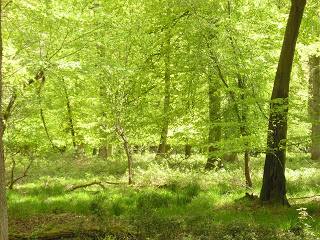
Without love there can be no loss and without illness there can be no recovery. And without fall there can be no spring. And it is the spring that renews, not just our gardens and the landscapes that surround us, it renews the spirit inside us. And so it was back to the Chiltern Hills, where I grew up and spent most of my life, that I returned to be revived by the extraordinary lushness of their beautiful beechwoods.


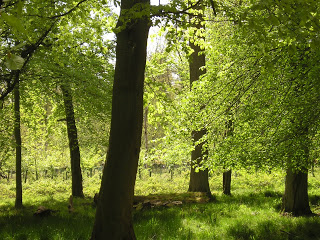
The Chilterns are barely 30 miles from the Cotswolds, the two being separated by the low lying Oxford vale. So close yet so different in character. The Cotwolds is a landscape of gently rolling hills, little rivers, big vistas and skyscapes. The Chilterns is a secretive land of steep combes – the beech woodlands clinging precariously to the valley walls. Few rivers, for this is a chalk land, a dry place with few views and no large skies for the forest hides them all. Yet the light is magical and nothing is as blinding as the intense greens of the unfurling beech leaves.


How can one walk here without being uplifted spiritually and mentally, whether holding religious belief or not? And if the beech is struggling to kick start you then the sight of the tens of thousands of bluebells, with their gentle scent, cleanse the body and renews the energy within.


Life is good and I’ve only got one attempt at it. I feel refreshed. I’d better get on with it.


Yes, life is good. No complaints. Honest!

Add to Technorati Favorites

Sunshine and Laughter

I always feel better when the sun is shining. I have more energy and achieve far more, whether working in the garden or even doing indoor chores. And sitting outside feeling the warmth on bare bits of body (not much on show these days after a bout of skin cancer), preferably with a glass of a good, chilled, white wine, makes me feel that all is right with the world.

And when I was in Grafton Street, the main ‘drag’ in Dublin, Ireland on a glorious spring day, I found that it wasn’t only me revelling in the long awaited heat. The road filled with people all intent on rushing at speed but instead ending up relaxing and enjoying themselves. It was good to see.

Magicians and entertainers did what they said: not only did they entertain but they worked their magic on the crowds and the street came to a standstill. All around people stood and laughed and clapped and cheered. A picture, so the saying goes, is worth a thousand words. These photos speak for themselves.

Musicians played and, quite spontaneously, there was dancing.

And if the heat became too much, continue laughing in Bewley’s cafe…..

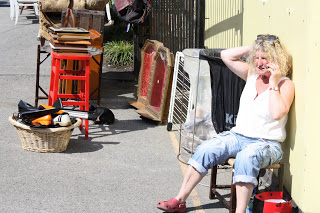
…..or just bask in the sun down a side street….


I love these photographs for the warmth that radiates from them – and I don’t mean sunshine. Having just been fortunate enough to hear Archbishop Desmond Tutu speak in Oxford, for me, these are confirmation of his viewpoint that, if you look for it, you will find that the natural goodness in people shines out.

Let’s hope we all have a warm, happy and laughter filled summer.

Add to Technorati Favorites

There’s no Business like Sloe Blusiness…..

…..or should it be There’s no Blossom like Sloe Blossom?

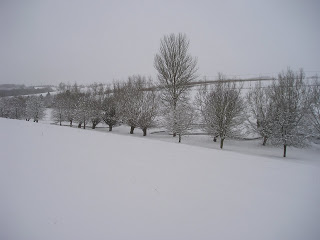
This winter was long and cold and, by the standards of southern England, very snowy. Spring has not been much better with little in the way of warmth for, even on sunny days, there has been a chill wind blowing from the north or east. Frosts have been commonplace and are still occurring – our last one, a hard one, was only a couple of days ago: in recent years we have had our last frosts in early April. This was the view of the entrance to the secret valley not so very long ago.

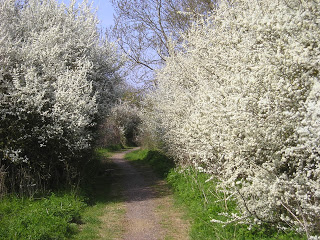
Now, just a few weeks later – and despite the efforts of our friend Jack (Frost) – the secret valley has been transformed by the best blossom for many years. Whether any fruit will set is another matter altogether.

One of the first trees to bloom is the Sloe, Prunus spinosa. The second half of its Latin name gives a hint of its nasty thorns, as does its other common name, Blackthorn. These thorns break off as you touch the plant, entering the skin and festering readily. The old country folk talk of “Blackthorn Winters” as, when it blooms, the weather always turns very cold once again. This year the tree has been caught out: it is flowering five weeks later than normal and the weather has been cold all the time with no warmer spells to fool us into thinking summer has come.

The Sloe is one of those remarkable species which flowers on bare wood in such profusion it gives the plant the appearance of being snow covered (photos above and below).

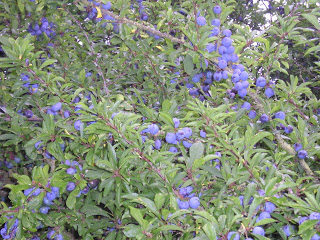
However, country people hold it in affection not for its early blossom or for making impenetrable, stockproof hedges. They even have a reason to forgive it for all the painful splinters it inflicts upon them, year in, year out. And that reason is alcohol. For despite being incredibly bitter when picked, its blue-black fruits, the size of a marble and equally hard, give rise to that most delicious and sweetest of drinks, Sloe Gin. Traditionally, the drink of hip flasks to be passed around amongst friends on a frosty shooting or hunting day, it is a good drink at all times – which is why I have none left to show you here. I have had to make do with a picture ‘lifted’ from one of the commercial makers of Sloe Gin, for it really is a business venture for some .

Nothing beats home brewed and our recipe, made each year, is below. The Sloes are picked after the first frosts, which softens them and brings out their flavour, although a couple of days in the freezer works just as well. And if Sloes aren’t available where you are, don’t despair: damsons or plums would be just as potent. Cheers!

Recipe:
* Frosted or frozen, then thawed, sloes – weight not too important, probably about a pound.
* Place in a bottle/bowl and cover with gin (or vodka)
* Add a similar quantity of sugar
* Shake well every day until sugar has completely dissolved
* Top up with more gin (we add, at this stage, a quarter bottle of brandy as well – our secret weapon for making fellow imbibers ‘legless’. It also helps to give much needed courage when jumping a big hedge on Barney!
* Leave for several weeks, then strain and enjoy

PS. The fruit will now be sweet and full of alcohol – absolutely delicious eaten with vanilla ice cream.

Add to Technorati Favorites

.

Archbishop Tutu comes to Oxford

One of the best aspects of living in the secret valley, (apart from being unknown, of course), and living on a relatively small island, is that we aren’t too far from anywhere. We can travel north, south, east and west with comparative ease and one of the nearest cities is Oxford.

Oxford is so steeped in the history and daily life of the Universities that it is generally forgotten that it has another side to its personality – but that will have to wait for another post. It was to Oxford, thanks to Kellogg College, that I found myself in the Sheldonian Theatre last Monday afternoon. If the word theatre conjures up a vision of red velvet curtains and plush velour seats, think again: The Sheldonian was designed by Sir Christopher Wren, perhaps our greatest architect, around 1664 to provide a suitable venue for ceremonies associated with the University. It is still used for this purpose and for lectures and the seats – benches – are hard and unforgiving. However, it is a masterpiece of design and, also by being circular, it is possible to see the platform uninterrupted by the heads of other people or by pillars.

When a friend asked if I would like to attend a lecture given by Archbishop Desmond Tutu I thought it must be joke as surely all places would be allocated. They were and we were amongst those that were priviledged to attend. Archbishop Tutu is a person I have admired for many years – for how can someone (or a people) that have suffered so much indignity and hardship be so forgiving? This was the subject of the lecture: Lessons From the Truth and Reconciliation Process for 21st Century Challenges. The transcript and video is not yet available but a similar lecture given in the States can be seen here.

Call me an old softy, but my initial reaction when the Archbishop walked into the centre of the building was to want to burst into tears, such was the emotion in seeing him in person. And when I looked around at the audience, many were wiping their eyes, both men and women, young and old.
.

Archbishop Tutu talked about the hardship that his people had suffered through the dreadful years of apartheid (I’m ashamed to say, that the British government didn’t give much assistance). In his characteristic tone of voice – sometimes high, sometimes low – he pointed out many of the everyday insults that arpartheid brought: the designation of race (black or coloured) by having a comb run through your hair. Of being denied medical treatment, so many things. He told harrowing stories of both blacks and whites being murdered during the armed struggle.
And also, after a long pause, as the horrors were absorbed, his high pitched laugh would bring the story to a close with a quip or a gesture. And he made us laught at ourselves too, which always has to be a good thing!

But the lecture wasn’t all about horror – in fact, horror (although plenty of it) was not the overwhelming feeling. That feeling was of joy and of love and of hope and that has to be great, in the biggest sense of the word, for we all need to be reminded that much in the world is good – don’t we?
.
.
.
.
.
.
Add to Technorati Favorites

Cotswold Cowslips

I never did get to see the fritillary fields of Oxford and the Upper Thames. Perhaps next year. If fritillaries are the flowers of the lowlands (albeit rare) then it has to be the cowslip that can lay claim to the title for the hills of the Cotswolds. These little, short stemmed wild primulas (Primula veris) have a simple beauty – they look good growing in the garden but even better in the fields and hedgerows where they belong.


Cowlsips grow in plenty in the secret valley and I have noticed this year that they abound along the old drovers road, as do bluebells – don’t they look good growing in combination? Is this because these green lanes are never sprayed with chemicals and the thick hedgerows that line them prevent any spray drift from reaching? The field below is at the top of the secret valley and is a haven for wild flowers – soon there will be orchids showing. The farmer likes to see them so has never tried to ‘improve’ the ground in the agricultural sense and, as a consequence, the field is also full of birds and bees and butterflies.


However, to see the truly stunning cowslip meadows, you have to travel out of the secret valley. Just a few miles up the road is this field where the cowslips grow in the tens of thousands, so dense that it is impossible to walk without trampling several plants at once. Few people see them as they are ‘off the beaten track’ which is a pity in some respects, for they should be enjoyed and marvelled over.

The scent of cowslips is subtle but, when growing in these huge numbers, it wafts over in waves on gentle, warm breezes, a heady mix of hay and honey. This gives cowslip wine, a traditional drink, its characteristic taste and potency. Made from many hundreds of flower heads it is now rarely made as, fortunately, most people now understand the importance of preserving our native flora and fauna. This has benefitted the cowslips, which were once quite an uncommon sight, as they are left to multiply with these spectacular results.

Add to Technorati Favorites

Painting The Fields Yellow

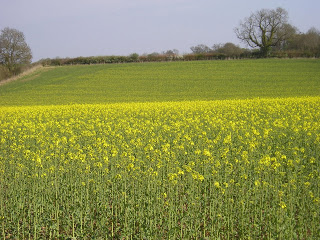
An artist has been at work changing the landscape dramatically over the past week. Finaly the sun has come out, the cold winds from the north have gone to be replaced by gentle, southerly breezes bringing warm air from the continent of Europe. And with this rise in temperature the cultivated fields of the secret valley and beyond have been altered from drab browns and fresh greens by the addition of an acidic, strident yellow.

Love it or hate it (and many people hate it, if only on account of its smell), Rape is now in full flower. Last spring, as a birthday treat, I was given a hot air balloon trip (read the post!) over our beautiful Cotswold countryside and the patchwork of yellow fields stood out as if the land had been given reflective, safety jackets to wear.

Rape, or Oilseed Rape as it is also called, is now a major crop in the UK being grown for its seed which, when pressed, produces cooking oils and biodiesel. The waste product is made into highly nutritious livestock feed.

Although it has been grown since the 13th century it was only in the 1970’s that production took off on a major scale – now almost a million acres. And with this increase in production has come the claim that some people suffer major allergies from it, although as always, there is no conclusive proof of this. What is certain is that there is a greater number of the tiny, black pollen beetles (that are such a nuisance in the flower garden, being transferred into the home with cut flowers) and the thick yellow ‘dust’ that settles on our cars and window sills.

When seen close to, Rape is so obviously one of the Brassica family with its cabbage like leaves and smell. Let a garden cabbage run to flower and the blooms are remarkably similar. However, where cabbages have been bred to ‘heart’ up, rape grows tall and open.

Like our garden cabbages, rape is also prone to a large number of pests and the crop is regularly sprayed with chemicals to protect from these and fungal diseases, in particular. Although it is reputed to be perfectly edible, it is for this reason that I never harvest any (or ‘filch’, would be a more accurate description, I suppose!) on walks around the farm. Even the sheep make no attempt to break through the fence to reach the crop.

Add to Technorati Favorites

Glasnevin: Beyond the Glasshouses

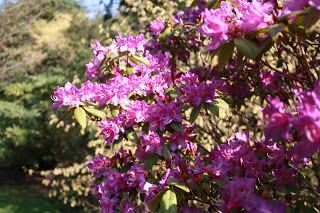
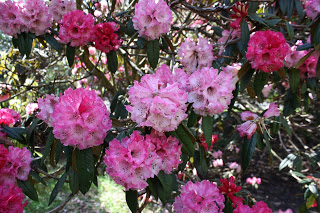
There is a lot more to explore in Dublin’s Botanic Gardens at Glasnevin than just the glasshouses which have been described in an earlier post. As expected, it’s 27 acres boast a wide array of plants and at this time of year the bright colours of the spring bedding and rhododendrons are a welcome sight after the long, grey winter we have all suffered.

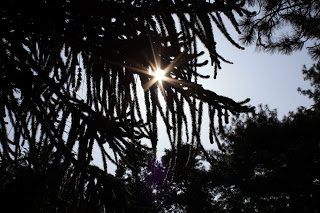
Beyond this glare of colour and at the highest point of the garden is the pinetum, where sunlight is filtered through the dark, pendulous branches of this conifer, whose name I have already forgotten.
A multi stemmed Thuya would be an asset in any garden but few could cope with the size of this one. It is surprising when seeing a tree of this stature, to think that when clipped, Thuya make a fine hedge.

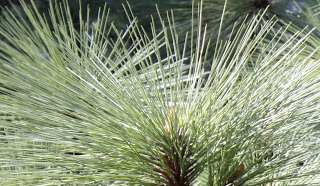
But perhaps the most outstanding tree at Glasnevin is the Montezuma Pine. Originating from Mexico (hence it’s name), it stands at the very brow of the hill, shining in the sunshine like a beacon. Seen close to, the irridescent, radiating needles give the branches the appearance of chimney sweeps brushes.


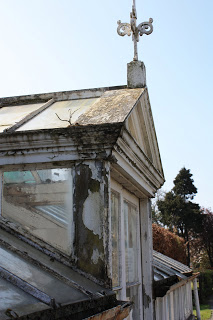
Never very far away from the magnificence of the ironwork glasshouses (upper photograph), it was a surprise to find this abandoned range of timber glasshouses (lower photograph). Awaiting funding for restoration, the faded, peeling paintwork and decaying architecture had a quiet dignity of its own. I loved it.


Add to Technorati Favorites

Glasnevin: Dublin’s Botanic Garden

No horticulturist or lover of gardens and plants should miss visiting the botanic gardens at Glasnevin, situated not far from the heart of the city of Dublin, southern Ireland. The 27 acre garden is also a quiet, green refuge for those just seeking beauty and peace away from the bustle of city life.


One of its greatest attractions has to be the magnificent ironwork of the glasshouses. The Palm House, built in 1884, dominates the garden yet it is the Curvilinear Range that was pioneering in its structure having been built almost 40 years earlier in 1848.


The smallest insectivorous plants to the mighty palms themselves find a home within these buildings. A walk through the houses is one of contrast, not just in leaf texture and flower colour, but also in temperature and humidity.


insect catching sundews

an insectivorous pitcher plant

Perhaps one of the finest flowering plants was this pale pink Protea, so typical of its type, although I was rather taken by this relatively tiny, deep pink version too, with which I was quite unfamiliar.


The Jade Vine, Strongylodon macrobotrys, was another plant that was totally unknown to me. It’s luminous, turquoise, metre long pendants of flowers looked quite eerie hanging high in the canopy – if it had not been for the fallen petals glowing on the floor they would have gone unnoticed. The plant, which naturally grows in the forests of the Phillipines, rarely sets seed when grown in these conditions as it has to be physically damaged by a large pollinator (what, I don’t know).


The sunniest day of the year so far ensured that light falling onto the plants revealed them at their finest, especially when the leaves were backlit – every photographer’s dream!


The gardens, themselves are deserving of attention and exploration and these will be featured shortly.

Add to Technorati Favorites