A Good Walk Home

Both my partner and I like walking but, more often than not, we walk alone.  Somehow it just works out like that and there is no doubt about it, that when you walk without company you do see and hear so much more.  It isn’t that we chatter away non-stop – we’ve been together for  far too long for that!!  It’s just that with no-one to speak to, or alongside, one becomes far more aware of all that’s around you.  And with only the sound from one pair of walking boots the wild creatures are less aware or concerned of your presence.

Walking quietly it’s possible to get quite close to wildlife

Usually, from necessity, our walks are circular – either back to the car or back to the house if we’ve started from home.  Recently I cadged a lift to Duns Tew, just outside the Cotswolds but still in Oxfordshire and not that far from home and the secret valley.  The village is an interesting mix of houses and makes use of their local ironstone as well as the Cotswold limestone.  I find it fascinating knowing that I live on the edge of two quite different rock formations, 0ne literally as hard as iron and the other, soft and easily worked.  The photo below shows the pretty church built of yellow ironstone and banded with paler limestone – a familiar pattern in the locality.

The thousand year-old Church of St Mary Magdalen, Duns Tew

The houses vary in style and age as well as building materials.  Some have thatched roofs; others slate and some stone tiles.  The traditional village pub has a stone tile roof made from Cotswold stone split into thin tiles.  Just to confuse the unknowing, these tiles are known locally as slates even though they are not made of slate!  The craft of making these roof tiles is centuries old – they have even been found by archaeologists when excavating Roman villas (of which there are quite a few in the Cotswolds) which means the manufacture of them has remained unchanged for the best part of two thousand years.  The pub also has a drystone garden wall, also made from Cotswold stone for which it is so ideal and makes such a memorable feature of the Cotswold Hills.

Village houses: contrasting style and stonework. The thatched house was built in the early 1600s. There are a number of these old signposts still standing locally
The village pub: this dates from the late 1600s. Note the stone ‘slate’ roof

One of the great things about walking in England is that we have a huge network of public footpaths, many of which date back to pre-history.  Now that I realise (thanks to my overseas readers) that being able to walk across privately-owned land by right is almost unique I intend to write specifically about them at a later date.  Suffice to say here, is that it is possible to walk from one end of the country to the other over thousands of miles of paths that must not, by ancient law, be obstructed.  This path is beautifully maintained by the owner. Just outside the village, partly hidden in undergrowth, were the remains of old pony carts.

A well-maintained public right of way that is also a driveway to the owner’s house
Half-hidden at the back of a semi-derelict shed

The path opened onto cornfields, the wheat harvested and the remaining stubble giving a real autumnal look to the countryside.  The hedgerow is also offering its autumnal fruits for the picking – crab apples, elderberries and blackberries; the sloes although looking good won’t be ready to collect until after the first frosts.  The squirrels have taken all the hazelnuts (you have to be quick to get them before they do – but already the embryo catkins, the male flowers, are beginning to appear.  It will be early February before they show the familiar ‘lamb’s tails’ that release clouds of yellow pollen with the slightest breeze.

The path is now gras covered passes ‘twixt hedgerow and cornfield
Crab apples, blackberries, elderberries. Tiny catkins are just forming amongst the blackberries

Although the path, now a wider track, looks obstructed here, the farmer/landowner has to leave the gate unlocked so that people on foot or on horseback can pass.  Crossing the lane it returns to being a path, this time skirting a large wood.  Now hidden by high hedgerows in the spring when the leaves are all bare, the woodland floor is carpeted with bluebells.  In the centre of the field is a stand of mature oaks.  Why were they left there?  For me, they always have a mystical look about them; stepping into their midst the atmosphere changes as if its centuries old story is being told to those that might listen.  Perhaps it’s just my imagination but the fancy is palpable.

As this is a public right of way, one of the gates must be kept unlocked by law
The copse in the middle of the fieldwas it once a sacred site?

Once again the path changes character.  Now a track crossing a small stream, the movement of a young coot searching for food catches my eye and we watch one another for a while before it decides that food is far more important than me.  At such close range I see it snatch a small water beetle before it disappears into the undergrowth.  For a while the path becomes woodland again and then opens up onto a concrete track.  The concrete is all that remains of a WW2 airfield, far inland to be out of the range of German bombers.  I stop to listen and am met with silence.  How different the scene would have been eighty years ago.

The baby coot carried on about its business…
The old wartime concrete paths make easy walking

Finally back home.  Being an Englishman through and through (if you ignore the foreign bits of me!) I sit on the old stone bench in the garden with a refreshing cup of tea and lean back against the walls of our own stone-built house built 170 years ago.  Looking out beyond the garden I can’t help feeling how privileged I am to be seeing the best views of the whole walk!

Not too bad a view from home!

.

.

.

2021: A Year in Review – part 1

With restrictions on movement and socialising for much of the year, 2021 was definitely the year to remember times past, be it visits to favourite haunts or thinking about friends and family. As it was in the real world so it was in the blogging world.

In January my memories took me across the sea to Ireland and a visit to Clonegal, in Co. Carlow. Ireland is a beautiful country with an ancient history. The visit to Huntington Castle, very much still a family home, was very worthwhile as the building itself was interesting, and the gardens, perhaps because they weren’t ornate, relaxing to walk around. A visit to the cellars is a must for it is now a Temple dedicated to Isis. The Fellowship of Isis, started by members of the family, was recognised as a world faith in 1993. I found the ornate decoration rather too theatrical for my taste, reminding me of a scene from an Agatha Christie novel. Take a look at the post by clicking on the link here and tell me what you think.

Huntington Castle in the south of |reland

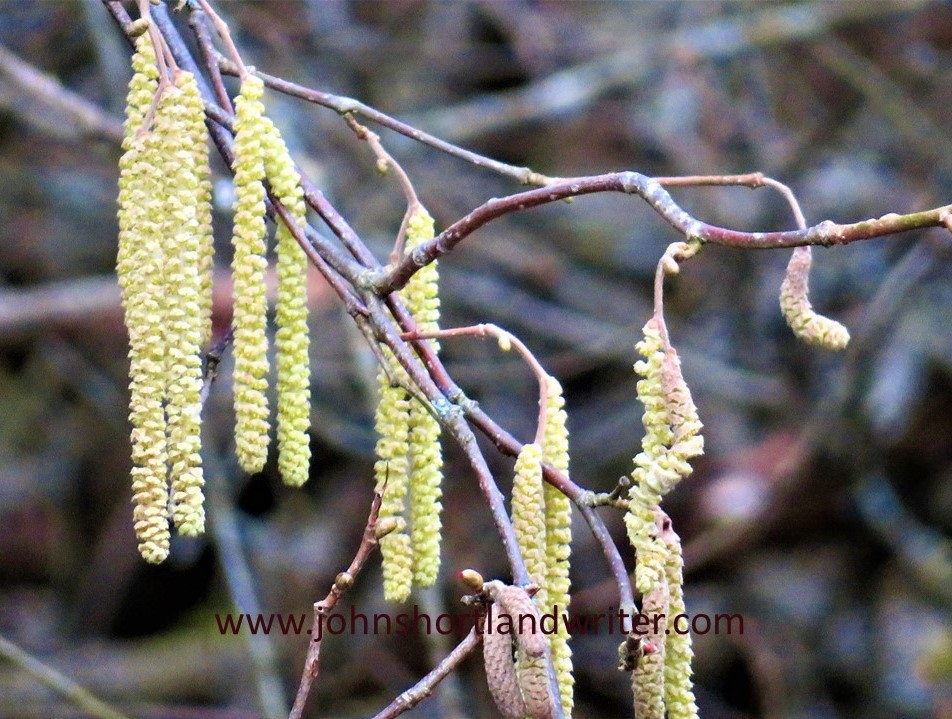
By February the earliest signs of the forthcoming spring are beginning to show. In the garden snowdrops and aconites are in full flower; in favoured spots early daffodils are starting to bloom. In the hedgerows hazel catkins hang in clusters shedding clouds of their golden pollen in the slightest breeze. Hazel, a native shrub, is also a useful one to grow in the garden. It’s pliable stems can be used in a myriad of ways – cut as pea-sticks, or growing into intriguing living tunnels. February’s blog post concentrated on these uses and looked at the ancient art of coppicing – a method of extending the life of the plant and providing plentiful cover for wild birds, animals and flowers. Described as an art, it is however, a very simple technique. Click on the link here to find out more.

Catkins or Lamb’s Tails – harbingers of Spring

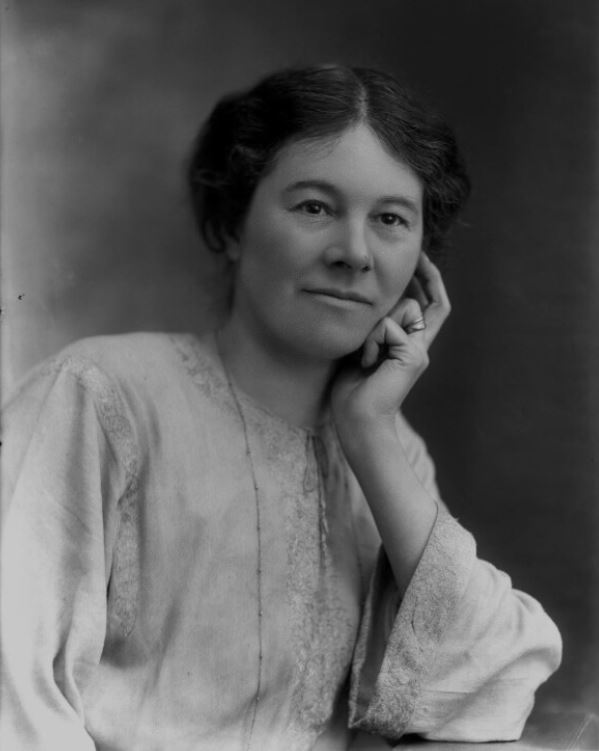
International Women’s Day occurs in March and I focused on the life of Lettice Fisher, the founder of the National Council for the Unmarried Mother & Child in 1918. Later, the charity changed its name to Gingerbread. A suffragette and economist, Lettice was also a cousin of my father and so family history came to the fore in this post (link here). Later in the year, the focus turned to her husband, H A L Fisher and his story but for March Lettice was the rightful star of the show.

Lettice Fisher, an ancestral cousin

In April, I was able to visit friends for a long weekend, a real treat after all the restrictions. I took the opportunity to go for a long walk in beautiful countryside. Rutland is England’s smallest county and was also the home of the poverty-stricken ‘peasant poet’ John Clare born in 1793. The walk took me past the old lime kiln where he worked and the village where he was raised – his poem The Ruins of Pickworth can be read in the blog post (link here) and there are lots of photos of the ruins as well as views along the paths and byways I walked. Several hours later, when I returned to my friend’s home, I was especially thrilled to have seen a group of wild fallow deer which included amongst them, a rare white hart,

The ruins at Pickworth were familiar to John Clare, the Peasant Poet

By May, spring is well and truly established and plants in the garden are flourishing. Everything is growing so fast that it can become overwhelming and with so many tasks to carry out, early supporting with canes and twigs can easily be forgotten until it is too late. Although this can’t be done to every tall plant in the garden, the Chelsea Chop is a drastic but very successful method of treating herbaceous plants so that they don’t need staking at all. The biggest hurdle to overcome with this technique is finding the courage to actually do it! By clicking on the link here you will find a step-by-step guide. Even if you don’t do it to many plants, I would highly recommend that you do it to the Ice Plant, Sedum spectabile which always collapses just as it comes into flower – once you have, you’ll wonder why you’ve never done it before.

Sedum, the Ice Plant – the perfect candidate for the Chelsea Chop

For June, it was back out into the countryside to check the state of a venerable old ash tree. Ash Dieback is a serious, recently imported disease that threatens to eradicate one of the most important trees in the British landscape. Younger trees in our parts of the Cotswolds are already showing signs of it, some much more severely than others. The farm where we keep our horses has one ancient tree that has stood sentinel over the adjoining fields for centuries (lots of pictures on the link here). It’s trunk is hollow and owls and bats roost within it; it must have seen generations of them leave its shelter at night. Likewise, it must have sheltered in the day many a farm labourer seeking shade during hot, summer harvests. It will be a sad day when it dies and we just have to hope that it may show some resistance to this new disease. I, all too well, remember as a child when a similar fate overtook elm trees and changed the English landscape forever. Let’s pray that it doesn’t come to that.

We ride past an ancient ash tree most days

If it sounds as if this review is ending on a sad note, don’t despair – July to December will be following shortly and there’s plenty of posts on an upbeat note there. My family’s fascinating exploits feature in some of them. Covid restrictions have given me plenty of time to root out the old stories of them – to be honest, I never knew what an interesting and, sometimes, brave bunch they are!!

Coppicing Hazel – the how, the why, the where

Lamb’s Tails (as country children call them), the pale-yellow catkins of the hazel, are a familiar sight at this time of year.  A traditional component of our hedgerows, they are perhaps seen in more glory when growing unchecked along roadside verges where they can achieve a much greater height.  There, up to 15 metres tall in favoured conditions, the soft golden shimmer of hundreds of catkins really is one of the earliest harbingers of spring.

Lamb’s tails: their pollen is released by the wind

Catkins begin to form early in the winter, small, stubby and dull in colour where they wait until, quite suddenly, they are as we see them now.  The transition always goes unnoticed.  Even less noticed are the female flowers – for catkins are male.  Whereas the majority of plants are self-fertile, Hazel, Corylus avellana, is one of a number that carry both male and female flowers.  Wind-pollinated, the breeze carries the pollen from the male to the female to fertilise.  However, the pollen has to reach a different plant for it to be successful.  The tiny, female flowers can be discovered by careful searching along the branches a few days after the catkins have fully formed.

The short, stubby embryo catkins form in early winter
The minute, female flowers take a bit of finding…

For gardeners, hazel is one of the most traditional and useful of plants and it is worth growing one or two in an odd corner if you have the room.  There they will quickly create a multi-stemmed shrub.  Visually, as a garden plant, when left to its own devices, it is of limited value (wildlife love it, of course).  However, by coppicing the plant there will be a regular supply of poles for runner beans to climb and the twiggy top-growth is the perfect support for garden peas, mange-tout and the headily-scented sweet peas.  They are also useful for supporting taller herbaceous plants, saving them from collapse and look so much more attractive than canes and string or wire netting.  It’s far quicker to do, too!

A good crop of runner bean poles

So, what is coppicing and how do you do it?  Well, for a start, it’s a dead easy and very uncomplicated form of pruning!  All that has to be done is to cut with secateurs or garden loppers the stems to a few inches above ground level during the winter.  If you do this over three years by removing only a third of the stems each year you will have stems of varying heights and diameters without losing any screening effect.  Although coppicing may seem a drastic form of pruning they quickly regrow and it also prolongs the life of the plant considerably. 

Coppiced hazel can make a good summer screen in the garden

Many years ago, coppicing of hazel (and, sometimes, ash and field maple too) was standard practice in many of our woodlands.  These days it is still carried out as a conservation tool to encourage the breeding of our now endangered dormouse and other wildlife.  Hazel is the food plant of many moths and the autumn supply of nuts are great favourites with jays, squirrels and wood mice – and, of course, humans. In the photo below of long-neglected woodland, the hazel is naturally regenerating as coppice as the old and heavy branches collapse onto the forest floor.

Neglected storm-damaged hazel naturally regenerating as coppice

Hazel can be useful, along with willow, to create living structures such as pergolas, arches, fencing and tunnels.  They all involve regular pruning in much the same way as coppicing although in most instances the number of upright growths is reduced to one or two.  The prunings make excellent kindling for wood burners and, if you’re feeling really creative, rustic furniture.  Why not have a go?  From just one native species we can have fun projects that are ideal for people of all ages.  It can be used as an educational tool too: nature study and conservation, rural history and artistry make it the perfect resource for lockdown and home learning.

This living hazel tunnel makes a fine garden feature and is also good for wildlife
An imaginative and practical way of using hazel branches