Yorkshire Cheese

Over the many years of writing this blog I have rarely posted reviews of products or of venues.  From time to time such requests are made and turned down as that sort of writing has never been my intention.  The few that I have written have been chosen solely on their merit – it is usually because I have come away with that ‘wow’ feeling.  And so it is with this one for, as others will testify, cheese is certainly, or can be, able to give it.

Judging cheese at the Great Yorkshire Show

My partner and I had chosen to spend a week in the Yorkshire Dales, a National Park with spectacular scenery.  Austwick is a classic north of England village – solid stone-built cottages, a church, a village green, a couple of village shops and for us, a great base for some wonderful walks over what can be challenging terrain.  As it happened, it turned out to be a little too challenging as my partner is recovering from a broken foot – the cross-country walks will have to wait for another visit.  Instead, we decided to explore the area mostly by car with a few short, gentle walks thrown in as ‘therapy’. 

The Yorkshire Dales at Austwick

On our first outing, we had only driven two miles before we saw a sign marked The Courtyard Dairy.  Not expecting too much other than an ice cream (they do those too), we were blown away by what we saw. The Courtyard Dairy – trading from a converted barn – is a family run affair and there is little doubt upon entering that they are certainly having a love affair with cheese.  There are cheeses of every colour, size and consistency everywhere you look.  I suppose we shouldn’t have been surprised for the fields we’d passed were full of black and white milking cattle and, of course, as every Wallace & Gromit fan knows, Wensleydale (just a few miles up the road) is famous for its cheese.  There is even a black and white – plus a few extra colours – cow to greet you as you walk into the Dairy yard.

The Courtyard Dairy

The people that run the Dairy couldn’t have been more friendly and were quick to correct us (nicely!) when we said we were staying at Austwick and pronouncing it in the typical Southern way, Oorstwick.  “Oh, you mean Austwick – Aust as in Australia.”  It reminded us of a time some years ago when we were up north and asked a local policeman how we reached the village of Oertop.  It took some time before he realised that the person who had given us directions had said, when translated into southern speak, “over the top” which had meant we needed to take the road that went over the hill. 

Friendly staff and a great selection at The Courtyard Dairy

As with all good cheese shops, we were able to taste the cheeses before deciding which ones to buy and, needless to say, came away with a classic cheeseboard: a couple of hard cheeses, a soft cheese, a blue cheese and a goat cheese.  Of course, no cheese should be unaccompanied without wine and across the courtyard there is a wine shop with a tremendous selection.  A bottle of Bordeaux was suggested as the perfect partner for the hard cheeses.

Every shelf is crammed with cheese

Behind the cheese shop the Swinscoe family have created a small museum telling the story of cheesemaking in the Dales.  The old equipment used is on display as well as boards explaining the family’s connection to the Dales, to cheese making and to farming.  For me, I found the recipe notes dating from 1912 and written by Great Granny Mary Reid of especial interest for I have a few recipes similarly handed down from my Polish great-grandmother Rachel.  She died in Poland before my mother was born and these precious mementos seem to give life back to these people of long ago that would otherwise be unknown. 

Artefacts at the Dairy Museum
Great-Granny Reid’s cheesemaking notes, 1912

Neither great-grandmother had, to my knowledge, a recipe for pizzas using local cheeses but if you fancy one these are also available in the restaurant attached to the Dairy.  All in all, a great visit and well worth making a special trip for.  However, if you are unable to find an excuse for a few days in Yorkshire an online order service and a cheese club are available.  I think there’s a very good chance that I shall be joining!

Not a picture but the view from the museum window!


The Courtyard Dairy is situated on the A65 Kirkby Lonsdale to Settle road, and about 2 miles south-east of Austwick

The Courtyard Dairy website

It is not surprising that I was so delighted to have discovered this place for it has received many accolades before: Cheesemonger of the Year in the World Cheese Awards, visits from King Charles III as Prince of Wales, Nadiya Hussein to mention just a few…

.
A Walk Across Dartmoor – part 2

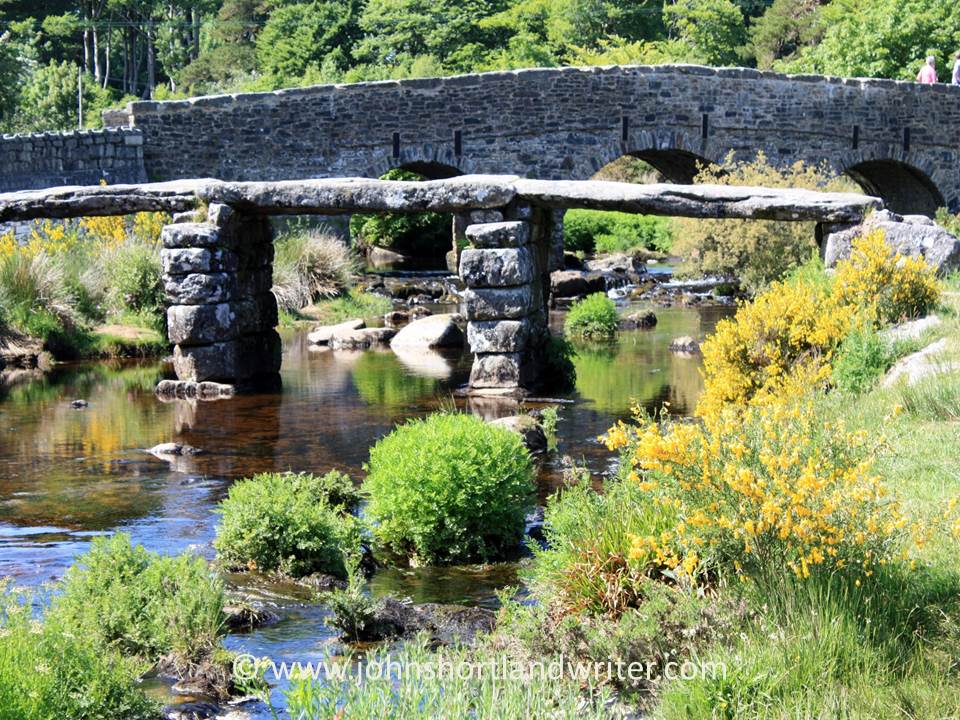
A riverside path heading north from the village of Postbridge, famed for its ancient clapper bridge, leads into the heart of the moor.  The bridge dates back at least to the fourteenth century and some of the slabs weigh over eight tons.  The ‘modern’ bridge in the background was built as recently as 1780.

Postbridge copyrightPostbridge 2   copyright

At the point where the river turns abruptly westwards are the remains of a beehive hut.  These were used mostly for storage and, compared to many of Dartmoor’s archaeological features which date back millennia, are also of more recent origin and date from the 1500’s.  They ‘disappear’ into the moorland  features but are clearly visible once you know where to look.

Beehive Hut (2)   copyrightBeehive Hut   copyright

Walking further onto the moor and leaving the river behind are the low grey shapes of the Grey Wethers double stone circle.  Sitting close to Sittaford Tor, they are so named for their resemblance to sheep, ‘wether’ being the Old English name for a castrated male sheep.  A tale, often repeated, is of a traveller stopping off at the remote Warren House Inn (where this walk started and will end) who complained of the poor quality sheep in the district.  After a drink or two, he was led to the circles and in the mist mistook the stones for sheep and bought them, only to discover later that he had been fooled.

Grey Wethers Stone Circle (4)   copyright

The two circles of Grey Wethers appear to the eye as one shaped as a figure of eight but an aerial view shows them to be quite separate to one another, sitting side by side.  The circles are of similar size and lie on a north-south axis although whether this is of relevance is unknown.  Numerous theories abound: perhaps the meeting place of two separate groups of people, or possibly they represent life and death. When excavations took place in 1909 a thick layer of ash was found to cover their centres but, again, the purpose of this is unknown.

Grey Wethers Stone Circle (2)   copyright

From Grey Wethers the walk back to the Warren House Inn skirted the edge of Fernworthy Forest.  Hidden behind the trees is Fernworthy reservoir, created by damming the South Teign River.  When water levels are low the remains of an old farm can be seen, as can the remains of a small clapper bridge, drowned reminders of life on the moor in times past.

the remote Warren House Inn

the remote Warren House Inn

Purple Haze

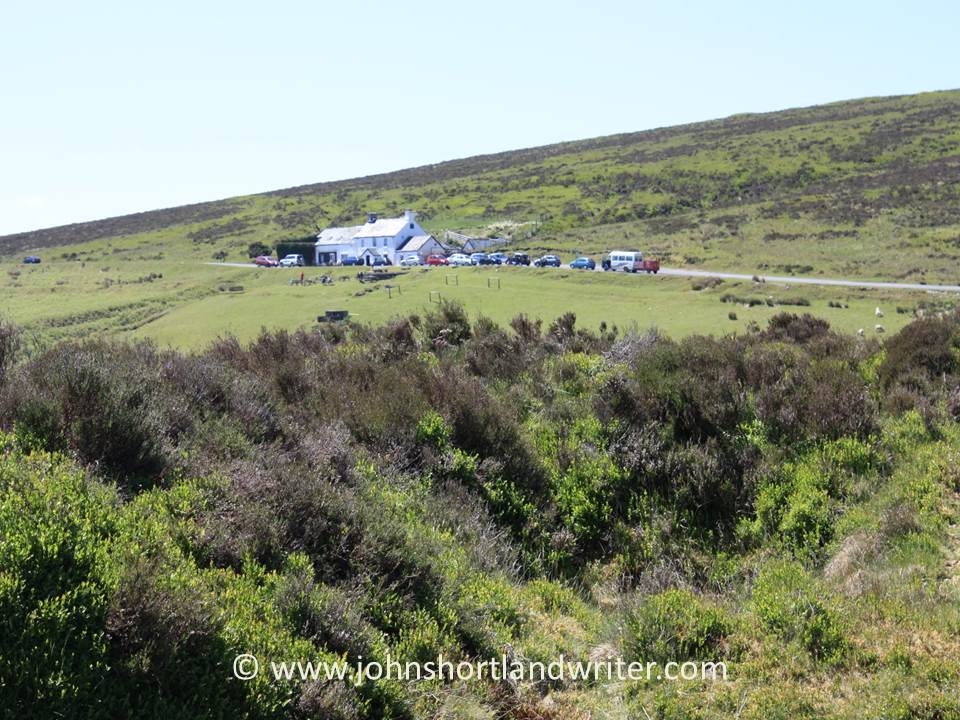
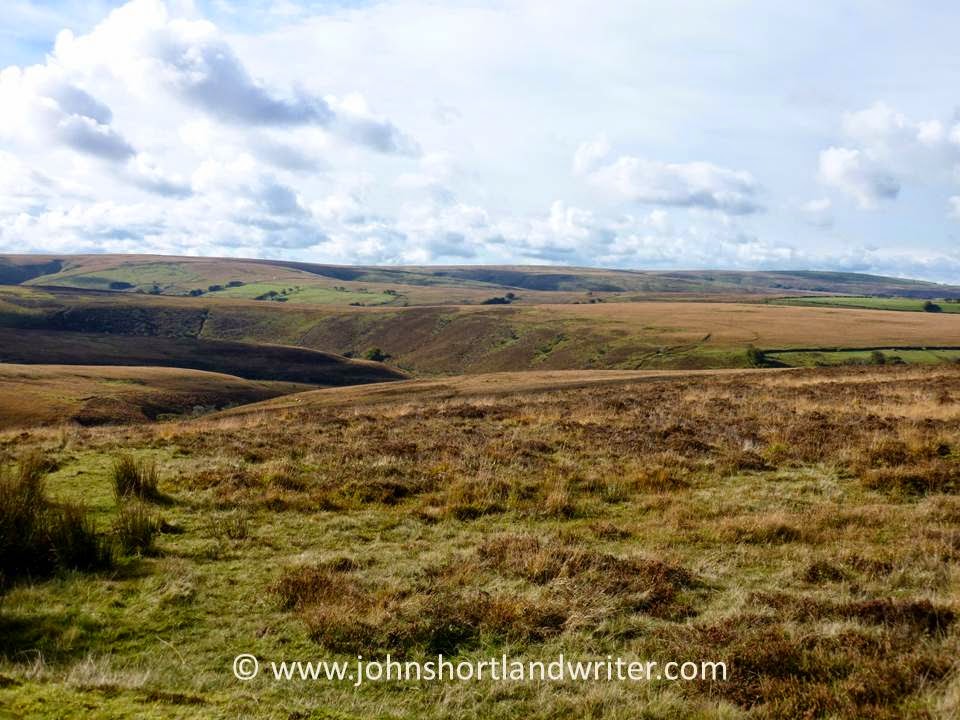
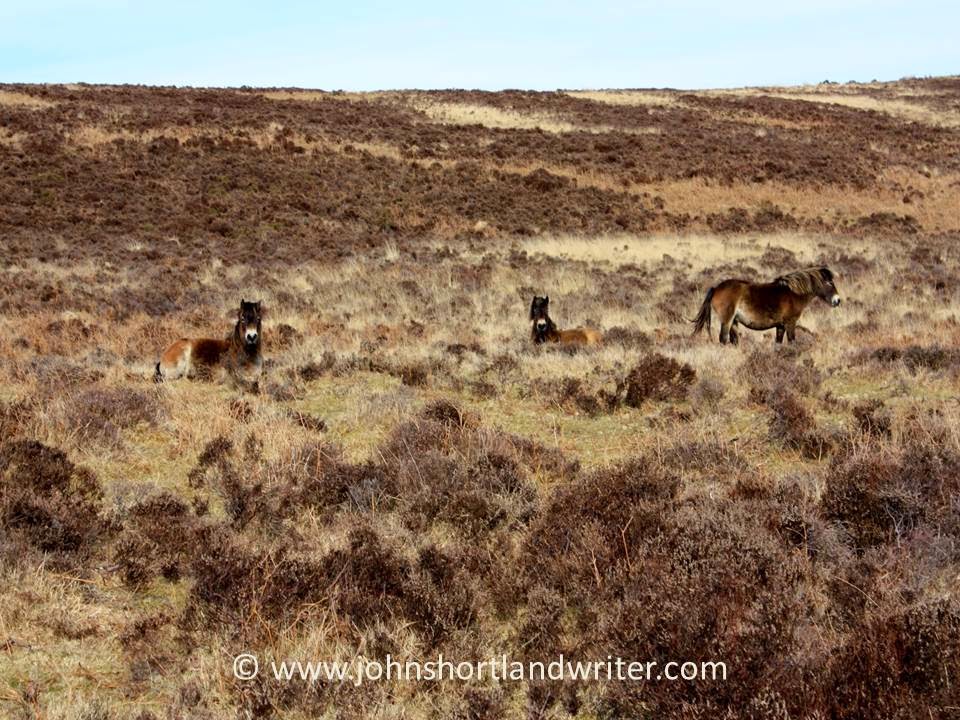
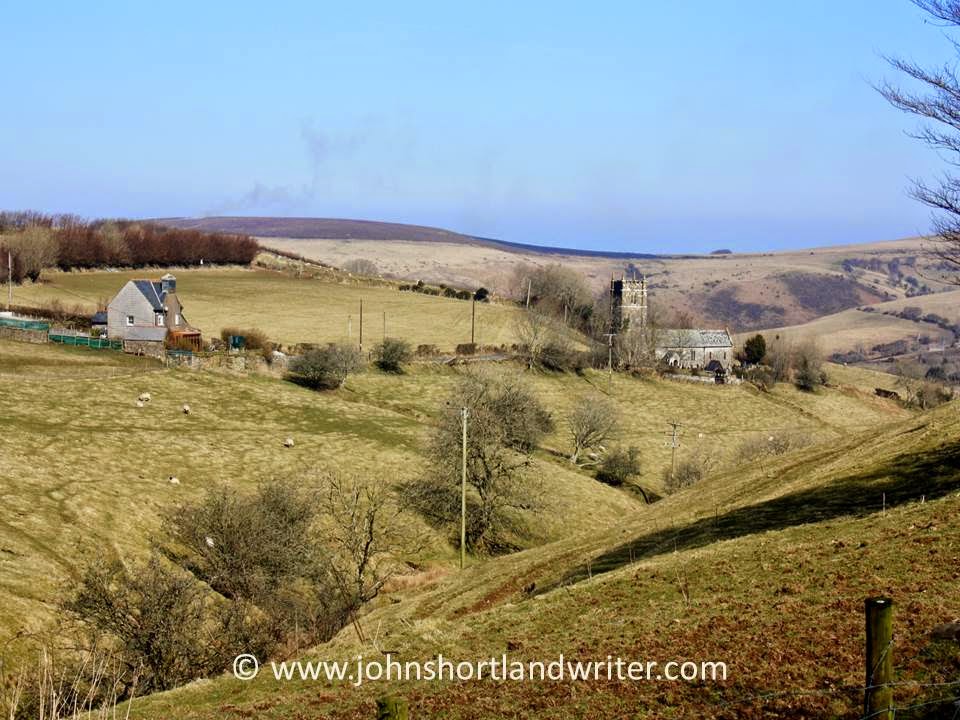
Ask those that know Exmoor – England’s smallest National Park – to conjure up just one image of it and you would get a number of different answers.  For some it is the wild ponies, others the rushing streams but mostly the answer would be the sea or the moorland.  On Exmoor you are never very far from either.

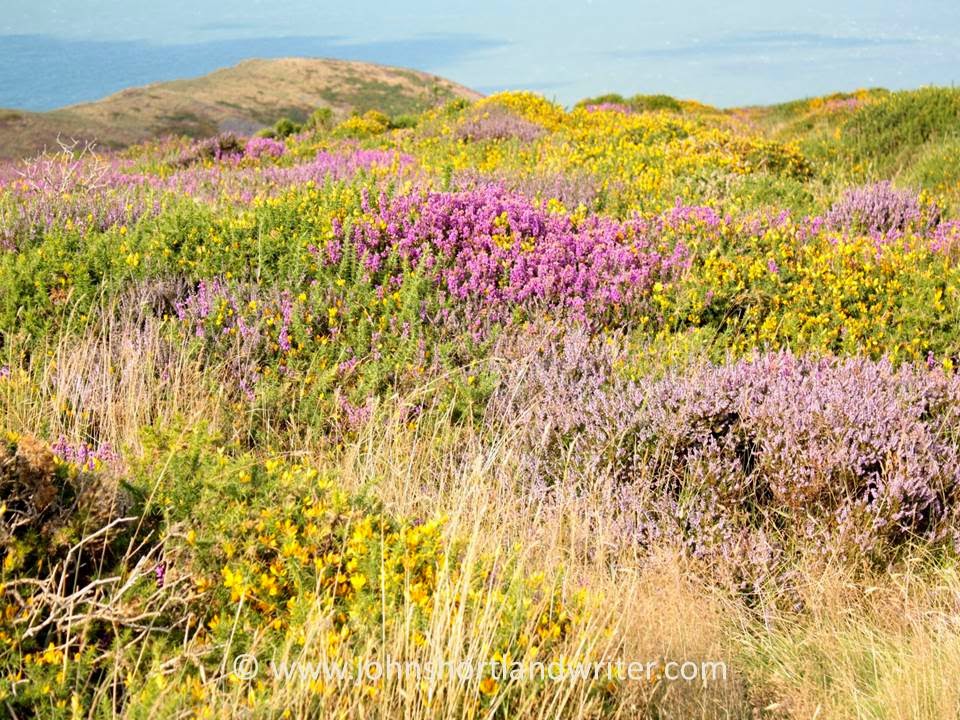
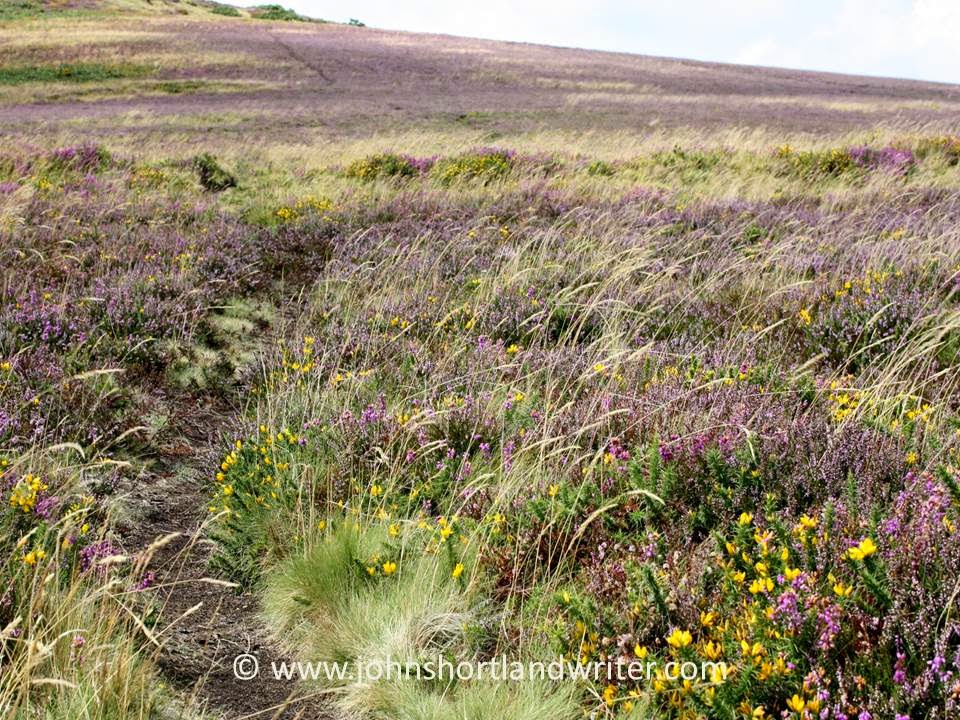
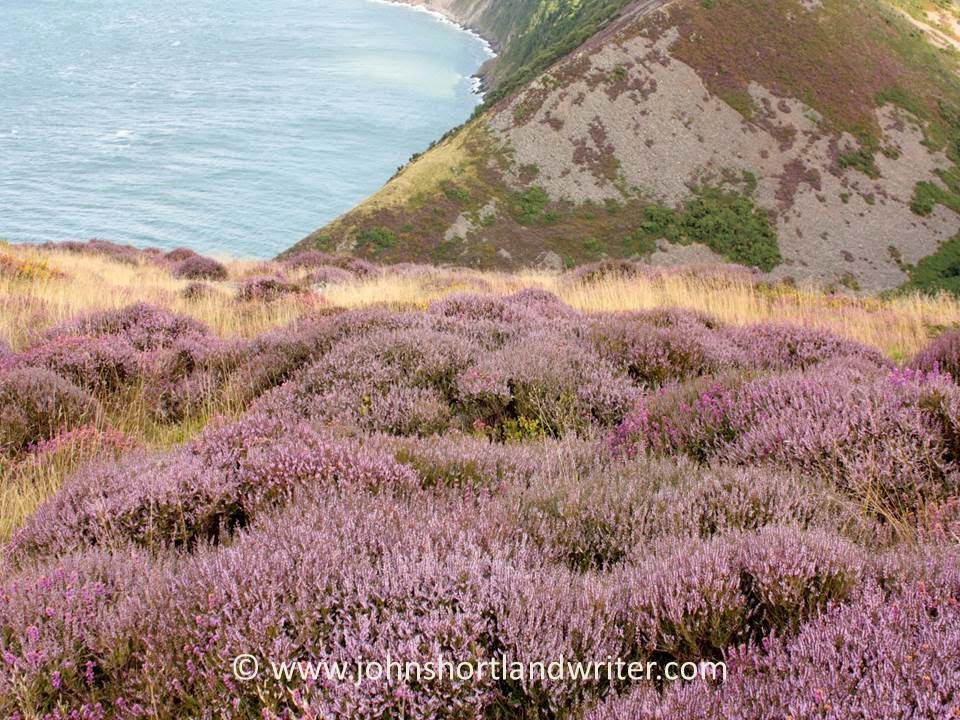
At this time of year the moors are, perhaps, at their very best: awash with a purple haze of heather in bloom, speckled with the yellow flowers of furze – the local dialect word for gorse.  During the cooler months, however, the heather looks very different, drab browns and greens giving no hint of the glory to come.

The heather is an important resource for animals whether it is food for the ponies, sheep or cattle that roam the open spaces or the deer.  In the past – they died out in 1969 – black grouse fed here too, the record of their existence recorded in place names such as Heath Poult Cross, heath poult being the dialect word for the grouse. For other birds that nest close to the ground the heather protects them with its cover.
Although at a glance the heather all looks the same, there are three types, quite easily distingushable when in flower.  Cross-leaved Heath (Erica tetralix) has paler flower clusters at the top of the stems; Bell Heather (Erica cinerea) is a rich crimson-purple in flower whereas the true Heather or Ling (Calluna vulgaris) is softer both in colouring and appearance.  Together, they blend to create a colour mix of shadow and light.
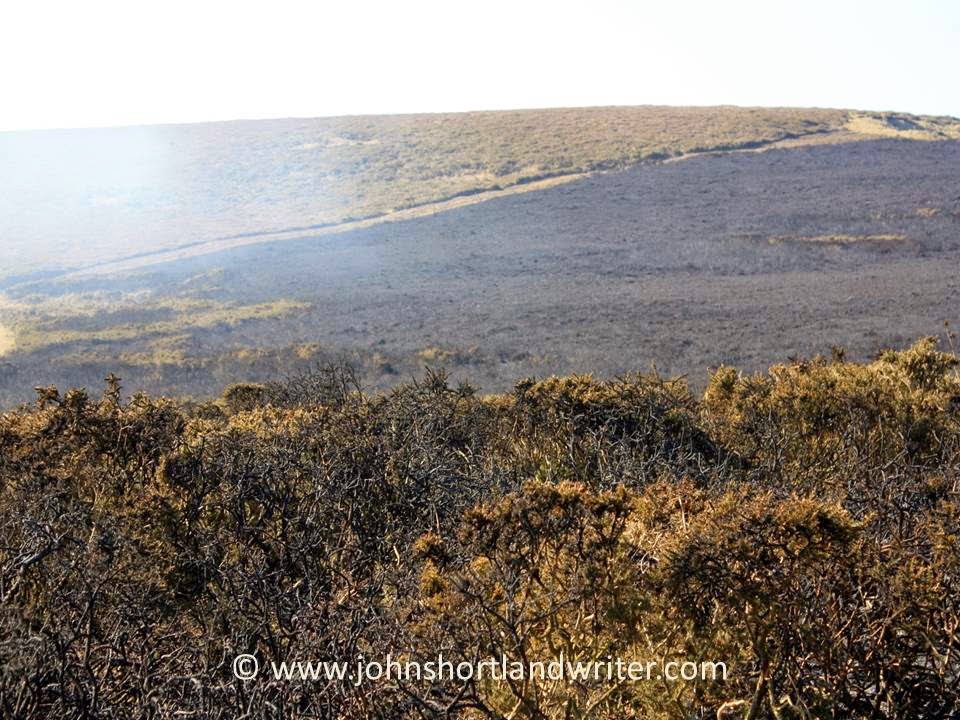
To keep the heather moorland in good order, controlled burning is carried out once the plants have become old and woody, an ancient method called swaling.  Only selected areas are burned, usually on a five to ten year cycle between October and early April.   
The fires are watched carefully, not just to prevent their spreading to other areas but to ensure that the rootstock is not damaged from which the new, tender shoots soon grow.  The burning of the moor is both exciting and interesting to watch for the smoke can be seen for many miles.  It is difficult to imagine when the stems are blackened and charred that life will ever return. The photograph below shows the regrowth after four years.

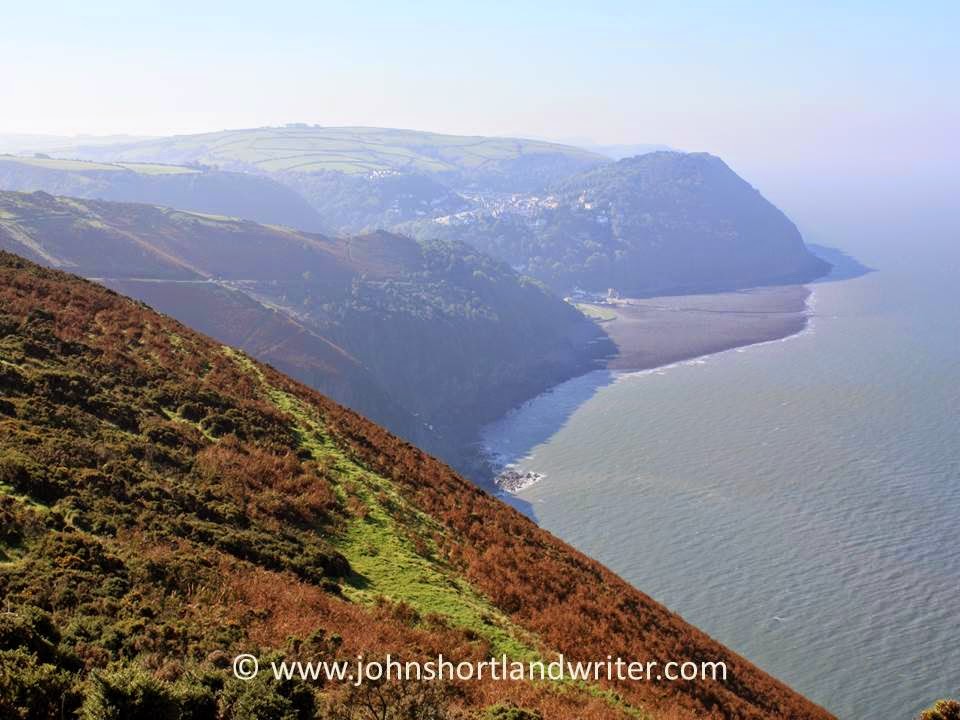
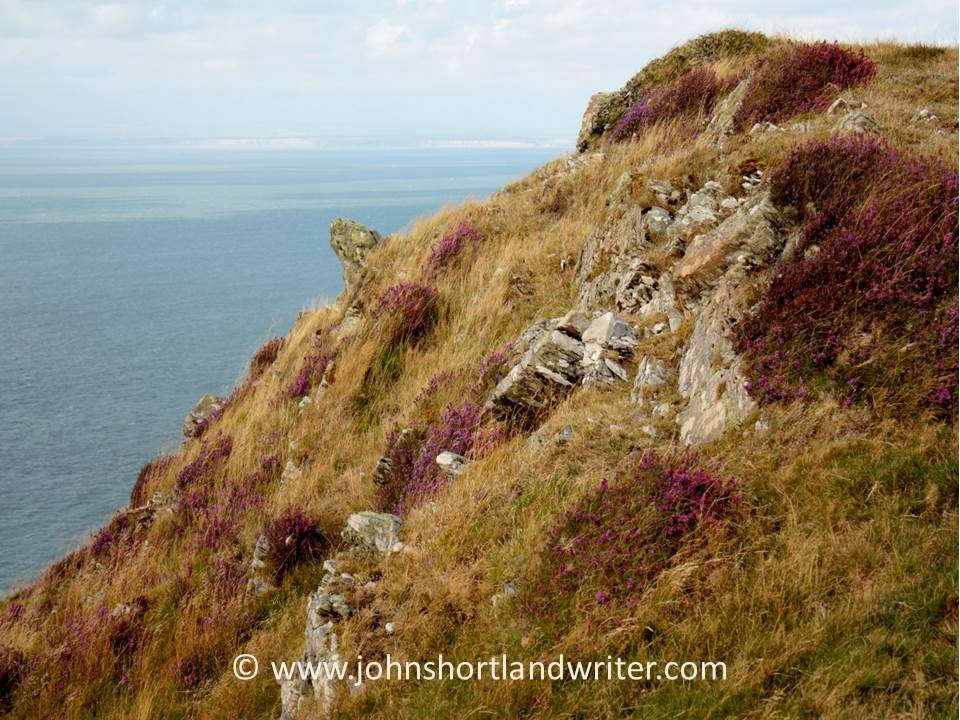
Exmoor has the highest cliffs in England and these are made even more dramatic by the moorland which extends to their edge, the heather even clinging to the steep sides as they tumble to the sea, caring little for the salt-laden winds that continually buffet them.  On a sunny day in August the combination of blue sea, purple heather, yellow gorse and blue sky, combined with Exmoor’s splendid views, is a sight rarely forgotten.

Add to Technorati Favorites