30 Years On – Sadness & Celebration (part two)

Earlier I wrote about the sadness felt within my family, as well as the wider community, at the closure of our small department store that bore the family name, Shortlands.  It had spanned the generations for almost one hundred years, firstly as Langstons – my great-grandfather’s surname, and then, after one of his sales assistants married the boss’s daughter, renamed Arthur Shortland.  Clever chap, my grandad!  Later still, during my tenure, the ‘Arthur’ was dropped.  I locked the doors for the final time thirty years ago this spring.  Last month seemed an appropriate time to celebrate its history and tell the story, not just of our family connection, but also of the incredible people that worked there over the decades.  It can be read in Part One by clicking on the link here.  I found the response to that blog incredible with so many people contacting me through my website or social media.  It was lovely, as well as humbling, to hear their memories and to know that Shortlands had not been forgotten after such a length of time.  Although I gave a hint in the blog, I was also asked what have I been doing since 1994.  In this post, Part Two, I bring the story up to the present date.
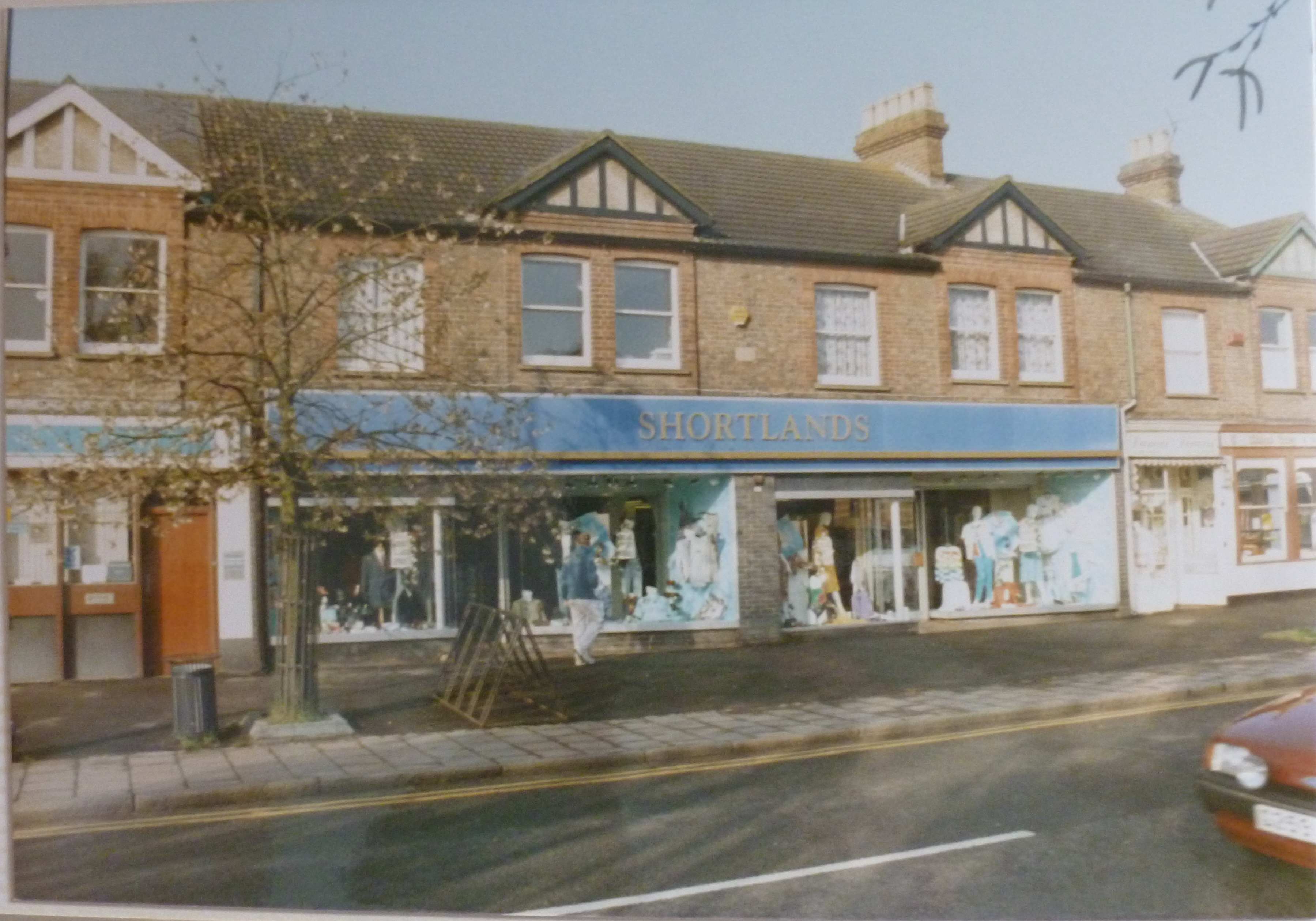
Shortlands Department Store 1994

A reaction to my choice of careers that I receive quite regularly is one of surprise.  Surprise that I once worked in the world of fashion, and wearing a suit and tie each day, or surprise that I am now working outdoors and wearing jeans and a t-shirt – although, I do have to look smarter on occasion [laughs].  When my retail career of twenty-five years ended, I was in my early forties and my future looked uncertain.  I toyed with various career plans, none of which appealed very much.  Unsure of what to do next, I decided to take a night class at our local agricultural college, Hall Place at Burchett’s Green.  Little did I realise, on the evening of my enrolment, that I would soon be working at the Chelsea Flower Show, working on a gardening series for Channel 4 television or travelling to Hungary, only recently free from Russian occupation, on a horticultural study tour.
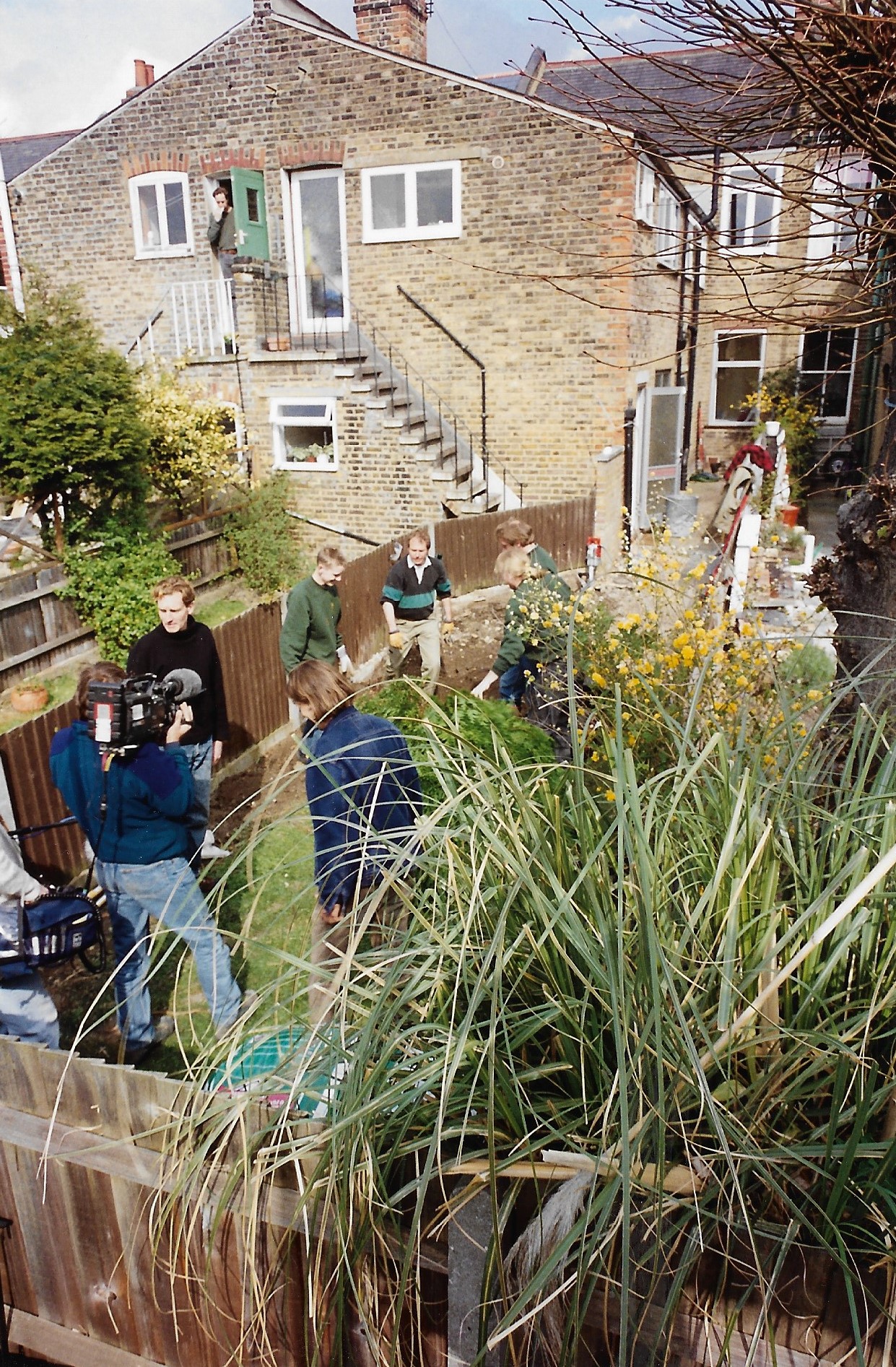
Filming with Channel 4 Television


My visit to Hall Place had ended not with a night class but a two-year, full-time crammer course in Horticulture where I studied Landscape & Estate Management.  Gardening had been the major hobby across the Shortland family for generations; I was the first in modern times to try and make a career of it.   Knowing I still had a mortgage to pay, and therefore failure wasn’t an option, I studied hard in a way that I had never managed in my school days and came away with a good qualification.  By then, I knew that I wanted to run gardens for large country estates.  I had the good fortune to be offered, during my training, a work placement with the Getty family, then the wealthiest in the world.  Their Head Gardener, Andrew Banbury, gave me various tasks and projects to carry out, frequently pushing me beyond my comfort zone.  I have a lot to be grateful to Andrew for.  When it was time for me to leave, I stepped straight into the role of managing gardens for a Swedish family who, again, were keen for me to develop further skills as well as their garden.  Over the next few years, I had the opportunity to develop an arboretum, create a lake and, best of all, to manage and develop a one-acre walled kitchen garden.
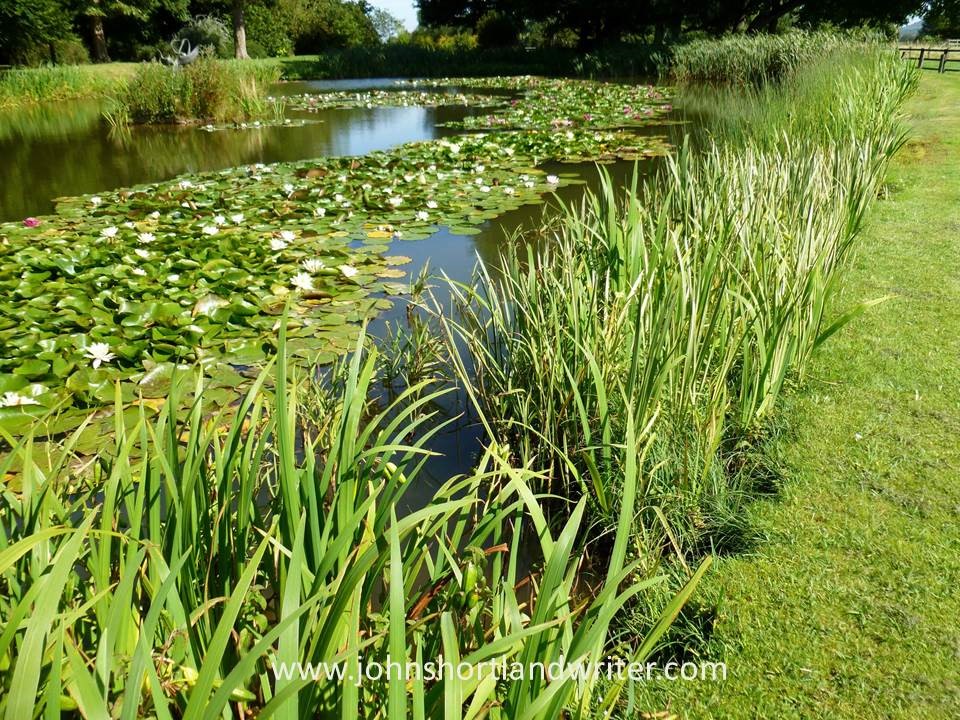
The new lake two years after construction

The Millennium saw a change once again for I left the Chilterns and the area I had known all my life and moved to the Cotswolds, there to manage an historic, Italianate Garden, Kiddington Hall.  This had new challenges but, although I enjoyed it enormously, the call of working for myself once again beckoned.  In 2005 I set up a design and landscaping business which, I am glad to say, flourished; now I have virtually retired.
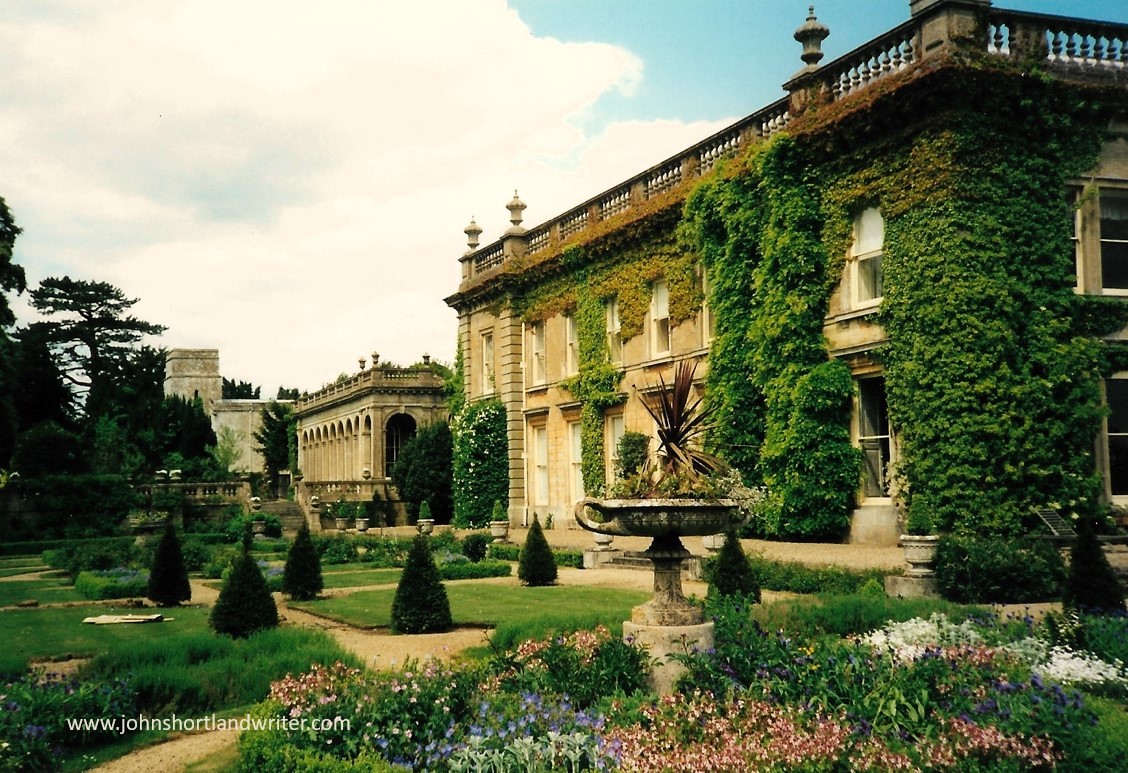
Kiddington Hall

One of my last projects had been designing and overseeing a garden that has many elements to it:  a 50 metre ha-ha, a cottage garden, formal lawns, terraces, topiary, wildflower meadows and kitchen garden, most of which have been created from scratch.  As I watched the garden come to shape, with all the hard work being carried out by the owner’s own team of builders and gardeners, how grateful I was that I could now ‘pull the age card’ and let others do the physical tasks!

A section of the terraced rose garden
The Rose Terrace a few months earlier

When I moved to the Cotswolds in 2001, for the first time in my life I was no longer ‘a local’ and knew no-one.  Hearing that Oxfordshire was one of the few counties without a Gardens Trust and that one was being formed, I volunteered and for several years organised talks and visits to gardens which introduced me to many new people.  One, hearing of my attempts at writing suggested I joined the local writers group.  Feeling very out-of-place I did and before long the talk of ‘doing something big’ with books came about.  From those very casual thoughts I found myself part of a small team that created the Chipping Norton Literary Festival.  My title of Author, Agent and Publisher Liaison brought me into contact with many people in the literary world and soon I was commissioned by one to write a book on gardening.  Three years later it was me being interviewed and giving talks on stage and the radio, a surreal experience.
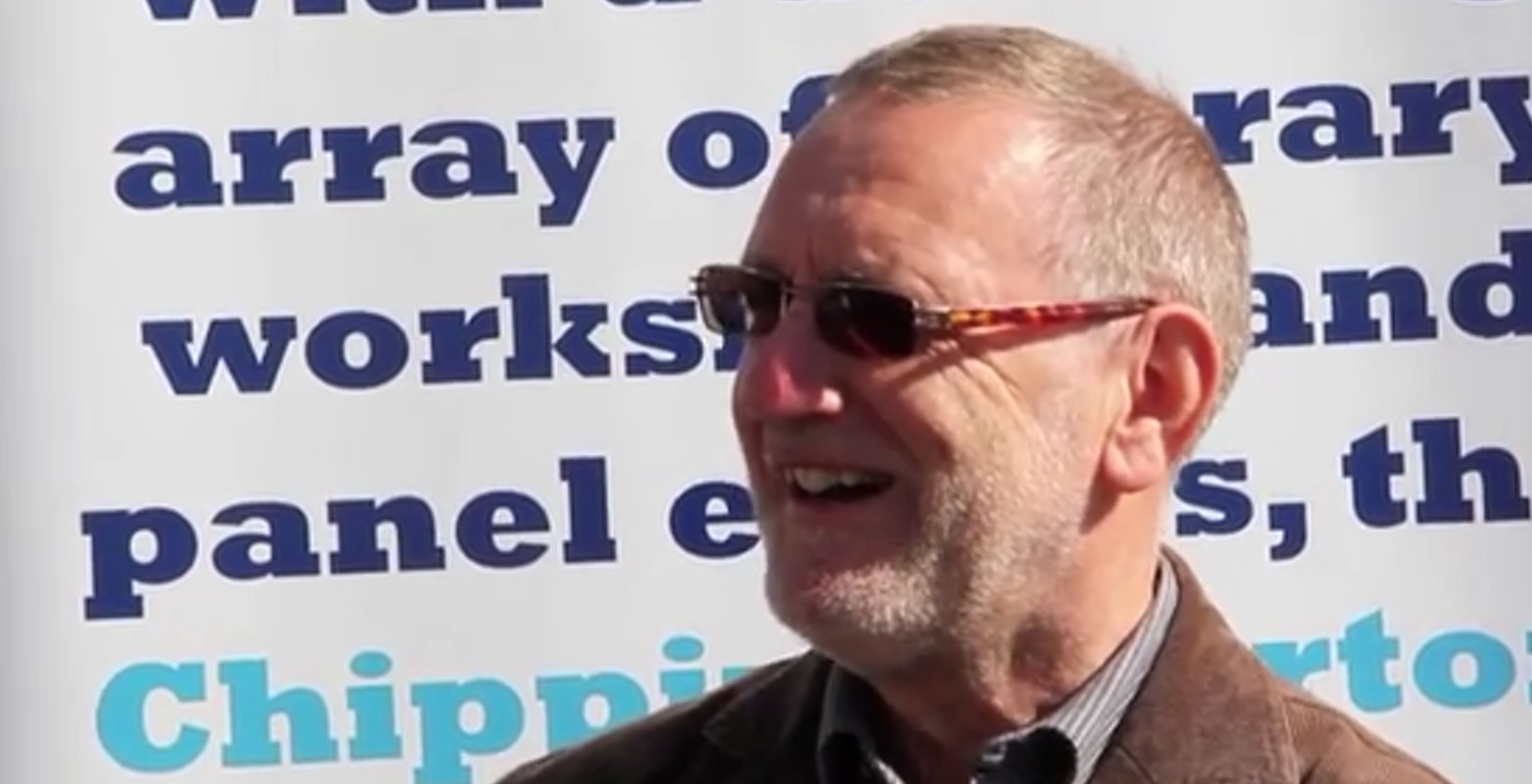
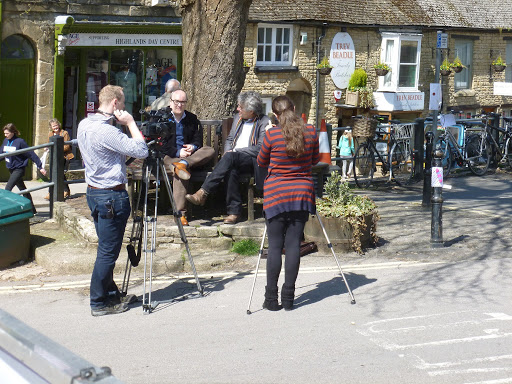
Being interviewed at the Chipping Norton Literary Festival

Looking back over the past thirty years I realise just what a chance I took with my career choice and how fortunate I was for it to have ended well.  It has taken me on the most incredible of journeys and given me the opportunity to meet/work with some very special people and places.  It has had both tearful and joyful moments – it has also had bizarre and funny ones too: being invited to play in a ‘friendly’ cricket match only to find myself bowled out for two by the Captain of South Africa, or sharing an ice cream with American model, and ex-wife of Mick Jagger, Jerry Hall, these being just two of them.  As with the shop, it has been a mix of celebration and sadness. I am so grateful that I have had the privilege of two careers both of which I can look back on with pleasure and a certain degree of pride.

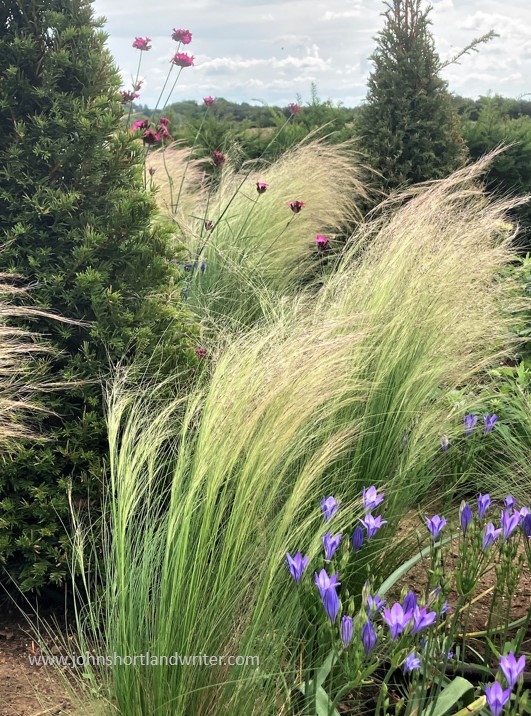
Chipping Norton Bliss

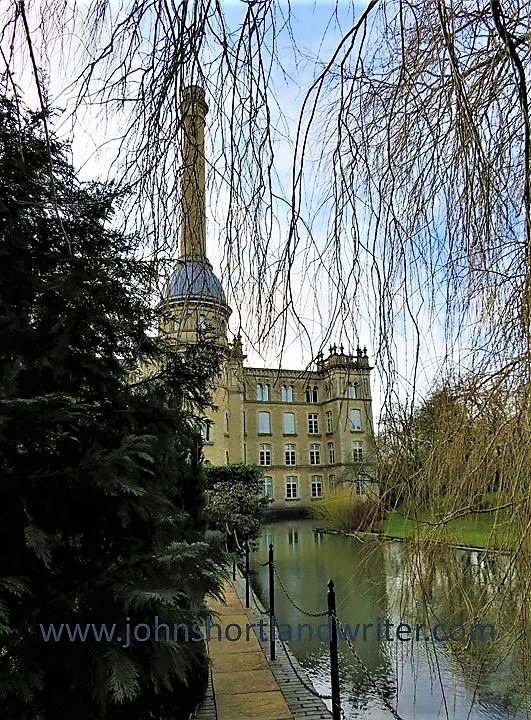
Chipping Norton, my local town, is something of an anomaly in the Cotswolds.  It’s very much a working town whereas many of the Cotswold centres of commerce rely heavily upon tourism for their trade.  Politically, it is a Labour enclave surrounded by the most conservative and Conservative Tory constituencies.  Environmentally it differs too – Its common land – wide, green, open public spaces held for posterity – reach deep into the town centre: it is not unusual to see cattle grazing within a few hundred yards of the main shopping streets.  The Common also frames Chipping Norton’s most iconic and photographed view, the Bliss Tweed Mill.  Seen in its peaceful setting today it is difficult to remember that its history has been quite turbulent.

Bliss Tweed Mill today viewed from across the Common

In the early hours of Wednesday 7th February 1872 fire was discovered on the fourth floor of the mill.  By the time the blaze was brought under control the whole building had been destroyed along with the livelihoods of the workforce.  The calamity for the town was so great that it was reported in the national press, the Manchester Evening News claiming that the flames were so fierce that “the fire was visible in the [city of] Oxford, a distance of twenty miles from the scene of the catastrophe.”  By Friday the press reported that three lives had been lost and three hundred made unemployed.  The Bicester Herald gave even more detail: “the fire was discovered by a farm servant around five o’clock in the morning…while a number of men were endeavouring to rescue some books and papers a wall fell, and three of them were killed and several others severely injured.”  The article describes how the relatively new, six storey building collapsed and the losses estimated to be £70-100,000, a vast sum in those days. It also reported with restrained understatement that the fire “created the greatest excitement.” 

The inquest into the deaths of the three men took place in the town at the Fox and Hounds Inn two days later, on Friday 9th.  They were named as Thomas Cook, aged 35 and married, Thomas Peachey, aged 25 and married, and Richard Boscott, a twenty-year-old single man.  Although the cause of their death was known the jurors had to ascertain whether they had been instructed to enter the building.  It confirmed that they and others had entered an office situated away from the fire to rescue papers when the mill wall collapsed onto the roof of the office and crushing the men who were unaware of the danger.  Several witnesses told of their own miraculous escape from the collapse, the noise of which was heard five miles away.  One, James Compton, told how his hat was knocked off his head by flying debris but he remained unhurt.  It was found that there had been no instruction to enter and as no one person could be held culpable for the fire, the verdict was “accidental death.”   The newspapers continued to report daily noting that the first Wednesday market day after the fire, the town was far busier than normal due to the large numbers of visitors, reaching several thousand, walking to the mill to view its smouldering ruins.

Three men were killed when the mill wall collapsed

Fifteen months later in July 1873, William Bliss, the owner of the tweed mill was able to address his workers and thank them for all their hard work and co-operation over what had been a very challenging time for everyone.  The new mill, the present building, was built although wouldn’t be in full production for several more weeks.  However, he was able to announce cessation of night work; permission for twenty-four-hour cloth production had been sought and granted by the Factory Inspectorate.  He was able to claim that “we may boast of having one of the handsomest and most complete mills in the Kingdom” and, indeed, it was.  Out of the ashes had grown a mill building more akin to a country house in appearance.

No wonder they were proud! Looking more like a stately home than a working tweed mill

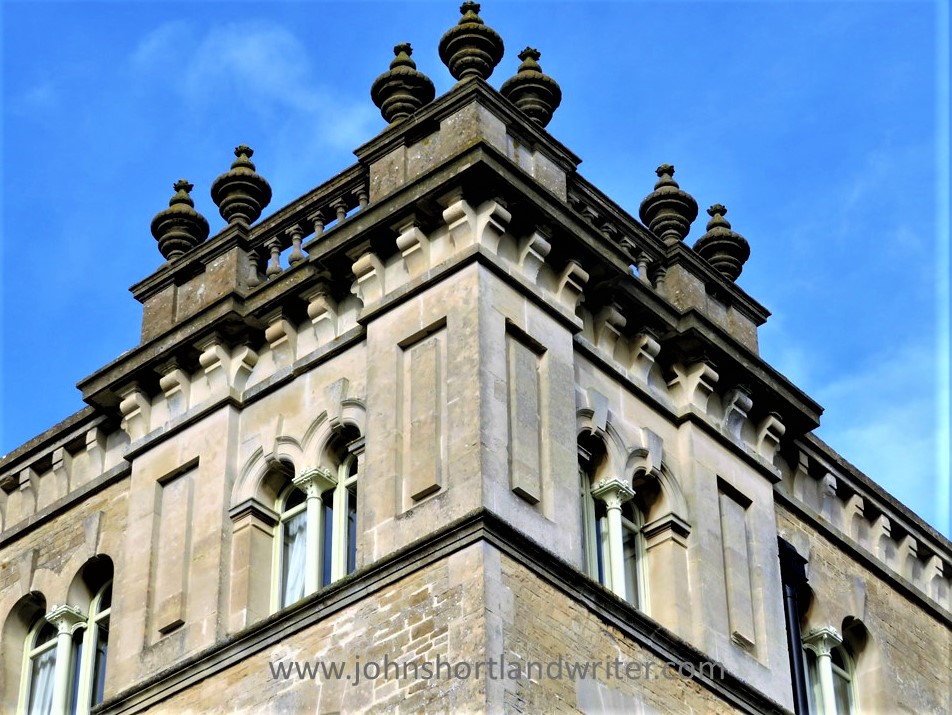
Designed by the architect George Woodhouse, the main building – the spinning house – was five stories high and faced with local limestone.  With its roof surrounded by stone balustrades and the corners of the building topped with stone urns it looked every part the grand residence.  Of special pride was the tall chimney built above the circular steam powerhouse.  Now a local landmark, it rises as a Tuscan column out of a domed cupola to a height of 165feet (50m).  Now a listed (protected) building by HistoricEngland (who aren’t known for their hyperbole), they describe it both as “an exceptional design” and “a remarkable opulent design in a park-like setting.”

No detail was too costly to add to the building
Soaring to a height of 165feet the chimney has become a local landmark

The buildings interior was, and still is, equally impressive with its high ceilings and architectural features.  Cast iron columns support the vaulted brick ceilings, held with remarkable grace.  Even the spiral staircases built into the corners of the building have a balance of style and functionality that is beautiful in its simplicity.

Despite its grandeur and the enthusiasm of the workforce for their new building more trouble arose over the years. By 1889 complaints were being made about the pollution of the millpond both by the growing towns sewage being discharged into the river and the effluent from the mills dye tanks.  It was claimed that when the millpond had been emptied the stench was overpowering.  Ten years later water issues arose again; this time there being a shortage of water supplying the town’s growing population.  As a result, piped water was only available for three hours a day and the mill only able to work two days out of six. 

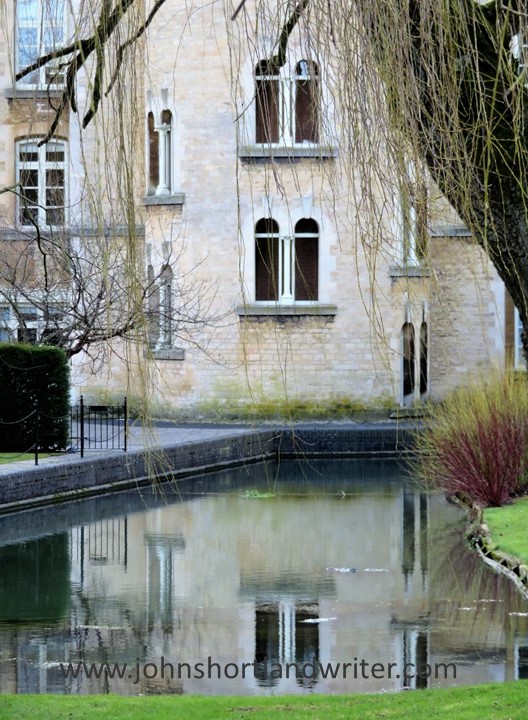
130 years ago complaints were made about the pollution of the millpond. Now it’s crystal-clear.

The most disruptive problem for the mill arose when just before Christmas 1913 part of the workforce came out on strike.  A local branch of the Workers’ Union had been formed a few weeks earlier and when several men joined, they were promptly fired.  The strikers marched through the town where they were addressed by their leader.  He advised them on how to conduct themselves: no fighting or bad language, no alcohol, just light-hearted singing and a little banter was all that was needed.  As with all strikes, the good humour didn’t last long and there were prosecutions for intimidation of non-striking workers.  During the spring of 1914, concerts were being given in the Town Hall and donations requested in aid of the Strike Hardship Fund.  Eighteen months after the strike had begun, it ended, broken by the steadfastness of the mill’s management.  The 160 now impoverished workers who had remained on strike became officially unemployed and had to seek work elsewhere.

The newspapers followed every detail of the strike

With the advent of World War One later that year, the nation had new concerns.  The war, as it happens, also helped the mill recover from the effects of the strike as large orders from the army for khaki cloth were received.  Finally, in 1980, the mill closed permanently and a few years later converted into luxury apartments.  Although the looms have now been silent for over forty years, Bliss Tweed is remembered as being at the forefront of British woven cloths.

The weaving sheds
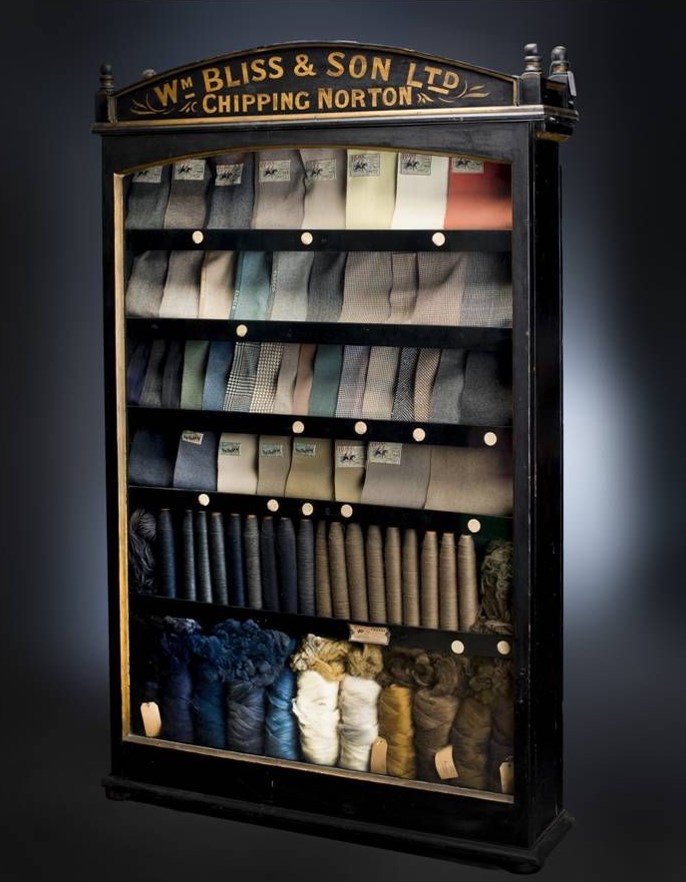
Bliss Tweed Mill samples [Source: Pinterest – Oxfordshire in 50 Objects]

References

British Newspaper Archive: Manchester Evening News, Bicester Herald, Gloucestershire Chronicle, Oxford Weekly News, Oxford Times

Wikipedia

Pinterest: Oxfordshire in 50 Objects

A Garden Invitation

If you are disappointed or disillusioned with your garden – or just not too sure how to begin – then this may be the answer: come and join me at the Chipping Norton Literary Festival next month.

Click on the image to enlarge.

Hope to see you there!

Add to Technorati Favorites

A Year in Review 2013: the Second Half

July to the end of  December already is a memory and rapidly becoming a distant one at that.  Just five days into January and Christmas seems further back in the mind than it is in reality.  2014 has arrived and I am optimistically looking forward to all that it may bring.  Not that the last one was disappointing or sad in any way; just that with time flying by it is essential to make the most of every moment.  Of course, I’m very fortunate: I have my health, I have a great job, friends and family I can always rely upon and I live in a superb part of the English countryside.  Long may all those things last!

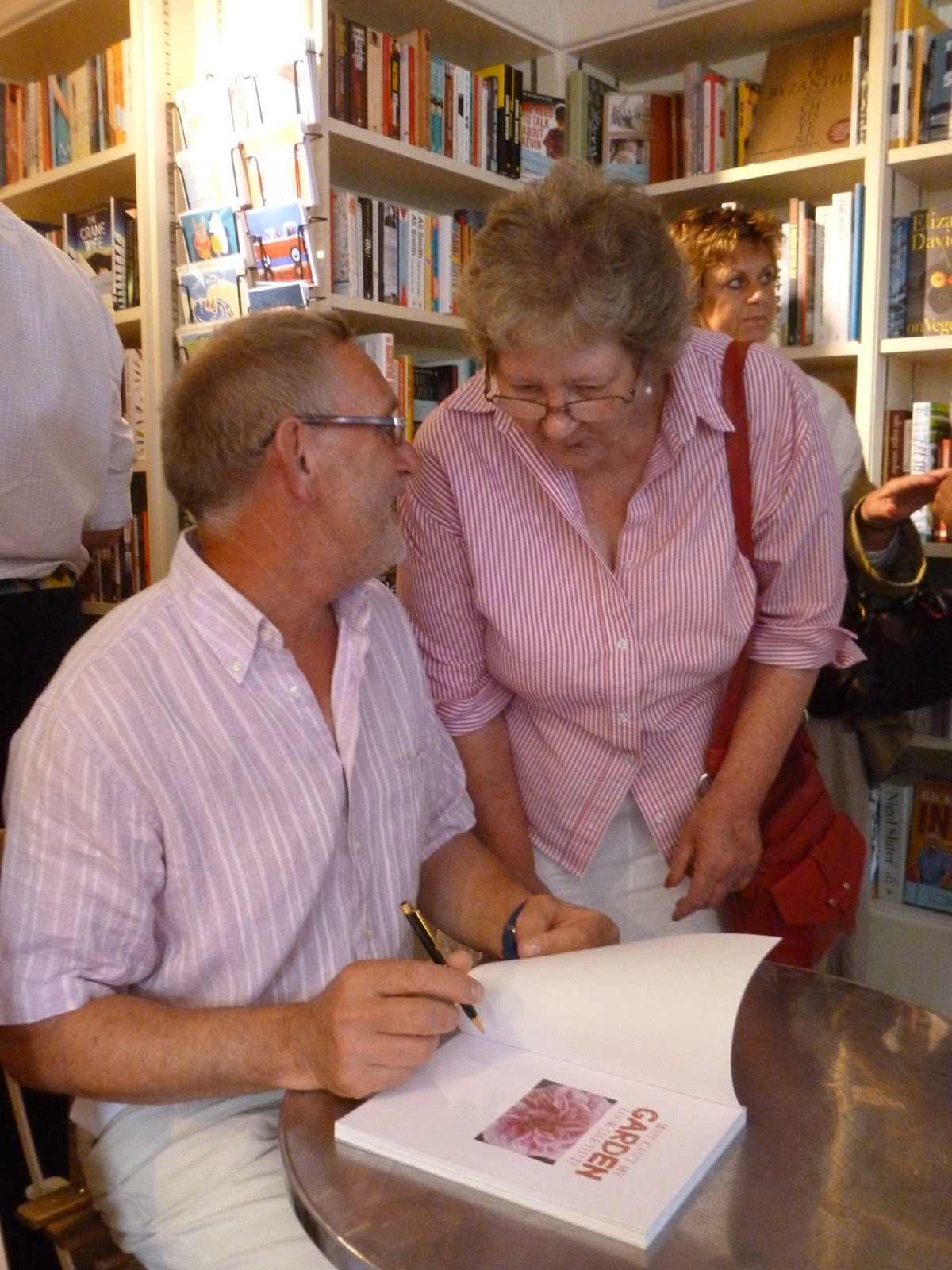
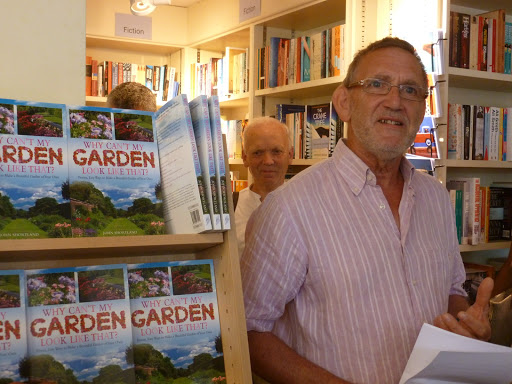
July:  The highlight of my year occurred this month.  An exciting and memorable launch of my first book to be published – a gardening book – Why Can’t My Garden Look Like That? took place in Chipping Norton’s award winning bookshop, Jaffe & Neale.  Would anyone turn up?  As it happened, very many did with people overflowing onto the street, the warm, sunny evening and the wine contributing to a street party feel to the occasion.  If you wish to find out more of the book or would like a signed copy you can find details here.
Many people are attracted to the magnificent looking but dangerous Giant Hogweed, also the subject of a post this month.  I was delighted when photographs from it were used in an educational video by the Hamilton County Soil and Water Conservation District (New York State).  Take heed of the messages if you come across the plant!

August: Travelling around the Cotswold Hills as I do every day in the course of my work you would think I would know most of what goes on there.  Nevertheless, I was surprised when I saw Tibetan flags fluttering in the breeze.  Further investigation found Alain Rouveure’s galleries and tea room.  Of course, I couldn’t leave until I’d tried out their lunch…

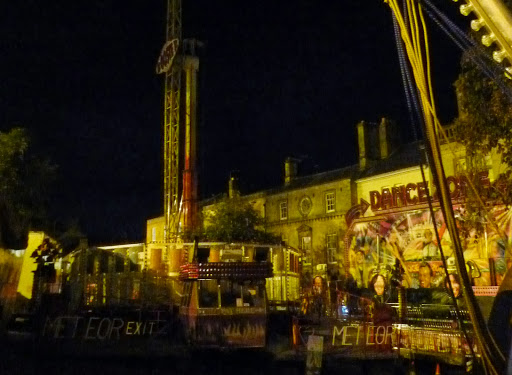
September:  Street fairs have been held for hundreds of years throughout England and Chipping Norton has an annual one that dates back to medieval charters.  Originally the time when livestock was sold and labour sought, these days they are purely held for pleasure.  Traffic has to be diverted around the town as the centre is blocked off by the rides and stalls.  Noisy, crowded and well lit they are great fun but I found  myself completely alone in darkness walking around it late one night.  It was an eerie experience, described here.

October:  The appearance of the secret valley was changed dramatically when the willow trees that line the banks of our little winding river were pollarded.  This dramatic ‘haircut’ is carried out only when necessary, the last time about fifteen years ago.  Suddenly, the view in the header of this blog has become wide open as every branch was removed leaving just the trunks standing.  The secret valley looks naked now but ‘new clothes’ will grow rapidly this coming spring.

November:  History isn’t just about learning dates of battles, the most interesting aspects are those that we can so easily relate to.  Yet so much of this is forgotten over time and it takes teams of dedicated people, often volunteers, to literally unearth it.  A now deserted and seemingly empty part of the Exmoor National Park was, one hundred and fifty years ago, teeming with people and was at the very forefront of Victorian technology.  It was quite extraordinary what these engineers achieved and their story featured in two posts which created much interest and comment.  They can be found by clicking here and here.

December:  The blogging year ended on a cuddly note – looking after two adorable but naughty beagle puppies.  If you are a dog lover there is nothing better than to be mauled by puppies.  If you’re not over-keen on dogs then you won’t understand the attraction!  You could try to find out, however, by clicking here.

So what’s going on in 2014?  Lots, hopefully. There is a new racehorse, more gardening, more travel, a lot more writing; it will be a busy year and how it pans out time – and this blog – will tell.

Thank you all so much for following my blog. Over one hundred thousand of you have looked at it since its inception which I find quite extraordinary and very humbling.  Please continue to do so and to tell all your blogging friends to come and pay me a visit, either on here or at my full website www.johnshortlandwriter.com .  I am also on Facebook and Twitter where daily updates can be found.  You are always very welcome to contact me with your comments or queries and I will do my best to answer them all.

Wishing you all a very happy and healthy New Year.

Add to Technorati Favorites

A Year in Review 2013: The First Six Months

As I feared, once you reach a certain age, time flies by even quicker than before and that certainly has happened in 2013.  Where has the year gone?  The only consolation is that speaking with young people, they say the same thing.  Perhaps that is a rather sad reflection of modern living for I often found that the time didn’t go by quickly enough years ago!  Despite the year having gone by rapidly, it has been a great one with some excitement along the way.

January: it is rapidly becoming a tradition that each New Year’s Day some close friends and I go off exploring.  This usually includes a museum and food.  The year before it had been London with a visit to the National Portrait Gallery followed by afternoon tea at my favourite grocers, Fortnum & Mason.  This January it was to the city of Bath with its glorious abbey church where Edgar was crowned King of England in 973AD.  The church has the most exquisite vaulting – it is hard to believe that such fine tracery can be achieved by carving stone.  Bath, which is a World Heritage Site, is famous for its Roman Baths built about a thousand years earlier and which are open to visitors.  A great place to view them from are the Pump Rooms, the imaginary setting of Sheridan’s Georgian play, The Rivals.  It was here that we had our champagne tea.

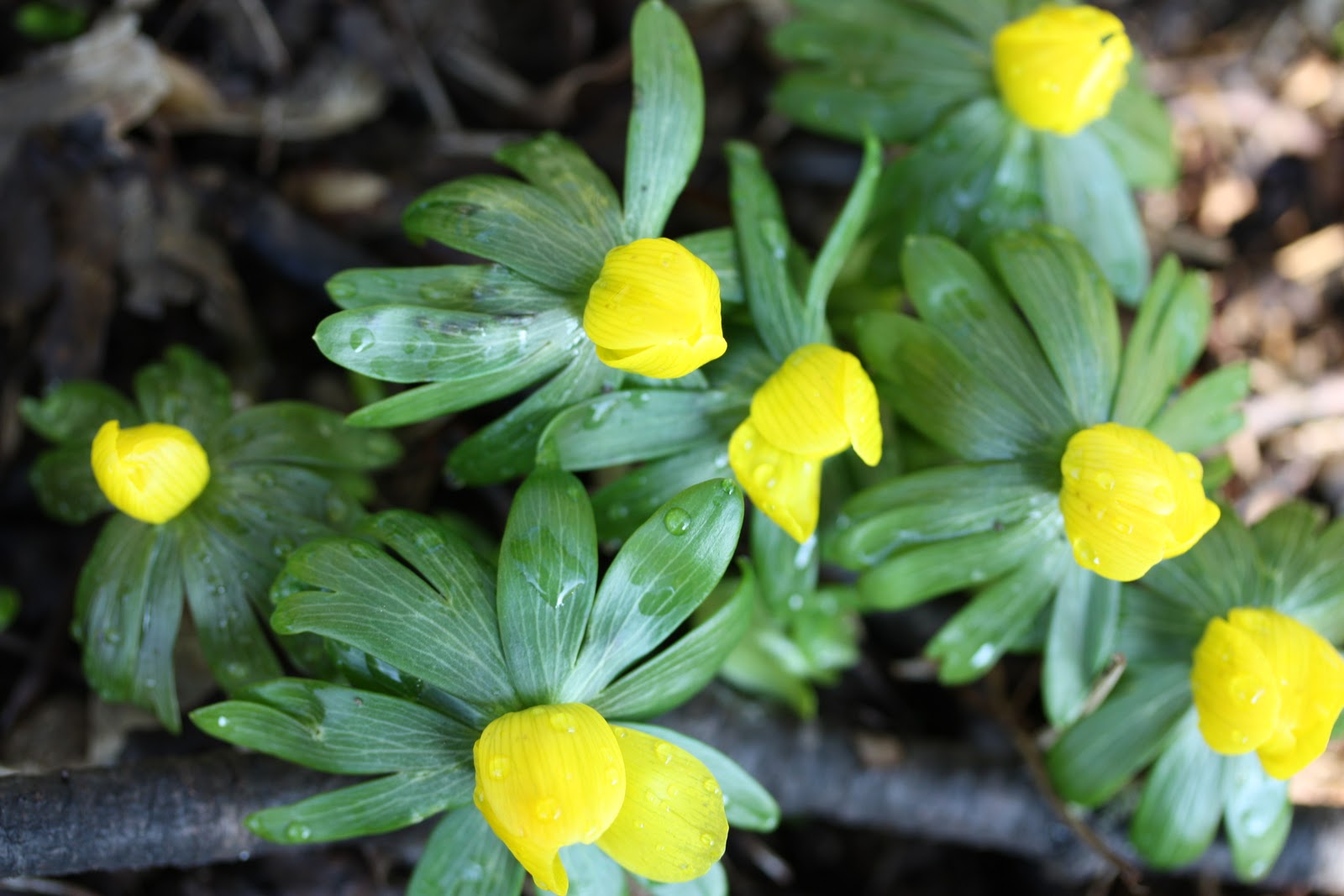
February was a mixed month weather-wise in the secret valley and one post describes the rain lashing against the windows and the trees being thrown around by a winter gale.  Despite that the winter aconites were in full flower advertising the advance of spring and the wild birds were hanging onto the feeders for dear life.  Take away the aconites and we have a carbon copy day as I write this and, although there are no signs of spring yet, we are passing the shortest day which is always encouraging.

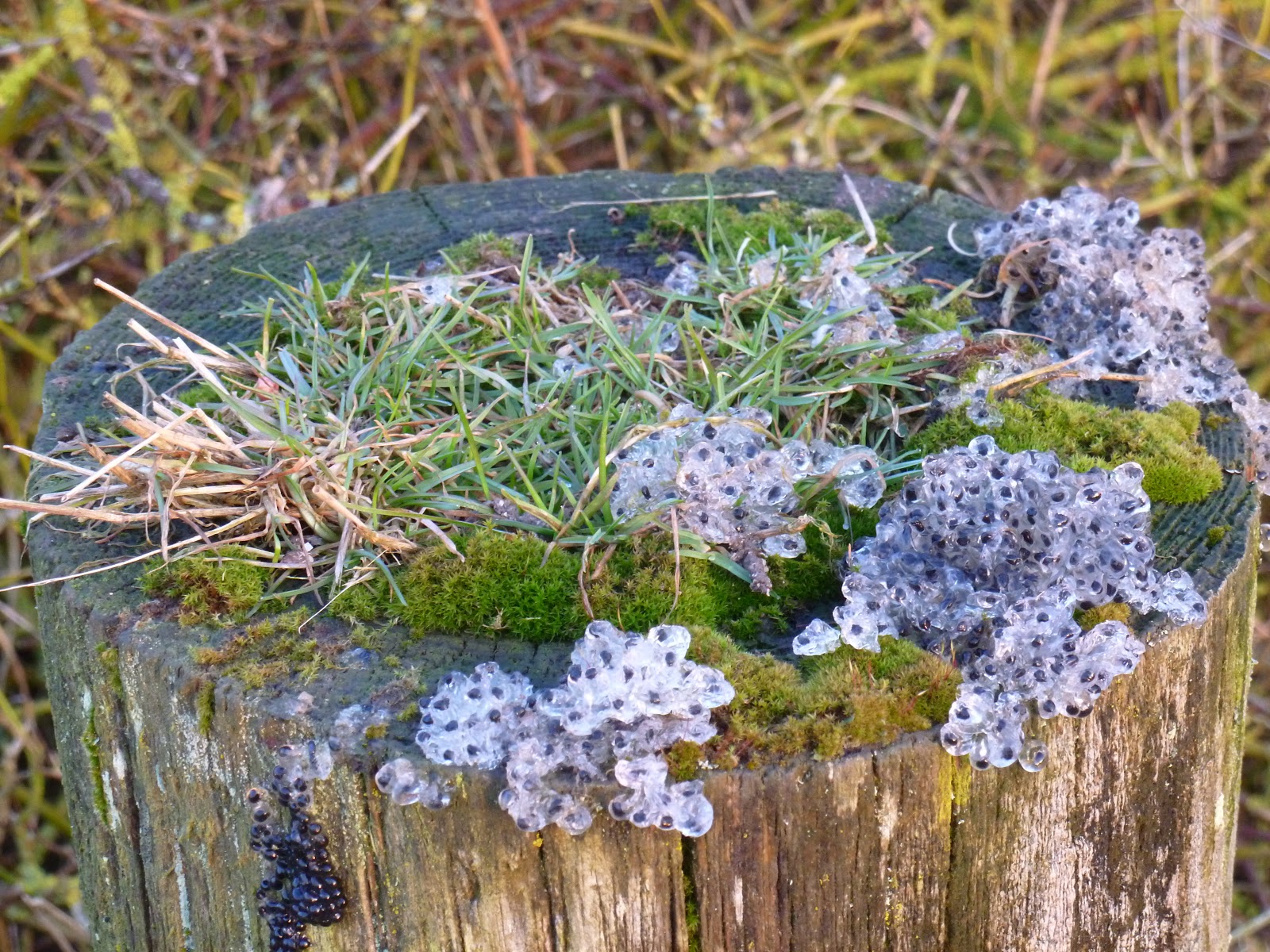
March was a strange month too with huge amounts of rain interspersed with wintry weather.  Even stranger was the affect it had upon the secret valley’s frog population.  I can only assume that it was because everything was so saturated that, instead of laying their spawn in the small lake that is visible from the cottage, they laid them instead upon the tops of nearby fence posts. They couldn’t possibly have survived there anyway but it was sad to see a few days later that they had turned black and ‘melted’ when a hard frost fell upon them.

April is the month of the Chipping Norton Literary Festival.  I have been on the committee since its inception and it has been gratifying to find that it has rapidly established a good reputation with authors, publishers and festival goers. One of the star attractions for 2013 was Sir Julian Fellowes of Downton Abbey fame.  Because it is a small festival in a small, country town the atmosphere is very relaxed and it is possible to meet the authors for book signings or just a chat as they stroll about ‘Chippy’.  This coming year the festival takes place from 24-27 April and tickets go on sale next month – check out the website for more details.

April also saw the launch of my new website www.johnshortlandwriter.com and also the start of my tweeting.  Come and join me @johnshortlandwr

May:  As I am always saying the secret valley is a magical place to live and one of the things that makes it so special is its history. Not the history of history books but the type that goes unrecorded other than by the clues it leaves behind in the landscape.  Here we have a patch of rough ground left uncultivated that is the invisible site of a Bronze Age settlement. Later, almost to within living memory, the lane was a drover’s route and, in places, the road has been abandoned to become a green track full of wild flowers and butterflies.  We still refer to one place as the ‘white gate’ even though it was removed a hundred years ago or more.  It feels special to know that the valley has been lived in and loved for over three thousand years.

It was also a very exciting time as my gardening book was published accompanied by radio and other interviews. The launch party took place a couple of months later.

June is a colourful time of year in gardens and one thing I’ve always wanted to create is an Iris border.  This is an extravagance of space that few can afford for they are only in flower for a relatively short time.  However, one of my clients liked the idea so the ‘rainbow’ border was created.  Interest is extended by daffodils and alliums for earlier colour and Japanese anemones, with large flowered clematis behind, for later on.

To read any of the posts referred to above just click on the links, coloured green.

Add to Technorati Favorites

The Sleeping Fairground

It is a very long time since I went for a ride on a Big Wheel.  I was twelve when I bravely called an older cousin a coward because he wasn’t too keen on the idea.  Once aboard, we slowly climbed to the top and as soon as we reached it he had he rocked it violently backwards and forwards until I’d begged forgiveness.  Now almost fifty years later, I was determined that I would go for my second trip but on my own so there would be no witness to my fear – but first I was due at a meeting.  Meeting ended and bolstered by a visit to the pub for a pint or two of beer, I ventured forth only to be thwarted: the fair had closed for the night.

Chipping Norton, here in the Cotswolds, comes to a standstill for three days every September when the fair comes to town.  Dating back to statutes in medieval times, the annual ‘mop’ or hiring fair was originally the time when agricultural and other workers would be hired for the forthcoming year.  In time, they became social events too and, nowadays, they are just a good excuse for enjoyment.  The rights of the fair to be held annually are carefully safeguarded and despite considerable inconvenience to traffic, the centre of the town is blocked by numerous stalls and rides.

Funfairs are noisy, active places.  There are flashing lights, music and the screams and shouts coming from the fair-goers, people of all ages reduced to childish delight by all that is happening around them.  But then it closes for the night and what happens then?

Oddly enough, once the fairground has closed the town centre becomes deserted.  Perhaps all the excitement and exhilaration has been too tiring but quite suddenly, there is silence and no-one to be seen or heard.  This is what I found when I wandered through the fair this late night.  It was a strange, surreal experience – almost as if the world had ceased to exist – and the more I looked at the dodgems and rides, stationary and empty, the more a feeling of unease came over me.  Even the helta skelta took on a threatening appearance.  Was I really alone here?  Would a person confront me from the shadows and, if they did, what then?  Telling myself I’d been watching too many horror movies I quickened my step and walked around a corner to come face to face with the only other ‘human’ in the place. 

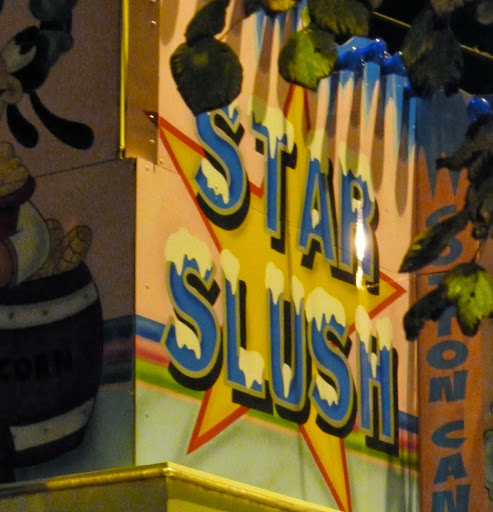
Turning sharply away the sight of Star Slush, the only sign lit up, brought back the pleasure to be found in the artistry of fairgrounds too.  Travelling people  of all types, whether fairground, Romany or bargemen have a highly developed form of decoration, all closely connected and worthy of further contemplation.  But not then – time for home with the vow to return next year for my ride on the Big Wheel.

Back at the Secret Valley, where the only light was that of the moon, there is never a feeling of unease and, the night being warm, I decided to walk down the lane to the river.  As I did so, I mused on why I felt so uncomfortable being alone in the town centre.  Many visitors comment on how silent and brooding the valley is at night with no street lights, houses or familiar sounds.  It is all about belonging: I have lived ‘in the middle of nowhere’ all my life, it is where I belong and the silence and darkness here is my comfort blanket.  I’m obviously not yet ready to become a city boy.

Add to Technorati Favorites

An Exciting Evening

Fellow bloggers often comment about when they first began to write and  especially when or why they began to blog. When you come to think about it, blogging is rather an odd thing to do: you write your piece, perhaps add a few images, press the publish button and it’s out there for all the world to see.  Many of us assume that no-one will bother to read it and, after all, why should anybody be interested in our thoughts or projects?  But, again as many of us know, gradually people find us, follow us and friendships start to build.  The great majority of our followers we are never likely to meet in reality yet they share our tales and show real interest in what we are doing, whether it be family, travel, garden or whatever else we blog about.  Just occasionally, you come face to face with one and this happened last night.

Followers of this blog, whether here or on Facebook or my new website – or my Tweets –  can hardly have failed to notice that I have had my first book, “Why Can’t My Garden look Like That?” published recently (for I have been talking about virtually nothing else lately).  It has been an incredible journey with a huge and rapid learning curve; from commission to publication  it was completed in only thirteen months.  Fortunately, I had huge support and encouragement from my publishers, Constable & Robinson.  Fast forward another seven weeks to yesterday evening: the date of the official book launch.

I was delighted that our local bookshop, Jaffe & Neale, hosted it for Chipping Norton is very fortunate in having such a lovely, independent and award-winning bookshop.  It couldn’t have been a better choice of location for the town was glowing golden with the heat-wave sunshine emphasising the colour of the old, Cotswold stone buildings.

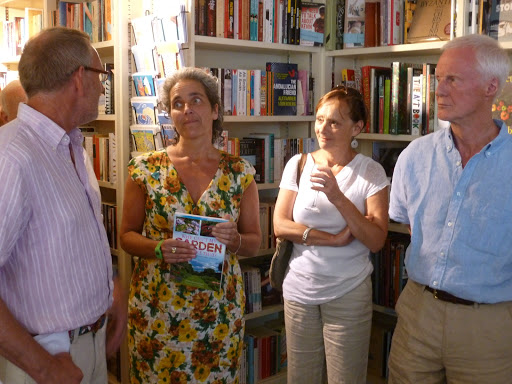
With Polly Jaffe of Jaffe & Neale, who hosted the evening, and Nikki Read and Giles Lewis of publishers, Constable & Robinson

I felt remarkably relaxed at the thought of making a speech to a large number of people.  In fact, my real concern was that no-one would turn up at all!  However, over one hundred came, filling the bookshop and spilling out onto the pavement giving the whole evening a real party atmosphere which, in turn, created more interest from passers-by.

A memorable evening was made all the more so as I began to realise just how far people had travelled to be with me.  Bette Baldwin of Friends of Hoar Oak Cottage had travelled up from Devon – I had met Bette only once before on Exmoor, thanks to the power of blogging.  Several others I had not met for a very long time; thirty years or more and, of course, there were others that I’d never met before at all.  The evening came to a close with a celebratory dinner organised by friends at a local restaurant.  An exciting evening and one never to be forgotten.

Yet more excitement today as I find that my book has been reviewed and described as “brilliant” by LandLove magazine.  They are also running a competition with ten copies of my book as prizes.  You can find out more about that by clicking the link here.

Add to Technorati Favorites

An Invitation

John Shortland

invites you to celebrate the launch of

Why Can’t My Garden Look Like That?

Proven, Easy Ways to Make a Beautiful Garden of Your Own

With a foreword by Josceline Dimbleby


Monday 15thJuly

6.00 – 8.00 pm

Jaffé & Neale Bookshop

Middle Row, Chipping Norton.  OX7 5NH

If you are unable to make it on the day and would like to purchase a signed copy, please do contact me.  Payment can be arranged through Paypal and I’m happy to ship overseas.  Unsigned copies can, of course, be purchased direct through Amazon or visit my publishers, Constable & Robinson’s website by clicking here.

Add to Technorati Favorites

Behind the Scenes at ChipLitFest

It hardly seems possible that a week has passed since the Chipping Norton Literary Festival (or ChipLitFest as it is affectionately called) took place.  For four days the small, market town situated on the edge of the Cotswolds hosted eighty of the best authors to be found anywhere – a remarkable feat for a festival still in its infancy.

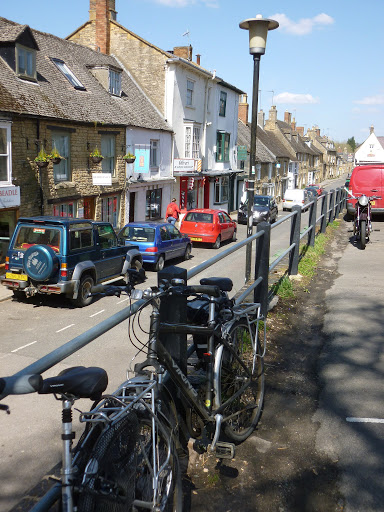
A quiet back street in the centre of Chipping Norton

For the eleven of us on the committee the past year has been an endless round of meetings, venues to be visited, volunteers to be found and co-ordinated, emails to be sent, publishers and agents to be contacted and authors to be booked.  Fortunately, our meetings have always been enjoyable and any stress negated by copious amounts of food, wine  and strong coffee.  These are an absolute necessity for none of the committee receive any payment whatsoever so meetings have to be fitted around busy work schedules in the evenings.  Perhaps if we had ever worked out how much the meetings cost the individuals hosting them there would have been a mass resignation.

The information point in the market place

The first two days of the festival are focused on children with authors visiting all of the local schools, speaking and reading and encouraging them to become better readers and writers.  The story writing competition was well supported; the winning entries can be read by clicking here.

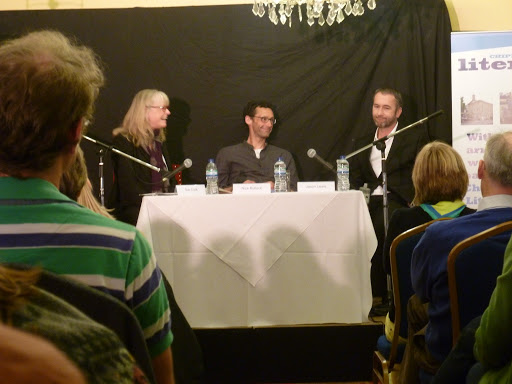
Mountaineer Nick Bullock and explorer Jason Lewis discuss their exploits with Sue Cook

The authors and patrons were guests of honour at a reception held in the town centre on Friday evening and gave them the chance to network and to meet the committee and sponsors in a relaxed and informal way.  My role in the festival has been  Author Liaison so I was especially keen to speak with as many of them as possible – it was good  to be finally able to meet face to face after many weeks of messages and telephone conversations.  The following evening myself and Merilyn Davies, the children’s programme co-ordinator, hosted a dinner for the authors and, as many events had taken place by then, we were all realising just how successful the festival was becoming.

At the reception our designated charity Storybook Dads gave a short explanation of their amazing work inside some of the UK’s toughest jails.  Their film was uplifting and heart-breaking all at the same time and it was wonderful that the festival was able to present a cheque to them for five hundred pounds.  They are now out in Afghanistan too, helping servicemen keep in touch with their children.  A short video montage of their work can be seen here.

Sharon Berry, founder of Storybook Dads, talks to author Clive Aslet about their work

It wasn’t just the committee that welcomed our guests for the whole town has taken the festival to its heart: the local window cleaners had put up yards of bunting, shops and cafes were offering special promotions and the farmer’s market was held over two days instead of the usual one day. Festival goers were appreciative of this and with warm, spring sunshine finally making an appearance the atmosphere was electric.

One of the drawbacks of being involved in putting on an event – and I wouldn’t have changed places for a second – is that there is little time for us to actually see any of the talks or workshops.  However, I did manage to sneak into a few places to take a quick photograph or two.

Julian Fellowes meeting festival goers and signing books after his Downton Abbey talk


Both the local and the national press came to town too.  David Freeman, past presenter of Sky television’s The Book Show, was busy interviewing and filming authors.  I, too, was interviewed by him about my forthcoming book Why Can’t My Garden Look Like That? published next month.

David Freeman being filmed during an author interview

The festival ended on Sunday evening and we all returned home utterly exhausted.  This state of affairs didn’t last long for within twenty-four hours emails from the committee were pouring into the inbox discussing how well it went and how we could make 2014’s even better.  Even more gratifying were the huge number from the authors, volunteers and public saying how much they had enjoyed it and asking for the dates of the next one.  So here it is:

Chipping Norton Literary Festival 2014 – April 24-27

If you want to take part or visit follow the information on the links to the websites: ChipLitFest, Facebook or Twitter

The actress, Lalla Ward, caught having a quiet moment at the Chipping Norton Literary Festival

Add to Technorati Favorites

Chipping Norton – One Week To Go!


Chipping Norton, one of the gateway towns of the Cotswolds often gets overlooked on the tourist trail.  It is not surprising in some ways for many of the region’s towns and villages look as if they have come straight off the lid of a chocolate box – all golden, mellow stone crouched under a heavy hat of deep thatch, devoid of much of twenty-first century life.  Chipping Norton – or Chippy as it is affectionately known by the locals – is different: a bustling, working town full of people going about their everyday lives , whether shopping or working.

Look beyond the modern shop fronts and traffic and you find a gem of a town; raise your eyes for every building has a different façade and, yes, they too are built from Cotswold stone.  Explore the side streets and you find almshouses and a magnificent church and both the 16th century Guildhall and the Town Hall are as glorious a building as you will see anywhere.  Bliss Mill,  a former tweed mill now converted to flats, is surrounded by common land that reaches into the heart of the town.

Chippy is a busy place socially too and for a small town with a population of only 6000 there is always something taking place.  Perhaps one of the most ambitious of recent events is the Chipping Norton Literary Festival (ChipLitFest), the first of which was held last year to great acclaim.  This year it is bigger than ever and starts in just seven days time on the 18th April and continuing throughout the weekend.


Because the town is so small, the festival is held in numerous venues.  It is fortunate to have an award winning theatre to stage larger events and an award winning bookshop, Jaffe & Neale, that holds workshops – and sells the most delicious coffee and cakes.  It seems everyone is involved in one way or another: the Chequers pub, the Blue Boar Inn, the Crown & Cushion Hotel, the Vintage Sports Car Club, the local churches, the library; even the shoe shop is hosting a children’s event.  Incidentally, there are free things going on for youngsters all weekend and the festivals designated charity this year is Storybook Dads, which connects prisoners with their families through books and reading.

So who is coming to the festival? There is an amazing choice of eighty authors so there is bound to be someone to interest everybody.  Sir Julian Fellowes of Downton Abbey fame will be there; Fern Britton will be talking about her latest book – and perhaps her experience in Strictly Come Dancing.  For detective novel buffs, Mark Billingham will be discussing murder with Val McDermid, Stuart MacBride and Martyn Waites.  Did you see the film We Need to Talk About Kevin?  Author Lionel Shriver will be discussing her new book, Big Brother, which tackles the subject of obesity.  For foodies, Xanthe Clay, Henrietta Green and William Sitwell ask “are we a nation of food fashionistas?”

Prue Leith – one of our Festival patrons

Two events that especially appeal to me are Ursula Buchan’s talk ‘How England’s Gardeners Fought the Second World War’ and the Extreme Travel team of Nick Bullock and Jason Lewis discuss their adventures with Sue Cook.  Jason, incidentally, has just been recognised by the Guinness Book of Records as the first person to circumnavigate the world using only human power and described by the Daily Mail as “the most remarkable adventurer in the world today.”

Sue Cook, another of our Patrons

One of the especial pleasures of coming to the festival is that because both the town and the venues are small, you are able to be close to the authors, to chat with them and to get them to sign your books.  You can also meet me (!) for, as Facebook followers of this blog know, I am part of the organising committee.  ChipLitFest also has a Facebook page or follow them on Twitter.

Tickets for all of these events are selling fast and for more information about them and the other authors and host of workshops visit the festival’s website by clicking here.

I look forward to seeing you at the Chipping Norton Literary Festival, 18th-21st April – do come and say ‘hello’.

all photos, apart from Bliss Mill, from the ChipLitFest website

Add to Technorati Favorites