An Arty Family?

Eighteen months ago I was contacted by a gallery in Cheltenham about their researching an artist for they had acquired four watercolours of London street scenes painted during a ten-year period from 1885.  They were by Edward Angell Roberts who had lived with Mary Ann Shortland, an ancestral cousin of mine.  Although they described themselves as husband and wife in official documents, Edward was already married to the exotically named Josephine Bartolozzi Vestry Anderson.

New Street, Spring Gardens
Edward Angell Roberts, 1885

Edward was born in Kennington in the English county of Surrey in1836.  His father was a tea merchant and aspiring gentleman which presumably he became for by the age of fifteen, Edward was being educated at Christ Church Hospital, a school for sons of clergy and gentlemen.  It was a good springboard for Edward for in 1855 he was promoted to Deputy-assistant to the Commissary of the Inland Revenue before proceeding to becoming Clerk to the War Office.  In his spare time, he painted.

Old Wooden Houses, The Strand
Edward Angell Roberts, 1887

The four watercolours show great artistic detail of places within a stone’s throw of the War Office, in London’s Pall Mall.  They are New Street, Spring Gardens (1885), Old Wooden Houses, The Strand (1887), Garden House, Clements Inn (1895) and Pump Court, Temple (1895). They have since been sold at auction to a buyer in the United States.

Garden House, Clements Inn
Edward Angell Roberts, 1897

Edward had married Josephine in 1858 and the census, three years later shows them living apart.  Whether that was a temporary separation is not known for shortly after they had two children, a girl in 1864 who died in infancy and a boy in 1866. However, by 1871 he was living with Mary Ann and Josephine and the son disappear from record.  It is thought that they may have moved to Ireland for the son reappears in the English 1901 census return and claimed to have spent time there.  As for Edward and Mary Ann, they never married (or had children) for in his will, Edward leaves his estate to Mary Ann Shortland, spinster.

Pump Court, Temple
Edward Angell Roberts, 1897

I began to wonder if we had other artists in the family for several of my cousins, my sister and my father were all artistic,  I always felt that the skill had passed me by until some kind person exclaimed that through my career as a garden designer,  I paint with flowers, a description I rather hold onto.  It is true that there are some similarities for a new garden is a blank canvas waiting to be given a backwash of green and then daubed with the colour shapes and textures of flowers.  Below is a rather poor quality photo of one of my early designs inspired by a Japanese Imari plate which was, I suppose, quite any arty approach to take!!

Garden design inspired by Japanese Imari Plate
John Shortland, 1999

Another ancestral cousin painted and illustrated books on the town of Rye.  Marian Eleanor Granville Bradley was the granddaughter of the Dean of Westminster Abbey, George Granville Bradley.  Mostly remembered for her line drawings, occasionally they or paintings of hers are available for sale at auction.  An only child, born in the United States, she returned to England sometime during the 1880s.  She never married and died in 1951.  Her pencil sketches of Rye appear very simple at first sight and, like Edward Angell Roberts, belie the attention to detail that is executed.  Interestingly, a couple of her close relatives are described as ‘oil and colour merchants’ so it seems that art provided a living for my family in more ways than one…

Ship and Anchor, Rye
Marion Eleanor Granville Bradley,1920

And finally, there is Uncle Les – not my uncle at all but (yet another) cousin of my father and, in the convention of the time, known to me as Uncle.  I only met Les the once for he died quite suddenly when I was young.  However, I did get to know his widow well, so it came as rather a surprise when I was sent this little pen and ink drawing of (I think) a house in Kingston-upon-Thames many years after her death. 

Edwardian House
Arthur Leslie Shortland, 1935

A few lines on Josephine.  With a name like hers, curiosity got the better of me and so enquiries were made and she turned out, as hoped, to be ‘interesting’.  She was a close relative of Madame Vestris, a famous, if not infamous actress, contralto opera singer and theatre manager.  Madame Vestris probably deserves a full article of her own!

Madame Vestris, c1831 [Wikipedia]

Family history research is always uncovering something fascinating, puzzling or new – I wonder what it will turn up next?

With thanks to Andy Shield of Brave Fine Art , Cheltenham www.bravefineart.com }for sending me copies of the four paintings

A Naughty Boy?

I wonder when Henry started going ‘off the rails.’  Was it down to his parentage?  Perhaps living in the small, Thames-side village of Medmenham, where everyone knew one another and so would have known the story behind his birth, may have been a factor.  Or was this considered too shameful to be ever spoken of openly again.  Whatever, the cause, by 1838 he already had a string of petty offences under his belt when once again he found himself standing in front of the Buckinghamshire Assizes for larceny.

The River Thames near Medmenham

Poor Henry’s troubles really began before he was even born.  His mother, Ann Chown, planned to marry local lad Thomas Burridge in the village church in the May of 1809 but on the 14th, halfway through the Banns being called, Thomas had them cancelled.  He had discovered that Ann was pregnant with Henry, the father being another village boy, Elias Nibbs.  Ann had very nearly got away with her deception for Henry had been born and baptised by 4th June.  Ann and Elias never married nor, it seems, lived together, for within a short time they had both married others. 

The village church at Medmenham

Henry couldn’t have been a clever thief for, on the 4th April 1838, he was sentenced to six months imprisonment with hard labour for the theft of an axe and mattock from William Chown, his uncle, and a billhook from John Rockall, his stepfather.  He was even less clever when he tried his hand at burglary again despite travelling four miles to the local town of Marlow for his crime.  This time he stole a shovel, the property of William Brangwin and so, within weeks of being freed from jail, in November he was back before the bench once again.

Standing before the magistrate, Squire Robert Hammond, Henry heard how the shovel was readily identified by Brangwin’s initials being burnt into the handle.  Richard Ayres testified that he had been using it on the day of the theft and Thomas Wright, the local pawnbroker told how Henry (using the alias Beaver) pawned it for one shilling – 5p in modern coinage.  Hammond was not prepared to give Henry another chance.  For this crime he was sentenced to seven years transportation to Australia.  It would be interesting to know how the family and villagers reacted to the sentence.  Perhaps it was relief for most but more likely, for his mother Ann, it was harrowing.

Henry was taken from prison on 13th May 1839 to Sheerness, a port east of London, where he boarded Convict Ship Parkfield.  There were already one hundred prisoners aboard and now it was filled to capacity with the addition of one hundred and forty more men.  A military guard of over thirty kept order and six women and nine children also boarded – as this was a male convict ship, one assumes they were planning to join loved ones or just hoping to seek a better life.  The voyage was better than normal; with no storms the sea remained calm.  When they arrived at Port Jackson, New South Wales, on 1st September, the ship’s Surgeon, Alexander Neill was commended for the cleanliness of the ship and the health of the men for there had been no deaths.  Interestingly, in his Journal he mentions that he had rejected one prisoner with scurvy: “one of the worst cases I’ve ever seen and him, not yet at sea.”  The convicts were taken ashore to Hyde Park Barracks for processing.  We hear nothing more of Henry until the 29th May 1840 – a simple entry in the register: Henry Chown, drowned, Sydney.  No further details were given.

Details of Henry’s, and others, crimes listed in the 1838 Register


What became of Ann, Thomas Burridge and Elias Nibbs?  Ann married John Rockall in 1811 and had nine children, dying in 1872, aged 85.  Elias married in 1813 and had one known child, Richard, before he disappears from the scene.  Interestingly, a Richard Nibbs was also transported on the same ship as Henry – were they half-brothers in crime?  And Thomas Burridge?  He obviously recovered from the upset for within eight months he had married Ann’s younger sister Mary.  They had seven children before Mary died in 1828.  He later married again and fathered three more children.  For such a small place, Medmenham, had its fair share of scandal and excitement!

Henry Chown – drowned. The last entry in the Convict Deaths Register

I have been researching my family history for many years and have uncovered all sorts of stories.  There seems to be a disproportionate number of ancestors that had illustrious careers, reaching both fame and wealth.  How very exciting to find, at last, a real black sheep in the family! 

Henry Chown, my ancestral 1st cousin born 9th May 1809 Medmenham, Buckinghamshire, England died 29th May 1840 Sydney, New South Wales, Australia, aged 31


Sources:

The National Archive British Newspaper Archive Wikipedia Convict Records, Australia Ancestry UK


Life Stories

Nearly all of us have family stories passed down to us through the generations but gradually some element of the story, if not all of it, becomes lost. Over the past twenty years or so our family have written down not only these tales but also a detailed account of our own lives to pass onto future generations. Whether, of course, they will be that interested who can tell but it is quite likely that someone one day will be.

When the family first began to write their life history it felt self-indulgent and embarrassing, and these emotions must be overcome if it is to be successful. Then, of course, there are decisions to be made as to what to include and what to leave out, after all, we all have moments in our lives that we’d rather forget. So, a decision needs to be made whether to go for the ‘warts and all’ approach or to be a little more restrictive in what you have to say. I think it’s important to be cautious, for no-one wants to intentionally hurt others through careless writing or cause a family rift – unless, of course, you seek revenge! If it is selective memories you decide to write about it is equally important to include the lows as well as the highs, otherwise the writing will not sound genuine. None of us, sadly, just sail through life, after all.

My first big low – the death of my girlfriend, Carolyn, aged 14

Your life hasn’t just been one of relationships with people. It has included the places where you have lived, where you studied, where you worked, where you holidayed. I was 37 when I first wrote my story, now aged 70 it’s time for an update. In that thirty-three-year gap I have moved westwards from the Chiltern Hills, where I had lived all my life, to the Cotswolds. I changed careers from the indoor world of retail fashion to my present one of designing and managing gardens. It also includes a two-year stint studying as a full-time student at horticultural college, a couple of years of being involved with the Chelsea Flower Show and working on one of the first garden makeover programmes, Garden Doctors, for Channel 4 television. You and I have lived through a Covid epidemic, witnessed the recent death and funeral of Queen Elizabeth, and part of Europe is at war – all proof that we don’t need to be in our dotage to write down our history. There is no shortage of things to write about!

College days – which one is me?!!


It was my sister who first persuaded my mother and then me
to write our life stories. Strangely, she was surprisingly reticent when it came to writing her own and took some persuading to take part! However, what we have now is a potted history not only of our lives, but also social conditions and changes that span well over one hundred years. An aunt and an older cousin have both added some of their memories too and now that some years have passed since their deaths, as well as my mother’s, these documents become more interesting and more precious with each passing year.

Extract from my mother’s memoir detailing the moment in 1945 when she regained consciousness
from a coma – for the full story of the pioneering treatment she received, click here

One of the stories that had been passed down from my paternal grandmother was the tale of the family’s friendship with a famous poet. The bulk of the story was lost, and we had always assumed that the connection must be with Shelley as the poet’s mother had lived in Marlow, where my grandparents also lived. It was only relatively recently, when researching the family history, that the connection became clear. My grandmother’s cousins had been a close friend of Alfred, Lord Tennyson, the Victorian Poet Laureate. I discovered through this research that our generations weren’t the only ones with lives documented for their friendship with Tennyson, as well as several letters between them, survived in the National Archives. Even better, a memoir had been written by the cousin, later published, which gave delightful insights into their lives: “…there was a constant coming and going between the children of each house, all being equally at home in the other…”

The start of a friendship – to read more about our family connection with Tennyson click here

Regular readers of my blog will know that I spent a lot of my time as a very young man (and now as an old one!) on Exmoor staying and working on a remote hill farm. Although so very different to my own home background and upbringing, I loved the traditional, farming life despite it being such hard work, sometimes in very bleak weather. Now, much of that lifestyle has gone which makes a written record of it all the more valuable – and it is all included as part of my life story. I hadn’t anticipated discovering yet another ancestral cousin had written about his teenage life on Exmoor a hundred years earlier. I also discovered that his sister married and emigrated to New Mexico and published a memoir of her life there in 1898. It seems that writing life histories is a long-established tradition in our family after all! I hadn’t known of the New Mexico connection when I visited there in 1994 – visiting a cousin from another branch of the family who had also emigrated there – even more to go into my updated memoir.

A memoir from an earlier generation

So now that you’re going to write your own historical record what is the best way to preserve it for posterity? A blog, such as this one is a possibility, and it is an easy way to record events along with appropriate photographs. It may not survive long-term as it depends upon the blog hosting company continuing indefinitely to exist. The same applies to any form of digital storage: in my lifetime we’ve gone from reel-to-reel tape recording to cassette tape recording. Then we became computerised, and storage moved from floppy disk to cd-rom to memory stick. Now only the latter is in common use (how many younger people even know what a floppy disk is?) and that is almost certainly to change. I shall continue to type my memoir with photos attached although hand-written would be even better for it gives a deeper insight into someone’s character as well as looking nicer on the page. Part of the pleasure of reading my mother’s story is that it is in her own handwriting, and it is easier on the eye. We have digitally copied it which means that it can be shared easily amongst the family. Publishing it in book form, as my ancestral cousins did (for it was their only option) is a good way to preserve it. These days it is much harder to find a publisher that is interested although self-publishing could be an option. Lastly, a copy lodged with your local museum or County archive should ensure its survival and many are very interested in receiving a record of everyday life and lives. Go ahead and do it!

Include photos, newspaper cuttings, invitations – anything that helps to tell the story

Voyage of Discovery – part 2

The Ex-Empress Eugenie (Bonaparte) was so concerned about the men keeping their heads warm that she had made for the sailors of the British Arctic Expedition of 1875 “special woollen wigs” to wear.  Nellie, the ship’s Labrador Retriever, would have preferred the same concern for her welfare.  It was only when Captain Nares, the leader of the Expedition, enquired further that he realised that the “Esquimaux” [sic] chief wanted her as a gift.  Nellie’s black coat had grown thick and luxurious in the freezing temperatures –a jacket made from it would be the most perfect present for his wife.  He assured the captain that the meat wouldn’t go to waste either.  The image below, shows Nellie rescued and safely returned to England the following year. 

Her Majesty’s Ships, HMS Alert and Discovery had left England to rapturous applause.  The Expedition to reach the North Pole had captured the imagination, not just of Queen Victoria and the British people but was causing a sensation world-wide.  The newspapers had explored every detail of the ships from their build to the foodstuffs they would be carrying, their planned route, the sailors, and the most exciting prospect of all: finding a sub-tropical paradise hidden beyond the ice packs.  (To read the story about the ships departure and the build-up leading to it can be read by clicking this link here). The journey would, of course, discover little else other than ice.  Sailing away from port in May 1875 to the sound of cheering and gun salutes the men were in high spirits.  These must have given way to deep trepidation when the two ships parted company from one another to sit out the Arctic winter separately amongst the ice floes.

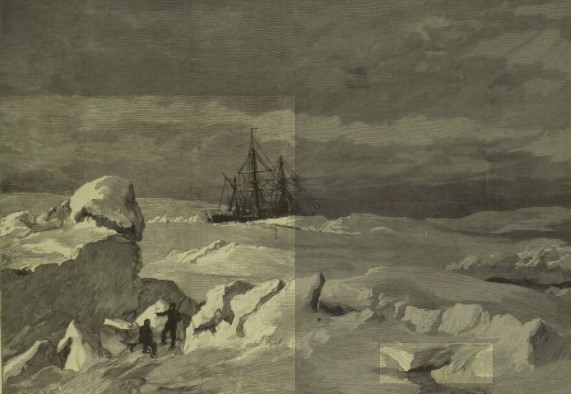
Sitting out the Arctic winter

The ships had followed the coastline of Greenland northwards before crossing the sea in fine weather to Cape Isabella.  Here the weather changed and they picked their way through floating ice in thick fog.  Reaching Lady Franklin Bay, in the northernmost tip of Arctic Canada on 27th August, the Discovery set anchor for the winter, the Alert continuing its journey for another five days before being unable to progress further.  When the sun finally disappeared below the horizon on October 12th they would be in total darkness for 142 days.  For the sailors, hearing only the sounds of wind and creaking ice, the sense of isolation must have felt all-encompassing.  To make matters worse, the sledging crew that had been dispatched to reach the Discovery to give word of the Alert’s position had returned defeated by the weather.  They had been out on the ice for twenty days, the last two of which they had travelled in total darkness.  Riven with scurvy and affected by frostbite, several of the men needed amputations.  To make matters worse, they reported they had seen no land whatsoever.

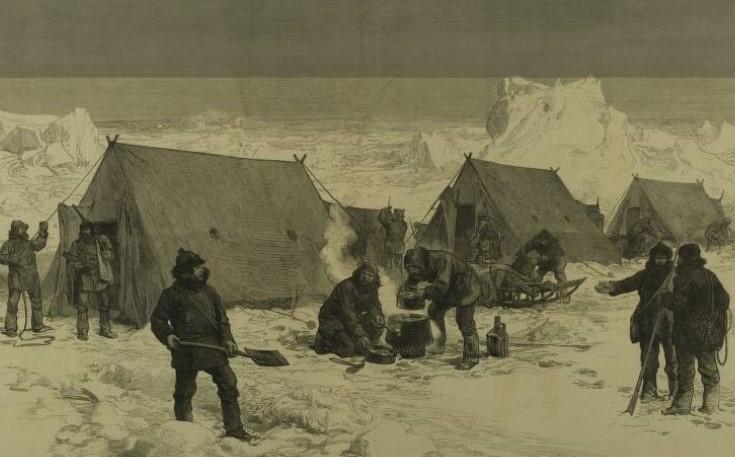
Camping overnight on the ice

It would be interesting to know the feelings of sailor John Langston Saggers during this time and whether he was selected to be one of the sledging party.  Saggers – who is my ancestral first cousin – was aged 18 when he joined the Royal Navy and his conduct had been exemplary.  Five years later he would be aboard the Discovery sailing for the Arctic, perhaps chosen for both his military record and because he had served on Victoria’s royal yacht, HMY Osborne, the ship he would return to in later years.  One can only imagine the tales he must have told in his later years of his Arctic adventure.

Extract from the naval Register for John Langston Saggers [Source: Ancestry UK]

Great care had been taken prior to departure over the welfare of the men.  Apart from warm clothing and adequate food provisions, the sailors were given facilities and equipment to keep them amused during the long winter months.  The ships both had theatres for the men to stage plays and they also had equipment to enable them to venture outdoors.  The men of the Discovery built a theatre on the ice with a 60ft x 27ft stage which they named after Alexandra, the Princess of Wales. They opened it on her birthday, 1st December with a farce, ‘My Turn Next.’  They also created a skating rink by pouring melted water over the ice which refroze to form a smooth surface.  The image below shows the skating rink with HMS Discovery locked in the ice in the background.

The sun reappeared on February 29th and plans were immediately put in place for further sledging expeditions.  With over one hundred degrees of frost recorded, one officer was badly affected by the cold.  He was returned to the Alert, his comrades taking turns to lie alongside him in an attempt to maintain his body temperature.  Although he survived the journey, he died soon after his two badly frostbitten feet had been amputated.  A week later, a small party of men led by Lieutenant Rawson reached the Discovery to tell them all was well.  The newspapers on hearing of it, reported with special pride that as the men’s frostbitten noses, cheeks and fingers were being treated Rawson jovially said, “at least the cheers from Southsea beach [on their departure from England] have now been fairly earned.”

Inevitably, there were a number of deaths amongst the sledging parties

In April the sledging parties started in earnest with small groups of men travelling in every direction.  On board the ships only the chaplains, medical officers and the sick remained alongside half a dozen essential crew members.  Exploring further north than any previous expedition, yet separated from one another, the groups remained unaware of the suffering and deaths of one another.  Although unsuccessful in reaching the North Pole they brought home with them detail of the birds and animals that they found along their way.  Of greater importance for future expeditions, they confirmed for the first time that there was “no open sea” or “an ocean teeming with life” or any “Elysian Fields”, only “an icy desert where all life ends.”  Finally, at the end of July 1876, the Alert broke free of the ice to rejoin the Discovery and together they began their battle through the slowly thawing sea on the start of their long journey home.

The sledging parties prepare to leave

The return of HMS Alert and HMS Discovery to England on Thursday 9th November 1876 was greeted with as much excitement as their departure.  Sailing into Portsmouth they were greeted by the Commander-in-Chief of the Fleet, the Lord Mayor, cheering crowds and massed bands.  The crew were allowed on shore that evening; the papers reporting proudly that “their behaviour has been excellent.”  The following day, back aboard ship, the men received three weeks’ leave and a month’s advance of pay. Over the following weeks the public continued to arrive in the town to visit the ships and an exhibition of the trip. 

This image has an empty alt attribute; its file name is 1876-saggers-john-langston-s173-arctic-expedition-iln-5j-alert.jpg
HMS Alert icebound as well as homeward bound

For the sailors of the Expedition there was still more celebration to come.  In early December the Lord Mayor of London entertained the officers and crews to a banquet at the Mansion House.  The newspapers noted that “all kinds of wines, and pheasants and plover were served, just as if Her Majesty’s Ministers were present.”  The wives and children watched the proceedings from the galleries of the ‘sumptuous” surroundings of the Egyptian Room.  At the end of the evening, the men were presented with gifts of pipes and tobacco.  Queen Victoria also relayed her gratitude to the men, thanking them for their dedication to service, their heroism and commiserating for the loss of life.  She also commanded that “… a medal be granted to all persons of every rank and class who were serving on the Alert and Discovery during the Arctic Expedition of 1875-76…”  For the ordinary seaman and his family, it must have been a sight so beyond their usual experience and one that would never be forgotten.   Records show that Cousin John Langston Saggers received his medal, albeit with an error engraved into the spelling.  Whether it is now in a private collection or still held by a member of his family or has been lost is unknown.

This image has an empty alt attribute; its file name is 1876-saggers-john-langston-s173-arctic-expedition-iln-14.jpg
Mid-day, Thursday, 9th November 1876: HMS Alert & HMS Discovery enter Portsmouth Harbour

*

Of special interest to my American readers

Captain Nares of the Alert stopped at Polaris Bay, Canada to hoist the American ensign and fire a gun salute.  He also erected a brass tablet the expedition had brought with them which read, “Sacred to the memory of Captain F C Hall of the U.S. ship Polaris, who sacrificed his life in the advancement of science on Nov, 8th 1871.  This tablet has been erected by the British Arctic Expedition of 1875, who, following in his footsteps, have profited by his experience.”

*

Over the years there would be many more attempts to reach the North Pole.  It would not be until 12th  May 1926 that Roald Amundsen scientifically proved that he had succeeded.

*

Sources

Ancestry UK

Royal Navy Registers of Seamen’s Services 1848-1939

British Newspaper Archive: The Norwich Mercury, The South London Chronicle, Shetland Times, Fife Herald, The Illustrated London News, Luton Times & Advertiser, The Graphic

British Polar Exploration and Research: A Historical and Medallic Record with Biographies 1818-1999

Wikipedia

Voyage of Discovery – part 1

May 29th 1875, the official birthday of Queen Victoria, was a day of huge national importance. Excitement had increased over many months and now, the anticipation of spectacular success even more assured with the realisation that departure was coinciding with Oak Apple Day, the traditional day of celebrating the Restoration of King Charles II [see footnote i] to the throne.  It seemed that the world had descended on Portsmouth, Britain’s premier Naval town to witness the sailing of Her Majesty’s Ships, the HMS Alert and HMS Discovery for the Arctic, and indeed it had.

The ships making their way through a narrow channel in the ice – the Discovery leading. [Source: BNA]

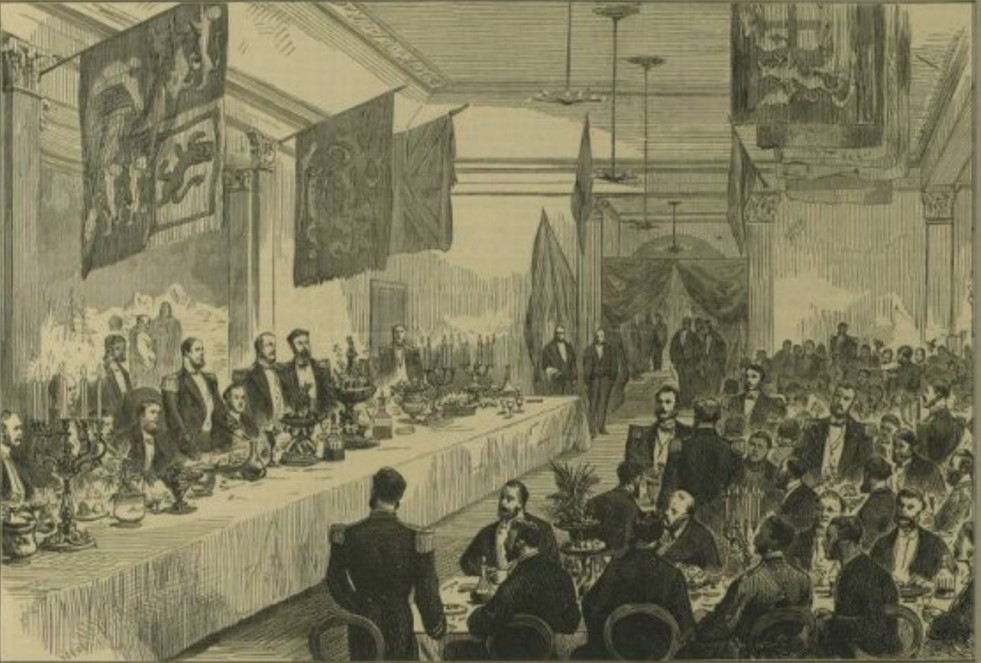
The interest of the Monarchy in the ships preparation for travel had culminated with a visit from the Ex-Empress Eugenie [Bonaparte] and her son, the Prince Regent on the 22nd.  There they had greeted the men who would be sailing the following Saturday.  Once the Royal party had left, the sailors marched through the town led by bandsmen to Portland Hall, Southsea, where the Mayor entertained them to dinner. The hall, which had hosted the Officers two days earlier had been decorated with models of the ships complete with icebergs and banners.  After dinner, Captain Nares of the Alert, and leader of the expedition, made an appearance to “thunderous applause”, followed by many of the men’s wives who were entertained at a separate table.

The dinner for the Officers given by the Mayor of Portsmouth the week before departure [Source: BNA]

Amongst the diners that day was John Langston Saggers, who for the past few months had been serving on Queen Victoria’s Royal Yacht, the HMY Osborne.  He had joined the Navy five years earlier and his record had been exemplary from the start.  Perhaps of greater importance, he was well within the criteria to be aboard the Arctic Expedition ships: at 5’ 4” (163cm) tall he was five inches below the maximum height and he had the fair complexion common to almost all those on board, a feature noted by newspapers eager to report on every facet of the trip.  Single and aged just 22 years old, he was about to embark on an adventure unlike any other – the quest to reach the North Pole before other competing nations.

Extract from the naval Register for John Langston Saggers [Source: Ancestry UK]

Attempts to reach the Pole in the past had always ended in failure with ships and crew either being lost at sea or unable to find a passage through the ice.  A belief held by many was that, if a way through could be found, the Pole may be the centre of a land with a benign climate where plants and animals flourished and potential minerals could be mined.  After all, they argued, had this not happened before with the discovery of the Americas?  This seems such an extraordinary thought in our now enlightened times that the full text can be read in footnote ii.

Map showing the route taken by the two ships through the northern waters [Source: BNA]

By Friday 28th, the men were on duty and only essential non-crew allowed aboard.  Of particular concern were the “Welch and Boucher’s Portable Lifebouys” – life rafts that had a central sealed food reservoir, the rations being sucked up through flexible feeding tubes.  They were also fitted with lanterns so that, at night, any man overboard could (as they assumed) swim to safety. These and hundreds of other items were carefully checked and tested.  Ex-Empress Eugenie had been especially concerned about the men having adequate warm clothing and had made, for each man, “comfortable, woollen-knitted wigs” for which the Expedition was “indebted.”

Newspapers reported every detail: “Implements and apparatus for the Arctic Expedition” [Source: BNA]

On the 29th, the departure ceremonies started early in the day.  The Royal Standard was raised and the men and officers all wore sprays of oak leaves in their button-holes as an expression of their loyalty.  Every ship in the dockyard was dressed from stern to stern with their signal flags, all fluttering in the gentle north-westerly breeze.  The Alert and the Discovery, ready to depart, differed from the other ships by only hoisting the St George ensign.  Piped aboard, the Lord Admirals of the Fleet carried out their final inspection before shaking hands with each of the Officers.  As they left, Mr George Ward Hunt, First Lord of the Admiralty, turned to acknowledge the crew before saying quite simply, “Good-bye, men” to which they responded with loud and excited cheering.

Plans had been made to keep the crew amused during the long hours of Arctic winter darkness Here they are shown putting on a play aboard the Alert [Source: BNA]

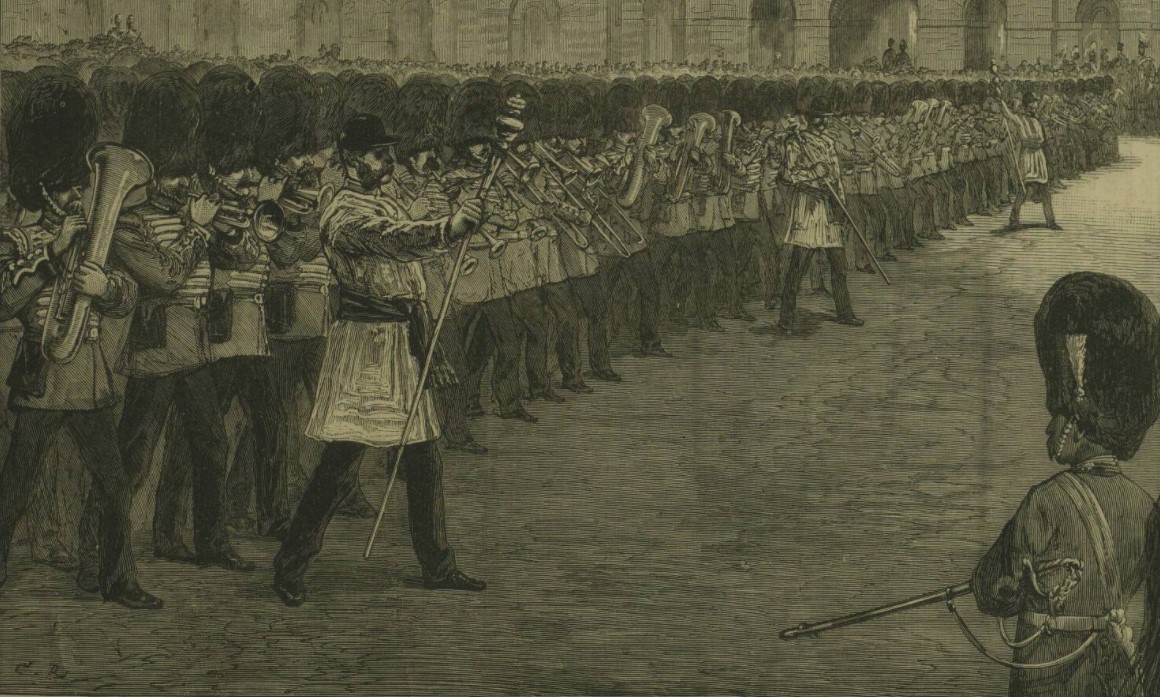
On Southsea Common a long line of field guns and troops from the Royal Engineers, the Royal Artillery and other regiments stood facing seawards.   The massed bands became silent at 11.30 and soon after, the first deafening volley of gun salutes echoed across the water to be answered by volleys from the ships and three other places along the coast.  The ceremony concluded with a march past of the massed troops reported with patriotic zeal, “…the perfection of precision for which British troops are so remarkable.”

[Source: BNA]

On the beach and pier, thousands of well-wishers gathered to see the boats depart.  They had travelled from all over Britain with special trains being laid on for the occasion.  Wives and “sweethearts” of the crew were allowed into the dockyard and crowded onto the piers.  Amongst them, and consoling them, were the wives of Scottish trawlermen who fished close to the Arctic ice; their reassurances belying the dangers and losses that they sometimes endured.  On board, Captain Nares read out a telegram from the Queen: “I earnestly wish you and your gallant companions every success, and I trust that you may safely accomplish the important duty you have so bravely undertaken.”  The Queen also sent aboard two large parcels, one for each ship, with the order that they were only to be opened at sea.  I have yet to discover what they may have held.

The time had come to depart, the Alert being the first to leave, followed by the Discovery. Escorting them were flotillas of ships and smaller craft as well as excursion steamers carrying passengers, all bedecked with flags.  From the thousands of spectators onshore and from those on the small boats came cheer after cheer and shouts of “God speed” to be answered with cheering from the crew of both ships.  The newspapers noted that “…four hundred miles – as far as from London to Edinburgh only – is all that stands between him [Captain Nares] and Arctic immortality.  Every Englishman will devoutly pray that he may secure it, and return safe and sound.”

 I discovered the intriguing story of the Arctic Expedition when researching the life of John Langston Saggers, my ancestral 1st cousin. The outcome of the Arctic Expedition, the fate of the Alert and Discovery, and that of John Langston Saggers will follow shortly in my next post. Edit: This is now published and can be found by clicking this link.

The Queen’s yacht, HMY Osborne; the ship where John Langston Saggers had served prior to the Arctic Expedition [Source: Wikipedia]

Footnote i.  Oak Apple Day, also known as Restoration Day or Royal Oak Day, commemorates the day in 1660 when King Charles II returned from Exile to be restored to the British throne.  He had fled to Europe following the execution of his father, Charles I during the English Civil War.  Why an oak to commemorate the day?  It was said that he alluded capture by hiding in an oak tree. The tradition of wearing oak leaves has mostly died out but there are several villages in England where local ceremonies still take place.

Footnote ii.  “…the flora of Greenland has three hundred flowering plants.  What may not that of the North Pole number?”  “ …within 400 miles of the Pole man, Esquimaux [sic], has been found.  [May not} a race be found uncontaminated by the vices of the known world, and yet with some of its ingenuity?  …May we not find some ‘Arcadian Retreats,’ some ‘Happy Valleys,’ or perhaps the ‘Lost Ten Tribes?…’

Sources

Ancestry UK

Royal Navy Registers of Seamen’s Services 1848-1939

British Newspaper Archive: The Morpeth Herald, The Derby Mercury, The Standard, The Nuneaton Advertiser, The Illustrated London News

Wikipedia

Grandma and The Man Who Never Was

Grandma was full of sayings that either puzzled us as children, made us laugh or made us think “silly, old Grandma” – often it was all three.  One was that you should always go out wearing clean underwear in case you got run over by a bus.  The story below just goes to prove that, as always, Grandma was right, well almost right.

Grandma was full of funny sayings & superstitions

Herbert Fisher (HAL Fisher), husband of Lettice Ilbert – whose own, remarkable story can be read here – was on his way to work during a WW2 blackout.  Warden of New College, Oxford and Chairman of the Conscientious Objectors Tribunal, he was in London for the latter when hit, not by a bus but by a lorry.  He died in hospital several days later on the 18th April 1940.  Little would he have thought, or Grandma for that matter, that his underwear would play a prominent part in the history of defeating Nazism.

HAL Fisher [Source: Ancestry]

About the same time as Fisher’s demise, in south Wales, the mother of Glyndwr Michael also died.  Michael had always lived with her but now homeless, he made his way to London.  It was here, aged 34 and depressed, penniless, and hungry, that he was found two years later in an abandoned warehouse.  He was dying from having eaten rat poison, the bait having been left, smeared on bread.  The phosphorus in the poison when ingested reacts with the naturally acting stomach acids to produce phosphine gas.  The slow death made his body ideal for the purpose that lay ahead.

The British Security Service had been waiting for some time to obtain a body that could be used in an elaborate hoax against the Germans.  Operation Mincemeat, as the top-secret plot became known, intended to release false papers on the body of a drowned officer of the British Army.  The aim was to deceive the German Military Intelligence into believing plans for the invasion of Greece and Sardinia, whereas in reality, the intention was to invade Sicily.  However, it was not felt possible to use the body of a serving officer whilst maintaining the secrecy required.

Major William Martin RM, as Glyndwr Michael’s corpse was to become, was released into the sea off the coast of Spain on the 30th April 1943 for the tide to carry him ashore.  About his person were various personal effects: letters and a photograph from his fiancée, theatre tickets and identity papers.  A briefcase had been attached to him carrying the false invasion plans, all with the purpose of making the Germans believe that he had been drowned at sea whilst delivering documents to a British General.  The ruse worked and the invasion of Sicily was carried out with considerable ease.

False papers of Major William Martin, RM [Source: Wikipedia

Major Martin was buried with full military honours on the island of Huelva, Spain, the deceit engraved into the grave’s headstone.  Over the years that followed rumours spread about the true identity of the body.  In 1996, an amateur historian Roger Morgan, discovered documents in the Public Records Office and it was later confirmed that the body was indeed that of Glyndwr Michael.  Soon after, an additional inscription was added to the headstone:  Glyndwr Michael Served as Major William Martin, RM.  Back in his hometown of Aberbargoed, Wales his name was added to the war memorial along with the name in Welsh by which he had become known – The Man Who Never Was.

Grave of The Man Who Never Was, island of Huelva, Spain [Source: Wikipedia]

Back to Grandma’s warning and HAL Fisher.  One of the problems in maintaining the secrecy of Operation Mincemeat was how to find clothing for Major William Martin.  Army uniform was not a problem to obtain but how could they find undergarments of suitable quality for someone of middle rank yet without risking a breach of security?  HAL Fisher’s New College rooms had been left untouched since his death where items of the required quality could be removed without raising suspicion.  If Grandma had lived long enough to have heard the tale, she would have been even more surprised, that HAL Fisher had married into her grandson’s family.  He may only have been a distant cousin of my father, but I can imagine her kvelling with pride and nodding with satisfaction.  There is no doubt that she would also have given a huge sigh of relief that HAL had heeded her advice.


Sources: Wikipedia, Ancestry, Commonwealth War Graves Commission

International Women’s Day: Lettice Fisher

Educator, economist, suffragist and founder of the National Council for the Unmarried Mother & Child (later to become known as the charity, Gingerbread).

Lettice Fisher, the eldest daughter of Sir Courtney Peregrine Ilbert came from a political family.  Born 14th June 1875 in London, her father was responsible for the drafting of parliamentary bills and was later to become Clerk to the House of Commons.  Her mother, Jessie, was a daughter of the Reverend Charles Bradley and her great-grandfather, another Reverend Charles Bradley was instrumental in the abolition of slavery.  At the time of Lady Ilbert’s death in 1924, she was described as “one of the most remarkable political women of her time.”  It was to this background of politics and campaigning that the young Lettice grew up.

Lettice Ilbert (image: Wikipedia)

Educated in London and at Somerville College, Oxford, Lettice later returned to Oxford in 1902 to teach history at St Hugh’s College.  Whilst at Oxford she also taught economics to women and became an active suffragist.  For two years from 1916 she was Chair of the National Union of Women’s Suffrage Societies.

It was during WW1 that Lettice became involved with the women munition workers of Sheffield.  Disturbed by the increase in wartime illegitimacy, the difficulties and prejudices the women faced, as well as the higher death rates of their babies, she founded in 1918 the National Council for the Unmarried Mother & Child.  Campaigning for the reform of the discriminatory Bastardy Acts and Affiliation Orders Acts, the council gave advice and assistance to single mothers.  Lettice remained in her role as first chair of the council until 1950.  Much later in its history the council merged to become known as the charity, Gingerbread.

Lettice Ilbert married Herbert Albert Laurens Fisher (known as HAL Fisher), her Oxford tutor in early July 1899.  They had one daughter, Mary – later Mary Bennett – who became principal of St Hilda’s College, Oxford.  After HAL’s untimely death in 1940, Lettice moved from Oxford to Thursley, Surrey where she died from heart failure in 1956.  Her ashes are interred at New College, Oxford where HAL had been warden for many years until the time of his death.

The theme of this year’s United Nations International Women’s Day is “Women in leadership: achieving an equal future in a Covid-19 world.”  I’m not qualified to write about current matters but I am quite certain that Lettice Fisher embraced the qualities that are still needed today.  One hundred years ago, Lettice Fisher found that the terrible aftermaths of World War and the ‘flu epidemic which caused even greater deaths and hardship, only hardened her resolve to tackle women’s rights, prejudice and injustice.  Sadly, in many places in the world, these issues are still very much outstanding.

Why my interest in Lettice Fisher?  Lettice Fisher (nee Ilbert) is an ancestral cousin through our mutual descent of the Bradley family.

Tennyson and Me

Sometimes I get asked the question why do I write.  The answer is usually just because I always have.  Recently I’ve given more thought to it and I think that perhaps it is because (apart from having something to say) I like the way words look as much as the way they sound when arranged on a page. You can almost play games with them, juggling the written and the spoken so that both the emphasis and flow change.  Nowhere is that more pronounced than with poetry.

Alfred, Lord Tennyson, Poet Laureate [photo credit: Wikipedia]

To be honest, I struggle a bit with poetry.  I feel I ought to like it more.  There are some that I love because they remind me of childhood although having to learn and recite, The Lady of Shallott didn’t excite me at the time.  Having to read a poem at the front of the class must have destroyed any potential to love poetry for many a generation of children.  I adore some of Christina Rosetti’s poems but mostly poetry is for me rather like jazz or wine – I know what I like and, sometimes, I discover a new one that is to my taste.

this beautiful angel statue is in the Glasnevin Cemetery, Dublin, Ireland

The quote in the photo is from Tennyson’s Maud.  Of course, I knew the old song, Come Into The Garden, Maud that quickly rose to popularity as a parlour song.  Because of this I assumed, like so many others, that Maud must be a love poem.  Certainly, my quote above which comes earlier in the poem would make you think so.

a classic rendition of Come Into the Garden, Maud dating from 1940

Maud is one of Tennyson’s epic poems; a tale of hatred, infatuation, of death and destruction and the decline into insanity and, later, of war.  The poem certainly wasn’t loved by the public when it was first published in 1855.  So why do I find it so fascinating?

transcription of letter from Tennyson to George Granville Bradley 1855

Many readers of my blog share an interest in genealogy and family history.  I have been researching mine for many years and have shared some of my ‘finds’ and stories here.  One such discovery was the long friendship between Tennyson and my ancestral cousin, George Granville Bradley.  Bradley was first the Headmaster of both Rugby and Marlborough Schools before becoming the Dean of Westminster Abbey.  Both he and Tennyson shared a love of geology, then in its early days of understanding.  They would roam the hills of the Isle of Wight together where they both lived geologising and reciting poetry.  The discovery of correspondence between them on the merits of Maud and how it may be altered before publication both excited and intrigued me.  Here was one of Britain’s greatest poets, a Poet Laureate, seeking advice from a cousin of mine!  I purchased an old copy of Tennyson to read it with a renewed interest and the rest – as they say – is (family) history.

George Granville Bradley with his family at Marlborough School about 1860 [photo credit: Ancestry]

Victory and a Brighter Future

War, it is often said, is made by old men for younger men to fight and die. Although this is true, as is the realisation that many wars are wars of vanity and/or stupidity, sometimes sadly, they are necessary. As we celebrate the 75th anniversary of the end of World War 2 in Europe, we need to reflect on the suffering it caused to the peoples of all nations. We also need to reflect that just as the First World War wasn’t ‘the war to end all wars’, neither did peace in Europe bring a future of peace throughout the world. It is with immense gratitude to our parents and grandparents that the end of hostilities in 1945 brought an enduring peace to Europe and the West. However, peace is a fragile object to be nurtured and handled with great care and the recent turn of events with Covid-19, Brexit and the tensions arising from the radical changes in USA diplomacy gives considerable rise to concern. We can only hope that our leaders remember how the rhetoric of the 1930s became the reality of the 1940s.

WW2 memorabilia (2) watermark

Like virtually every other family in the land, mine suffered mixed fortunes. My father, the eldest of three boys survived the conflict as did the middle brother. Sadly, the youngest of the three died, not by enemy gunfire but by his own hand in Austria. By the age of 23 he had already seen more pain and suffering (we can assume) than he could endure and the thought of returning to civilian life proved too much. He is buried in a Commonwealth War Grave beside his fallen comrades in Klagenfurt. For his parents it must have been very hard to receive the news when they had believed all three sons had survived the fighting. My grandmother received a telegram reporting quite simply ‘single bullet wound to head when unsound of mind.’

Jack, H, Gershom - army watermark

My father (middle) with his two brothers during WW2

Gershom with poss Bertha watermark

My father’s youngest brother in happier times

My mother’s family suffered an even worse fate. Her parents, my grandparents, were Polish Jews who had come to England around 1912 and, with my grandmother’s sister who also lived here, were spared the fate of the majority of their kin. To learn that all but three of their extended families had been killed in the Holocaust must have been an unbearable burden to be carried for the remainder of their lives. They never showed their suffering – at least, not to us grandchildren – and they never spoke of Poland or their families again.

Grandma & Papa Bon Voyage watermark

My Polish grandparents never spoke of the enduring pain they both must have suffered

If it is hard to imagine the anxiety our forebears suffered during the conflict. It is, in some ways, even more difficult to imagine the joy, excitement and sense of relief that they must have felt as the news of impending victory circulated, followed by the reality that victory had finally been achieved. No more black-outs, no more uncertainty and, within a few short years, no more rationing. In our family no-one ever discussed such emotions but the retaining of various memorabilia stands as the record of their feelings. The letter from Field-Marshall Alexander and the Service of Thanksgiving booklet that my father kept and the left-over furniture ration tokens of my mother’s perhaps show how their priorities differed for it was always down to the womenfolk to ensure that there was food on the table and a comfortable home to return to.

War Notice watermark

The letter foretelling victory from Field-Marshall Alexander, April 1945

WW2 memorabilia (2) watermark

Thanksgiving for Victory in Europe order of church service

WW2 memorabilia - Utility furniture tokens watermark

Ration stamps – everything was rationed, even furniture

This week, while acknowledging the pain and hardship of war, there is much to be celebrated on this 75th anniversary. Not only have we as a family and a nation, survived and thrived there is also much that unites the world. The internet has given the ‘ordinary person’ a much greater and louder international voice, mostly for the better. For me, it means I keep in touch with cousins scattered across the world, descendants of the Polish family that hatred had so very nearly completely wiped out. Through my blog and through Facebook I am in conversation with and have ‘met’ people from all walks of life and cultures – something that would have seemed unlikely if not impossible only thirty or so years ago. So, as we move forward from the celebrations, let us all strive for a world where peace, love, respect, kindness, concern and trust remain dominant. Wherever we are today, tomorrow and in the longer future, may we stay safe, stay well and be thankful for the peace of yesterday.

Sunrise (5) watermark

The start of a new day

A Rebel in the Family

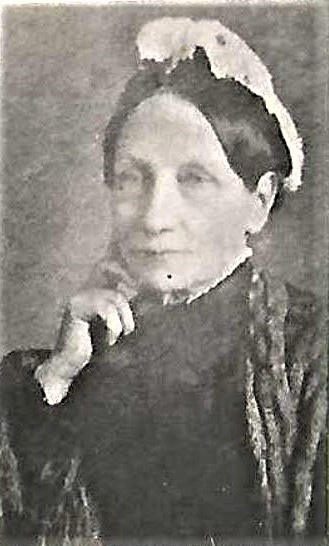
A photograph came winging through the ether to me via email recently of a rather severe looking lady, taken in her later years. As is often the case when meeting an older person for the first time it is all too easy to forget that they had a past; that they were young once and, perhaps, hold a huge store of memories and tales. Sometimes, the stories they tell surprise you and seem more in keeping with today rather than decades before. It was (as it turned out) the same with this lady – Sophia Bradby.

1890 LANGSTON (BRADBY) Sophia B14

Sophia Langston nee Bradby

I had never seen a photograph of Sophia before although I knew of her existence for she was my great-great grandmother. The only tale I knew was that she came ‘from a good family’, the friend of a great poet and the giver of a ‘middle’ name for succeeding generations. Numerous boys, although for some reason, neither my father or myself (for which I’ve always felt rather cheated), sported the name Bradby immediately before the surname. Now that this unexpected image had landed in my inbox I began to dig a bit deeper.

Sophia was born on Christmas Day 1828 in Theale, Berkshire, the third daughter of William Bradby and Mary Shepherd. William had been born in Derbyshire, his parents of Yorkshire origin. Why or when he came south is unknown but in 1814 he married Mary in Reading. We also know that by then he had changed his surname from Bradley to Bradby. The reason behind the name change is unclear for he remained on friendly terms with other members of the Bradley family. In their day, the Bradleys were well-known nationally and, later, internationally. Perhaps the name change was to give his own, immediate family a degree of anonymity. Whether the family were upset and/or disappointed by his decision is unrecorded but perhaps this is the first sign of a rebellious streak that would continue to run through the family to this day.

1863 LANGSTON Charles Samuel L18

The date on this old image is wrong for he was baptised on 3rd September 1823


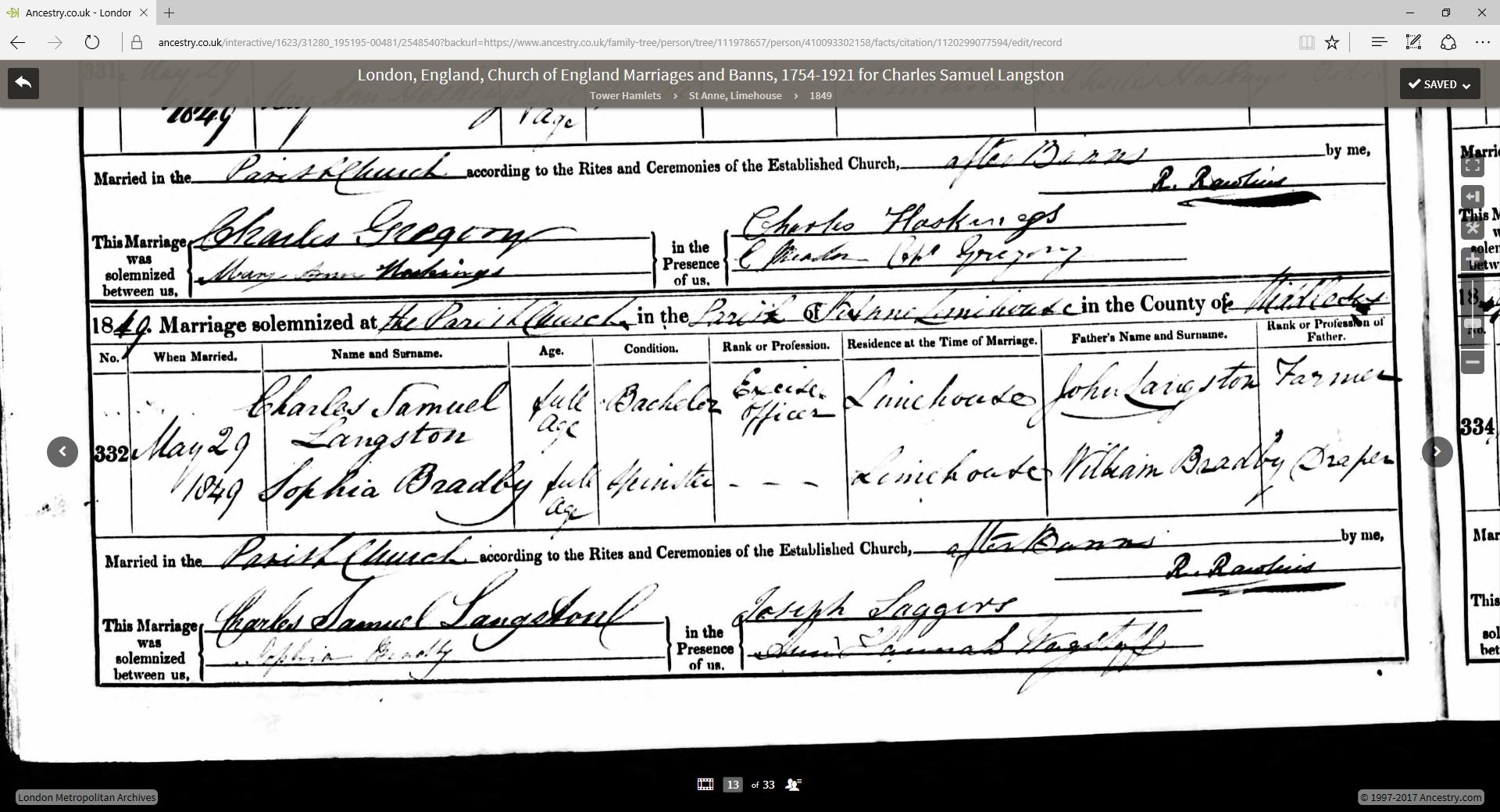
In 1849 it was Sophia’s turn to rebel. On the 29th May she eloped to London to marry Charles Samuel Langston, a union disapproved of by her family. These days, the journey would take no longer than an hour but in the mid-1800s it would have been quite an undertaking. Her travel may have been by coach and horses although the new Great Western Railway line had opened in the early 1840s so she might have travelled by train. Whichever mode of travel she chose she would have been all too aware that her path crossed both an area that had been notorious for highwaymen and footpads and, in more recent times, the scene of a landslide that had derailed a train, killing ten passengers. Whether Sophia ever met her parents again is unknown.

1849 Langston Charles Samuel L18, Bradby Sophia B14

The marriage of Charles Samuel Langston to Sophia Bradby 1849, St Anne’s, Limehouse, London


St_Anne,_Limehouse, London - copyright Amanda Slater

St Anne’s, Limehouse, London  (photo Wikipedia/Amanda Slater)

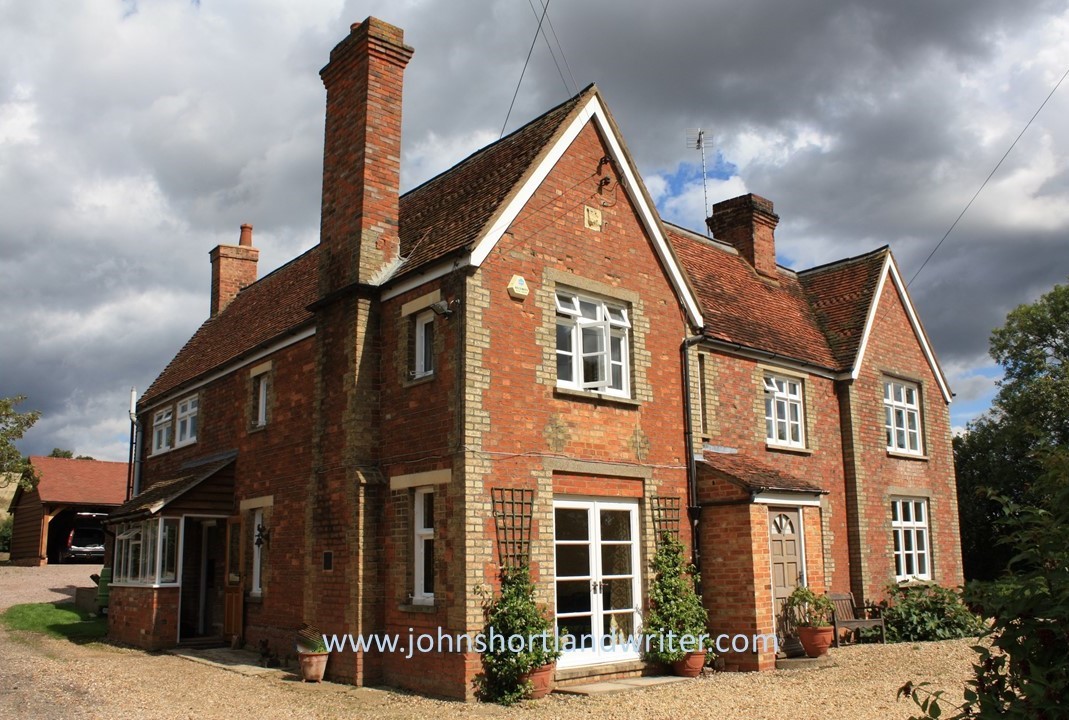
It turned out that Charles, too, had rebelled, leaving his parents’ home in Cranfield, Bedfordshire because of religious differences. Quite what these might have been is unrecorded.  We know from old records that Charles had been baptised into the Church of England and he also married Sophia within the Church of England so there seems to be no conflict there. Whatever the reason, in 1843 he became an Excise Officer and his application papers are held by the National Archive in Kew, London.  At a later date, this side of the family must have been reconciled for Charles’ father died when visiting Sophia in 1865.

Rectory Farm, Cranfield (3) copyright

The childhood home of Charles Samuel Langston

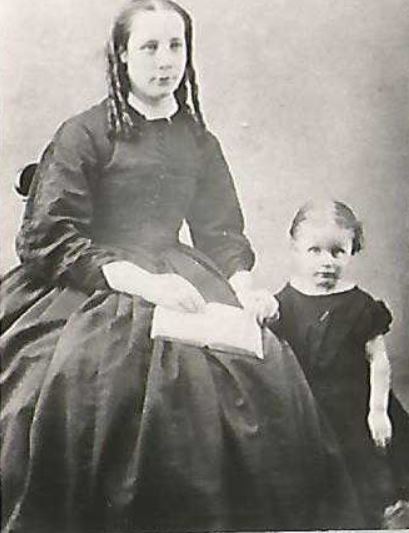
Sadly, Charles and Sophia’s marriage turned out to be fairly short-lived for Charles died aged 40 from cancer of the throat. Their 14 years of marriage produced eight known children, my great-grandfather William Bradby Langston was just twelve months old at the time of his father’s death and poor Sophia was some months pregnant with another daughter, Agnes. The photo below shows Sophia – wearing a crinoline – with one of her children, probably Christiana and taken in 1865. By 1871 she had established a drapery business with her eldest son, Ernest in Reading. By 1891 she had been successful enough to retire to the south coast where she died in 1916; the business that she had founded also prospered and became the largest department store in Reading before it finally closed its doors 120 years later.

LANGSTON (BRADBY) Sophia B14, probably Christiana abt 1865

Sophia with (probably) Christiana, 1865

Many thanks to Jo Liddement who, like me, is a great-great grandchild of Sophia. Not only did she send me the two photographs of Sophia which set me on the journey to find out more about the life of our remarkable ancestor, she also became a newly-discovered cousin.