2024: A Year in Review – part 1

As we enter the new year it’s always a good time to reflect on the past twelve months as well as to look forward to what 2025 may bring. For me, 2024 has been a busy year. I remember many years ago an ‘old boy’ telling me that when you reach the age of sixty, life is downhill all the way. I was in my thirties at the time and so believed him. I’m now in my early seventies and I can’t say that I agree with his pessimism. Funnily enough, he lived well into his nineties and, for most of that time, enjoyed rude health so he proved himself wrong too! The only way to tackle ageing, I’ve decided, is to embrace its positive aspects – no mortgage, wisdom (ha-ha!) and more time to do the things that matter to you. Of course, good health is important and maintaining balance and staying active helps no end. One of the reasons why I’ve not retired completely.

John Shortland, summer 2024

Tewkesbury, a town in Gloucestershire on the River Severn – the UK’s longest river – is just a few miles from the edge of the Cotswolds. It’s an ancient town that I have driven through dozens of times but early in the year I made the effort to actually stop and explore its narrow streets and abbey church. I hadn’t realised that when entering the church I would be staring at a suspended globe which, when standing 211 metres away from it, is the exact size and view of Planet Earth you would see if standing on the moon. When I first saw it ‘suitable’ music was being played but it was only after that had stopped that I found the exhibit strangely moving as it rotated slowly in total silence. That’s another thing I’ve noticed as I’ve grown older – how much I enjoy silence! The church is well worth visiting for it is now almost one thousand years since it was built and is one of the finest examples of early Norman architecture in Britain. Unable to visit? Then click on the link here to see lots of photos.

The abbey church looms over the ancient houses and narrow streets of Tewkesbury
Planet Earth, mysteriously beautiful

In March, we travelled north to the county of Yorkshire to watch a friend take part in the oldest horse race in the country. The Kiplingcotes Derby has been run annually since 1519. Tradition sys that if it ever stops taking place it will never happen again so all through the Covid restrictions only one horse took part! For this race, the 505th, dozens of riders took part for it is a horse race like no other: no finely maintained racecourse but a series of roads, lanes, field margins and tracks, a real test of endurance for both horse and rider. Our friend, who had never raced before was taking part to raise money in support of the local hospice. She reached the finishing post in good time and raised over ten thousand pounds in memory of a close friend. The race has one other completely bizarre quirk which makes it unique in the world of horse racing – to find out what that is you’ll need to click on this link here!

The oldest, continuously-run horse race in the UK
Safely past the winning post!

Later, in early summer we returned to Yorkshire for a week’s holiday spent in the pretty village of Austwick. We had planned to spend our time walking for it is excellent hiking country. However, my partner was nursing a broken foot and, later, during a hill walk on my own there, I hurt my knee badly so we were both hobbling about instead (what was I saying about staying active?!) There is always a positive outcome to everything, I find, and so we explored by car instead where we discovered the Courtyard Dairy. To misquote Paul Whitehouse, “if you like cheese, you’ll like these” for we’d stumbled across one of the top, award-winning artisan cheese makers in the country. With a restaurant, small museum, ice-cream and wine shops as well as a huge selection of cheeses, we were in our element. For lots of photos of the trip – and not just of blocks of cheese, click here.

The Courtyard Dairy – one of England’s finest artisan cheese shops
There are beautiful walks around the Yorkshire village of Austwick

I have been very fortunate in not just living in a beautiful part of the country but also being able to make my living from being in the midst of it. However, that hasn’t always been the case for before I embarked on my horticultural career I spent twenty years in the world of retail fashions. When I left school I spent some months on a sheep farm on Exmoor – the remote, hill country, now a National Park, in the West Country. That short time farming changed my life for I met some wonderful and inspirational people there who left me with a yearning for the outdoor life, However, I was dragged away by my parents to work in the small department store which had been central to my family for the best part of a hundred years. Fortunately, I had a happy time there but the desire to be spending my days outdoors never left me. This spring it was thirty years since I sold the business to follow my dream and so it seemed a good time to reflect on those retailing years.

How the family store began in 1904
The family store in 1994 when it was sold

A few months later the blog post (link here) had developed into a full-blown illustrated talk to over seventy people followed by press interviews and a printed history of the store which had been started by my great-grandfather. I am delighted that the story of the family’s endeavour has now been recorded for posterity. By complete coincidence, I was also contacted by Exmoor Magazine and my memories of farming at Brendon Barton have been included in an article on Dick and Lorna French who were the couple who welcomed me into their lives – and changing mine by doing so.

Recorded for posterity – the history of my family’s department store

At the age of 42 I took myself off to study landscape and estate management for two years at agricultural college. It was a huge gamble and one that fortunately came off for I found employment as Head Gardener to the European Youth Parliament, an educational charity that brought teenagers from all over Europe to debate world affairs. With some Polish blood in me I liked the idea of being part of the organisation. Next, and still in England, I spent some happy years working for a delightful Swedish family – even after my role as Head Gardener had ended I maintained contact with them as Consultant overseeing projects such as the creation of a lake and an arboretum. My next move was to the Cotswolds to manage an historic garden, Kiddington Hall, designed by the architect who had created the Houses of Parliament. It was after that, that I decided to go freelance which culminated in the career in designing and creating gardens as well as the commission to write the gardening book.
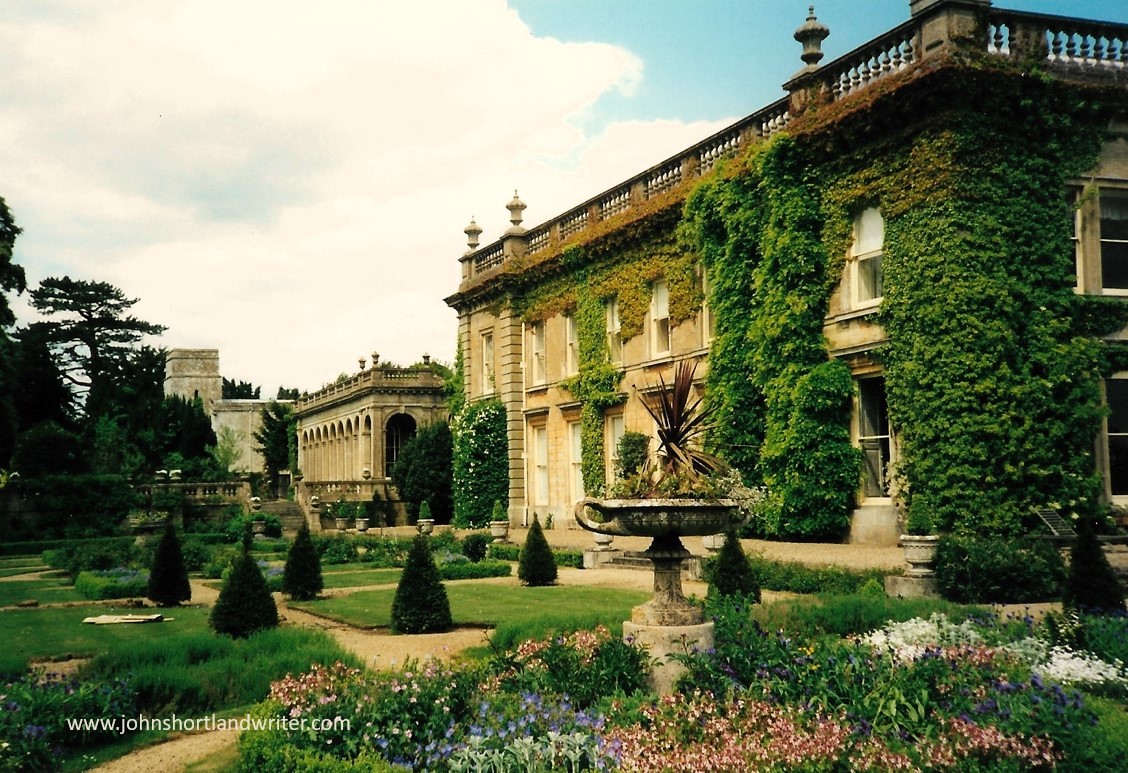
The historic gardens at Kiddington Hall

Little did I think, when I began college that my career would include a stint at the Chelsea Flower Show, Channel 4 Television, creating a new literary festival and a study tour of Hungary. My latest – and final – garden project has been the most exciting to date. How fortunate have I been?! As before, the press picked up on the thirty year career change and a double-page spread in the Bucks Free Press newspaper followed. To read more about the gardens I’ve created, or just to enjoy the photos, click on the link here.

The newspaper article

Related links/websites

Tewkesbury Abbey Church
Gaia
The Courtyard Dairy, Settle, Yorkshire
Yorkshire Dales National Park
Exmoor Magazine
Exmoor National Park
John Shortland
Berkshire College of Agriculture
European Youth Parliament
30 Years On – Sadness & Celebration (part two)

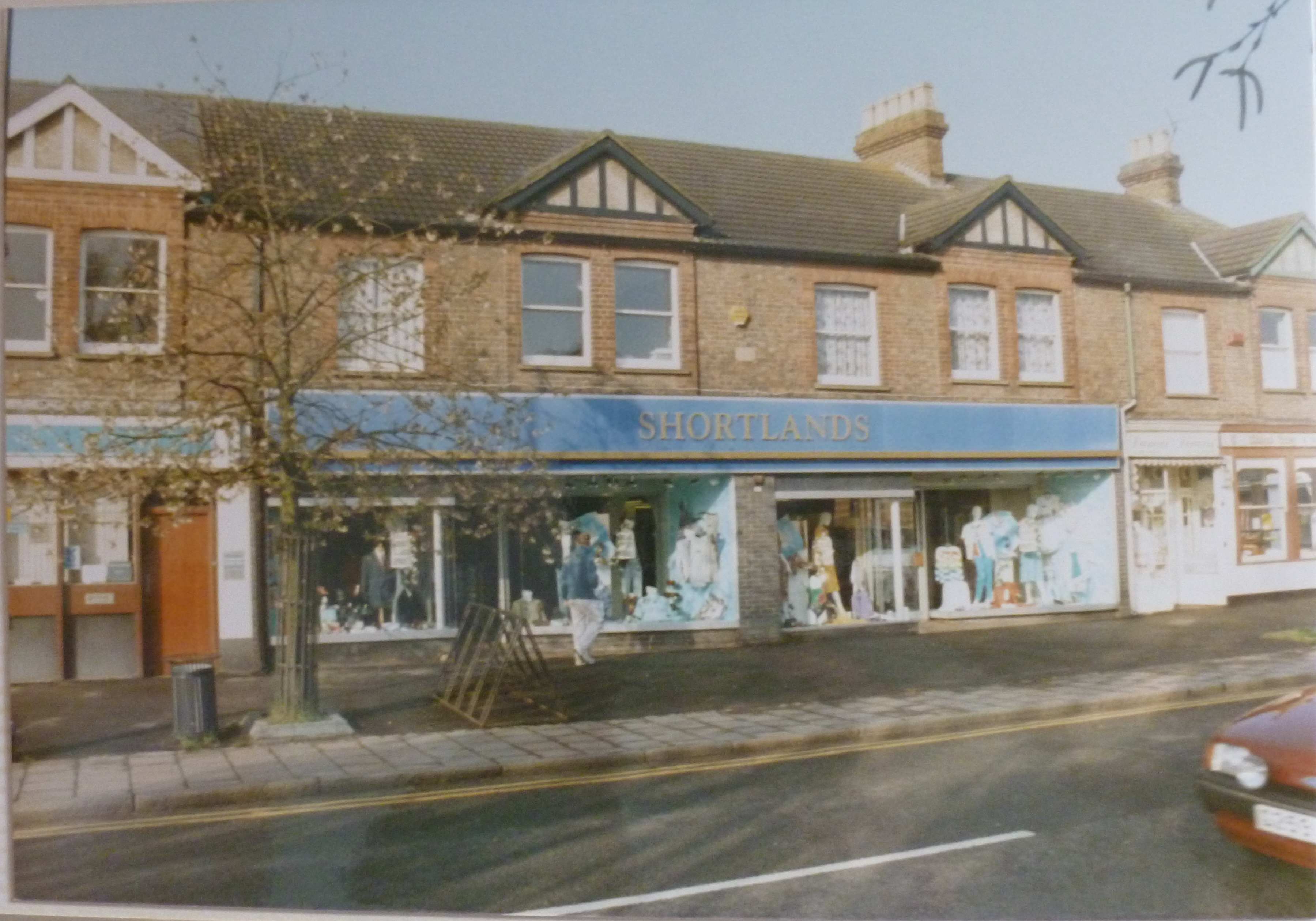
Earlier I wrote about the sadness felt within my family, as well as the wider community, at the closure of our small department store that bore the family name, Shortlands.  It had spanned the generations for almost one hundred years, firstly as Langstons – my great-grandfather’s surname, and then, after one of his sales assistants married the boss’s daughter, renamed Arthur Shortland.  Clever chap, my grandad!  Later still, during my tenure, the ‘Arthur’ was dropped.  I locked the doors for the final time thirty years ago this spring.  Last month seemed an appropriate time to celebrate its history and tell the story, not just of our family connection, but also of the incredible people that worked there over the decades.  It can be read in Part One by clicking on the link here.  I found the response to that blog incredible with so many people contacting me through my website or social media.  It was lovely, as well as humbling, to hear their memories and to know that Shortlands had not been forgotten after such a length of time.  Although I gave a hint in the blog, I was also asked what have I been doing since 1994.  In this post, Part Two, I bring the story up to the present date.

Shortlands Department Store 1994

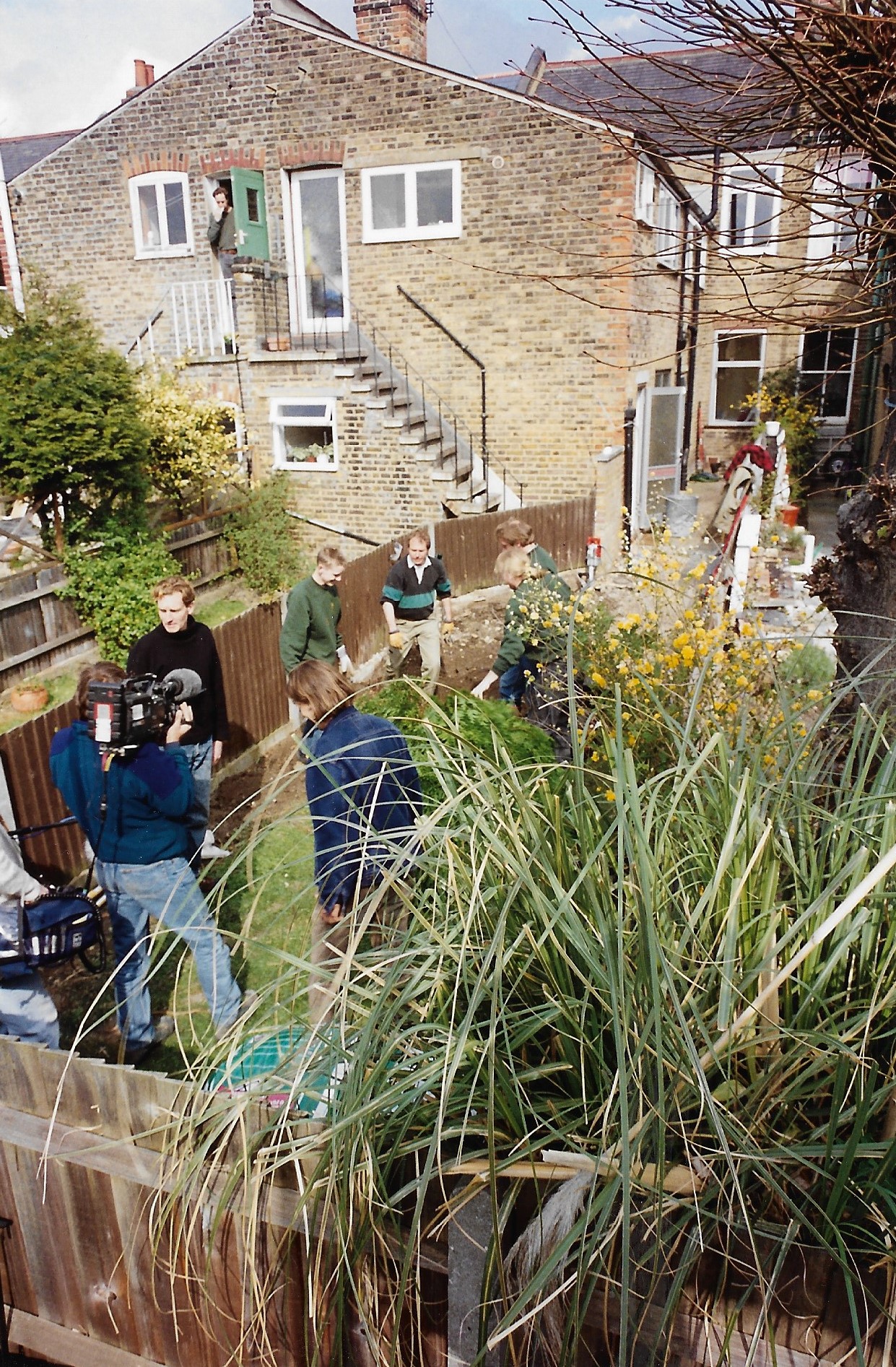
A reaction to my choice of careers that I receive quite regularly is one of surprise.  Surprise that I once worked in the world of fashion, and wearing a suit and tie each day, or surprise that I am now working outdoors and wearing jeans and a t-shirt – although, I do have to look smarter on occasion [laughs].  When my retail career of twenty-five years ended, I was in my early forties and my future looked uncertain.  I toyed with various career plans, none of which appealed very much.  Unsure of what to do next, I decided to take a night class at our local agricultural college, Hall Place at Burchett’s Green.  Little did I realise, on the evening of my enrolment, that I would soon be working at the Chelsea Flower Show, working on a gardening series for Channel 4 television or travelling to Hungary, only recently free from Russian occupation, on a horticultural study tour.

Filming with Channel 4 Television


My visit to Hall Place had ended not with a night class but a two-year, full-time crammer course in Horticulture where I studied Landscape & Estate Management.  Gardening had been the major hobby across the Shortland family for generations; I was the first in modern times to try and make a career of it.   Knowing I still had a mortgage to pay, and therefore failure wasn’t an option, I studied hard in a way that I had never managed in my school days and came away with a good qualification.  By then, I knew that I wanted to run gardens for large country estates.  I had the good fortune to be offered, during my training, a work placement with the Getty family, then the wealthiest in the world.  Their Head Gardener, Andrew Banbury, gave me various tasks and projects to carry out, frequently pushing me beyond my comfort zone.  I have a lot to be grateful to Andrew for.  When it was time for me to leave, I stepped straight into the role of managing gardens for a Swedish family who, again, were keen for me to develop further skills as well as their garden.  Over the next few years, I had the opportunity to develop an arboretum, create a lake and, best of all, to manage and develop a one-acre walled kitchen garden.

The new lake two years after construction

The Millennium saw a change once again for I left the Chilterns and the area I had known all my life and moved to the Cotswolds, there to manage an historic, Italianate Garden, Kiddington Hall.  This had new challenges but, although I enjoyed it enormously, the call of working for myself once again beckoned.  In 2005 I set up a design and landscaping business which, I am glad to say, flourished; now I have virtually retired.

Kiddington Hall

One of my last projects had been designing and overseeing a garden that has many elements to it:  a 50 metre ha-ha, a cottage garden, formal lawns, terraces, topiary, wildflower meadows and kitchen garden, most of which have been created from scratch.  As I watched the garden come to shape, with all the hard work being carried out by the owner’s own team of builders and gardeners, how grateful I was that I could now ‘pull the age card’ and let others do the physical tasks!

A section of the terraced rose garden
The Rose Terrace a few months earlier

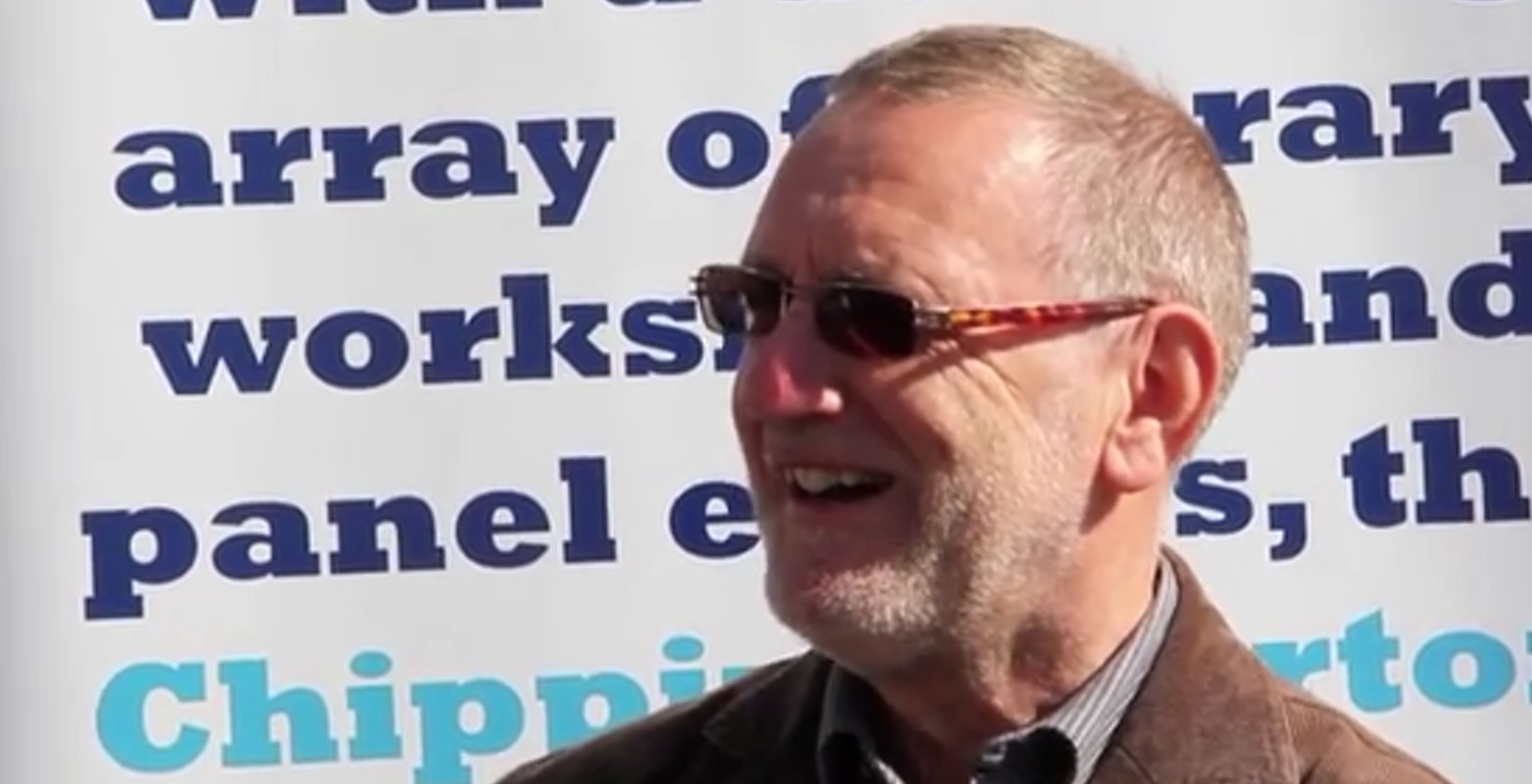
When I moved to the Cotswolds in 2001, for the first time in my life I was no longer ‘a local’ and knew no-one.  Hearing that Oxfordshire was one of the few counties without a Gardens Trust and that one was being formed, I volunteered and for several years organised talks and visits to gardens which introduced me to many new people.  One, hearing of my attempts at writing suggested I joined the local writers group.  Feeling very out-of-place I did and before long the talk of ‘doing something big’ with books came about.  From those very casual thoughts I found myself part of a small team that created the Chipping Norton Literary Festival.  My title of Author, Agent and Publisher Liaison brought me into contact with many people in the literary world and soon I was commissioned by one to write a book on gardening.  Three years later it was me being interviewed and giving talks on stage and the radio, a surreal experience.

Being interviewed at the Chipping Norton Literary Festival

Looking back over the past thirty years I realise just what a chance I took with my career choice and how fortunate I was for it to have ended well.  It has taken me on the most incredible of journeys and given me the opportunity to meet/work with some very special people and places.  It has had both tearful and joyful moments – it has also had bizarre and funny ones too: being invited to play in a ‘friendly’ cricket match only to find myself bowled out for two by the Captain of South Africa, or sharing an ice cream with American model, and ex-wife of Mick Jagger, Jerry Hall, these being just two of them.  As with the shop, it has been a mix of celebration and sadness. I am so grateful that I have had the privilege of two careers both of which I can look back on with pleasure and a certain degree of pride.

Life Stories

Nearly all of us have family stories passed down to us through the generations but gradually some element of the story, if not all of it, becomes lost. Over the past twenty years or so our family have written down not only these tales but also a detailed account of our own lives to pass onto future generations. Whether, of course, they will be that interested who can tell but it is quite likely that someone one day will be.

When the family first began to write their life history it felt self-indulgent and embarrassing, and these emotions must be overcome if it is to be successful. Then, of course, there are decisions to be made as to what to include and what to leave out, after all, we all have moments in our lives that we’d rather forget. So, a decision needs to be made whether to go for the ‘warts and all’ approach or to be a little more restrictive in what you have to say. I think it’s important to be cautious, for no-one wants to intentionally hurt others through careless writing or cause a family rift – unless, of course, you seek revenge! If it is selective memories you decide to write about it is equally important to include the lows as well as the highs, otherwise the writing will not sound genuine. None of us, sadly, just sail through life, after all.

My first big low – the death of my girlfriend, Carolyn, aged 14

Your life hasn’t just been one of relationships with people. It has included the places where you have lived, where you studied, where you worked, where you holidayed. I was 37 when I first wrote my story, now aged 70 it’s time for an update. In that thirty-three-year gap I have moved westwards from the Chiltern Hills, where I had lived all my life, to the Cotswolds. I changed careers from the indoor world of retail fashion to my present one of designing and managing gardens. It also includes a two-year stint studying as a full-time student at horticultural college, a couple of years of being involved with the Chelsea Flower Show and working on one of the first garden makeover programmes, Garden Doctors, for Channel 4 television. You and I have lived through a Covid epidemic, witnessed the recent death and funeral of Queen Elizabeth, and part of Europe is at war – all proof that we don’t need to be in our dotage to write down our history. There is no shortage of things to write about!

College days – which one is me?!!


It was my sister who first persuaded my mother and then me
to write our life stories. Strangely, she was surprisingly reticent when it came to writing her own and took some persuading to take part! However, what we have now is a potted history not only of our lives, but also social conditions and changes that span well over one hundred years. An aunt and an older cousin have both added some of their memories too and now that some years have passed since their deaths, as well as my mother’s, these documents become more interesting and more precious with each passing year.

Extract from my mother’s memoir detailing the moment in 1945 when she regained consciousness
from a coma – for the full story of the pioneering treatment she received, click here

One of the stories that had been passed down from my paternal grandmother was the tale of the family’s friendship with a famous poet. The bulk of the story was lost, and we had always assumed that the connection must be with Shelley as the poet’s mother had lived in Marlow, where my grandparents also lived. It was only relatively recently, when researching the family history, that the connection became clear. My grandmother’s cousins had been a close friend of Alfred, Lord Tennyson, the Victorian Poet Laureate. I discovered through this research that our generations weren’t the only ones with lives documented for their friendship with Tennyson, as well as several letters between them, survived in the National Archives. Even better, a memoir had been written by the cousin, later published, which gave delightful insights into their lives: “…there was a constant coming and going between the children of each house, all being equally at home in the other…”

The start of a friendship – to read more about our family connection with Tennyson click here

Regular readers of my blog will know that I spent a lot of my time as a very young man (and now as an old one!) on Exmoor staying and working on a remote hill farm. Although so very different to my own home background and upbringing, I loved the traditional, farming life despite it being such hard work, sometimes in very bleak weather. Now, much of that lifestyle has gone which makes a written record of it all the more valuable – and it is all included as part of my life story. I hadn’t anticipated discovering yet another ancestral cousin had written about his teenage life on Exmoor a hundred years earlier. I also discovered that his sister married and emigrated to New Mexico and published a memoir of her life there in 1898. It seems that writing life histories is a long-established tradition in our family after all! I hadn’t known of the New Mexico connection when I visited there in 1994 – visiting a cousin from another branch of the family who had also emigrated there – even more to go into my updated memoir.

A memoir from an earlier generation

So now that you’re going to write your own historical record what is the best way to preserve it for posterity? A blog, such as this one is a possibility, and it is an easy way to record events along with appropriate photographs. It may not survive long-term as it depends upon the blog hosting company continuing indefinitely to exist. The same applies to any form of digital storage: in my lifetime we’ve gone from reel-to-reel tape recording to cassette tape recording. Then we became computerised, and storage moved from floppy disk to cd-rom to memory stick. Now only the latter is in common use (how many younger people even know what a floppy disk is?) and that is almost certainly to change. I shall continue to type my memoir with photos attached although hand-written would be even better for it gives a deeper insight into someone’s character as well as looking nicer on the page. Part of the pleasure of reading my mother’s story is that it is in her own handwriting, and it is easier on the eye. We have digitally copied it which means that it can be shared easily amongst the family. Publishing it in book form, as my ancestral cousins did (for it was their only option) is a good way to preserve it. These days it is much harder to find a publisher that is interested although self-publishing could be an option. Lastly, a copy lodged with your local museum or County archive should ensure its survival and many are very interested in receiving a record of everyday life and lives. Go ahead and do it!

Include photos, newspaper cuttings, invitations – anything that helps to tell the story

The Chelsea Chop

Despite its name, the Chelsea Chop isn’t the latest trend in hair styling although trimming the unruly and the straggly certainly is involved. It is a very simple and straightforward method of cutting back herbaceous* plants which, for some reason, terrifies even the most confident of gardeners.

Sedums (foreground) growing at Lytes Cary Manor

The only skills required are courage and the knowledge of exactly when to carry out the chop. The latter is simple to calculate and is hinted at by the title of the deed – the week of the Chelsea Flower Show or thereabouts. This year, there have been two hiccups in using this rule: firstly, the show has been moved to autumn because of Covid restrictions and secondly, because spring has been so slow in coming that plants are behind with their growth. As a general rule of thumb, the time for cutting is around the third week of May.

The flat flowerheads of sedum are made up of hundreds of tiny star-like florets

Beloved by bees and butterflies, Sedum – also known as Ice Plants on account of their fleshy, cool-to-the-touch leaves – are the ideal candidate for the chop and one of the most satisfying to do. Inevitably, when left to their own devices, the large, flat flowerheads are too weighty for their stems and they topple over to sprawl across the ground and spoiling an otherwise impressive display.

Sedum, the Ice Plant, frequently collapses & looks ugly just as it flowers

To make the chop all that has to be done is to cut through every growing stem, thereby reducing the plant’s overall height by half to one-third. Clear away the prunings (which can be added to the compost heap) so as not to attract slugs. There, I told you it was simple!

Sedum given the chop. Don’t forget to pick up all the prunings!

Although the method sounds and looks drastic the plants quickly recover and make new growth. The end result will be a plant that doesn’t collapse and doesn’t require staking. Admittedly, the flowerheads will be smaller than before but they produce so many more than they would have done left unpruned that the effect is in no way diminished.

Numerous flowerheads appearing on the now tight growth of Sedum two months after the Chelsea Chop

This simple pruning technique can be used on a number of other plants too in exactly the same way. The taller achillea, phlox, campanula, asters (michaelmas daisies) and rudbeckias are all good candidates. I have heard of its use on echinacea (cone flower), penstemon and helenium but, in my experience, these are trouble-free plants anyway, so why bother? The secret to good, stress-free gardening practice is to find the balance of what suits you and what suits the plant. The Chelsea Chop on sedum in May prevents an awful lot of stress later in the year!

top left – clockwise: achillea, campanula, aster, rudbeckia. They can all be given the Chelsea Chop

*herbaceous – a non-woody plant that dies back and becomes dormant in winter to regrow each spring