Mentors – part 1

Mentor.  There are dozens of words to choose from when looking for an alternative description of someone who takes on this role: life coach, guide, adviser, confidante, counsellor, influencer to name just a few.  One thing that is certain is that the four people who played such an important role in shaping my life would not recognise any of these terms, not even the word mentor.  And to be honest, it is only with the benefit of hindsight that I recognise them as being mentors at all.

Mentors: Lorna French, Dick French, Cyril Heber Percy, Pamela Heber Percy

If I had to choose just one word, I think it would be guide for that seems to describe what they were during their lifetimes. It is only since they’ve been gone – for sadly,  they have all been dead for more than twenty years – that I actually think of them even as that for their influence was subtle.  They would almost certainly find the description laughable for there was never any conscious effort to take on that role.  It was one that had come about by chance meetings leading to friendship, respect and love.

Despite the angelic appearance I wasn’t an easy child!

I was not an easy child – I know that statement is hard to believe now (laughs).  A streak of rebellion has run through our family for generations and although I wasn’t outwardly rebellious, I sometimes made life difficult for those around me.  From the age of fourteen I found school a waste of my time for I had wanted to study sciences and school insisted I did languages instead.  I’m sure they were probably right for studying French and English had come easily to me whereas I’d struggled with even General Science.  To me that was irrelevant for I had desperately wanted to learn botany and biology.  Instead, I now found myself sitting in German classes seething inwardly and resenting every moment of having to learn the difference between der, das and dem or liebe and Lieber.  I began playing truant and found that if I left school after the lunchtime register had been taken nobody seemed to notice and  I could walk the three hours back home through the woods and fields where I could practice my botanising.  I finally stormed out of school halfway through my ‘O-level’ exams before sitting the dreaded German but not before I’d sat French and English.  I passed both with flying colours but my parents were furious.

Me in my element!

More out of desperation, my parents agreed that I could take my bicycle and tent on the train to Exeter and cycle and camp across Dartmoor for two weeks.  It would be my first solo holiday and, I imagine, they agreed in the hope that it would make me appreciate just how fortunate I was to have been given the chance of a good and expensive private education.  I arrived in Exeter in blazing sunshine and armed with maps and far too much self-confidence started my journey westwards.  In those days, with no mobile phones or credit cards to monitor my progress, my parents provided me with stamps and cash so that I could send them a postcard at the end of each day.  I reached Okehampton, a small market town on the fringe of the Dartmoor National Park in a sweat and seeing from my map that I wasn’t that far from the sea instead decided to cycle northwards to Westward Ho, a beach resort on the North Devon coast.

I had reached the sea

Refreshed from an early morning swim in the sea (I’d arrived there at 2.00 in the morning) I looked again at the map and now decided to travel eastwards to a different national park, Exmoor.  I’d read the novel Lorna Doone at school and had loved it and the thought of exploring the rugged and isolated places where she had met and married John Ridd, only then to be shot at the altar of Oare church, filled my imagination.  Little did I know then that soon I would be meeting a real-life Lorna Ridd who with her farmer husband would welcome me into their lives.

Oare Church – where Lorna Doone was shot at the altar on her wedding day

Three days later, having cycled over some tough and exhausting hilly roads I ended up at Brendon Barton, a remote farm perched high on the edge of the open moorland.  It was coming towards the end of my fortnight away and so I knew that I could only stay there for one or two days before the long bike ride back south to Exeter and home.  Venturing into the farmyard I could hear sounds coming from inside the barn where Dick French, the farmer, was working with sheep.  I asked if I could camp in one of his fields but he didn’t look up and instead replied, “be a good lad and bring those last two sheep in here.”  I had never been near a sheep before and so spent the next half an hour running around the yard in circles before finally managing to herd them inside.  I was out of breath, sweating and covered in sheep shit but I found a contentment in my success that I’d not experienced before.  Years later, Dick and I would laugh about that first encounter.  I used to say that I should have just got back on my bike and cycled away to which he would respond with, “when I saw you wouldn’t give up, I knew that you’d do!”

I cycled over Exmoor’s remote, hilly roads
Preparing for a good night’s sleep, Brendon Barton 1968

By my second day on the farm I had helped bring in the cows and Dick had  taught me how to hand milk  them.  Hearing I could ride, he suggested that I took Star, one of their horses up onto the moor to have a look around    The heather was in flower and its deep purple carpet continued to the sea.  Beyond, the coastline of Wales could be seen in the hazy far-distance.  I ventured into a deep combe before crossing a stream and climbing up a ridge.  There I spotted a deserted farm cottage* half-hidden by beech trees.  I stood entranced by the beauty of my surroundings and its all-encompassing silence.  I felt I had found my true home and with no consideration for my parent’s concern, I decided never to leave.  I sent them a postcard saying that I’d missed my train home.  I remained purposely vague as to my whereabouts, just saying that I’d kept back enough money to buy a new railway ticket.

The heather clad hills of Exmoor reach to the sea
Half-hidden amongst the trees stood a deserted farm cottage

A week later I was having my meals in the farmhouse enjoying the banter amongst the farm lads and hearing the discussions about the tasks that needed  to be done around the farm.   By the time harvest came round, my tent had been ditched and I was sleeping in the house in a comfortable bed, receiving a small wage and spending evenings in the village pub with new-found friends.  Dick had said that it would be his wife Lorna (Ridd had been her maiden name) who would decide whether I could stay or not.  She was such a hard-working woman and one more person to care for might be one too many.  Her approach had been that one more would make no difference and so she looked after me while I spent long days working at Dick’s side, listening to his tales and learning about their way of life.  Asked about my parents, they seemed content enough with my explanation that I was spending extended time away having just left school (the term gap year hadn’t been invented then!). 

Brendon Barton 1968I soon moved into the farmhouse and a comfortable bed
Harvest was still carried out the old-fashioned way

Months passed and the harder I worked the more I knew an Exmoor outdoor life was for me.  However, it came to an abrupt end when one day I walked into the kitchen to find my parents sitting there telling me it was time to return home. I was devastated and asked Dick why he hadn’t told me they were coming.  “I knew you’d hide up on the moor,” he’d replied – and he was right!  Although I was pleased to see my parents I pleaded with them to let me stay.  Dick, in the first of his subtle acts of persuasion that I can recall, asked me to help him look at a horse in the barn.  There was no horse, instead we sat and talked about our time together before he reminded me that my home was with my parents and, in time, running our family business.  Don’t forget, he’d said, there’s a room here always available so why not come down for lambing next spring.  To ensure that I did he added, “You’d be doing me a great favour, I could do with your help.”

The barn in 1968 where I had my first taste of farming
I returned for lambing in 1969

Lorna, too, had her subtle ways of persuasion.  “Your parents have said that you can come here for Christmas if you’d like to.  We’ll be on our own and some young company would be good.  It’ll be just the three of us.”  She’d also boxed up the bantam chicks that I’d been caring for so that “you can carry on farming at home.”  After that first Christmas I visited them both for many years, helping on the farm whenever I could, and exchanging letters and phone calls.  They were always my first port of call when I was having difficulties, feeling down or just wanting to celebrate with them.  Life hill-farming is hard, the weather often unmerciful and the hours long but there are also the pleasures of being part of a small tight-knit community that will help one another whatever the reason.  Leading by example, they instilled in me a love of farming and hard work, a sense of duty, generosity of spirit and kindness.  I will leave it to others to decide whether they succeeded or not!  From them, I also acquired an even deeper love for being outdoors regardless of the weather and especially in remote, wild landscapes.  Little did I know then that these skills would be put to the test when, aged forty, I began my career change to follow my outdoor dream, or that Exmoor would still play such an important part of my life today. 

The bantam chicks that Lorna sent back home with me, 1968

Dick and Lorna French died just before the Millenium and the farm was sold to another local farming family, some of whom I’ve now known for almost sixty years. Because of that, I still on occasion visit Brendon Barton and sit in the kitchen drinking tea to discuss farming and, of course, putting the world to rights.  A bonus is that Maria, the new ‘Lorna’ has been creating an extensive garden around the farmhouse, so we have gardening in common too, as well as a lifetime of shared memories.  It would be another fifteen years and then as a man, before I would meet my other mentor couple.  Cyril Heber Percy and his wife Pamela’s lives were worlds apart from Dick and Lorna’s but there were some similarities too.  Part 2 tells their story.

Lorna & Dick French

Have you had a mentor or mentored someone?  What does it take for someone to become a mentor?  Our parents have probably the greatest influence on our lives so why does a mentor s role take on such importance? Let’s hear your story either in the comments below or, if you prefer, by using the Get in Touch tab at the top of this page.  Thanks to Diane Highton for posing the question that triggered this blog!


* The deserted cottage still stands in splendid isolation hidden away behind the trees, albeit now as a ruin.  It has a fascinating history and has been the subject of much research in recent years.  Take a look at the website devoted to the story of Hoar Oak Cottage
The Boy from London

I am a hills person.  I love walking – or even better – cross-country skiing in the mountains. I can also admire the huge skies and vistas of flat country.  However, it is with hills that I have always strongly identified with.  So, when I’m asked “where was home for you?” it isn’t the county of Buckinghamshire, or even the village I was brought up in that I respond with, it is the hills and the Chiltern Hills in particular.

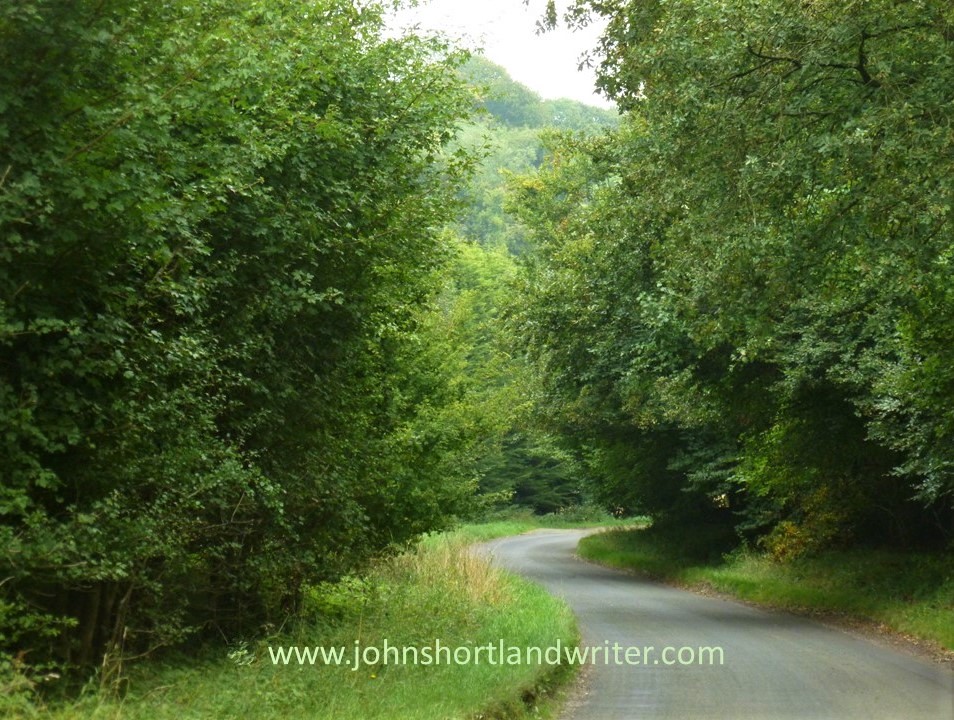
A country lane in the Chiltern Hills winds its way through dense woodland

As a child, I lived on the very edge of the village and not being schooled locally and with no children of my own age nearby anyway, I learnt to spend many hours on my own during the lengthy holidays. Although our house was close to the River Thames I found fishing of limited interest preferring always to be out walking or cycling.  As I grew older I travelled further afield exploring the lanes, fields and woodlands, learning all the time about the ways of nature.  Back in the fifties and early sixties people seemed to have more time to answer inquisitive children about these things or, perhaps, it was just that in those days people were more connected with the natural world so were able to answer their questions.  Whatever the reason, I became more knowledgeable and enthusiastic about country ways than I ever did with schoolwork.  A consequence of this is, when asked the question, “where are you from?” I respond without hesitation (and with a certain degree of pride), “I’m a Chilterns man.”

A childhood spent exploring the fields and woodlands that surrounded home

It was not until I reached the ripe old age of 49 that I moved away from the Chilterns to start a new life in the Cotswolds.  Although as the crow flies, the Cotswolds are not many miles away (I can even see the distant Chilterns from the top of my lane) they are very different in character, the former being chalk and flint country, the latter limestone.  But it wasn’t the exchange of deep, wooded valleys with few, if any, streams for a landscape of far-reaching views, fast-running brooks and drystone walls that I noticed most of all, it was the language.  When I moved to this then unfashionable part of the Cotswolds twenty years ago it was still a forgotten corner of the world where, even if the local dialect had mostly died out, the twang of local accent hadn’t.  It reminded me of, for it is related to, the south-western tongue spoken by many of my country cousins and also by my friends further west still.   So, when I gave my usual response to the question, I was rather peeved to hear it acknowledged by the words, “so you come from London way, then.” 

A Chilterns cottage built using the local flint
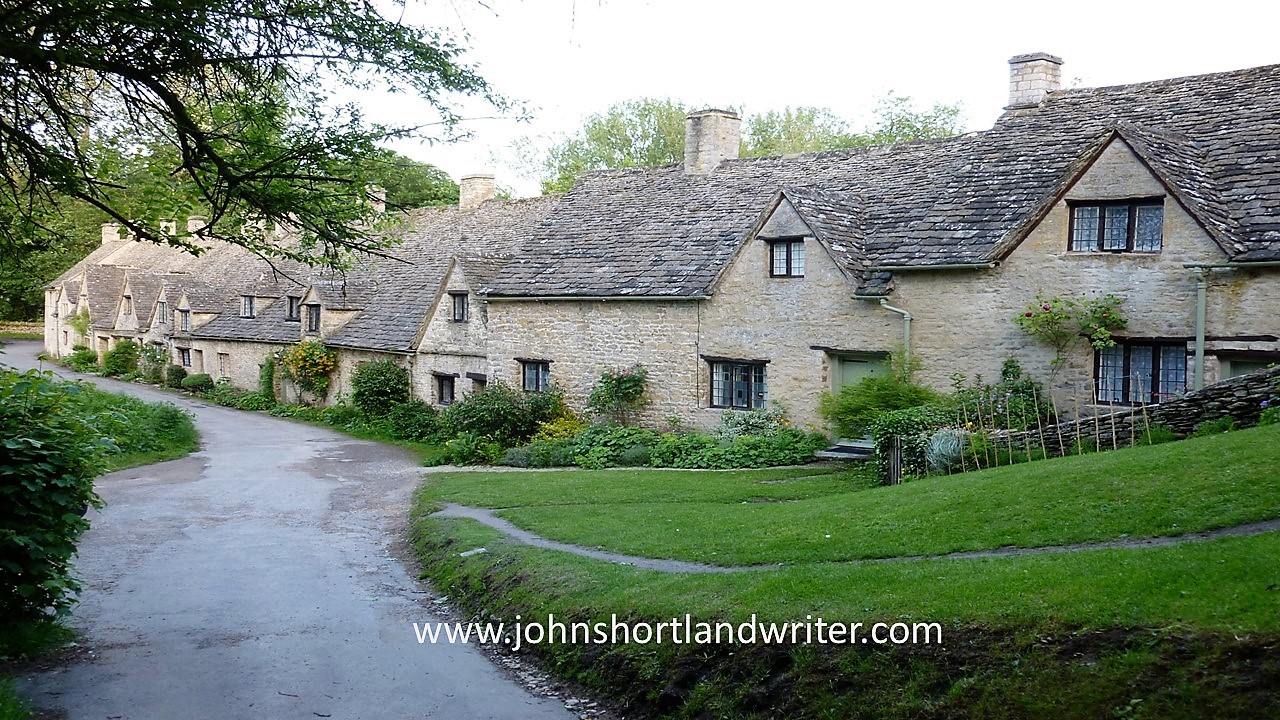
Cotswold cottages look very different and are made with local limestone

Now, I hasten to say, that there is nothing wrong about being referred to as a Londoner.  It’s just that our capital city is as much a foreign land to me as it would be to an overseas visitor.  Ok, so that might be a slight exaggeration, but somehow, I just don’t relate to city life despite my mother being born and raised in London’s West End.  She had come to the Chilterns as an evacuee from WW2 through her war work and there met my father, a local boy – but that’s another story.  Suffice to say, that I am a child of two halves – I have country family and I have city family much in the same way as I am a child of two cultures and two religions.  Despite my relating to country ways and to complicate matters further, (although I should be used to it by now), it is to my mother’s culture and religion that I feel a closer affinity to.  It still grates, ‘though, when I’m thought of as a townie.

City girl sophistication meets country gent: my parents soon after marriage

As I mentioned earlier, school life didn’t hold much appeal and so I persuaded my parents that I should leave aged sixteen.  As soon as I could, I took myself off on my bicycle to holiday in Devon.  Leaving Exeter with tent, camping gas stove and billy cans loosely tied to the crossbar I clanked and clattered my way along the lanes of Dartmoor.   At the end of each day I would pitch my tent wherever I could and reflect with delight upon all the new experiences that had come my way.  Getting hopelessly lost, I ended up at Westward Ho!, a small seaside town on on the north Devon coast.  From there I travelled east finding the hills becoming ever steeper and the villages further and further apart.  One day, I ended up on a remote farm on Exmoor where I decided I would spend two days to recuperate before heading for home.  It didn’t happen. 

The 16 year old hits the road!
Remote hill farm, Brendon Barton where I intended to stay for only two days

Looking back, I can’t imagine what my poor parents were thinking for there were no mobile phones or credit card statements for them to track my progress or whereabouts.  I would telephone them occasionally or send a postcard always being deliberately vague as to where I was staying.  In the meantime, I remained at the farm working – at first for food then, as I became more established and with the tent discarded, for a bedroom and beer money.  By the time my parents turned up at the door several months later (after some shrewd detective work) I had settled into my new life and rapidly adopting the ways of the hard but exhilarating Exmoor life.  Dragged back home to “get a proper job” I never completely left Exmoor behind.  Every spare moment was spent on the farm and, as regular readers of my blog will know, I still spend as much time on Exmoor as possible.  Being a National Park, the landscape and buildings of Exmoor haven’t changed very much over the 50+ years since I turned up on Lorna and Dick French’s doorstep although they have, as have most of the others I knew in those early days, since died.  To my dismay, there is one other thing that hasn’t changed at all: when I respond proudly to the inevitable question with “I’m a Chilterns man”, their response remains the same: “So up-country then?  London?”  Over the years, the ‘boy from London’ has become ‘the man from London.’    And I’m sorry, Londoners, Mum and cousins – I don’t like the label!

Dick & Lorna French who welcomed me into their lives and in the process changed mine

Discovering the Five Senses in Lockdown

It sometimes takes a crisis to make us re-evaluate what is of importance in our lives and the present one of Coronavirus/Corvid-19 surely has to be the greatest that we will collectively face. Now, several weeks into lockdown we have all been developing new patterns to our daily regime, one of which may well be taking more exercise. Never before have we placed so much value on fresh air and being able to walk freely whether it be in our parks, gardens or open countryside.

Marlow watermark

                           Riverside path, Higginson Park, Marlow (before social distancing).                                 The river is the River Thames in Buckinghamshire

Living where I do in the Cotswolds surrounded by fields and with woodlands and the river close by it is relatively easy for me to enjoy the open space. For others able to take advantage of their enforced free time, it may involve a longer walk and I have certainly noticed an increase in the numbers of walkers and cyclists here in the valley. I have also noticed that for many of them one aspect of their lives hasn’t changed: as they walk their eyes are glued to the screen of their mobiles and headphones are clamped to their ears, seemingly unaware of their surroundings. It has made me think all the more of our five senses and how we use (or should use) each one of them when out exercising.

Nr Fingest copyright

Cycling in the Chiltern Hills

SIGHT For those of us blessed with the gift of vision, perhaps sight is the most important sense we use and perhaps the one we most take for granted.  Without it, it is still possible to enjoy one’s surroundings for the other senses become heightened but I doubt if anyone would deny the pleasure of seeing the beauty that surrounds us on our daily walks. Even within cities there is much nature to be enjoyed although I admit that sometimes it has to be sought with more vigour and awareness.

Viola watermark

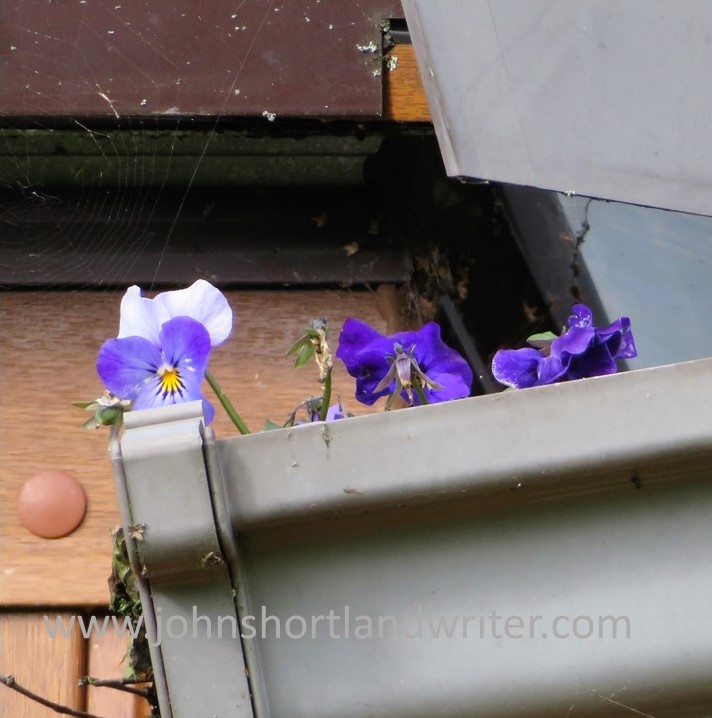
Look everywhere – self-sown violas peep out from overhead guttering!

At this time of year, more than any other season, there is much to see. Tight leaf buds unfurl into an explosion of vivid green foliage, iridescent wherever sunlight filters through; young ducklings tumbling into the park pond to take their first swim. But it isn’t just the natural world to be seen anew, there are other things too. Although it had been there for more than a hundred and forty years (and I’d walked past it very day for twenty) the date scratched into the stone on this wall had gone unnoticed.

Date stone watermark

Who scratched this date into the old stone wall and why?

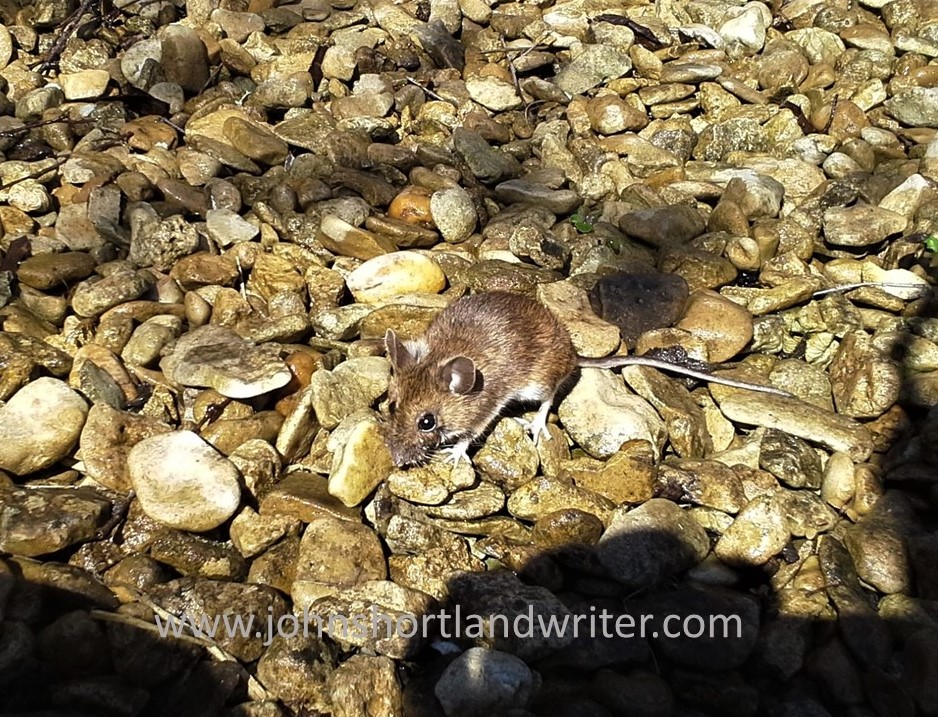
HEARING Along with sight the second most important sense we use on our daily amble. Apart from the glory of birdsong there are other sounds that bombard us when out walking. The wind flurry that makes the catkins tremble and shed their pollen, the stronger breeze that make the twigs and branches clatter gently against one another. Then there’s the rustle in the undergrowth. Stop and wait silently and with patience you may be rewarded by the sight of a little field mouse going about its daily chores or a rabbit venturing out to feed.

Field Mouse watermark

patience was rewarded when this little field mouse ventured into the open

Altamont Gardens (8) watermark

… and also this rabbit

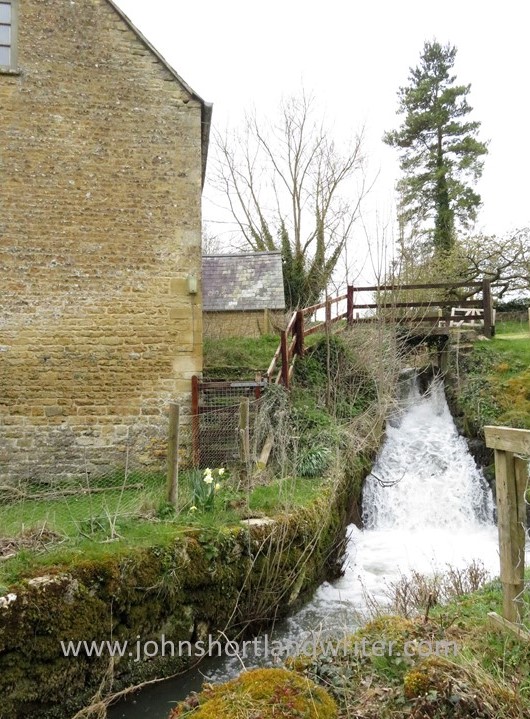
The sound of the river alters constantly. The smooth, barely audible glide of the water changes to a tinkling of soft musical sounds, its flow interrupted by a fallen branch. A few yards further downstream they rise to a crescendo as they crash and tumble over the old millrace before returning to silence as the flow stills in the calm of the millpond.

Radford Mill (1) watermark

The old millrace 

Radford Mill watermark

the calm of the millpond

TOUCH   In the present crisis we are sensibly being discouraged from touching things unnecessarily. Out on walks perhaps care may be advisable when opening gates or climbing stiles but, if you do, take a moment to think about what you feel. Heed the cold steel of the metal five-bar gate and the way it slowly warms beneath your hand; feel the rough timbers of a stile worn smooth from much use over the years. Of less concern health-wise – and all the more pleasurable for that – become aware of the softness of new horse chestnut leaves; later in the year they will become as harsh as sandpaper. Run your fingers across the twisted, grooved bark of the sweet chestnut tree and stroke the furry softness of the aptly named ‘Lamb’s Ears’, the favourite garden herbaceous plant Stachys byzantina.

Sweet Chestnut 4 watermark

The deeply grooved bark of the Sweet Chestnut tree

Stachys byzantina  Lamb’s Ears

SMELL   The scent of spring is everywhere at the moment and to be delighted in. However, the sense of smell is also a powerful trigger of long-forgotten memories. In a few weeks’ time the sweet scent of drying hay in the meadows may recall childhood farm holidays but for now there is the unique smell of new-mown lawns. Both start off as freshly cut grass yet their scent is so surprisingly different. Likewise, compare the subtly differing fragrance of apple and cherry blossom, both in their full-blown glory right now.

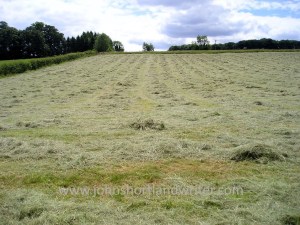
Drying hay before baling

The smell of freshly-mown grass…

Without even leaving home, squeeze the leaves of the herbs on the kitchen sill and notice their variation in scent, their colours and textures too. Early morn in the woodland, especially after warm rain, the delicate perfume of bluebells quickly disappears as the sun becomes stronger. Half-close your eyes and glory in their colour, in the silence and in their perfume and leave all cares behind you – if only for a while.

discover the different textures & scents of herbs

The vivid greens & blues of an English beechwood in spring

In town, the scents are also there just waiting to be noticed. Rain falling on roads and pavements or scorched by hot sun both produce delightfully tarry smells, one mild, the other strong. In the formal beds of the local park flowering bulbs stand in regimental rows; each have a unique scent which rises in the air to mingle with the vanilla fragrance of wallflowers. The wallflowers, their dull green foliage barely noticeable throughout the winter, now shout out the arrival of spring through the colours of their flowers of brick red, orange and yellow.

Tulips & wallflowers – a favourite park bedding combination

TASTE   In shaded places where the soil stays moist you may be greeted – even before you arrive – by the pungent scent of wild garlic. A prolific carpeter of the woodland floor its leaves and flowers make a useful ingredient to spring salads. Wild garlic or Ramsons to give it it’s country name, is fickle where it will grow. In some places that would seem suitable, not a single plant can be found. A less common member of the onion family to be found in the wild are the chives of our gardens, they grow along road edges and field boundaries locally. It is thought that they were spread by the old drovers of centuries ago so that they could harvest them along the way to liven up a bland meal. There is no doubting its identification, disturb the tubular green leaves and the familiar scent is immediately released.

Ramsons grow in damp, shaded places

It is not only the onion family that can be nibbled en route. Richard Mabey in his book Food for Free, published many years before foraging became a ‘craze’, suggests nibbling on the half-open buds of hawthorn. Many a country child has done so over countless generations and perhaps that is how they got their old name of Bread and Cheese. To me, they only have a slightly nutty taste and texture.

Hawthorn leaf buds are not really worth eating!

As a boy, brought up close to the River Thames, the hollow stems of the common reed were a regular source of pleasure for the soft pithy centre could be drawn out by pulling the stems through clenched teeth. Close to my present home there is also a small reedbed. These tall reeds have something to offer every one of the other senses too: sight – the pleasure of watching petrol-blue damsel-flies sunbathing on the stems; hearing – as they sway and rustle with the slightest breeze; touch – the coarseness of the leaves, a contrast to their smooth stems; smell – those of the river as it seeps around the roots, a heady mix of wet mud and wet greenery.

Only the male of the Beautiful Demoiselle damsel-fly has petrol-blue wings & body

So, within the bounds and restraints of the Covid-19 advice when out on your daily exercise, remove the earphones, place the phone in your pocket and use, really use, every one of your senses. Not only will you notice more, you will wonder how you never managed to notice them before. Stay safe, stay alert and take this unique opportunity to discover a new world on your doorstep.

Finally, one word of warning. Only try tasting wild plants if you are confident they have been identified correctly. If you decide to forage, do so responsibly and only pick a few leaves at a time. Make sure that all plants for consumption are free of pesticides and other contaminants, especially those growing in or near water.