2014 in Review: the first six months

So another year is almost over and it certainly has been a busy one for me.  Living and working in the spectacular Cotswold countryside, a classified area of Outstanding Natural Beauty (AONB) is a great treat and one of which I never tire.  It’s also nice to go off exploring other places so 2014 found me in other parts of the UK and  Ireland too.  One of the first places I visited, however, was only twenty miles down the road but light years apart in reality!

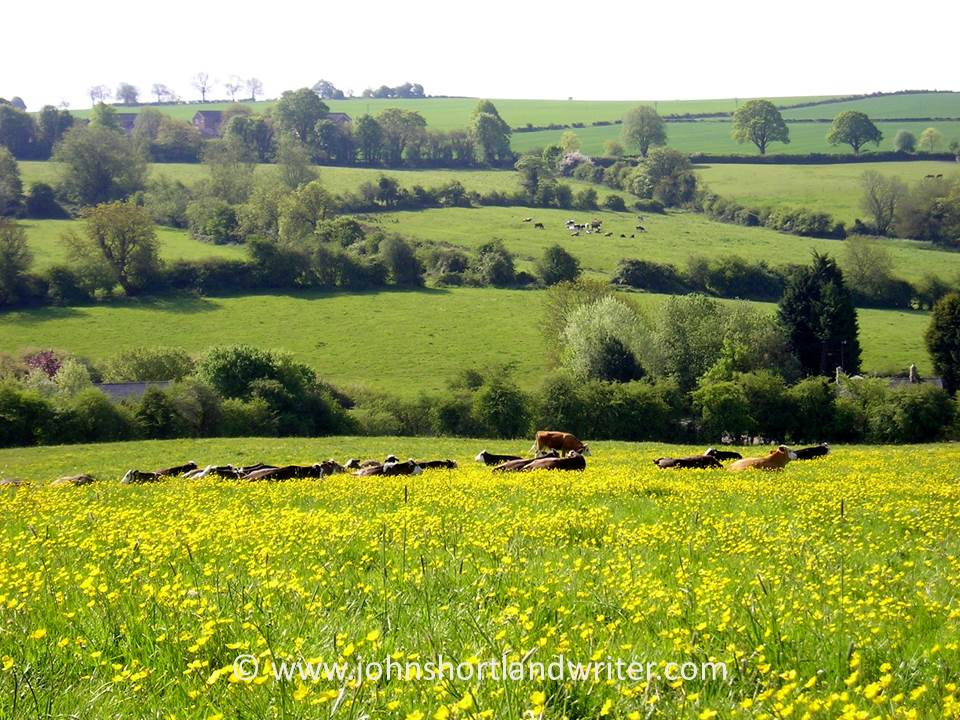
a typical Cotswold scene   copyright

typical Cotswold countryside

Like many people that live close to tourist attractions I don’t often visit the ones on my doorstep but last January found me walking the streets of Oxford.  I hadn’t come to explore the colleges but the covered market which dates back more than two hundred years.   The history of the market and the building is fascinating and is well worth making the time to visit – especially if you like a bargain.  To read more about it and to see other photos click here.

0bab1-copyrightjjj

One of the fathers of ecological writing died tragically young and in February I matched quotations from his work to images I had taken (to see them, click here).  My favourite was noticed by the Society that bears his name and reprinted in their journal.  I felt very honoured!

7d91b-hmecopyright

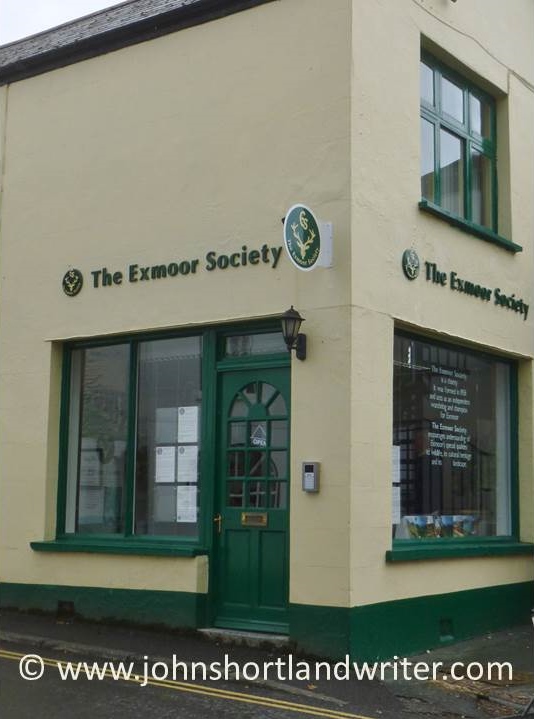
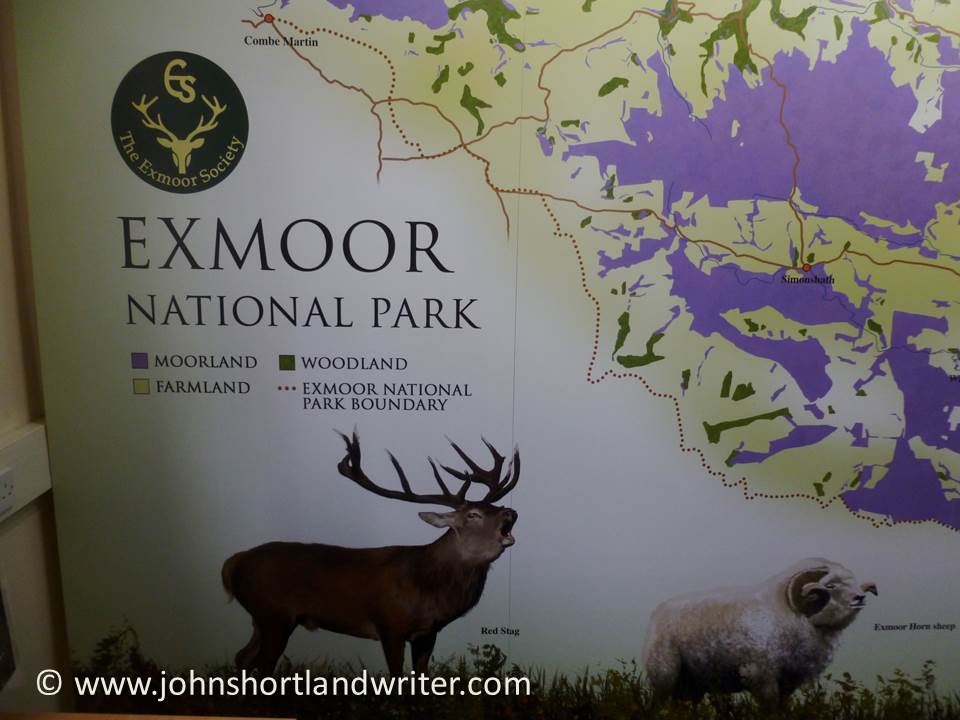
Wild and rugged scenery is often best appreciated over cake and coffee and at Watersmeet in Exmoor National Park you can do just that.  Two rivers collide spectacularly besides the Victorian fishing lodge that is now owned by the National Trust and run as a café. March found me walking through beautiful scenery as well as indulging myself and the link to this remote but very accessible place is here.

c6c63-watersmeet5copyright

Dublin, the capital city of Ireland is a favourite place of mine and in April I visited the Casino Marino, one of the most impressive and perfect neo-classical buildings in Europe.  Everything about it was designed to deceive so although you only see one window on each side you actually have – well, click here to find out what plus all the other deceptions the Georgian architect managed to fit in.

Casino Marino

Planting trees is a long term project for they rarely mature during the life of the planter.  Of all the hundreds I have done in my professional life none has given me as much pleasure as this particular one.  I have waited for years for it to flower and in May it did so for the first time.  I felt quite emotional – it was a case of finding a handkerchief.  Take a look by clicking the link here.

Davidia involucrata   copyright (2)

The Cotswolds are world renowned for their ‘chocolate box’ village scenes and Lower Slaughter must be one of the contenders.  Despite its name it is a beautiful and tranquil place to visit for it has everything from crystal clear trout streams to olde-world stone cottages to a mill complete with working water wheel. If you choose the right time to explore you can have the place to yourself.  To learn more click the June link here.

2d910-lowerslaughter3copyright

The Story of Lorna Doone – just a myth?

 Lorna Doone is the tale of a young boy, John Ridd, whose father is killed by Scottish outlaws – the Doones.   Exiled to a remote part of Exmoor (which is in England’s West Country and now a National Park), they rob travellers and local farms.  Living amongst them is the pretty Lorna Doone, kidnapped by them as an infant.  John enters the forbidden Doone Valley by climbing a steep and difficult waterfall, the ‘waterslide’, and meets Lorna for the first time.  Some years later he rescues her and as they marry Lorna is shot through the window of Oare church by the wicked Carver Doone.  John pursues him and after a struggle Carver perishes in a bog.  Lorna recovers from her wounds and so the story has a happy ending.

Oare Church

But is it true?  The simple answer to the question is that the answer isn’t simple.  When Richard Dodderidge Blackmore wrote his historic novel in the late 1800’s he mixed fact with fiction and local legend with the names of local people.

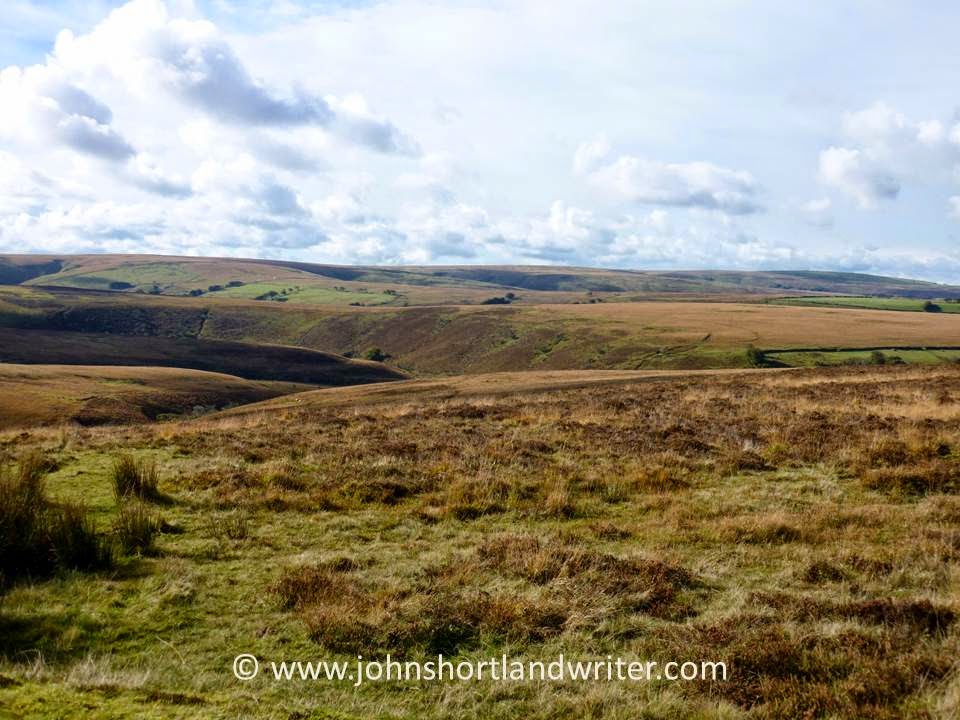
Blackmore placed the Doone stronghold beside Badgworthy (pronounced ‘Badgery’) Water.  There is a deserted medieval village beside a tributary in Hoccombe Combe and it is very probable that this is the site for the ruins were still visible in Blackmore’s day.  However the Waterslide is not found there but in another side valley, Lank Combe. Nowhere as sheer as described it is, however, an impressive sight with its three smooth slabs of rock especially when the river is in spate.  I like to think that he also had in mind the waterslide at Watersmeet a few miles further downstream which would be much more of a challenging climb.
The waterslide at Watersmeet
 

Because the precise location of the Doone Valley is uncertain it is no longer described as such on maps, the Ordnance Survey now describing the area more accurately as Doone Country.  A rewarding walk can be taken along the whole length of Badgworthy Water starting from Brendon Common by parking the car at Brendon Two Gates.  Here there are wide views of both the open heather moorland and also the grass moor of the Royal Forest ‘improved’ in the nineteenth century.  Badgworthy Water changes in character along its length from fast running rapids to smoother, deeper pools.

Badgworthy Water

The above walk is rugged and long but a more gentle approach is from Malmsmead with its much photographed packhorse bridge and ford that also denotes the county border between Devon and Somerset.

Malmsmead where Badgworthy Water crosses the road
 

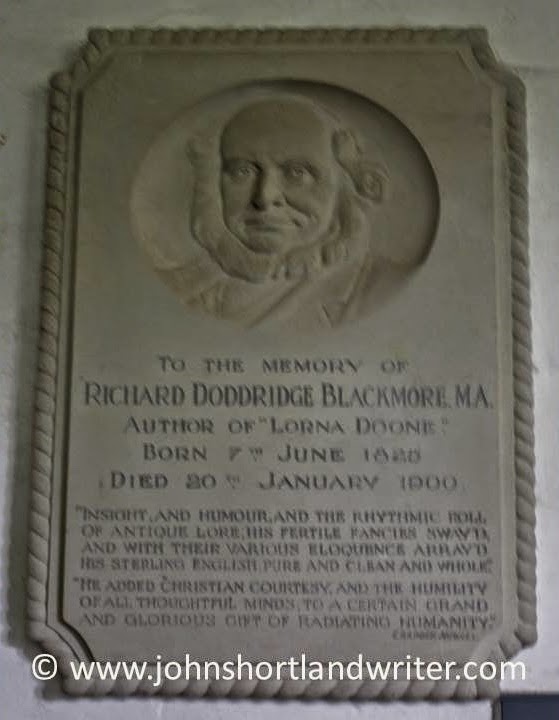
Further along the lane nestles the village of Oare and the church where Lorna and John wed.  Inside is a memorial to Blackmore, a smaller copy of the one in Exeter cathedral.  A memorial can also be seen to the Snow family who lived at Oare manor and also feature in Lorna Doone. It is recorded that as Blackmore didn’t write kindly of the Snows he was afterwards much disliked by them.  Other local characters also existed: Tom Faggus, the highwayman was – in real life – from nearby North Molton and Ridd is still a local surname. 

Oare village and church nestle in a deep combe

Is Lorna Doone a story based on truth?  That is for the reader to decide, perhaps after visiting Mother Meldrum’s cave in the Valley of Rocks, for both are mentioned in Blackmore’s book.

The Valley of Rocks

Add to Technorati Favorites

All is Safely Gathered In?

The air is heavy with the scent of harvest.  Is it the summer heat that produces the heady smell of fresh straw or the act of cutting it?  Probably a combination of both but the result gives mixed emotions for, whilst there is something very comforting about knowing that the corn is safely stored and the livestock will have plentiful winter bedding, there is also a tinge of regret for it is the first sign that autumn is rapidly approaching.

Harvest is one of the few events in the modern farming calendar which gives an insight into the ways of country life of generations ago.  These days, for most of the year, farming is a solitary occupation with a skilled tractor operator carrying out the tasks of many people.  Now the fields often seem empty, quiet places, devoid of human life or activity. Even fifty years ago there were more people working there but go back even further, say another hundred, and there would have been the sights and sounds of dozens of people working from dawn until dusk, racing against the weather.  A poor harvest then meant months of hardship and hunger for many.  Modern harvesting, albeit for a much shorter time is when the fields seem alive once more with combines, grain trucks, straw wagons and the like. 


The image below is taken from a nineteenth century farming manual belonging to my great, great-grandfather, and it demonstrates just how many people both men and women, were required for harvest. There were the mowers with their scythes, the gatherers, the bandsters who bound the sheaf together and then set them in ‘stooks’ to keep dry. Finally, the raker would clean up all fallen straw and grain for none could be afforded to be lost.  Harvesting by hand was surprisingly speedy for a skilled mower could cut over an acre of wheat in a day.  However, by the 1880’s virtually all corn was harvested by horse drawn machines.

Many attempts were made to design a harvesting machine throughout the centuries – the earliest, using oxen, is described by Pliny two thousand years ago.  The binder – as seen in the wonderful engraving also taken from g-g-grandad’s book – which cut and tied the corn into sheaves in one operation, first came into use in the 1850’s; it continued to be used for another hundred years: by 1979 when the photograph below was taken it was an eccentric rarity. 

the binder can just be seen on the middle right of the photo
 
Combine havesters are giants compared to the binders of old and when they travel through the secret valley they take up the full width of the lane with very little room to spare.  First to be cut is oilseed rape, the crop that turns vast swathes of the British countryside bright yellow in spring.  The resulting stubble, unlike that of corn, is sparse and sharp and makes for uncomfortable walking on.


Barley, oats and wheat – which in the UK are collectively referred to as ‘corn’ – then follow with each crop (and its straw) having its own requirement and characteristic.  Modern technology may have shortened the number of days it takes to bring in the harvest but the working day is just as long as it ever was for the combines work from early morning to late at night, providing the crop doesn’t become damp with dew or rain. 

Harvest has always been dependent upon the weather so it is not surprising that upon completion celebrations take place.  Although the traditional Harvest Supper is now mostly a thing of the past, the Harvest Festival church service is still one of the most popular.  On Exmoor – where I helped with harvest in my early years – and typical of a remote, tightly –knit community, every window ledge and the altar of the church would be decorated with flowers, fruit and vegetables.  Pride of place was given to the first stookof corn cut from the field. Packed with families that had been too busy to meet one another for several weeks the hymn ‘Come Ye Thankful People, Come’, written by Henry Alford in 1844 a line from which the title of this blog post is taken, and a great favourite of the farmers, was sung with gusto.

Exmoor church

Add to Technorati Favorites