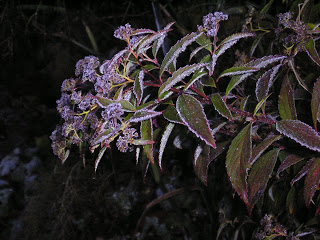
In my last post I discussed a new-to-me variety of Ribes, Ribes laurifolium. In it, I mentioned that it was unlike those I have seen elsewhere. That is, I have since discovered is because it isn’t a Ribes at all! It had been wrongly labelled in the nursery where I bought it. It isn’t even related to the flowering currants for, despite its currant like flowers, it is part of the rose family. . Oemleria cerasiformis, also known as the Oso Berry or Oregon Plum comes, as the name suggests, from North America. It is fully hardy, deciduous, prefers semi shade (ideally planted by good luck in my garden) and grows to about 2.5m. The great scent is agreed upon but described as smelling of almonds. It also describes it as a ‘mildly’ suckering shrub and mine is already sending out a new growth about 30cms from the base of the plant. I am more than delighted for it to do this. .
. Apparantly, the native Indians chew the twigs and leaves as an aphrodisiac which will make (when it grows bigger) pruning possibly less of a chore ;-). Being monoecious, berries are only formed if both male and female plants are grown together. . I’m delighted to find out its true name, if only to clear up the confusion of laurifolium. And it also proves one of the great delights of gardening – it is an adventure where, however much knowledge you might have, the potential for learning and discovery never end. . Grow it if you can find it …… . . . . . 
Author Archives: johnshortlandwriter
Shh! Don’t Tell The Weather Man!
I hardly dare mention it but I think Spring is finally coming to the Cotswolds. After I wrote about it back in February, the man from the Met Office sent us cold again. Hard frosts put spring on hold. To be fair, as I also wrote, the Cotswolds may be one of the most beautiful places to live in the south of England but the hills are also one of the coldest. Our spring is always two or three weeks later than places even as close as Oxford or Gloucester.
.
.
Early spring sunshine comes to the ancient Cotswold town of Burford
.
.
.
.
.
.
.
.
.
.
.
Two Updates……..
.
First Update – Ancestors!
.
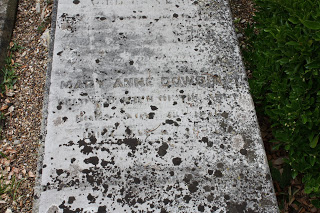
Regular readers of this blog may recall my post about discovering not only my great (and also great-great) grandparents graves but also finding that the church that they had been instrumental in building still there and thriving. Great-great grandpa Wright had also been Deacon at one time.
.
.
To recap, I did not have time to visit the interior of the church and vowed to return. How pleased I was that I did. Members of the congregation were so friendly and welcoming and interested in my connection. It was Harvest Festival, always a joyful time and the service was delightful. How surreal it was to sit there – in a church interior that, miraculously, had remained virtually unaltered since the day it was built in the mid 1800’s, worshipping in the place of my ancestors. Their presence felt very strong and I think they would have approved that I, not a very religious man (although I like to think quite a spiritual and good one) and now the ‘elder’ of the family, had returned. I was so pleased that my first steps inside the building had been to join others in prayer.
.
.
.
Since then, I have returned once again, this time with a friend, to hear an organ recital. It was a joy to see the church filled with so many people. As a cousin, who works with the poor in Afghanistan, said “God is holding you in the palm of His hand, you never know when He will release you”. By coincidence – or perhaps not – the opening hymn was ‘To God Be The Glory’, a hymn sung a few weeks earlier at the last of my aunt’s funeral. A deeply religious woman, her greatest wish was that I might have the same depth of faith as she. How heartly I sang although I doubt if my aunt would consider me yet saved!
.
.
On my last visit, I also found the house where my grandmother had been raised. Overlooking the River Thames, our great river that runs, 30 miles downstream, through London it was just a few yards from the paper mill that my ancestors owned before the Second World War. All was sold long before I was born – a pity, it would be amazing to live there now!
.
.
.
.
Second Update: She-Dog!
.
.
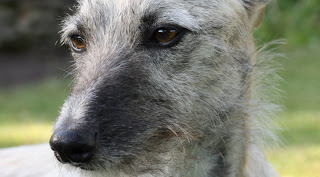
After delays for one reason and another, the precious She-Dog may be in pup. She has met a handsome lurcher of similar colouring – not the original choice but just as dashing – and spent a few days away on extended honeymoon. Fingers crossed, I may finally become a father. Watch this space!
.
.
.
.
Spring Is Around The Corner!
Winter in the secret valley: sheep wait patiently for food by our little winding river
.
The Cotswolds are known, however, for their colder and longer winters compared to the rest of the region. Here, about as far inland as you can be on a small island, we have little benefit from the warming effect of the sea and we are also hill country. Elsewhere may be showing signs of spring but in the secret valley these are still hard to find – an elder twig just breaking into leaf is the only green that I can find so far.
.
.
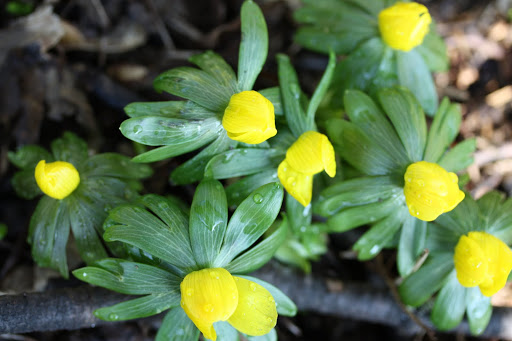
The aconite wood, ‘though, is a sight to behold and has been flowering for a couple of weeks now. How many plants can there be? Surely, tens of thousands. When and why were they planted here, for they are not native to this country. An old country chap told me it used to be called Summer House Woods but there is no sign of a building here and the ‘big’ house that owns the land is some distance away.
.
.
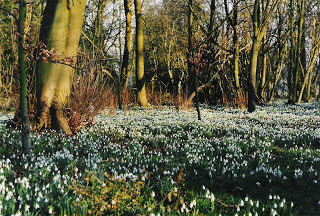
This snowdrop wood was planted by nuns over a hundred and fifty years ago and is attached to my ‘reincarnation’ house. Snowdrop woods, unlike aconite ones, are not uncommon but never fail to impress. Even a small group in a garden are eagerly awaited and we have plenty here where they spill out beyond the garden boundary and peep out from amongst the hedgerow that borders the lane.
.
.
The Cornus mas is also flowering now. It grows in our garden against the house wall, facing east. Despite this, it perfoms regularly and is easy to keep pruned to shape. This one, is the variegated leaf variety which is quite slow growing compared to the standard type and so is ideal as a wall shrub. In late summer it carries edible scarlet berries, hence its common name of Cornelian Cherry.
.
.
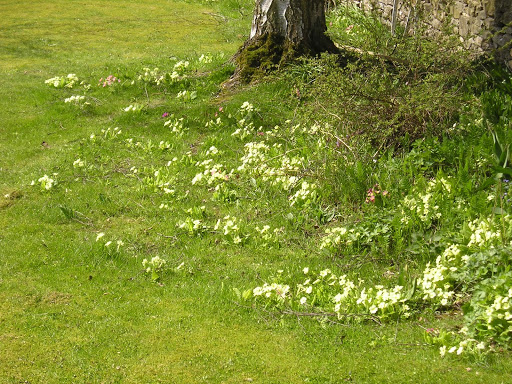
Also in the garden, I found a single, wild primrose, sheltered by the old garden roller, in flower. Later, the garden, and especially the lawn, will be covered with their flowers. Daffodils, although beginning to flower elsewhere will be a few more weeks before they do up here. But even in the Cotwolds they are showing colour in the warmth of our towns – which makes shopping just a little bit more enjoyable.
.
When in town, I was surprised to find that oldest of symbols of spring – the green man. He was standing tall and lofty down a back street unnoticed and forgotten. Closer examination revealed that he was an old column and ball, the remaining one of a pair of stone entrance pillars from some long demolished house. Now covered in ivy, I wondered why it had been left and what was its history.
.
.
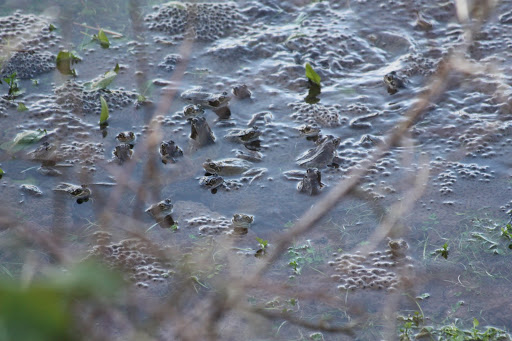
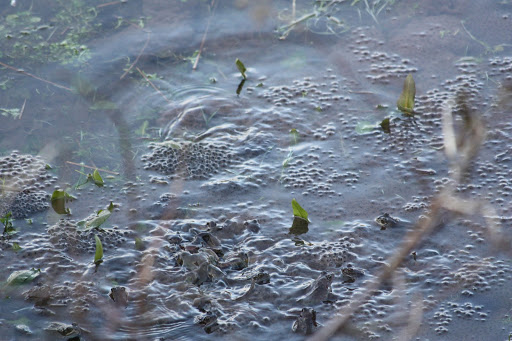
Further afield still, I came across a small pond in a field. The croaking of hundreds of frogs drew my attention to it and in the photo below there are over forty heads poking out above the water. As I approached, sensing danger, they fought one another to get below the surface, making the water look as if it was a boiling cauldron. A few days later, when I returned, all was quiet and the surface of the water completely covered in frogspawn. Like the daffodils, it will be some weeks before our secret valley frogs start marching across the lane and entering the house in their quest to reach the lake below our garden.
.
.
.
Footprints of History
It is a busy time in the garden as the weather at the moment is quite mild and dry. This is an unusual combination for an English winter as warmer winds that come from the Atlantic Ocean also bring rain. It is the bitingly cold weather that comes from Eastern Europe or sweeps down from the Arctic that often brings dryness (and, if lucky, sunshine) with it.
.
.
.
..
.
.
.
.
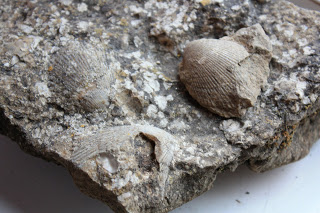
I only have ever found one ammonite and then, only a small chunk of it. However, this was the very first fossil I ever found when I was still a child, so is my ‘very special’ one. At the time I had no idea what it was but it is part of the coiled tube that forms the outer shell. The ‘shadow’ of its ribs can be seen at one end. It would have lived about 200 million years ago.
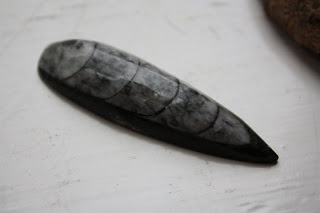
This small fossil was given to me as a gift and has been highly polished. It is a Belemnite, a type of squid that lived about 150 million years ago. It came from the Atlas Mountais in northern Africa. Although I love its colouring and smoothness it doesn’t give quite the same thrill and sense of awe that finding your own does: how extraordinary to be able to handle something that is of such an incredible age.
.

.
Grey Wethers Double Stone Circle
.
.
.

.
.
.
.

.
.
.
.
.
.
.
.
.Modern Stained Glass at Glasnevin
Plans are afoot to visit Dublin in Ireland once again this Spring. I went last April and the weather was glorious – it is a nice thought anticipating some spring warmth. The highlight then was the day spent at Glasnevin, the city’s botanic gardens.
.
Like many events in life, it is often the unexpected that remain at the forefront of the mind and so it was at Glasnevin. The glasshouses and plants were, without saying, spectacular but a complete surprise was a small exhibition of modern stained glass work.
.
.
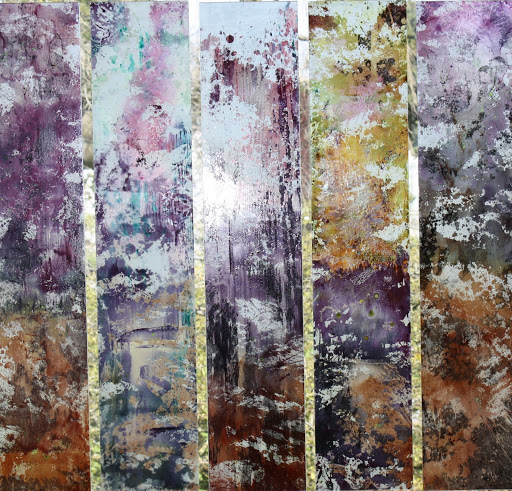
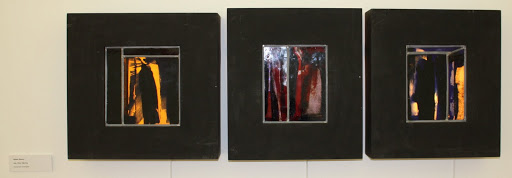
This first piece of five panels is the work of Mary Mackey, based in County Cork. I love the colours and mix – to me it is a blend found in mountains in the fall (odd how, for an Englishman, ‘mountains in the autumn’, doesn’t sound as expressive or as romantic!). However, much of Mary’s work is inspired by the sea and this particular piece is titled ‘Sea-shushed Secret Places’. Painted and sandblasted, the strong colours used still have a swirling, dream like quality about them. Perhaps it is the light coming through the piece that allows this contradiction. Mary, in her own description of her work, tells of how she sees a flash of landscape: “…. fleeting images in real time, but in my memory the image is sharply focused, connected witha particular place, a particular time…..stored and enriched by treasuring it…..until at least something of that essence is achieved“.
.
.
.
.
.
.
A New Year
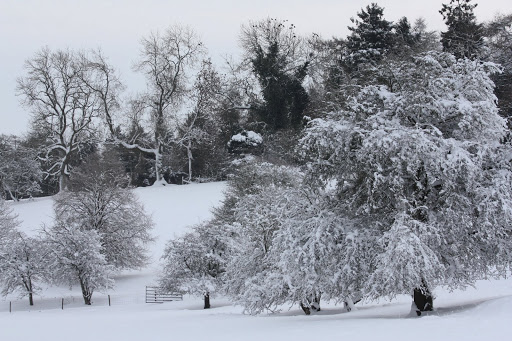
The snow has all but gone from the secret valley, thanks to a sudden thaw, after the temperature rose from -15 centigrade to +6 centigrade. Some still clings to the gullies at the sides of the fields and on the colder banks of the hillside but elsewhere, in its place, is the battered appearance of a landscape after attack.
.
.
Last night, New Year’s Eve, was seen out at our neighbours and good friends 3/4 mile up the road, at the farmhouse that is the centre of our farming life here. Although a cold night it was good to be able to walk there effortlessly (after ploughing our way through snow for several weeks or sliding around in the car). As the chimes of Big Ben in London struck twelve o’clock we all sang ‘Auld Langs Syne’ to the traditional sound of a lone piper – in this case lone because there was only one Scotsman present and he could play the bagpipes. And a couple of hours later I stepped out into the cold, still air to walk back down the hill to home.
.
.
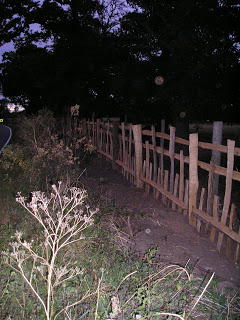
The secret valley at night – and some nights especially so – is a silent and dark place. Never menacing, it is a good time to reflect on times passed and to breathe in the air which seems to take on a different quality to daytime. Walking down the lane, with bands of snow periodically reminding me to watch my feet, I was aware that there were others on the move too. An alarmed rabbit shot across the road in front of me, diving into the hedge, it’s path being highlighted not by moonlight, for there was none, but by the sounds of leaves rustling and twigs breaking beneath it. The fox was far more discreet, the only witness to its passing, its distinctive musky scent.
.
.
Our little river, now thawed out from the frozen state that it had been in gurgled and splashed its way into the distance. It had seemed odd not to be able to hear it when it had its lid of ice and snow for even in the hardest winters past it had not been known to freeze over.
.
.
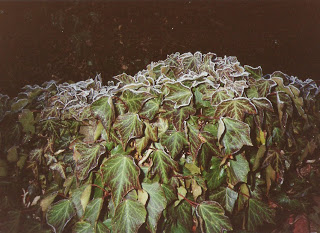
However, a touch of frost had given a magical dusting to the plants and fruits that had survived the onslaught of our early winter, for snow is rare at this time of year. January and February can be snowy and often we have none at all so who knows what the start of 2011 will bring?
.
.
.
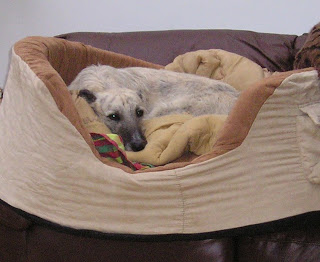
Approaching home, the reassuring smell of wood smoke drifted from the chimneys towards me. Warmth at last! And, as always, She-dog, our best companion, was there to greet us but not before raising a bleary eye from her bed, as if to say “what are you doing out at this time of day and at your age?”.
.
.
And so to bed tired but with a warm, contented feeling both inside and outside. To live in the secret valley, isolated but surrounded by beauty and good friends, is such a privelege. Who knows what 2011 may bring but if the first days sunrise is to go by, it should be a good one!
Happy New Year to you all…..
.
.
.
Christmas Greetings
For the first time for very many years we have a white Christmas
.
Thank you for your continued support and interest – keep the comments flowing, I’m always interested to hear your views!
.
May you all have a very happy holiday
Johnson
Cotswold Hills, England
The North Wind Doth Blow…..
The other day I recalled one of the nursery rhymes that my mother used to sing to me when I was a small child sitting on her lap. Goodness knows why, after so very many years, but no sooner had I done so than the words became true:
.
“The north wind doth blow and we shall have snow and what will the robin do then, poor thing?”
.
Well, the answer is puff up its feathers and stand close to the bird feeding table until it gets fed!

.
It isn’t just the robin that demands food in these difficult conditions and there has been a constant stream of activity back and forth to the feeders. The tit family are always welcome – we get many different sorts here: blue, great, coal, willow and long-tailed.
.
.
It is often stated that British birds are rather dull compared to the exotica of warmer climes. We do have our share of ‘little brown jobs’ that aren’t too easy to identify but what can be more spectacular than the Greater Spotted Woodpecker? With it’s red cap and rump and black and white markings, it is a beautiful looking bird. We also have its diminutive cousin, the Lesser Spotted, but these tend to stay out of the garden and feed amongst the willows by the river.
.
.
.
.
.

.
.
.
The snow – which is very unusual around here before Christmas – looks to hang around for a while, with more forecast next week. I cannot remember the last time we had one but, perhaps, a white Christmas may be a reality rather than just a picture on a card. If so, I shall have to write a post quoting Bing Crosby…..
.