The Green Way Out of Town

It may seem odd that having moved from the depths of the countryside to the centre of a town that the first piece I write about after the move should be about escaping back into the wilds.  It isn’t that I’m yearning for open space away from the crowds for, to my surprise, I’m finding life in Cheltenham to be remarkably exciting in ways that I didn’t expect, namely people watching, shopping and architecture (well, I half-expected the latter).  What has surprised me, however, is how just yards from my front door there are ‘green ways’ that lead up into the hills.  I tend to think of them as my escape routes although I’m really loving the change of pace and lifestyle, albeit it’s early days.
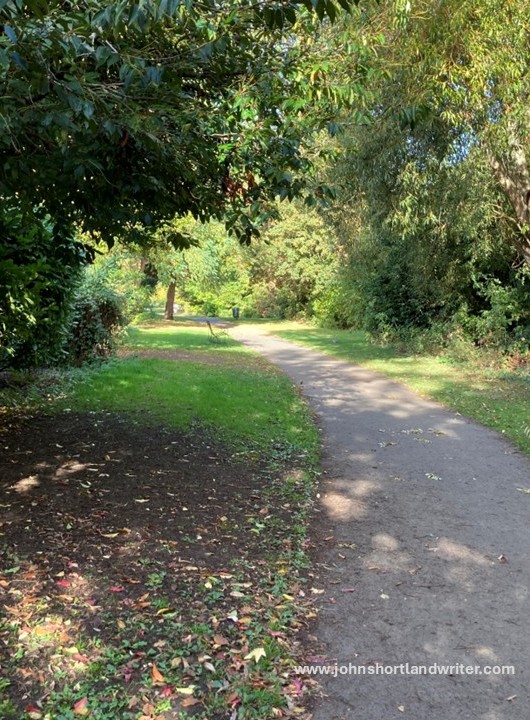
The old railway track is now a green pathway that links the town centre to the countryside

Cheltenham has a reputation of having more trees than people and I think it could well be true for the photo below of the Promenade, one of the main shopping streets in the town (and a four minute walk from our door) demonstrates this so well. There are numerous parks as well, and these interconnect with the green ways: not only do they give me a way to exit the town it also gives wild animals and birds a route to enter it.  In time I shall be writing about the wildlife I come across and the parks in more detail.  Suffice to say, that it is something that I hadn’t really considered: I thought I was leaving the world of deer, fox, badger and otter behind but apparently not for all live within the town centre.  Of course, I’m not trying to pretend that I don’t have to walk along pavements and sometimes busy roads as well, it is just that I had assumed that would be my only option to reach open country.
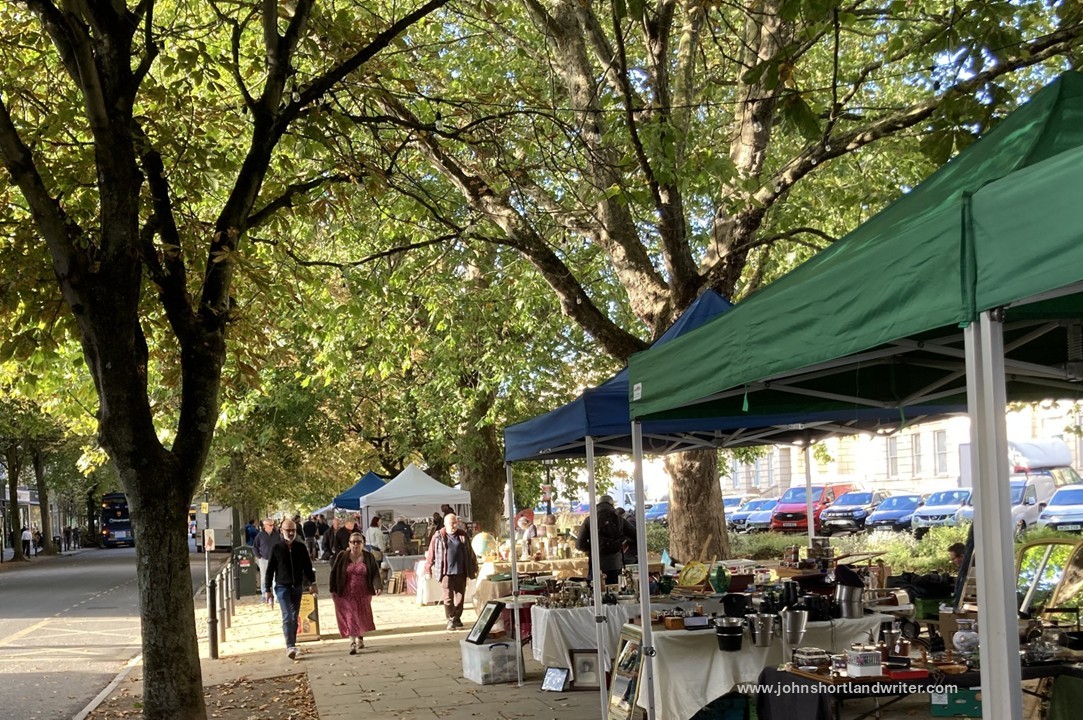
They say Cheltenham has more trees than people. The Promenade, one of the town’s main shopping streets proving the point!
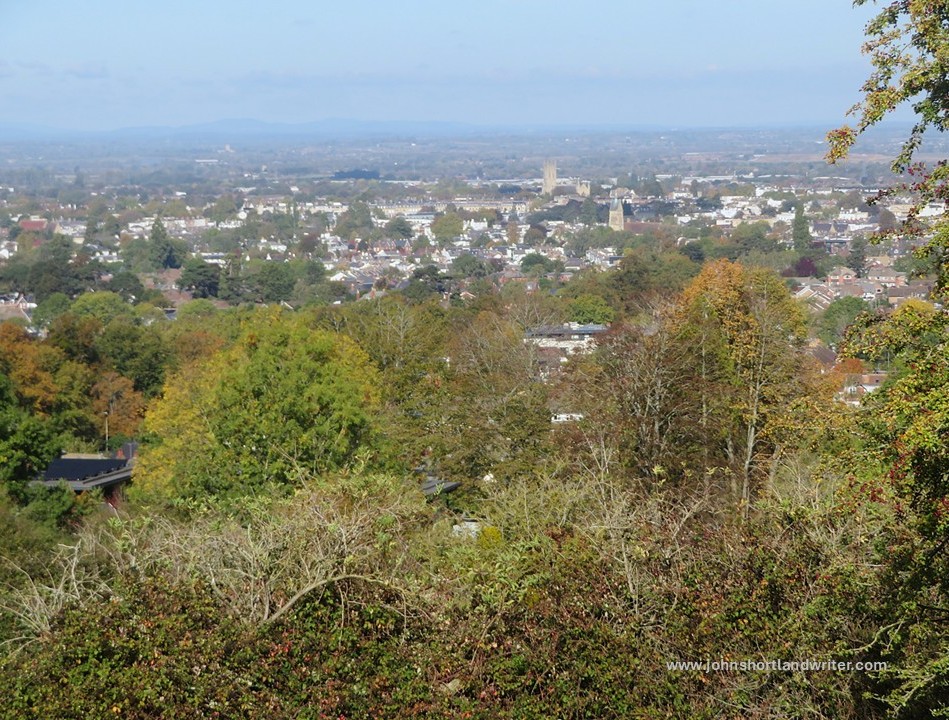
Cheltenham from the roof of the Cotswolds showing just how many trees there are in the town

The path that is so close to my new home, known as the Honeybourne Line, started life in the mid-1800s as the branch line of the railway bringing in services and visitors into the heart of the town.  When it closed in 1976 the station was demolished (it’s now the site of our local Waitrose supermarket) and the area gradually became forgotten and overgrown.  It wasn’t until the Millenium that various groups and the town council began to clear it to create a traffic-free walking and cycling route.  When finally completed it will link several local towns and communities along its 26-mile course.
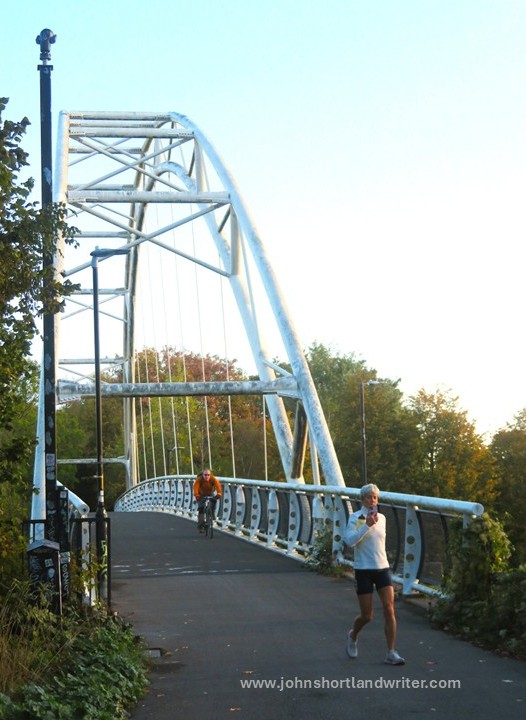
The Millennium bridge spanning a busy road junction – part of what will be a 26 mile traffic-free, green route for cyclists and walkers

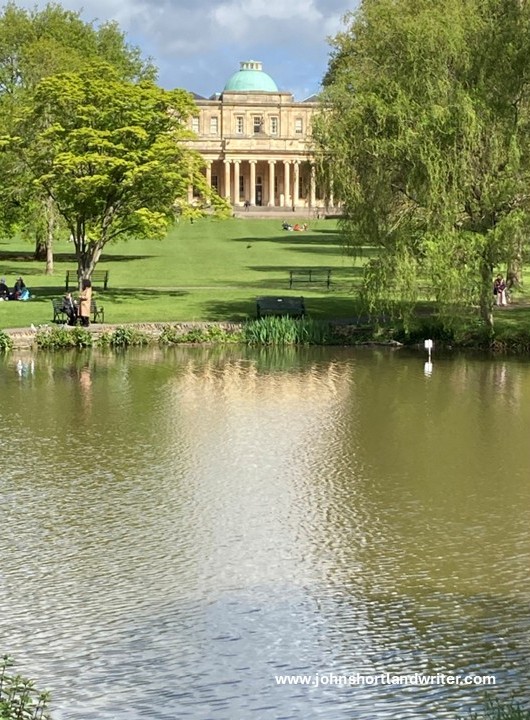
My first venture along this path took me northwards to the racecourse.  Cheltenham is famous for its horse racing and it is here, each March that the Gold Cup, one of the world’s major sporting events is held.  On the day that I walked there was no racing and so I had the place to myself.  A public footpath alongside the gallops would have lead me high into the (Cotswold) hills but I chose to turn towards the town, this time choosing a route through Pitville Park with its beautiful lake and spa building.   There will be other days, I thought, when I can climb the hills.
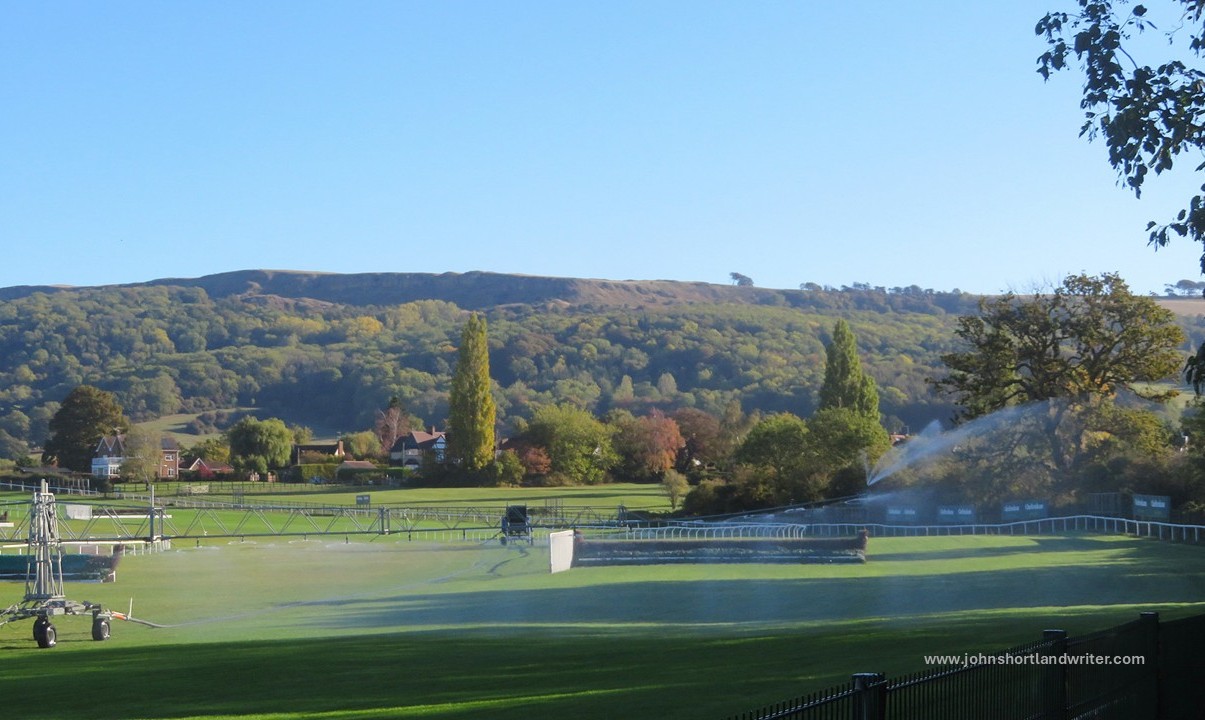
The Cotswolds rise steeply from the very edge of the racecourse giving endless walking possibilities
The lake at Pittville Park with its beautiful Regency Spa building beyond

For my second walk I tried to find a way west and although I finally did reach farmland to walk over, this route involved just a few too many roads for my liking.  However, I was rewarded with hazy views of the Malvern Hills and also by stumbling across a mid-length long-distance path known as the Cheltenham Circular Path.  This, I have since discovered, starts at Pittville Park and would have taken me on a much nicer and quieter route out of town.  A little further on I came across a derelict farm to explore before finding myself back on a stretch of the Honeybourne Line to lead me back home.
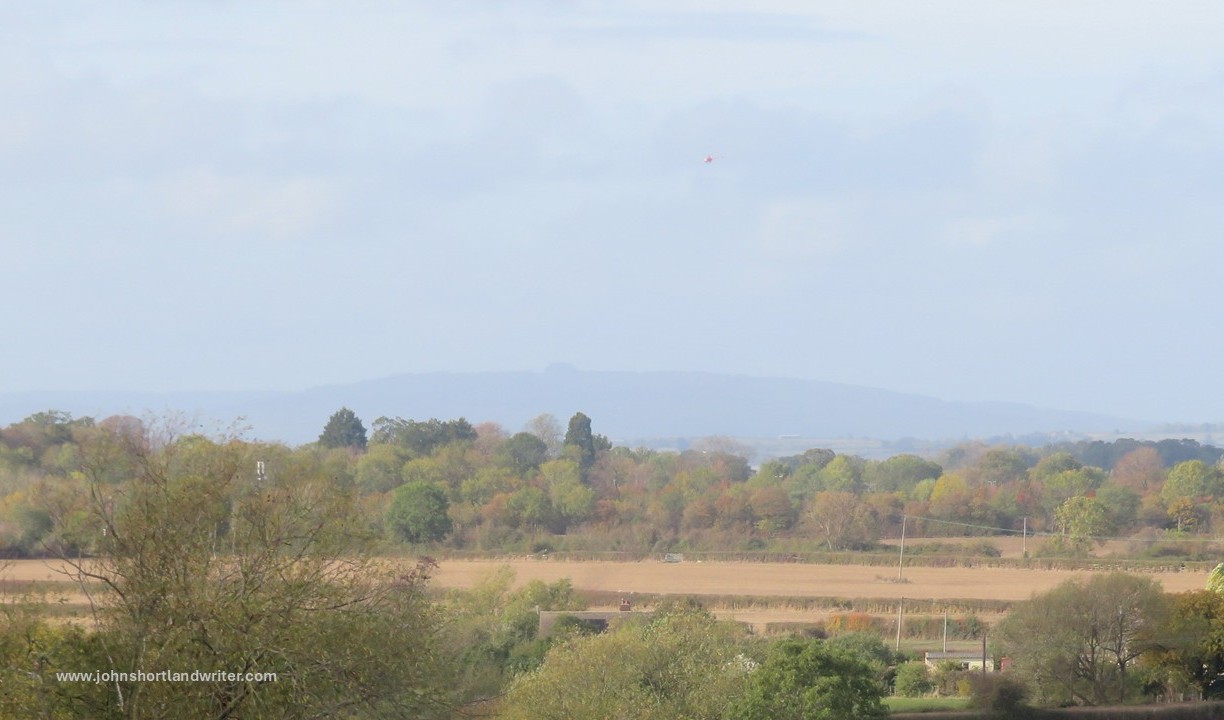
It is just possible to see the centuries-old crown of trees on distant May Hill,
a solitary outlier of the Malverns over 15 miles away
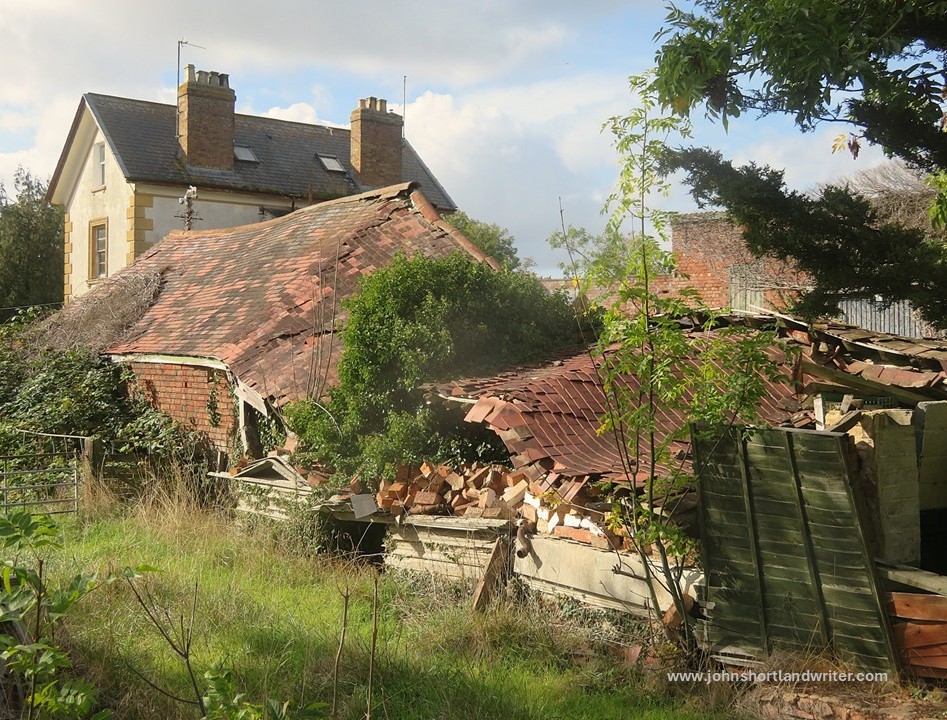
I came across a derelict farm…

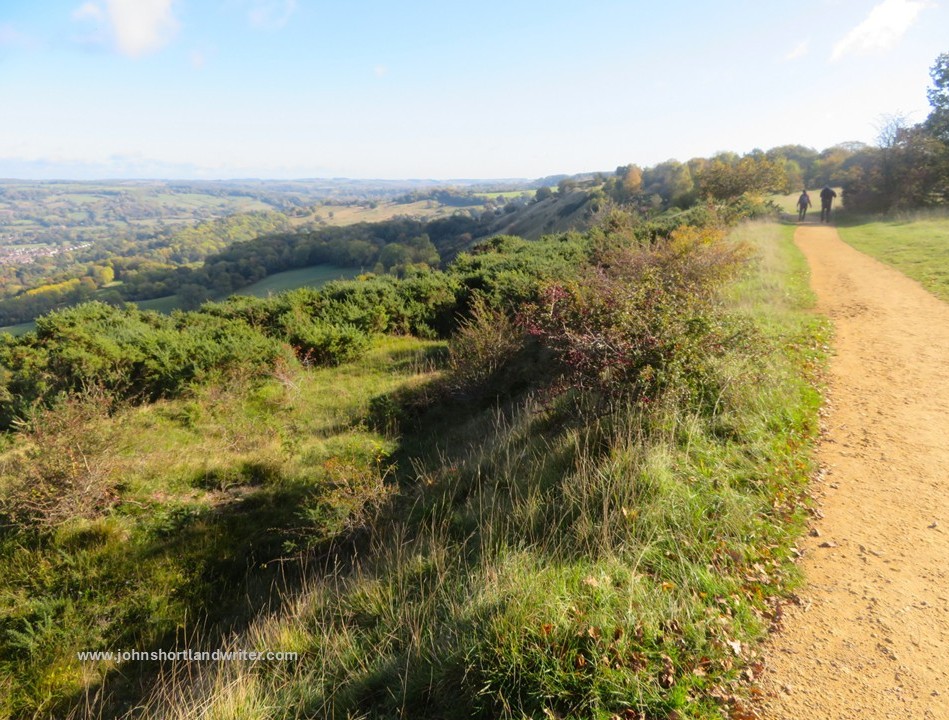
The third walk was through a different park – Sandford Park.  This was also a surprise for the path followed the course of the little River Chelt and led through well-maintained gardens before opening out into a much wilder part of the park, kept that way as part of the flood defences for the town. Rather like the little winding river back in the secret valley the Chelt can rise very rapidly after heavy rain. As with my first walk, I thought I would leave exploring the hills for a later date, but it was such a glorious day and the path so tempting that I climbed the 900 feet to the top. There I was rewarded by stupendous views of not just the Cotswold and Malvern Hills but also, way off in the far-distance, the misty shapes of the Long Myndd and Shropshire Hills, fifty miles away.  It is also here that my path linked to the Cotswold Way, another National Trail of over 100 miles length so the possibilities are literally endless.
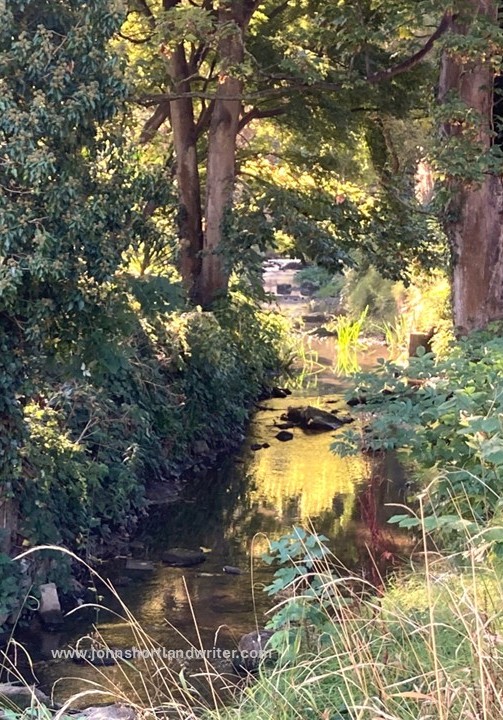
It’s hard to believe this is still within the town
– a tranquil stretch of the River Chelt by Sandford Park
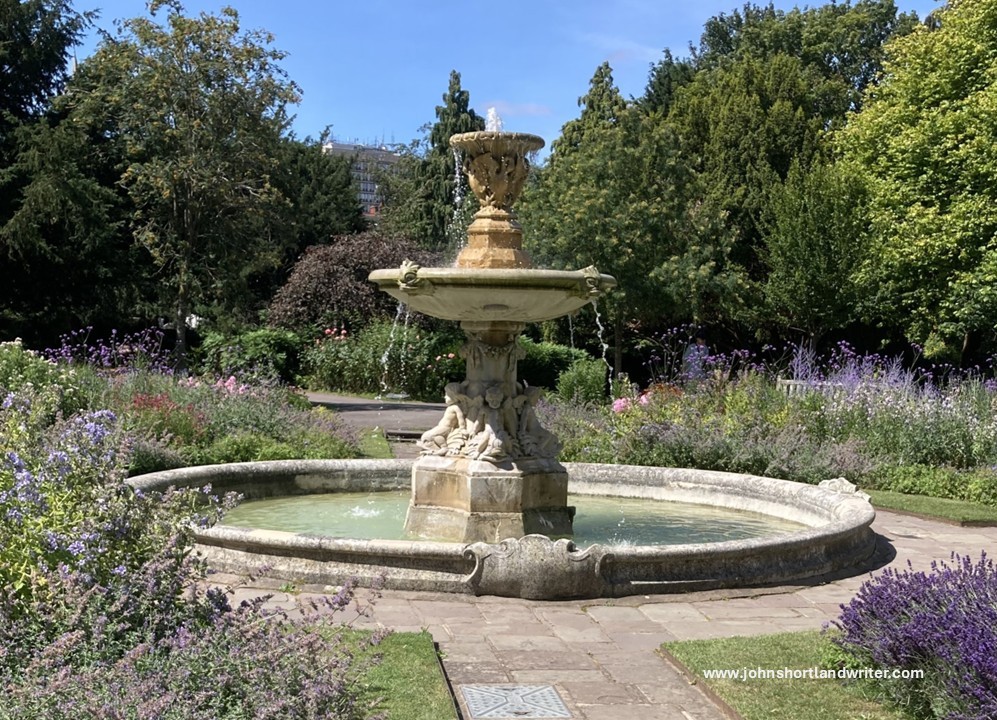
Formal gardens at Sandford Park give way to much wilder, natural areas, rich in wildlife

When I was a young man before the responsibilities of home ownership, career and all the other things in life that get in the way, I used to spend a lot of my time walking these long-distance paths.  Now that I have finally retired, I’m looking forward to spending much more time clocking up the miles although I doubt I shall be walking the 25 miles a day I would do in my youth.  Moving to a new area, although still in the Cotswolds, there is much to explore both in the town and the country.   The town with its rich history of its development as a spa in the 1800s when the fashionable and wealthy came to ‘take the waters’, the hill country and its villages or the vale of the River Severn – England’s longest river – will give me plenty of walking opportunities and plenty to write about.  I can’t wait to get going!
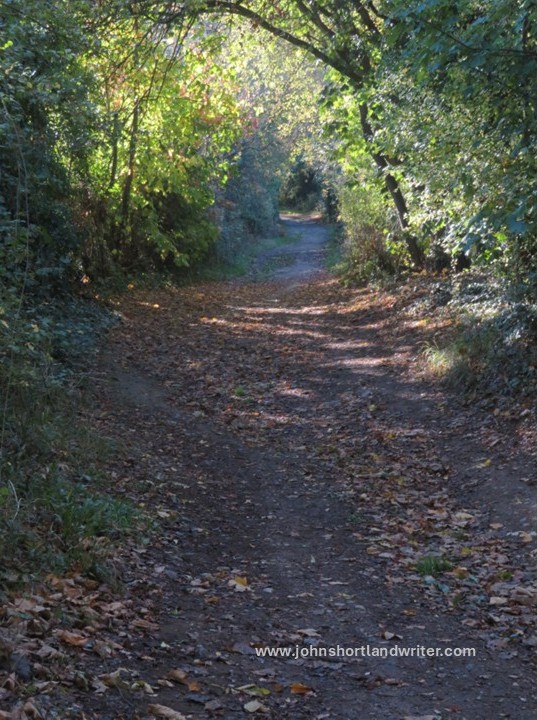
When I reached this enticing path, I just couldn’t stop myself from exploring further!
I reached the top and the Cotswold Way long-distance trail. From here it is possible to walk over 100 miles

A Sudden Escape

Sometimes it is good to plan and sometimes it is good to be spontaneous. I certainly have proved the latter in the past few days by surprising my family when announcing that I thought I would spend a couple of days away in Sidmouth. “When are you thinking of coming down?” my sister had asked. “Now,” was my response, “can you provide a bed?” I arrived a few hours later.

Sidmouth, a small, Regency resort on the south coast of Devon lies about 170 miles to the south-west of the Cotswolds. Devon, along with Somerset and Cornwall, are three English counties collectively known as “The West Country” and a prime tourist destination. A long peninsula reaching out into the Atlantic Ocean, it has many spectacular cliffs and sandy beaches and these, combined with a benign climate, make it the place where many Brits go for their summer holidays. Inland, it is a country of traditional farming, fast-flowing streams and open moorland and remains one of the few areas where it is possible to roam freely without too many restrictions. It is also home to several National Parks and long-distance footpaths.

Sidmouth (4a) copyright

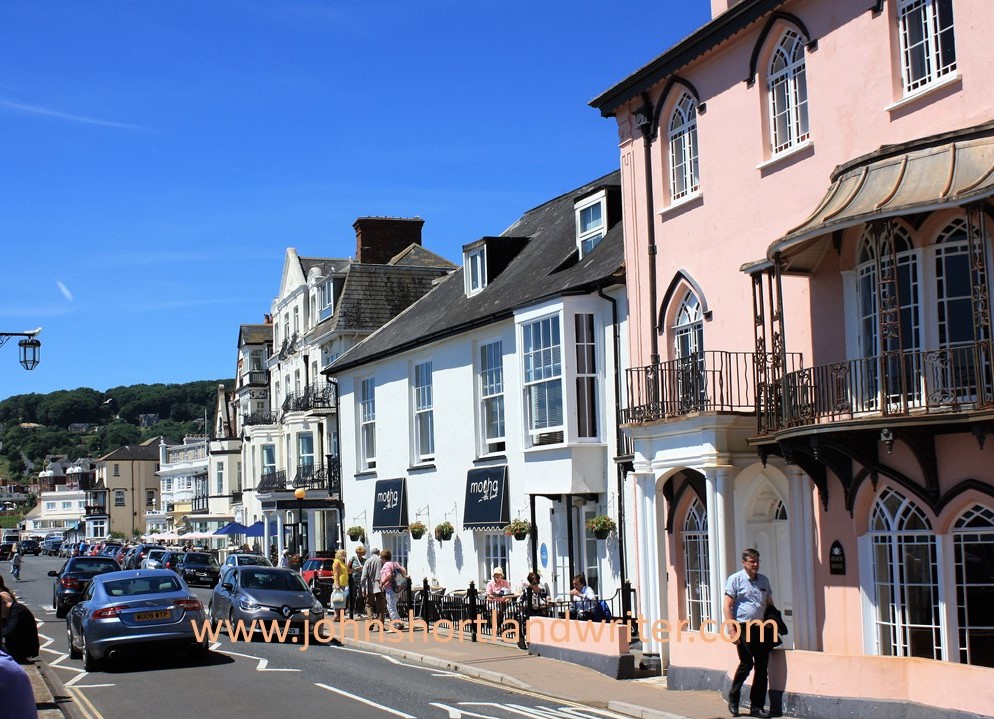
Sidmouth came to prominence during the 1800s when in 1819 the Duke of Kent came to stay with his young child, Victoria. During this stay he died yet despite this inauspicious start the small fishing village became a fashionable place to visit. Later, after Victoria ascended the throne, she gifted to the church a memorial window which in recent times has been restored, partly funded by a further gift by our present Queen. Much of old Sidmouth is now a conservation area and buildings along the Esplanade, the seafront road, are classic examples of those built during this time.

Sidmouth 15 watermark

The Esplanade

Like many coastal towns, Sidmouth is at the mercy of winter storms and with no natural sheltered harbour to protect it, when the sea batters the town it suffers, although not as badly as might be expected. However, it is the exposed sandstone cliffs that bare the brunt of these storms. Erosion is a real and constant threat and the red cliffs of Salcombe Hill are constantly crumbling. A number of houses are at serious risk of collapse in the forthcoming years. The cliffs form part of the Jurassic Coast, a World Heritage Site, renowned for its rock formations and fossils.

Sidmouth (15) watermark

Not there for much longer…

Sidmouth (9) watermark

Modern fossils!

Away from the crumbling cliff, there are two beaches. The Town Beach is of pebbles, reinstated after a 1990s storm washed it away. It is now protected by manmade rocky outcrops. At the far end of town is Jacob’s Ladder beach, so-named after the series of zig-zag wooden steps that lead down to it from the clifftop. This beach is a combination of sand and shingle. Both beaches are popular in the summer when the water is warmer; now, in February, the sea looks less inviting.

Sidmouth (1) watermark

Jacob’s Ladder Beach in midsummer

Sidmouth - waves (1) watermark

The Town Beach in February

The mild, coastal climate protects many semi-tender plants which further inland would suffer damage from frosts. Connaught Gardens, a public space that date from the 1820s, are a riot of colour during the summer months and each year a number of private gardens also open to the public under the National Gardens Scheme.  Although these can be lovely, for me the jewel in Sidmouth’s crown is the area of natural parkland known as The Byes. A 2km green corridor that follows the course of the Sid river, it has a good path network, some outstanding trees as well as wildflower meadows. It is a good place to spot wild birds such as kingfishers and dippers. Popular with residents, it seems less well-known to visitors.

Sidmouth (12) watermark

The Connaught Gardens in midsummer

Sidmouth (16) watermark

The Byes

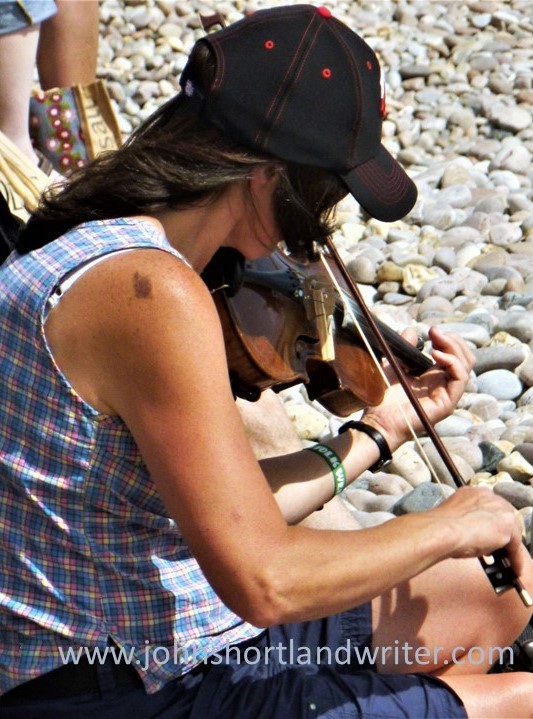
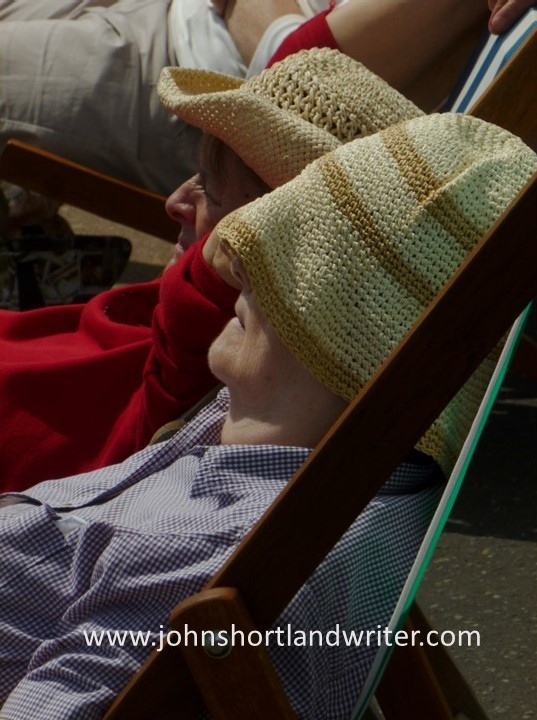
During the first week of August, at the height of the tourist season, the Sidmouth Folk Festival takes place. First held in 1955, it attracts some of the top names in the country. Apart from the listed acts, others sit around the seafront playing and busking, greatly adding to the atmosphere. When it all proves too much, there is always the opportunity to sit on a deckchair and take a nap in the summer sun.

Sidmouth Folk Week 2014 (5) copyright

Fiddling on the beach

Sidmouth (6) copyright