We Built a Pond – you can too!

Winter is an ideal time to create a pond and with it fast approaching now is the time to start planning.  Quite probably you have an idea where you want to place it but do think about its position carefully.  Falling leaves from trees is an obvious issue but some others aren’t until it is too late. Water always collects at the given lowest point; a pond perched on top of a mound will look ridiculous so check where the lowest point in your garden is and create the pond there, remodelling other sections of the garden, if need be, to tie in. bulrush-copyright

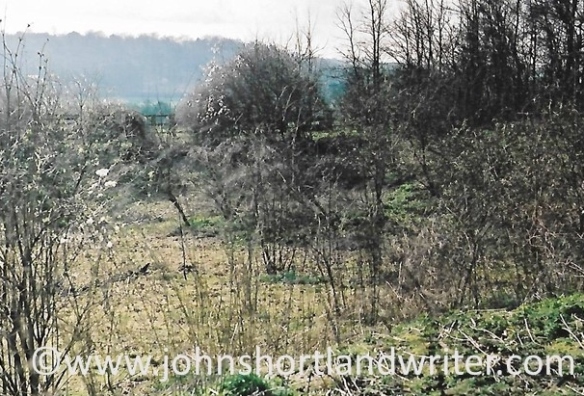
With our proposed pond site, we already had a large depression where garden rubbish and junk had been thrown for years.  Now overgrown with scrub, it needed careful clearing, including roots that may have punctured the lining.  If space is tight, the pond should have a planting shelf set several inches below water level, around at least one third of its edge; if space permits a graduated slope to the pond encourages plants to spread more naturally and, to my mind, is preferable.pond-build-1-copyright

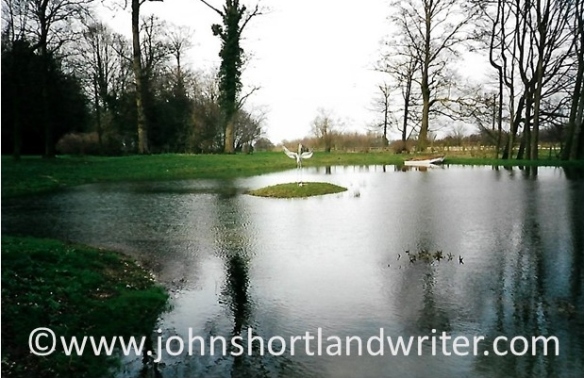
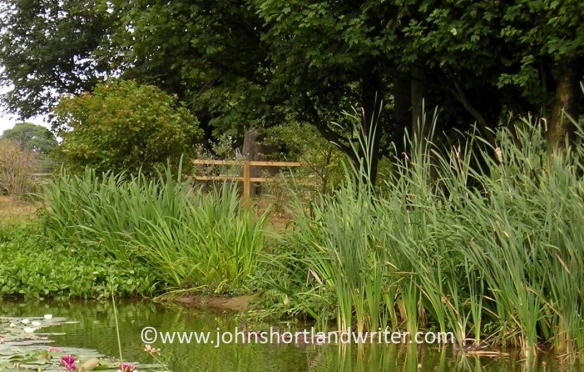
If access allows, it is sensible to hire a digger to create the pond for even a small one involves a lot of digging and moving of soil.  In the past, the mound was often left behind with a few rocks, or even worse, bits of broken concrete, to create a rockery.  This very rarely works well and it looks far better to have lawn leading down to the pond with possibly shrubs or other plants surrounding it.  Whatever the choice, it is important to have a seamless transition from water to garden.  Iris work well for this as there are varieties that will grow in shallow water and on the moist soil surrounding it; some reeds, too, will colonise the bank giving the pond that natural look.pond-build-3-copyright

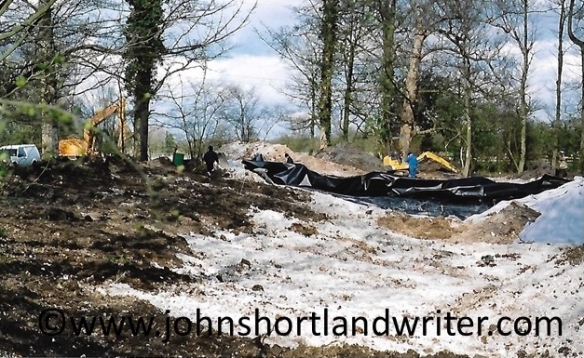
When using a lining it is important to allow a decent overhang onto dry land.  In this photo, the lining has been cut a little on the tight side – the weight of the water pulled the liner down into position; it is better to trim the liner after the pond has filled.  Once that has been done the liner can be disguised by laying turf down the sides to just below water level.  Once grown, it creates a beautifully natural appearance to the pool.pond-lining-2-copyright

pond-build-4-copyright

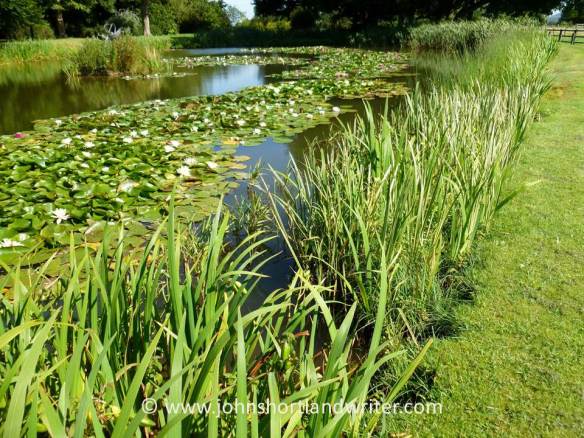
In the spring, aquatic plants can be planted.  Oxygenating plants grow below water level and apart from being essential, make good cover for fish and insects from predators.  Marginal plants grow in shallow water and are used for lining the edges of the pool.  A thick planting of these are a good safety measure if small children are likely to visit, although they should never be allowed to do so unsupervised.  Water lilies grow in different depths of water so do make sure that the variety you choose is suitable for the depth of the pond. pond-5-copyright


Ponds, however large, never need to be exceptionally deep, rarely more than a metre and can be as little as 50cms.  Smaller ponds benefit from a deeper ‘hole’ so that fish can take shelter from the coldest weather.  It is worth remembering that the larger the pond the easier it is to maintain and keep healthy.  Finally, once the plants have established, fish can be added.  For a wildlife pond, ornamental goldfish should be avoided although some of our smaller native fish can be included.

koi-copyright

Koi Carp are best kept by enthusiasts!


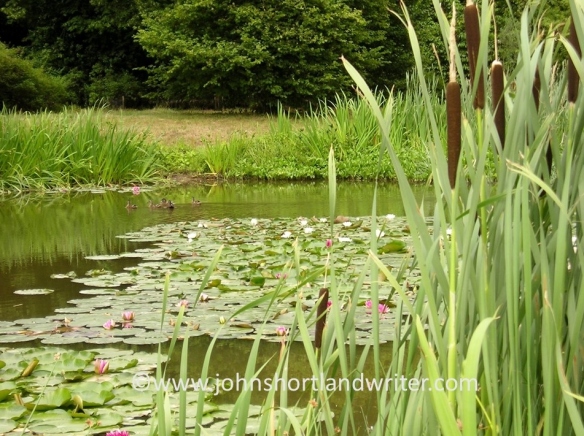
It is always a surprise at how quickly new plantings grow in a garden and the pond is no exception.  The scars of our pond had healed within months and even after just a couple of years ponds can look as if they have been there for ever.  Now twenty years later, visitors to our garden find it hard to believe that the pond isn’t natural; it abounds with wildlife and there isn’t an inch of black butyl liner to be seen.pond-2-copyright

The pond featured here was built in the large garden of the house that I claim to be my birthright (joke).  Correspondingly, the pond also had to be large but the principles of pond design and placement are the same whatever their size.

To read about the bizarre coincidences that cause me to ‘claim’ the house click on these links:

The House My Parents Built – 200 Years Ago

Reincarnation – or just Coincidence?


Castleyons – an Irish Gem

The small village of Castlelyons in Co. Cork, Ireland appeared deserted when we drove into it and as we seemed to be the only car on the road there was no fear of being run over when taking the photo below. As if to confirm its silence the main street was dominated by the ruins of an old Carmelite abbey.Castlelyons   copyrightCastlelyons (2)   copyright

Little is known of the origins of the abbey for there are few surviving written records. It is thought that it dates from the beginning of the 14th century although the existing ruins are from a hundred years later.

Castlelyons (5)   copyright

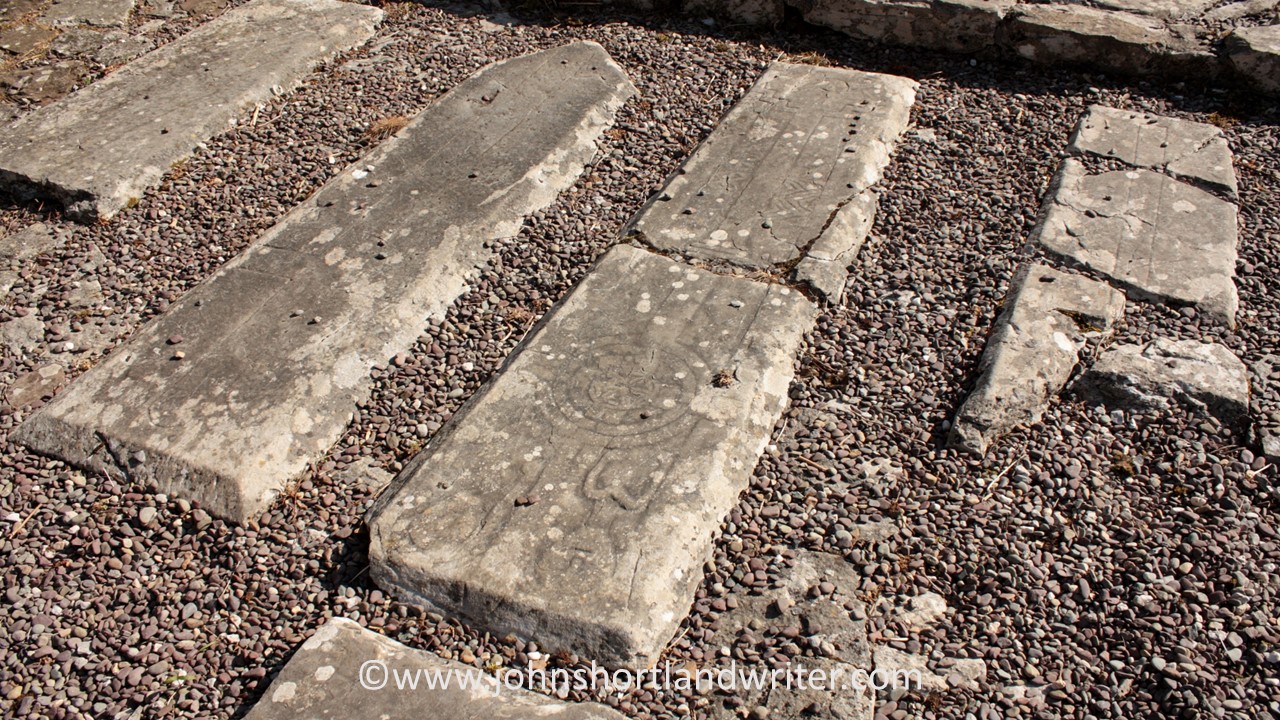
The size of the nave is huge measuring over sixty feet in length and twenty in width. It is separated from the chancel by the tower which although very ruined still has its complete spiral staircase which can be climbed – but not for the faint-hearted. The chancel which is also very large (over fifty feet in length) is where the altar would have been placed. A number of grave slabs survive some of which still have visible markings.Castlelyons (7)   copyright

Castlelyons (9)   copyright

The cloister, where the monks walked and meditated, is less complete but the turf square and parts of columns gives a sense of the place. The monastery was dissolved during the Reformation and passed into private hands. Now it is a national monument.Castlelyons (12)   copyright

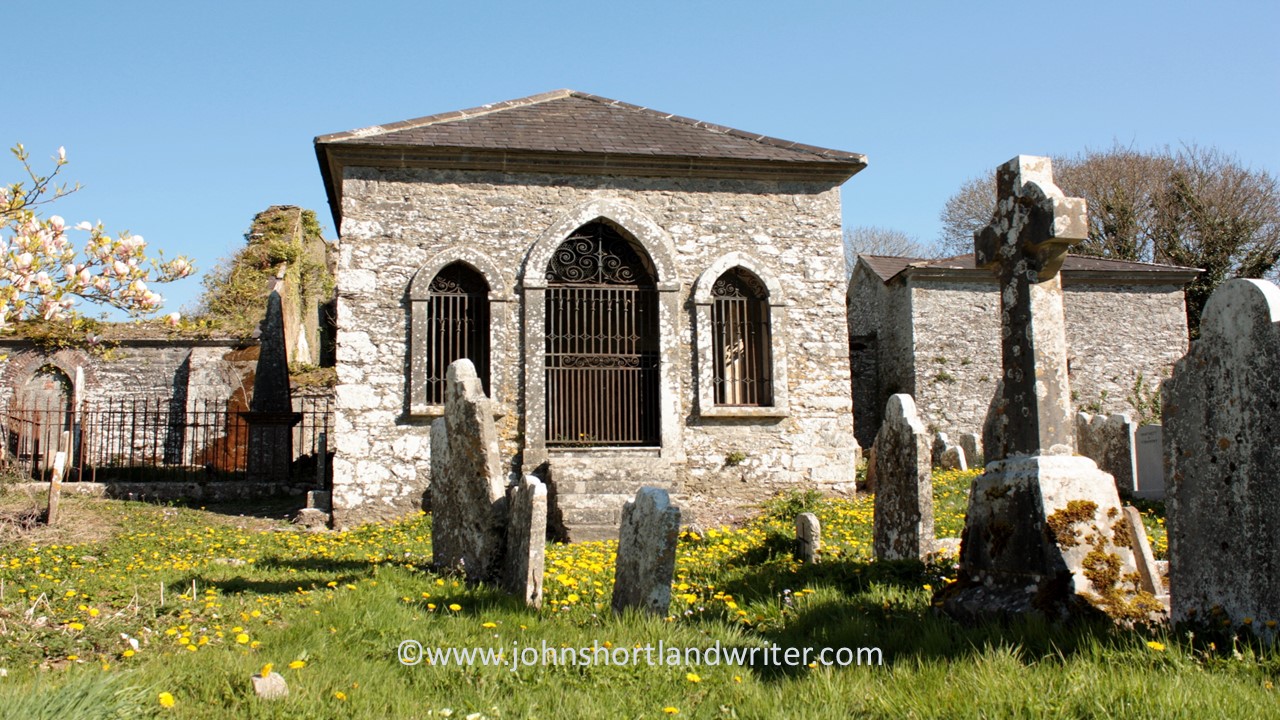
A mile or two from the abbey ruins is the Castlelyons Graveyard at Kill-St-Anne. At its centre is a mausoleum built about 1747. The interior is circular with just one marble monument to James Barry, Earl of Barrymore and carved in 1753. External steps lead to a crypt below.

Castlelyons (19)   copyright

Castlelyons (22)   copyright

Close to the first lies a second mausoleum, also built in the eighteenth century, for the Peard family, local landlords. Their earliest grave (dated 1683) lies elsewhere in the churchyard and commemorates Richard Peard, an ensign from Devonshire in England.Castlelyons (20)   copyright

The church – or more accurately churches – lie in ruins for a more recent one was built within the original. They date from the eighteenth and fourteenth centuries respectively. The remains of the bell tower and gothic arches are from the earlier date, the elaborate stone window which are in the later ruins are reputed to have belonged to the original church. Whatever the truth of this tale, the result is beautiful and romantic.Castlelyons (23)   copyright

The churchyard is a haven for wildlife and native flowers flourish beside mown paths. Beside the old cemetery is another, newer one still in use and equally well-maintained as were the old abbey ruins and the village itself. Castlelyons maybe off the beaten track but it is well worth making the effort to visit. It is rural Ireland at its very best.

Castlelyons (24)   copyright

Much information has been gleaned from information boards within the village and also the Castlelyons village website – link here. Apart from details of its history the website shows that despite its small size, the village social life is thriving.