In Praise of Bluebells

Can there be a more delightful spot to linger than a bluebell wood in spring?  The intensity of their colour when seen growing in their tens of thousands would hurt the eyes if not offset by the citrus green of the beech trees they favour growing under.  With early morning sunlight filtering through the branches to strike the woodland floor below, both leaves of beech and ‘bell shimmer and sparkle in the clear light.  As the forest warms the bluebells release their scent but not the heavy, redolent perfume that one might expect. Instead, a fragrance so soft and gentle that for a moment it seems to come from elsewhere; all too quickly it melts away, dispersed by the increasing heat.

Bluebells are one of the key indicator plants of ancient woodland, a term that refers to woodland that pre-dates AD1600, for their bulbs prefer to remain undisturbed where they can slowly establish huge colonies.   Here, in the secret valley where they grow in hedge banks, they can be used to trace the line of an equally ancient drove road for it is thought that the hedgerows and trees that line it are remnants of Wychwood Forest.  Over centuries, the boundaries of the Forest have shrunk as fields were created and the trees cleared for arable land or pasture.  By leaving the field edges untouched the early farmers saved themselves both time and labour and in doing so preserved the bluebells that give me so much pleasure each spring.  The drove road – primarily used for herding livestock long distances to market – passes our little stone-built cottage before diverting across open country.  It is still used as a public right of way.

Bluebells line the old drove road that passes my house

Unsurprisingly for a plant that has been around from time immemorial, the bluebell has numerous regional names – Common Bluebell, English Bluebell, Fairy Bell, Wild Hyacinth to name a few.  Perhaps the best has to be Granfer Giggles.  In Scotland they are known as harebells although to an Englishman harebell would be a completely different plant that grows later in the summer when the bluebells have long ended.  Even the Latin name which is supposed to prevent confusion has changed over time – it is now known as Hyacinthoides non-scripta.  I much prefer the earlier name of Endymion non-sciptus, it sounds more attractive as well as having a romantic Greek legend attached to it.  Illegal to dig up plants from the wild, bluebells are sometimes offered for sale from cultivated stock under either of these names.

Occasionally you may find a white, or even a pink bluebell

For such a well-loved plant – it has been voted England’s unofficial national flower – bluebells do not seem to feature much in poetry.  They are frequently mentioned by name but no-one, as far as I can tell, seems to have written poems specifically about the plant.  Perhaps it is because they are such a common sight and have none of the delicacy of the wild rose, the scent of the honeysuckle or the diminuity of wild thyme. Shakespeare, who seems to have written about absolutely everything (including thyme), only mentions it once: “the azur’d harebell” in Cymbeline.  The Brontë sisters both wrote of bluebells but I’m not sure they weren’t describing later flowering harebells. Emily’s description “waves in summer air”, and Ann talks of a single flower and of its trembling.  Bluebells are quite a stiff flower that don’t wave or tremble that readily whereas Campanula harebells fit the description nicely. I can’t recall even my beloved Richard Jefferies, the Victorian naturalist, waxing lyrical over them as he did over so many other things.  I may be wrong about this for I can hardly call myself a Jefferies’ scholar, more an enthusiast. However, Cicely Mary Baker created a delightful illustration of the flower in her set of Flower Fairies published in 1923 where she describes the bluebell as the king of flowers.

The less-common Harebell – Campanula rotundifolia
It flowers later in the summer and in more open places

It is to the Georgians that I have turned to illustrate our love of bluebells for I have found frequent references to them in old newspapers and periodicals not just in published poetry but also in their fashions.  This description of the sumptuous gown worn by the Princess of Wales when attending the King’s Birthday in 1795 is worth reproducing here: “A gown of superb, embroidered crepe imitating the rays of the sun and intertwined with embroidered white lilies.  Over which a cape of Venetian net embroidered with laurels and Diana’s (presumably the Goddess) crescent”.  Finally, there was another over-cape “embroidered with bluebells (yes!) and held in place by rich cords and tassels”.  As if this wasn’t splendid enough there was “a long train of silver gauze bordered in purple and silver”.  Having spent twenty years in the world of fashion (before I switched careers to horticulture) this has sent me into overdrive!  Sadly, I haven’t found any illustrations for this ensemble but I do have photos of the ‘draft’ for equally exquisite embroidery designed by Norman Hartnell for a robe for Queen Elizabeth II.

Embroidery design by Norman Hartnell for Queen Elizabeth II

Even earlier, in 1786, Mrs Charlotte Smith was publishing her sonnets.  A remarkable woman for the age, she left an unhappy and violent marriage and campaigned for women’s rights and the abolition of slavery.  She wrote fiction and poetry to financially support herself and her children.  This sonnet reminds me so much of my youth where I roamed the bluebell beechwoods of the Chiltern Hills, for which they are renowned.

“Ah, Hills belov’d!  where once a happy child,
Your beechen shades, your turf, your flowers among,
I wove your bluebells into garlands wild,
And woke your echoes with my artless song.
Ah! Hills, belov’d! your turf, your flowers remain;
But can they peace to this fad’ breast restore?
For one poor moment soothe the sense of pain,
And teach a breaking heart to throb no more?

I’m glad to say that my heart is no longer breaking so perhaps the bluebells worked their magic!

A very old photo (hence the strange colour!) of me and my two deerhounds in a Chilterns beechwood at bluebell time

.
.
.

2021: A Year in Review – part 1

With restrictions on movement and socialising for much of the year, 2021 was definitely the year to remember times past, be it visits to favourite haunts or thinking about friends and family. As it was in the real world so it was in the blogging world.

In January my memories took me across the sea to Ireland and a visit to Clonegal, in Co. Carlow. Ireland is a beautiful country with an ancient history. The visit to Huntington Castle, very much still a family home, was very worthwhile as the building itself was interesting, and the gardens, perhaps because they weren’t ornate, relaxing to walk around. A visit to the cellars is a must for it is now a Temple dedicated to Isis. The Fellowship of Isis, started by members of the family, was recognised as a world faith in 1993. I found the ornate decoration rather too theatrical for my taste, reminding me of a scene from an Agatha Christie novel. Take a look at the post by clicking on the link here and tell me what you think.

Huntington Castle in the south of |reland

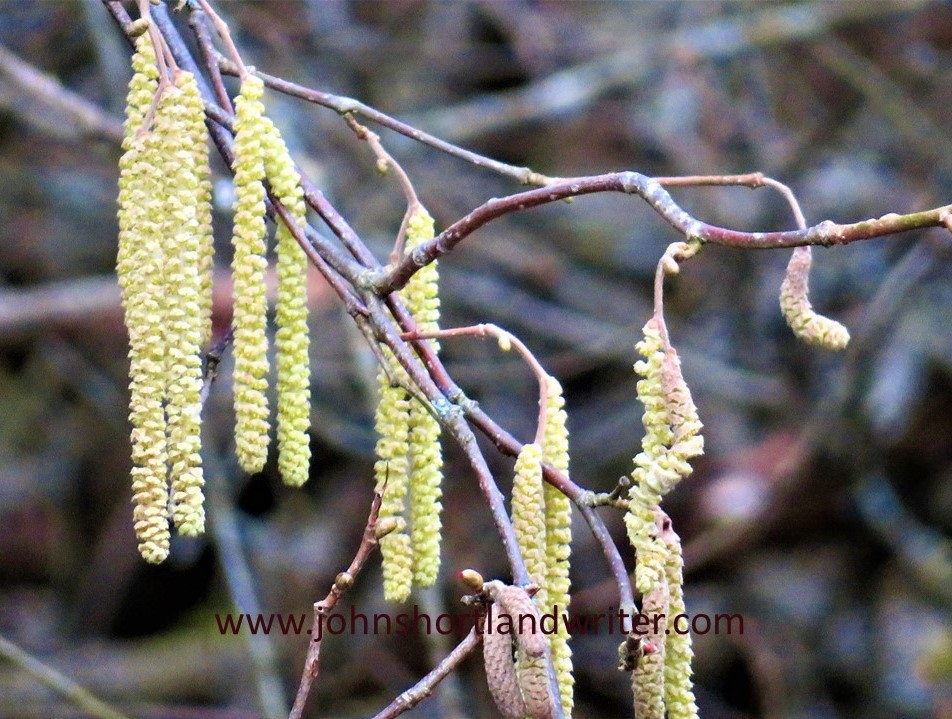
By February the earliest signs of the forthcoming spring are beginning to show. In the garden snowdrops and aconites are in full flower; in favoured spots early daffodils are starting to bloom. In the hedgerows hazel catkins hang in clusters shedding clouds of their golden pollen in the slightest breeze. Hazel, a native shrub, is also a useful one to grow in the garden. It’s pliable stems can be used in a myriad of ways – cut as pea-sticks, or growing into intriguing living tunnels. February’s blog post concentrated on these uses and looked at the ancient art of coppicing – a method of extending the life of the plant and providing plentiful cover for wild birds, animals and flowers. Described as an art, it is however, a very simple technique. Click on the link here to find out more.

Catkins or Lamb’s Tails – harbingers of Spring

International Women’s Day occurs in March and I focused on the life of Lettice Fisher, the founder of the National Council for the Unmarried Mother & Child in 1918. Later, the charity changed its name to Gingerbread. A suffragette and economist, Lettice was also a cousin of my father and so family history came to the fore in this post (link here). Later in the year, the focus turned to her husband, H A L Fisher and his story but for March Lettice was the rightful star of the show.

Lettice Fisher, an ancestral cousin

In April, I was able to visit friends for a long weekend, a real treat after all the restrictions. I took the opportunity to go for a long walk in beautiful countryside. Rutland is England’s smallest county and was also the home of the poverty-stricken ‘peasant poet’ John Clare born in 1793. The walk took me past the old lime kiln where he worked and the village where he was raised – his poem The Ruins of Pickworth can be read in the blog post (link here) and there are lots of photos of the ruins as well as views along the paths and byways I walked. Several hours later, when I returned to my friend’s home, I was especially thrilled to have seen a group of wild fallow deer which included amongst them, a rare white hart,

The ruins at Pickworth were familiar to John Clare, the Peasant Poet

By May, spring is well and truly established and plants in the garden are flourishing. Everything is growing so fast that it can become overwhelming and with so many tasks to carry out, early supporting with canes and twigs can easily be forgotten until it is too late. Although this can’t be done to every tall plant in the garden, the Chelsea Chop is a drastic but very successful method of treating herbaceous plants so that they don’t need staking at all. The biggest hurdle to overcome with this technique is finding the courage to actually do it! By clicking on the link here you will find a step-by-step guide. Even if you don’t do it to many plants, I would highly recommend that you do it to the Ice Plant, Sedum spectabile which always collapses just as it comes into flower – once you have, you’ll wonder why you’ve never done it before.

Sedum, the Ice Plant – the perfect candidate for the Chelsea Chop

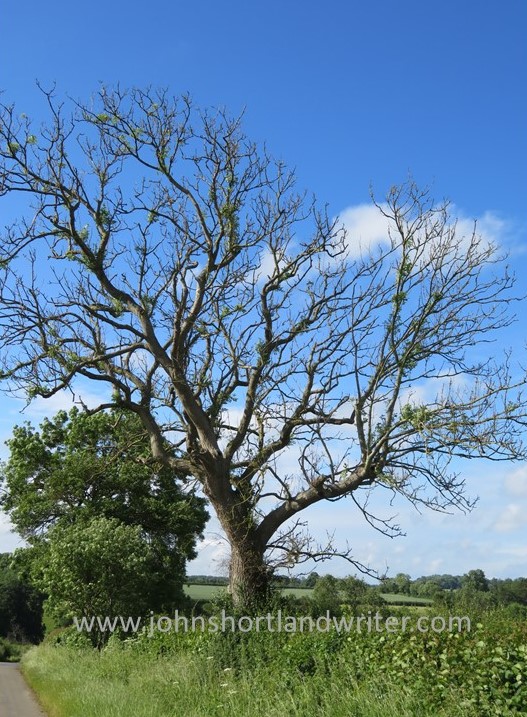
For June, it was back out into the countryside to check the state of a venerable old ash tree. Ash Dieback is a serious, recently imported disease that threatens to eradicate one of the most important trees in the British landscape. Younger trees in our parts of the Cotswolds are already showing signs of it, some much more severely than others. The farm where we keep our horses has one ancient tree that has stood sentinel over the adjoining fields for centuries (lots of pictures on the link here). It’s trunk is hollow and owls and bats roost within it; it must have seen generations of them leave its shelter at night. Likewise, it must have sheltered in the day many a farm labourer seeking shade during hot, summer harvests. It will be a sad day when it dies and we just have to hope that it may show some resistance to this new disease. I, all too well, remember as a child when a similar fate overtook elm trees and changed the English landscape forever. Let’s pray that it doesn’t come to that.

We ride past an ancient ash tree most days

If it sounds as if this review is ending on a sad note, don’t despair – July to December will be following shortly and there’s plenty of posts on an upbeat note there. My family’s fascinating exploits feature in some of them. Covid restrictions have given me plenty of time to root out the old stories of them – to be honest, I never knew what an interesting and, sometimes, brave bunch they are!!

Ash to Ashes?

On the farm where we keep our horses there is a venerable, old ash tree. ‘So what?’, you might ask, for around much of Britain ash trees are two-a-penny; in fact, their self-sown seedlings can be quite a nuisance. Well, firstly, this particular ash is very special.

Growing halfway along a scrappy old hedgerow dividing two fields, the ash has seen generations of farmers, farm workers and, perhaps, lovers all sheltering from the sun and the rain. It would seem the obvious place to rest when taking a break from toil in the heat of summer harvest and haymaking. Perfect, when its branches spread widely to cast shade but not when the trunk stands bare, its branches freshly pollarded. Years of pollarding have created a relatively short trunk full of cracks and fissures, the home of bats, owls and the occasional nesting kestrel. Its branches show the characteristic shape of old, abandoned pollards.

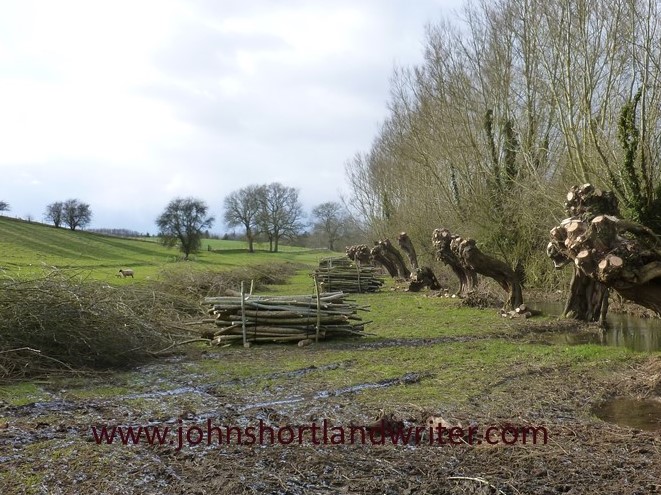
Pollarding, the removal of branches, is an ancient country method of producing straight poles. These would be used in many different ways from sheep hurdles and fencing, for building material and posts, to pegs and walking sticks. I have quite a collection of the latter, my favourite being a five-foot ash stave that I cut as a sixteen year old. Over 50 years of continual use it has become as smooth and as polished as if it had been carefully honed.

Willow coppicing. The branches, known as cordwood, stacked ready for transporting

Pollarding is carried out every few years, the time period varying with the timber size requirement and the rate of growth. Contrary to what one might expect from such drastic treatment, pollarded trees have a much greater lifespan than those left unpruned. Or they did have.

Ash Dieback disease, Chalara, was first seen in the UK in early 2012 on trees imported from Europe. A total ban on importing new trees came into force later that year but, by then, the disease had begun to spread. A classic case of ‘too little, too late’ for Chalara had been known on the Continent since the early 1990s. Now it is to be found in many regions of the British Isles. Here, in the Cotswolds, it has been slow to show its face but this year, the effects are noticeable with dead and dying trees standing alongside others that appear not to have been infected.

Stunted & sparse leaf growth on diseased ash trees
A severely infected ash tree with a healthy tree behind

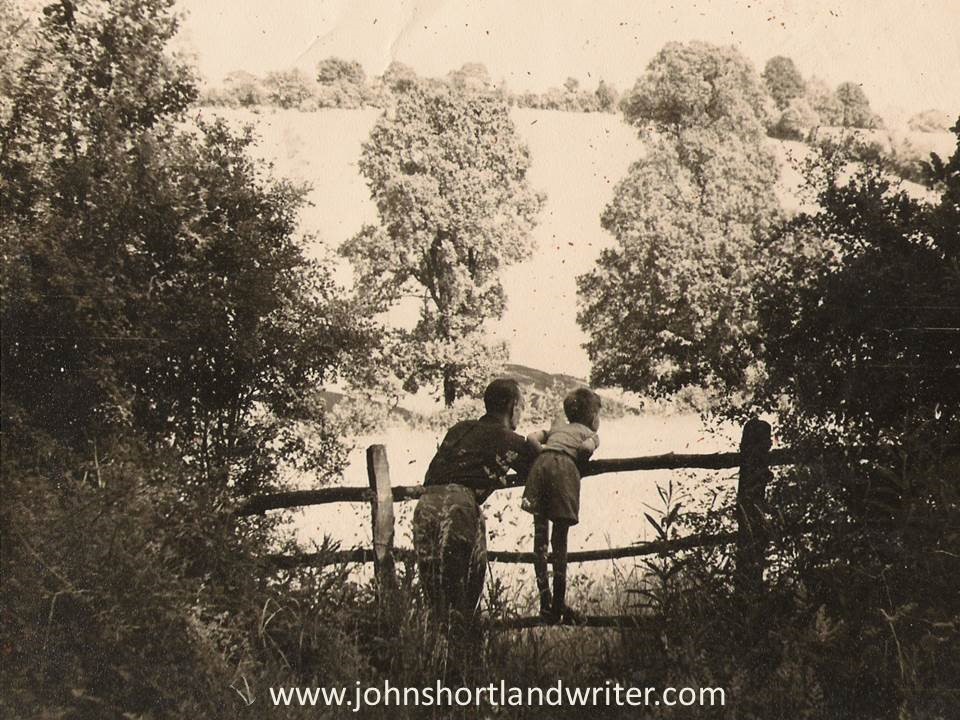
It is thought that probably 90% of all ash trees will succumb to the disease, the loss of such a great number dramatically changing the appearance of the countryside. As a boy I lived in a road that was lined with elm trees. Like the ash, those in our garden my father regularly pollarded and I would be sent up to climb onto the lighter branches to saw them off. No health and safety issues in those days! A favourite old photo of mine is the one below showing my father and I in what now looks an idyllic rural scene. It also shows how old elm trees were once the dominant feature of English lowland landscapes; all gone due to the ravages of Dutch Elm Disease that arrived in the 1970s. It is hoped that by not clear-felling the ash, as they did with the elm, disease resistant trees may be found. If not, once again our treescape will change just as dramatically.

My father & me with elm trees dominating the landscape c.1956

Ash, Fraxinus excelsior, is more often allowed to grow unchecked to its full glory. The pinnate leaves and wide-spreading branches create a light shade under which many of our native flowers thrive. It is also home to bats, birds and numerous insects including six of our rarest beetles and flies. It is especially associated with the scarce Brown Hairstreak butterfly (source: Devon Wildlife Trust) – only time will tell whether this butterflies breeding success will decline even more.

A healthy ash tree in spring

In the spring, before the leaves open, the ash bursts into flower, all too often overlooked. Make a note to take a closer look next spring, for it may be one of the last chances you have before, like the elm, it too fades into history.

Ash flowers in early spring before the leaves open

If you have a favourite ash tree in your own area why not photograph and upload it onto a nature recording website such as iRecord? That way, you will be preserving it forever and help to create an historic record for the future. Perhaps one day there will be disease resistance and ‘your’ tree can be replaced. You can find the link here.

Having a Blackthorn Winter?


The first trees are beginning to bloom in the Cotswolds; in a few days’ they will be billowing clouds of white blossom.  My father, a countryman through and through, would always mark the occasion by repeating the old English warning of a coming “blackthorn winter” and “the cold blow” ahead.  But was he correct?

h-about-1964-2-copyright

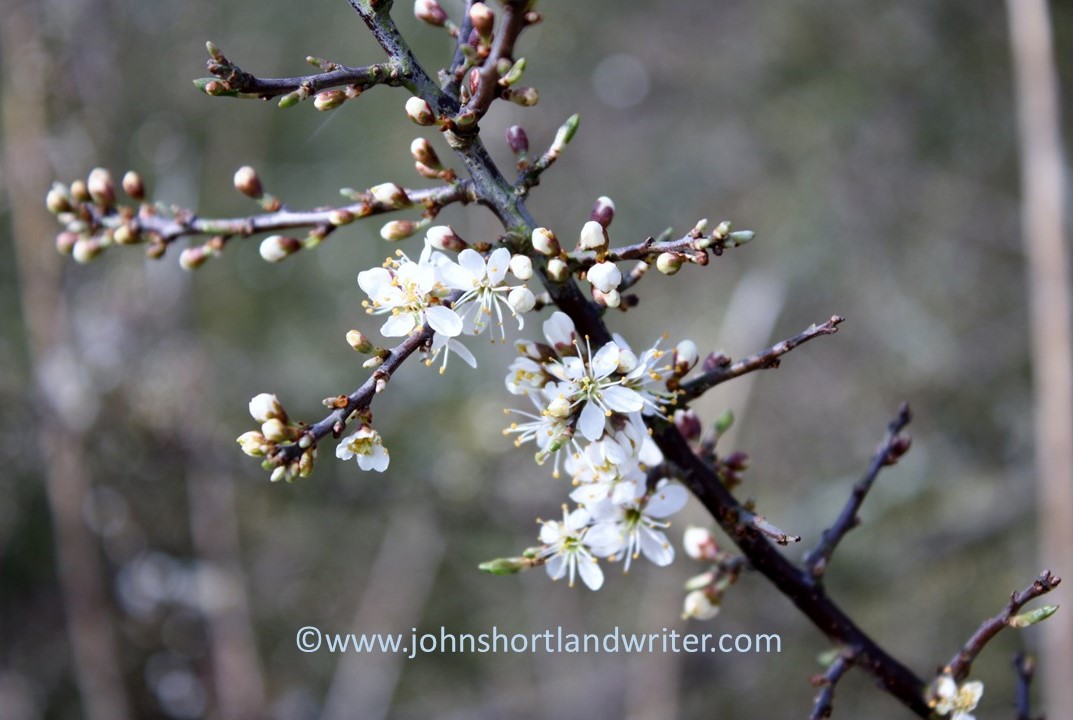
The blackthorn (Prunus spinosa), also commonly known as sloe, is frequently used as a hedging plant where its tangled and viciously thorny branches make an impenetrable, stock-proof barrier.  When left untrimmed it grows into a small tree.blackthorn-blossoms-crowd-an-old-cotswold-green-lane-copyright

I haven’t found a referral to the earliest date for a blackthorn winter but it almost certainly goes back centuries for the blackthorn is a ‘magick’ tree and often used in witchcraft.  But can it really dictate the weather?  Common sense says ‘no’ unless, of course you believe in magick.

blackthorn-3-copyright

Pretty flowers hide vicious thorns

There appears to be a problem with my father’s and others belief in the blackthorn winter.  The tree that blooms first and so often referred to is not blackthorn but the cherry plum, another Prunus – Prunus cerasifera.  Sometimes known as the Myrobalan Plum, it is also found in hedgerows and when allowed to grow to full height is often covered in red or golden cherry-sized, edible fruits.  It was introduced from southern Europe about three hundred years ago.

cherry-plum-copyright

Prunus cerasifera, the Cherry or Myrobalan Plum

So, blackthorn or cherry plum?  For the time being we will be having a “cherry plum winter”.  The sloe will blossom in about three weeks’ time when we will probably have the blackthorn winter too for one thing is proven: in England, we are far more likely to have a spell of wintry weather now than we ever are in December.  Either way, let us hope that it is a good year for both trees for then we can look forward to cherry plum pies washed down with a nice glass of sloe gin.

cherry-plums-copyright

Cherry Plums

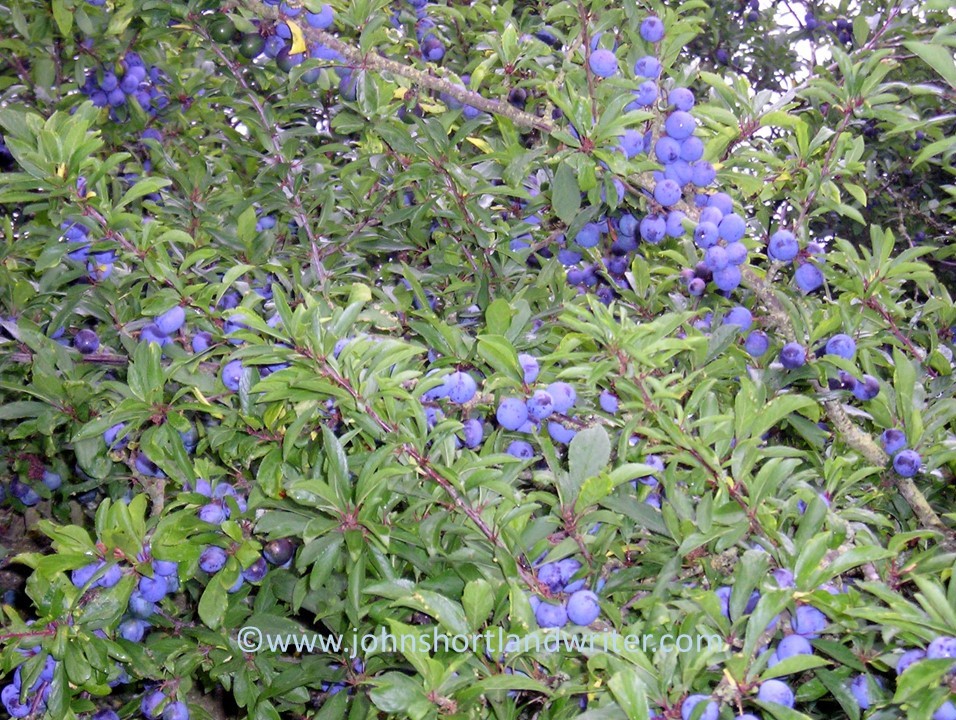
blackthorn-sloes-copyright

Sloe Berries

Footnote:  according to the British Meteorological Office, the term “blackthorn winter” originated in the Thames Valley, the birthplace of my father and where I was brought up.  It will be interesting to know many of you use the term and where in the world you are located.