Mentors – part 2

In my earlier post on mentors, I asked the question “what makes someone a mentor” and do they realise they have actually become one. Of course, the answer will vary for there are many reasons why people do it, and equally a number of reasons why someone needs it.  My experience is that it is only with hindsight that I realise I had four mentors in my life and all would be amused at my describing them as such. 

Lorna Dick French, Cyril Pamela Heber Percy

In part one I told of how I met, quite by chance, Dick and Lorna French who had a remote hill farm on Exmoor, a National Park in England’s West Country.  I was aged sixteen and, despite our age differences (essential for mentoring) a close friendship developed that lasted until their deaths many years later. [Their story can be found here] Fifteen years after that first meeting, I met another couple, Cyril and Pamela Heber Percy, and although of a very different background from Lorna and Dick, they too took on the role of mentor.

Woodlands Cottage, the Heber Percy’s home

In 1983 I had moved house to a small village in the Chilterns.  Although I consider myself a ‘Chilterns man’ I had always lived at their foot, first by the River Thames and, later, by the steep escarpment to the west.  Now I was living in one of the highest villages, surrounded by wonderful bluebell woods and prone to quite different weather than seemingly, everywhere else.  Like many hilltop villages it was a straggly affair, a mile long but with the houses scattered first one side of the road and then the other.   Our house sat opposite the common – a wide, open piece of land although by us it had been invaded by bracken and hazel scrub where Dormice could be seen climbing amongst the branches.   Wild cherries and raspberries also grew there and with a small pond that had once been the village’s only source of drinking water, it was very quiet and very lovely.     

There was a small pond amongst the cherry trees, once the village water supply
The village was surrounded by wonderful beechwoods awash with bluebells each spring

Soon after our arrival, there had been a knock on the door. Standing on the doorstep was an elderly gentleman, very upright and with a clipped moustache he looked every part the retired army colonel which he was.  With no introduction he barked, “what religion are you?”   Before I could answer, he continued, “Of no matter, we need bell ringers.  I’ll see you at practice tomorrow, 7pm.”  Of course, I didn’t go!  Our next meeting was one evening when out walking.    Hearing a lot of shouting and cursing I could see a man of similar age to me having difficulty with ‘boxing’ (loading) his horse to transport it back home.  No matter how he tried the horse refused to walk up the ramp and into the lorry.  As I drew level, the Colonel holding a whisky in his hand also appeared ready to give advice. The young man looked very dismissive at his suggestions but that changed after the Colonel took hold of the reins, jumped onto the horse’s back with an agility that belied his years and cantered away before turning and riding it straight into the lorry.  “Don’t stand any nonsense in future” was all he said as he tied the horse securely.  Turning to me, he said, “must be time for another whisky.”    Both the rider and I had learnt a valuable lesson that evening – never judge someone’s abilities by their age.

Boxing – or in this case, unboxing – a horse

The Colonel and I spent the rest of that evening in his home drinking whisky and discussing all manner of things, Pamela, his wife, joining us.  Sitting back in a comfortable armchair, I took in my surroundings, my eyes landing on a small photograph sitting on a shelf.  It was of two army officers on duty outside Buckingham Palace.   Cyril noticed my interest immediately – another thing I was to discover: he was exceptionally alert and noticed everything.  He explained that the photo had been taken many years earlier and featured in the national newspapers.  It was of him and his brother, one in the Welsh Guards the other in the Grenadier Guards acting as Colour Bearers at the Changing of Guards ceremony, the first time that two brothers had had that honour.

Changing of the Guard at Buckingham Palace 1927 [copyright British Newspaper Archive]

Over the years that followed, Cyril would tell me of his military career, of his escorting Queen Wilhelmina of the Netherlands under enemy fire during her evacuation, of dinners in England at the Palace with the King. (Pamela complained of how tedious all the formalities were!).  Of even greater interest was to learn of his Edwardian upbringing for he had been raised at Hodnet Hall, a large country estate in Shropshire.  He lived on the top floor in the nursery and each evening Nanny would bring him down to say goodnight to his parents where he would recite a poem and dutifully kiss his mother and shake his father’s hand.  Surrounded by liveried footman and other house staff, he preferred the informal company of the gardeners and gamekeepers.  Through them he developed a deep love for the natural world and keen observational skills which he passed onto me.  Walking together, he would point to a barely visible gap in a hedge and ask me if a hare, fox, badger or deer had made it.  Of course, I got it wrong but he persevered until I was able to tell the difference.

Hodnet Hall, Cyril Heber Percy’s childhood home
The Colonel taught me to recognise the different paths wild animals make (in this case, a badger)

During this time I was still working indoors in the retail fashions business but he taught me a lot about gardening too for the gardens at Hodnet were considered one of the finest in Europe.  You have to think big, he would say, immediately followed by “and you have to think small”.  To prove the point he would get me to lie down staring up at the undersides of large leaved plants, and then, on my knees, examine the different shades of green that could be found in the tiny leaves of wild thyme.  To get me to understand the wonders of the natural world he would say, “think like a child but always act like an adult”.  Years later, in my present career, I remember this advice and concentrate on elements of surprise as well as leaf texture when designing gardens.

When you look up at a plant you see a quite different world….

Pamela, also would tell me stories of her life.  Born into Irish aristocracy she had a very different upbringing to her husbands for there was the insecurity that the fight for Irish independence would bring.  There were stories of hiding in secret passageways within the house ready to escape if a violent attack took place, Fortunately, this never happened, perhaps because her mother took her social duties very seriously and would visit the poor and the sick to make sure that they never went hungry.  Pamela would accompany her mother on these visits and so from an early age saw how frugally ‘ordinary’ people lived.  It also gave her the ability to empathise with people from all walks of life and to treat them as equals.

Pamela Heber Percy

Over the years, the Heber Percy’s taught me many things, one of which was to cast a fly.  Both the Colonel and Pamela were expert salmon and trout fishers.  When I mentioned how much I enjoyed spinning for pike, Cyril had shaken his head and joked that it was very poor sport.  Venturing out onto the lawn he pointed to a fallen leaf – “that is your trout” – and he patiently watched and corrected me as I tried to get the line to drop close-by,  After I had mastered that he made life more difficult by pointing to leaves under low hanging branches and from there, to leaves floating on the surface of the swimming pool.  Unaware at the time, they gave me lessons in accuracy and perseverance as well as a useful fishing skill.

The Colonel: Cyril Heber Percy

It was a sad day when I heard that the Colonel had died.  He was buried, with full military honours at Hodnet, his childhood home.  We had always planned to visit the house and gardens together one day and now we were, although not in the way we had planned.  I felt surprise, pride and honour when I was ushered to the front of the church to sit with the family.  As the Last Post was being played from the top of the church tower I felt my lower lip tremble only for it to be controlled by hearing the Colonel’s voice whispering, “not very British!”.  Soon after his death, Pamela moved house and although not too far away, I saw less of her, and not many years after she also died.  I had lost two very dear and good friends.

Stained glass window at St Luke, Hodnet

And one final thought – I did learn how to ring the church bells!

Have you had a mentor or mentored someone?  What does it take for someone to become a mentor?  Our parents have probably the greatest influence on our lives so why does a mentor s role take on such importance? Let’s hear your story either in the comments below or, if you prefer, by using the Get in Touch tab at the top of this page.  Thanks to Diane Highton for posing the question that triggered this blog!

A Good Walk Home

Both my partner and I like walking but, more often than not, we walk alone.  Somehow it just works out like that and there is no doubt about it, that when you walk without company you do see and hear so much more.  It isn’t that we chatter away non-stop – we’ve been together for  far too long for that!!  It’s just that with no-one to speak to, or alongside, one becomes far more aware of all that’s around you.  And with only the sound from one pair of walking boots the wild creatures are less aware or concerned of your presence.

Walking quietly it’s possible to get quite close to wildlife

Usually, from necessity, our walks are circular – either back to the car or back to the house if we’ve started from home.  Recently I cadged a lift to Duns Tew, just outside the Cotswolds but still in Oxfordshire and not that far from home and the secret valley.  The village is an interesting mix of houses and makes use of their local ironstone as well as the Cotswold limestone.  I find it fascinating knowing that I live on the edge of two quite different rock formations, 0ne literally as hard as iron and the other, soft and easily worked.  The photo below shows the pretty church built of yellow ironstone and banded with paler limestone – a familiar pattern in the locality.

The thousand year-old Church of St Mary Magdalen, Duns Tew

The houses vary in style and age as well as building materials.  Some have thatched roofs; others slate and some stone tiles.  The traditional village pub has a stone tile roof made from Cotswold stone split into thin tiles.  Just to confuse the unknowing, these tiles are known locally as slates even though they are not made of slate!  The craft of making these roof tiles is centuries old – they have even been found by archaeologists when excavating Roman villas (of which there are quite a few in the Cotswolds) which means the manufacture of them has remained unchanged for the best part of two thousand years.  The pub also has a drystone garden wall, also made from Cotswold stone for which it is so ideal and makes such a memorable feature of the Cotswold Hills.

Village houses: contrasting style and stonework. The thatched house was built in the early 1600s. There are a number of these old signposts still standing locally
The village pub: this dates from the late 1600s. Note the stone ‘slate’ roof

One of the great things about walking in England is that we have a huge network of public footpaths, many of which date back to pre-history.  Now that I realise (thanks to my overseas readers) that being able to walk across privately-owned land by right is almost unique I intend to write specifically about them at a later date.  Suffice to say here, is that it is possible to walk from one end of the country to the other over thousands of miles of paths that must not, by ancient law, be obstructed.  This path is beautifully maintained by the owner. Just outside the village, partly hidden in undergrowth, were the remains of old pony carts.

A well-maintained public right of way that is also a driveway to the owner’s house
Half-hidden at the back of a semi-derelict shed

The path opened onto cornfields, the wheat harvested and the remaining stubble giving a real autumnal look to the countryside.  The hedgerow is also offering its autumnal fruits for the picking – crab apples, elderberries and blackberries; the sloes although looking good won’t be ready to collect until after the first frosts.  The squirrels have taken all the hazelnuts (you have to be quick to get them before they do – but already the embryo catkins, the male flowers, are beginning to appear.  It will be early February before they show the familiar ‘lamb’s tails’ that release clouds of yellow pollen with the slightest breeze.

The path is now gras covered passes ‘twixt hedgerow and cornfield
Crab apples, blackberries, elderberries. Tiny catkins are just forming amongst the blackberries

Although the path, now a wider track, looks obstructed here, the farmer/landowner has to leave the gate unlocked so that people on foot or on horseback can pass.  Crossing the lane it returns to being a path, this time skirting a large wood.  Now hidden by high hedgerows in the spring when the leaves are all bare, the woodland floor is carpeted with bluebells.  In the centre of the field is a stand of mature oaks.  Why were they left there?  For me, they always have a mystical look about them; stepping into their midst the atmosphere changes as if its centuries old story is being told to those that might listen.  Perhaps it’s just my imagination but the fancy is palpable.

As this is a public right of way, one of the gates must be kept unlocked by law
The copse in the middle of the fieldwas it once a sacred site?

Once again the path changes character.  Now a track crossing a small stream, the movement of a young coot searching for food catches my eye and we watch one another for a while before it decides that food is far more important than me.  At such close range I see it snatch a small water beetle before it disappears into the undergrowth.  For a while the path becomes woodland again and then opens up onto a concrete track.  The concrete is all that remains of a WW2 airfield, far inland to be out of the range of German bombers.  I stop to listen and am met with silence.  How different the scene would have been eighty years ago.

The baby coot carried on about its business…
The old wartime concrete paths make easy walking

Finally back home.  Being an Englishman through and through (if you ignore the foreign bits of me!) I sit on the old stone bench in the garden with a refreshing cup of tea and lean back against the walls of our own stone-built house built 170 years ago.  Looking out beyond the garden I can’t help feeling how privileged I am to be seeing the best views of the whole walk!

Not too bad a view from home!

.

.

.

A Walk by Stonehenge – part 1

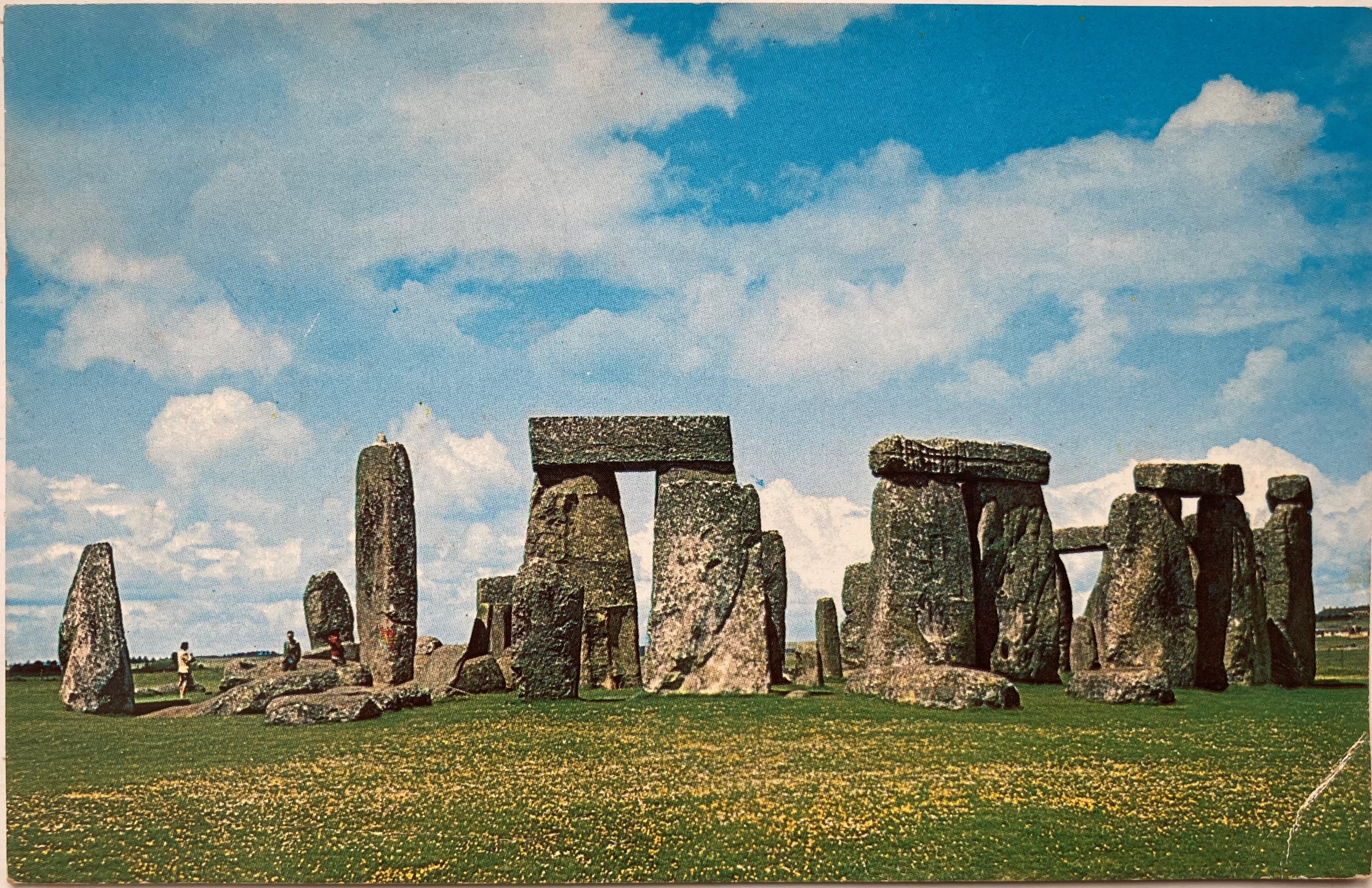
It is many years since I last visited Stonehenge, the prehistoric standing stones so closely attuned to the midsummer solstice.  Renowned throughout the world, it has been listed as an UNESCO World Heritage Site since 1986.  With fame comes numerous issues, not least how to cope with the estimated one million visitors that come to see them each year.  To prevent damage to the stones through soil erosion and, surprisingly, physical damage through the chipping off of ‘mementos’, the stones are now cordoned off.  This fencing is removed to allow access at the time of the midsummer solstice, a time when hundreds of people wait through the night for the midsummer sun to rise directly between the stones.  The image below is of a postcard that my great-aunt sent me in 1963 when the stones were much less frequently visited and reminds me of those early years when I used to play amongst them.

Stonehenge was far less visited back in the 1960s!

The Stonehenge World Heritage Site covers an area that includes other Neolithic standing stones close by.  A few miles away, and unlike Stonehenge, a place where you can walk amongst the stones every day of the year, is Avebury.  This circle is huge and considerably older than Stonehenge: flint tools dating back 9000 years show that early man was passing that way 4000 years before Stonehenge was built.  Avebury is the place to visit if you want to get close enough to touch the stones and it is also completely free to visit.  To visit Stonehenge can be quite costly although there is another way you can see the stones (legally) without paying if you’re prepared to walk – see below.

Avebury Stone Circle – part of the Stonehenge World Heritage Site

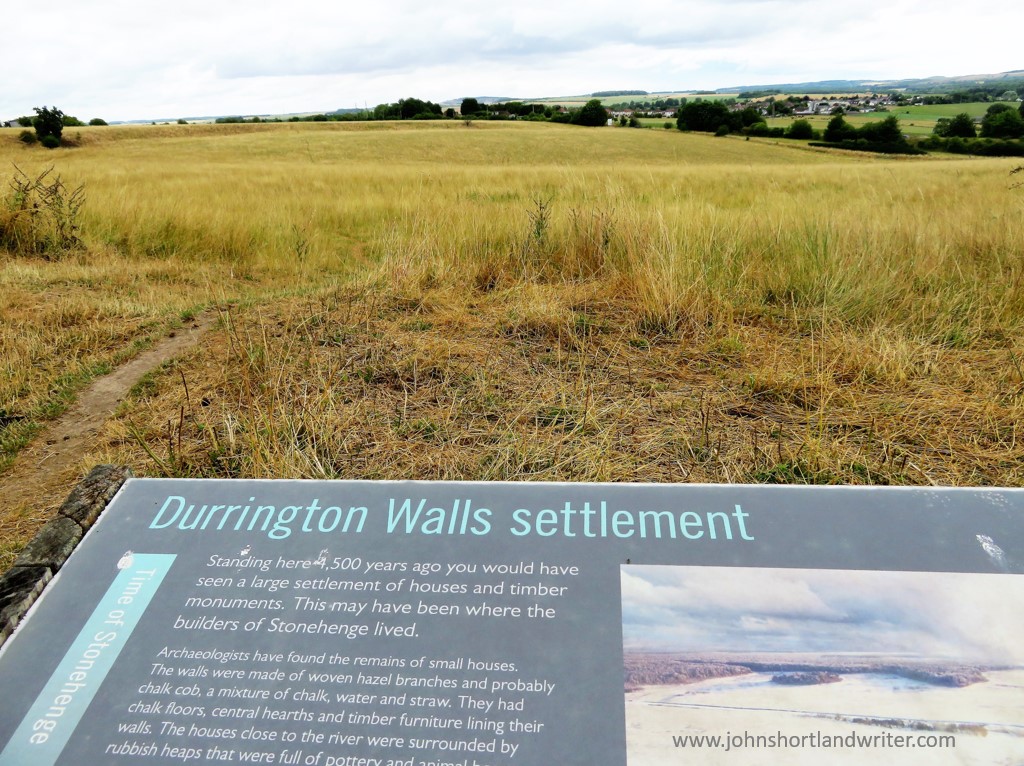
The third site, and to my mind, the best one for you will almost certainly have the place to yourself, is known as Woodhenge & Durrington Walls.  To be really impressed by this comparatively unknown place you do need to know some background information of its history plus a vivid imagination.  For me, it is such an atmospheric place to visit that the latter has never been an issue!  I recommend starting your walk here and walking inside the circle of Durrington Walls before exploring Woodhenge.  The first thing that is noticeable about Durrington Walls is that there are no walls!  The circular bank and ditch that surrounds the site was enormous and consisted of the bank itself which would have been several metres high.  The ditch originally was over five metres deep and, in places, up to thirty metres wide.  It is estimated that between four and six thousand people would have been needed to build the walls as well as the various houses and large timber circles associated with the site.  A feat quite remarkable nowadays let alone over four thousand years ago using just antler pickaxes!  Although nothing remains above ground now, apart from the bank, I found it very easy to imagine, as I walked alone and in silence, the bustle and noise of these industrious people.

Within Durrington Walls, now a grassy bank, up to 6000 people once lived
Information boards help you to understand the context of what you are not seeing!

Leaving Durrington Walls I made my way to the Cuckoo Stone, my only companions, sheep.  Now fallen, this stone would originally have been placed upright.  Looking at maps, it appears to be more, or less in line with the Great Cursus (more about that below) which in turn leads to Stonehenge.  The Cuckoo Stone, positioned 4000 years ago, continued to be ritually used into Roman times for in 2007, during archaeological excavation, a small building thought to be a shrine from that period was discovered. 

Close to the Cuckoo Stone a Roman shrine once stood

Leaving the Cuckoo Stone, my path led to an old track edged by wildflowers humming with bees and butterflies and bringing me out at the top of the Cursus.  The Cursus is another huge earthwork showing nowadays as a crop mark – two bright green stripes in an otherwise darker landscape.  If you compare my photograph with the one of the information board (below), I was standing at the opposite end.  In my image, the end of the Cursus can just be made out on the far horizon almost two miles distant.  The purpose of the Cursus is unknown but thought to be ceremonial as it is again aligned to the summer solstice.  It is even older than Stonehenge having been constructed several hundred years earlier.

The two-mile long Cursus now only shows as two grassy green stripes
The Cursus is better understood from this aerial photograph

Another good track took me due south before turning west to Old King Barrows and then back south to New King Barrows.  Before leaving the Cursus I stood to watch the visitors to Stonehenge some long way off and thinking how lucky I was to have all of this unseen history of the World Heritage Site to myself with only the song of skylarks as company.  More than five thousand years separated me from the Neolithic people yet surely, they must have stood here too and seen a similar picture as they made their way to join others already arrived, a humbling thought.

A distant Stonehenge can be clearly seen from the Cursus

The Old and New King Barrows consist of two groups, each of seven burial mounds so fourteen in total, separated by Stonehenge Avenue which is only visible as another cropmark.  The Avenue linked Stonehenge to the River Avon almost two miles away and was, perhaps, another route the Ancients would have taken to reach the stones. Despite their name, the Old and New King Barrows date from the same time period, and also around the same as Stonehenge.

One of the prehistoric burial mounds at Old King Barrows

It was by the barrows that I turned back towards Woodhenge, the last part of my relatively short but extraordinarily rich walk, rich both in its views and its wildlife, as well as its history.  As if to bring me almost up-to-date in time, the sound of an old-fashioned binder in an adjoining field was busy bringing in the harvest.  Not quite twenty-first century but a common sight less than a hundred years ago.

Harvesting wheat the old-fashioned way


The final part of my walk to Woodhenge can be found by clicking this link here.

To visit Stonehenge for free involves a walk not dissimilar to this one.  Park in Durrington village and take the public bridleway path (where it meets Fargo Road) directly south to Stonehenge.  The path passes the stones within yards of the public viewing path so you will still be separated from the stones.  Public footpaths continue southwards, criss-crossing an area rich in more barrows and other ancient earthworks.  With the help of an Ordnance Survey map it should be quite possible to make a longer, circular walk.

**Click on any of the images to enlarge**

.

The Glories of a Beechwood

Buckinghamshire, one of the so-named Shire counties, lies to the north-west of London.  A long, narrow county; the southern part is renowned for its beech woodlands.  Although greatly diminished in size over the centuries, many of them are still there, remnants of the ancient woodlands that once covered much of Britain, although the industries that they supported are long gone.

Nr Fingest 2 watermark

In the Chilterns the beechwoods can almost engulf the lanes

Straddling the Buckinghamshire/Oxfordshire borders the Chiltern Hills extend diagonally northwards into neighbouring Bedfordshire where they change character from dense woodlands to more open downland.  It is within the shadow of the southern woodlands where I was born and where I lived for the greater part of my life before moving to the secret valley in the Cotswolds.  Inspired by Enid Blyton’s The Children of Cherry Tree Farm, my childhood was spent crawling around the fields, woods and hedgerows learning as much as I could about the wild birds and animals that lived within them.john david shortland 1965 watermark

Although nowadays the woods appear mostly deserted, they are still made use of.  The old tracks and paths that were once used by the men and women that worked and lived there are trodden by walkers, and by the wildlife that remains elusive for only those that move quietly have the pleasure of seeing anything other than a glimpse of a fleeing animal.

Woodland Track (2) watermark

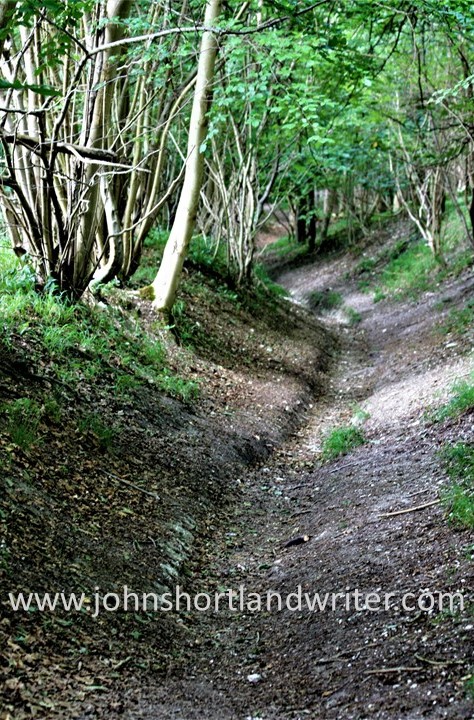
This centuries old track leads down into a deep valley

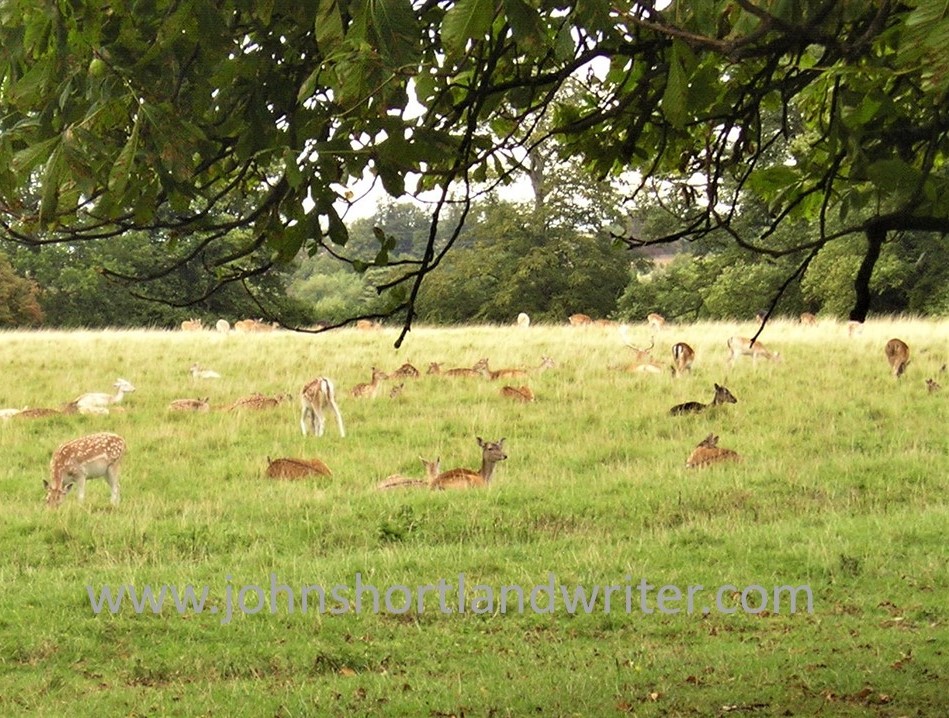
Fallow Deer watermark

Fallow deer can often be seen at rest in clearings if you walk quietly

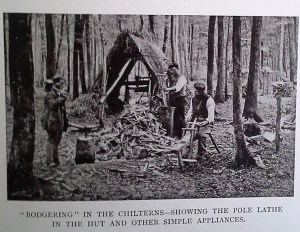
The making of chair legs to keep the flourishing furniture industry of High Wycombe, the local market town, was carried out within the woodland by men who would set up shelters there.  Known as chair-bodgers, a local dialect word originally confined to this immediate area, they were highly skilled craftsmen who could earn relatively high wages for their work.  The Second World War virtually ended the centuries old tradition, the last being Samuel Rockall who died in the early 1960s.  I had been unaware of Rockall’s life until I researched for this blog post and it seems as if we may have been related for I have Rockalls in my family tree.  In the 1851 census return one of my ancestral cousins is described as a chair turner living in the village where I spent much of my adult life.  More research required!

1851 census - Rockall

Jonathan Rockall, chair turner and ancestral cousin in the 1851 census return.  His wife, Ann, a lace maker,- another local craft

Some of my cousins?! Photo from an old book ‘English Country Life & Work’

It is, perhaps, springtime when the beech woods are most visited for the forest floor is carpeted with bluebells.  The intensity of their colour plus the iridescent green of the tree’s unfurling leaves almost hurt the eyes.  With early morning sunshine the scent is unique and difficult to describe – gentle is the best I can come up with.  As the day progresses the scent is quickly lost.Chilterns Beechwood copyright

During midsummer, the woods become visually silent: the leaves have turned a dark, leathery green and the bluebells gone to lie dormant for the rest of the year.  With autumn, the trees become alive once more with colour, this time as their leaves turn into every shade of copper, gold and brown before they drop to the ground for winter.  It is then that the smooth bark of the trees come to the fore with a silvery sheen that catches the low light of a winter’s day.  Although it may seem as if the woodlands are sleeping, in places the first bluebells are starting to poke their noses through the leaf litter.  Spring is on its way.Autumn colour watermarkIbstone 1984 watermark