A Good Walk Home

Both my partner and I like walking but, more often than not, we walk alone.  Somehow it just works out like that and there is no doubt about it, that when you walk without company you do see and hear so much more.  It isn’t that we chatter away non-stop – we’ve been together for  far too long for that!!  It’s just that with no-one to speak to, or alongside, one becomes far more aware of all that’s around you.  And with only the sound from one pair of walking boots the wild creatures are less aware or concerned of your presence.

Walking quietly it’s possible to get quite close to wildlife

Usually, from necessity, our walks are circular – either back to the car or back to the house if we’ve started from home.  Recently I cadged a lift to Duns Tew, just outside the Cotswolds but still in Oxfordshire and not that far from home and the secret valley.  The village is an interesting mix of houses and makes use of their local ironstone as well as the Cotswold limestone.  I find it fascinating knowing that I live on the edge of two quite different rock formations, 0ne literally as hard as iron and the other, soft and easily worked.  The photo below shows the pretty church built of yellow ironstone and banded with paler limestone – a familiar pattern in the locality.

The thousand year-old Church of St Mary Magdalen, Duns Tew

The houses vary in style and age as well as building materials.  Some have thatched roofs; others slate and some stone tiles.  The traditional village pub has a stone tile roof made from Cotswold stone split into thin tiles.  Just to confuse the unknowing, these tiles are known locally as slates even though they are not made of slate!  The craft of making these roof tiles is centuries old – they have even been found by archaeologists when excavating Roman villas (of which there are quite a few in the Cotswolds) which means the manufacture of them has remained unchanged for the best part of two thousand years.  The pub also has a drystone garden wall, also made from Cotswold stone for which it is so ideal and makes such a memorable feature of the Cotswold Hills.

Village houses: contrasting style and stonework. The thatched house was built in the early 1600s. There are a number of these old signposts still standing locally
The village pub: this dates from the late 1600s. Note the stone ‘slate’ roof

One of the great things about walking in England is that we have a huge network of public footpaths, many of which date back to pre-history.  Now that I realise (thanks to my overseas readers) that being able to walk across privately-owned land by right is almost unique I intend to write specifically about them at a later date.  Suffice to say here, is that it is possible to walk from one end of the country to the other over thousands of miles of paths that must not, by ancient law, be obstructed.  This path is beautifully maintained by the owner. Just outside the village, partly hidden in undergrowth, were the remains of old pony carts.

A well-maintained public right of way that is also a driveway to the owner’s house
Half-hidden at the back of a semi-derelict shed

The path opened onto cornfields, the wheat harvested and the remaining stubble giving a real autumnal look to the countryside.  The hedgerow is also offering its autumnal fruits for the picking – crab apples, elderberries and blackberries; the sloes although looking good won’t be ready to collect until after the first frosts.  The squirrels have taken all the hazelnuts (you have to be quick to get them before they do – but already the embryo catkins, the male flowers, are beginning to appear.  It will be early February before they show the familiar ‘lamb’s tails’ that release clouds of yellow pollen with the slightest breeze.

The path is now gras covered passes ‘twixt hedgerow and cornfield
Crab apples, blackberries, elderberries. Tiny catkins are just forming amongst the blackberries

Although the path, now a wider track, looks obstructed here, the farmer/landowner has to leave the gate unlocked so that people on foot or on horseback can pass.  Crossing the lane it returns to being a path, this time skirting a large wood.  Now hidden by high hedgerows in the spring when the leaves are all bare, the woodland floor is carpeted with bluebells.  In the centre of the field is a stand of mature oaks.  Why were they left there?  For me, they always have a mystical look about them; stepping into their midst the atmosphere changes as if its centuries old story is being told to those that might listen.  Perhaps it’s just my imagination but the fancy is palpable.

As this is a public right of way, one of the gates must be kept unlocked by law
The copse in the middle of the fieldwas it once a sacred site?

Once again the path changes character.  Now a track crossing a small stream, the movement of a young coot searching for food catches my eye and we watch one another for a while before it decides that food is far more important than me.  At such close range I see it snatch a small water beetle before it disappears into the undergrowth.  For a while the path becomes woodland again and then opens up onto a concrete track.  The concrete is all that remains of a WW2 airfield, far inland to be out of the range of German bombers.  I stop to listen and am met with silence.  How different the scene would have been eighty years ago.

The baby coot carried on about its business…
The old wartime concrete paths make easy walking

Finally back home.  Being an Englishman through and through (if you ignore the foreign bits of me!) I sit on the old stone bench in the garden with a refreshing cup of tea and lean back against the walls of our own stone-built house built 170 years ago.  Looking out beyond the garden I can’t help feeling how privileged I am to be seeing the best views of the whole walk!

Not too bad a view from home!

.

.

.

Yorkshire Cheese

Over the many years of writing this blog I have rarely posted reviews of products or of venues.  From time to time such requests are made and turned down as that sort of writing has never been my intention.  The few that I have written have been chosen solely on their merit – it is usually because I have come away with that ‘wow’ feeling.  And so it is with this one for, as others will testify, cheese is certainly, or can be, able to give it.

Judging cheese at the Great Yorkshire Show

My partner and I had chosen to spend a week in the Yorkshire Dales, a National Park with spectacular scenery.  Austwick is a classic north of England village – solid stone-built cottages, a church, a village green, a couple of village shops and for us, a great base for some wonderful walks over what can be challenging terrain.  As it happened, it turned out to be a little too challenging as my partner is recovering from a broken foot – the cross-country walks will have to wait for another visit.  Instead, we decided to explore the area mostly by car with a few short, gentle walks thrown in as ‘therapy’. 

The Yorkshire Dales at Austwick

On our first outing, we had only driven two miles before we saw a sign marked The Courtyard Dairy.  Not expecting too much other than an ice cream (they do those too), we were blown away by what we saw. The Courtyard Dairy – trading from a converted barn – is a family run affair and there is little doubt upon entering that they are certainly having a love affair with cheese.  There are cheeses of every colour, size and consistency everywhere you look.  I suppose we shouldn’t have been surprised for the fields we’d passed were full of black and white milking cattle and, of course, as every Wallace & Gromit fan knows, Wensleydale (just a few miles up the road) is famous for its cheese.  There is even a black and white – plus a few extra colours – cow to greet you as you walk into the Dairy yard.

The Courtyard Dairy

The people that run the Dairy couldn’t have been more friendly and were quick to correct us (nicely!) when we said we were staying at Austwick and pronouncing it in the typical Southern way, Oorstwick.  “Oh, you mean Austwick – Aust as in Australia.”  It reminded us of a time some years ago when we were up north and asked a local policeman how we reached the village of Oertop.  It took some time before he realised that the person who had given us directions had said, when translated into southern speak, “over the top” which had meant we needed to take the road that went over the hill. 

Friendly staff and a great selection at The Courtyard Dairy

As with all good cheese shops, we were able to taste the cheeses before deciding which ones to buy and, needless to say, came away with a classic cheeseboard: a couple of hard cheeses, a soft cheese, a blue cheese and a goat cheese.  Of course, no cheese should be unaccompanied without wine and across the courtyard there is a wine shop with a tremendous selection.  A bottle of Bordeaux was suggested as the perfect partner for the hard cheeses.

Every shelf is crammed with cheese

Behind the cheese shop the Swinscoe family have created a small museum telling the story of cheesemaking in the Dales.  The old equipment used is on display as well as boards explaining the family’s connection to the Dales, to cheese making and to farming.  For me, I found the recipe notes dating from 1912 and written by Great Granny Mary Reid of especial interest for I have a few recipes similarly handed down from my Polish great-grandmother Rachel.  She died in Poland before my mother was born and these precious mementos seem to give life back to these people of long ago that would otherwise be unknown. 

Artefacts at the Dairy Museum
Great-Granny Reid’s cheesemaking notes, 1912

Neither great-grandmother had, to my knowledge, a recipe for pizzas using local cheeses but if you fancy one these are also available in the restaurant attached to the Dairy.  All in all, a great visit and well worth making a special trip for.  However, if you are unable to find an excuse for a few days in Yorkshire an online order service and a cheese club are available.  I think there’s a very good chance that I shall be joining!

Not a picture but the view from the museum window!


The Courtyard Dairy is situated on the A65 Kirkby Lonsdale to Settle road, and about 2 miles south-east of Austwick

The Courtyard Dairy website

It is not surprising that I was so delighted to have discovered this place for it has received many accolades before: Cheesemonger of the Year in the World Cheese Awards, visits from King Charles III as Prince of Wales, Nadiya Hussein to mention just a few…

.

Far from the Madd(en)ing Crowd

The title of this blog is actually rather a misnomer for the picturesque village of East Hendred is, in reality, quite close to both London and Oxford.  Nestling at the foot of the Berkshire Downs, its charm and ancient houses give it the appearance of a place far from civilisation and today’s frenetic pace of life.

East Hendred (13) copyright

East Hendred (9) copyright

A traditional English village centres around the ‘big house,’ the pub and the church and East Hendred can boast that its manor has been owned by the same family, the Eystons, for over six hundred years.  It has three pubs thereby bucking the trend in recent years of the many pub closures elsewhere that often sees the social heart of a community destroyed.East Hendred (18) copyright

East Hendred (2) copyright

There has been a village shop for very many years for a book published in 1922 (English Country Life & Work by  Ernest C. Pulbrook) shows it in a photograph.  Today, the shop is still “thriving and well-accustomed” although it is doubtful if it now sells the wooden hay rakes that are lined up outside on the early photo!  The building has remained unchanged over the years although the village changed allegiance in 1974 and is now in the county of Oxfordshire.  The shop is easily recognisable in my photograph as being at the far end of the row.East Hendred (1) copyright

East Hendred 1(a)

The church, dedicated to St Augustine of Canterbury, dates from the late twelfth century although its tower is later, built around 1450.  East Hendred (17) copyright

East Hendred (21) copyright

At the other end of the village is the former Chapel of Jesus of Bethlehem also built around 1450 by Carthusian monks.  Now known as Champs Chapel, it houses a small museum dedicated to the history of the village.  It is opened and maintained by volunteers.

East Hendred (6) copyright

Despite its historic past, the parish of East Hendred which is crossed by the ancient Ridgeway path (now a National Trail) is also firmly fixed in the modern day for it also houses the Harwell Science and Innovation Centre where the Diamond Syncrotron Facility is located.

East Hendred (16) copyright


A Thunderbolt and a Broken Cross

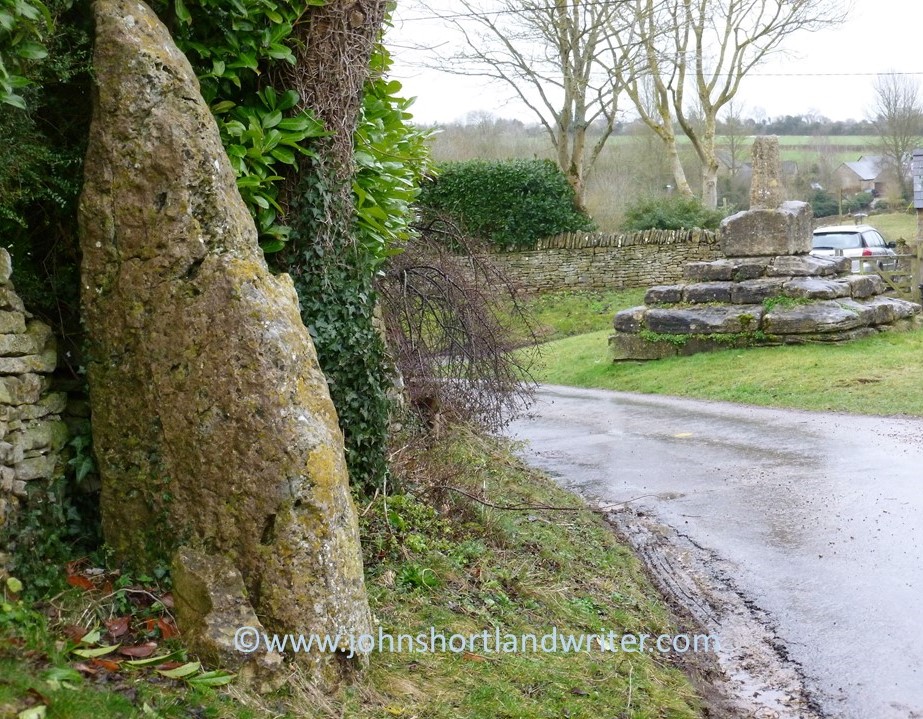
For so tiny a place, the Cotswold village of Taston, or more accurately ‘hamlet’, has more than it’s fair share of interesting features.  None can be so dramatic – in the most understated of ways – than the lump of rock hurled in rage by the Norse God, Thor and now wedged between the roadside and a wall.Taston (1) copyright

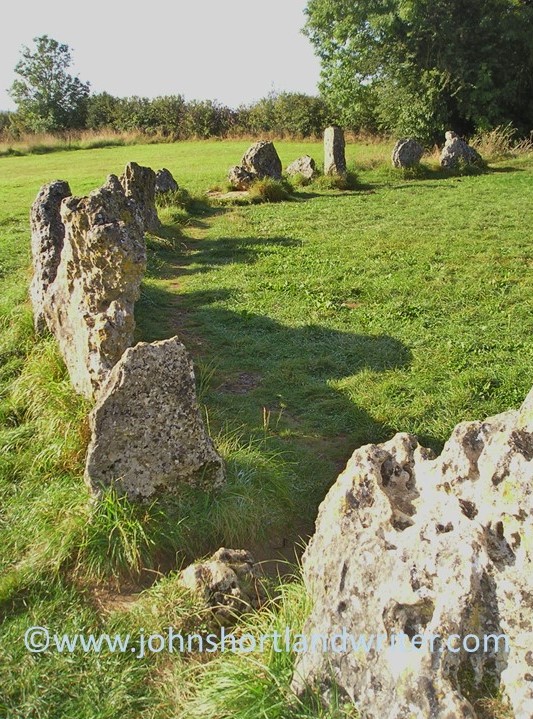
The Thorstone (from which the village’s name is derived) is one of a number of standing stones that litter this part of the Cotswolds.  They range in size from the extensive Rollright Stone Circle to the single unnamed stone that can be found in the town centre of Chipping Norton.Rollright Stones (5) copyrightChipping Norton Stone copyright

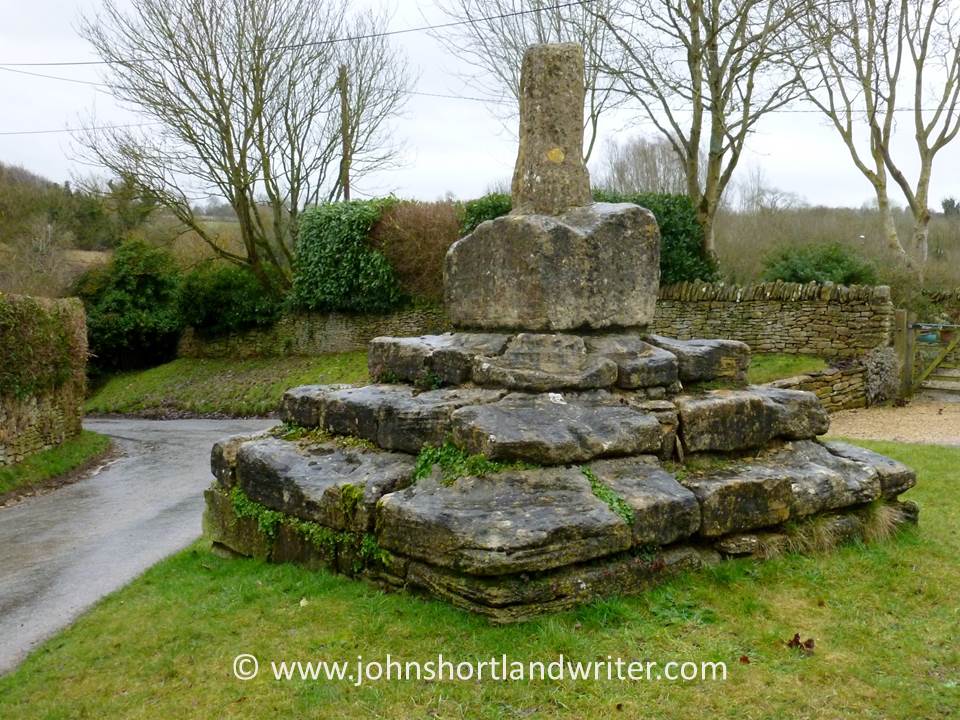
Close to the Thorstone are the remains of a medieval preaching cross.  Many were destroyed during the Puritans time of Cromwell (mid 1600s) but their base, as here, still remain.Taston - Broken Cross copyright

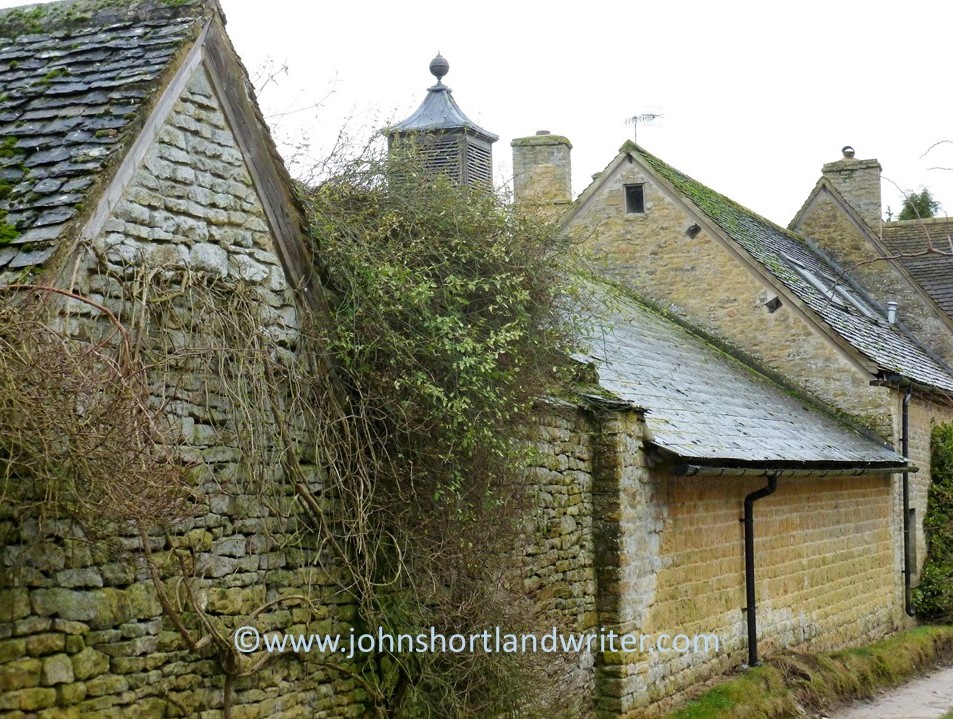
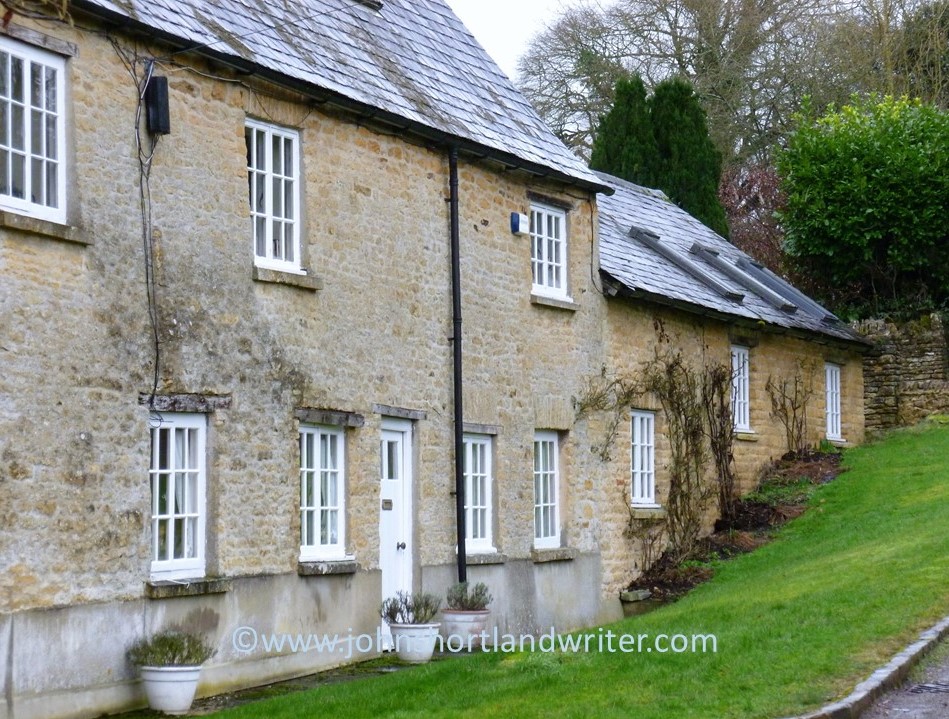
Ancient stone houses, many of them listed by English Heritage, line the three narrow streets of Taston.  Exploring on foot is the best way to see them and to absorb the villages tranquil atmosphere.  It is highly unlikely that you will meet others doing the same! Taston (2) copyrightTaston (4) copyright

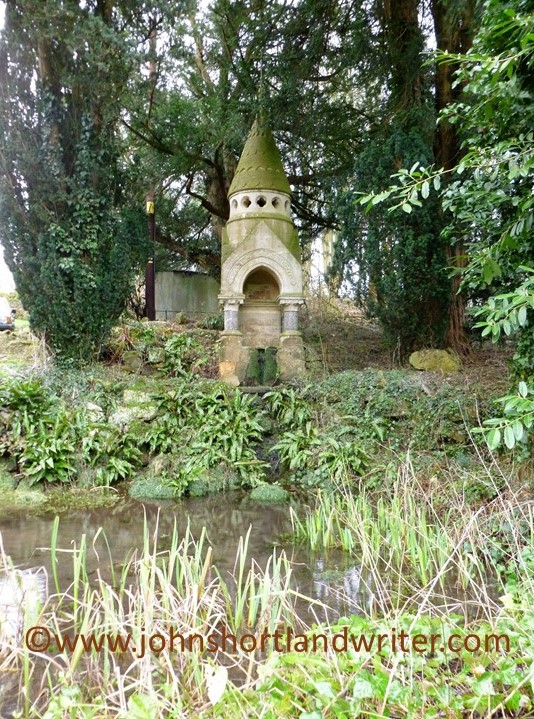
It is on foot, that you will find, tucked away beneath the trees, the memorial fountain to Henrietta, Viscountess Dillon.  Built in 1862 of limestone, granite and pink sandstone, it has the words In Memorium in a decorative arched band beneath its spire.Taston (5) copyright

Taston lies 4 miles southeast of Chipping Norton and 1.5 miles north of Charlbury.

Don’t Be Put Off By Its Name…

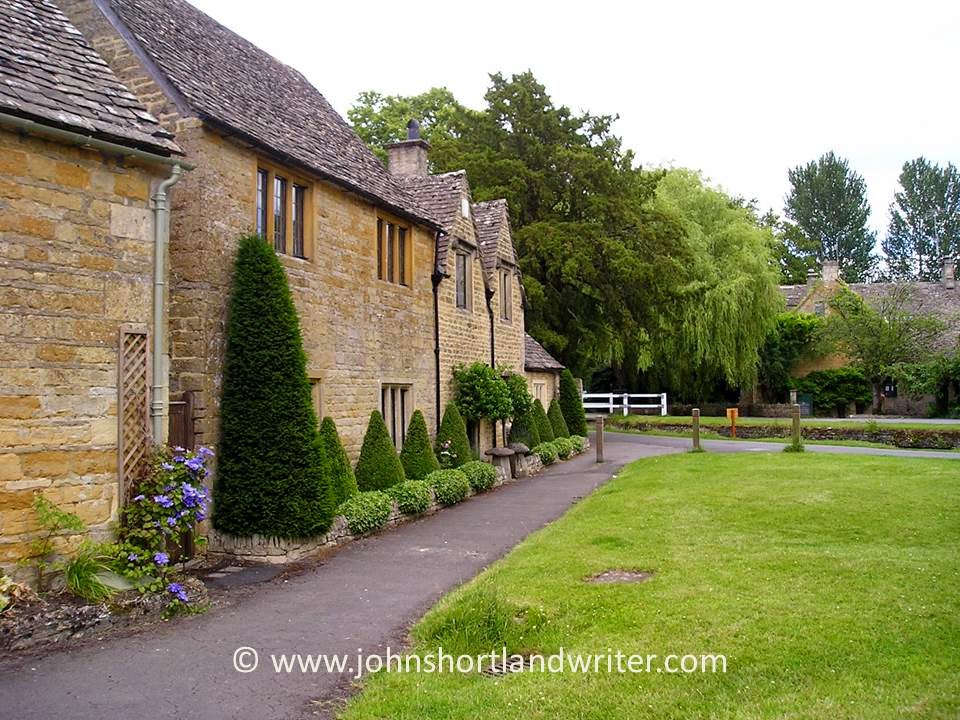
Slaughter may not sound the most promising of names but Lower Slaughter situated in the heart of the Cotswold Hills is one of the prettiest and most unspoilt villages you can visit.  Its unusual name is a derivation of the Old English word ‘slough’ meaning muddy patch but, if it was many years ago, it is certainly not one now.  In fact, three years ago it was described in a poll as having ‘the most romantic street in Britain’.

Although there is some more recent housing discreetly tucked away most of the buildings date from the mid sixteenth to mid-seventeenth centuries.  Its origins are even older  for it was well established even before being recorded in the Domesday Book; this means that it has been continuously inhabited for over a thousand years.

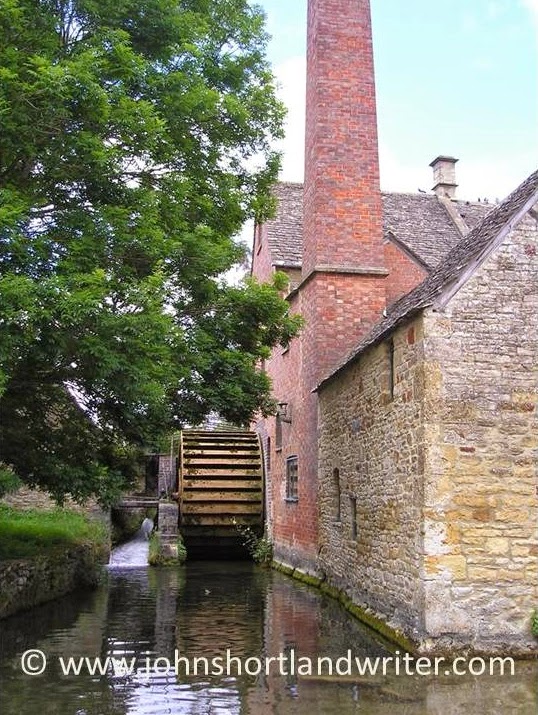
Many of the oldest houses cluster around the the River Eye which, although shallow, is powerful enough to feed the undershot waterwheeel of the mill.  This building, which now houses a small museum, is made from red brick – an unusual building material in this area – and was working as recently as the the late 1950’s.  It is a comparatively modern building having been built in the 1800’s although a mill was recorded on the site in 1086.  The tall chimney was built to give the mill additional steam power.
A similar tale can be told of the picturesque church with its tall spire which also dates from the ninteenth century.  There are a few traces of the original building within it: an arcade of four bays dating back to the early 1200’s.  The lichen encrusted gravestones in the churchyard also belie their age for burial rights were only granted in 1770 – before then villagers were buried in nearby Bourton-on-the-Water.


The countryside surrounding Lower Slaughter, and also the village itself, may not appear to have changed much in centuries but there is no doubt that they are very much ‘tidier’ than they once were.  An old Pathe News clip shows the banks of the Eye overgrown – there probably wasn’t the same enthusiasm for cutting its grassy banks when it has to be done by scythe.  Another change the film shows is the ‘locals’ sitting on the benches: nowadays, many of the houses are owned by the wealthy as weekend retreats and those exploring its lanes are visitors. 


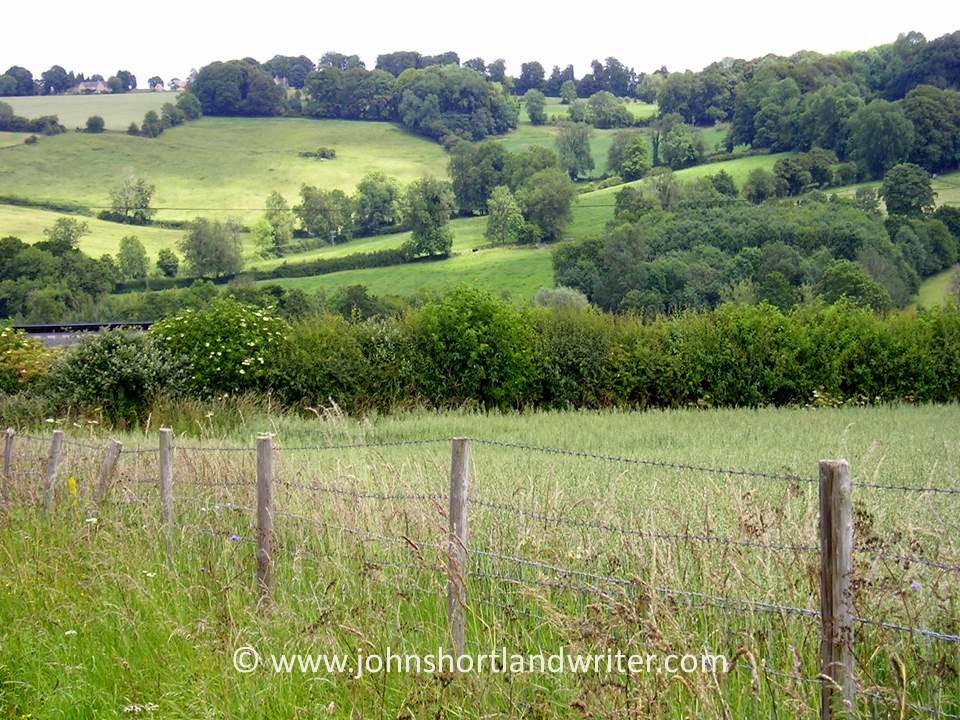
Lower Slaughter, despite its obvious attraction, has done very little to encourage tourism.  It is still possible to sit there or cross its little stone footbridges or paddle in the ford and be transported back to a time when life ran at a much slower pace.  It makes a very refreshing place for visitors to recharge the batteries after the crowds of its larger neighbours, Bourton and Stow-on-the-Wold or, for us lucky enough to live in the Cotswolds, to do the same after a hard day’s labour. 
 
Lower Slaughter is just 2½ miles north of Bourton-on-the-Water and 3 miles west of Stow-on-the-Wold.  The Old Mill sells great ice cream!
To see the Pathe News Clip from1939 click here

Add to Technorati Favorites