
Mentor. There are dozens of words to choose from when looking for an alternative description of someone who takes on this role: life coach, guide, adviser, confidante, counsellor, influencer to name just a few. One thing that is certain is that the four people who played such an important role in shaping my life would not recognise any of these terms, not even the word mentor. And to be honest, it is only with the benefit of hindsight that I recognise them as being mentors at all.

If I had to choose just one word, I think it would be guide for that seems to describe what they were during their lifetimes. It is only since they’ve been gone – for sadly, they have all been dead for more than twenty years – that I actually think of them even as that for their influence was subtle. They would almost certainly find the description laughable for there was never any conscious effort to take on that role. It was one that had come about by chance meetings leading to friendship, respect and love.

I was not an easy child – I know that statement is hard to believe now (laughs). A streak of rebellion has run through our family for generations and although I wasn’t outwardly rebellious, I sometimes made life difficult for those around me. From the age of fourteen I found school a waste of my time for I had wanted to study sciences and school insisted I did languages instead. I’m sure they were probably right for studying French and English had come easily to me whereas I’d struggled with even General Science. To me that was irrelevant for I had desperately wanted to learn botany and biology. Instead, I now found myself sitting in German classes seething inwardly and resenting every moment of having to learn the difference between der, das and dem or liebe and Lieber. I began playing truant and found that if I left school after the lunchtime register had been taken nobody seemed to notice and I could walk the three hours back home through the woods and fields where I could practice my botanising. I finally stormed out of school halfway through my ‘O-level’ exams before sitting the dreaded German but not before I’d sat French and English. I passed both with flying colours but my parents were furious.

More out of desperation, my parents agreed that I could take my bicycle and tent on the train to Exeter and cycle and camp across Dartmoor for two weeks. It would be my first solo holiday and, I imagine, they agreed in the hope that it would make me appreciate just how fortunate I was to have been given the chance of a good and expensive private education. I arrived in Exeter in blazing sunshine and armed with maps and far too much self-confidence started my journey westwards. In those days, with no mobile phones or credit cards to monitor my progress, my parents provided me with stamps and cash so that I could send them a postcard at the end of each day. I reached Okehampton, a small market town on the fringe of the Dartmoor National Park in a sweat and seeing from my map that I wasn’t that far from the sea instead decided to cycle northwards to Westward Ho, a beach resort on the North Devon coast.

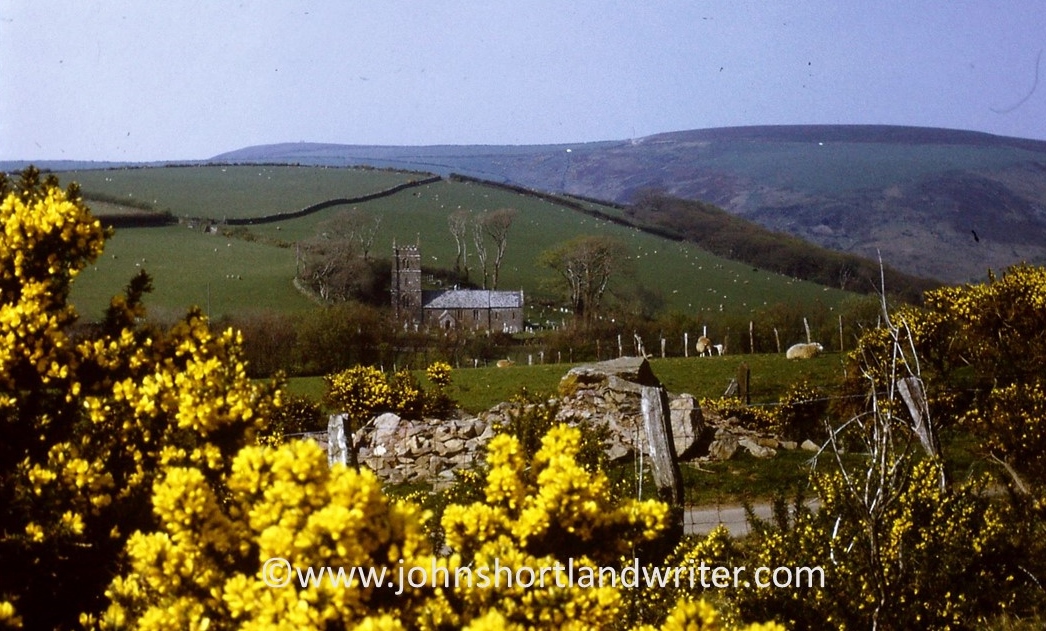
Refreshed from an early morning swim in the sea (I’d arrived there at 2.00 in the morning) I looked again at the map and now decided to travel eastwards to a different national park, Exmoor. I’d read the novel Lorna Doone at school and had loved it and the thought of exploring the rugged and isolated places where she had met and married John Ridd, only then to be shot at the altar of Oare church, filled my imagination. Little did I know then that soon I would be meeting a real-life Lorna Ridd who with her farmer husband would welcome me into their lives.

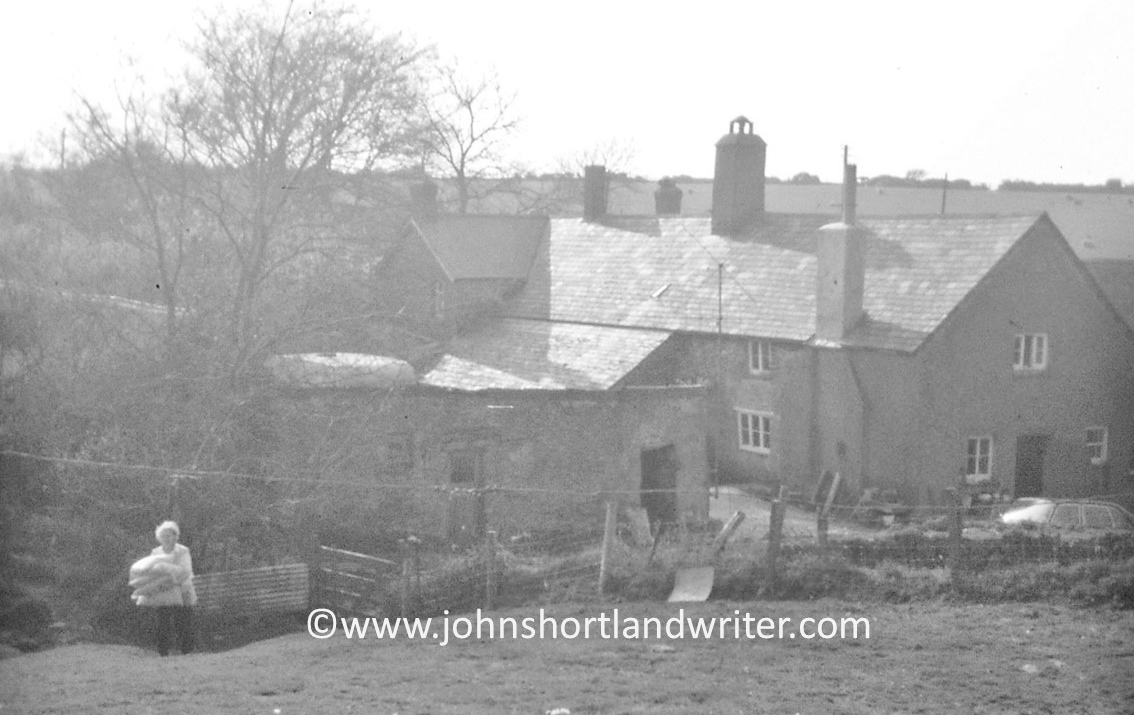
Three days later, having cycled over some tough and exhausting hilly roads I ended up at Brendon Barton, a remote farm perched high on the edge of the open moorland. It was coming towards the end of my fortnight away and so I knew that I could only stay there for one or two days before the long bike ride back south to Exeter and home. Venturing into the farmyard I could hear sounds coming from inside the barn where Dick French, the farmer, was working with sheep. I asked if I could camp in one of his fields but he didn’t look up and instead replied, “be a good lad and bring those last two sheep in here.” I had never been near a sheep before and so spent the next half an hour running around the yard in circles before finally managing to herd them inside. I was out of breath, sweating and covered in sheep shit but I found a contentment in my success that I’d not experienced before. Years later, Dick and I would laugh about that first encounter. I used to say that I should have just got back on my bike and cycled away to which he would respond with, “when I saw you wouldn’t give up, I knew that you’d do!”


By my second day on the farm I had helped bring in the cows and Dick had taught me how to hand milk them. Hearing I could ride, he suggested that I took Star, one of their horses up onto the moor to have a look around The heather was in flower and its deep purple carpet continued to the sea. Beyond, the coastline of Wales could be seen in the hazy far-distance. I ventured into a deep combe before crossing a stream and climbing up a ridge. There I spotted a deserted farm cottage* half-hidden by beech trees. I stood entranced by the beauty of my surroundings and its all-encompassing silence. I felt I had found my true home and with no consideration for my parent’s concern, I decided never to leave. I sent them a postcard saying that I’d missed my train home. I remained purposely vague as to my whereabouts, just saying that I’d kept back enough money to buy a new railway ticket.


A week later I was having my meals in the farmhouse enjoying the banter amongst the farm lads and hearing the discussions about the tasks that needed to be done around the farm. By the time harvest came round, my tent had been ditched and I was sleeping in the house in a comfortable bed, receiving a small wage and spending evenings in the village pub with new-found friends. Dick had said that it would be his wife Lorna (Ridd had been her maiden name) who would decide whether I could stay or not. She was such a hard-working woman and one more person to care for might be one too many. Her approach had been that one more would make no difference and so she looked after me while I spent long days working at Dick’s side, listening to his tales and learning about their way of life. Asked about my parents, they seemed content enough with my explanation that I was spending extended time away having just left school (the term gap year hadn’t been invented then!).


Months passed and the harder I worked the more I knew an Exmoor outdoor life was for me. However, it came to an abrupt end when one day I walked into the kitchen to find my parents sitting there telling me it was time to return home. I was devastated and asked Dick why he hadn’t told me they were coming. “I knew you’d hide up on the moor,” he’d replied – and he was right! Although I was pleased to see my parents I pleaded with them to let me stay. Dick, in the first of his subtle acts of persuasion that I can recall, asked me to help him look at a horse in the barn. There was no horse, instead we sat and talked about our time together before he reminded me that my home was with my parents and, in time, running our family business. Don’t forget, he’d said, there’s a room here always available so why not come down for lambing next spring. To ensure that I did he added, “You’d be doing me a great favour, I could do with your help.”


Lorna, too, had her subtle ways of persuasion. “Your parents have said that you can come here for Christmas if you’d like to. We’ll be on our own and some young company would be good. It’ll be just the three of us.” She’d also boxed up the bantam chicks that I’d been caring for so that “you can carry on farming at home.” After that first Christmas I visited them both for many years, helping on the farm whenever I could, and exchanging letters and phone calls. They were always my first port of call when I was having difficulties, feeling down or just wanting to celebrate with them. Life hill-farming is hard, the weather often unmerciful and the hours long but there are also the pleasures of being part of a small tight-knit community that will help one another whatever the reason. Leading by example, they instilled in me a love of farming and hard work, a sense of duty, generosity of spirit and kindness. I will leave it to others to decide whether they succeeded or not! From them, I also acquired an even deeper love for being outdoors regardless of the weather and especially in remote, wild landscapes. Little did I know then that these skills would be put to the test when, aged forty, I began my career change to follow my outdoor dream, or that Exmoor would still play such an important part of my life today.

Dick and Lorna French died just before the Millenium and the farm was sold to another local farming family, some of whom I’ve now known for almost sixty years. Because of that, I still on occasion visit Brendon Barton and sit in the kitchen drinking tea to discuss farming and, of course, putting the world to rights. A bonus is that Maria, the new ‘Lorna’ has been creating an extensive garden around the farmhouse, so we have gardening in common too, as well as a lifetime of shared memories. It would be another fifteen years and then as a man, before I would meet my other mentor couple. Cyril Heber Percy and his wife Pamela’s lives were worlds apart from Dick and Lorna’s but there were some similarities too. Part 2 tells their story.

Have you had a mentor or mentored someone? What does it take for someone to become a mentor? Our parents have probably the greatest influence on our lives so why does a mentor s role take on such importance? Let’s hear your story either in the comments below or, if you prefer, by using the Get in Touch tab at the top of this page. Thanks to Diane Highton for posing the question that triggered this blog!
* The deserted cottage still stands in splendid isolation hidden away behind the trees, albeit now as a ruin. It has a fascinating history and has been the subject of much research in recent years. Take a look at the website devoted to the story of Hoar Oak Cottage





 Life in the English Cotswolds