Hide That Ugly Wall

We nearly all have one – or, at least, if we haven’t, we have an unwanted view that needs disguising.  Now is the perfect time to deal with it for, if you decide to plant some screening, the soil is moist and still retains some stored summer warmth.  Wait until spring – which you can do – and you run the risk of summer drought and the need for more careful and regular watering.  In the perfect conditions of late autumn/early winter the plant’s roots begin to establish even if you’re unaware of anything happening above ground.

However difficult the position, there is almost always a way to enhance an ugly wall

There are several questions to ask before rushing to the garden centre.  The first is to decide which way the wall faces for the amount of sunlight hitting it will influence the choice of plant – more about that later.  Other factors to consider are will the plants need to be tied into place with strings and wire, and will they need regular maintenance to keep them looking nice and within bounds?  If you’re already beginning to think this sounds like too much hard work or is too complicated, don’t despair – there’s a list of planting options below.  Still baulking at the thought?  An alternative question is, would some sort of decorative screen do the job instead?

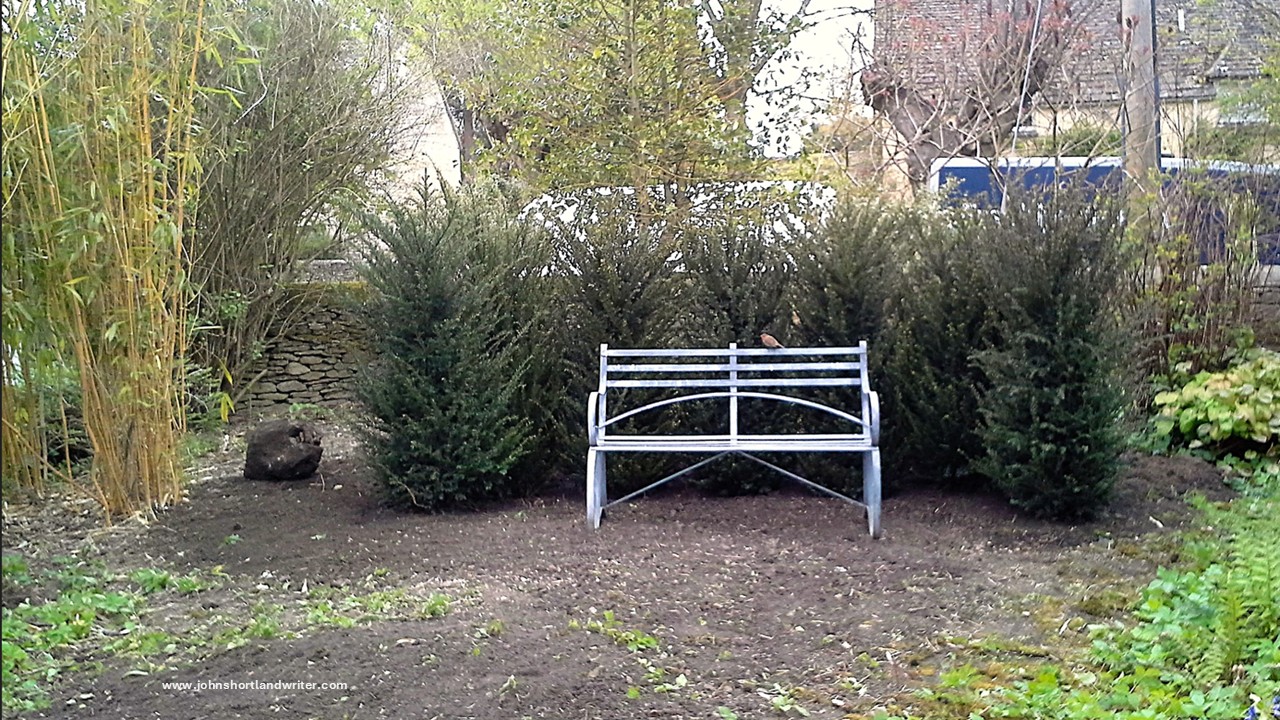
A decorative screen masks this unwanted view

One more option to consider is planting in front of the wall, rather than against it.  If there’s room a low maintenance shrub border might be possible.  If space is really tight, then one or two well-chosen plants may work just as well.  For example, trees trained to grow flat against a wall are readily available and can make a statement without hiding the wall completely. Some shrubs will also do this; they are a much cheaper option and usually grow quite rapidly.  In the photo below forsythia, an unusual choice, has been grown against an ugly garage constructed from concrete blocks.  Although it loses its leaves in the winter its dense network of twigs continues to disguise the wall.  For a few weeks in the spring, it looks both exotic and stunning.

Flowering forsythia suddenly looks exotic grown against this ugly garage wall
The Judas Tree (Cercis) flowers on bare wood, its leaves will appear shortly. It has been fan-trained to remain flat against the wall
If space allows, a low maintenance shrub border can work well

For most people, the decision made is to grow a plant that will climb as well as cover the wall.  The plants available can be broken down into two groups – the true climbers (that will need wires on the wall for support), or the ‘clingers’.  These attach themselves to the wall by little sucker-like pads or by hair-like roots.  With the latter it is essential that the wall is in good condition although it is rare for serious damage to happen.  Both types can be sub-divided into deciduous (lose their leaves in winter) or evergreen.  I have found that the majority of clingers benefit from having some wall ties when first establishing to keep them in close contact to the wall.  Once they start climbing they’ll cling without help.

The climbing hydrangea clings to the wall by tiny hair-like roots
Honeysuckle is an example of a climber that needs wires to support it

One option often recommended, is to fix trellis to a wall and it does sound like a quick fix.  My experience is that the plants weave through it – which is, of course, the idea – but that makes for difficult pruning when it is required for it can be tricky to work out which stems need removing and even trickier to disentangle them.  Worse still, trellis has a tendency to rot or break after some years, usually just when the climber has reached its prime.  Replacing it involves cutting the plant back very hard or replacing it along with the trellis.  However, decorative trellis may be an alternative form of wall disguise to consider with, perhaps, just a large pot of plants standing in front of it.

Trellis helps mask this unwanted view. By creating a focal point of the attractive tree, the trellis becomes a feature in its own right and so no plants are being grown on it

Wires are normally very straight forward to fit providing it is done before planting.  I prefer to use a screw-in ‘eye’ rather than the hammer-in ‘vine eyes’ that are the traditional method of fixing.  All that is needed is a drill and a rawlplug and some very basic handyman skills.  The wires should be fitted horizontally and there is no need to create a network of wires heading off in all directions.  The golden rule is to stretch the wire taut and make the plant grow to the wire, don’t add random wires that follow the growth.  Stems should always be tied to the wire rather than pushed behind it and use ties that will stretch or perish in time otherwise they will become strangled as they grow.  It is all much easier in practice – writing down every step makes it sound more difficult than it really is!

A well-trained rose growing on supporting wires. I have enhanced these for clarity they want to be stretched horizontally and spaced about 18″ (45cms) apart
This poor plant has been strangled by its tie; all the upper growth has died

When it comes to planting, whatever the type of plant it is, make a generous planting hole and mix a good quality compost in with the soil.  Often the ground by a wall is dry and full of builder’s rubble or compacted so having a good planting medium around the new plant will set it off on a good start.  At planting, keep the base of the plant at least a foot (30cms) away from the wall if there’s room.  That way it will receive more water when it rains.  One major cause of failure is planting too deep – make sure that the soil is at the same level as the top of the compost that the plant is growing in.  Standing the plant pot in water for a few hours before planting is a good idea too so that the plant is well-watered before it is disturbed – and, if you’re a real beginner to gardening, don’t forget to remove the plant from its pot keeping its soil intact around it.

Solanum crispum (blue) & Clematis montana (white) hiding a garden shed

A list of plant suggestions:
E=evergreen, CL=clinger, N=will cope with north facing wall, Sh=shrub, T=tree

Large walls:
Carpinus (Hornbeam) – N, T, buy pleached or ready shaped
Cercis- T, more tricky to find and you may have to train it yourself but lovely flowers in pink or white and good autumn leaf colour – see photo
Clematis montana – clip back the growth immediately after flowering to keep tidy and within bounds
Ficus (Fig) – N (but won’t fruit), if you like Figs to eat, Ficus is worth considering
Fremontodendron – E, Sh, colourful yellow saucer-like blooms
Garrya – N, Sh, dark green leaves with long green catkins in late winter
Hedera (Ivy) – Cl, E, N, easy to keep under control and provides late nectar sauce for bees and other insects.  Make sure that wall mortar is sound before planting
Hydrangea petiolaris – Cl, Sh, prune after flowering if necessary
Jasminum (Jasmine) – both evergreen and deciduous types are available with scented flowers.  The evergreen (sold as Trachelospermum) needs a warm wall for best results
Magnolia grandiflora – E,Sh, for a high, warm wall.  They need lots of space to thrive
Parthenocissus (Virginia Creeper) – Cl, magnificent autumn color
Prunus lusitanica (Portuguese Laurel) – E, Sh, T, can be grown as a shrub or purchased as a trained tree (see photo)
Solanum crispum – blue or white clusters of flowers.  Vigorous but easily pruned
Vines – prune in winter if necessary
Wisteria – prune twice yearly, midsummer and midwinter

Medium walls:
Actinidia kolomikta – Sh, pretty multi-cloloured leaves best when avoiding strong sunshine
Azara – E, Sh, for a warm wall
Berberis – E, N, Sh, very spiny branches are a good reason for not growing it!  Magnificent red or yellow berries in autumn, much loved by birds
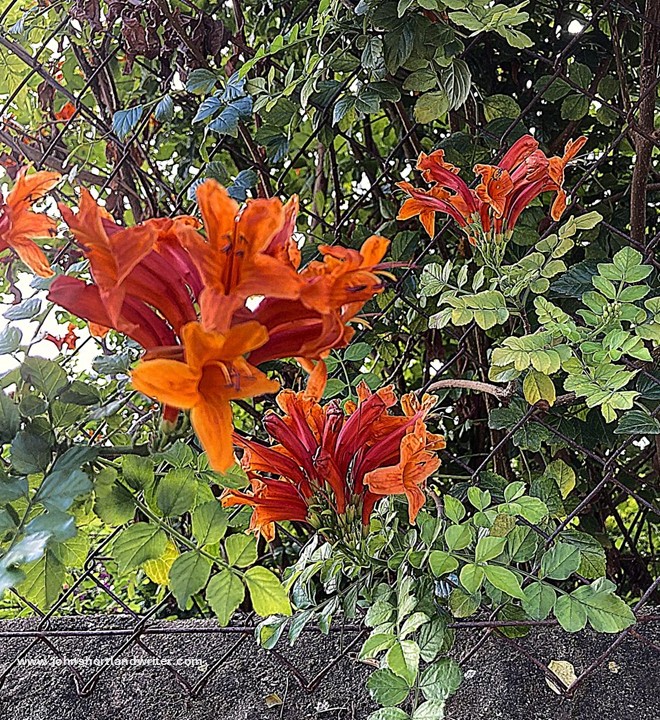
Campsis (Trumpet Vine) – orange trumpet flowers and attractive leaves for a sunny wall
Ceonothus – E, Sh,  smothered in powder-blue flowers during summer
Chaenomoles – E, Sh, white or pink flowers in late winter/early spring
Clematis – plenty of varieties to choose from including evergreen ones – check labels for size as some can require a lot of space
Forsythia – Sh, prune after flowering which takes place in early spring – see photo
Jasminum nudiflorum (Winter Jasmine) – N, Sh, flowers throughout winter
Osmanthus – E, Sh, early-flowering, scented – clip immediately after flowering ends to keep flat against wall
Rhamnus ‘Argenteovariegata’ – E, Sh, variegated foliage, prune to keep flat against wall in spring

Low Walls:
Daphne – E, Sh, very scented flowers but very slow growing
Euonymus – E, N, Sh, Cl, can be grown a sa shrub or clipped flat against a wall, some are self-clinging
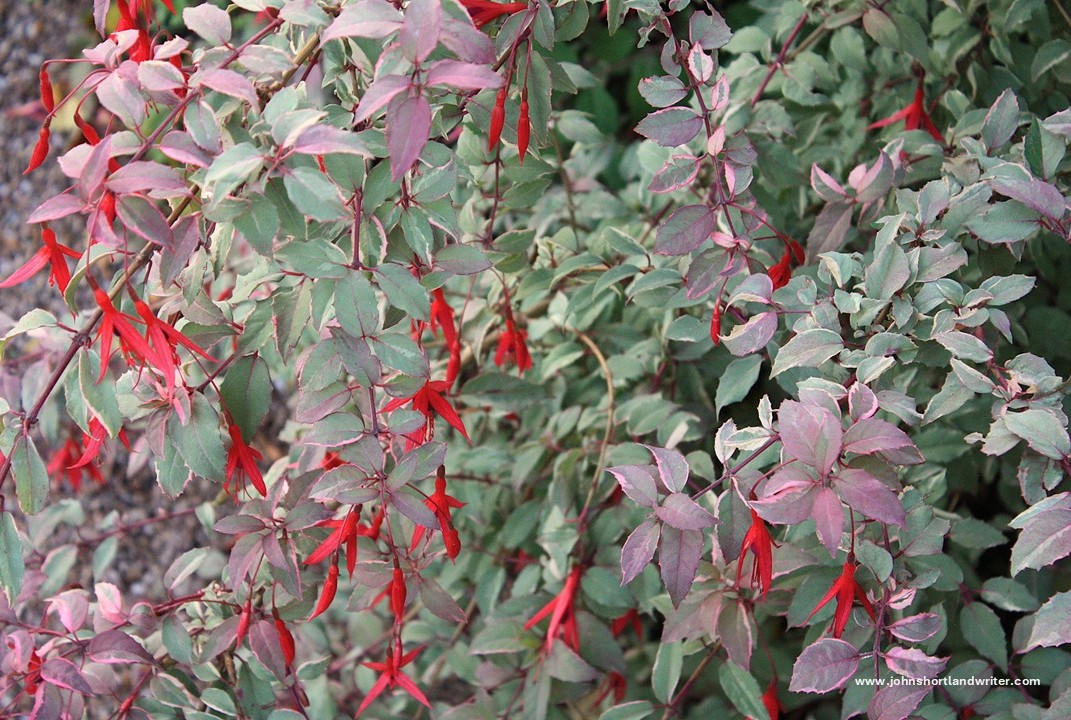
Fuschia – Sh, varying heights, the smaller-flowered varieties are more suited for growing against walls
Helianthemum – E,Sh, very low growing but smothered in flowers through summer, clip after flowers to keep tidy
Lavender – E, Sh,likes sunshine for best flowering
Nandina – E, N, Sh – trouble-free, needs no  pruning
Perovskia (Russian Sage) – Sh, silvery foliage and blue spires of flowers from mid-summer.  I’ve grown it successfully on a shady wall although not usually recommend for this.  Prune back by half in late autumn and then again in early spring to keep bushy
Potentilla – E, Sh, bushy long-flowering plants in varying colours

I recommend looking up these plants on Google to see more detail.  Also, there are many roses that can be considered including some that are fine for north walls.  Apples, pears and plums fruit well when grown against walls of any aspect, as do apricots and peaches if the wall is warm and sunny enough.

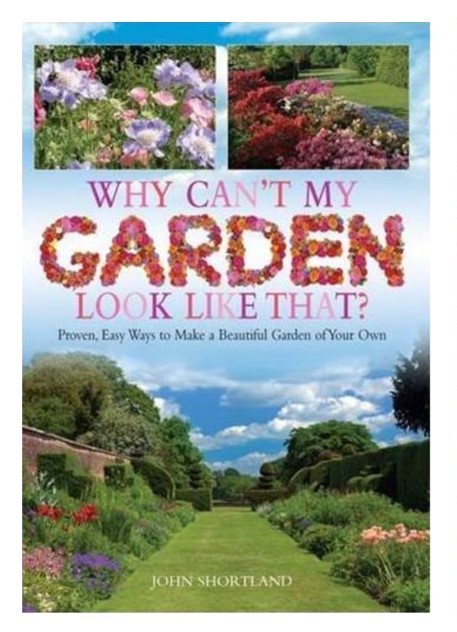
For similar information on how to make both your garden and gardening more pleasurable, why not take a look at my book Why Can’t My Garden Look Like That? It’s written for newbie gardeners as well as those with more experience and covers everything from design to planting and maintenance.  In it, I reveal some of the secrets that I used when Head Gardener to large, country estates with gardens open to the public, where the garden had to look great all the time.  All written in an informal, no-nonsense approach.  Makes a great gift and is available from bookshops and, of course, Amazon.


Mentors – part 2

In my earlier post on mentors, I asked the question “what makes someone a mentor” and do they realise they have actually become one. Of course, the answer will vary for there are many reasons why people do it, and equally a number of reasons why someone needs it.  My experience is that it is only with hindsight that I realise I had four mentors in my life and all would be amused at my describing them as such. 

Lorna Dick French, Cyril Pamela Heber Percy

In part one I told of how I met, quite by chance, Dick and Lorna French who had a remote hill farm on Exmoor, a National Park in England’s West Country.  I was aged sixteen and, despite our age differences (essential for mentoring) a close friendship developed that lasted until their deaths many years later. [Their story can be found here] Fifteen years after that first meeting, I met another couple, Cyril and Pamela Heber Percy, and although of a very different background from Lorna and Dick, they too took on the role of mentor.

Woodlands Cottage, the Heber Percy’s home

In 1983 I had moved house to a small village in the Chilterns.  Although I consider myself a ‘Chilterns man’ I had always lived at their foot, first by the River Thames and, later, by the steep escarpment to the west.  Now I was living in one of the highest villages, surrounded by wonderful bluebell woods and prone to quite different weather than seemingly, everywhere else.  Like many hilltop villages it was a straggly affair, a mile long but with the houses scattered first one side of the road and then the other.   Our house sat opposite the common – a wide, open piece of land although by us it had been invaded by bracken and hazel scrub where Dormice could be seen climbing amongst the branches.   Wild cherries and raspberries also grew there and with a small pond that had once been the village’s only source of drinking water, it was very quiet and very lovely.     

There was a small pond amongst the cherry trees, once the village water supply
The village was surrounded by wonderful beechwoods awash with bluebells each spring

Soon after our arrival, there had been a knock on the door. Standing on the doorstep was an elderly gentleman, very upright and with a clipped moustache he looked every part the retired army colonel which he was.  With no introduction he barked, “what religion are you?”   Before I could answer, he continued, “Of no matter, we need bell ringers.  I’ll see you at practice tomorrow, 7pm.”  Of course, I didn’t go!  Our next meeting was one evening when out walking.    Hearing a lot of shouting and cursing I could see a man of similar age to me having difficulty with ‘boxing’ (loading) his horse to transport it back home.  No matter how he tried the horse refused to walk up the ramp and into the lorry.  As I drew level, the Colonel holding a whisky in his hand also appeared ready to give advice. The young man looked very dismissive at his suggestions but that changed after the Colonel took hold of the reins, jumped onto the horse’s back with an agility that belied his years and cantered away before turning and riding it straight into the lorry.  “Don’t stand any nonsense in future” was all he said as he tied the horse securely.  Turning to me, he said, “must be time for another whisky.”    Both the rider and I had learnt a valuable lesson that evening – never judge someone’s abilities by their age.

Boxing – or in this case, unboxing – a horse

The Colonel and I spent the rest of that evening in his home drinking whisky and discussing all manner of things, Pamela, his wife, joining us.  Sitting back in a comfortable armchair, I took in my surroundings, my eyes landing on a small photograph sitting on a shelf.  It was of two army officers on duty outside Buckingham Palace.   Cyril noticed my interest immediately – another thing I was to discover: he was exceptionally alert and noticed everything.  He explained that the photo had been taken many years earlier and featured in the national newspapers.  It was of him and his brother, one in the Welsh Guards the other in the Grenadier Guards acting as Colour Bearers at the Changing of Guards ceremony, the first time that two brothers had had that honour.

Changing of the Guard at Buckingham Palace 1927 [copyright British Newspaper Archive]

Over the years that followed, Cyril would tell me of his military career, of his escorting Queen Wilhelmina of the Netherlands under enemy fire during her evacuation, of dinners in England at the Palace with the King. (Pamela complained of how tedious all the formalities were!).  Of even greater interest was to learn of his Edwardian upbringing for he had been raised at Hodnet Hall, a large country estate in Shropshire.  He lived on the top floor in the nursery and each evening Nanny would bring him down to say goodnight to his parents where he would recite a poem and dutifully kiss his mother and shake his father’s hand.  Surrounded by liveried footman and other house staff, he preferred the informal company of the gardeners and gamekeepers.  Through them he developed a deep love for the natural world and keen observational skills which he passed onto me.  Walking together, he would point to a barely visible gap in a hedge and ask me if a hare, fox, badger or deer had made it.  Of course, I got it wrong but he persevered until I was able to tell the difference.

Hodnet Hall, Cyril Heber Percy’s childhood home
The Colonel taught me to recognise the different paths wild animals make (in this case, a badger)

During this time I was still working indoors in the retail fashions business but he taught me a lot about gardening too for the gardens at Hodnet were considered one of the finest in Europe.  You have to think big, he would say, immediately followed by “and you have to think small”.  To prove the point he would get me to lie down staring up at the undersides of large leaved plants, and then, on my knees, examine the different shades of green that could be found in the tiny leaves of wild thyme.  To get me to understand the wonders of the natural world he would say, “think like a child but always act like an adult”.  Years later, in my present career, I remember this advice and concentrate on elements of surprise as well as leaf texture when designing gardens.

When you look up at a plant you see a quite different world….

Pamela, also would tell me stories of her life.  Born into Irish aristocracy she had a very different upbringing to her husbands for there was the insecurity that the fight for Irish independence would bring.  There were stories of hiding in secret passageways within the house ready to escape if a violent attack took place, Fortunately, this never happened, perhaps because her mother took her social duties very seriously and would visit the poor and the sick to make sure that they never went hungry.  Pamela would accompany her mother on these visits and so from an early age saw how frugally ‘ordinary’ people lived.  It also gave her the ability to empathise with people from all walks of life and to treat them as equals.

Pamela Heber Percy

Over the years, the Heber Percy’s taught me many things, one of which was to cast a fly.  Both the Colonel and Pamela were expert salmon and trout fishers.  When I mentioned how much I enjoyed spinning for pike, Cyril had shaken his head and joked that it was very poor sport.  Venturing out onto the lawn he pointed to a fallen leaf – “that is your trout” – and he patiently watched and corrected me as I tried to get the line to drop close-by,  After I had mastered that he made life more difficult by pointing to leaves under low hanging branches and from there, to leaves floating on the surface of the swimming pool.  Unaware at the time, they gave me lessons in accuracy and perseverance as well as a useful fishing skill.

The Colonel: Cyril Heber Percy

It was a sad day when I heard that the Colonel had died.  He was buried, with full military honours at Hodnet, his childhood home.  We had always planned to visit the house and gardens together one day and now we were, although not in the way we had planned.  I felt surprise, pride and honour when I was ushered to the front of the church to sit with the family.  As the Last Post was being played from the top of the church tower I felt my lower lip tremble only for it to be controlled by hearing the Colonel’s voice whispering, “not very British!”.  Soon after his death, Pamela moved house and although not too far away, I saw less of her, and not many years after she also died.  I had lost two very dear and good friends.

Stained glass window at St Luke, Hodnet

And one final thought – I did learn how to ring the church bells!

Have you had a mentor or mentored someone?  What does it take for someone to become a mentor?  Our parents have probably the greatest influence on our lives so why does a mentor s role take on such importance? Let’s hear your story either in the comments below or, if you prefer, by using the Get in Touch tab at the top of this page.  Thanks to Diane Highton for posing the question that triggered this blog!

2024: A Year in Review – part 1

As we enter the new year it’s always a good time to reflect on the past twelve months as well as to look forward to what 2025 may bring. For me, 2024 has been a busy year. I remember many years ago an ‘old boy’ telling me that when you reach the age of sixty, life is downhill all the way. I was in my thirties at the time and so believed him. I’m now in my early seventies and I can’t say that I agree with his pessimism. Funnily enough, he lived well into his nineties and, for most of that time, enjoyed rude health so he proved himself wrong too! The only way to tackle ageing, I’ve decided, is to embrace its positive aspects – no mortgage, wisdom (ha-ha!) and more time to do the things that matter to you. Of course, good health is important and maintaining balance and staying active helps no end. One of the reasons why I’ve not retired completely.

John Shortland, summer 2024

Tewkesbury, a town in Gloucestershire on the River Severn – the UK’s longest river – is just a few miles from the edge of the Cotswolds. It’s an ancient town that I have driven through dozens of times but early in the year I made the effort to actually stop and explore its narrow streets and abbey church. I hadn’t realised that when entering the church I would be staring at a suspended globe which, when standing 211 metres away from it, is the exact size and view of Planet Earth you would see if standing on the moon. When I first saw it ‘suitable’ music was being played but it was only after that had stopped that I found the exhibit strangely moving as it rotated slowly in total silence. That’s another thing I’ve noticed as I’ve grown older – how much I enjoy silence! The church is well worth visiting for it is now almost one thousand years since it was built and is one of the finest examples of early Norman architecture in Britain. Unable to visit? Then click on the link here to see lots of photos.

The abbey church looms over the ancient houses and narrow streets of Tewkesbury
Planet Earth, mysteriously beautiful

In March, we travelled north to the county of Yorkshire to watch a friend take part in the oldest horse race in the country. The Kiplingcotes Derby has been run annually since 1519. Tradition sys that if it ever stops taking place it will never happen again so all through the Covid restrictions only one horse took part! For this race, the 505th, dozens of riders took part for it is a horse race like no other: no finely maintained racecourse but a series of roads, lanes, field margins and tracks, a real test of endurance for both horse and rider. Our friend, who had never raced before was taking part to raise money in support of the local hospice. She reached the finishing post in good time and raised over ten thousand pounds in memory of a close friend. The race has one other completely bizarre quirk which makes it unique in the world of horse racing – to find out what that is you’ll need to click on this link here!

The oldest, continuously-run horse race in the UK
Safely past the winning post!

Later, in early summer we returned to Yorkshire for a week’s holiday spent in the pretty village of Austwick. We had planned to spend our time walking for it is excellent hiking country. However, my partner was nursing a broken foot and, later, during a hill walk on my own there, I hurt my knee badly so we were both hobbling about instead (what was I saying about staying active?!) There is always a positive outcome to everything, I find, and so we explored by car instead where we discovered the Courtyard Dairy. To misquote Paul Whitehouse, “if you like cheese, you’ll like these” for we’d stumbled across one of the top, award-winning artisan cheese makers in the country. With a restaurant, small museum, ice-cream and wine shops as well as a huge selection of cheeses, we were in our element. For lots of photos of the trip – and not just of blocks of cheese, click here.

The Courtyard Dairy – one of England’s finest artisan cheese shops
There are beautiful walks around the Yorkshire village of Austwick

I have been very fortunate in not just living in a beautiful part of the country but also being able to make my living from being in the midst of it. However, that hasn’t always been the case for before I embarked on my horticultural career I spent twenty years in the world of retail fashions. When I left school I spent some months on a sheep farm on Exmoor – the remote, hill country, now a National Park, in the West Country. That short time farming changed my life for I met some wonderful and inspirational people there who left me with a yearning for the outdoor life, However, I was dragged away by my parents to work in the small department store which had been central to my family for the best part of a hundred years. Fortunately, I had a happy time there but the desire to be spending my days outdoors never left me. This spring it was thirty years since I sold the business to follow my dream and so it seemed a good time to reflect on those retailing years.

How the family store began in 1904
The family store in 1994 when it was sold

A few months later the blog post (link here) had developed into a full-blown illustrated talk to over seventy people followed by press interviews and a printed history of the store which had been started by my great-grandfather. I am delighted that the story of the family’s endeavour has now been recorded for posterity. By complete coincidence, I was also contacted by Exmoor Magazine and my memories of farming at Brendon Barton have been included in an article on Dick and Lorna French who were the couple who welcomed me into their lives – and changing mine by doing so.

Recorded for posterity – the history of my family’s department store

At the age of 42 I took myself off to study landscape and estate management for two years at agricultural college. It was a huge gamble and one that fortunately came off for I found employment as Head Gardener to the European Youth Parliament, an educational charity that brought teenagers from all over Europe to debate world affairs. With some Polish blood in me I liked the idea of being part of the organisation. Next, and still in England, I spent some happy years working for a delightful Swedish family – even after my role as Head Gardener had ended I maintained contact with them as Consultant overseeing projects such as the creation of a lake and an arboretum. My next move was to the Cotswolds to manage an historic garden, Kiddington Hall, designed by the architect who had created the Houses of Parliament. It was after that, that I decided to go freelance which culminated in the career in designing and creating gardens as well as the commission to write the gardening book.

The historic gardens at Kiddington Hall

Little did I think, when I began college that my career would include a stint at the Chelsea Flower Show, Channel 4 Television, creating a new literary festival and a study tour of Hungary. My latest – and final – garden project has been the most exciting to date. How fortunate have I been?! As before, the press picked up on the thirty year career change and a double-page spread in the Bucks Free Press newspaper followed. To read more about the gardens I’ve created, or just to enjoy the photos, click on the link here.

The newspaper article

Related links/websites

Tewkesbury Abbey Church
Gaia
The Courtyard Dairy, Settle, Yorkshire
Yorkshire Dales National Park
Exmoor Magazine
Exmoor National Park
John Shortland
Berkshire College of Agriculture
European Youth Parliament

30 Years On – Sadness & Celebration (part two)

Earlier I wrote about the sadness felt within my family, as well as the wider community, at the closure of our small department store that bore the family name, Shortlands.  It had spanned the generations for almost one hundred years, firstly as Langstons – my great-grandfather’s surname, and then, after one of his sales assistants married the boss’s daughter, renamed Arthur Shortland.  Clever chap, my grandad!  Later still, during my tenure, the ‘Arthur’ was dropped.  I locked the doors for the final time thirty years ago this spring.  Last month seemed an appropriate time to celebrate its history and tell the story, not just of our family connection, but also of the incredible people that worked there over the decades.  It can be read in Part One by clicking on the link here.  I found the response to that blog incredible with so many people contacting me through my website or social media.  It was lovely, as well as humbling, to hear their memories and to know that Shortlands had not been forgotten after such a length of time.  Although I gave a hint in the blog, I was also asked what have I been doing since 1994.  In this post, Part Two, I bring the story up to the present date.

Shortlands Department Store 1994

A reaction to my choice of careers that I receive quite regularly is one of surprise.  Surprise that I once worked in the world of fashion, and wearing a suit and tie each day, or surprise that I am now working outdoors and wearing jeans and a t-shirt – although, I do have to look smarter on occasion [laughs].  When my retail career of twenty-five years ended, I was in my early forties and my future looked uncertain.  I toyed with various career plans, none of which appealed very much.  Unsure of what to do next, I decided to take a night class at our local agricultural college, Hall Place at Burchett’s Green.  Little did I realise, on the evening of my enrolment, that I would soon be working at the Chelsea Flower Show, working on a gardening series for Channel 4 television or travelling to Hungary, only recently free from Russian occupation, on a horticultural study tour.

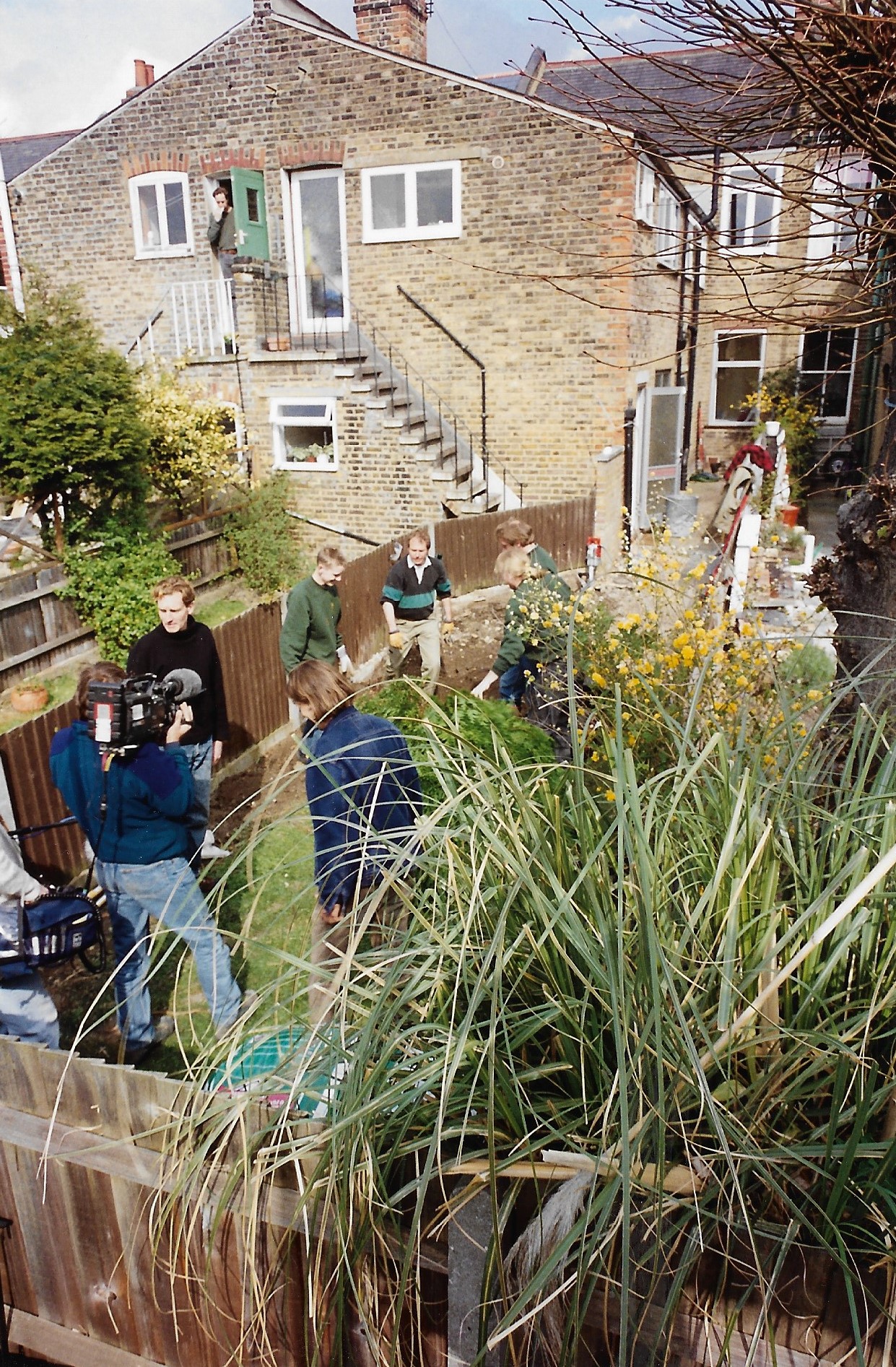
Filming with Channel 4 Television


My visit to Hall Place had ended not with a night class but a two-year, full-time crammer course in Horticulture where I studied Landscape & Estate Management.  Gardening had been the major hobby across the Shortland family for generations; I was the first in modern times to try and make a career of it.   Knowing I still had a mortgage to pay, and therefore failure wasn’t an option, I studied hard in a way that I had never managed in my school days and came away with a good qualification.  By then, I knew that I wanted to run gardens for large country estates.  I had the good fortune to be offered, during my training, a work placement with the Getty family, then the wealthiest in the world.  Their Head Gardener, Andrew Banbury, gave me various tasks and projects to carry out, frequently pushing me beyond my comfort zone.  I have a lot to be grateful to Andrew for.  When it was time for me to leave, I stepped straight into the role of managing gardens for a Swedish family who, again, were keen for me to develop further skills as well as their garden.  Over the next few years, I had the opportunity to develop an arboretum, create a lake and, best of all, to manage and develop a one-acre walled kitchen garden.

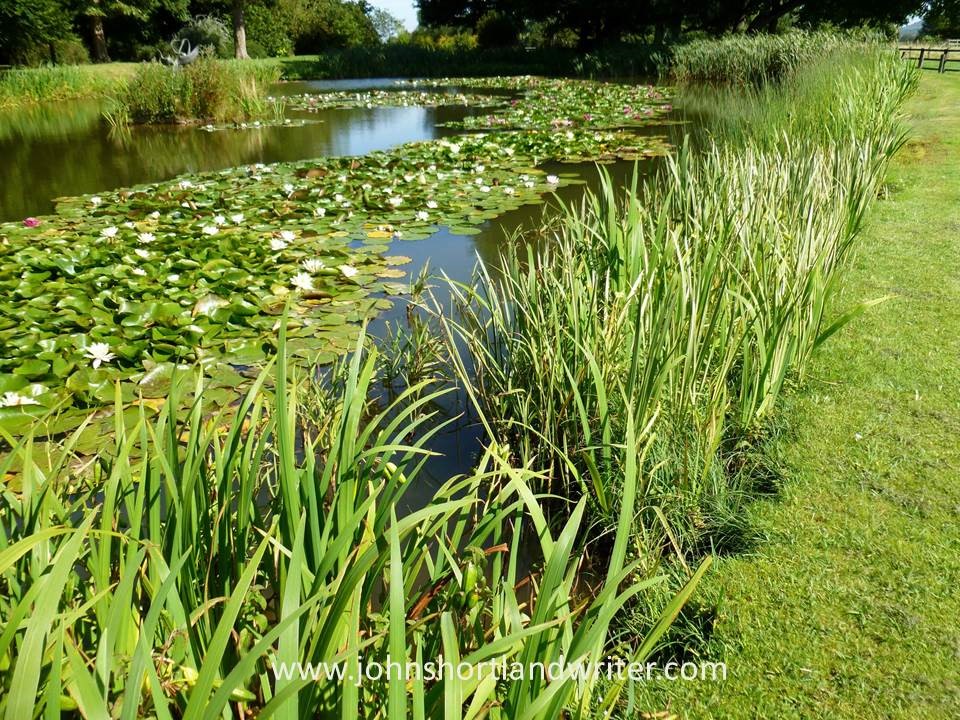
The new lake two years after construction

The Millennium saw a change once again for I left the Chilterns and the area I had known all my life and moved to the Cotswolds, there to manage an historic, Italianate Garden, Kiddington Hall.  This had new challenges but, although I enjoyed it enormously, the call of working for myself once again beckoned.  In 2005 I set up a design and landscaping business which, I am glad to say, flourished; now I have virtually retired.

Kiddington Hall

One of my last projects had been designing and overseeing a garden that has many elements to it:  a 50 metre ha-ha, a cottage garden, formal lawns, terraces, topiary, wildflower meadows and kitchen garden, most of which have been created from scratch.  As I watched the garden come to shape, with all the hard work being carried out by the owner’s own team of builders and gardeners, how grateful I was that I could now ‘pull the age card’ and let others do the physical tasks!

A section of the terraced rose garden
The Rose Terrace a few months earlier

When I moved to the Cotswolds in 2001, for the first time in my life I was no longer ‘a local’ and knew no-one.  Hearing that Oxfordshire was one of the few counties without a Gardens Trust and that one was being formed, I volunteered and for several years organised talks and visits to gardens which introduced me to many new people.  One, hearing of my attempts at writing suggested I joined the local writers group.  Feeling very out-of-place I did and before long the talk of ‘doing something big’ with books came about.  From those very casual thoughts I found myself part of a small team that created the Chipping Norton Literary Festival.  My title of Author, Agent and Publisher Liaison brought me into contact with many people in the literary world and soon I was commissioned by one to write a book on gardening.  Three years later it was me being interviewed and giving talks on stage and the radio, a surreal experience.

Being interviewed at the Chipping Norton Literary Festival

Looking back over the past thirty years I realise just what a chance I took with my career choice and how fortunate I was for it to have ended well.  It has taken me on the most incredible of journeys and given me the opportunity to meet/work with some very special people and places.  It has had both tearful and joyful moments – it has also had bizarre and funny ones too: being invited to play in a ‘friendly’ cricket match only to find myself bowled out for two by the Captain of South Africa, or sharing an ice cream with American model, and ex-wife of Mick Jagger, Jerry Hall, these being just two of them.  As with the shop, it has been a mix of celebration and sadness. I am so grateful that I have had the privilege of two careers both of which I can look back on with pleasure and a certain degree of pride.

Thirty Years On – Sadness & Celebration (part one)

How time flies by.  I know that’s a bit of a cliché to open with but, even so, it hardly seems possible that thirty years could have passed since that early spring day in 1994 when I locked the door of Shortlands clothing and footwear store for the very last time, and wondering where my career would go to next.  I was in my early forties and knew that I would have to do something to earn my keep and pay the mortgage but what?  It was a time of great sadness, not just for me and my family but also for our loyal staff some of whom had been with us for many years.  Thirty years on it seems time to write the shop’s story to celebrate it having been at the centre of community life for the best part of a hundred years.

Shortlands in the 1990s

The shop that was to become Shortlands began with my great-grandfather, William Bradby Langston, who had already established shops in Marlow High Street and in nearby Lane End. He was quite entrepreneurial, something he and his brothers inherited from their mother.  Poor Sophia, widowed in 1863 at the age of 34 with five children under the age of 13 and a baby due at any time needed to provide for herself and her family.  She set up a shop in her front living room which later expanded to become Langstons Department Store in Reading, Berkshire.  As well as those already mentioned, she and her sons between them also had shops in Boscombe (Hampshire) and Ilford (Essex).  Unsurprisingly, she is remembered as being rather a force to be reckoned with – you can read her life story, Rebel in the Family, by clicking here.

The first generations of retailers
l to r: My great-great grandmother Sophia Langston (nee Bradby); my great-grandfather William Bradby Langston; my grandfather Arthur Shortland

William opened his ‘Boot and Shoe Warehouse’ in Marlow in 1884 at the age of 22.  Seven years later he opened another, opposite the first, specialising in boating and tennis shoes as well as other sporting footwear.  When a newly built parade of shops became available in Bourne End in 1899 he established what was to become Shortlands.  At first the shop was tiny but by 1904 he had expanded to sell not just shoes but also mens and boys clothing.   Four years later William’s daughter, Nellie, married Arthur Shortland who had come to Marlow to work for William a few years earlier.  The newly married couple came to Bourne End and by 1915 Arthur was listed as the owner in Kelly’s Directory.

Langstons – the Bourne End branch c1910

The shop continued to prosper and during the 1920s the adjoining shop was purchased and ladies clothing and footwear as well as carpets, haberdashery, dress fabrics and knitting wools, soft furnishings, household linens and luggage were added to create Bourne End’s own department store.  The 1920s photo below shows my grandfather Arthur using the steam (clothes) press although it was a (much hated!) task given to my father Hedley as soon as he returned from school.

Langstons, now expanded and with my grandfather’s name on the fascia 1920s

My grandfather, Arthur Shortland using the steam press,1920s

With the outset of WW2 my father joined the army and it was left to the older generation, including my great-aunt Edith Shortland, to run the business.  Both the Langstons and the Shortlands were deeply religious and scrupulous in the way they behaved towards others.  My mother would tell the story of how when some silk stockings arrived (which were rationed and in short supply) she rather assumed that she would have a pair. She was told quite firmly that her name would go on the bottom of the list like anyone else – she never did get her stockings.  Aunt Edie was quite diminutive but with a voice that belied her stature.  One day she spotted a lady conceal some goods inside her coat.  “Jesus saw you do that” came a thundering voice from nowhere; the woman screamed, dropped the goods and her shopping and was last seen running down the street fearing the wrath of God was upon her!  After the war, my father returned to the business along with his brother Jack, later to be joined by their cousin Maurice Phipps.

A retailing family : four generations

During the 1960s the shop expanded again.  The garden and old shoe repair workshops at the rear of the property were built over and a new shopfront installed.  Made of aluminium, it was considerably ahead of its time and was featured in several design magazines both here and on the Continent.  By the late 1970s both my father and my uncle Jack had died and soon after the shop was due for another major refit.  The interior, as well as the fascia, was modernised and the displays became more open and accessible to customers.  Until that time stock was kept hidden away in drawers and boxes – if you wanted to buy something it was necessary to ask and an assistant would show what was available.  Personal service, nowadays a rarity, was the norm back then.  How times have changed!  To make space for the improved selection of clothing, all of the other departments closed and the shop concentrated on mens and womens fashions and footwear for all the family.  The toiletries and gift department was retained; the soaps and potpourri helping to make the shop always smell rather nice!

The ‘new and modern’ shopfront in 1969 featured in design magazines of the timeby the 1990s it was looking tired and old-fashioned
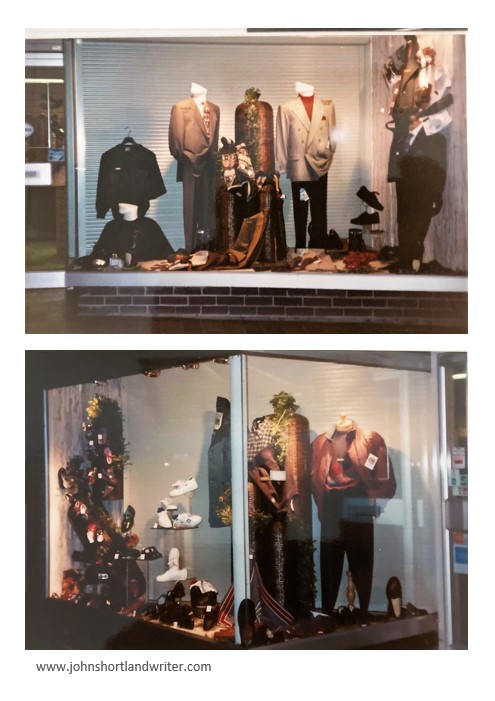
By the 1990s the displays were brighter and (to use 2020s speak) more ‘on trend’

I suppose it was because the shop was ‘always there’ that we have no photographs of the shop interior through the decades which is rather sad.  Fortunately, I did take a few in the early 1990s and these will probably trigger some memories for local people.  The 1990s brought new challenges for the business with recession and changing shopping habits sounding the death knell for businesses like ours.  I had joined the firm in 1971 and my business partner, John Pheby had begun even earlier, as a lad, working for the family.  It was a hard but inevitable decision that we decided to close and were fortunate to find a buyer almost immediately.  They converted the property to three shops and the accommodation and stockrooms above to flats.  Since that time Bourne End has changed quite considerably and most of the old shop names (and several of the buildings too) have disappeared.   I believe that there must be photos of the interior held by local people somewhere – it would be wonderful to see them.  I seem to recall Jean Peasley taking photos during our last few days…

Menswear Department, 1990
a small section of the Ladies Fashions Department 1990

So, what happened to our employees?  In the early days of my tenure there was Ivy Taplin (Akela to us cubs of the late 50s!), Yvonne Ludgate, June Charlton (later to become June Billinghurst), Cissy Hyde, Mrs Faulkner, Liz Hill and Diana Spokes.  Later, Pauline Harvey, Marjorie Kane, Wendy Manley, David and Marian Bratter, Diane Douneen, Kath Bowdrey, Iris Halstead and Cissy Vickers. I’m afraid I can’t remember the names of them all but some of those listed will be familiar to Bourne End locals – please don’t be offended if I have left you out, you were all valued!  The younger generation I purposely have not named but they aren’t forgotten either – I still keep in touch with several of them thanks to social media.  It was thanks to a succession of great staff through the years that the business was so successful.  It seems appropriate to thank our loyal customers too – I can still picture many of them and the frequent kind comments that I still receive on social media shows that they haven’t forgotten Shortlands either which, after all this time, is rather humbling as well as very special.

Ladies Shoe Department display 1990

And what have I been doing the past thirty years?  Retailing had been a passion for my family for generations but I decided to follow another of the Shortland passions and forge a new and very different career – you’ll have to wait a short while for part two to find out what but the photo below may give a clue!


Part Two of this blog focussing on the last thirty years is now published and can be found by clicking on the link here

2021: A Year in Review – part 1

With restrictions on movement and socialising for much of the year, 2021 was definitely the year to remember times past, be it visits to favourite haunts or thinking about friends and family. As it was in the real world so it was in the blogging world.

In January my memories took me across the sea to Ireland and a visit to Clonegal, in Co. Carlow. Ireland is a beautiful country with an ancient history. The visit to Huntington Castle, very much still a family home, was very worthwhile as the building itself was interesting, and the gardens, perhaps because they weren’t ornate, relaxing to walk around. A visit to the cellars is a must for it is now a Temple dedicated to Isis. The Fellowship of Isis, started by members of the family, was recognised as a world faith in 1993. I found the ornate decoration rather too theatrical for my taste, reminding me of a scene from an Agatha Christie novel. Take a look at the post by clicking on the link here and tell me what you think.

Huntington Castle in the south of |reland

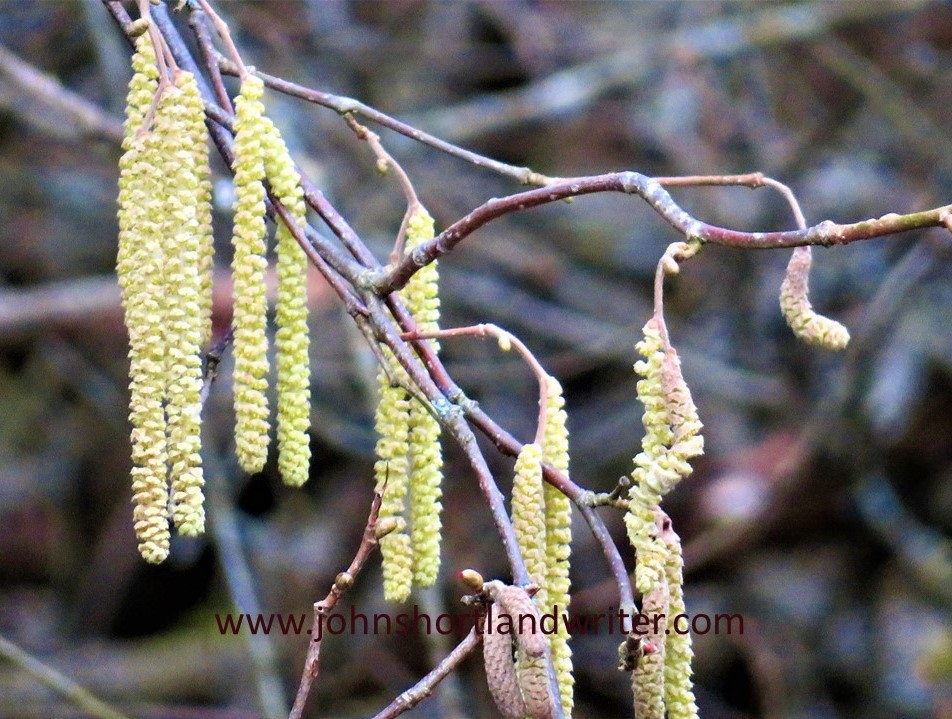
By February the earliest signs of the forthcoming spring are beginning to show. In the garden snowdrops and aconites are in full flower; in favoured spots early daffodils are starting to bloom. In the hedgerows hazel catkins hang in clusters shedding clouds of their golden pollen in the slightest breeze. Hazel, a native shrub, is also a useful one to grow in the garden. It’s pliable stems can be used in a myriad of ways – cut as pea-sticks, or growing into intriguing living tunnels. February’s blog post concentrated on these uses and looked at the ancient art of coppicing – a method of extending the life of the plant and providing plentiful cover for wild birds, animals and flowers. Described as an art, it is however, a very simple technique. Click on the link here to find out more.

Catkins or Lamb’s Tails – harbingers of Spring

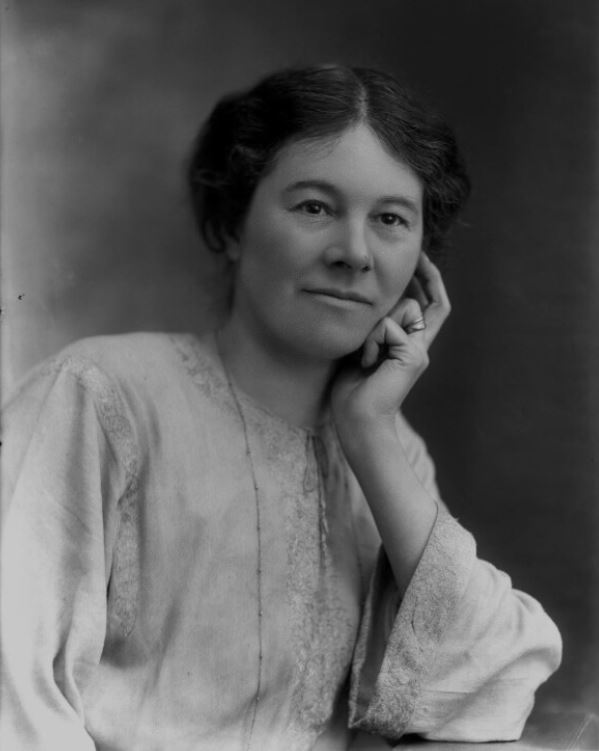
International Women’s Day occurs in March and I focused on the life of Lettice Fisher, the founder of the National Council for the Unmarried Mother & Child in 1918. Later, the charity changed its name to Gingerbread. A suffragette and economist, Lettice was also a cousin of my father and so family history came to the fore in this post (link here). Later in the year, the focus turned to her husband, H A L Fisher and his story but for March Lettice was the rightful star of the show.

Lettice Fisher, an ancestral cousin

In April, I was able to visit friends for a long weekend, a real treat after all the restrictions. I took the opportunity to go for a long walk in beautiful countryside. Rutland is England’s smallest county and was also the home of the poverty-stricken ‘peasant poet’ John Clare born in 1793. The walk took me past the old lime kiln where he worked and the village where he was raised – his poem The Ruins of Pickworth can be read in the blog post (link here) and there are lots of photos of the ruins as well as views along the paths and byways I walked. Several hours later, when I returned to my friend’s home, I was especially thrilled to have seen a group of wild fallow deer which included amongst them, a rare white hart,

The ruins at Pickworth were familiar to John Clare, the Peasant Poet

By May, spring is well and truly established and plants in the garden are flourishing. Everything is growing so fast that it can become overwhelming and with so many tasks to carry out, early supporting with canes and twigs can easily be forgotten until it is too late. Although this can’t be done to every tall plant in the garden, the Chelsea Chop is a drastic but very successful method of treating herbaceous plants so that they don’t need staking at all. The biggest hurdle to overcome with this technique is finding the courage to actually do it! By clicking on the link here you will find a step-by-step guide. Even if you don’t do it to many plants, I would highly recommend that you do it to the Ice Plant, Sedum spectabile which always collapses just as it comes into flower – once you have, you’ll wonder why you’ve never done it before.

Sedum, the Ice Plant – the perfect candidate for the Chelsea Chop

For June, it was back out into the countryside to check the state of a venerable old ash tree. Ash Dieback is a serious, recently imported disease that threatens to eradicate one of the most important trees in the British landscape. Younger trees in our parts of the Cotswolds are already showing signs of it, some much more severely than others. The farm where we keep our horses has one ancient tree that has stood sentinel over the adjoining fields for centuries (lots of pictures on the link here). It’s trunk is hollow and owls and bats roost within it; it must have seen generations of them leave its shelter at night. Likewise, it must have sheltered in the day many a farm labourer seeking shade during hot, summer harvests. It will be a sad day when it dies and we just have to hope that it may show some resistance to this new disease. I, all too well, remember as a child when a similar fate overtook elm trees and changed the English landscape forever. Let’s pray that it doesn’t come to that.

We ride past an ancient ash tree most days

If it sounds as if this review is ending on a sad note, don’t despair – July to December will be following shortly and there’s plenty of posts on an upbeat note there. My family’s fascinating exploits feature in some of them. Covid restrictions have given me plenty of time to root out the old stories of them – to be honest, I never knew what an interesting and, sometimes, brave bunch they are!!

Discovering the Five Senses in Lockdown

It sometimes takes a crisis to make us re-evaluate what is of importance in our lives and the present one of Coronavirus/Corvid-19 surely has to be the greatest that we will collectively face. Now, several weeks into lockdown we have all been developing new patterns to our daily regime, one of which may well be taking more exercise. Never before have we placed so much value on fresh air and being able to walk freely whether it be in our parks, gardens or open countryside.

Marlow watermark

                           Riverside path, Higginson Park, Marlow (before social distancing).                                 The river is the River Thames in Buckinghamshire

Living where I do in the Cotswolds surrounded by fields and with woodlands and the river close by it is relatively easy for me to enjoy the open space. For others able to take advantage of their enforced free time, it may involve a longer walk and I have certainly noticed an increase in the numbers of walkers and cyclists here in the valley. I have also noticed that for many of them one aspect of their lives hasn’t changed: as they walk their eyes are glued to the screen of their mobiles and headphones are clamped to their ears, seemingly unaware of their surroundings. It has made me think all the more of our five senses and how we use (or should use) each one of them when out exercising.

Nr Fingest copyright

Cycling in the Chiltern Hills

SIGHT For those of us blessed with the gift of vision, perhaps sight is the most important sense we use and perhaps the one we most take for granted.  Without it, it is still possible to enjoy one’s surroundings for the other senses become heightened but I doubt if anyone would deny the pleasure of seeing the beauty that surrounds us on our daily walks. Even within cities there is much nature to be enjoyed although I admit that sometimes it has to be sought with more vigour and awareness.

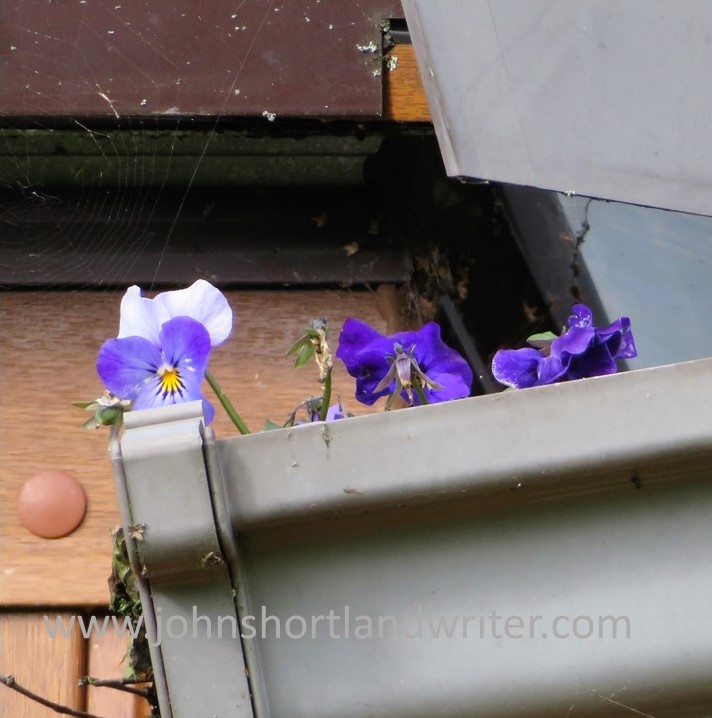
Viola watermark

Look everywhere – self-sown violas peep out from overhead guttering!

At this time of year, more than any other season, there is much to see. Tight leaf buds unfurl into an explosion of vivid green foliage, iridescent wherever sunlight filters through; young ducklings tumbling into the park pond to take their first swim. But it isn’t just the natural world to be seen anew, there are other things too. Although it had been there for more than a hundred and forty years (and I’d walked past it very day for twenty) the date scratched into the stone on this wall had gone unnoticed.

Date stone watermark

Who scratched this date into the old stone wall and why?

HEARING Along with sight the second most important sense we use on our daily amble. Apart from the glory of birdsong there are other sounds that bombard us when out walking. The wind flurry that makes the catkins tremble and shed their pollen, the stronger breeze that make the twigs and branches clatter gently against one another. Then there’s the rustle in the undergrowth. Stop and wait silently and with patience you may be rewarded by the sight of a little field mouse going about its daily chores or a rabbit venturing out to feed.

Field Mouse watermark

patience was rewarded when this little field mouse ventured into the open

Altamont Gardens (8) watermark

… and also this rabbit

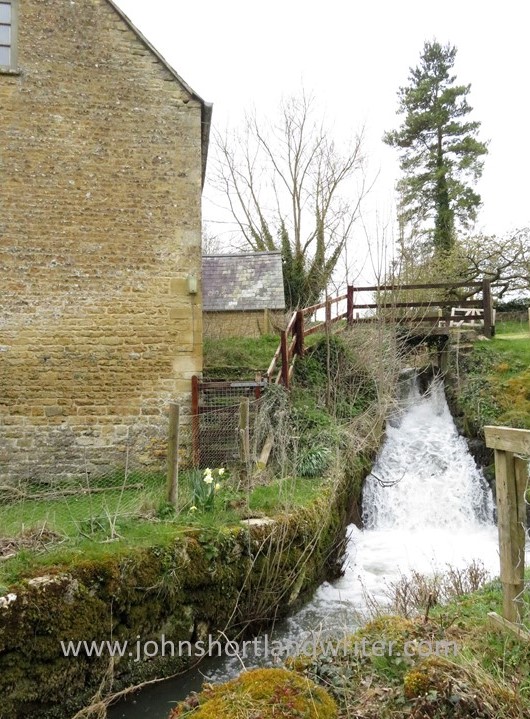
The sound of the river alters constantly. The smooth, barely audible glide of the water changes to a tinkling of soft musical sounds, its flow interrupted by a fallen branch. A few yards further downstream they rise to a crescendo as they crash and tumble over the old millrace before returning to silence as the flow stills in the calm of the millpond.

Radford Mill (1) watermark

The old millrace 

Radford Mill watermark

the calm of the millpond

TOUCH   In the present crisis we are sensibly being discouraged from touching things unnecessarily. Out on walks perhaps care may be advisable when opening gates or climbing stiles but, if you do, take a moment to think about what you feel. Heed the cold steel of the metal five-bar gate and the way it slowly warms beneath your hand; feel the rough timbers of a stile worn smooth from much use over the years. Of less concern health-wise – and all the more pleasurable for that – become aware of the softness of new horse chestnut leaves; later in the year they will become as harsh as sandpaper. Run your fingers across the twisted, grooved bark of the sweet chestnut tree and stroke the furry softness of the aptly named ‘Lamb’s Ears’, the favourite garden herbaceous plant Stachys byzantina.

Sweet Chestnut 4 watermark

The deeply grooved bark of the Sweet Chestnut tree

Stachys byzantina  Lamb’s Ears

SMELL   The scent of spring is everywhere at the moment and to be delighted in. However, the sense of smell is also a powerful trigger of long-forgotten memories. In a few weeks’ time the sweet scent of drying hay in the meadows may recall childhood farm holidays but for now there is the unique smell of new-mown lawns. Both start off as freshly cut grass yet their scent is so surprisingly different. Likewise, compare the subtly differing fragrance of apple and cherry blossom, both in their full-blown glory right now.

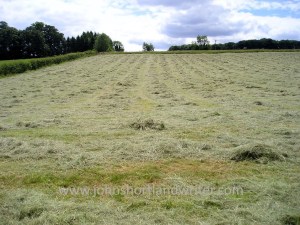
Drying hay before baling

The smell of freshly-mown grass…

Without even leaving home, squeeze the leaves of the herbs on the kitchen sill and notice their variation in scent, their colours and textures too. Early morn in the woodland, especially after warm rain, the delicate perfume of bluebells quickly disappears as the sun becomes stronger. Half-close your eyes and glory in their colour, in the silence and in their perfume and leave all cares behind you – if only for a while.

discover the different textures & scents of herbs

The vivid greens & blues of an English beechwood in spring

In town, the scents are also there just waiting to be noticed. Rain falling on roads and pavements or scorched by hot sun both produce delightfully tarry smells, one mild, the other strong. In the formal beds of the local park flowering bulbs stand in regimental rows; each have a unique scent which rises in the air to mingle with the vanilla fragrance of wallflowers. The wallflowers, their dull green foliage barely noticeable throughout the winter, now shout out the arrival of spring through the colours of their flowers of brick red, orange and yellow.

Tulips & wallflowers – a favourite park bedding combination

TASTE   In shaded places where the soil stays moist you may be greeted – even before you arrive – by the pungent scent of wild garlic. A prolific carpeter of the woodland floor its leaves and flowers make a useful ingredient to spring salads. Wild garlic or Ramsons to give it it’s country name, is fickle where it will grow. In some places that would seem suitable, not a single plant can be found. A less common member of the onion family to be found in the wild are the chives of our gardens, they grow along road edges and field boundaries locally. It is thought that they were spread by the old drovers of centuries ago so that they could harvest them along the way to liven up a bland meal. There is no doubting its identification, disturb the tubular green leaves and the familiar scent is immediately released.

Ramsons grow in damp, shaded places

It is not only the onion family that can be nibbled en route. Richard Mabey in his book Food for Free, published many years before foraging became a ‘craze’, suggests nibbling on the half-open buds of hawthorn. Many a country child has done so over countless generations and perhaps that is how they got their old name of Bread and Cheese. To me, they only have a slightly nutty taste and texture.

Hawthorn leaf buds are not really worth eating!

As a boy, brought up close to the River Thames, the hollow stems of the common reed were a regular source of pleasure for the soft pithy centre could be drawn out by pulling the stems through clenched teeth. Close to my present home there is also a small reedbed. These tall reeds have something to offer every one of the other senses too: sight – the pleasure of watching petrol-blue damsel-flies sunbathing on the stems; hearing – as they sway and rustle with the slightest breeze; touch – the coarseness of the leaves, a contrast to their smooth stems; smell – those of the river as it seeps around the roots, a heady mix of wet mud and wet greenery.

Only the male of the Beautiful Demoiselle damsel-fly has petrol-blue wings & body

So, within the bounds and restraints of the Covid-19 advice when out on your daily exercise, remove the earphones, place the phone in your pocket and use, really use, every one of your senses. Not only will you notice more, you will wonder how you never managed to notice them before. Stay safe, stay alert and take this unique opportunity to discover a new world on your doorstep.

Finally, one word of warning. Only try tasting wild plants if you are confident they have been identified correctly. If you decide to forage, do so responsibly and only pick a few leaves at a time. Make sure that all plants for consumption are free of pesticides and other contaminants, especially those growing in or near water.


How To Grow Tomatoes With Little Effort

It may seem odd writing about growing tomatoes at the time you should be harvesting them but it is often the case that when you see a plant growing somewhere that is the time you wish you knew how to grow them.  As regular readers of my garden articles will know, although I love gardening I also like to achieve great results with the minimum of effort and tomatoes are not an exception!  Effortless gardening doesn’t mean bad horticultural practice for you can hardly expect great results from shoddy workmanship wherever your interest lies.  All the photographs below demonstrate that it is possible to have superb tomatoes without devoting every spare moment to growing them.

Tomato 'Moneymaker' watermark

Perfect tomatoes can be grown quite easily using my method

As is often the case, I discovered this easy way to grow tomatoes out of necessity: a client wanted them but they only visited their country house irregularly and I could only devote one day a week to maintaining their grounds.  That left about fifteen minutes a week for the tomatoes.   This method, by the way, only works for plants grown in containers.  Although they were grown in a greenhouse there is no reason why the same method could not be used for growing in pots outdoors although they are more at the mercy of the usually variable British summer weather (not variable this year, 2018!).

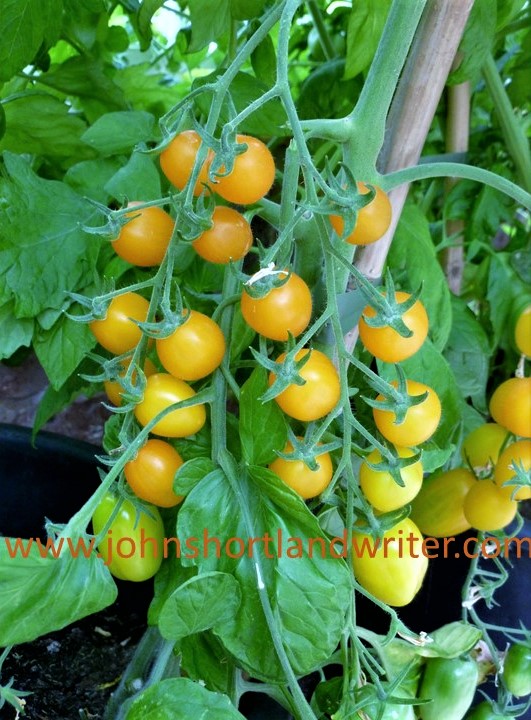
Tomato 'Golden Sweet' watermark

Tomato ‘Golden Sweet’

All garden plants, whether grown in containers or in the garden border require good growing conditions and this starts with getting the soil or potting compost right.  Tomatoes are greedy feeders and books and articles always advise feeding the plants on a regular basis as soon as the first flowers show signs of turning into fruit.  That is far too time consuming for my fifteen-minute rule!  Instead, use a quality compost.  I used Carr’s potting compost which is made from composted farmyard manure; although not the cheapest it is well worth paying the extra cost for the results that are obtained.  There are, of course, other manufacturers that do something similar which, I daresay, will achieve similar results.  To this compost I mix in several handfuls of horticultural grit and double the recommended amount of water-retaining granules – these swell upon contact with water, and release it gradually thereby reducing the necessity for regular watering.

Tomato 'Cherrola' F1 watermark

Tomato ‘Cherrola’

Tomatoes are easy to grow from seed, sowing in gentle heat in February and there is a huge choice of variety.  For ease and speed, I purchased young plants from a garden centre once I had no concern of late frosts killing them.  The pots were filled to within a couple of inches of the brim with the compost mix which I had pre-moistened.  As a guide, the compost should feel damp but you shouldn’t be able to squeeze water out of it.  Plant three tomatoes in a 20/25 litre plant pot placing a sturdy cane by each plant.  Stand the pot on a watering saucer or tray and water well.  Gardening rules state that tomatoes don’t like standing in water but I found that by using the saucers I could leave them with a good supply to last them the week.  By the time of my next visit, the compost and tray were dry but the plants unaffected by either the standing water or the drought.

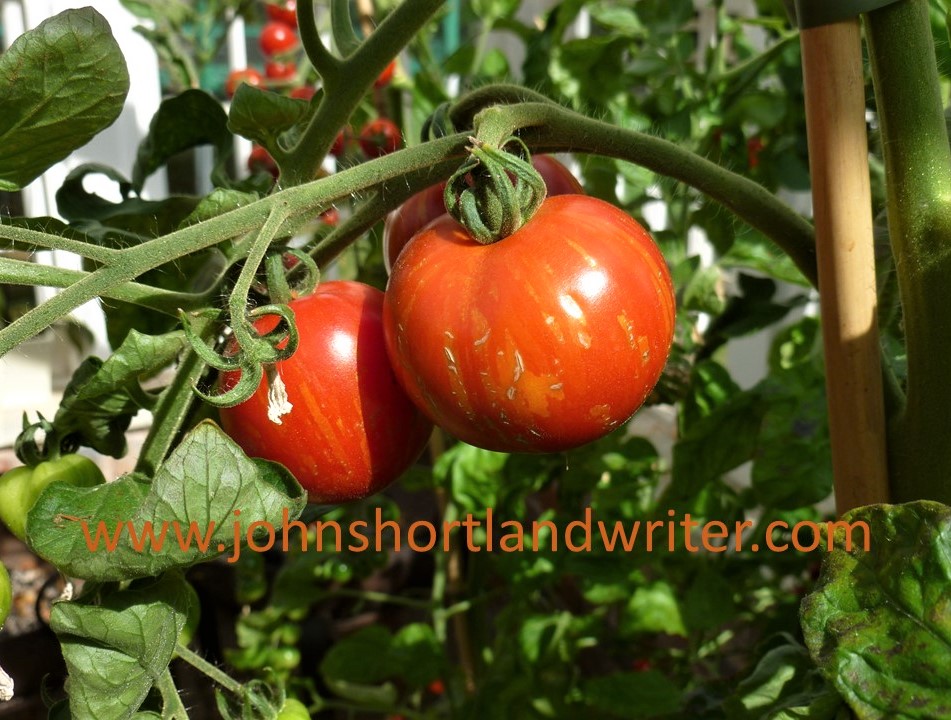
Tomato 'Tigerella' watermark

‘Tigerella’, an heirloom variety of tomato with striped fruits

Tomatoes grow in two different ways depending upon the variety – bush or cordon.  With bush tomatoes you just leave them to grow as they will; with cordons it is recommended that you remove side shoots and tie the plant upright onto the cane.  Although the latter method sounds time consuming and fiddly it is a simple and quick task once it’s been mastered.  The secret is to remove any shoots that grow out of the union of the leaf stalk with the main stem – if done early enough they snap off with the fingers.  If you leave them they will need to be cut out with a knife or scissors.  Although it is possible to leave them in situ I find that the plants become very congested and difficult to manage which, in the longer term, means they are more time consuming to deal with.

Tomato 'Sungold' watermark

Tomato ‘Sungold’ – note how the plant has been ‘stopped’ when it had grown as tall as I wanted it to be.

And that’s it!  Just tie the plants to the cane as they grow and give them a really thorough watering once a week from the top of the compost until the saucer begins to overflow.  There’s no time-consuming feeding for the compost will provide all the necessary nutrients. And because the plants are growing strongly and healthily you are far less likely to be bothered by pests or diseases.  All the tomatoes in the photographs received no chemicals or other additives; all we had to do was to eat them.  If you’ve never tasted a home-grown tomato eaten the moment it is plucked from the vine then you’re in for a real treat!

Tomato Big Boy 1979 watermark

A photograph from 1979!  Tomato ‘Big Boy’, a beefsteak variety living up to it’s name!

Thinking Outside the Box(wood)

Over the years I must have hand clipped many miles of box (in the USA, boxwood) hedging and once the knack is mastered it can be quite therapeutic.  The main rule to follow is to remember that it has to be precise for there is nothing worse than a straight, level hedge that is clipped unevenly.  It irritates the eye as much as a picture hanging crookedly on a wall.

Box Hedge Clipping (2) watermark

Patience and plenty of time are key factors in ensuring straight lines

I can’t say that I feel quite the same about topiary.  I can admire the craftsmanship that goes into producing weird and wonderful shapes but it is so easy, in a lapse of concentration to, say, cut the ear off a teddy bear or the beak off a peacock.  As a consequence, I find it rather stressful.  Cloud topiary is far more forgiving but, again, it doesn’t really “do it for me.”

Box Cloud Topiary watermark

You need even more patience to clip topiary

Perhaps the most rewarding design I have created was turning four rather scruffy and unbalanced squares of box into simple but elegant cubes.  Yes, it was topiary but to misquote Star Trek “it’s topiary Jim, but…”  To begin with, I was faced by the four squares each with a rather ugly and thorny shrub rose growing out of their centres.  A consequence of this design was that the box couldn’t be clipped properly and neither could the rose be properly pruned.

Box Hedge Clipping watermark

The original design with roses always looked scruffy

To create the design the roses had first to be removed leaving a gaping hole in the centre of each square.  Fortunately, I had some reasonably tall box plants elsewhere in the garden that I could dig up and replant.  I soon discovered that it was impossible to plant them properly without damaging the existing plants.  My gamble of just standing them on the earth and then throwing topsoil over them to trickle through the branches paid off.  The soil covered the roots and probably much of the lower branches too*.  Given a good watering, the plants thrived.  Before trimming  all the outer edges needed to be marked with string lines for accuracy in cutting.

Box Hedge - Copy watermark

Without strings for guidance clipping the box into perfect cubes would be almost impossible

I thought about all sorts of fancy designs for the tops of the cubes and, as is so often the case with design, I decided that simplicity was the key to a satisfactory outcome.  Two cubes would have a raised circle and two a raised square.  It was essential that these weren’t too high – I didn’t want them to look like a combination of wedding cakes and pimples!  I found that it was impossible to mark these designs out and so they were created without guidelines, relying on my eye to tell me where and what to clip.  By their second year of clipping they looked as if they had been there for ever.

Box hedge Clipping (10) Year 2 watermark

The design will look just as good in winter when highlighted by frost or snow

Box is such a versatile plant to use and it is well worth experimenting with them.  Below are three photos of how I have used them: the first is the classic edging to a border; the second to bring focus to a set of garden steps; the third a mini-parterre to link two levels in a garden.  Your garden doesn’t need to be huge or grand to use box in these ways – the parterre was suitably small scale for a tiny town garden.  Have a go at creating your own box design – and if creating a topiary peacock is your thing, that’s fine with me – just don’t aske me to clip it!

Apricot & Blue watermark

The classic use for box – fronting a border

Box Topiary watermark

Giving focus to garden steps

Box Parterre watermark

Mini-parterre for a tiny garden


*This is also a good and easy way to create plenty of new plants for the buried stems will often send out roots.  When they do they can be severed from the parent plant to be grown on elsewhere.

Growing Sweet Peas – the lazy person’s guide

Imagine it is mid-summer, the morning sun is warming the day and you are gathering handfuls of pretty, multi-coloured and fragrant flowers to bring back into the house.  If this sounds like a heavenly dream then read on.  The dedicated gardener will need no further encouragement to grow sweet peas but for those less keen on gardening or with little time, they are still the perfect choice.

So, even if your idea of gardening is to sit in it with a glass of chilled, white wine, there is a quick and easy way to grow sweet peas for, at this time of year, pots of young seedlings are available from garden centres.  They are usually grown in a single pot with a dozen or more plantlets crowded together.  They nearly always come as a mix of colours but it is necessary to check that they are a tall-growing and scented variety.  Avoid buying the scentless and/or dwarf types, both of which I dislike intensely – why grow these when they should be fragrant and elegant?

Sweet Peas (3) copyright

Sweet peas grown informally on a ‘wigwam’ in the garden border

If the weather is reasonable and the soil not frozen, the seedlings can be tipped out of their pot, teased gently apart and popped in the ground about six inches (15cms) apart.  It is beneficial to make sure that the soil in the pot is moist so give them a good drink an hour or so before planting.  Sweet peas, being climbers, need something to clamber up: the traditional way are hazel sticks. These are ideal for the sweet peas attach themselves readily to the rough and twiggy stems.  If hazel cannot be found, bamboo canes also work well although the young plants may need a little helping hand at first to attach themselves – use any short twigs for this just to prop them up.  The canes, which are traditionally placed into a circular ‘wigwam’, need to be about 7-8ft long so that once in the ground they are about 6ft tall.  Apart from keeping them watered in dry spells and free from slugs and snails that’s it.  They will begin to flower in June and continue (providing you pick them regularly and never allow them to set seed) until the autumn frosts.  Incidentally, they grow well up fences too providing they get adequate sunshine.

Sweet Pea copyright

For more experienced gardeners and those that want to enter the local flower show try growing them as ‘cordons’.  With this method they are grown in straight rows on bamboo canes or strings to a height of 5ft.  A place in the vegetable garden is ideal as they can be readily accessed from all angles without treading on other plants.  The spacing is again six inches apart.  For the best blooms, remove the tendrils and any side shoots as they appear, also any flower stems with less than four flower buds. With no tendrils for self-clinging it will be necessary to tie the plants to the stakes with string or by using metal rings sold especially for the purpose.  When the plants reach the top of the canes and/or the flower quality diminishes, cut the plants free of their stakes and lay them carefully along the ground. Tie in the growing tips to their nearest stake and train as before.  The plants will flourish having been given a new lease of life.

Sweet Peas copyright

These sweet peas, grown as cordons, are now ready for layering

Sweet Peas (2)

The layering process

Sweet peas are readily grown from seed, either sown in pots or the ground in March/April or in pots in October.  I prefer to start them in individual pots regardless of the time of year and to protect them from the worst of any cold weather.  The seed does have a hard coating and many gardening books advise chipping the individual seeds with a knife.  Not only is this hard work and time consuming, I have never found it to be necessary.  The seed is both plentiful and inexpensive and if a few don’t germinate does it really matter that much?

The growing and exhibiting of sweet peas reached a peak in late Victorian and Edwardian times with many specialist clubs holding shows.  With patience and luck, who knows you may become a medal winner at your local flower show?  Even if you don’t, you’ll be rewarded by a garden full of colour and a house full of scent.

Book Cover

There is lots more no-nonsense advice for gardeners in my book “Why Can’t My Garden Look Like That?”  To take a peek inside the covers, click here.