A Good Walk Home

Both my partner and I like walking but, more often than not, we walk alone.  Somehow it just works out like that and there is no doubt about it, that when you walk without company you do see and hear so much more.  It isn’t that we chatter away non-stop – we’ve been together for  far too long for that!!  It’s just that with no-one to speak to, or alongside, one becomes far more aware of all that’s around you.  And with only the sound from one pair of walking boots the wild creatures are less aware or concerned of your presence.

Walking quietly it’s possible to get quite close to wildlife

Usually, from necessity, our walks are circular – either back to the car or back to the house if we’ve started from home.  Recently I cadged a lift to Duns Tew, just outside the Cotswolds but still in Oxfordshire and not that far from home and the secret valley.  The village is an interesting mix of houses and makes use of their local ironstone as well as the Cotswold limestone.  I find it fascinating knowing that I live on the edge of two quite different rock formations, 0ne literally as hard as iron and the other, soft and easily worked.  The photo below shows the pretty church built of yellow ironstone and banded with paler limestone – a familiar pattern in the locality.

The thousand year-old Church of St Mary Magdalen, Duns Tew

The houses vary in style and age as well as building materials.  Some have thatched roofs; others slate and some stone tiles.  The traditional village pub has a stone tile roof made from Cotswold stone split into thin tiles.  Just to confuse the unknowing, these tiles are known locally as slates even though they are not made of slate!  The craft of making these roof tiles is centuries old – they have even been found by archaeologists when excavating Roman villas (of which there are quite a few in the Cotswolds) which means the manufacture of them has remained unchanged for the best part of two thousand years.  The pub also has a drystone garden wall, also made from Cotswold stone for which it is so ideal and makes such a memorable feature of the Cotswold Hills.

Village houses: contrasting style and stonework. The thatched house was built in the early 1600s. There are a number of these old signposts still standing locally
The village pub: this dates from the late 1600s. Note the stone ‘slate’ roof

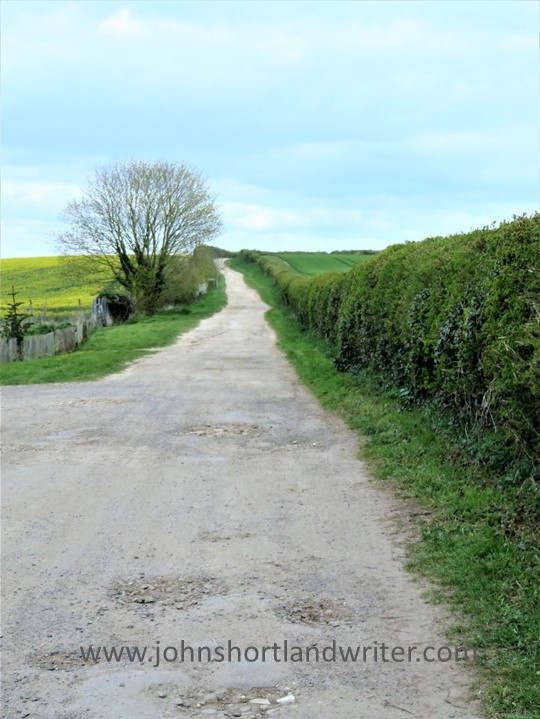
One of the great things about walking in England is that we have a huge network of public footpaths, many of which date back to pre-history.  Now that I realise (thanks to my overseas readers) that being able to walk across privately-owned land by right is almost unique I intend to write specifically about them at a later date.  Suffice to say here, is that it is possible to walk from one end of the country to the other over thousands of miles of paths that must not, by ancient law, be obstructed.  This path is beautifully maintained by the owner. Just outside the village, partly hidden in undergrowth, were the remains of old pony carts.

A well-maintained public right of way that is also a driveway to the owner’s house
Half-hidden at the back of a semi-derelict shed

The path opened onto cornfields, the wheat harvested and the remaining stubble giving a real autumnal look to the countryside.  The hedgerow is also offering its autumnal fruits for the picking – crab apples, elderberries and blackberries; the sloes although looking good won’t be ready to collect until after the first frosts.  The squirrels have taken all the hazelnuts (you have to be quick to get them before they do – but already the embryo catkins, the male flowers, are beginning to appear.  It will be early February before they show the familiar ‘lamb’s tails’ that release clouds of yellow pollen with the slightest breeze.

The path is now gras covered passes ‘twixt hedgerow and cornfield
Crab apples, blackberries, elderberries. Tiny catkins are just forming amongst the blackberries

Although the path, now a wider track, looks obstructed here, the farmer/landowner has to leave the gate unlocked so that people on foot or on horseback can pass.  Crossing the lane it returns to being a path, this time skirting a large wood.  Now hidden by high hedgerows in the spring when the leaves are all bare, the woodland floor is carpeted with bluebells.  In the centre of the field is a stand of mature oaks.  Why were they left there?  For me, they always have a mystical look about them; stepping into their midst the atmosphere changes as if its centuries old story is being told to those that might listen.  Perhaps it’s just my imagination but the fancy is palpable.

As this is a public right of way, one of the gates must be kept unlocked by law
The copse in the middle of the fieldwas it once a sacred site?

Once again the path changes character.  Now a track crossing a small stream, the movement of a young coot searching for food catches my eye and we watch one another for a while before it decides that food is far more important than me.  At such close range I see it snatch a small water beetle before it disappears into the undergrowth.  For a while the path becomes woodland again and then opens up onto a concrete track.  The concrete is all that remains of a WW2 airfield, far inland to be out of the range of German bombers.  I stop to listen and am met with silence.  How different the scene would have been eighty years ago.

The baby coot carried on about its business…
The old wartime concrete paths make easy walking

Finally back home.  Being an Englishman through and through (if you ignore the foreign bits of me!) I sit on the old stone bench in the garden with a refreshing cup of tea and lean back against the walls of our own stone-built house built 170 years ago.  Looking out beyond the garden I can’t help feeling how privileged I am to be seeing the best views of the whole walk!

Not too bad a view from home!

.

.

.
Winter Pruning of Limes, Hazels & Dogwoods

Hard pruning takes courage and gardeners are often reluctant to carry it out for fear of harming or, even worse, killing the plant. Once it is understood that more trees and shrubs are lost through neglect than by pruning the task becomes somewhat easier. In far too many gardens woody plants are grubbed out because they have outgrown their allotted space when judicious pruning at an earlier stage of their life would have allowed them to thrive and give pleasure for many more years.

Outgrown its space? Don’t remove it, prune it!

January and February are the perfect months for carrying out coppicing and pollarding and some shrubs like willow and dogwoods, grown for the winter colour of their bark, are actually improved by the process. Coppicing and pollarding are traditional techniques that have been carried out for centuries in woods and forests to provide a plentiful supply of fuel and fencing materials. As with all procedures, jargon evolves and coppicing and pollarding are just words that describe the removal of branches back to the tree trunk (coppicing) or, in the case of pollarding, the removal of stems to ground level. Somehow, if you just say to yourself, “cut off every branch” the mystery of the process disappears and becomes less intimidating.

Willows – some newly pollarded line a riverbank

Limes (Tilia) are very beautiful when grown as full-sized trees but become far too large for most gardens. They are better planted as parkland trees in a field, if you are lucky enough to own one, where there stature and grace can be appreciated from a distance. Too often they are grown where their branches overhang driveways where they drop their sticky honeydew over vehicles and become a nuisance. Most limes are host to tens of thousands of aphids (greenfly) which feed on its sap and then secrete the unwanted waste. Somehow, the gardener’s jargon word ‘honeydew’ sounds so much nicer than ‘greenfly crap!’ If you are determined to plant a lime tree in a confined space the Caucasian Lime, Tilia x euchlora which doesn’t have this problem is the one to go for. Remember that any tree in a confined space will need its size controlled so read on to find out how to pollard it.

Limes, when mature, are beautiful but very large trees

The time to pollard a tree is winter and January, when there isn’t too much to do gardening-wise, is the perfect month. I always aim to complete by the 31st which allows time to continue into February, if need be. By the middle of that month the sap will be starting to rise within the tree so it is sensible to complete the task by then. It is very straightforward to remove the branches for which you will need secateurs for smaller twigs, loppers for larger ones and a sharp pruning saw for anything bigger still. Which tool to use when? That too is easy to know. Secateurs and loppers should cut through the stems easily – if you need to twist the tool or the stem, you should be using the saw.

By midsummer there is plenty of new growth on this old willow pollard

Common sense will tell you that if you remove all branches from a tree there will be nothing left to offer any screening. This isn’t always important and coppiced trees send out new growth very rapidly as the weather warms up. However, for privacy or a different ornamental effect more careful pruning is required. All that needs to be done is to cut back any branch or twig that has grown beyond the space you have allocated for it.

A pollarded lime allee provides drama and a focal point
This lime allee has had its side branches retained to give denser summer screening

Limes are not often grown for the colour of their winter twigs probably as they are up rather high and so less noticeable. Willows (Salix) (when coppiced, for they can also be pollarded) and dogwoods (Cornus) are very different for their bright yellow, orange or scarlet stems are very visible and a mainstay for any winter garden. They are also quite simple to prune as it is all carried out at ground level. When the plants are mature, I prefer to cut them over a three year period as this retains their overall height. Quite simply, it means that only a third of the stems are removed or, if you have plenty of shrubs, completely prune one in every three to their base. The purpose behind this pruning is not so much to control their size but to maintain the strength of colour which is at its best on younger shoots. If left, they gradually become quite dull.

The coloured stems of dogwoods

Hazels are treated very much like willows and dogwoods, although the usual purpose is purely to maintain a convenient size or to provide ‘pea sticks’ to be used for supporting summer plants as well as peas and beans. For guidance take a look at my earlier post from 2021 which can be read by clicking on the link here.

A hazel tunnel is created by partial coppicing to reduce the number of tall stems

In The Footsteps of Clare

The days have been unseasonably dry and the nights exceptionally cold for April but day after day of unbroken sunshine has meant that it has been particularly good to be outdoors.  The warmth tempered by a gentle north-easterly has created perfect walking conditions.    However, as is so often the way, the day I chose to wander along the byways that criss-cross the border of Lincolnshire, one of England’s largest counties, and Rutland, England’s smallest, there was more cloud to be seen than for weeks.

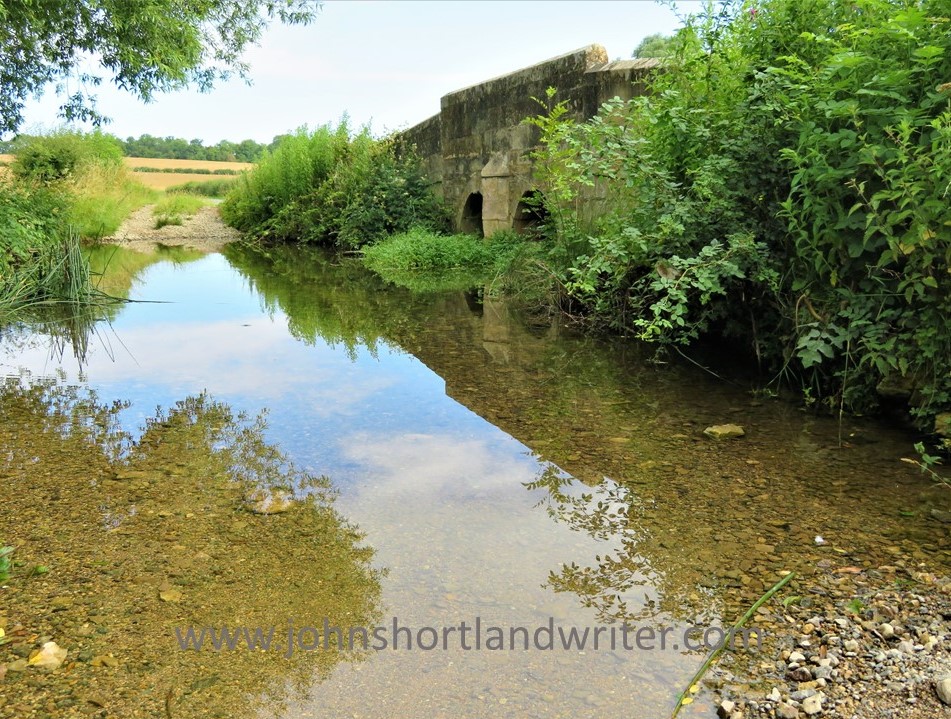
The Ford at Aunby – where the walk begins and ends

My walk began at the ford by the tiny hamlet of Aunby, a few miles north of Stamford.  Stamford has been described as “the most perfect stone town in England” as well as being voted the best place to live.  It certainly is a beautiful place to explore with numerous, fine churches as well as a great Friday market and a wealth of independent shops.  Whereas Stamford has prospered through the centuries, Aunby suffered a dramatic decline: in the fourteenth century there were numerous houses and a church; today, apart from a few cottages, they only show as cropmarks.

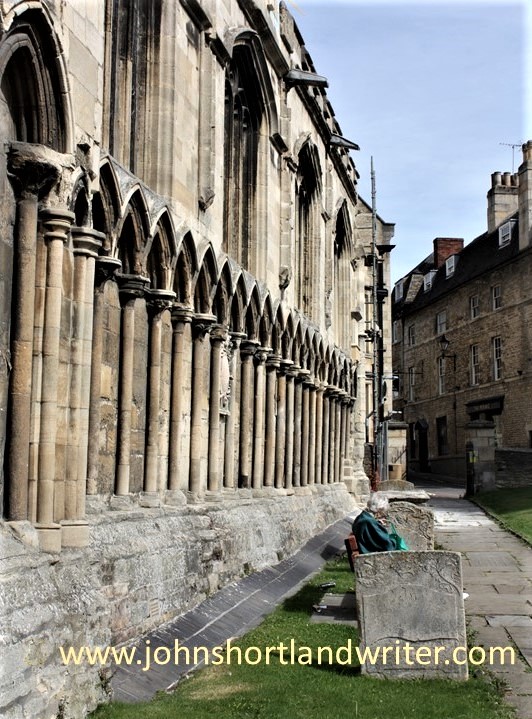
A quiet seat in Stanford
Stamford Market before the crowds arrive…

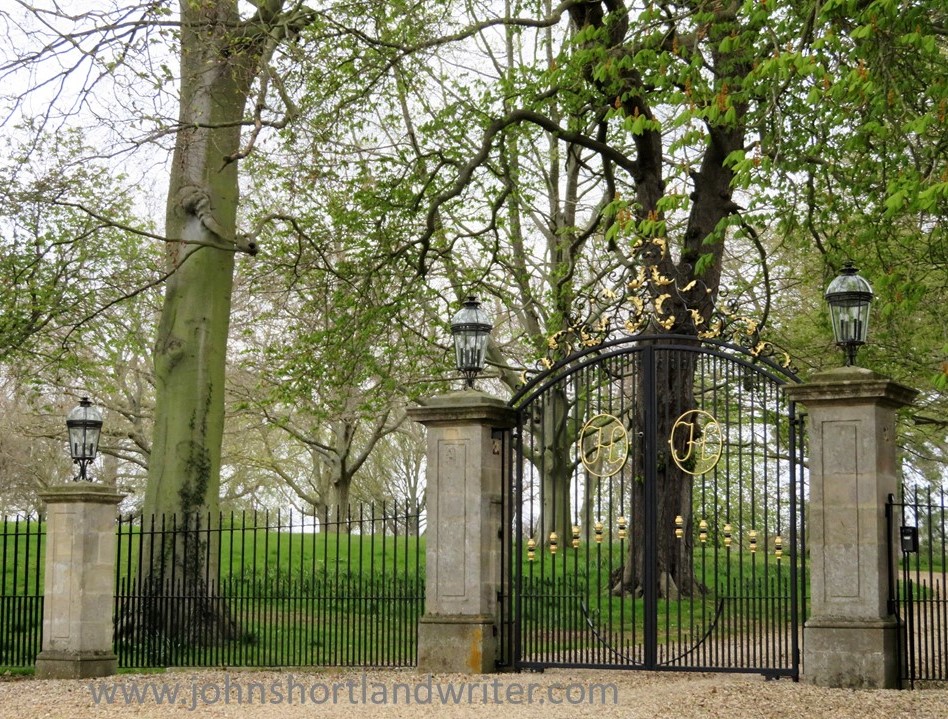
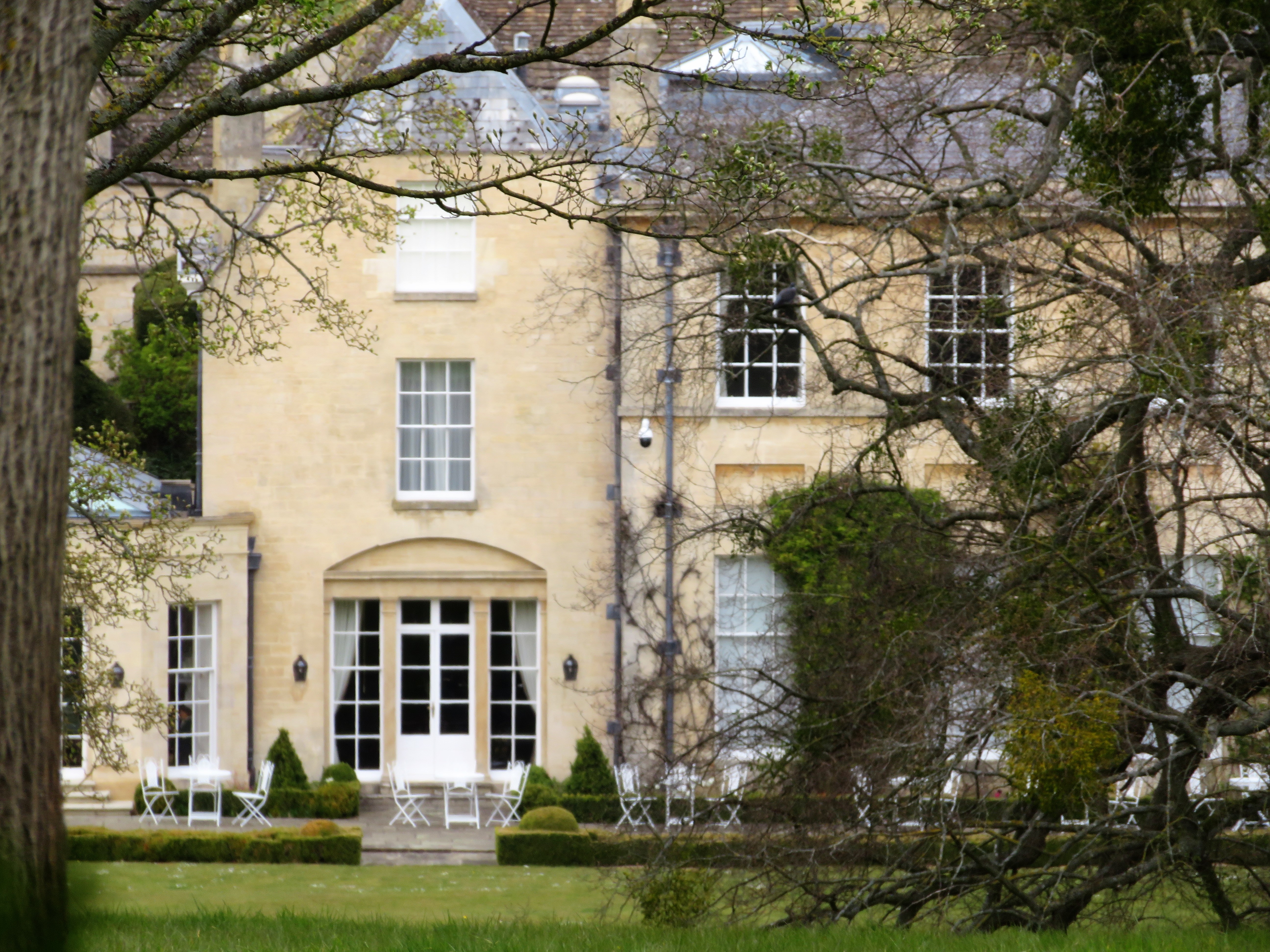
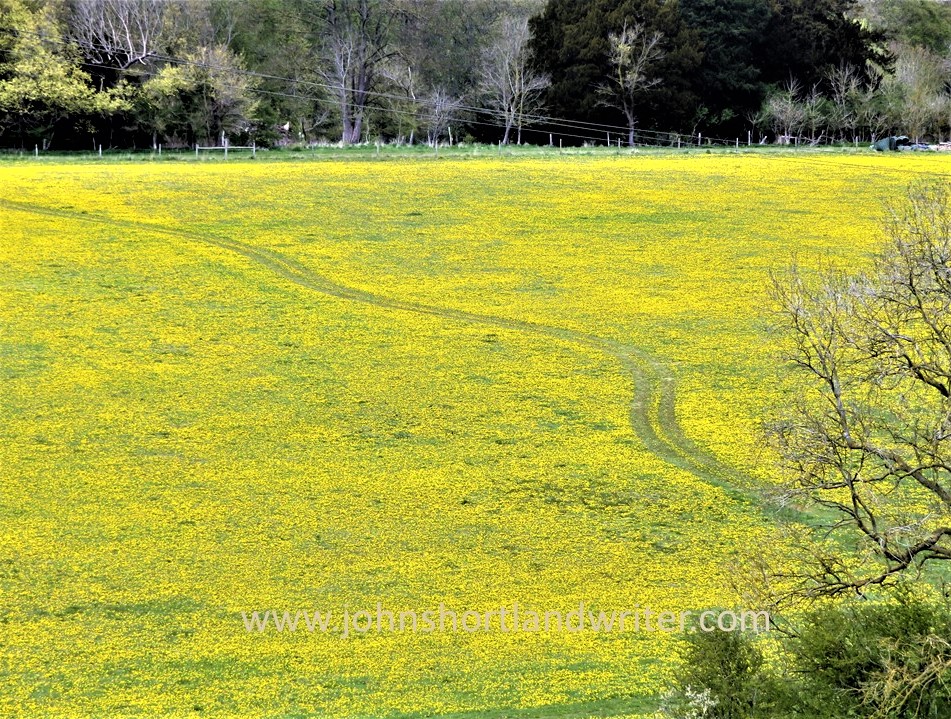
Heading north-west along a grassy bridleway, the path climbs gently until a narrow lane with wide, grassy verges is reached.  One of the many roadside nature reserves in the county, the late spring meant that the only wildflowers to be seen were cowslips which grew in plentiful splendour.  Following this lane uphill  to the elaborate, black and gold entrance gates of Holywell Hall where I turned left, glimpses of the mansion could be seen through the hedgerow that lined the lane. Both the house and grounds are immaculately cared for although I admired most of all the winding path cut through a splendid swathe of dandelions in full bloom.  Considered by many a nuisance ‘weed’ to be sprayed out rather than a wildflower to be kept, dandelions are a great source of early nectar for bees and other insects as well as looking beautiful in their own right.

The entrance to Holywell Hall
Holywell Hall
The dandelion meadow at Holywell Hall

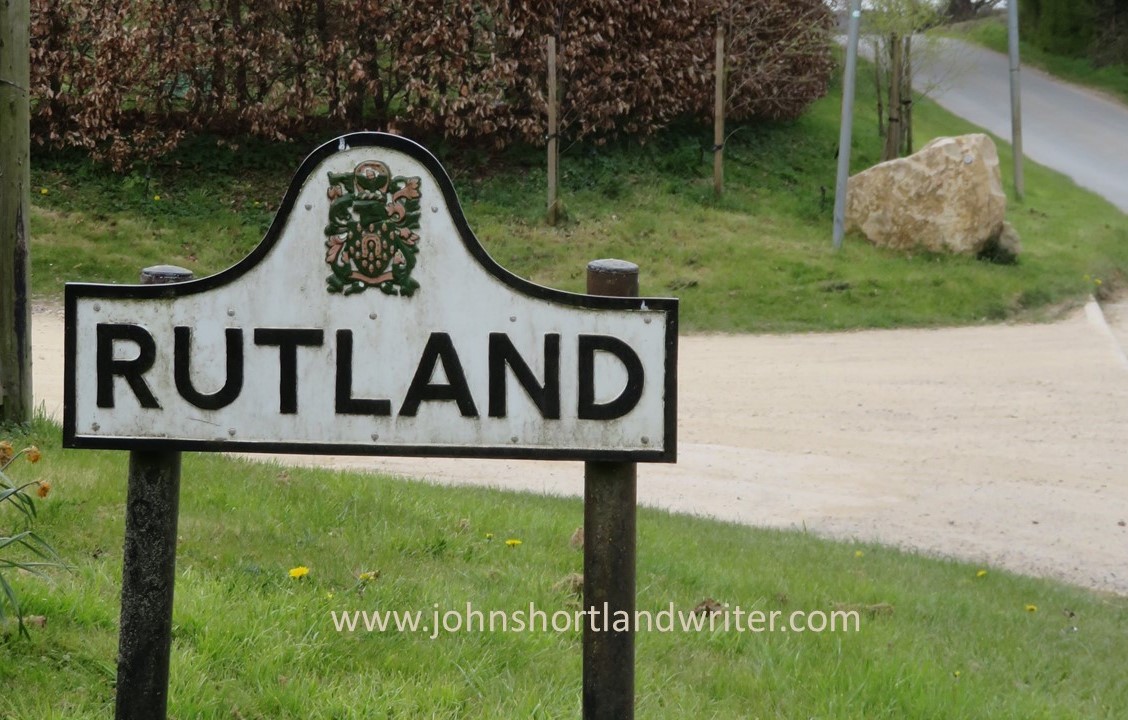
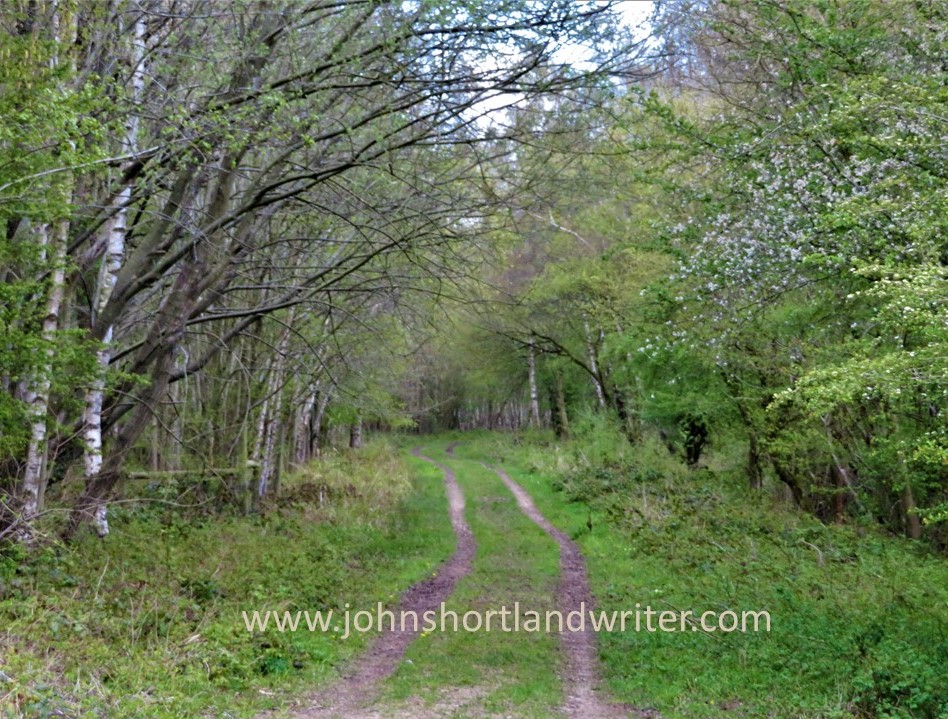
Crossing the county border into Rutland my route immediately turned left onto a forest track to take me up to Holywell Wood and into Pickworth Great Wood.  It was here that I met a local couple exercising their black Labrador dogs, the only people I saw on the whole of my eight-mile walk. They told me that the area was one of the largest woodlands locally as well as being a Site of Special Scientific Interest, designated for its geology as well as its wildlife – a fact confirmed by the NatureSpot website (click here for more information). The woodland path was lined with primroses, the trees just breaking bud and coming into leaf but, sadly, I was too early to hear the nightingales sing. 

Crossing into England’s smallest county
The path through Pickworth Great Wood

Beyond the wood, the path crossed diagonally over unseasonably dry arable land to the village of Pickworth.  It was at this point that I really felt that I was walking in Clare’s footsteps although we can safely assume that he knew most, if not all, of the paths that I would be taking that day.  John Clare, the Peasant Poet, born into poverty and distraught by the destructive changes to the countryside and its people at that time, died in 1864 in the Northampton General Lunatic Asylum.  It was at Pickworth where he laboured in the lime kiln which inspired him to write the poem The Ruins of Pickworth (click link here to read).  The lime kiln still stands although it is barely visible through a thicket of blackthorn.

No muddy boots this unseasonably dry Spring
The barely visible lime kiln where the Peasant Poet, John Clare, toiled

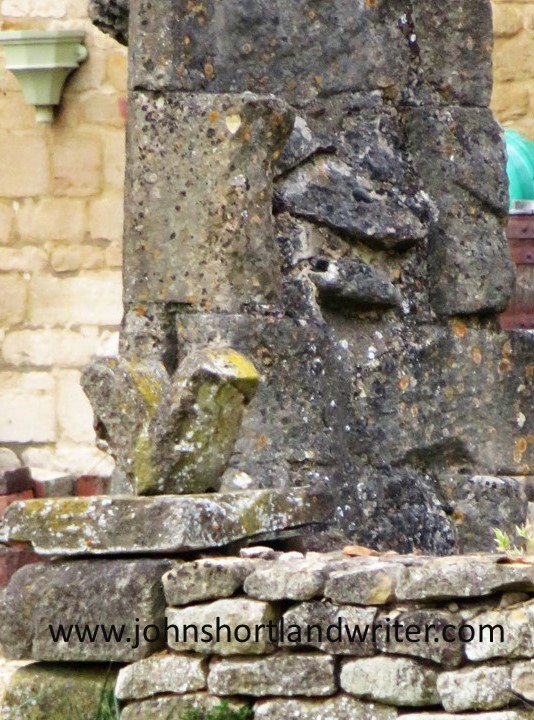
 Pickworth, like Aunby, is another village that has almost disappeared.  Thriving in the 1300s, it now has a population of less than a hundred.  The only sign of the old village is the crumbling stone arch of the church and various grassy mounds and ruts in the surrounding fields. The arch stands on private property but with the help of the camera, details of ornate mouldings and leaves could be seen. It is thought that the Battle of Losecote Field in 1470 fought two miles from the village may have been the cause of its depopulation.

All that remains of the old church at Pickworth is the 13th century arch
Pickworth Old Church – detail

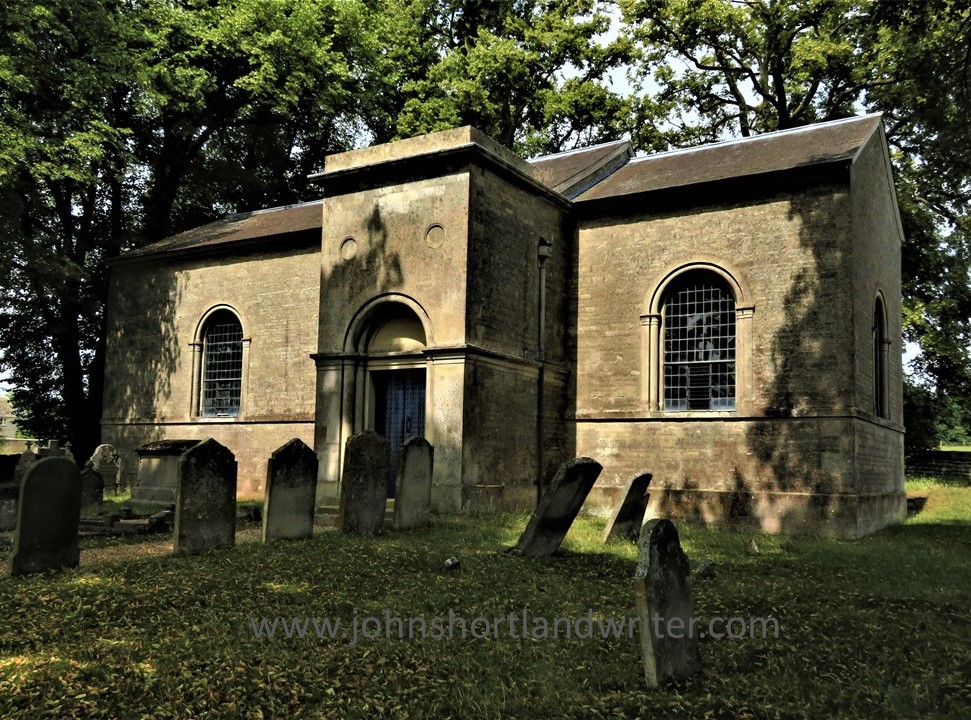
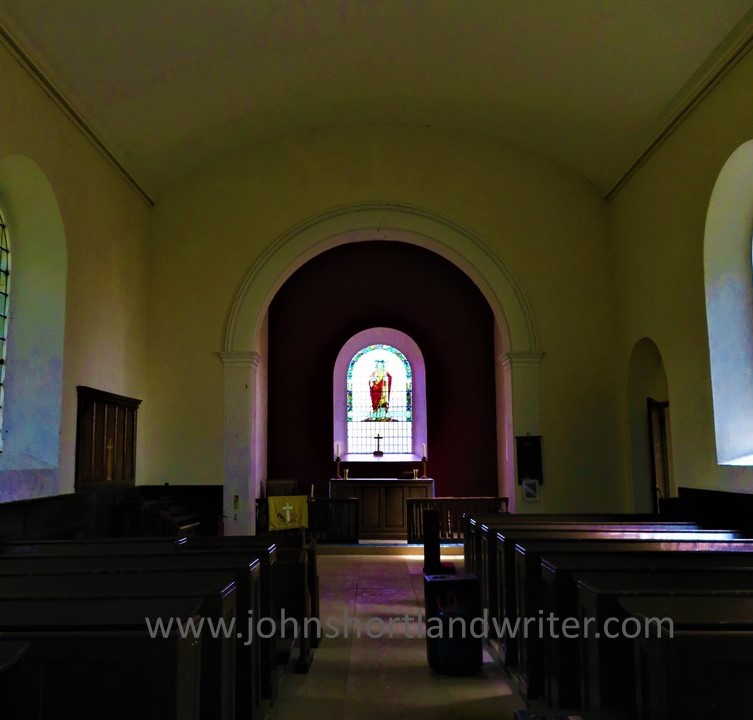
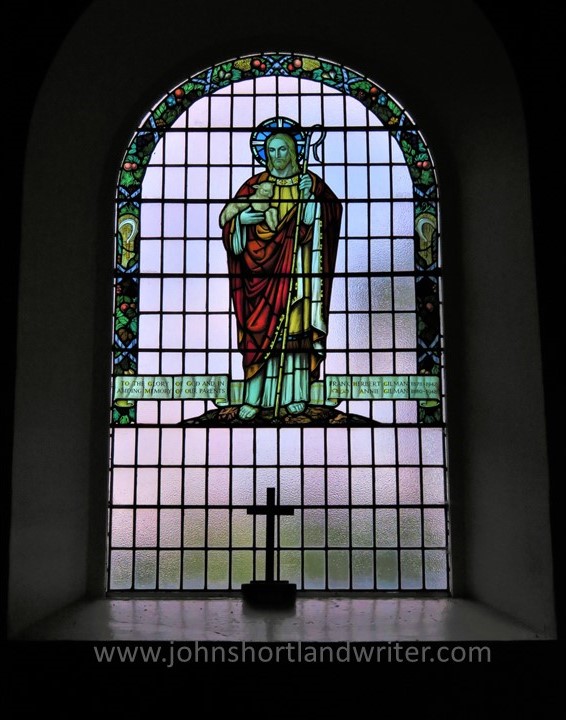
Although the association of Pickworth with Clare is important, to visit the Church of All Saints was the main purpose for my walk.  Built in 1822 at the bequest of Joseph Armitage of Wakefield, Yorkshire, it is a rectangular, stone building of plain beauty and fine proportion.  Set high on a bank and surrounded by trees, the interior is simply lime-washed, the only colour a small amount of stained glass above the altar.

The Church of All Saints, Pickworth
The simple interior of All Saints, Pickworth
The understated beauty of the only stained glass at Pickworth, All Saints

From Pickworth, an old drove road, The Drift, leads back towards Aunby by crossing Ryall Heath.  The road, now another old track, offers pleasing views across arable land, hedgerows filled with wildflowers and the sound of skylarks showering you from high with their song. The Drift ends at the junction with the road that takes you directly back to the start of the walk (turn left here).   Although the B4116 can be quite a busy road at times there are wide grass verges to make walking feel safe.  Finally, you reach the ford at Aunby, where this walk began.  Alternatively, a few yards before the ford you can take the lane that leads to Clematis Cottage, where I stayed for the duration of this oh-so-welcome-after-lockdown short break.

Pickworth Drift, the old drover’s road leads across Ryall Heath
Pickworth Drift, an ancient drover’s road

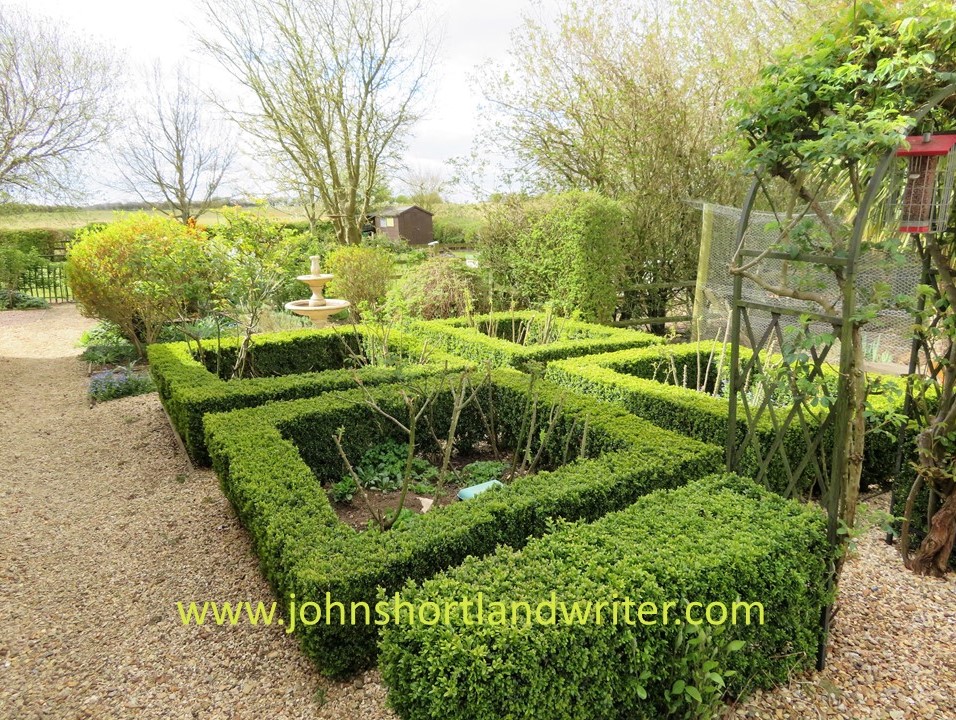
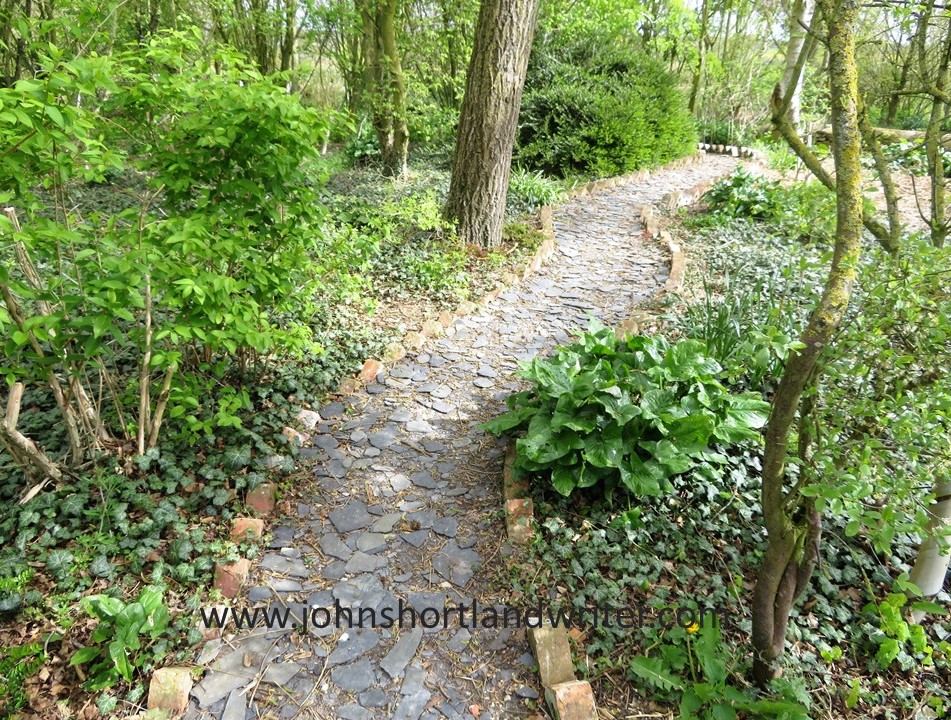
Clematis Cottages at Lodge Farm, Aunby is a small group of buildings converted into delightful, self-catering holiday accommodation.  Richard and Kaye Griffin, friends as well as the owners, live in the farmhouse where they provide every comfort to make a stay enjoyable.  Set in extensive gardens, their aim is to be self-sufficient in vegetables, eggs and honey.  Throughout the gardens there are paths and seating areas – one of my favourites is the summerhouse overlooking the small lake, a haven for wildlife.  Although set on its own and surrounded by fields, Stamford is only six miles away and the internationally renowned Rutland Water, where you can watch rare ospreys nest and fish, ten miles away.  It’s also the perfect base for the nearby Burghley Horse Trials.  To find out more about staying in one of the cottages and their range of home-produced chutneys, preserves and honey click this link here.

A corner of the pretty gardens at Clematis Cottages, Aunby
A winding woodland path in the gardens of Clematis Cottages, Aunby
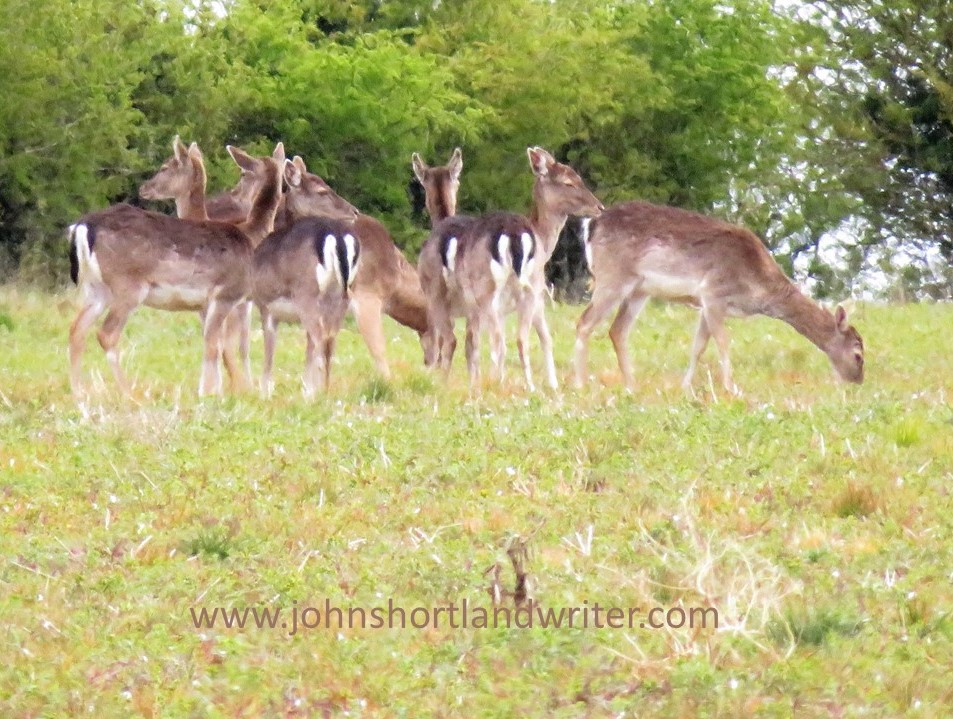
Deer are frequently seen in the fields adjacent to Clematis Cottages, Aunby

Notes:  the walk is a relatively easy and gentle route mostly along roads and tracks.  In places the paths can be uneven and/or muddy but neither should deter anyone with average health and mobility.  Although there are some inclines none are prolonged or steep.  However, as always, care should be taken and appropriate clothing and footwear worn.  It is approximately eight miles in length so allow a good three hours to complete.

The Boy from London

I am a hills person.  I love walking – or even better – cross-country skiing in the mountains. I can also admire the huge skies and vistas of flat country.  However, it is with hills that I have always strongly identified with.  So, when I’m asked “where was home for you?” it isn’t the county of Buckinghamshire, or even the village I was brought up in that I respond with, it is the hills and the Chiltern Hills in particular.

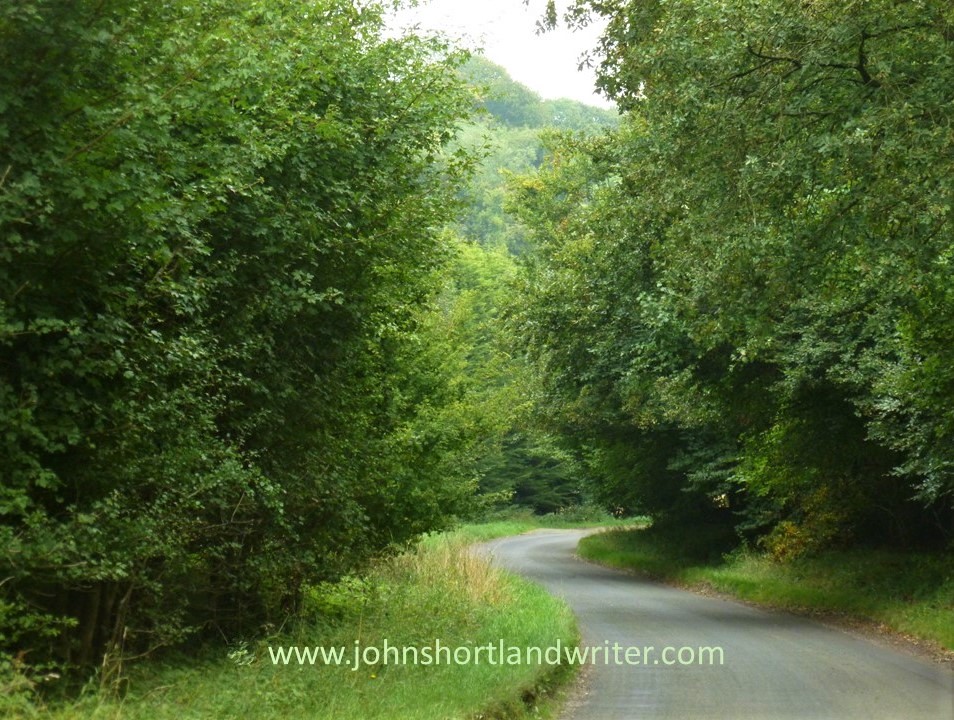
A country lane in the Chiltern Hills winds its way through dense woodland

As a child, I lived on the very edge of the village and not being schooled locally and with no children of my own age nearby anyway, I learnt to spend many hours on my own during the lengthy holidays. Although our house was close to the River Thames I found fishing of limited interest preferring always to be out walking or cycling.  As I grew older I travelled further afield exploring the lanes, fields and woodlands, learning all the time about the ways of nature.  Back in the fifties and early sixties people seemed to have more time to answer inquisitive children about these things or, perhaps, it was just that in those days people were more connected with the natural world so were able to answer their questions.  Whatever the reason, I became more knowledgeable and enthusiastic about country ways than I ever did with schoolwork.  A consequence of this is, when asked the question, “where are you from?” I respond without hesitation (and with a certain degree of pride), “I’m a Chilterns man.”

A childhood spent exploring the fields and woodlands that surrounded home

It was not until I reached the ripe old age of 49 that I moved away from the Chilterns to start a new life in the Cotswolds.  Although as the crow flies, the Cotswolds are not many miles away (I can even see the distant Chilterns from the top of my lane) they are very different in character, the former being chalk and flint country, the latter limestone.  But it wasn’t the exchange of deep, wooded valleys with few, if any, streams for a landscape of far-reaching views, fast-running brooks and drystone walls that I noticed most of all, it was the language.  When I moved to this then unfashionable part of the Cotswolds twenty years ago it was still a forgotten corner of the world where, even if the local dialect had mostly died out, the twang of local accent hadn’t.  It reminded me of, for it is related to, the south-western tongue spoken by many of my country cousins and also by my friends further west still.   So, when I gave my usual response to the question, I was rather peeved to hear it acknowledged by the words, “so you come from London way, then.” 

A Chilterns cottage built using the local flint
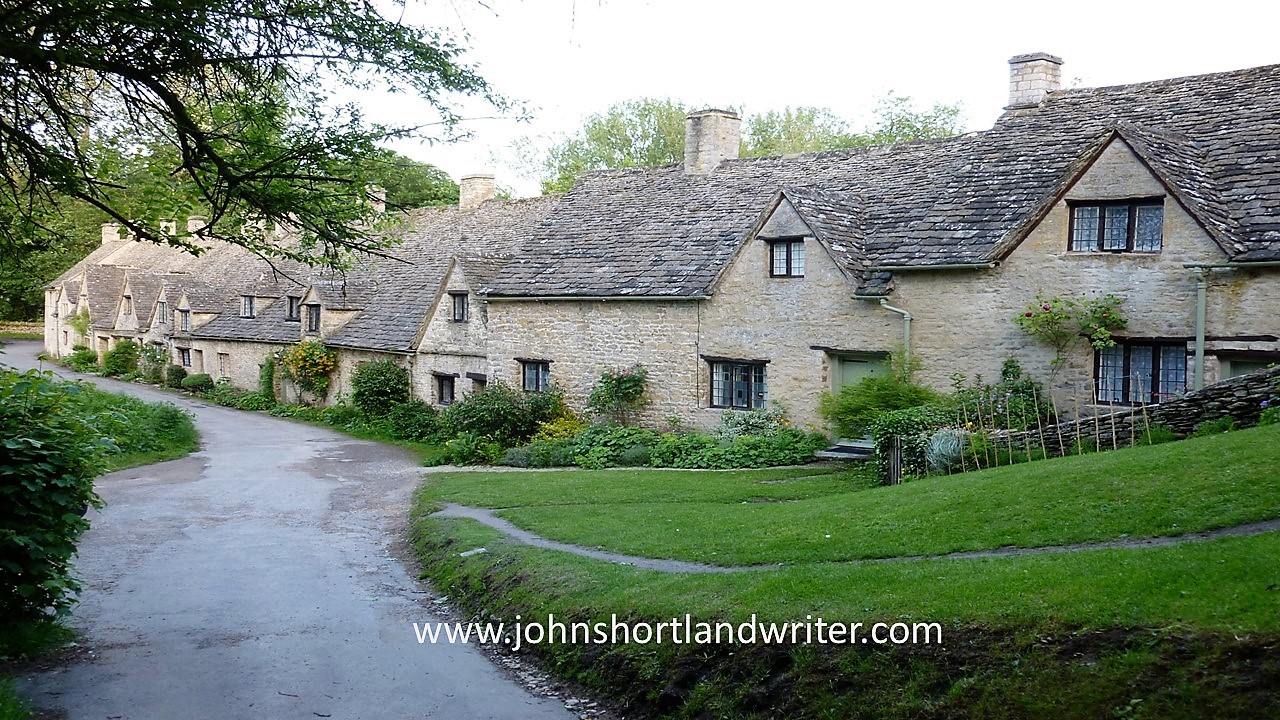
Cotswold cottages look very different and are made with local limestone

Now, I hasten to say, that there is nothing wrong about being referred to as a Londoner.  It’s just that our capital city is as much a foreign land to me as it would be to an overseas visitor.  Ok, so that might be a slight exaggeration, but somehow, I just don’t relate to city life despite my mother being born and raised in London’s West End.  She had come to the Chilterns as an evacuee from WW2 through her war work and there met my father, a local boy – but that’s another story.  Suffice to say, that I am a child of two halves – I have country family and I have city family much in the same way as I am a child of two cultures and two religions.  Despite my relating to country ways and to complicate matters further, (although I should be used to it by now), it is to my mother’s culture and religion that I feel a closer affinity to.  It still grates, ‘though, when I’m thought of as a townie.

City girl sophistication meets country gent: my parents soon after marriage

As I mentioned earlier, school life didn’t hold much appeal and so I persuaded my parents that I should leave aged sixteen.  As soon as I could, I took myself off on my bicycle to holiday in Devon.  Leaving Exeter with tent, camping gas stove and billy cans loosely tied to the crossbar I clanked and clattered my way along the lanes of Dartmoor.   At the end of each day I would pitch my tent wherever I could and reflect with delight upon all the new experiences that had come my way.  Getting hopelessly lost, I ended up at Westward Ho!, a small seaside town on on the north Devon coast.  From there I travelled east finding the hills becoming ever steeper and the villages further and further apart.  One day, I ended up on a remote farm on Exmoor where I decided I would spend two days to recuperate before heading for home.  It didn’t happen. 

The 16 year old hits the road!
Remote hill farm, Brendon Barton where I intended to stay for only two days

Looking back, I can’t imagine what my poor parents were thinking for there were no mobile phones or credit card statements for them to track my progress or whereabouts.  I would telephone them occasionally or send a postcard always being deliberately vague as to where I was staying.  In the meantime, I remained at the farm working – at first for food then, as I became more established and with the tent discarded, for a bedroom and beer money.  By the time my parents turned up at the door several months later (after some shrewd detective work) I had settled into my new life and rapidly adopting the ways of the hard but exhilarating Exmoor life.  Dragged back home to “get a proper job” I never completely left Exmoor behind.  Every spare moment was spent on the farm and, as regular readers of my blog will know, I still spend as much time on Exmoor as possible.  Being a National Park, the landscape and buildings of Exmoor haven’t changed very much over the 50+ years since I turned up on Lorna and Dick French’s doorstep although they have, as have most of the others I knew in those early days, since died.  To my dismay, there is one other thing that hasn’t changed at all: when I respond proudly to the inevitable question with “I’m a Chilterns man”, their response remains the same: “So up-country then?  London?”  Over the years, the ‘boy from London’ has become ‘the man from London.’    And I’m sorry, Londoners, Mum and cousins – I don’t like the label!

Dick & Lorna French who welcomed me into their lives and in the process changed mine